LiFePO4 Battery Voltage Guide: Performance, Charging & Optimization
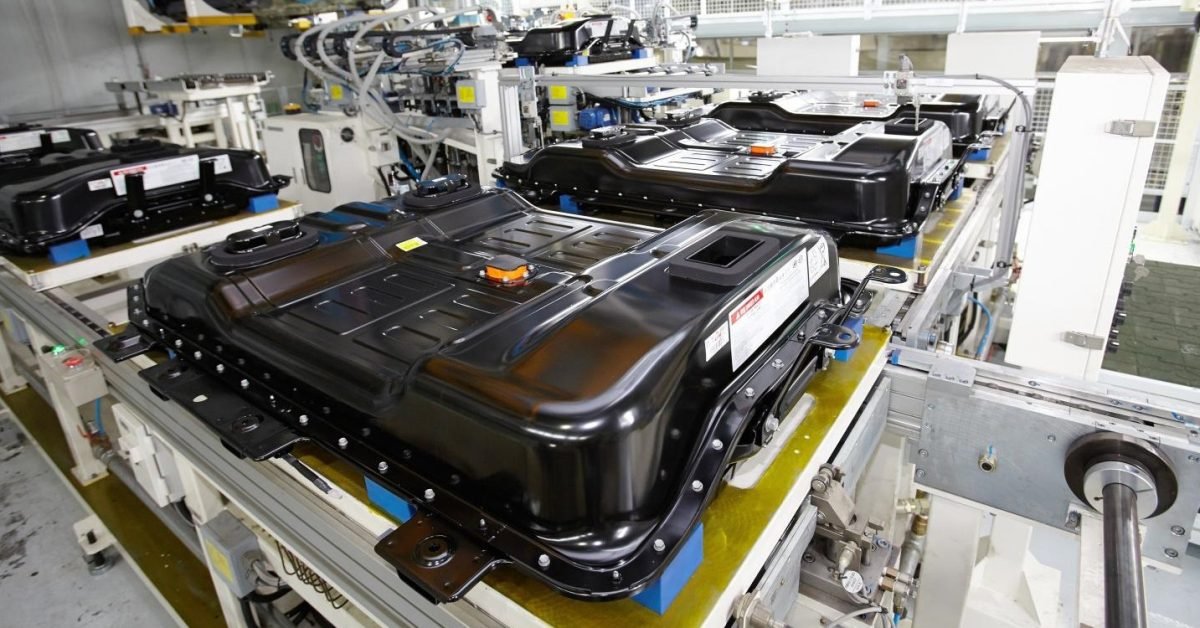
LiFePO4 (Lithium Iron Phosphate) batteries are renowned for their safety, stability, and long lifespan. This guide explores their voltage characteristics, charging parameters, and best practices to maximize performance and longevity. Whether you're a tech enthusiast or new to battery technology, this guide provides essential insights into LiFePO4 batteries—ideal for renewable energy systems, electric vehicles, and portable power solutions. What Is LiFePO4 Battery Voltage? LiFePO4 battery voltage refers to the electrical potential difference in Lithium Iron Phosphate cells. These batteries have a nominal voltage of 3.2V per cell, distinguishing them from traditional lithium-ion batteries (3.6V–3.7V per cell). Key Advantages of LiFePO4 Voltage: ✔ Stable chemistry – Resists overheating and thermal runaway ✔ Longer lifespan – 3,000–5,000+ charge cycles ✔ Wider operating range – Efficient in extreme temperatures ✔ Safer discharge – Maintains stable voltage under load LiFePO4 Voltage Chart (State of Charge) The voltage chart helps determine battery charge levels and health. Below are typical values for different configurations: State of Charge 12V Battery 24V Battery 48V Battery 100% (Charging) 14.6V 29.2V 58.4V 100% (Resting) 13.6V 27.2V 54.4V 90% 13.4V 26.8V 53.6V 80% 13.3V 26.6V 53.2V 70% 13.2V 26.4V 52.8V 60% 13.1V 26.2V 52.4V 50% 13.0V 26.0V 52.0V 40% 12.9V 25.8V 51.6V 30% 12.8V 25.6V 51.2V 20% 12.5V 25.0V 50.0V 10% 12.0V 24.0V 48.0V 0% 10.0V 20.0V 40.0V Single-Cell (3.2V) Voltage Range: Fully Charged: 3.65V Nominal Voltage: 3.2V Low Cutoff: ~2.5V LiFePO4 Charging & Discharging Proper charging ensures longevity and efficiency. LiFePO4 batteries use Constant Current (CC) / Constant Voltage (CV) charging: Charging Parameters Parameter 12V Battery 24V Battery 48V Battery Charging Voltage 14.2V–14.6V 28.4V–29.2V 56.8V–58.4V Float Voltage 13.6V 27.2V 54.4V Max Voltage 14.6V 29.2V 58.4V Min Voltage 10.0V 20.0V 40.0V Nominal Voltage 12.8V 25.6V 51.2V Bulk, Float & Equalization Stage 12V 24V 48V Bulk 14.6V 29.2V 58.4V Float 13.5V 27.0V 54.0V Equalize 14.6V 29.2V 58.4V (Note: Equalization is rarely needed for LiFePO4 due to balanced cells.) How Voltage Affects Performance Capacity – Higher voltage = more stored energy Charging – Correct voltage prevents overheating Discharging – Stable voltage ensures consistent power Efficiency – Optimal voltage reduces energy loss Lifespan – Proper voltage management extends longevity 5 Tips to Extend LiFePO4 Battery Life Avoid Full Discharge – Keep charge between 20%–90% for longevity. Use Correct Charging Voltage – Follow manufacturer guidelines. Prevent Extreme Temperatures – Ideal range: 0°C–45°C (32°F–113°F). Store at 50% Charge – Reduces self-discharge in long-term storage. Use a Battery Management System (BMS) – Prevents overcharging & deep discharge. How to Check LiFePO4 Battery Capacity Multimeter – Measures voltage (indirect capacity indicator). Battery Monitor – Tracks real-time capacity & health. Solar Charge Controller – Displays voltage & charge state. Smartphone Apps – EcoFlow’s app allows remote monitoring. FAQs What is the best float voltage for LiFePO4? 13.4V–13.6V (12V battery) – Prevents overcharging while maintaining readiness. What is the low voltage cutoff? 10V–11V (12V battery) or 2.5V per cell – Prevents deep discharge damage. Can LiFePO4 batteries be equalized? Rarely needed due to stable cell balancing. If required, use 14.6V (12V battery) briefly. Final Thoughts LiFePO4 batteries offer superior safety, efficiency, and lifespan compared to traditional lithium-ion. By following proper charging practices and voltage management, you can maximize their performance for years. For reliable off-grid power, explore EcoFlow’s LiFePO4 power stations, designed for durability and smart energy management.
Daimler Buses unveil eCitaro with NMC4 batteries
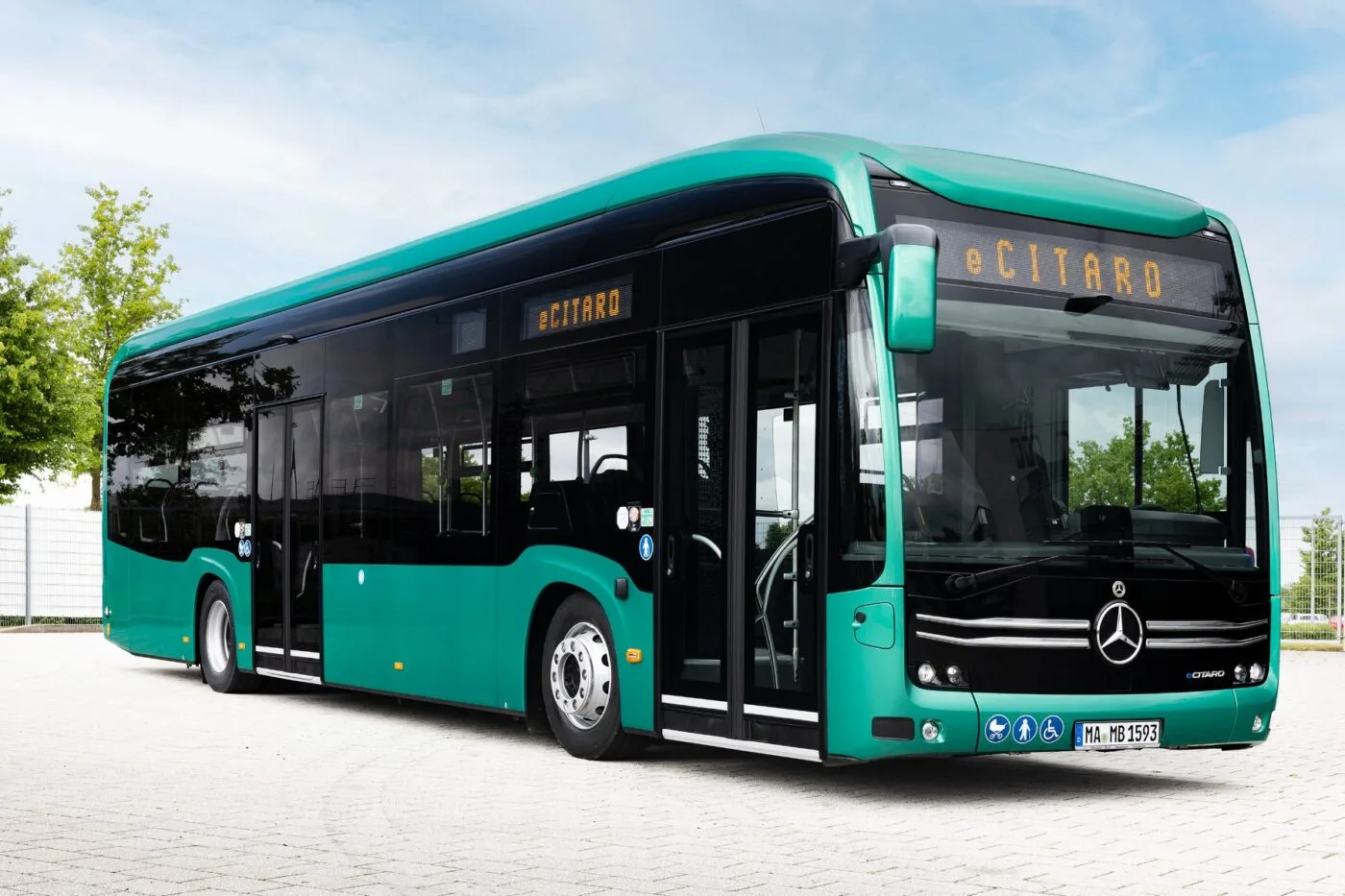
Daimler Buses has just premiered the new Mercedes-Benz eCitaro with a fourth generation NMC battery. The company states that all variants of the eCitaro will receive these batteries from 2026. The next-gen NMC batteries are set to be showcased at the UITP Summit 2025 in Hamburg from the 15th to 18th of June. That week, they will only be featured in a two-door solo demo bus, but critically, will be introduced to the market next year in both the long and short versions of the eCitaro G and the eCitaro K. The new NMC battery packs have a 111 kWh capacity, i.e. a higher energy density with the same battery size. This should provide range improvements of up to 500km for the solo and 400km for the articulated model. Currently, the maximum charging power is set at 150 kW, but Daimler Buses specified that this will be increased to 300 kW in future. Additionally, the NMC4 battery generation will have a ‘very long service life’, although Daimler Buses has not specified exactly how long. Readers may recall that the current-gen NMC3 battery was first introduced by Daimler Buses in September 2022. This was based on cylindrical cells of the format 21700 (21mm diameter, 70mm length), whereby 600 cells are fitted per module and nine modules are mounted per single pack. That translates roughly to energy content of 98kWh per pack. On the current 12m-long eCitaro solo bus, it’s possible to install up to six packs (i.e. 588kWh); on the 18m-long articulated version, it’s seven (686kWh). That translates to a range of around 400km for the electric solo and 300km for the articulated bus, which you can compare with the NMC4 figures in the table below. NMC3 NMC4 eCitaro* 400km 500km eCitaro G* 300km 400km eCitaro fuel cell** up to 600km up to 700km eCitaro G fuel cell** up to 500km up to 600km *Equipment with maximum battery capacity**Equipment with maximum battery and H2 capacity The current NMC3 packs are assembled at Akasol in Hessen, Germany. However, from 2026, the NMC4 packs will be assembled in Poland by the local subsidiary of BMZ Holding, which entered a strategic partnership with Daimler Buses to expand production at its site in Gliwice. daimlertruck.com
Yet Another Sign EVs Are Here To Stay
Last Updated on: 20th May 2025, 10:24 am US President Donald Trump has been losing his battle against EVs, and he’s about to begin losing even biglier now that new sodium-ion EV batteries are emerging on the market. Some researchers note that “salt batteries” are not quite ready for prime time, but other stakeholders — including industry leader CATL — are already laying plans for mass production. Losing The Battle Against EVs The rising demand for zero-emission mobility goes beyond the nice idea of preventing a catastrophic climate crisis. EVs are a better fit for the connected, electrified lifestyle of the 21st century, they offer more opportunities for convenience, they are more useful for weathering power outages and climate-connected emergencies, and they are more adaptable to the needs of fleet managers, among other advantages. The specter of range anxiety dominated the early years of EV marketing, but that was just a red herring wrapped in a blanket of self-serving, fossil-fueled fear mongering. After all, the batteries in gasmobiles provoked plenty of anxiety on their own, long before all-electric cars hit the road. The year 2015 is particularly instructive. Electric cars accounted for a vanishingly small number of vehicles on the road back then, so when AAA reported a “record-breaking” 32 million driver rescues that year, with battery problems among the leading causes, they were talking about the conventional lead-acid batteries used in gasmobiles, not the lithium-ion batteries used in electric cars. The Sodium-Ion Battery Difference Having done the hero’s work of ushering in the EV revolution, lithium-ion battery technology is beginning to make room for new formulas that offer a more abundant and accessible supply chain, reduce the reliance on toxic inputs, and achieve both cost and safety improvements. That’s easier said than done, particularly in the field of sodium-ion energy storage. Sodium sits right under lithium on the Periodic Table, but it is much heavier, and that is a key disadvantage for mobility applications. Just ask the Swedish firm Northvolt, which was on its way to hooking up its sodium-ion EV battery with the Chinese firm BYD before declaring bankruptcy last year. Still, other sodium-ion battery innovators have kept the torch burning. That includes the leading global firm CATL, which introduced its first sodium-ion batteries in 2021. Last month, CATL also burned up the Intertubes when it announced a suite of two sodium-ion batteries ready for full volume production by the end of this year. Sodium Batteries For All EVs, Eventually For all the attention CATL received last month, the company’s new sodium-ion battery is not designed to compete directly against Li-ion in all EVs. Of the two versions set for mass production this year, one is the “Naxtra 24V Heavy-Duty Truck Integrated Start-Stop Battery.” Start–stop is your clue that the battery is designed to be compatible with fuel efficient hybrid trucks, in which the diesel engine shuts down when the truck is temporarily stopped. With the Naxtra 24V, CATL is aiming to compete against lead-acid batteries in the truck market. “It reduces total lifecycle costs by 61% compared to traditional lead-acid batteries,” the company says of the new battery. “Compared to lead-acid batteries, it is more efficient, eco-friendly, and economical.” CATL also plans to mass produce a passenger car version of the Naxtra formula later this year, but again, Li-ion technology is not the primary target. “CATL’s Naxtra passenger EV Battery achieves an energy density of 175Wh/kg, the highest among sodium-ion batteries worldwide, and comparable to LFP batteries,” CATL advises, referring to the lithium-iron-phosphate battery formula. A Work In Progress Sodium-ion batteries still need some tweaks around the edges before they can compete head-on with Li-ion batteries, particularly in terms of EVs and other mobility applications. For example, a research team based at the Jawaharlal Nehru Centre for Advanced Scientific Research in India recently reported a “super-fast charging” sodium-ion battery capable of charging up to 80% in just six minutes. The battery can also withstand more than 3000 charge cycles. The team achieved their breakthrough by deploying nanoscale particles wrapped in a carbon coating, and by doping the anode material with aluminum. “These tweaks made sodium ions move faster and more safely, enabling both speed and durability,” Jawaharlal Nehru Centre reported. “What makes it especially exciting is that it not only supports rapid charging but also avoids the fire and degradation risks of traditional batteries,” they added. Exciting or not, the researchers caution that “more development is needed before these batteries hit the market.” You can say that again, says a team of researchers based at Stanford University. Their assessment of the state of sodium-ion battery technology, published in the journal Nature in January, suggests that salt batteries are not ready to shove Li-ion aside from mass market EVs today, but they could soon. The team outlines several pathways to cost-competitiveness within a timeline of the next 10 years or so. “Our modelled outcomes suggest that being price advantageous against low-cost lithium-ion variants in the near term is challenging and increasing sodium-ion energy densities to decrease materials intensity is among the most impactful ways to improve competitiveness,” they concluded. Keep an eye on a new sodium-ion battery consortium spearheaded by Argonne National Laboratory for signs of advanced research here in the US. The $50 million project launched in November last fall, but the Trump–Musk budget axe has been chopping away at the national laboratory network. Whether the new program survives or not is anybody’s guess. More EVs For The USA Meanwhile, over here in the US, more people are buying more EVs, regardless of the president’s fossil-friendly energy agenda. That is to be expected. Trump has successfully traumatized a generation of federal workers with the gleeful assistance of Tesla CEO Elon Musk, but he is losing bigly in his war against the energy transition, the offshore wind fight being just one example. Rising activity in the EV charging area is a strong indication that industry stakeholders expect EVs to continue their upward sales trajectory in the US,
Hyundai begins real-world testing of AI-powered EV charging robot
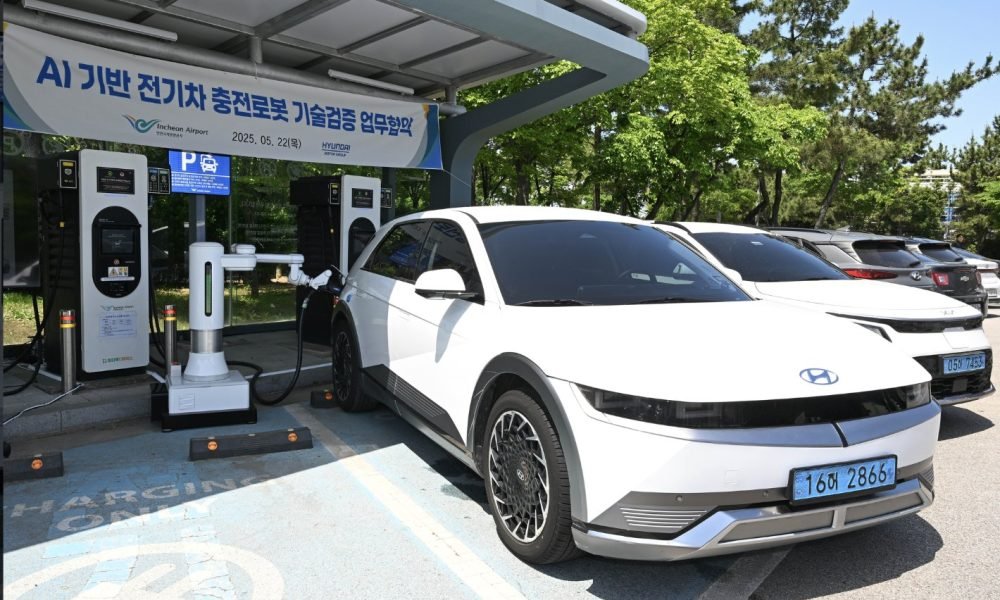
Hyundai announced on Thursday that it has officially launched real-world testing of its AI-powered EV charging robot, which it is referring to as the ACR. The Korean company is partnering with both Kia and Incheon International Airport for the testing phase, which was launched with a memorandum of understanding (MOU). The pilot program is going to be used to lay the groundwork for future robot use for EV charging. Incheon already has a reputation that aligns with the pilot program as it has the largest eco-friendly vehicle infrastructure in Korea, according to Korea JoongAng Daily, which first reported the launch of the pilot program. Hyundai is partnering with Kia’s Robotics Lab to provide hardware and software solutions for this early rollout. Yan Hee-won, President of Hyundai Motor’s R&D Division, said: “This marks an important turning point in validating the practical value of future mobility technologies. With customized automatic charging solutions, we aim to deliver a more convenient and enhanced mobility experience for users.” The testing phase will be limited in the sense that the charging robot will be deployed for a fleet of eco-friendly airport vehicles. Those who park their EVs at the airport will not be able to use it for use while they’re traveling — at least at first. Eventually, it will become a great way to give vehicles range while the owners are off on trips. Tesla had a similar idea several years ago, which it shared viral videos of back in 2015. Tesla “snake charger” wasn’t just a creepy one-off, suggests Elon Musk Musk said in 2020 that Tesla still had the intention of making it. However, it has shifted to wireless induction charging, which seems to be a better option simply because of fewer moving parts and better compatibility with the upcoming Robotaxi fleet. Tesla flexes Robotaxi wireless charging — autonomy from top to bottom Tesla displayed its wireless charging idea at the “We, Robot” event last year: Robotaxi wireless charging No hands required pic.twitter.com/XL746DkGhb — Tesla (@Tesla) October 18, 2024 The post Hyundai begins real-world testing of AI-powered EV charging robot appeared first on TESLARATI.
EcoFlow's Memorial Day & RV Sales: Unmatched Deals On Solar Generators, Batteries, & Power Stations

If you’re a fan of off-grid living and travel, van life, or reliable home backup solutions, EcoFlow’s Memorial Day Sale and RV Sale is an event worth paying attention to. Running from May 19 to May 28, 2025, EcoFlow is offering up to 67% off some of its most popular portable power stations, solar panels, and all-in-one bundles. Whether you’re planning a long-term RV trip or simply want to secure a dependable home backup system before storm season, these deals provide exceptional value and performance for solar and battery enthusiasts. Power Your Life: Portable Power Stations On Sale EcoFlow DELTA Pro + 2×220W Portable Solar Panels + Free Bag: The DELTA Pro is EcoFlow’s flagship portable power station, and for good reason. With a massive 3.6kWh capacity and a 3600W AC output, it can power nearly anything from refrigerators and air conditioners to heavy-duty power tools. For RVers or off-grid homeowners, this system can be expanded up to 25kWh with additional batteries, which is enough to fully power an entire home or rig. This Memorial Day bundle includes two 220W bifacial solar panels that capture up to 25% more energy using ambient sunlight reflected on their rear side, along with a convenient carrying bag. Normally priced near $5,000, this is a steal at $2,399. EcoFlow DELTA 2 Max + 2×220W Solar Panels + Camping Chair: For those who want serious power without the size and weight of the DELTA Pro, the DELTA 2 Max offers a more compact solution. It features a 2.048kWh battery with a 2400W output, ideal for powering RV appliances, e-bikes, laptops, and CPAP machines. The system is expandable up to 6kWh for multi-day usage. This bundle includes two 220W solar panels and a folding camping chair, making it perfect for those heading off-grid for the weekend or longer. It’s a practical and well-rounded package for road warriors, overlanders, and tent campers alike, and at just $1,899 (reg. $3,984), it’s a great bundle that’s also very affordable. EcoFlow DELTA 2 Portable Power Station: If you’re new to the world of portable solar or just need a reliable emergency backup, the DELTA 2 hits the sweet spot between power, portability, and price. With a 1,024Wh capacity and 1,800W output, it can run 90% of home appliances and devices — everything from phones and laptops to blenders and projectors. It’s lightweight at just under 27 pounds, and like all DELTA units, it charges incredibly fast — up to 80% in just 50 minutes via AC. You can also pair it with solar for sustainable off-grid use. It’s an ideal choice for short trips, apartment dwellers, or first-time buyers, and is currently on sale for just $529 (reg. $999). Built For The Road: RV Sale Specials EcoFlow’s RV Sale runs concurrently with the Memorial Day event and is tailored for those living or vacationing in mobile homes, campers, or converted vans. It’s all about versatility, rapid charging, and solar compatibility, without sacrificing performance. DELTA 2 Max + 2×100W Solar Panels + 800W Alternator Charger: This RV-ready bundle stands out because of its 800W alternator charger, which is a game-changer for those on the move. It allows you to charge your power station directly from your vehicle’s alternator while you drive, keeping your batteries topped off without needing to stop for shore power or solar. Add in two 100W solar panels and the DELTA 2 Max’s already stellar 2kWh capacity, and you’ve got a mobile power solution that works 24/7, rain or shine, parked or driving. Regularly $2,747, this bundle is on sale for just $1,499. Wave 3 AC + Add-on Battery + EcoFlow GLACIER Classic 55L Portable Refrigerator + Glacier Plug-in Battery: This bundle is designed for those who need reliable refrigeration and climate control on the go. The 32-pound Wave 3 is a 3-in-1 unit that cools, heats, and dehumidifies spaces up to 183 square feet for up. to 8 hours. With 6,100 BTUs of cooling and 6,800 BTUs of heating, it delivers fast temperature changes, dropping the heat by up to 15°F or raising it by 17°F in just 15 minutes. With the Wave 3 1024Wh add-on battery, you can get another 8 hours of off-grid coolth or warmth. This bundle is rounded out by the Glacier Classic 55L, a portable dual-zone fridge and freezer unit with a 298Wh battery on board that provides up to 39 hours of refrigeration. Regularly $3,696, this comfort bundle is currently just $2,799. Bottom Line EcoFlow’s Memorial Day and RV Sale is offering some of the lowest prices of the year on its best-selling products. With climate events on the rise and the growing popularity of van life, overlanding, and sustainable living, these tools are more than just gadgets, they’re smart power systems engineered for serious users. And with the solar panels included in many bundles, you’re not just buying a battery, you’re buying the ability to create your own ‘fuel’ to recharge it. Whether you’re prepping your RV for the summer, planning a cross-country road trip, or upgrading your emergency power setup at home, EcoFlow’s Memorial Day and RV Sales offer unbeatable value. If you’ve been on the fence about investing in a portable power station or solar setup, now’s the time to act. These deals are all valid through May 28, however, popular models and bundles tend to sell out quickly during major promotions. For orders over $2,000, you can get a free 110W solar panel, or two free 125W solar panels with orders over $4,000. And for an extra 5% off at EcoFlow, use coupon code EFRVSALEAFF. This sale runs from May 19-28, 2025, so don’t hesitate too long. Sign up for CleanTechnica's Weekly Substack for Zach and Scott's in-depth analyses and high level summaries, sign up for our daily newsletter, and/or follow us on Google News! Whether you have solar power or not, please complete our latest solar power survey. Have a tip for CleanTechnica? Want to advertise? Want to suggest a guest for our CleanTech Talk podcast?
SpaceX Starship gets FAA nod for ninth test flight
The United States House of Representatives passed President Trump’s “Big Beautiful Bill” by a vote of 215 to 214 on Thursday, effectively bringing an end to many EV subsidy programs, like the $7,500 tax credit, by the end of this year. The bill will not only eliminate the $7,500 credit on new EV purchases, but also the $4,000 credit given on the purchase of used electric vehicles, and a $1,000 credit on the installation of Level 2 chargers. It will also impact solar subsidies that help generate clean energy in a residential setting. EVs would also be subject to a $250 road use fee. 🚨 The “Big Beautiful Bill” has been passed in the House, meaning: 1) The EV tax credit is in serious jeopardy. It will likely be eliminated for 2026. 2) EVs will likely have a $250 road use fee 3) $1,000 Level 2 charger credit will also be eliminated pic.twitter.com/Aad41say43 — TESLARATI (@Teslarati) May 22, 2025 All of these things sound like negatives — truly because they are. Those who are not in a financial position to buy an EV this year, even with the tax credit, might not be able to afford them in the coming years either, unless manufacturers are able to bring pricing to a level that is more accessible to consumers. In theory, President Trump’s focus on bringing manufacturing back to America would bring prices down, but it won’t happen overnight. Companies will take many years to completely bring manufacturing and part sourcing to the United States. However, Tesla could feel some positives from this bill, and it all comes down to timing. Of course, in the long term, it wouldn’t be great for the company, especially if it did not have two things going on right now: a slightly lagging delivery pace and the introduction of affordable models. Tax Credit Sunsetting Advantage Sunsetting the $7,500 tax credit means one thing: those who have been in limbo over buying an EV from Tesla are going to have to make a decision on whether they want to buy this year and still have access to the credit, or test their luck and hope for price reductions. More than likely, those who have been on the fence will be willing to pull the trigger this year, and Tesla will definitely gain some sales from this fact alone. Other automakers will, too. This could help offset Tesla’s slow start to the year, which has been caused by the changeover of production lines of the Model Y across each of its factories globally. Affordable Models Tesla said earlier this year that it will roll out affordable models in the first half of 2025. These cars are expected to be around the $30,000 mark, but the company has not shed any true information on what they will cost. Potential affordable Tesla “Model 2/Model Q” test car spotted anew in Giga Texas Ideally, the cars would cost under $30,000 without the EV tax credit, which would be more than accessible for many car buyers in the United States. The introduction of models that are not in need of a tax credit to be affordable to the masses. This would help offset some of the losses Tesla might feel from cars losing the tax credit.
SEIA: Solar & Storage Industry Statement on U.S. International Trade Commission Injury Determination
Last Updated on: 21st May 2025, 02:55 am WASHINGTON, D.C. — Today the U.S. International Trade Commission (USITC) issued a final affirmative injury determination in the antidumping and countervailing duty (AD/CVD) investigation on solar cells and modules from southeast Asia. Following is a statement from Abigail Ross Hopper, president and CEO of the Solar Energy Industries Association (SEIA), on the decision: “Today’s decision by the U.S. International Trade Commission is concerning for American solar manufacturers and the broader U.S. solar industry. The USITC’s final affirmative injury determination adds an additional layer of tariffs that will raise costs for the solar products American companies need to build projects and grow domestic manufacturing. “Today, U.S. solar cell manufacturing is growing for the first time in years, but it is still not at the scale needed to meet demand. This determination especially harms U.S. solar module producers that depend on access to imported solar cells as we ramp up domestic cell manufacturing capacity. Imposing additional tariffs on cell imports at this stage risks stalling progress and undermining the very industry they are meant to support. “This is yet another hurdle for U.S. solar module manufacturing, which has grown sixfold in the last two years and has seen perhaps the most successful industrial onshoring effort in our nation’s history. After today’s decision, it is more important than ever for Congress to support American solar manufacturing. Tax credits for domestic production must be preserved and strengthened as lawmakers consider the budget reconciliation bill. These policies are the key to building a resilient, competitive solar manufacturing base here at home. “SEIA will continue to advocate for policies that bolster the domestic manufacturing sector and ensure the solar and storage industry has what it needs to deliver affordable, reliable energy to American families and businesses.” About SEIA®: The Solar Energy Industries Association® (SEIA) is leading the transformation to a clean energy economy. SEIA works with its 1,200 member companies and other strategic partners to fight for policies that create jobs in every community and shape fair market rules that promote competition and the growth of reliable, low-cost solar power. Founded in 1974, SEIA is the national trade association for the solar and solar + storage industries, building a comprehensive vision for the Solar+ Decade through research, education and advocacy. Visit SEIA online at www.seia.org and follow @SEIA on Twitter, LinkedIn and Instagram. News release courtesy of SEIA. Sign up for CleanTechnica's Weekly Substack for Zach and Scott's in-depth analyses and high level summaries, sign up for our daily newsletter, and/or follow us on Google News! Whether you have solar power or not, please complete our latest solar power survey. Have a tip for CleanTechnica? Want to advertise? Want to suggest a guest for our CleanTech Talk podcast? Contact us here. Sign up for our daily newsletter for 15 new cleantech stories a day. Or sign up for our weekly one on top stories of the week if daily is too frequent. Advertisement CleanTechnica uses affiliate links. See our policy here. CleanTechnica's Comment Policy
Tesla $TSLA set for 'golden age of autonomous' with Robotaxi launch: Ives
The United States House of Representatives passed President Trump’s “Big Beautiful Bill” by a vote of 215 to 214 on Thursday, effectively bringing an end to many EV subsidy programs, like the $7,500 tax credit, by the end of this year. The bill will not only eliminate the $7,500 credit on new EV purchases, but also the $4,000 credit given on the purchase of used electric vehicles, and a $1,000 credit on the installation of Level 2 chargers. It will also impact solar subsidies that help generate clean energy in a residential setting. EVs would also be subject to a $250 road use fee. 🚨 The “Big Beautiful Bill” has been passed in the House, meaning: 1) The EV tax credit is in serious jeopardy. It will likely be eliminated for 2026. 2) EVs will likely have a $250 road use fee 3) $1,000 Level 2 charger credit will also be eliminated pic.twitter.com/Aad41say43 — TESLARATI (@Teslarati) May 22, 2025 All of these things sound like negatives — truly because they are. Those who are not in a financial position to buy an EV this year, even with the tax credit, might not be able to afford them in the coming years either, unless manufacturers are able to bring pricing to a level that is more accessible to consumers. In theory, President Trump’s focus on bringing manufacturing back to America would bring prices down, but it won’t happen overnight. Companies will take many years to completely bring manufacturing and part sourcing to the United States. However, Tesla could feel some positives from this bill, and it all comes down to timing. Of course, in the long term, it wouldn’t be great for the company, especially if it did not have two things going on right now: a slightly lagging delivery pace and the introduction of affordable models. Tax Credit Sunsetting Advantage Sunsetting the $7,500 tax credit means one thing: those who have been in limbo over buying an EV from Tesla are going to have to make a decision on whether they want to buy this year and still have access to the credit, or test their luck and hope for price reductions. More than likely, those who have been on the fence will be willing to pull the trigger this year, and Tesla will definitely gain some sales from this fact alone. Other automakers will, too. This could help offset Tesla’s slow start to the year, which has been caused by the changeover of production lines of the Model Y across each of its factories globally. Affordable Models Tesla said earlier this year that it will roll out affordable models in the first half of 2025. These cars are expected to be around the $30,000 mark, but the company has not shed any true information on what they will cost. Potential affordable Tesla “Model 2/Model Q” test car spotted anew in Giga Texas Ideally, the cars would cost under $30,000 without the EV tax credit, which would be more than accessible for many car buyers in the United States. The introduction of models that are not in need of a tax credit to be affordable to the masses. This would help offset some of the losses Tesla might feel from cars losing the tax credit.
Solar, Gas, & Battery: Why Apex 300’s 3-Part Backup Plan Is a Hurricane Season Must-Have
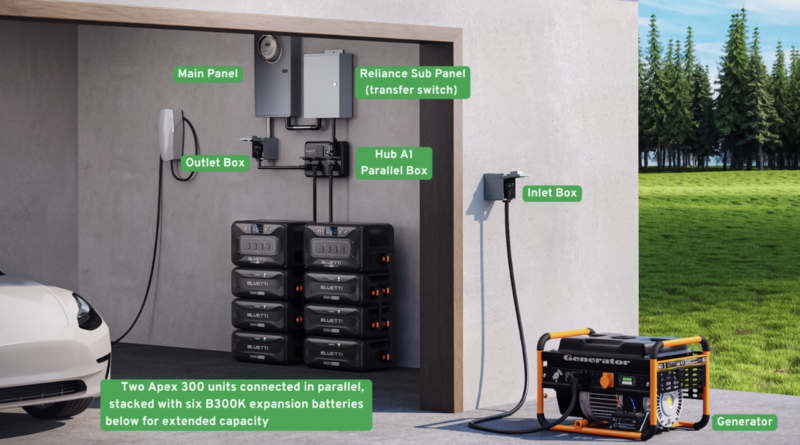
Last Updated on: 21st May 2025, 04:58 pm Hurricane season is knocking—and so is blackout season. In Texas, Florida, and the Gulf Coast, it’s not if the power goes out, it’s how soon. Most 3kWh battery systems? They’ll last you maybe two days, tops. After that, it’s either sunshine or gasoline—or both. That’s why real preparedness means having a Plan B (solar), a Plan C (generator), or even better—a smart combo of all three. Let’s break it down with BLUETTI’s latest Apex 300, and see how it powers through each backup plan. Battery-powered solution Solar power solution Generator-compatible backup system Battery Backup Solution Battery-powered backup systems, like the Apex 300, are compact, efficient, and easy to use. With the right setup, you can power essential appliances for days. Most battery systems last a few days depending on capacity and usage, so it’s important to assess your energy consumption carefully, or choose a scalable system as your need grows. A single Apex 300 offers 2,764.8Wh capacity and 3,840W output power (dual 120/240 V voltage supported); it can be expanded up to 58kWh capacity and 11.52kW output, providing enough power to keep a home running for an entire week. How to customize Apex 300 to fit your needs: Solar Power Solution When the power’s gone but the sun isn’t, solar becomes your best ally. While solar panels are limited by efficiency and local sunlight, a storage system with higher solar input is a controllable factor that reduces energy waste and speeds up recharge time. Each Apex 300 comes equipped with dual MPPT controllers, allowing it to charge up to 80% in just 40 minutes. Paired with the Solar X 4K Charge Controller, the system can take in up to 6,400W of solar input and seamlessly integrate with your existing solar inverter setup without complex wiring like traditional home backup. For those looking to scale up, a massive 30,720W solar input is also tangible by connecting three Apex 300 in parallel using the Hub A1 Parallel Box and AT1 Smart Distribution Box, along with three Solar X 4K. This high solar input allows the system to top up the battery with every beam of sunlight, even if the sun only comes out for a few hours. For sun-rich states like Texas or Florida, where frequent power outages make solar storage an essential backup, this high solar input could be a real boon. Additionally, California’s NEM 3.0 policy now has homeowners with large solar setups prioritizing energy storage. A system like this lets them capture and store solar energy for later use instead of letting it go to waste, while such a high solar input capacity is rarely seen in most solar generators. Generator-Compatible Backup System For extended power outages or days when solar isn’t ideal, both battery-powered and solar solutions may fall short. That’s when a generator backup becomes a lifesaver. The Apex 300 stands out with built-in 50A charging ports. Connecting to these generators will simply need one 30A or 50A charging cable. With a 3,840W input, it can be fully recharged in as little as 65 minutes, ensuring quick power restoration. Additionally, it can handle 120/240V generator charging with up to 11,520W (when connected in parallel) capacity, providing even more flexibility for larger power needs in most home battery backup scenarios. The key advantage of a generator-hybrid setup is improved energy efficiency. Most gas generators operate at fixed output levels and can’t match your appliances’ real-time power needs—so any excess energy is simply wasted. A hybrid setup solves this by storing the generator’s output in a battery like the Apex 300, allowing you to use that energy exactly when needed. In most cases, you’d run the generator during the day to charge the Apex 300 fast, then switch to battery power after it’s fully charged—cutting down on noise and fuel use during rest hours. And since the Apex 300 can be stored indoors, there’s no need to worry about your thousand dollars worth of battery left outdoors or having to deal with gasoline fumes while you sleep. For an even more seamless setup, you can take advantage of your already installed inlet box, by connecting the Apex 300 to your home’s power system through the inlet box and then linking it to your generator. This way, you only need to flip the generator’s switch to transfer power to the Apex 300, avoiding the hassle of unplugging and plugging in cables. Other Key Takeaways for Home Backup Lower AC idle drain means more efficient runtimeUnits with minimal standby consumption can make a big difference during long outages. For example, the Apex 300 with around 20W idle drain (nearly one-third of what’s typical in its class) may keep a fridge running up to 24 hours longer and extend CPAP usability by more than double compared to typical models. Battery lifespan is a long-term investmentIf you’re looking into a battery backup, lifespan really matters. The Apex 300 uses EV-grade cells that can last over 6,000 cycles—so you’re looking at around 17 years of regular use. Every household is different, and so are their backup needs. Your decision should be based on how often you experience outages, how much energy your essentials draw, and how long you need to stay powered. Still, the safest strategy is always layered preparedness—solar, generator, battery. One plan is good. Three plans are better. With integrated systems like the Apex 300 combining all three, weathering this hurricane season might just get a little easier. The Apex 300 solar generator is available on Indiegogo for just $900—or $0.36/Wh when bundled with the B300K expansion battery (tax and shipping included). Limited-time pricing, installment plans, and additional early-bird perks make it a timely and practical investment for those seeking reliable home backup solutions. The campaign runs until July 19. Article sponsored by BLUETTI. Sign up for CleanTechnica's Weekly Substack for Zach and Scott's in-depth analyses and high level summaries, sign up for our daily newsletter, and/or follow us on Google News! Whether
Tesla's new Model S and X spotted, but they leave a lot to be desired
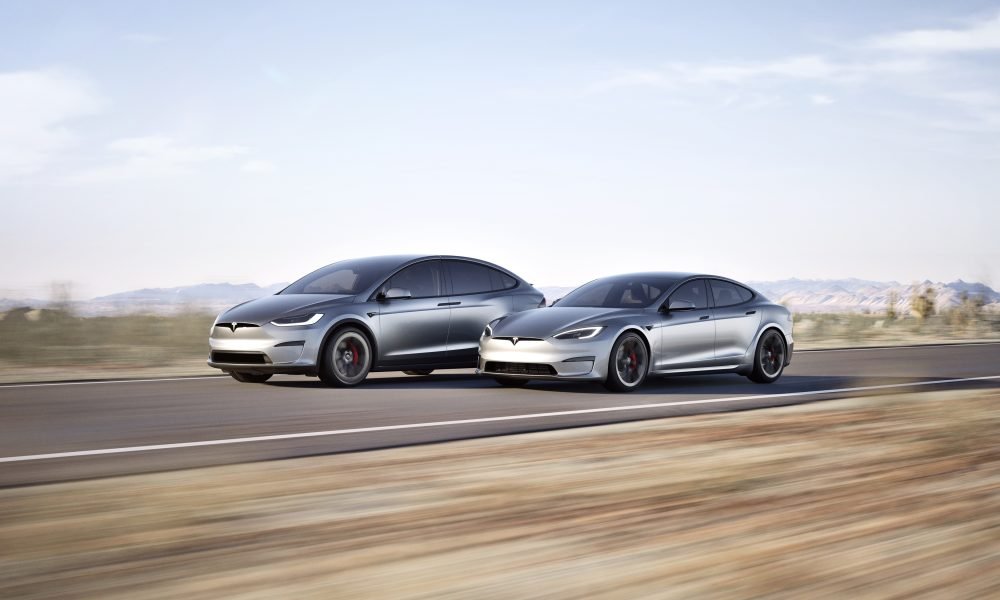
Tesla has been hinting for a few months now that the flagship Model S and Model X would be getting some attention in 2025 as the vehicles continue to be sold in extremely low volumes. Both models seem to be under the knife, especially as their newest versions were spotted in California earlier this week. However, images of the vehicles seem to show that Tesla is not planning a major overhaul, which begs the question: why even do it in the first place? Tesla makes a decision on the future of its flagship Model S and Model X The Model S and Model X are grouped with the Cybertruck in Tesla’s quarterly delivery releases, and Q1 saw just 12,881 units of the three cars delivered. The Cybertruck likely made up the majority of this number, as some outlets reported around 6,400 deliveries of the all-electric pickup in Q1. This is unconfirmed. The Model S and Model X have stuck around for “sentimental reasons,” according to CEO Elon Musk, who said back in 2021: “I mean, they’re very expensive, made in low volume. To be totally frank, we’re continuing to make them more for sentimental reasons than anything else. They’re really of minor importance to the future.” However, the cars seem to be in need of a serious refresh. As Tesla changed up the exterior aesthetic on both the Model 3 and Model Y, recent images captured of the Model X by The Kilowatts seem to show this is not the strategy with the Model X or Model S: 📸 pic.twitter.com/vv06WcqCdV — The Kilowatts 🚗⚡️ (@klwtts) May 22, 2025 As we can see, the overall aesthetic of the X, if this is what Tesla plans to release, has literally no changes from a purely visual standpoint. There is the addition of the front bumper camera, which was first implemented on the Cybercab unveiled in October 2024, and then on the new Model Y this year. There are some new 20″ wheels, and the interior has been fitted with ambient lighting. The Model S looked to be relatively the same, other than these few hardware changes, including a rear diffuser on this Plaid that was spotted: Tesla is definitely doing some things 👀 pic.twitter.com/qchMiAWEoT — The Kilowatts 🚗⚡️ (@klwtts) May 22, 2025 While these changes are welcome and should be beneficial, they don’t seem like they will encourage major sales growth, which might be something Tesla is okay with. Admitting the two cars are low volume and not contributors to the company’s long-term goals, Musk is likely willing to just upgrade things to make these more compatible and better functioning with the Full Self-Driving suite. Earlier this year, VP of Vehicle Engineering Lars Moravy said the S and X were not going anywhere and would get “some love” before the end of 2025: “Just give it a minute. We’ll get there. The upgrade a couple of years ago was bigger than most people thought in terms of architecture and structure of the car got a lot better, too. But, we’ll give it some love later this year and make sure it gets a little bit…you know, with the stuff we’ve been putting in 3 and Y. Obviously, with 3 and Y, the higher volume stuff, you’ve gotta focus there.” It seems these strategies have held true — the S and X appear to be getting what the 3 and Y got with the ambient lighting and front bumper camera (at least on the Model Y).
Unlocking Value From Existing Solar: SolMicroGrid’s Array-to-Microgrid Program

Ever feel like your company’s solar array could be doing more? SolMicroGrid has just launched a program that might be the answer. Its new “Array-to-Microgrid” solution lets businesses sell their existing solar systems for immediate cash while upgrading to a fully managed microgrid, without spending a dime on new equipment. This Array-to-Microgrid (AtM) model looks to be a significant evolution in distributed energy strategy, enabling businesses to transition from passive solar generation to an integrated, resilient energy solution with no additional capital investment. Overview If you’re a business with solar panels already installed, SolMicroGrid will buy your system outright, giving you an immediate cash injection. Then they’ll transform it into something far more powerful — a comprehensive microgrid with energy storage, backup power, and smart management systems. It’s kind of like trading in your reliable but basic sedan for a fully-loaded smart vehicle, and getting paid to make the switch. But why would you consider this if you already have a system working for you? For starters, you get cash up front, which is money you can put back into your core business. But the benefits go a lot deeper than that: No more maintenance headaches: SolMicroGrid takes over all operation and maintenance of your energy system True energy resilience: With added battery storage and backup generators, your business can keep running even when the grid goes down Smart energy management: Advanced systems that optimize when you use solar, stored, or grid power to minimize your costs EV charging capability: Support for adding electric vehicle charging to your facility Predictable energy costs: Protection against utility price spikes without capital investment Key Benefits Immediate Capital Infusion: By selling their installed solar system to SMG, businesses receive an upfront cash payment. This financial benefit allows for capital reallocation into core operations or other strategic initiatives, improving liquidity and operational flexibility. Operational Outsourcing: Once SMG assumes ownership of the energy system, the customer is no longer responsible for maintenance, monitoring, or repair. SMG manages the performance and reliability of the system, eliminating operational burdens and associated costs. Microgrid Integration & Energy Resilience: The AtM program enables the integration of additional energy assets, such as: Battery Energy Storage Systems (BESS): Provide energy during peak demand periods and during grid outages. Backup Generators: Ensure continuous power in the event of grid failure. Smart Energy Management Systems: Optimize energy consumption, prioritize the use of solar and stored energy, and reduce utility demand charges. EV Charging Infrastructure: Supports electric vehicle charging through sustainable on-site generation. Together, these technologies create a resilient microgrid that allows facilities to maintain operations during outages and manage their energy usage more strategically. Energy Cost Predictability & Savings: Through SolMicroGrid’s Energy-as-a-Service (EaaS) model, businesses can access predictable, often reduced energy costs without requiring new capital investment. This model protects against energy price volatility and minimizes exposure to unplanned maintenance expenses. How It Works SolMicroGrid’s microgrid solutions are designed to optimize energy generation, storage, and consumption across multiple technologies: Solar PV (rooftop, ground-mount, or canopy): Generates electricity for immediate use or storage. Battery Storage: Enables load shifting and peak shaving by storing excess solar production for use during high-cost or outage periods. Advanced Control Systems: Monitor and manage energy sources and loads, enabling real-time optimization based on grid conditions and pricing. Backup Generation: Ensures continuity of power for critical operations during utility interruptions. Grid Integration: Draws electricity from the grid during off-peak times when rates are lowest. This architecture aims to ensure both energy resilience and cost efficiency, which can support business continuity and reduce operational risk. Strategic Relevance As energy infrastructure ages and climate-related disruptions become more frequent, the importance of resilient and autonomous energy systems continues to grow. Traditional solar installations, while beneficial, can fall short in terms of flexibility and resilience. The AtM program can address this gap by converting static solar investments into dynamic, multi-source microgrids capable of sustaining operations through grid instability, pricing fluctuations, and evolving energy requirements. Financing & Ownership Model A defining feature of the AtM program is its no-capital-expenditure structure. SMG funds all upgrades, asset integration, and ongoing operations. Customers receive power through a structured EaaS agreement, effectively outsourcing the ownership and management of the energy system. This arrangement enables organizations to upgrade their energy infrastructure with zero capital outlay, while achieving operational and financial benefits. Background & Experience SolMicroGrid is a portfolio company of Morgan Stanley Energy Partners which specializes in distributed clean energy solutions for the commercial and industrial sectors. The company designs and operates scalable microgrid systems that combine solar generation with storage, backup generation, and intelligent energy controls. Takeaway SolMicroGrid’s Array-to-Microgrid program could provide a strategic solution for organizations looking to modernize their energy infrastructure without new capital investment. By monetizing existing solar arrays and transitioning to a microgrid, businesses may be able to reduce operational complexity, increase energy resilience, and realize long-term cost savings. The AtM model seems to offer a practical, scalable pathway to future-ready energy systems aligned with both financial and sustainability goals. Sign up for CleanTechnica's Weekly Substack for Zach and Scott's in-depth analyses and high level summaries, sign up for our daily newsletter, and/or follow us on Google News! Whether you have solar power or not, please complete our latest solar power survey. Have a tip for CleanTechnica? Want to advertise? Want to suggest a guest for our CleanTech Talk podcast? Contact us here. Sign up for our daily newsletter for 15 new cleantech stories a day. Or sign up for our weekly one on top stories of the week if daily is too frequent. Advertisement CleanTechnica uses affiliate links. See our policy here. CleanTechnica's Comment Policy
'Tesla tax' could be no more in United Kingdom
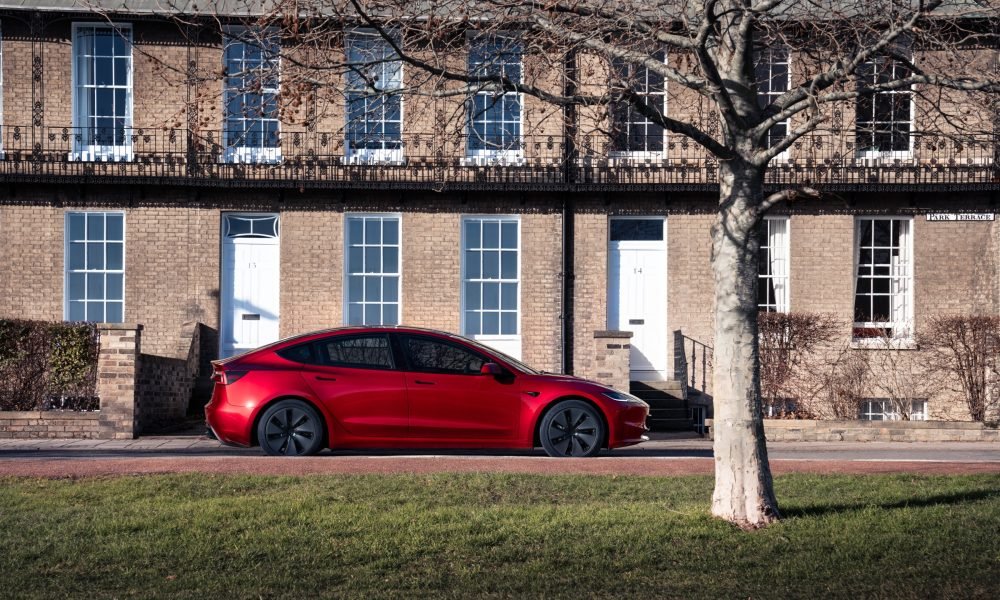
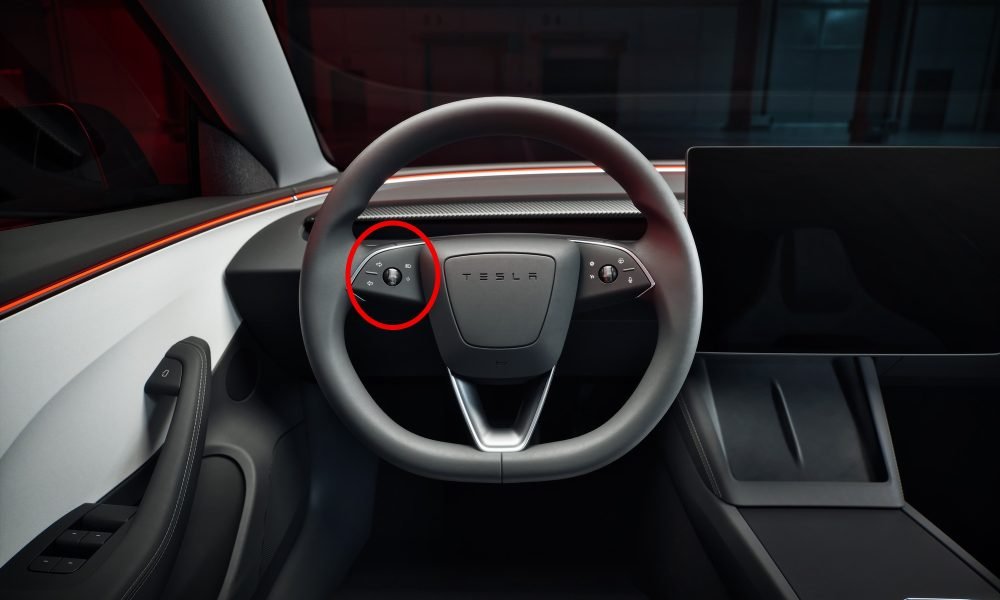
Known Elon Musk critic Mark Cuban is ready to sell his Tesla because of a simple feature that is one of the more polarizing amongst community members. Cuban and Musk have gone head-to-head in several back-and-forths on X, Musk’s social media platform, formerly Twitter. However, it is not the public spats that the two have shared that makes Cuban want to sell his car. In fact, it is something relatively trivial and a feature that many could easily adjust to in the matter of a few minutes of driving. For the entrepreneur and former owner of the Dallas Mavericks, it is a feature that every driver must use, but Tesla temporarily changed it in the Model 3, Model S, and Model X: the turn signal. With the refreshed versions of the S, 3, and X, Tesla chose to eliminate the turn signal stalk, instead opting for a turn signal button, which is located on the steering wheel. This was a change that was extremely polarizing among the Tesla community, with many requesting that the company reverse the change with the new Model Y. Credit: Tesla They listened, and the newest version of the all-electric crossover has a stalk. No turn signal haptics are available on the new Model Y. This is one feature Cuban said he cannot get into, and instead chooses to drive his Kia EV6, which he said he is “comfortable with.” On the Your Mom’s House podcast, Cuban commented on the stalk and turn signal button dilemma within the vehicle: “On the Tesla, you’ve got to find [the turn signal] and push the button…while you’re driving. You can’t pay attention to the road as much. [The Kia] doesn’t try to be too fancy. Your turn signal is like, a turn signal.” It’s hard to imagine that someone’s attention is taken away from the road when pushing a button. In my test drive of the new Model 3 last year, I noted that the button was definitely an adjustment, but it only took a few minutes to adjust to: “It only took me about three or four turns, or roughly ten minutes, to realize I needed to stop reaching for stalks. I feel like the buttons are super convenient, but there were times I would push the edges or corners, and the signal would not come on.” I drove the new Tesla Model 3, here’s what got better At least to me, it’s not super believable that pushing a turn signal button takes your attention away from the road for more than a split second. Do I like the traditional stalk more? Yes. However, it would not make me sell a car I really enjoyed driving. Cuban also said that his son called the EV6 “a nerd car,” to which he replied, “Exactly.”
Power Up: Redodo’s Memorial Day Sale Offers Up To 55% Off LiFePO₄ Batteries
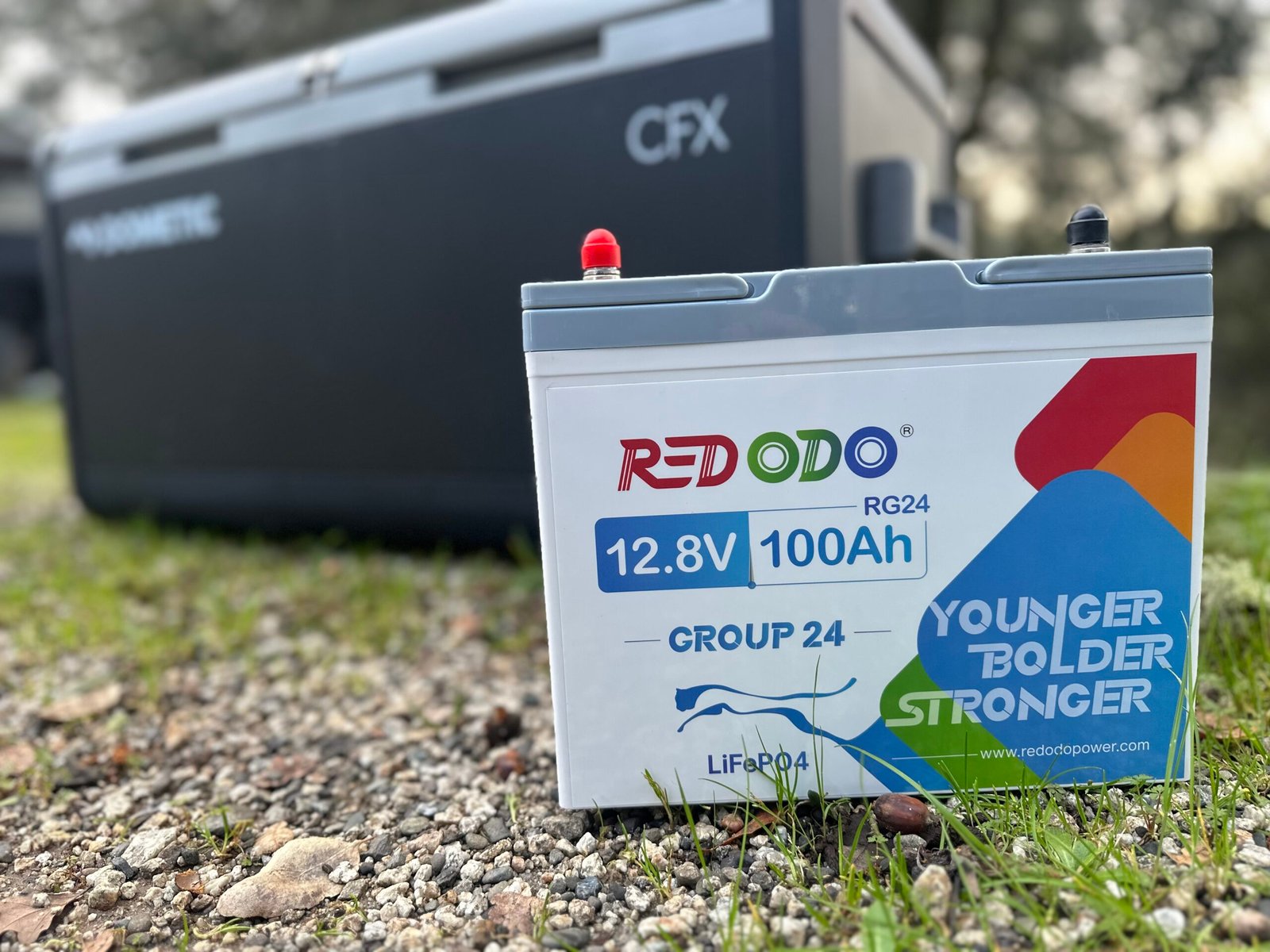
If you’ve been waiting for the right time to upgrade your energy storage setup, or finally pull the trigger on that off-grid or solar project, Redodo’s 2025 Memorial Day Sale might just be the sign you’ve been looking for. Known for their reliable, high-performance LiFePO₄ batteries, Redodo is offering some of the deepest discounts we’ve seen all year. Save up to 55% on select products, plus some extra savings for bulk buyers and new customers. This isn’t your average holiday sale. Redodo is clearly aiming to support serious users who know what they’re looking for in a battery: capacity, cycle life, safety, and smart tech. If you already know the difference between a Group 31 and a Mini, or why 150A BMS can make a difference in system design, this sale is definitely for you. Tiered Discounts, Real Savings Here’s how Redodo’s discount structure breaks down: Buy 1 battery → 6% off Buy 2 batteries → 7% off Buy 4 or more → 8% off New subscribers also get an extra 8% off The more you buy, the more you save, which is excellent news for folks building out entire systems or stocking up for multiple projects. Here are a few of the deals well worth paying attention to: 12V 165Ah Group 31 Bluetooth Battery: Originally $499.99, now $349.99, and new customers get it for just $321.99. This battery is a solid choice for RVers or solar users who need 65% more runtime in the Group 31 footprint, and it has Bluetooth 5.0 built-in. 12V 100Ah Mini Battery: Regularly $388.99, now just $239.99, and with sign-up, it’s $220.79. This battery is 35% smaller and 13% lighter than most Group 31s, which is ideal for compact spaces where every inch counts. 12V 100Ah Classic Battery: Usually $279.99, but on sale for $239.99, and with sign-up, it’s priced at $165.59. This one is a customer favorite, as it’s budget-friendly, tested by experts, and proven in the field. 12V 140Ah Bluetooth (150A BMS): Down from its regular price of $495.99, it’s currently just $319.99. This model offers high current support plus Bluetooth for real-time stats. These deals are available only for a limited time, so don’t wait to grab the ones you need (or want), as inventory could go very fast, especially for the best-value models. Redodo 12V 100Ah Group 24 Off-Grid Battery Review — CleanTechnica Tested Built For Real-World Usage Redodo has built a reputation for packing high-tech features into durable, user-friendly packages. All batteries in the sale come with serious perks: Bluetooth 5.0 Monitoring: Check on charge level, voltage, and temperature from your phone Advanced BMS: Protects against overcharging, discharging, high current, and more Long Cycle Life: Expect thousands of cycles without noticeable degradation Compact Design: Higher energy density means smaller sizes for the same capacity Whether your use case is a mobile setup, an off-grid cabin, with a solar array, or as backup power, these are plug-and-play solutions built for the long haul. Redodo 12V 100Ah Low-Temp Lithium Deep-Cycle Battery — CleanTechnica Tested Power For Every Application Redodo’s lineup of batteries serves a wide range of uses: RVs & Vanlife: Lightweight, space-saving batteries that won’t quit on the road Marine Use: Built tough for saltwater environments and vibration resistance Solar Storage: Efficient and scalable, perfect for pairing with panels Off-Grid Projects: Dependable energy where the grid doesn’t reach Home Backup: Keep essential systems running when the power goes out No matter where you want to integrate energy storage, there’s a Redodo battery that fits. Worry-Free Shopping On top of these discounts, Redodo includes perks that make buying a lot less stressful: Free & Fast Shipping: 2–5 day delivery 30-Day Money-Back Guarantee: Test it, try it, return it if it’s not right 15-Day Price Protection: If the price drops right after you buy, they’ll refund the difference Long story short, Redodo makes it easy to upgrade without regret. Redodo’s Memorial Day Sale is more than a seasonal promotion. Shopping this sale is a smart move for anyone looking to future-proof their energy systems or take the next step in a solar/off-grid build. With a mix of smart features, fair prices, and real-world reliability, these batteries deliver value where it counts. But don’t wait around, because when these deals are gone, they’re gone. Sign up for CleanTechnica's Weekly Substack for Zach and Scott's in-depth analyses and high level summaries, sign up for our daily newsletter, and/or follow us on Google News! Whether you have solar power or not, please complete our latest solar power survey. Have a tip for CleanTechnica? Want to advertise? Want to suggest a guest for our CleanTech Talk podcast? Contact us here. Sign up for our daily newsletter for 15 new cleantech stories a day. Or sign up for our weekly one on top stories of the week if daily is too frequent. Advertisement CleanTechnica uses affiliate links. See our policy here. CleanTechnica's Comment Policy
Tesla Cybertrucks join Jalisco’s police fleet before FIFA World Cup

Known Elon Musk critic Mark Cuban is ready to sell his Tesla because of a simple feature that is one of the more polarizing amongst community members. Cuban and Musk have gone head-to-head in several back-and-forths on X, Musk’s social media platform, formerly Twitter. However, it is not the public spats that the two have shared that makes Cuban want to sell his car. In fact, it is something relatively trivial and a feature that many could easily adjust to in the matter of a few minutes of driving. For the entrepreneur and former owner of the Dallas Mavericks, it is a feature that every driver must use, but Tesla temporarily changed it in the Model 3, Model S, and Model X: the turn signal. With the refreshed versions of the S, 3, and X, Tesla chose to eliminate the turn signal stalk, instead opting for a turn signal button, which is located on the steering wheel. This was a change that was extremely polarizing among the Tesla community, with many requesting that the company reverse the change with the new Model Y. Credit: Tesla They listened, and the newest version of the all-electric crossover has a stalk. No turn signal haptics are available on the new Model Y. This is one feature Cuban said he cannot get into, and instead chooses to drive his Kia EV6, which he said he is “comfortable with.” On the Your Mom’s House podcast, Cuban commented on the stalk and turn signal button dilemma within the vehicle: “On the Tesla, you’ve got to find [the turn signal] and push the button…while you’re driving. You can’t pay attention to the road as much. [The Kia] doesn’t try to be too fancy. Your turn signal is like, a turn signal.” It’s hard to imagine that someone’s attention is taken away from the road when pushing a button. In my test drive of the new Model 3 last year, I noted that the button was definitely an adjustment, but it only took a few minutes to adjust to: “It only took me about three or four turns, or roughly ten minutes, to realize I needed to stop reaching for stalks. I feel like the buttons are super convenient, but there were times I would push the edges or corners, and the signal would not come on.” I drove the new Tesla Model 3, here’s what got better At least to me, it’s not super believable that pushing a turn signal button takes your attention away from the road for more than a split second. Do I like the traditional stalk more? Yes. However, it would not make me sell a car I really enjoyed driving. Cuban also said that his son called the EV6 “a nerd car,” to which he replied, “Exactly.”
China Dominates Global Trade of Battery Minerals

Last Updated on: 22nd May 2025, 01:20 am China has a major role at each stage of the global battery supply chain and dominates interregional trade of minerals. China imported almost 12 million short tons of raw and processed battery minerals, accounting for 44% of interregional trade, and exported almost 11 million short tons of battery materials, packs, and components, or 58% of interregional trade in 2023, according to regional UN Comtrade data. In this article, we consider trade of three key minerals needed for batteries—graphite, lithium, and cobalt—among China and key global regions. These minerals are mined or extracted from natural and synthetic sources, processed for battery material manufacturing, and then used to produce batteries and battery components, with robust trade at each stage. As global demand for electric vehicles, energy storage, and other energy technologies increases, the importance of these minerals and materials also increases. Data source: United Nations Statistics Division, UN Comtrade. Note: Excludes trade within regions. Battery mineral production and raw battery minerals trade Lithium is produced through brine extraction or hard rock mining, cobalt is primarily produced as a byproduct of nickel and copper mining, and graphite is mined as a natural ore or synthetically produced from pitch and coke. China domestically produced approximately 18% (33,000 short tons) of the world’s mined lithium in 2023, and Chinese companies control 25% of the world’s lithium mining capacity. According to the National Geospatial-Intelligence Agency’s Tearline Project, Chinese companies have significant investments in multiple mining and extraction projects in Argentina, giving China access to the lithium triangle, an area in Argentina, Bolivia, and Chile that contains 50% of the world’s lithium. Domestically, China produced 79%, or 1.27 million short tons, of the world’s natural graphite in 2024, according to the U.S. Geological Survey; the United States did not produce any natural graphite that year. Chinese companies own 80% of cobalt production in Congo-Kinshasa, where more than half of global cobalt production is located. After production, raw battery minerals are shipped globally to be used as feedstock for refining. China accounted for 46% of the world’s raw battery mineral import trade in 2023, according to the UN Comtrade data. Australia, the world’s largest lithium producer, sent almost all its exports to China alone. China, Australia, and the rest of Asia and Oceania (particularly India and Japan) accounted for 71% of the world’s raw battery mineral import trade in 2023. Battery mineral processing and processed battery minerals trade China processes over 90% of the world’s graphite, and in 2022, Chinese companies accounted for over two-thirds of the world’s cobalt and lithium processing capacity. China imported 20% of the world’s processed battery minerals in 2023, made up of mainly cobalt from Africa. That same year, China exported 58% of the world’s processed battery minerals, mainly synthetic graphite to the rest of Asia and Oceania. China began implementing export restrictions on graphite products related to electrode manufacturing in 2023, and we expect such restrictions to lead to lower graphite exports from China in 2024 and 2025. Battery materials manufacturing and battery materials and component trade Processed battery minerals are used to produce battery materials, which vary depending on a battery’s chemical composition. China accounted for 53% of the world’s battery material export trade in 2023. Battery materials are then used to produce battery components like electrodes, electrolytes, and separators. For example, a lithium-ion battery cell usually includes a graphite anode, lithium-based cathode, and a dissolved lithium salt electrolyte. In 2022, China produced 85% of the world’s anodes, 82% of electrolytes, 74% of separators, and 70% of cathodes. China accounted for 74% of the world’s battery pack and component exports in 2023. That same year, China controlled nearly 85% of the world’s battery cell production capacity by monetary value. Data source: United Nations Statistics Division, UN Comtrade. Note: Excludes trade within regions. Product classifications and selected Harmonized System codes for raw battery minerals, processed battery minerals, battery materials, and battery packs and components are based on the United Nations Conference on Trade and Development technical note on critical minerals (2023). Principal contributor: Gavin Clark. Originally published on Today in Energy. Sign up for CleanTechnica's Weekly Substack for Zach and Scott's in-depth analyses and high level summaries, sign up for our daily newsletter, and/or follow us on Google News! Whether you have solar power or not, please complete our latest solar power survey. Have a tip for CleanTechnica? Want to advertise? Want to suggest a guest for our CleanTech Talk podcast? Contact us here. Sign up for our daily newsletter for 15 new cleantech stories a day. Or sign up for our weekly one on top stories of the week if daily is too frequent. Advertisement CleanTechnica uses affiliate links. See our policy here. CleanTechnica's Comment Policy
Mark Cuban wants to sell his Tesla due to this polarizing feature
The United States House of Representatives passed President Trump’s “Big Beautiful Bill” by a vote of 215 to 214 on Thursday, effectively bringing an end to many EV subsidy programs, like the $7,500 tax credit, by the end of this year. The bill will not only eliminate the $7,500 credit on new EV purchases, but also the $4,000 credit given on the purchase of used electric vehicles, and a $1,000 credit on the installation of Level 2 chargers. It will also impact solar subsidies that help generate clean energy in a residential setting. EVs would also be subject to a $250 road use fee. 🚨 The “Big Beautiful Bill” has been passed in the House, meaning: 1) The EV tax credit is in serious jeopardy. It will likely be eliminated for 2026.2) EVs will likely have a $250 road use fee3) $1,000 Level 2 charger credit will also be eliminated pic.twitter.com/Aad41say43 — TESLARATI (@Teslarati) May 22, 2025 All of these things sound like negatives — truly because they are. Those who are not in a financial position to buy an EV this year, even with the tax credit, might not be able to afford them in the coming years either, unless manufacturers are able to bring pricing to a level that is more accessible to consumers. In theory, President Trump’s focus on bringing manufacturing back to America would bring prices down, but it won’t happen overnight. Companies will take many years to completely bring manufacturing and part sourcing to the United States. However, Tesla could feel some positives from this bill, and it all comes down to timing. Of course, in the long term, it wouldn’t be great for the company, especially if it did not have two things going on right now: a slightly lagging delivery pace and the introduction of affordable models. Tax Credit Sunsetting Advantage Sunsetting the $7,500 tax credit means one thing: those who have been in limbo over buying an EV from Tesla are going to have to make a decision on whether they want to buy this year and still have access to the credit, or test their luck and hope for price reductions. More than likely, those who have been on the fence will be willing to pull the trigger this year, and Tesla will definitely gain some sales from this fact alone. Other automakers will, too. This could help offset Tesla’s slow start to the year, which has been caused by the changeover of production lines of the Model Y across each of its factories globally. Affordable Models Tesla said earlier this year that it will roll out affordable models in the first half of 2025. These cars are expected to be around the $30,000 mark, but the company has not shed any true information on what they will cost. Potential affordable Tesla “Model 2/Model Q” test car spotted anew in Giga Texas Ideally, the cars would cost under $30,000 without the EV tax credit, which would be more than accessible for many car buyers in the United States. The introduction of models that are not in need of a tax credit to be affordable to the masses. This would help offset some of the losses Tesla might feel from cars losing the tax credit.
Harmontronics Automation files lawsuit against CATL, subsidiaries over delayed payments

Suzhou Harmontronics Automation Technology said on Friday that it has filed a lawsuit against CATL and its two subsidiaries over delayed payments totalling 60.9 million yuan ($8.48 million), according to a company filing.The Suzhou-based intelligent manufacturing solution provider said it has signed multiple contracts and orders for battery swapping stations with CATL and its two subsidiaries. They have delayed payments despite Harmontronics Automation’s fulfilled obligations including delivery and installation, the filing said.CATL did not immediately respond to a request for comment. reuters.com Previous articleAfter production halt in Sweden: Work at Northvolt plant in Germany continues Next articleLion Smart to study fast charging truck batteries
100% Solid-State EV Batteries Seal The Deal: No More Gasmobiles
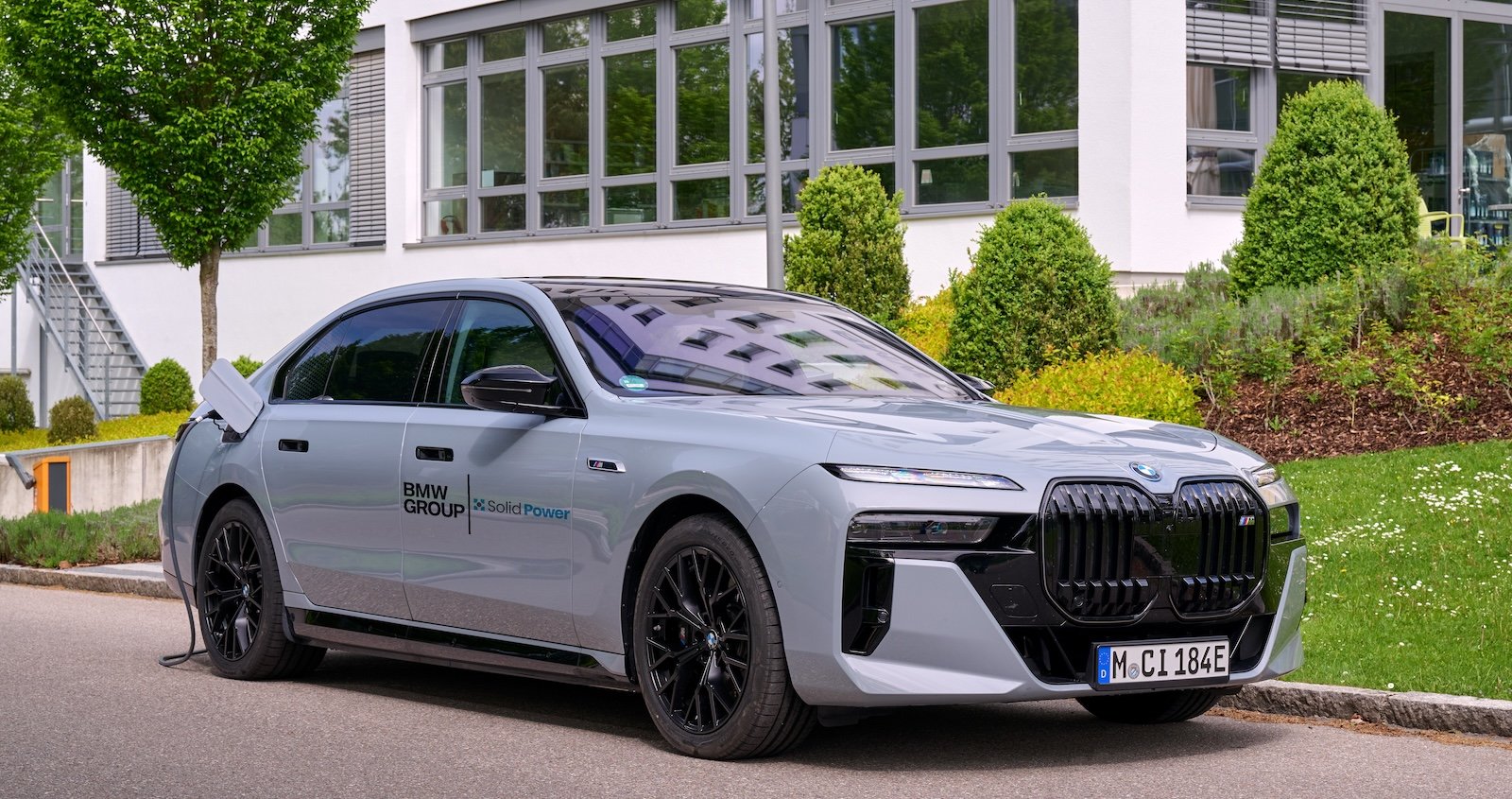
The US has taken a U-turn on zero emission mobility, but the rest of the world is moving on. A case in point is BMW Group, which is moving forward with plans to introduce 100% solid-state EV batteries to the auto-buying public. Progress has been slow, but a key test is under way right now in the firm’s home country of Germany, deploying battery technology from the Colorado-based startup Solid Power. Solid-State EV Batteries Are Coming For Your Fossil Fuels EVs have already cracked into the mainstream automotive market, so it’s fair to ask what’s wrong with the conventional liquid-electrolyte batteries commonly used in EVs. The answer is nothing. In surveys, individual EV owners and commercial fleet operators both report they are overwhelmingly satisfied with the EV experience. Globally, most EV makers (though not all) also continue to enjoy rising year-on-year sales. Still, the auto market runs on shiny new objects. All-solid electrolytes can pack more energy into a smaller, lighter battery, providing more range in the same footprint as a conventional battery. Conversely, the energy density factor can enable automakers to offer smaller, lighter EVs with smaller batteries that provide a reasonable amount of range. Additional benefits include reducing the cost of materials and manufacturing while also providing automotive designers more flexibility to tempt car shoppers with new style concepts. Supply chain benefits also come into play including diversification, onshoring, and reducing if not eliminating ethical complications and toxic materials. The Sulfide Solution Solid-state EV batteries are already beginning to emerge on the market. However, the early iterations combine solid with semi-solid or liquid electrolytes, or some variation thereof. BMW is aiming for the more elusive prize of 100% solid-state EV batteries. Managing the expansion and contract of a solid material is one among many hurdles standing between battery researchers and all-solid electrolytes, and Solid Power has plenty of experience in that area. The company launched 14 years ago in Colorado, building on research conducted at the University of Colorado Boulder. The solid state wheels have been turning since then. Solid Power first caught the eye of BMW in 2016. When Solid Power went public in 2021, both Ford and BMW signed on as investors. The company also has a relationship with the Korean battery manufacturer SK On (see more Solid Power background here). Solid Power has adopted sulfides (derivatives of sulfur) as the pivotal input for its solid electrolyte. In addition to pushing volatile liquids out of the picture, the sulfide material eliminates the polymer separator typical of lithium-ion batteries. “Solid Power’s sulfide-based solid electrolyte is the key ingredient that powers Solid Power’s All-Solid-State Battery Platform technology,” the company explains. “This thin, solid layer acts as a barrier to keep the anode and cathode from touching one another, which would short the battery. It also acts as a conductive electrolyte.” “We expect to scale electrolyte production to power 800,000 electrified vehicles using our all-solid-state battery cells annually by 2028,” Solid Power also states on its website. The Long Road To Solid-State EV Batteries The figure of 800,000 EVs per year by 2028 sounds rather optimistic at this point, but the latest news from BMW indicates that the road-testing phase is well under way. “The BMW Group is bringing large-format, pure ASSB [All Solid State Battery] cells from Solid Power to its test vehicle, a BMW i7, which is being operated in the Munich area,” BMW Group announced earlier this week, citing the higher density of solid-state EV batteries as the primary benefit. “With a higher energy density compared to current battery technologies, ASSB batteries have the potential to achieve longer ranges in vehicles without the disadvantages with regard to the weight of the overall storage system,” BMW emphasized. There is still a long way to go. BMW notes that the test period will take place over the coming months, describing the battery in the i7 test vehicle as a “concept battery,” that combines “new, innovative module concepts” with the proven architecture of prismatic cells, referring to a rectangular shape first introduced in the 1990s. BMW adds that it will be paying close attention to expansion management during the road tests. Among other elements under observation, BMW also cites controlling the operating pressure and adjusting the temperature. “Further development steps are required to implement ASSB technology in a competitive overall storage system,” the company advises. Next Steps For Solid-State Batteries In The US Anticipating that development will proceed apace, BMW is planning to run a prototype line in Germany at its Cell Manufacturing Competence Center in Parsdorf, under a license from Solid Power. As for when those new EV batteries will hit the road in the US, that’s a good question. Solid Power is not the only US firm working to bring 100% solid electrolytes to the EV world, but the company does lay claim to the pole position. “Only Solid Power develops and produces sulfide-based solid electrolytes at pilot scale and tests in large format cells produced on a scalable production line,” the company states, referring to its facility in Colorado. Keep an eye on Ford for further activity here in the US. Aside from its interest in Solid Power, in 2021 Ford shelled out the big bucks for new factories to grow its output of EVs and EV batteries. Earlier this week, however, The Wall Street Journal observed that Ford has scaled back its electrification plans. SK On, though, is continuing its efforts to fine tune sulfide-based solid state batteries. In another interesting development, last September Solid Power celebrated its selection for a $50 million grant from the US Department of Energy, subject to negotiation. “With this project, Solid Power intends to install the first globally known continuous manufacturing process of sulfide-based solid electrolyte materials for advanced all-solid-state batteries (ASSBs) and expand its electrolyte production capabilities at its Thornton, CO facility,” Solid Power explained, adding a continuous manufacturing process will enable it to produce the new electrolyte at a “significantly lower cost, compared to today’s process.”