Surging Solar Power, Booming EV Sales, & Robotaxi Safety — Top 12 Stories of the Week

It’s been a busy week! Below are 12 top stories (or groups of stories) from the week. Check them out and share with friends. Unfortunately, CO2 surged globally in 2024, and it’s not even clear why — aside from the long understood fact that burning fossil fuels leads to more CO2 emissions, but it’s unclear what exactly caused such a big surge in 2024. Uber is rolling out robotaxis more and more with a variety of partners, including with Waymo, with WeRide, and with Volkswagen and its ID. Buzz electric minivans. On that topic of robotaxis, Waymo has been showing how the one big benefit of its robotaxis is safer roads — much safer roads. Solar power continues to grow at a rapid clip around the world — even (or especially) in “Trump states” in the USA. For more fun, this past week, we took a look at the top 5 solar power states in the USA. On that note, a new report out from EnergySage tells us that residential solar system pricing and solar-plus-storage pricing declined to record lows in the second half of 2024. Costs just continue to drop. AcePower has just launched a new 50 kW air-cooled high-efficiency module to accelerate Europe’s fast-charging network expansion which sounds pretty … cool. If you want a laugh, and a cry, Michael Barnard’s takedown of a ridiculous, absurd hydrogen carsharing program is worth a read. Meanwhile, a new study is out of Germany sharing that electric cars are proving to be more reliable than fossil-powered cars. EV sales are booming in various markets, but as a couple of highlights, Sweden’s plugin vehicle share is now at 63% while its BEV share of the auto market is at 35%, and Norway leads the world with more than 97% of vehicle sales being plugins and 97% even being BEVs! Additionally, Costa Rica is a truly fascinating market and is leading South and Central America for share of its auto sales that are electrics. But for the biggest, broadest take, see our two new world EV sales reports — one focused on models and one focused on brands & OEMs. Highlighting a few standout brands (from China of course), NIO sales were up 53% in April, XPENG sales were up 313% in January–April, and BYD full-electric passenger vehicle sales were up 46% in April while the company’s electric truck sales were up 1,249%. Let’s end with one super fun one. Michael Barnard writes that, “Seventy percent of ferries currently on order globally now feature electric drivetrains.” Wow — 70% of ferry orders! Impressive. “There are about 15,400 ferries in operation around the world, new ones are overwhelmingly being purchased with electric drivetrains, and most operators have electric retrofit plans for existing vessels.” That’s it for this week, but I’m sure I skipped over some other big, hot stories. Chime in down in the comments if you have more to add. Note: This is also sent out as a newsletter on top cleantech stories of the week. You can sign up for the newsletter here. Sign up for CleanTechnica's Weekly Substack for Zach and Scott's in-depth analyses and high level summaries, sign up for our daily newsletter, and/or follow us on Google News! Whether you have solar power or not, please complete our latest solar power survey. Have a tip for CleanTechnica? Want to advertise? Want to suggest a guest for our CleanTech Talk podcast? Contact us here. Sign up for our daily newsletter for 15 new cleantech stories a day. Or sign up for our weekly one on top stories of the week if daily is too frequent. Advertisement CleanTechnica uses affiliate links. See our policy here. CleanTechnica's Comment Policy
The Bluetti AC60 Is On Sale For Just $269: Get A Pro-Grade Power Station At A Budget Price
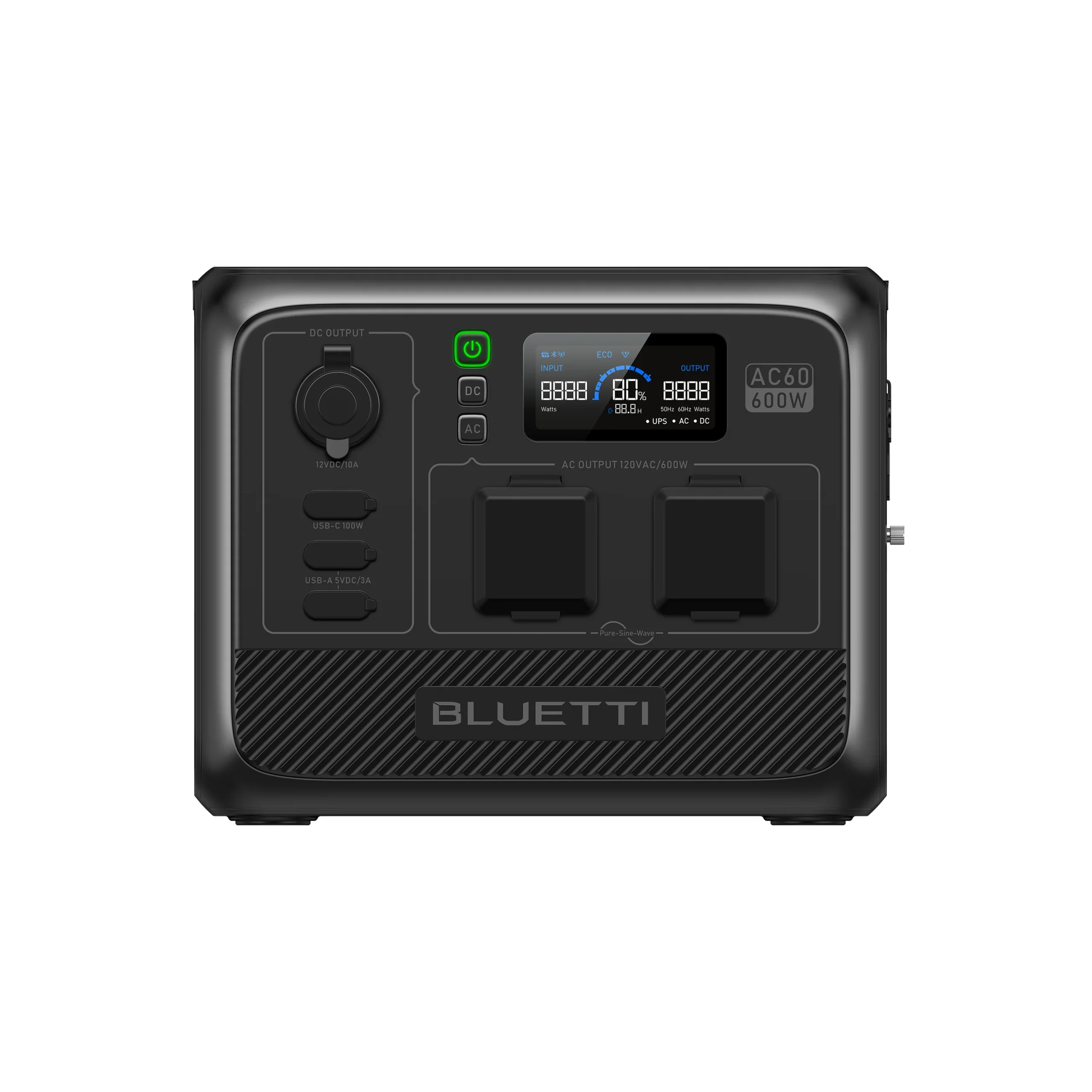
If you’ve been waiting for the right moment to grab a powerful, compact power station, the Bluetti AC60 might be the one. Regularly priced at $699, it’s now on sale for just $269, which is an outstanding deal for a device that checks nearly every box for outdoor adventurers, road trippers, and emergency preppers alike. [Read our review of the Bluetti AC60 here.] Small Size, Big Performance The Bluetti AC60 packs a 403Wh LiFePO₄ battery and delivers 600W of continuous power, with a surge capacity of up to 1,200W. That’s enough to run small appliances, charge all your devices, and keep essential gear running when you’re off-grid. Need more juice? You can expand its capacity up to 2,015Wh with Bluetti’s optional B80 battery packs. Built For The Real World Unlike many power stations that are more suited to your living room than a rainy campsite, the AC60 is rated IP65, meaning it’s protected against dust and low-pressure water jets. Translation: it can handle a bit of roughing it. It’s also compact (11.4″ x 8″ x 9.2″) and weighs around 20 pounds, making it a solid travel companion. Flexible Charging, Fast Top-Ups One of the AC60’s biggest advantages is how fast and versatile it is when it comes to charging. Plug it into the wall and you’ll get a full charge in about an hour, thanks to turbo charging. But it’s also solar-friendly (up to 200W), car-compatible, and can even charge via a lead-acid battery. That kind of flexibility makes it a reliable choice whether you’re camping, tailgating, or preparing for a blackout. All The Ports You Actually Need The AC60 isn’t just powerful, it’s practical. It includes: 2 × AC outlets (120V, 600W total) 1 × 100W USB-C port 2 × USB-A ports 1 × 12V car outlet 1 × 15W wireless charging pad Whether you’re powering a mini fridge or topping off your laptop, phone, or drone, it’s got you covered. Smart, Quiet, & Covered This unit runs quietly (under 45dB) and supports Bluetooth connectivity so you can monitor and control it using the Bluetti app. It also comes with a 6-year warranty, which is unusually generous in this category, and proof that Bluetti stands behind its build quality. Final Thoughts If you’re already familiar with portable power stations, the Bluetti AC60 is a rare find at this price point. It’s rugged, expandable, fast-charging, and packed with practical features. At just $269, it’s hard to beat in terms of value. Whether you’re heading into the wild or just want peace of mind at home, this is one power station that punches way above its weight. Sign up for CleanTechnica's Weekly Substack for Zach and Scott's in-depth analyses and high level summaries, sign up for our daily newsletter, and/or follow us on Google News! Whether you have solar power or not, please complete our latest solar power survey. Have a tip for CleanTechnica? Want to advertise? Want to suggest a guest for our CleanTech Talk podcast? Contact us here. Sign up for our daily newsletter for 15 new cleantech stories a day. Or sign up for our weekly one on top stories of the week if daily is too frequent. Advertisement CleanTechnica uses affiliate links. See our policy here. CleanTechnica's Comment Policy
Energy storage to soar in Spain and Italy but questions remain
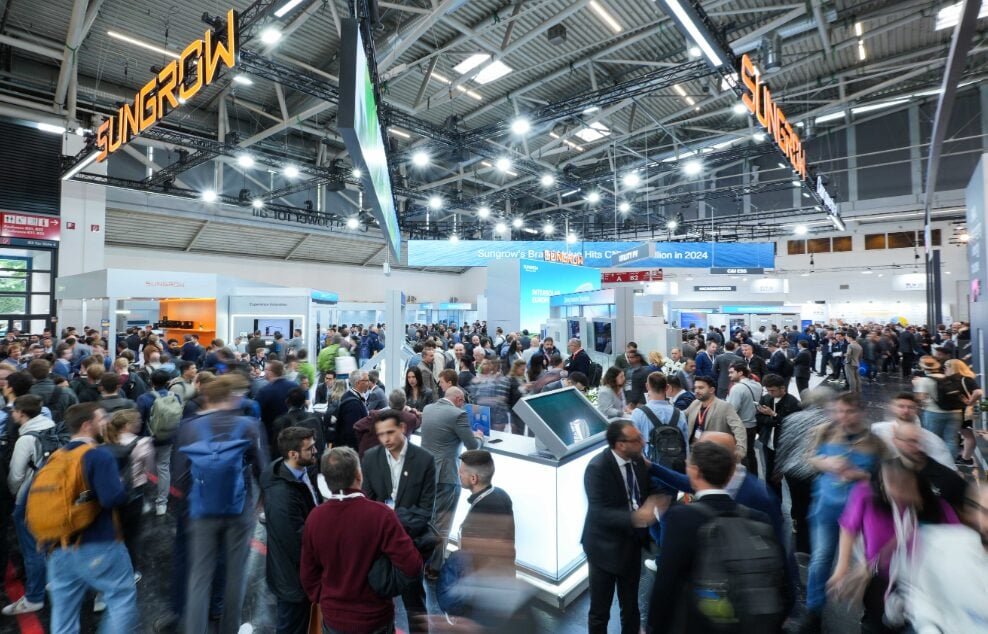
Italy Italy is set to be one of Europe’s busiest and largest markets for battery energy storage system (BESS) deployment over the next few years, thanks in large part to its MACSE auction. System integrator Nidec ASI is one of the few that is already building large-scale BESS in Italy having won a 1.35GW/5.4GWh contract back in 2022. Though never confirmed, they are most likely for power firm Enel which announced construction on its 1.6GW pipeline in 2023. Franck Girard, président of Nidec ASI told Energy-Storage.news that the firm has completed 14 out of the 18 sites in Italy. Discussing the Italian market, he said that MACSE holds promise but the final price of the auction is still a big question mark. “Everyone is focused on the MACSE tender, with 10GWh expected for the first one. The big question is what will be the final price. The pipeline is very big, something like 100GWh according to the feedback. That means the bidding pipeline is 10x the capacity,” Girard said. The first auctions under MACSE, full name Meccanismo di Approvvigionamento di Capacità di Stoccaggio Elettrico (Electricity Storage Capacity Procurement Mechanism), will take place in Q3 2025. Javier Izcue, VP Europe responsible for South Europe for inverter and battery energy storage system (BESS) Sungrow said that the capacity market (CM) in Italy is also expected to hand contracts to around 6GWh of storage per year. “Many companies from outside Italy will participate in these auctions. Everyone was expecting 2025 to be the boom year, but 2026-2030 is the plan now with MACSE and the CM. The topology of Italy means there is a clear strategy,” Izcue said. Girard said that deploying BESS in Italy didn’t require a different approach to its work in other countries. He said the market is seeing some 8-hour systems deployed, with that configuration lending itself well to the MACSE scheme. The firm assembles its BESS from a site in Roche la Moliere, France. Spain Energy storage is already booming in Italy but Spain is the next big market for storage in Southern Europe, Izcue said, adding that some 1GWh is already under construction there. “Spain and Italy have some similarities. There’s a tender process in Spain called PERTE and the first one allotted around 4.5GWh, there is currently around 1GWh under construction. There is also a programme called FEDER with around €700 million (US$798.52 million) to be put into energy storage,” Izcue said. “I think Spain is starting to realise that storage is not only energy-shifting but also grid-forming. It can provide things like frequency regulation, black start, everything related to the grid – but it needs specific regulations around that. The market for sure is there.” Spain and Portugal suffered from a huge blackout a few days prior to the ees Europe event. Full details have not been released though many have speculated that having more grid-forming and grid-supporting energy storage could have helped. Izcue was keen to stress he was not commenting directly on the blackout since details had not been released, but said that new regulations were needed to allow storage to properly provide those grid services. “There is not a clear regulation in Spain for what storage can offer in terms of grid-forming. Storage can provide grid support services but there is not a regulation about it for you to get a premium on it. This will be the next step,” he said. “There are discussions and checking how it can be done, the idea is there.” “The first-movers in Spain will benefit from the energy-shifting revenues primarily. Long-term, we can’t say with certainty what the revenue stack will be.”
Tesla rolls out new crucial safety feature aimed at saving children
Tesla is moving closer to the initial production of the Semi later this year, and outside of its dedicated factory in Nevada, which will be responsible for building the all-electric truck, frames, and other parts of the vehicle, are beginning to stack up. The Semi production facility is located on the same property as Gigafactory Nevada, and is moving closer to completion as the construction crews on site have already enclosed walls. Semi Factory progress update pic.twitter.com/OQ1oXvnjev — Tesla Semi (@tesla_semi) April 28, 2025 Now, production is moving even closer as parts of the Semi were spotted outside of the Semi production facility in Nevada. The images were captured by Zanegler, a Tesla Semi enthusiast and Giga Nevada tracker: Assemble these parts and you have the beginning of a Tesla semi. pic.twitter.com/ygCBUjWcJ3 — Zanegler (@HinrichsZane) May 26, 2025 The Semi is already used by a handful of companies, including U.S. Foods, Frito-Lay, and PepsiCo. However, the vehicle is not up for public use quite yet, as Tesla is working with various companies to carry out pilot testing of the Semi to see how it performs during regional runs. Tesla Semi fleet from Frito-Lay gets more charging at Bakersfield factory The results have been very encouraging, with the Semi even completing a 1,000-mile run in a single day two years ago. Now, Tesla is truly focusing on the launch of the factory, which will put production into full swing moving into 2026. Earlier this year, Lars Moravy, Tesla’s VP of Vehicle Engineering, gave an update on the Semi and the company’s current timeline for the product: “So, we just closed out the Semi factory roof of walls last week in Reno, a schedule, which is great with the weather. In Reno, you never know what’s going to happen. But we’re prepping for mechanical installation of all the equipment in the coming months. The first builds of the high volumes in design come late this year in 2025 and begin ramping early in 2026. But as we’ve said before, the Semi is a TCO, no-brainer. I think it’s really similar to Optimus. It’s going to be set by how much people pay and it has the total cost of ownership, it’s much, much cheaper than any other transportation you could have.” Tesla also started ordering parts for the Semi and Cybercab after the tariff situation between the U.S. and China was alleviated.
4 More NIO Houses, 112 More Power Swap Stations & Charging Stations
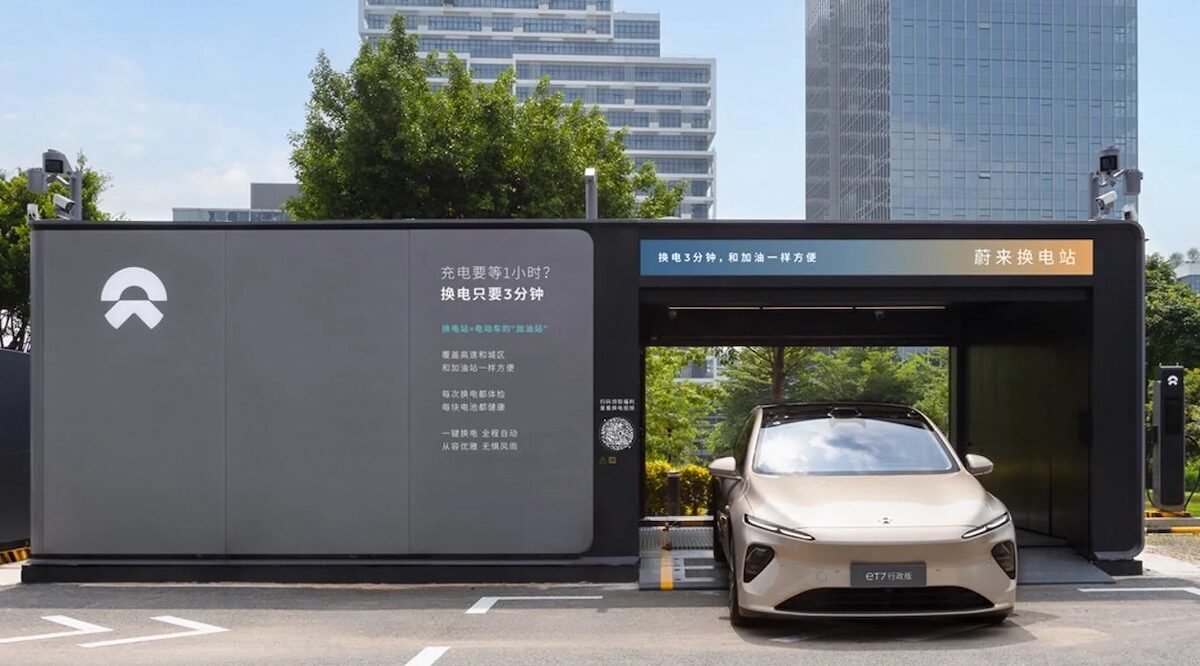
Last Updated on: 14th May 2025, 08:37 am I feel like NIO’s continued rollout of battery swap stations (which it calls Power Swap Stations) goes under the radar. Sure, whenever the topic of battery swapping is brought up again, NIO is brought into the conversation, but the rest of the time, we sort of forget about it and don’t realize how much NIO continues to develop the network. In its latest summary of monthly accomplishments, though, the company points out that it installed another 56 power swap stations last month! Month after month, NIO launches more and more battery swap stations. In addition to those 56 power swap stations, NIO installed 56 more charging stations (bringing the total of the two combined to 112). NIO also opened 4 more NIO Houses. Through the end of April, NIO had a whopping 3,354 Power Swap Stations in operation worldwide. That’s a stunning total, and they still provide the quickest, most convenient full recharge on the planet. In addition, the company had 4,560 charging stations in place with 26,233 chargers, and it had 187 NIO Houses open around the world — but mostly in China. It is also connected to 1,835,000+ third-party chargers. NIO has reached 737,558 cumulative deliveries — 697,385 from the NIO brand and 39,942 from the newer, family oriented ONVO brand. The company has now launched the Firefly brand as well. Deliveries of the first Firefly models began on April 29. Regarding ONVO, its second model was just launched in April as well, at Auto Shanghai 2025. That would be the L90. “Built upon NIO’s decade of full-stack in-house technology and outstanding engineering expertise, the L90 features a 240L smart powered front compartment and an unprecedented 6-passenger, 10-suitcase capacity, earning its title as the“King of Space” among three-row SUVs,” NIO writes. Additionally, still into ESG apparently, NIO released its 2024 ESG report. The reported highlighted “the company’s sustainability management and achievements across six key areas: effective governance, environmental protection, premium products, a responsible value chain, employee development, and collaboration to create sustainable social value.” How wholesome. Isn’t it just nice to have feelgood companies like this without all the drama? Sign up for CleanTechnica's Weekly Substack for Zach and Scott's in-depth analyses and high level summaries, sign up for our daily newsletter, and/or follow us on Google News! Whether you have solar power or not, please complete our latest solar power survey. Have a tip for CleanTechnica? Want to advertise? Want to suggest a guest for our CleanTech Talk podcast? Contact us here. Sign up for our daily newsletter for 15 new cleantech stories a day. Or sign up for our weekly one on top stories of the week if daily is too frequent. Advertisement CleanTechnica uses affiliate links. See our policy here. CleanTechnica's Comment Policy
South Africa: Sungrow enters talks to supply 612MWh tender-winning battery project

South Africa: Sungrow enters talks to supply 612MWh tender-winning battery project - Energy-Storage.News Skip to content
Tesla analyst's firm has sold its entire TSLA position: Here's why
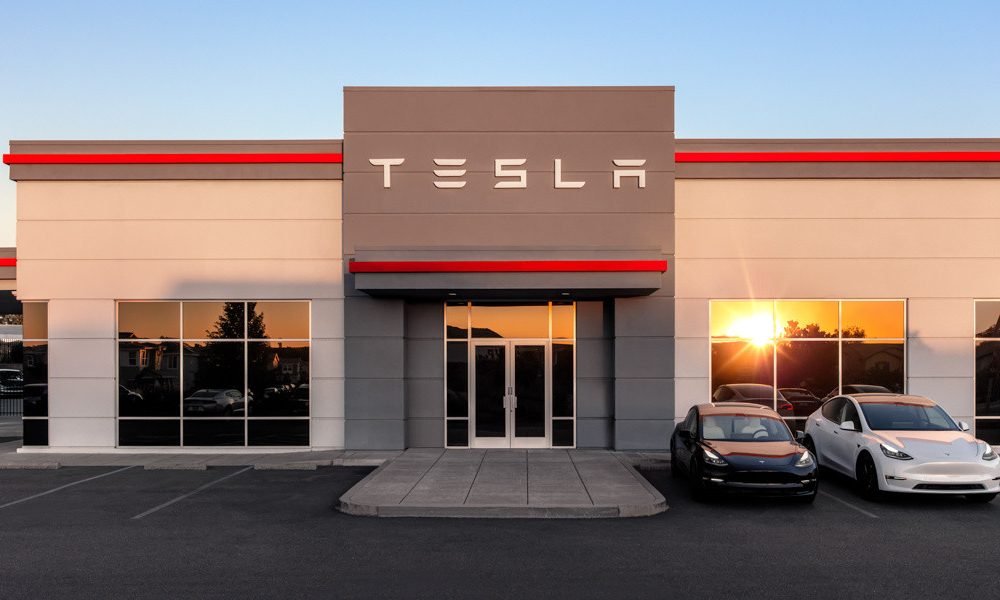
Tesla analyst Gary Black of The Future Fund revealed today that his firm has sold its entire $TSLA holding, marking the first time since 2021 that it has not had a position in the company’s stock. Black has been a skeptic of the company and relatively pessimistic regarding some things many investors would consider catalysts, outlining his concerns and reasoning for selling the shares. Much of Black’s reasoning concerns Tesla’s price-to-earnings ratio, delivery results and potential delivery figures for the future, and other near-term projects that he does not believe will yield as much value as others perceive. We will break down each concern of Black’s below: ‘Disconnected from Underlying Fundamentals’ Black says that The Future Fund sold its holdings at $358 per share. The firm’s current price target is at $310, and he says it will remain there based on “our forecast of 2030 Tesla volumes of 5.4m and 2030 Adj EPS of $12. Main Concern is P/E Ratio The main concern Black and The Future Fund have is that TSLA “now sells at a 2025 P/E of 188x as earnings estimates continue to fall (-5% in the past week, -40% YTD) driven by weak YTD deliveries, including weak April results.” Black says he believes quarterly deliveries will decline by 12 percent, and full-year by 10 percent. This compares to Wall Street’s estimates of a 7 percent decrease for Q2 and a 5 percent year-over-year. Robotaxi Skepticism “We believe the risk/reward associated with the Austin robotaxi test remain asymmetrical to the downside,” Black writes in his post on X. Tesla Robotaxi deemed a total failure by media — even though it hasn’t been released Many believe the Robotaxi platform could be Tesla’s biggest catalyst moving forward, especially as other automakers do not seem to have even close to as robust a solution to self-driving as Tesla. Tesla’s Affordable Models Black says there are concerns the affordable model will be “a stripped-down Model Y priced lower and funded by lower costs rather than a new form factory that expands TAM.” This is confusing, especially considering the cheaper price tag would expand the total addressable market (TAM) to begin with. The Model Y has been the best-selling vehicle in the world for the past two years. Tesla still on track to release more affordable models in 1H25 Introducing an even lower-cost model with some missing features would still likely be a significantly more attractive option than a base model ICE vehicle, especially because the value Full Self-Driving provides would make the car more beneficial. “This increases odds that FY’25 estimates decline further, risking a repeat of 2023-2024, when TSLA reduced EV prices supported by lower costs, and TSLA saw little or no incremental volume growth,” he finishes with.
GM and Ford Tease Game Changing LMR EV Batteries
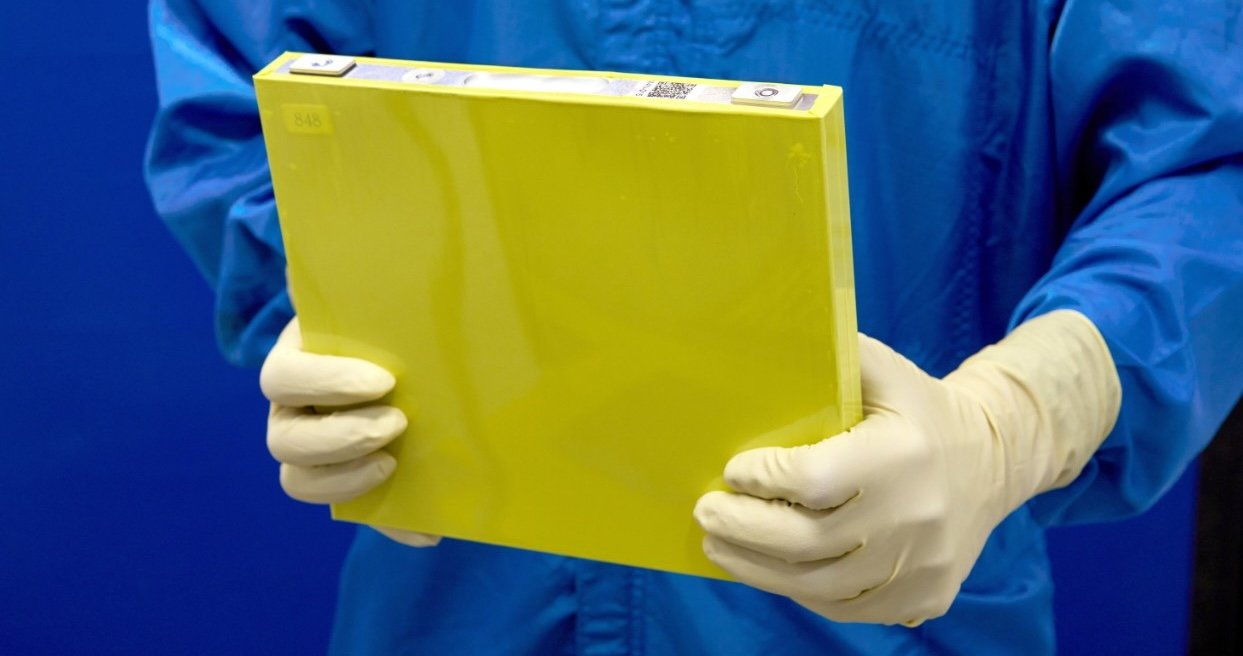
Last Updated on: 14th May 2025, 09:16 am General Motors and The Ford Motor Company are both over the moon about new lithium manganese-rich EV batteries, which GM is pitching as “a leap forward that will offer consumers EVs with an attractive combination of long range and low cost.” Everyone is also waiting for that other well known US-headquartered automaker, Tesla, to join the crushing on LMR EV batteries … waiting…. New LMR EV Batteries Are Coming, Eventually… Manganese has flitted across the CleanTechnica screen, but don’t confuse it with magnesium. Magnesium is a similarly named but significantly different element, which is also under exploration for use in EV batteries (see more magnesium background here). Manganese is the fifth most abundant element on Earth, making it a cheap and widely available alternative to other, more expensive battery materials, if only researchers could figure out how to increase the proportion of manganese without crimping performance or lifespan. On the cost side, one interesting development arose about eight months ago, when a research team based at Lawrence Berkeley National Laboratory in California reported a high level of performance on manganese-based cathodes formulated with large particles. “Manganese-based materials have tremendous potential to become the next-generation lithium-ion cathode as they are Earth abundant, low cost and stable. Here we show how the mobility of manganese cations can be used to obtain a unique nanosized microstructure in large-particle-sized cathode materials with enhanced electrochemical properties,” the research team reported in the journal Nature. The use of larger particles — about 1,000 times larger — was a significant split with previous assumptions about the necessary particle size for batteries deploying disordered rock salts (DRX). “Previous research suggested that to perform well, DRX materials had to be ground down to nanosized particles in an energy-intensive process. But the new study found that manganese-based cathodes can actually excel with particles that are about 1000 times larger than expected,” the researchers noted, Problem Solved … But Where’s Waldo? Meanwhile, Ford and GM are not waiting around for the dust to settle. Ford teased a forthcoming LMR battery last month, as widely reported in the automotive media, and GM followed up this week. If you’re wondering where Tesla is on the topic of LMR EV batteries, that’s no mystery. Tesla CEO Elon Musk famously introduced the idea of high-content manganese batteries five years ago, during his company’s high profile “Battery Day” event. “At Tesla’s Battery Day 2020, Musk said Tesla’s next generation EV batteries will contain 1/3 manganese,” CleanTechnica reported on September 9 of 2020. “It’s relatively straightforward to do a cathode that’s 2/3 nickel, 1/3 manganese, which will allow us to make 50% more cell volume with the same amount of nickel,” Musk said during the event. Whelp, that was five years ago, and where is Elon now? That’s no mystery, either. Last October, Musk was in Washington, DC, meeting with the Governor of Qatar Central Bank and Chairman of Qatar Investment Authority, Sheikh Bandar bin Mohammed bin Saoud Al Thani. “During the meeting, they reviewed the key global financial and investment developments,” reported the English-language Qatar-based news organization The Peninsula on October 22. The DC meetup happened just two weeks before the results of Election Day 2024 began rolling in, thrusting convicted felon Donald Trump back into the White House with a hefty financial assist from Musk, who returned to Washington a few months later at Trump’s behest in order to dismantle the US government brick by brick. This week, Musk is visiting the Middle East in person as part of the president’s entourage, and he is reportedly planning to appear at the Qatar Economic Forum 2025 event on May 20 in a live virtual interview. Coincidentally or not, the government of Qatar has offered President Trump the “gift” of a $400 million luxury jet to replace the official Air Force One official presidential aircraft. Although, security experts note that US taxpayers will be on the hook for many millions more in order to install the necessary equipment. GM’s Excellent LMR EV Battery Adventure If you have any thoughts about those goings-on, drop a note in the comment thread. The last we heard, Tesla has patents in the works for LMR EV batteries, but so far no official word regarding production plans has dropped into the publicosphere. GM, on the other hand, can’t say enough about its new LMR EV batteries, out loud and in public. “The bottom line: LMR is going to make it possible for GM to offer EVs with premium range at considerably lower cost,” summarized GM’s director of advanced battery cell engineering, Kushal Narayanaswamy, in a GM post on May 13. “Researchers have been studying LMR technology since the 1990s, attracted by the potential for a new class of electric vehicle batteries offering impressive range and affordable pricing,” Narayanaswamy explained. He also noted that GM’s work on the technology goes back around 10 years with its partner LG Energy Solution. The R&D effort started in 2015 and picked up steam around 2020. If you’re wondering why GM is looking for the next best thing beyond its NMCA low-mangese EV batteries, that’s a good question. The near-term idea is to deploy prismatic battery architecture to pack more than 400 miles of range into a large SUV or pickup truck, while shaving significant dollars off the cost of the high-nickel NMCA packs. All else being equal in terms of the total upfront cost of an EV, a pickup like GM’s Chevrolet Silverado EV Work Truck (492 mile range on full charge) will be more affordable to more of the car-buying public when it rides on LMR batteries. Countdown To 2028 For The EV Batteries Of The Future The GM/LG collaboration resulted in EV batteries formulated with 35% nickel and 65% manganese. In contrast, a typical high-nickel battery is composed of 85% nickel and just 10% manganese, with cobalt contributing the remaining 5%. In addition to noting that manganese is more abundant and less expensive than either nickel
California CCA contract for BESS includes tariff, ITC risk hedges- Energy-Storage.News

California CCA contract for BESS includes tariff, ITC risk hedges- Energy-Storage.News Skip to content
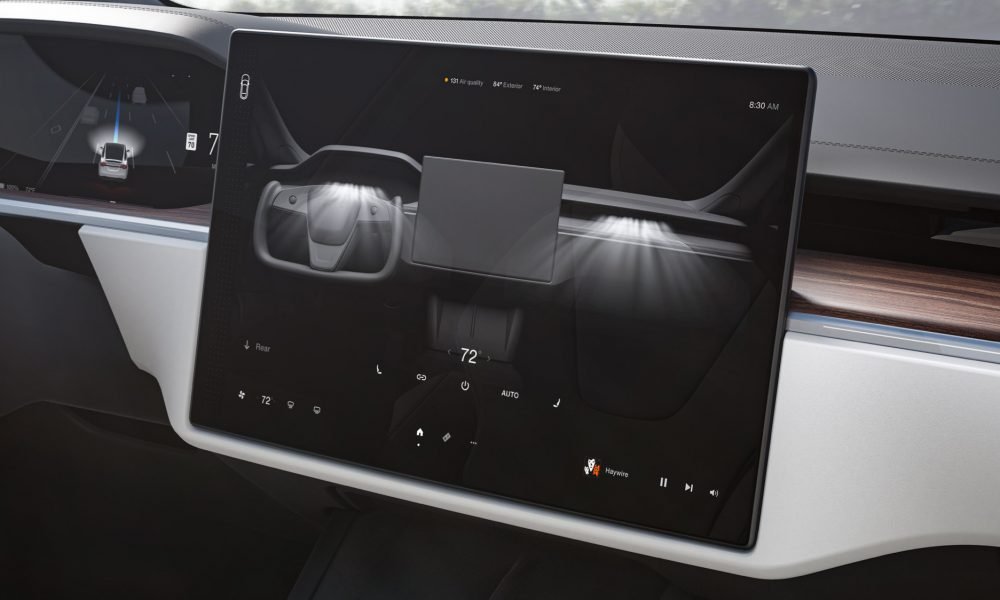
Tesla gets major upgrade that Apple users will absolutely love
Tesla appears to be teasing a brand new color while it was testing the refreshed Model S and Model X, which was spotted last week in California. Tesla currently offers six paint options in the United States, but they are all pretty basic. This has not been a problem for owners as wrapping the vehicles is a common practice, but some people would likely see more versatility from Tesla in terms of their standard paint colors. This is especially relevant as Europe has been able to have both Midnight Cherry Red and Quicksilver, which were, at one time, exclusive to the market. Quicksilver made its way to the United States, and Tesla did release a new Red last year with “Ultra Red,” but Midnight Cherry Red never made its way outside the walls of Gigafactory Berlin. Last week, as the first spy images of the new Model S and Model X were taken and released by The Kilowatts, there was a very noticeable difference with the vehicle, as other changes seemed to be relatively underwhelming: a new paint color. New factory blue, coming soon to a Model X near you pic.twitter.com/3CuN4j1ipq — The Kilowatts 🚗⚡️ (@klwtts) May 22, 2025 Many believed this was simply a wrap, but Ryan Levenson of The Kilowatts, a former Tesla employee, dispelled that rumor after several questions about it. He said that this is absolutely a factory paint color and not a wrap: New color too! If you know what you’re looking for you know that this is factory paint and not a wrap. pic.twitter.com/jBYrimZIQT — The Kilowatts 🚗⚡️ (@klwtts) May 22, 2025 More images were shared by @supergeek18 on X: New paint color for Model S/X 🤩 pic.twitter.com/Pb27JruhXs — Henry (@supergeek18) May 24, 2025 Tesla released a new color earlier this year, but it was just a revision to Black, now called “Diamond Black,” featuring speckles that give a reflection and refraction of light as a diamond would. However, this new color is certainly quite different than anything Tesla has previously offered in the U.S. before. It is relatively similar to Glacier Blue, a color Tesla launched in Asia. Earlier this year, Franz von Holzhausen, Tesla’s Chief Designer, talked about bringing the color to the U.S.: “Glacier Blue is just a color that we’ve been talking about with our team — the team is like right through that window by the way — and we were looking at the impact of silver, how do we get pigment into silver and really add a little bit of personality to it. If you look at our palette, you know it was either darks or white, and so we were looking for something in between. Blue is always a fairly popular color.” It would be a refreshing addition to the options Tesla currently offers, and a breath of fresh air for those who have been wanting a different look altogether.
Get 50% Off These EcoFlow Power & AC Bundles - Perfect For Off-Grid Adventures
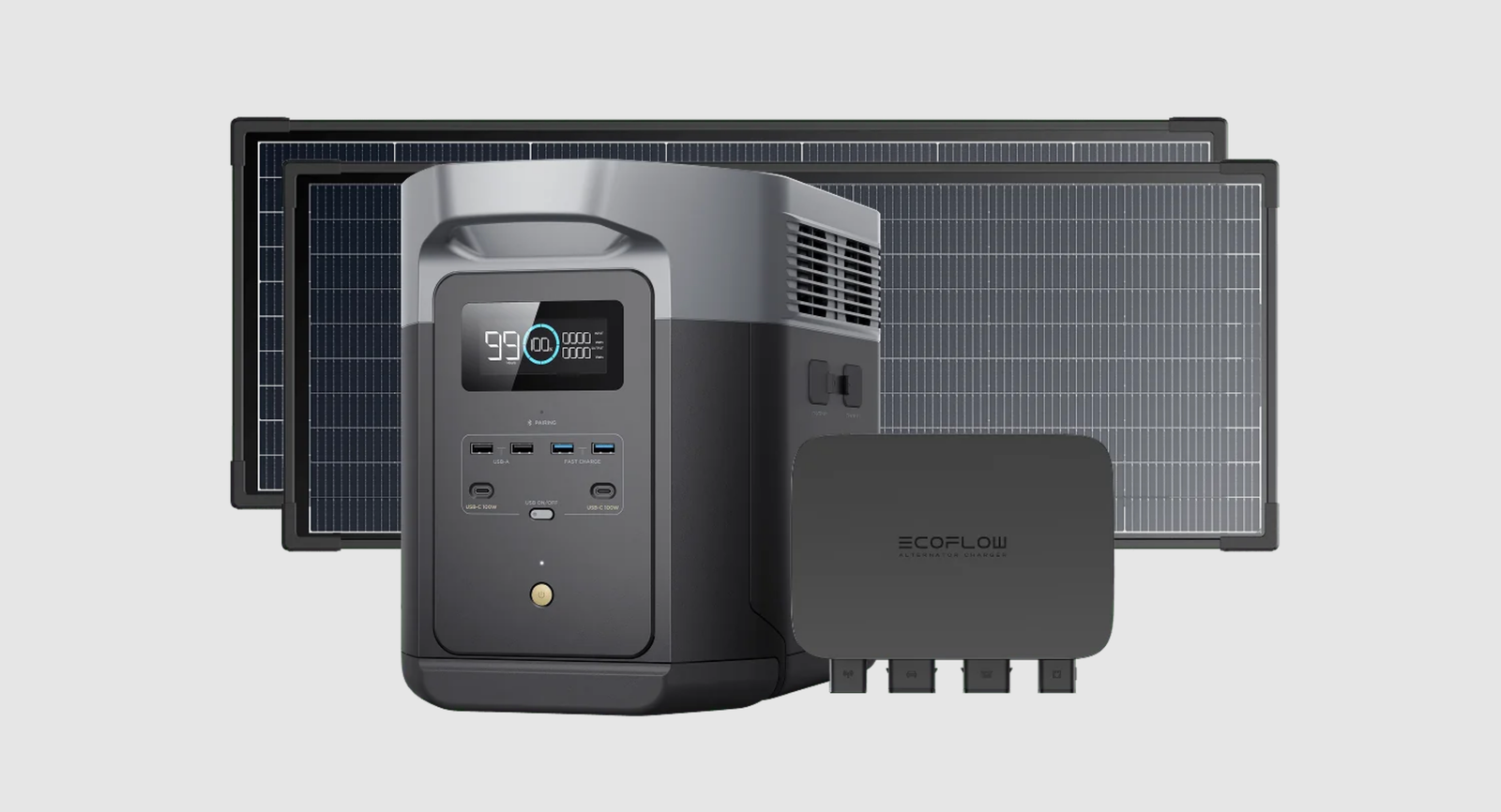
Now is the perfect time to upgrade your solar gear and portable power setup, to round out your mobile energy ecosystem, or even just get started with an off-grid power system. EcoFlow, known for reliable, high-capacity battery stations and smart energy tech, has two seriously attractive bundle deals on offer through May 28: DELTA 2 Max + 2×130W Solar Panels + 800W Alternator Charger: 48% off, now $1,799 WAVE 3 Portable Air Conditioner + DELTA 3 Plus Power Station: 50% off, now $1,499 Whether you’re gearing up for off-grid living, vanlife, or a home backup system, these bundles cover two core needs: versatile high-output power, and climate control in any season. Here’s what you’d be getting, and why these discounts matter. DELTA 2 Max Bundle: A Serious Powerhouse For Off-Grid Or Emergency Use If reliability and expandability are top of your list, the DELTA 2 Max is a clear standout. With a 2,048Wh capacity and a 2,400W output (4,800W surge), it can power most home appliances and heavy-duty tools with ease. Whether it’s keeping your fridge running during an outage or fueling your off-grid workspace, this unit has the muscle. In addition to the DELTA 2 Max, the bundle includes: 2 x 130W Solar Panels: Lightweight, portable, and efficient, these panels produce a solid solar input for recharging on the go. 800W Alternator Charger: Plug into your vehicle’s alternator and recharge while you drive. This is a game-changer for RVers, vanlifers, or anyone on the move. Why it’s a big deal: Battery longevity: Thanks to LiFePO₄ chemistry, you’ll get over 3,000 cycles to 80% capacity, which is ideal for frequent use. Fast charging: Fully recharge from 0–80% in just 43 minutes when using AC + solar + alternator input combined. Smart app control: Use EcoFlow’s app to monitor and manage everything remotely. Great for optimizing usage in real time. At $1,799 through May 28 (regular price ~$3,450), this 48% discount makes the DELTA 2 Max bundle a stellar deal for serious power users. Read our review of the DELTA 2 Max here. WAVE 3 + DELTA 3 Plus: Year-Round Climate Comfort, Anywhere The WAVE 3 is one of the most powerful and compact portable air conditioners on the market, and this new version ups the ante by adding heating functionality. With 6,100 BTU cooling and 6,800 BTU heating, it’s perfect for small spaces like vans, tents, offices, or tiny homes. Paired with the DELTA 3 Plus, which boasts a 1,024Wh capacity and 1,800W output, you’ve got a portable, climate-controlled setup that can run for hours without needing a wall outlet. EcoFlow WAVE 3 Portable Air Conditioner + DELTA 3 Plus Power Station Here’s what makes this bundle shine: Dual-mode operation: Cooling and heating in one unit. Switch easily depending on the weather. 13-hour runtime: In Eco or Sleep mode, the WAVE 3 can run for up to 13 hours on a full charge from the DELTA 3 Plus. Mobile app integration: Bluetooth and Wi-Fi connectivity let you adjust settings on the fly, even from bed. At just $1,499 until May 28 (normally about $3,000 for both units), this is a 50% discount that brings real value to vanlifers, preppers, and campers alike. These Portable Power Bundles Are Worth It EcoFlow’s gear is engineered with the mobile, prepared, and eco-conscious user in mind. These bundles don’t just deliver value, they offer practical tools for living and working wherever you are, no gas generator required. If you’ve been waiting for the right moment to invest in a more capable portable power system, or to add flexible heating and cooling to your off-grid or backup gear, these EcoFlow bundles are hard to beat. With deep discounts and proven performance, they’re a smart move whether you’re prepping for emergencies, going off-grid, or upgrading your travel setup. EcoFlow also has a bunch of good deals running through May 18th for its Mother’s Day sale, so be sure to check those out as well. Sign up for CleanTechnica's Weekly Substack for Zach and Scott's in-depth analyses and high level summaries, sign up for our daily newsletter, and/or follow us on Google News! Whether you have solar power or not, please complete our latest solar power survey. Have a tip for CleanTechnica? Want to advertise? Want to suggest a guest for our CleanTech Talk podcast? Contact us here. Sign up for our daily newsletter for 15 new cleantech stories a day. Or sign up for our weekly one on top stories of the week if daily is too frequent. Advertisement CleanTechnica uses affiliate links. See our policy here. CleanTechnica's Comment Policy
Massachusetts moves toward goal of 5,000MW of BESS by 2030

Massachusetts moves toward goal of 5,000MW of BESS by 2030 - Energy-Storage.News Skip to content
Electric cars overtake diesel in new EU vehicle registrations
According to the industry association ACEA, new registrations of electric cars in the EU rose by 26 per cent year-on-year to just under 560,000 units in the first four months of the year. This gives BEV cars a 15.3 per cent share of the total EU new car market – significantly more than diesel cars. In April, registrations of electric cars in the EU continued to develop positively and increased by a third (34.1%) – this is reflected in a strong four-month balance for 2025 to date: after the electric share across the EU was already at 15.2 per cent in the first quarter, it has now grown to 15.3 per cent between January and April thanks to 558,262 new units. To compare: a year earlier, market penetration was still at twelve per cent. At the same time, the overall market grew by 1.3 per cent in April, according to the ACEA’s latest statistics. In March, new registrations across the EU had fallen by 0.2 per cent, in January and February by as much as -2.6 and -3.4 per cent respectively. The ACEA sees this “as a sign of recovery despite the still unpredictable global economic environment.” Electric cars played a major role in this recovery: three of the four largest markets in the EU, which account for 63 per cent of all battery electric vehicle registrations, recorded robust growth in April: Germany (+42.8 per cent), Belgium (+31.3 per cent) and the Netherlands (+6.4 per cent). This contrasted with a decline of 4.4% in France. This quartet of countries already showed a similar picture in March. The decline in France could have something to do with the fact that a particularly large number of BEVs were put on the road a year ago via the ‘social leasing’ subsidy programme of the French government. It is also interesting to look at the UK. There, 144,749 new BEVs have been registered since the beginning of the year, an increase of 35 per cent. Germany remains ahead in terms of absolute figures with 158,503 newly registered BEVs to date. This is significant because the UK overtook Germany in terms of BEV registrations for the first time in 2024. After the first four months of the current year, Germany is now back in the lead. Incidentally, France is the only other European country to also have a six-digit BEV registration figure, so far this year (100,061 units). Despite Model Y Juniper: Tesla continues to plummet In terms of new registrations by manufacturer, the ACEA does not differentiate between drive types, so only statements on pure BEV manufacturers are possible here. Between January and April, 41,677 new registrations were registered for Tesla in the EU, which corresponds to a fall of 46 per cent compared to the same period last year. In April, the decline was 53 per cent to 5,475 new registrations. This means that the deliveries of the revised Model Y Juniper, which have now begun, have not brought about a trend reversal. However, if the EU figures are supplemented by registrations in the UK and EFTA countries (Iceland, Norway, Switzerland and Liechtenstein), Tesla has seen a slightly muted fall of 39 per cent since the beginning of the year. Another e-manufacturer worth mentioning is Smart. Here, the decline after the first four months of the year is also striking at 67.6 per cent. In April, as many as 73 per cent fewer new Smarts were registered in the EU, with only 644 vehicles instead of 2,397 new Smarts in April 2024. Among the other drive types, electrified drive systems were also up in the year to date: plug-in hybrids increased by 7.8 per cent to 287,850 vehicles, with Germany (+46.6%), Italy (+41.8%) and Spain (+42.8%) being the main drivers here. As a result, the EU-wide market share of part-time electric vehicles climbed slightly to 7.9 per cent (from 7.6 per cent in Q1). Hybrid electric vehicles were the most popular drive type, with registration figures up by 20.8 per cent. With a market share of 35.3%, hybrids are now well ahead of petrol-only vehicles (28.6%). The combined market share of petrol and diesel combustion engines has fallen from 48.4 to 38.2 per cent within a year. While new diesel registrations in the EU were still ahead of electric cars in the first four months of the previous year (472,589 diesels to 441,785 BEVs), electric cars have clearly taken the lead since the beginning of the yea,r with 558,262 new registrations. Only 348,050 new diesel cars were registered. Country ranking in April In April, ACEA recorded 145,341 new electric cars in its analysis, an increase of 34.1 per cent – although growth was lower in March at 17.1 per cent, the absolute number of units was higher (157,505 BEVs). The fact that the 2025 figures are constant and significantly higher than 2024 is, of course, due to the fact that new registrations in the important electric car market of Germany, for example, fell at the beginning of 2024 following the abrupt end of the environmental bonus. In April, Germany was once again the largest e-car market in the EU with 45,535 new registrations (+53.5 per cent), although this had already been known from the KBA figures since the beginning of April. France (25,542 BEVs, +2.8 per cent), Belgium (12,469 BEVs, +35.8 per cent) and Denmark (9,567 BEVs, +45.5 per cent) followed just ahead of the Netherlands (9,235 BEVs, +1.8 per cent). The Czech Republic (1,229 BEVs, +110.8%) and Italy (6,643 BEVs, +108.2%) recorded the highest growth. As in March, the sharpest decline was recorded in Romania with -70.1 per cent from 728 to 218 new e-cars. Outside the European Union, two European countries recorded five-digit registration figures in April: Great Britain (24,558 BEVs, +8.1 per cent) and Norway (10,942, +8.9 per cent). acea.auto (PDF)
Electrifying Ground Vehicles: The Practical First Phase Of Port Sustainability
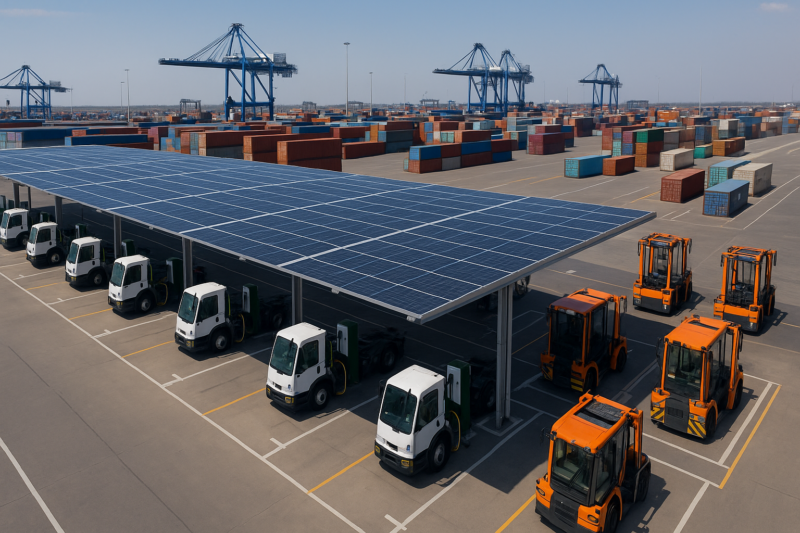
Ports sit at the crossroads of global trade, and increasingly, they’re also at the center of global decarbonization efforts. In the maritime sector, a careful and deliberate phased approach to electrification and zero-emission operations is critical. This article, the second in a series, focuses specifically on the initial five-year phase: electrifying ground vehicles at a representative mid-sized European port, a logical and pragmatic first step in achieving a broader, multi-decade decarbonization vision. Ground vehicles and cargo handling equipment offer relatively low-hanging fruit given the availability and proven reliability of electric alternatives, making this transition strategically sensible. Today, the baseline reality at many ports, including our representative scenario, remains firmly diesel-centric. For the baseline energy demand, see the first article in the series. Container yards rely heavily on diesel-powered straddle carriers, terminal tractors, forklifts, and mobile cranes. For context, a typical mid-sized European port operates roughly twenty diesel-powered straddle carriers, each consuming approximately 19 liters of diesel per operational hour, a figure confirmed by operational benchmarks from major terminals such as those operated by HHLA in Hamburg. Coupled with around fifty terminal tractors and numerous diesel forklifts and mobile cranes, these vehicles collectively consume in the range of two to three million liters of diesel annually, representing about 20–30 gigawatt-hours of diesel energy consumption every year. TCO comparison of hydrogen to battery electric container ground handling vehicles from report by APM Terminals. Transitioning to electric ground vehicles in this initial five-year window is not only achievable—it’s increasingly common in practice. Industry leaders such as APM Terminals and HHLA have already demonstrated the viability of electric straddle carriers, battery-powered terminal tractors, electric forklifts, and cable-driven cranes. For example, APM Terminals has repeatedly underscored the improved total cost of ownership for electric equipment, driven by substantial reductions in fuel and maintenance expenses. Maintenance savings alone are noteworthy: electric vehicles typically require significantly fewer maintenance hours, have fewer moving parts, and avoid the complexities associated with internal combustion engines. Concretely, the port’s electrification efforts during the first five years would target replacing or retrofitting about half of the existing diesel equipment fleet with electric alternatives. This includes electric straddle carriers and terminal tractors, along with retrofitting mobile cranes and forklifts with electric drive systems or cable-reel solutions. By year five, approximately fifty percent of yard equipment could be fully electric, with all new procurement decisions exclusively favoring electric equipment. Charging infrastructure would be systematically deployed throughout the port, enabling both heavy equipment and incoming electric trucks to recharge efficiently. Fast chargers strategically placed at truck gates and throughout the terminal ensure smooth operation and minimize disruption to logistics flow. Electrifying these ground vehicles increases the port’s electricity demand modestly but noticeably—approximately two to five gigawatt-hours per year by the end of year five. To illustrate, converting a fleet of twenty diesel straddle carriers to fully electric operation, each averaging 3,000 operational hours annually with average power draws around 150 kilowatts, would add roughly three gigawatt-hours annually. Similarly, electrifying dozens of terminal tractors and forklifts further increases electricity requirements by a few gigawatt-hours, cumulatively raising the port’s total electricity demand from a baseline of approximately 20 gigawatt-hours per year up to around 25 gigawatt-hours annually. Importantly, this incremental electricity demand replaces millions of liters of diesel previously burned each year, yielding immediate and tangible environmental benefits. Not only do carbon dioxide emissions drop significantly, but local air quality also improves dramatically due to reduced particulate matter, nitrogen oxide, and sulfur emissions. As ports are often located near urban areas, these environmental benefits extend well beyond the operational boundaries of the terminal itself, significantly improving community health outcomes and aligning ports with increasingly stringent air-quality regulations. Adjusted Sankey of energy flows for the port with reduced rejected energy and solar by author To reliably meet the increased electricity demands, initial power supply during the first five-year phase would be predominantly sourced from the national grid, supplemented significantly by moderate-scale onsite renewable generation. A realistic target for onsite solar deployment—installing approximately five megawatts of photovoltaic capacity on warehouse roofs, parking canopies, and available land—could yield roughly five gigawatt-hours of clean electricity annually, based on realistic capacity factors in Northern European climates (typically around 11–15%). This would cover a substantial portion of the new electricity requirements. The remaining incremental electricity demand, especially during peak usage times, would rely on upgrades to grid connections, such as adding dedicated 20-kilovolt feeders, ensuring adequate power availability for all port operations. Comparing to the baseline Sankey, a key point is that total primary energy requirements with just electrified ground vehicles have dropped and there is less rejected energy. An port that replaces molecules with electrons is an efficient port. A port that generates its own energy with solar is a port that is creating an economic advantage with zero margin energy. To further stabilize and optimize energy use, a modest-scale battery energy storage system would be implemented, sized around five megawatt-hours. Such a battery system offers multiple practical benefits: it efficiently manages short-term load peaks from simultaneous vehicle charging events, mitigates grid impact during periods of high demand, and helps store surplus solar-generated electricity for use during peak operational times. For example, during midday breaks or shift changes when multiple straddle carriers and terminal tractors plug in simultaneously, the battery system can discharge stored electricity, smoothing the demand curve and lowering peak charges significantly. The economic case for this initial investment phase is robust. An approximate investment of €50 million would cover the procurement or retrofitting of electric ground equipment—roughly €300,000 per electric terminal tractor and €1–2 million per electric straddle carrier—as well as comprehensive installation of charging infrastructure, civil works, grid upgrades, and renewable energy assets. Specifically, this figure includes roughly €5–10 million for charging infrastructure and civil engineering, approximately €5 million for solar photovoltaic installations, around €3 million for the battery energy storage system, and additional contingency funds for necessary grid upgrades. Despite the upfront investment, the longer-term economic benefits are compelling and well-documented by industry leaders such as
'Largest BESS in EU' inaugurated in Bulgaria
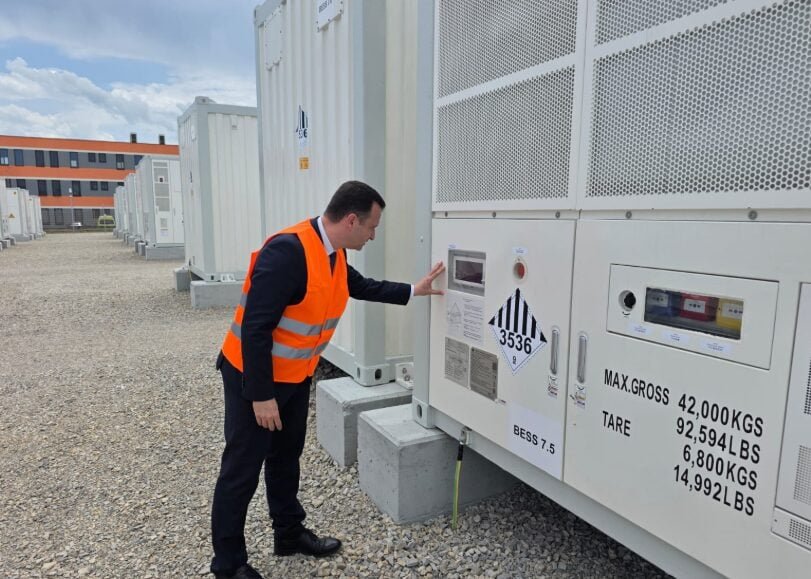
“It is the first step towards achieving the goal of having 10,000 megawatt-hours of operating batteries in the country within the next year,” said Minister of Energy, Zhecho Stankov, adding that BESS technology helps system security and price stability for Bulgaria. That 10GWh figure alludes to 82 projects totalling 9,712.89MWh that were awarded capex support in a recent auction totalling BGN 1.15 billion (€588 million/US$670 million), finalised by the government last month. Stankov added: “When the state and business look in the same direction, the result is stable projects for the benefit of the Bulgarian energy sector. Our task is to reduce the administrative burden and thus give business a chance to create new jobs and new investments.” Local outlets have reported the project is a 124MW/496.2MWh, 4-hour system deployed by a company called Advance Green Energy AD, which is owned by brothers Kiril and Georgi Domuschiev. Advance Green Energy AD’s CEO Stanislav Cherkezov posted on business networking site LinkedIn about the project: “Today marks a historic moment for our team and the entire renewable energy sector – we’re proud to officially open EU’s largest battery storage power plant.” The technology provider for the project wasn’t revealed but images showed a BESS unit with a weight of 42,000kg, which is roughly the average weight for a 5MWh 20-foot container product. The industry has somewhat converged over the last few years to this form factor, although recently more products have come out with different designs. Until the Lovech project came online, the largest operating BESS in Bulgaria was most likely a 25MW/55MWh system commissioned by Renalfa IPP in mid-2024. He added: “This facility will play a crucial role in stabilising the grid, supporting the integration of renewable energy sources, and helping Europe move closer to its climate goals.” Other companies deploying BESS in Bulgaria that Energy-Storage.news has recently reported on include IPP and T&D network owner Eurohold Bulgaria and state-owned utility and power generation firm NEK.
DEKRA starts testing EV components at new lab in the USA
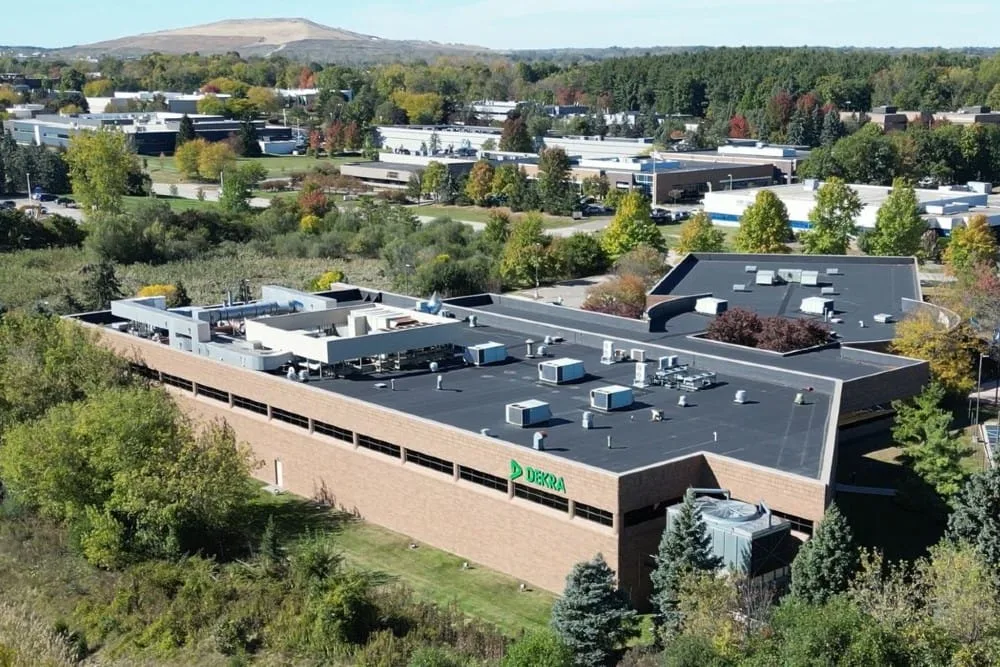
The testing organisation DEKRA has opened a new test centre in the USA. The Michigan Automotive Testing Laboratory in Plymouth in the US state of Michigan offers the testing, validation and certification of vehicle components in North America, above all the testing of electric car parts The new centre was developed by DEKRA in collaboration with the Michigan Economic Development Corporation. The new product testing laboratory’s services include testing of electric car components, electromagnetic compatibility (EMC) testing, reliability testing, automotive connectivity technologies and services in the areas of digital trust, cybersecurity, functional safety and AI testing and certification. According to DEKRA, the opening of the centre was preceded by an investment of millions from its own budget. “With this center, we are delivering what the future of mobility demands – rigorous testing, seamless certification, and digital trust,” said John Tesoro, President of DEKRA North America. The new centre in Plymouth is the only facility of its kind in North America with such a comprehensive range of services for the automotive industry. The new location expands DEKRA’s network of testing and certification facilities in Germany, China, South Korea, Taiwan, Japan, Italy, Spain and the Netherlands, among others. Among other things, the organisation also operates and is planning dedicated battery testing centres, for example, at the Lausitzring. dekra.com
A New Flow Battery Takes On The Data Center Energy Crisis

Last Updated on: 19th May 2025, 04:04 am Data center stakeholders have been falling all over themselves to build new gas power plants, including such luminaries as Meta, Microsoft, and Tesla CEO Elon Musk’s xAI venture. What’s the rush? Renewable energy solutions have been emerging with an assist from next-generation energy storage technologies, and the Massachusetts startup XL Batteries is in the mix. A Flow Battery Fix For The Data Center Energy Crisis A flow battery produces electricity from the movement of two specialized solutions, separated by a thin membrane. The basic technology dates back to the 1970s. Earlier iterations were bulky and inefficient. Producing a more compact, high performing flow battery has been the goal of energy storage researchers since the early 2000s. The soft-transition metal vanadium (not vibranium!) was an early favorite for use in flow battery solutions, partly because it can be used in both, simplifying the supply chain. New flow battery formulas that deploy more abundant, inexpensive organic molecules have also emerged. The R&D activity has picked up in recent years alongside the entrenchment of wind and solar energy in the nation’s grid, requiring new long-duration energy storage solutions. Lithium-ion batteries are still the go-to solution, but they only last a handful of hours. A flow battery can discharge electricity for days or even weeks at a time, depending on the formula and the architecture. At that level of performance, flow batteries could store enough renewable energy to provide large energy consumers, such as data centers, with a reliable source of electricity to smooth out bumps in renewable energy availability. The Long (Or Short) Road To The Flow Battery Solution There being no such thing as a free lunch, getting flow battery technology up to speed has been a long slog. On the plus side, the steady buildout of investor interest is beginning to compress the timeline between startup and shovels-in-the-ground. XL Batteries, for example, spun out of organic flow battery research based at Columbia University in 2019. By 2023 the company secured patents in both the US and Japan for its core chemistry, attracting investors along the way with the prospect of a “highly stable, pH-neutral, non-corrosive, scalable, longer-duration storage with a 20+ year lifetime at a low cost of less than $0.05/kWh,” as described by Mercom Capital’s research branch. In February of 2023, XL Batteries nailed down $10 million in a Seed-2 round of funding lead by Catalus Capital. New investors SIP Global and Xerox Ventures also jumped in, along with existing investors Jeffrey Schwarz, Joel Greenblatt, and Robert Goldstein. There Goes Texas, Again In an interesting turn of events, last month XL announced the installation of its flow battery at pilot scale in Stolthaven Terminals in Texas. Although best known for its footprint in the oil and gas industry, Texas has also become an epicenter of activity in the wind, solar, energy storage, and data center industries. “In partnership with Stolthaven Terminals, a leading global provider of storage services for bulk liquids and gases, this paid pilot is the first deployment of XL’s innovative long-duration energy storage (LDES) technology and confirms its commercial viability,” XL explained in a press statement. The data center developer Prometheus Hyperscale is already on board. Last week the two firms announced a multi-year flow battery agreement, aimed at helping Prometheus follow through on its intentions to center sustainability. They have some work to do on that score. Earlier this month Prometheus also announced a new natural gas-plus-carbon capture partnership for its main campus in Wyoming. On the plus side, Wyoming’s growing renewable energy profile could enable the campus to reduce its dependence on fossil resources, and that’s where long-duration energy storage can kick in. “Our Organic Flow Battery™ will enable Prometheus to improve energy resilience, manage power quality and reduce carbon emissions,” explained XL Batteries CEO and co-founder Tom Sisto in a press statement on May 14. The partners will test out XL’s new battery in stages, beginning with a 333-kilowatt demonstration-scale version at the Wyoming campus, expected to come online in 2027. “After that, Prometheus intends to purchase one 12.5 megawatt (MW) / 125 megawatt-hour (MWh) commercial-scale system in 2028 and an additional 12.5 MW / 125 MWh system in 2029,” the partners add. “Going forward, both companies are aligned on a long-term vision for future deployments of XL’s technology at Prometheus facilities, positioning Prometheus at the forefront of next-generation data center resilience and sustainability,” they added for good measure. The Flow Battery Of The Future Is Coming For Your Fossil Fuels While all of this is going on, other data center energy solutions of interest are emerging. One futuristic example involves sending data centers up into space, where they can run 24/7 on solar energy and transmit data down to Earth. Along those lines, other innovators are working on space-based solar arrays that transmit energy down to Earth, the general idea being to avoid terrestrial land use conflicts while harvesting solar energy regardless of weather conditions on land. Somewhat more down to Earth is the ongoing effort to improve energy efficiency at data centers. Some data center stakeholders, Google being one example, are also working to co-locate data centers with new clean power projects. On the flow battery side, cutting costs would help improve the prospects for hooking up new data centers with renewable energy. The Texas startup Quino Energy has developed an organic formula tailored for use in repurposed oil storage tanks, helping to reduce the expense of new infrastructure. Other innovators are working to push down the cost of the battery membrane as well. Meanwhile, Democratic representatives in Congress have questions about how Meta aims to reconcile its climate commitments with the three new gas power plants needed to power its proposed data center in Northeastern Louisiana. Last week US Senator Sheldon Whitehouse of Rhode Island launched an official inquiry into the company’s plans. The planet-saving reputation of Tesla is also on the line. Musk touted the zero-emission benefits of electric vehicles for
RWE virtual toll for 100MWh BESS in Germany with Terralayr
The projects are aggregated into a virtual battery via Terralayr’s flexibility platform, which offers storage capacity virtually rather than tied to a specific single project. RWE will pay Terralayr a fixed annual fee for the capacity in return for taking control of the BESS capacity’s activity in the energy market. The approach is designed to open up the security of fixed revenues to smaller projects that may struggle to secure single-site tolls, as well as offer a wider array of options to those seeking to procure flexibility. Spreading the toll across projects also reduces operational risk. Terralayr CEO Philipp Man and VP strategy and commercial Mikko Preuss discussed the platform in an interview with ESN Premium in January this year. It is the second big-name company to procure capacity from the firm, after Swedish state-owned power generation and trading company Vattenfall. Commenting on the RWE deal, Preuss said: “We offer customers storage capacity, providing all the advantages of a physical battery storage system without them having to manage the physical systems themselves.” Preuss will be speaking on a panel on Day One of next week’s inaugural Energy Storage Summit Germany in Stuttgart (3-5 June), as will his colleague Valerie Mahar, VP asset development, on Day Three. Bart Beljaars, head of commercial asset optimisation for Continental Europe at RWE, commented: “Batteries are becoming increasingly important for a stable energy supply, and Terralayr’s virtual battery is a perfect complement to our rapidly growing portfolio of batteries and generation assets. By working with Terralayr, we can utilise the flexibility of both RWE and customer batteries more effectively.” RWE is a major deployer of renewables and storage alongside its legacy coal and gas portfolio, with 1.2GW of BESS operational worldwide. It recently commissioned large-scale BESS projects in Germany and the Netherlands, while in the US the past six months has seen it break ground on 900MWh of Texas BESS, propose a 200MW system in Colorado and pilot a novel nickel-hydrogen battery technology.