The Geopolitics Of Critical Minerals: China’s Grip & The West’s Response

Recently, I stood — virtually — before an audience of global institutional investors, invited by Jefferies investment bank to speak alongside six other experts on the deepening geopolitical tensions between the U.S. and China and their implications. Amid this intense discussion, one of the central themes was the rapid return of industrial policies to Western economies after four decades of dominance by market-driven ideologies. This represents not merely a cyclical shift but a structural response to a profound reshaping of the global economic landscape, particularly in the context of energy transition and decarbonization through the end of this century. For years, I’ve analyzed and projected key trends in decarbonization, covering everything from renewable energy and electrification to advanced battery chemistries and the scaling of green hydrogen. Underlying these projections has always been a recognition of the necessity for a reliable supply of critical minerals. In recent years, as I’ve sharpened my analysis through a blend of technical feasibility, economic modeling, and assessments of human factors such as regulatory frameworks and geopolitical risks, one persistent risk loomed large: China’s control over critical mineral supply chains. The implications of this dominance have become starkly clear, especially in the past year. Well before headlines caught up, it was evident to me and others closely watching China’s strategic moves that Beijing was preparing export controls on a range of strategically critical minerals. China’s actions on gallium, germanium, antimony, tungsten, and rare earth elements, among others, represent a carefully calibrated assertion of geopolitical influence. According to the International Energy Agency (IEA), China’s control over processing and refining these minerals ranges from 80% to over 90% globally, making it an indispensable node in the technology and energy supply chains. This strategic chokehold is precisely what has forced Western nations to reconsider their longstanding reliance on unfettered global markets and to re-adopt industrial policies after decades of relative neglect. This article is my slides and talking points from the presentation, expanded somewhat. Slide from Michael Barnard’s presentation to global institutional investors through Jefferies investment bank The term “critical minerals” carries varying connotations depending on the perspective one adopts — strategic, economic, technological, geopolitical, or environmental. Understanding these nuances is increasingly important as governments, industries, and investors grapple with a new era of resource constraints, technological transformations, and geopolitical tensions. From a strategic standpoint, critical minerals are defined primarily by their necessity for national security applications, particularly defense technologies, military hardware, and aerospace equipment. Rare earth elements are a classic example, as they play vital roles in the production of fighter jets, missile guidance systems, and advanced radar technology. Gallium, similarly, is crucial for high-frequency radar systems and advanced communications infrastructure. The strategic definition emphasizes minerals whose availability can directly influence a country’s military preparedness and geopolitical leverage, thus highlighting the vulnerabilities nations face when such materials are controlled by geopolitical rivals. An economic definition shifts the focus slightly, characterizing critical minerals as those vital to major industries that form the backbone of national and global economies. These include electric vehicles, renewable energy systems, semiconductors, and various advanced manufacturing sectors. Lithium and cobalt, for example, have gained substantial economic prominence due to their role in battery technologies, underpinning the explosive growth of electric vehicles and stationary energy storage solutions. Similarly, graphite is essential for battery anodes, and silicon serves as a fundamental material in semiconductor manufacturing. According to recent analyses by the International Energy Agency (IEA), demand growth in these economically critical minerals is projected to accelerate dramatically, creating both market opportunities and supply-chain risks. The supply-risk definition of critical minerals revolves around geopolitical vulnerability and the fragility of global supply chains. This perspective identifies minerals whose extraction, refining, or processing is concentrated in a small number of countries, creating potential chokepoints. Rare earth elements again offer a prime example, with China dominating approximately 85% to 90% of global refining capacity, per data from the IEA. Cobalt’s concentration in the Democratic Republic of Congo, where human rights and governance issues create ethical and geopolitical challenges, further underscores the complexity inherent in the supply-risk dimension, and led to R&D that has reduced or eliminated its use in batteries. This definition is increasingly informing national policy decisions, driving investments aimed at diversification, reshoring, and developing alternative or recycled sources of minerals. The technology-critical definition of minerals is innovation-driven, emphasizing materials that are essential for emerging or disruptive technologies. These technologies could profoundly reshape economic structures, security paradigms, and global competitiveness. For instance, germanium is vital for fiber-optic communication systems, essential for advanced telecommunications and quantum computing. Indium is critical to the manufacturing of LCD screens and next-generation displays, while graphite’s role in battery technology underscores its importance in the ongoing electrification of transport and the rapid growth of grid-scale battery storage. According to a Nature study, shortages or supply disruptions in these innovation-critical minerals could substantially delay technological progress, impacting a wide array of downstream industries. Finally, an environmental definition emerges strongly in the context of global climate policy and the energy transition. Minerals categorized under this definition are crucial for decarbonization technologies — solar panels, wind turbines, electric vehicle batteries, and the infrastructure necessary for a low-carbon energy grid. Lithium is essential for electric vehicle battery technology; copper underpins electricity transmission, distribution infrastructure, and renewable generation equipment; and nickel plays a key role in advanced battery cathodes. According to IEA forecasts, achieving global decarbonization targets will necessitate unprecedented scaling of these minerals, thus intensifying environmental scrutiny, sustainability challenges, and supply-chain complexities. Each of these definitions carries important implications for policymakers, businesses, and investors. They illustrate why the recent revival of industrial policy in the West after decades of reliance on market-driven approaches is not merely reactive, but strategic and multifaceted. Industrial policy today seeks to address national security vulnerabilities, support economic resilience, promote technological innovation, and accelerate the energy transition simultaneously. In doing so, governments face complex trade-offs and decisions about investments, regulatory frameworks, and international partnerships. These overlapping yet distinct definitions of critical minerals highlight
Ingrid/SEB, Monsson building Finland and Sweden BESS projects
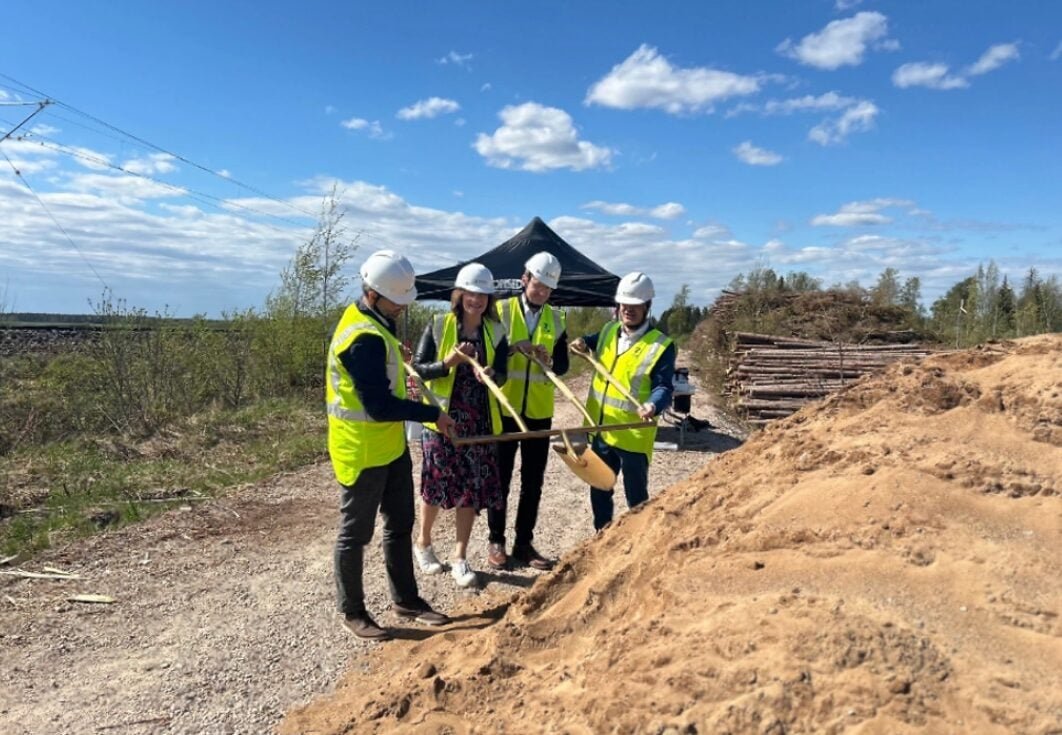
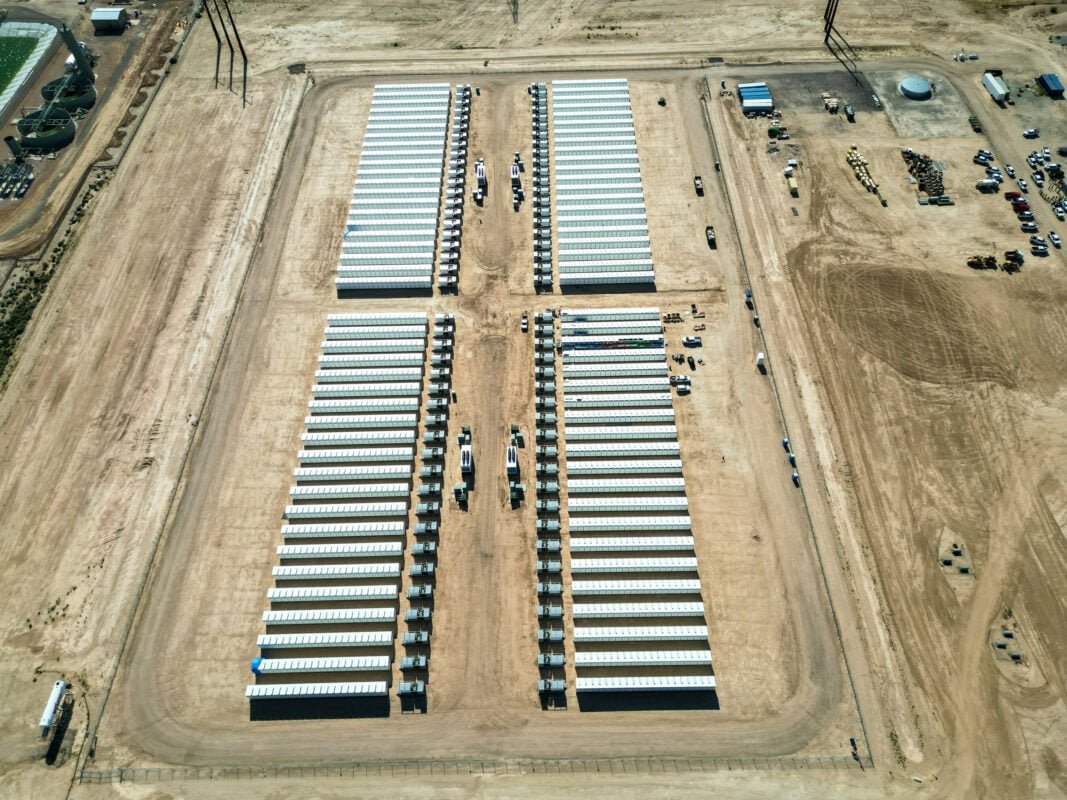
The 2-hour duration project is scheduled to go into operation in 2026. The project will be optimised with Ingrid Capacity’s proprietary trading platform which the company launched last year. CEO Axel Holmberg discussed this with ESN Premium last year. Jussi Jyrinsalo, senior VP of transmission system operator (TSO) Fingrid commented: “This groundbreaking is an important moment for Finland’s energy transition and a concrete step toward a more flexible, resilient, and decarbonised energy system. We welcome Ingrid Capacity and Locus Energy’s contribution to our shared mission of enabling a reliable and renewable-powered grid.” BESS are being deployed in Finland to capitalise on a profitable and growing ancillary services market, with much of the country’s renewable energy generation and future pipeline comprised of wind power. The country is targeting carbon neutrality on its grid by 2035. Earlier this month inverter and BESS firm Sungrow completed a 30MW/60MWh project in north Finland. Ingrid Capacity and Locus Energy are both headquartered in Sweden and the Finland project follows collaboration on their home turf, with a 196MW/196MWh portfolio already under construction. Monsson buys Sweden BESS from Neoen In related news, independent power producer (IPP) Monsson has acquired a 60MWh BESS project in Sweden from fellow IPP Neoen, with construction set to be launched in June 2025. The project is in Eskilstuna Municipality, Södermanland County in southern Sweden. The company has already been active in Sweden from wind farm operation and maintenance (O&M) services, and now intends to deploy over 200MWh of storage in the country. Note that Neoen is also building larger BESS projects in Sweden, seemingly to operate itself, including the 93.9MW/93.9MWh Isbillen Power Reserve, set to come online this year. Monsson will use its own BESS solution in Sweden, which the firm is also planning to use for a huge, 2GWh BESS in Romania. The firm also has links to Sweden via its desire to deploy BESS using European-made technologies, which it claimed to have done for a 24MWh project in Romania in early 2024 – the inauguration of which was attended by Sweden’s ambassador to the country. Enache told ESN Premium in an interview in May 2024 that, while in Romania it used battery technology from local firm Prime Batteries, in Sweden it could use batteries from lithium-ion OEM Northvolt. However, since then Northvolt has filed for bankruptcy in Sweden (in March 2025) with its assets currently for sale.
Tesla races strange, compact Model Y on Fremont Test Track: affordable model?

Pension fund leaders with Tesla investments are urging the company’s board to mandate Elon Musk dedicate at least 40 hours per week to the electric vehicle maker, citing a looming crisis. The group holds a combined 7.9 million TSLA shares and expressed alarm over Tesla’s challenges in a Wednesday letter to board chair Robyn Denholm. “Tesla’s stock price volatility, declining sales, as well as disconcerting reports regarding the company’s human rights practices, and a plummeting global reputation are cause for serious concern,” the investors wrote. https://www.teslarati.com/tesla-elon-musk-explains-25-percent-voting-share-tsla/ They attributed many issues to Musk’s external activities, including his role in the U.S. Department of Government Efficiency (DOGE). The pension fund leaders criticized the board for failing to ensure Musk’s “full-time attention” on Tesla. The group includes the SOC Investment Group, the American Federation of Teachers, New York City Comptroller Brad Lander, and Oregon State Treasurer Elizabeth Steiner. The investors’ letter comes as the Tesla board plans for Elon Musk’s next compensation plan, following the Delaware Court of Chancery’s 2023 ruling to rescind his $56 billion 2018 package. Besides a 40-hour workweek requirement, they also called for a clear succession plan and limits on directors’ external board commitments to strengthen governance. The letter highlighted concerns about board independence. Tesla recently added former Chipotle CFO Jack Hartung, who previously worked with Musk’s brother, Kimbal Musk, as a Tesla board member. The group’s letter reveals where the position of some investors as Elon Musk forges ahead with Tesla’s future plans. Musk’s broader ambitions for Tesla were evident during the Q4 and FY 2023 earnings call, where he envisioned the company as an AI and robotics powerhouse with “truly immense capability and power.” He emphasized his desire for 25% voting control to maintain influence without complete control. “You know, we’ve had a lot of challenges with Institutional Shareholder Services, ISS — I call them ISIS — and Glass Lewis, you know, which there’s a lot of activists that basically infiltrate those organizations and have strange ideas about what should be done,” Musk said. As Musk plans to focus more on Tesla, alongside xAI and SpaceX, the investors’ demands underscore tensions between his expansive vision and shareholder expectations. With Tesla navigating stock volatility and reputational challenges, the board faces pressure to align Musk’s leadership with the company’s long-term stability.
Nissan plans $7 billion funding, including loan backed by UK government, Bloomberg News says

Japan’s struggling Nissan is considering raising more than 1 trillion yen ($7 billion) from debt and asset sales which would include a syndicated loan guaranteed by the British government, Bloomberg News said on Wednesday.The country’s third-biggest automaker plans to issue as much as 630 billion yen worth of convertible securities and bonds, including high-yielding U.S. dollar and euro notes, Bloomberg News said, citing documents it had seen.Nissan is also considering taking out a 1 billion pound ($1.35 billion) syndicated loan guaranteed by UK Export Finance, the report said. UK Export Finance is a government agency that provides loans and insurance to British exporters.The Bloomberg News report said Nissan is also looking at selling part of the stakes it holds in French automaker and long-standing alliance partner Renault and in battery maker AESC Group, as well as plants in South Africa and Mexico.A representative for Nissan said the company does not comment on speculation. UK Export Finance also said it did not comment on speculation around specific transactions.Bloomberg News cited sources as saying Nissan’s board did not appear to have approved the funding proposal yet, leaving it unclear whether it would happen.The proposal was also slated to include the rollover of some debt, the report said.Earlier this month, the company presented a sweeping cost-cutting plan under which it plans to reduce its workforce by around 15% and cut car plants to 10 from 17 globally.Sources told Reuters this month that Nissan is considering plans to shut two car assembly plants in Japan and overseas factories, including in Mexico, and stop production in South Africa as part of its cost-cutting plan.Nissan’s shares rose more than 4% following the report but they gave up those gains and closed down 0.3%. reuters.com Previous articleMIT researchers create sodium fuel cell with high energy density Next articleArtemis hydrofoil workboat to skim Rotterdam waters
Pure Lithium Announces Engagement with Kingston Process Metallurgy to Scale Lithium Metal Anode Production
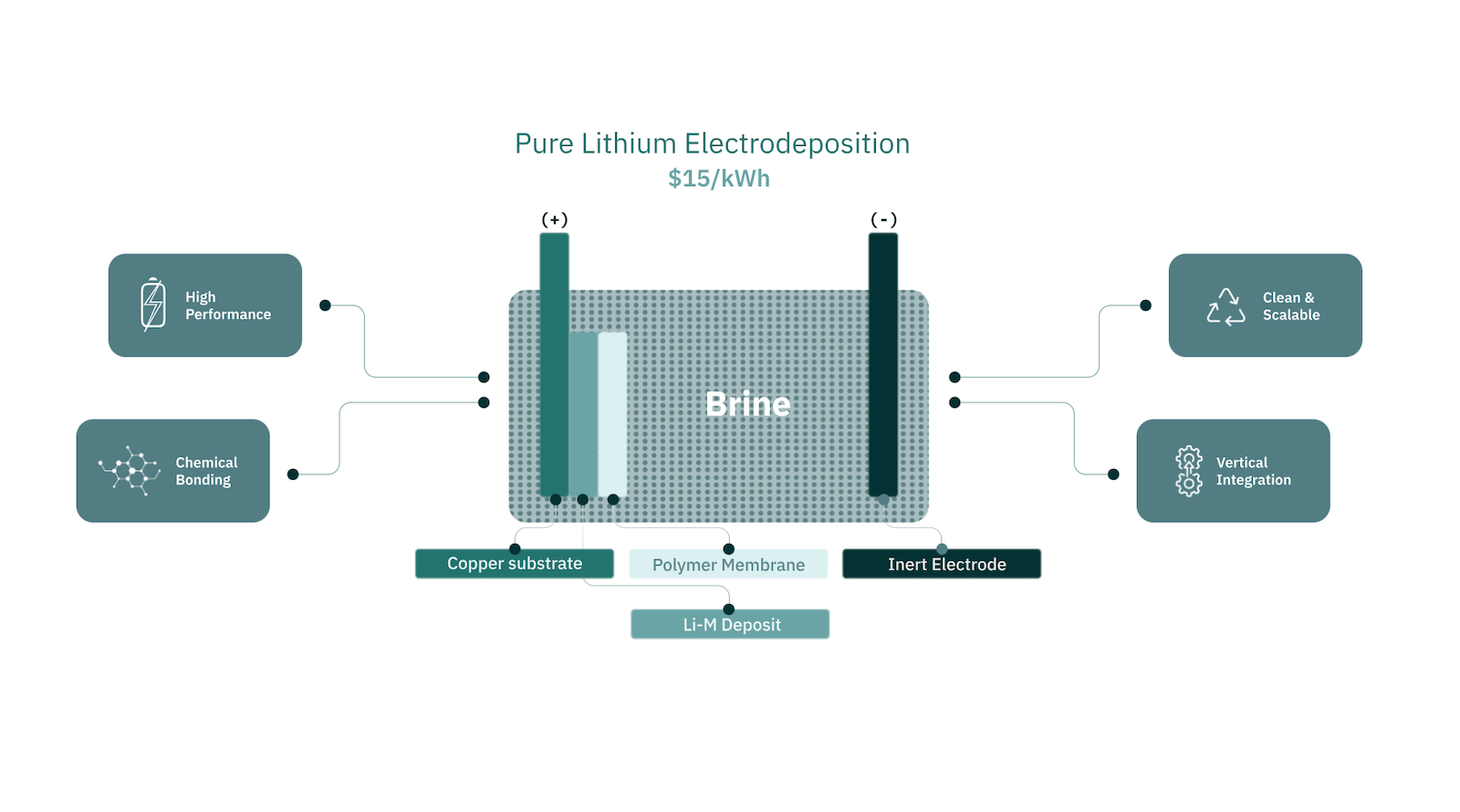
Last Updated on: 1st May 2025, 02:44 am Pure Lithium Corporation, a disruptive Boston-based, vertically integrated lithium metal battery technology company, is pleased to announce a strategic agreement with Kingston Process Metallurgy (KPM) to collaboratively scale, design, construct, and commission Pure Lithium’s proprietary pilot-scale lithium metal anode production reactor. Pure Lithium is advancing battery technology with a lithium metal vanadium oxide battery enabled by a novel, scalable, and cost-effective lithium metal electroplating process, Brine to Battery™, that bypasses traditional lithium compound production. In collaboration with KPM, known for its deep expertise in designing and optimizing complex chemical and metallurgical systems, the company is developing a fully integrated demonstration reactor capable of producing highly pure lithium metal anodes of varying thicknesses. The reactor will demonstrate the technical and economic viability of Pure Lithium’s end-to-end process, encompassing selective lithium extraction, electrochemical plating and efficient materials recycling. The project sets the foundation for future pilot plant and commercial development, supporting Pure Lithium’s mission to sustainably bring lithium from Brine to Battery™. Emilie Bodoin, Pure lithium Founder and CEO, comments: “Our lithium metal anode technology was a necessary first step to commercializing our lithium metal batteries. Without this technology at scale, these batteries would never reach commercialization due to the high cost and low quality of lithium metal produced by existing methods. I was first introduced to Kingston Process Metallurgy during my time with Argonne National Laboratory and I am pleased to work with them, given their deep expertise in metallurgical system design and development. The team at KPM will play a critical role in scaling our innovative lithium electroplating technology into a fully operational pilot-scale reactor. Their hands-on approach and experience in scaling complex processes gives us confidence as we move toward pilot-scale production and continue building a truly next-generation lithium metal battery at commercially viable price point.” About Pure Lithium Pure Lithium is a disruptive Boston-based lithium metal battery technology company led by its founders, inventor and lithium expert, CEO Emilie Bodoin, and world-renowned battery and metallurgical expert, MIT Emeritus Professor Donald R. Sadoway, as full-time CSO. The Company’s novel Brine to Battery™ technology combines metal extraction and anode production, bypassing traditional lithium compound production. The resulting pure lithium metal anode is the core component of our lithium metal vanadium oxide battery, a step-change improvement over today’s lithium-ion technology in cell performance, cost and safety. Additionally, the battery is free of graphite, cobalt, nickel and manganese. For more information, visit www.purelithium.io or email news@purelithium.io. About Kingston Process Metallurgy Kingston Process Metallurgy (KPM) is a Canadian company specializing in transforming innovative ChemTech ideas into commercially viable processes through deep technical expertise and hands-on development. With a multidisciplinary team of engineers, chemists, scientists, and technicians, KPM offers end-to-end support from laboratory-scale testing to pilot plant design and operation. Their mission is to bring clarity to process development—clarity on technical feasibility, economic potential, and the most efficient path to commercialization. Leveraging strengths in chemistry, unit operations, techno-economic analysis, and custom experimental design, KPM is a trusted partner for companies scaling breakthrough technologies. Sign up for CleanTechnica's Weekly Substack for Zach and Scott's in-depth analyses and high level summaries, sign up for our daily newsletter, and/or follow us on Google News! Whether you have solar power or not, please complete our latest solar power survey. Have a tip for CleanTechnica? Want to advertise? Want to suggest a guest for our CleanTech Talk podcast? Contact us here. Sign up for our daily newsletter for 15 new cleantech stories a day. Or sign up for our weekly one on top stories of the week if daily is too frequent. Advertisement CleanTechnica uses affiliate links. See our policy here. CleanTechnica's Comment Policy
OCI signs MOU for Texas BESS, Ormat's US$62 million tax equity
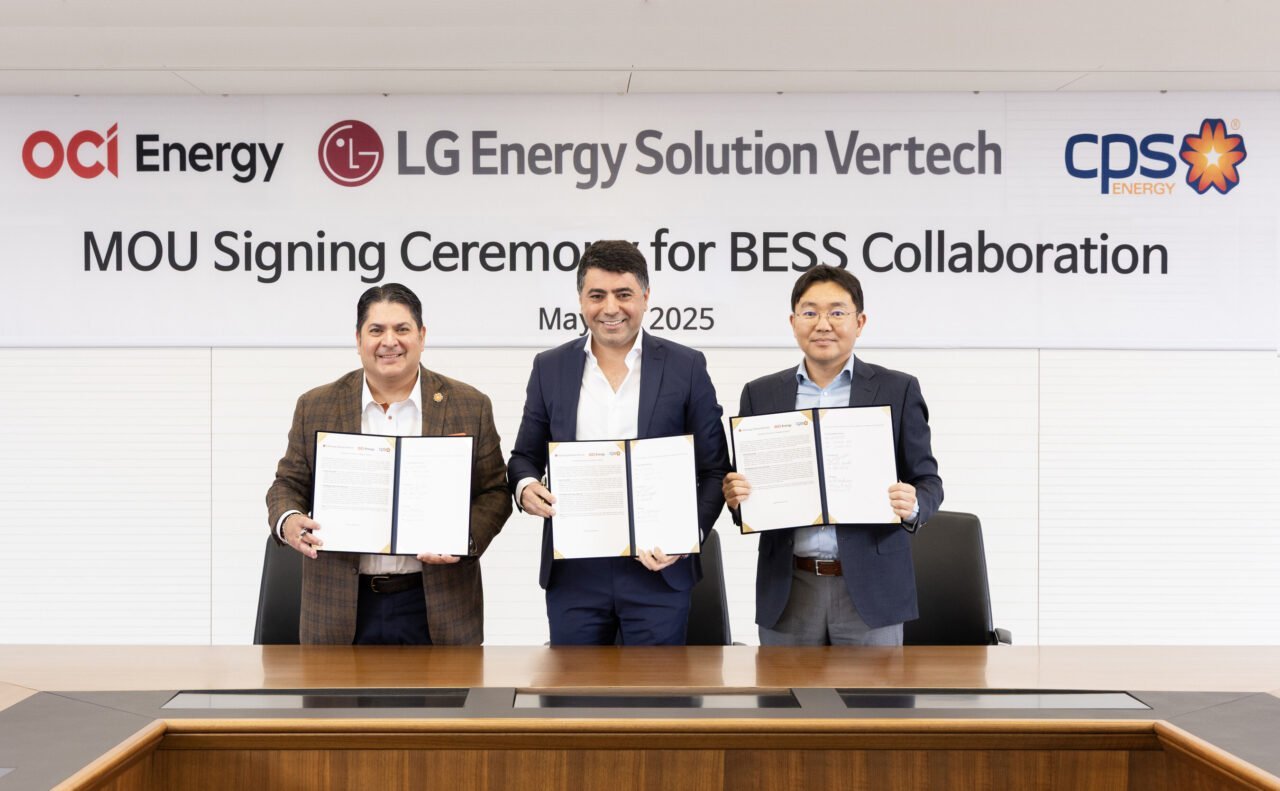
OCI signs MOU for Texas BESS, Ormat's US$62 million tax equity - Energy-Storage.News Skip to content
Teslas will self-deliver to customers, Elon Musk says: here's when

Known Elon Musk critic Mark Cuban is ready to sell his Tesla because of a simple feature that is one of the more polarizing amongst community members. Cuban and Musk have gone head-to-head in several back-and-forths on X, Musk’s social media platform, formerly Twitter. However, it is not the public spats that the two have shared that makes Cuban want to sell his car. In fact, it is something relatively trivial and a feature that many could easily adjust to in the matter of a few minutes of driving. For the entrepreneur and former owner of the Dallas Mavericks, it is a feature that every driver must use, but Tesla temporarily changed it in the Model 3, Model S, and Model X: the turn signal. With the refreshed versions of the S, 3, and X, Tesla chose to eliminate the turn signal stalk, instead opting for a turn signal button, which is located on the steering wheel. This was a change that was extremely polarizing among the Tesla community, with many requesting that the company reverse the change with the new Model Y. Credit: Tesla They listened, and the newest version of the all-electric crossover has a stalk. No turn signal haptics are available on the new Model Y. This is one feature Cuban said he cannot get into, and instead chooses to drive his Kia EV6, which he said he is “comfortable with.” On the Your Mom’s House podcast, Cuban commented on the stalk and turn signal button dilemma within the vehicle: “On the Tesla, you’ve got to find [the turn signal] and push the button…while you’re driving. You can’t pay attention to the road as much. [The Kia] doesn’t try to be too fancy. Your turn signal is like, a turn signal.” It’s hard to imagine that someone’s attention is taken away from the road when pushing a button. In my test drive of the new Model 3 last year, I noted that the button was definitely an adjustment, but it only took a few minutes to adjust to: “It only took me about three or four turns, or roughly ten minutes, to realize I needed to stop reaching for stalks. I feel like the buttons are super convenient, but there were times I would push the edges or corners, and the signal would not come on.” I drove the new Tesla Model 3, here’s what got better At least to me, it’s not super believable that pushing a turn signal button takes your attention away from the road for more than a split second. Do I like the traditional stalk more? Yes. However, it would not make me sell a car I really enjoyed driving. Cuban also said that his son called the EV6 “a nerd car,” to which he replied, “Exactly.”
California's Energy Revolution: Sunrun Quadruples Virtual Power Plant Ahead Of Summer

As California prepares for yet another summer marked by extreme heat, wildfire risks, and rising electricity demand, Sunrun is significantly scaling up its innovative CalReady distributed power plant. The project now links together 75,000 home solar batteries — four times larger than last year’s setup — becoming one of the most substantial distributed battery networks in the United States. The timing couldn’t be better, as California’s grid increasingly struggles to meet escalating energy demands amid frequent heatwaves and intensifying wildfire conditions. Traditional centralized power plants often struggle during these peak demand periods, highlighting a critical need for more flexible, decentralized power solutions. Sunrun’s expanded CalReady power plant addresses precisely this issue, creating a robust, distributed energy resource capable of supplying critical backup when the grid needs it most. Meeting Peak Demand With Decentralized Power CalReady, originally launched to help ease the stress on California’s power grid, experienced impressive growth this year, expanding from about 16,000 households in 2024 to more than 56,000 homes today. With these additional installations, the virtual power plant now has the capability to deliver up to 375 megawatts of instantaneous peak power, which is enough electricity to supply around 280,000 households, nearly matching the number of homes in Ventura County. Unlike traditional centralized battery or fossil fuel plants, CalReady leverages thousands of individual residential solar batteries. According to Sunrun CEO Mary Powell, this approach is fundamentally changing California’s energy landscape: “Sunrun has created one of the largest batteries in the country, rivaling large-scale utility projects but without taking up additional land or requiring costly new infrastructure. CalReady’s decentralized nature eliminates any potential single point of failure while offering greater resilience and flexibility for the state’s evolving energy needs.” A More Resilient Grid Through Distributed Systems One of CalReady’s biggest advantages is its decentralized structure. Traditional centralized power facilities, whether fossil-fueled or renewable, are vulnerable to single points of failure. A wildfire, severe storm, or infrastructure malfunction can quickly take these plants offline. By contrast, Sunrun’s distributed network, made up of thousands of independently operating batteries, significantly reduces these risks. CalReady is actively managed and dispatched by Sunrun, providing reliable daily grid support during peak energy usage hours from 4 to 9 p.m. from May through October. The California Energy Commission recognizes CalReady as the largest aggregation participating in its Demand Side Grid Support program, underscoring the importance and scale of this residential-powered resource. Financial Incentives & Lower Electricity Costs For Californians Beyond boosting reliability, CalReady offers substantial economic incentives for California homeowners. Participating households earn compensation of up to $150 annually per battery for allowing Sunrun to utilize stored solar energy during periods of high demand. In 2024 alone, CalReady delivered $1.5 million directly into the pockets of Sunrun customers. This year, with its significant expansion, the project expects total homeowner earnings to approach $10 million. Paul Dickson, President and Chief Revenue Officer at Sunrun, emphasized the benefits: “CalReady is unlocking meaningful opportunities for families to generate passive income from their existing storage and solar systems. Now in its second year, our rapidly growing power plant is proving that grid operators can depend on distributed energy resources to deliver reliable, cost-effective services at scale when critical emergency power is most needed.” This financial model stands in sharp contrast to California’s steadily rising electricity rates, which have consistently outpaced inflation and national averages. By providing alternative revenue streams for homeowners, CalReady also indirectly reduces costs for all California electricity users by offsetting expensive peak-time electricity purchases and delaying costly grid upgrades. Strong Consumer Demand Fuels Expansion The rapid growth of CalReady reflects broader consumer demand for home energy storage. At the close of 2024, more than 60% of new Sunrun customers nationwide (and nearly 90% in California) chose to pair batteries with their solar systems. The high adoption rates underscore growing homeowner awareness of the practical, financial, and resilience benefits provided by integrated solar-plus-storage solutions. Participation in CalReady is straightforward: Sunrun manages battery operations, making the experience seamless for homeowners. Importantly, customers who rely on batteries for emergency backup power are assured that at least 20% battery capacity will always remain available, safeguarding their ability to power essential home functions during local outages. A Model For National Expansion? Sunrun’s dramatic expansion of CalReady isn’t just significant for California, as it also offers a compelling blueprint for how distributed energy networks could be replicated nationwide. The successful aggregation of thousands of residential batteries demonstrates how similar networks could offer robust, scalable, and economically attractive solutions elsewhere. As California enters another challenging summer, Sunrun’s CalReady is more than just a technical achievement. It represents a fundamental shift toward a decentralized, homeowner-powered energy future, one which is capable of effectively meeting both today’s demands and tomorrow’s environmental challenges. Sign up for CleanTechnica's Weekly Substack for Zach and Scott's in-depth analyses and high level summaries, sign up for our daily newsletter, and/or follow us on Google News! Whether you have solar power or not, please complete our latest solar power survey. Have a tip for CleanTechnica? Want to advertise? Want to suggest a guest for our CleanTech Talk podcast? Contact us here. Sign up for our daily newsletter for 15 new cleantech stories a day. Or sign up for our weekly one on top stories of the week if daily is too frequent. Advertisement CleanTechnica uses affiliate links. See our policy here. CleanTechnica's Comment Policy
Energy storage IPPs reveal impacts of tariffs and tax credit risks
Energy storage IPPs reveal impacts of tariffs and tax credit risks - Energy-Storage.News Skip to content
Tesla lands on date for Robotaxi launch in Austin: report

Known Elon Musk critic Mark Cuban is ready to sell his Tesla because of a simple feature that is one of the more polarizing amongst community members. Cuban and Musk have gone head-to-head in several back-and-forths on X, Musk’s social media platform, formerly Twitter. However, it is not the public spats that the two have shared that makes Cuban want to sell his car. In fact, it is something relatively trivial and a feature that many could easily adjust to in the matter of a few minutes of driving. For the entrepreneur and former owner of the Dallas Mavericks, it is a feature that every driver must use, but Tesla temporarily changed it in the Model 3, Model S, and Model X: the turn signal. With the refreshed versions of the S, 3, and X, Tesla chose to eliminate the turn signal stalk, instead opting for a turn signal button, which is located on the steering wheel. This was a change that was extremely polarizing among the Tesla community, with many requesting that the company reverse the change with the new Model Y. Credit: Tesla They listened, and the newest version of the all-electric crossover has a stalk. No turn signal haptics are available on the new Model Y. This is one feature Cuban said he cannot get into, and instead chooses to drive his Kia EV6, which he said he is “comfortable with.” On the Your Mom’s House podcast, Cuban commented on the stalk and turn signal button dilemma within the vehicle: “On the Tesla, you’ve got to find [the turn signal] and push the button…while you’re driving. You can’t pay attention to the road as much. [The Kia] doesn’t try to be too fancy. Your turn signal is like, a turn signal.” It’s hard to imagine that someone’s attention is taken away from the road when pushing a button. In my test drive of the new Model 3 last year, I noted that the button was definitely an adjustment, but it only took a few minutes to adjust to: “It only took me about three or four turns, or roughly ten minutes, to realize I needed to stop reaching for stalks. I feel like the buttons are super convenient, but there were times I would push the edges or corners, and the signal would not come on.” I drove the new Tesla Model 3, here’s what got better At least to me, it’s not super believable that pushing a turn signal button takes your attention away from the road for more than a split second. Do I like the traditional stalk more? Yes. However, it would not make me sell a car I really enjoyed driving. Cuban also said that his son called the EV6 “a nerd car,” to which he replied, “Exactly.”
EcoFlow STREAM Ultra: A Game-Changer For Plug-&-Play Home Solar Systems

EcoFlow, a company already respected in the portable power and off-grid energy space, has just unveiled a product that could help reshape residential solar: the STREAM Ultra Plug-and-Play Home Solar System. Designed with a modular, DIY ethos in mind, the STREAM Ultra isn’t just an innovation, it’s a new category of residential energy product aimed at homeowners, apartment dwellers, and condo residents who have previously been locked out of traditional rooftop solar installations. A Real Plug-&-Play Solar Solution — Finally The term “plug-&-play” gets tossed around loosely in clean tech, but EcoFlow delivers on it here. The STREAM Ultra is a 1.92kWh lithium iron phosphate (LFP) solar battery with a built-in grid-tied microinverter. Unlike traditional solar+storage systems that require roof mounting, permit approvals, and hardwired installation, Stream Ultra connects via a standard 120V wall outlet. Setup takes minutes, not months. EcoFlow is targeting a major market segment long underserved by the solar industry: renters and residents of multi-family buildings. Unlike rooftop systems that require property ownership, building approvals, and often costly electrical work, the STREAM Ultra operates as an appliance. Place the panels, plug the system in, and start saving. The Microinverter variant is also available as a standalone product for households that want immediate solar generation without storage. EcoFlow STREAM Series Impressive Specs & Modular Flexibility At the core of the STREAM Ultra’s appeal is its scalability and intelligent design. Out of the box, the battery provides 1.92kWh of LFP storage, known for thermal stability and 6,000-cycle longevity. But users aren’t locked into a single unit: the system supports up to 11.52kWh via additional stackable Ultra batteries. Even more compelling is that multiple units can operate in parallel across a residence, syncing intelligently regardless of physical location. The STREAM Ultra supports a dual-mode solar input of up to 3,200W, utilizing a 4-MPPT (Maximum Power Point Tracking) design. This configuration maximizes solar energy capture, even under varying environmental conditions. In terms of solar input, users have three flexible configurations: STREAM Ultra alone: Up to 2,000W solar input; 1,200W AC output to the home; the remainder stored. Microinverter alone: Up to 1,200W solar input/output; no storage. STREAM Ultra + Microinverter: Up to 3,200W solar input with hybrid storage and output. The system’s built-in microinverter sends up to 1,200W of electricity directly to the home, and excess solar is stored in the battery for evening or emergency use. It’s a tight, well-integrated solution, ideal for homes with patios, balconies, or modest outdoor space. AI-Driven Energy Management With EcoFlow OASIS What sets the STREAM Ultra apart from other DIY battery systems is its native integration with EcoFlow OASIS, the company’s AI-powered energy management platform. This cloud-based platform goes far beyond simple app controls, offering: Real-time usage monitoring Time-of-Use optimization Smart charging and discharging scheduling Battery health diagnostics Proactive blackout prep Multilingual 24/7 virtual assistant EcoFlow OASIS helps users actively reduce electricity bills and extend battery life by making real-time, AI-informed decisions about when and how to charge, store, or discharge power. This is the kind of functionality typically reserved for high-end whole-home battery systems, but now it’s available in a portable plug-in format. Durability Meets Design The STREAM Ultra doesn’t just work well — it’s built to last. With a NEMA 4 weatherproof rating, it’s suitable for outdoor use, and it operates reliably in temperatures as low as -14°F (-20°C). That makes it especially relevant for colder US states. Safety features include intelligent load monitoring that auto-regulates AC output to stay within the 1,200W limit and prevent tripping circuits. From a design standpoint, the unit is compact and minimal, avoiding the industrial look common in energy storage products. It’s appliance-like in the best sense — clean, intuitive, and quietly powerful. Tangible Savings & Grid Independence EcoFlow estimates that a setup consisting of one STREAM Ultra and one Microinverter can generate over 6,000kWh annually, or roughly 50% of the average US household’s consumption. That could equate to utility bill savings of up to $1,027 per year. Given the modularity of the system, users can scale to offset an even higher percentage of their usage or maximize energy independence. With rising electricity rates in many states, particularly Utah, where the product is first launching, this is an especially timely release. The STREAM Ultra’s value proposition is simple: affordable, user-controlled solar power that pays for itself in just a few years. Cost & Availability EcoFlow is launching the STREAM Series in Utah due to its favorable conditions: high solar potential, a growing multi-family housing sector, and regulatory support for plug-in solar systems. Other states are expected to follow based on legislative changes and demand. “By launching STREAM Series in Utah, we’re taking the first step in making renewable energy simple and accessible for people in the US who have not been able to enjoy the benefits of residential solar. We’ve successfully launched this solution across Europe over the past two years with more than 120,000 units sold. We’re now applying our global experience to bring flexible solar options to Americans beyond just single family homes. Plug-and-play home solar systems allow people to save on electric bills while avoiding the high costs, permitting and months-long installation timelines of traditional systems.” — Brian Essenmacher, head of North American business development at EcoFlow Early-bird pricing (valid through July 31): These prices position the Stream Ultra as a premium but highly accessible solar product, especially considering the energy capacity and software ecosystem included. Conclusion The EcoFlow STREAM Ultra doesn’t just democratize access to solar, it redefines what home energy systems can be. For solar-savvy users who value flexibility, control, and ROI, it offers a genuinely plug-and-play, AI-optimized, expandable path toward energy independence. This system is not a backup generator or a simple off-grid battery; it’s a forward-looking platform that merges smart energy with user autonomy. As traditional rooftop solar continues to struggle with soft costs, permitting bottlenecks, and structural limitations, EcoFlow’s STREAM Series could lead a new wave of accessible residential solar adoption. For those looking to cut bills, reduce
Amprius contracts South Korean battery manufacturer

The Californian developer of batteries with silicon anodes, Amprius, has signed a contract manufacturing agreement with an unnamed “leading battery manufacturer in South Korea.” Its plant in South Korea will manufacture SiCore silicon anode cells to Amprius’ specifications, supporting both current and future battery platforms. Amprius says that the new partnership “represents a pivotal step in Amprius’ journey to scale its SiCore platform” and that the unnamed Korean battery maker “brings extensive experience in manufacturing advanced lithium-ion batteries across a range of form factors and cell chemistries.” South Korea is home to several battery-making giants and multiple smaller players. In January this year, Amprius said its new SiCore cell has been designed to meet the rigorous demands of aerospace and defence applications, and that it is collaborating with leading aerospace and defence customers to prepare for commercial use of the technology. At the time, the Californian silicon anode developer said it had established a global contract manufacturing network with gigawatt-hour-scale production capacity, enabling cost-competitive delivery. Now, with the new manufacturing partner in South Korea, the company adds this capacity to an existing 1.8 GWh of contracted production capacity. Amprius says the new capacity will enable it “to deliver at volume and compete more effectively across global markets.” Production in South Korea with the new agreement is stated to “include a balanced SiCore cell engineered to deliver high-energy and high-power performance for an advanced drone.” The facility will manufacture SiCore silicon anode cells to Amprius’ specifications, which the company says will support both current and next-generation battery platforms “optimised for high-demand applications in aerospace, defence, and electric mobility.” Silicon anodes have the advantage of avoiding limited graphite supplies, which are dominated by China both in the production of synthetic graphite and the processing of mined graphite. At the end of 2022, the US government funded three companies, Amprius Technologies, Group14 Technologies, and Sila Nanotechnologies build factories for silicon anode materials. businesswire.com
Rooftop Solar Is Winning (Trump Is Losing)

US President Trump snuffed out practically the entire domestic offshore wind industry upon taking office in January, but the rooftop solar movement is a much tougher beast to kill. A case in point is the leading domestic solar firm Sunrun. In a major pushback against Trump’s love affair with all things fossil, the company has just launched a first-of-its-kind incentive plan aimed at equipping more households with rooftop panels and home energy storage systems, too. Bucking The Rooftop Solar Headwinds The domestic rooftop solar industry could certainly use a pick-me-up. Times are tough these days. The former rooftop leader Tesla, for example, stopped reporting its sales in 2024 after suffering through four straight quarters of decline. Go ahead and blame Tesla’s spiraling brand reputation if you will, but solar industry watchers have noted a broad slowdown in activity globally, and other domestic rooftop companies have also been in a fix. In March Financial Times recapped the situation in the US, noting that another residential rooftop solar industry leader, SunPower, filed for bankruptcy protection in the summer of 2024. FT also name-checked the solar installer Sunnova, which is prepping for bankruptcy according to a report in Bloomberg last week. “Longer interest rates and an American president hostile to anything resembling clean energy are a toxic combination for companies with burdened balance sheets,” FT observed, also drawing attention to the uncertain future of solar subsidies under the Inflation Reduction Act of 2022. Next Steps For The Rooftop Solar PPA FT also cites the solar-as-a-service business model as a contributor to the financial instability of some US rooftop stakeholders. As a sort of power purchase agreement in miniature, solar-as-a-service relieves homeowners from the up-front cost of installing rooftop solar panels. Instead, they pay off the project in small installments, through monthly bills. That system worked for the rooftop solar industry until higher interest rates kicked in, among other factors. “Clean energy companies have relied on cheap money and government subsidies to sustain them until they reach escape velocity. Those boosters have all disappeared at the same time,” FT summarized. The Power Of The Power Purchase Agreement Somewhat ironically, Sunrun can take credit for introducing the PPA model to the residential rooftop solar field all the way back in 2007, so it stands to reason that the innovative company would figure out another transformative financial transaction to help kick its business up to the next level while others falter (see lots more Sunrun background here). On Wednesday, Sunrun announced the launch of its new “Sunrun Flex™” service, billing it as the “first solar and battery storage solution designed to adapt to customers’ changing energy needs.” The new service provides solar-curious homeowners with assurance that their solar PPA will adapt to their benefit, even if (and when) their electricity demand rises. Rise it will, according to Sunrun. The addition of new family members is one factor that can lead to rising demand after a homeowner installs rooftop solar panels. The new family member doesn’t necessarily have to be human, either. A new EV, for example, can push the electricity demand numbers up when a home charger is available, and the overwhelming majority of EV owners prefer to recharge at home. “We know households that go solar increase their energy consumption by about 15% within the first year,” SunRun President and Chief Revenue Officer Paul Dickson notes. “It’s also not uncommon for solar customers to adopt an electric vehicle, which drives up their energy consumption even more,” said Dickson adds. The new Flex program includes a home storage unit to help cure a common issue with new rooftop solar arrays. “Until now, home solar systems were designed to either match a household’s current energy usage or be oversized in anticipation of future needs — potentially resulting in either unmet needs as energy usage increases or generating solar energy that is not used immediately,” Sunrun explains. Rooftop Solar Is Just The Beginning Under the Flex model, ratepayers get a predictable, locked-in monthly minimum rate based on their pre-installation electricity consumption. They only pay an additional “Flex Rate” during months when they exceed their baseline. Sunrun also guarantees that their annual payment will never exceed the electricity produced by their solar panels. That’s a nifty way of incentivizing energy conservation. As an additional, first-of-its-kind energy-saving incentive, the Flex model also enables customers to earn rollover credits when they use less electricity than their baseline. They can bank those credits to offset any baseline-topping increases in their electricity use, including seasonal spikes. If the local utility provides grid services incentives to their ratepayers, Flex customers are automatically enrolled in those, too, providing an opportunity to sell extra kilowatts back to the grid. Also sweetening the pot is the home battery, which comes standard with of the Flex package. Sunrun anticipates that its customers will use the battery routinely to avoid peak rates, in addition to deploying it as an emergency backup system when needed. Will It Work, Though? Global slowdown or not, supportive public policies can help keep the domestic solar industry humming along. It’s too bad the US government is now under the control of a malevolently incompetent errand-runner for oil, gas, and coal stakeholders, but presidents come and go, and state-based solar incentives are still operative in some states. Sunrun, for one, is already seeing some traction for the Flex program. In an email to CleanTechnica, the company stated that thousands of households with rooftop solar panels are already enrolled in California, and the firm’s initial expansion plans include Illinois and Texas. Of course, no story that mentions Tesla at the top is complete without circling back around to that subject at the bottom. As fate would have it, Sunrun is banking on the popularity of Tesla’s new Powerwall 3 home batteries to help sell the Flex package. That could be a lifesaver for Tesla, at least as far as its home energy storage business. Or not, as the case may be. In April, the leading
Utah Republican Senator praises tax credits at Fluence factory- Energy-Storage.News

Utah Republican Senator praises tax credits at Fluence factory- Energy-Storage.News Skip to content
Tesla investors demand 40-hour workweek from Elon Musk
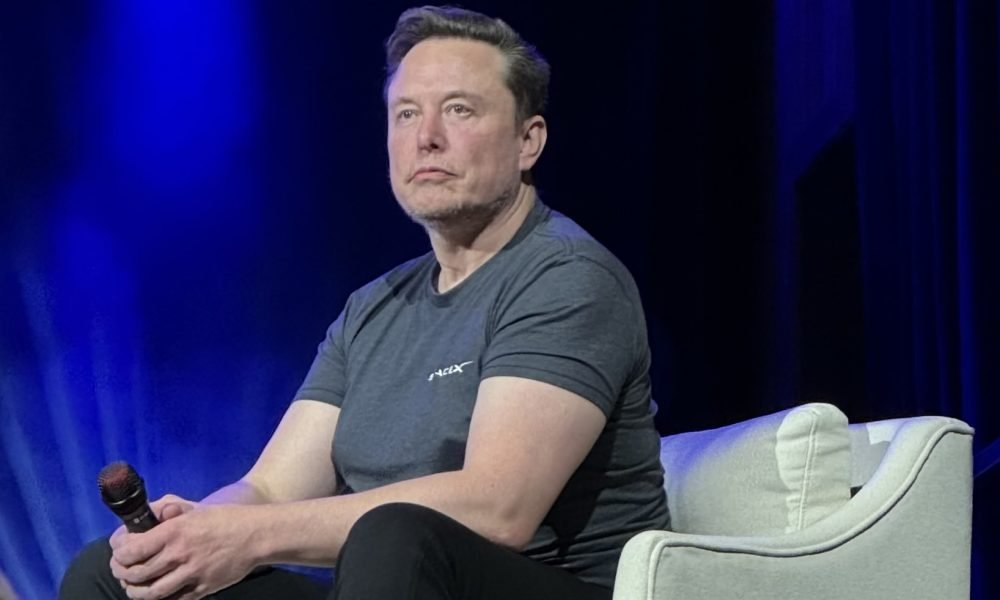
Tesla analyst Gary Black of The Future Fund revealed today that his firm has sold its entire $TSLA holding, marking the first time since 2021 that it has not had a position in the company’s stock. Black has been a skeptic of the company and relatively pessimistic regarding some things many investors would consider catalysts, outlining his concerns and reasoning for selling the shares. Much of Black’s reasoning concerns Tesla’s price-to-earnings ratio, delivery results and potential delivery figures for the future, and other near-term projects that he does not believe will yield as much value as others perceive. We will break down each concern of Black’s below: ‘Disconnected from Underlying Fundamentals’ Black says that The Future Fund sold its holdings at $358 per share. The firm’s current price target is at $310, and he says it will remain there based on “our forecast of 2030 Tesla volumes of 5.4m and 2030 Adj EPS of $12. Main Concern is P/E Ratio The main concern Black and The Future Fund have is that TSLA “now sells at a 2025 P/E of 188x as earnings estimates continue to fall (-5% in the past week, -40% YTD) driven by weak YTD deliveries, including weak April results.” Black says he believes quarterly deliveries will decline by 12 percent, and full-year by 10 percent. This compares to Wall Street’s estimates of a 7 percent decrease for Q2 and a 5 percent year-over-year. Robotaxi Skepticism “We believe the risk/reward associated with the Austin robotaxi test remain asymmetrical to the downside,” Black writes in his post on X. Tesla Robotaxi deemed a total failure by media — even though it hasn’t been released Many believe the Robotaxi platform could be Tesla’s biggest catalyst moving forward, especially as other automakers do not seem to have even close to as robust a solution to self-driving as Tesla. Tesla’s Affordable Models Black says there are concerns the affordable model will be “a stripped-down Model Y priced lower and funded by lower costs rather than a new form factory that expands TAM.” This is confusing, especially considering the cheaper price tag would expand the total addressable market (TAM) to begin with. The Model Y has been the best-selling vehicle in the world for the past two years. Tesla still on track to release more affordable models in 1H25 Introducing an even lower-cost model with some missing features would still likely be a significantly more attractive option than a base model ICE vehicle, especially because the value Full Self-Driving provides would make the car more beneficial. “This increases odds that FY’25 estimates decline further, risking a repeat of 2023-2024, when TSLA reduced EV prices supported by lower costs, and TSLA saw little or no incremental volume growth,” he finishes with.
The Bluetti Apex 300: Scalable Power, Smarter Energy, & A Step Beyond Backup
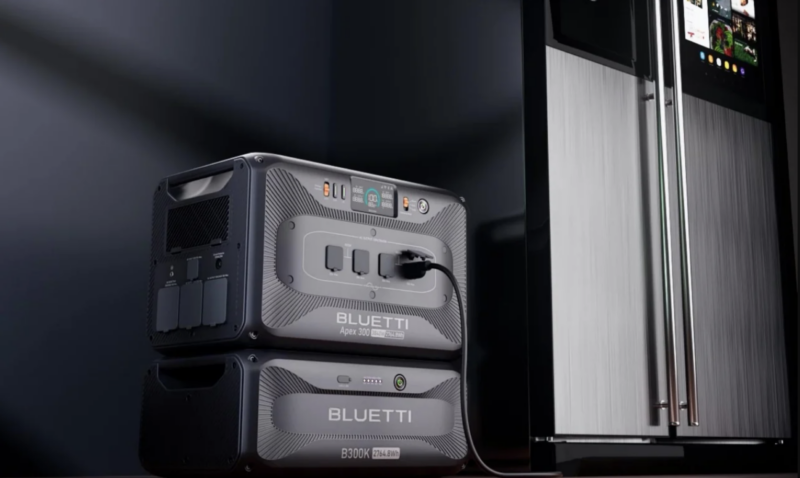
Bluetti has built a solid reputation in the home energy market, and with the release of the Apex 300, the company is clearly aiming for more than just reliable backup power. This isn’t a simple successor to the AC300. It’s a modular, high-output, smart storage system built for people who want to take serious control over their home energy. Whether you’re looking to optimize your solar setup, cut energy bills, or power an off-grid lifestyle, the Apex 300 brings a level of flexibility, expandability, and intelligence that stands out in the increasingly crowded energy storage space. Key Specifications Base capacity: 2,764.8Wh Expandable up to: 19.35kWh with 6 x B300K modules AC output: 3,840W (continuous) Voltage: Supports both 120V and 240V Parallel support: Up to 3 units, for a total of 11.52kW output Solar input: Up to 30,000W with Bluetti’s new SolarX 4K voltage regulators Switchover time: 0ms (uninterrupted backup) Built For Modularity & Growth The Apex 300 was clearly built with scale in mind. At its core, the base unit provides nearly 2.8kWh of usable energy. But thanks to Bluetti’s B300K expansion modules, you can grow the system to over 19kWh, enough to support essential appliances for multiple days or power a full home through prolonged outages. Need more power? You can run up to three Apex 300s in parallel, giving you over 11.5kW of output — enough to run high-demand tools, electric vehicles, or multiple HVAC units. And the best part? It’s hot-swappable. You can add or swap batteries without taking the system offline. Ultra-Fast, Flexible Charging One of the standout features of the Apex 300 is its charging speed and input versatility. With Bluetti’s SolarX 4K voltage regulators, you can input up to 30,000W of solar power, which is enough to fully charge the system in as little as 1.6 hours under optimal conditions. For users combining solar with grid power, the Apex 300 allows dual charging from AC and solar simultaneously. This not only reduces charging time but also opens up smart energy usage strategies like peak shaving and time-of-use optimization. Smart Energy Management With Real Savings The Apex 300 goes beyond backup, as it helps you optimize your day-to-day energy use. Through the Bluetti app, you can schedule when and how the system charges and discharges. Want to charge the battery during off-peak hours and use it during peak pricing? No problem. According to Bluetti, this kind of intelligent load shifting can save up to $2,400 per year on electricity bills for high-usage households. And during blackouts, the 0ms switchover time ensures that your critical devices stay on with zero interruption — ideal for sensitive electronics or home office setups. Versatile Enough For Any Situation The Apex 300 is more than just a home battery. Its modular, portable-friendly design also makes it ideal for: Full home backup Off-grid cabins and homesteads RV and van life setups Jobsite and remote workstations Bluetti even offers kits designed specifically for mobile and outdoor use cases, taking advantage of its dual charging and scalable storage. Apex 300 vs. AC300: What’s New? If you’re familiar with Bluetti’s AC300, the Apex 300 brings some key upgrades. While the AC300 delivers 3,000W of output and 3,072Wh capacity, the Apex 300 increases that to 3,840W output with a slightly smaller starting capacity but greater expandability. It also significantly ups the ante with solar input — 30,000W vs. AC300’s 2,400W — thanks to the new SolarX 4K regulators. That’s a big leap for anyone planning a serious solar buildout. Final Thoughts For users who understand the value of modularity, intelligent energy management, and serious solar integration, the Bluetti Apex 300 checks nearly every box. It’s not just a backup battery, it’s a full-featured home energy solution, and one that grows with your needs. With industry-leading power output, lightning-fast solar charging, and seamless app-based control, the Apex 300 is more than just a new product — it’s a platform. For more information, explore the full specs and pre-order details on the Bluetti website or the Indiegogo campaign page. Sign up for CleanTechnica's Weekly Substack for Zach and Scott's in-depth analyses and high level summaries, sign up for our daily newsletter, and/or follow us on Google News! Whether you have solar power or not, please complete our latest solar power survey. Have a tip for CleanTechnica? Want to advertise? Want to suggest a guest for our CleanTech Talk podcast? Contact us here. Sign up for our daily newsletter for 15 new cleantech stories a day. Or sign up for our weekly one on top stories of the week if daily is too frequent. Advertisement CleanTechnica uses affiliate links. See our policy here. CleanTechnica's Comment Policy
EU Battery Due Diligence Rules: Are Carmakers Ready?
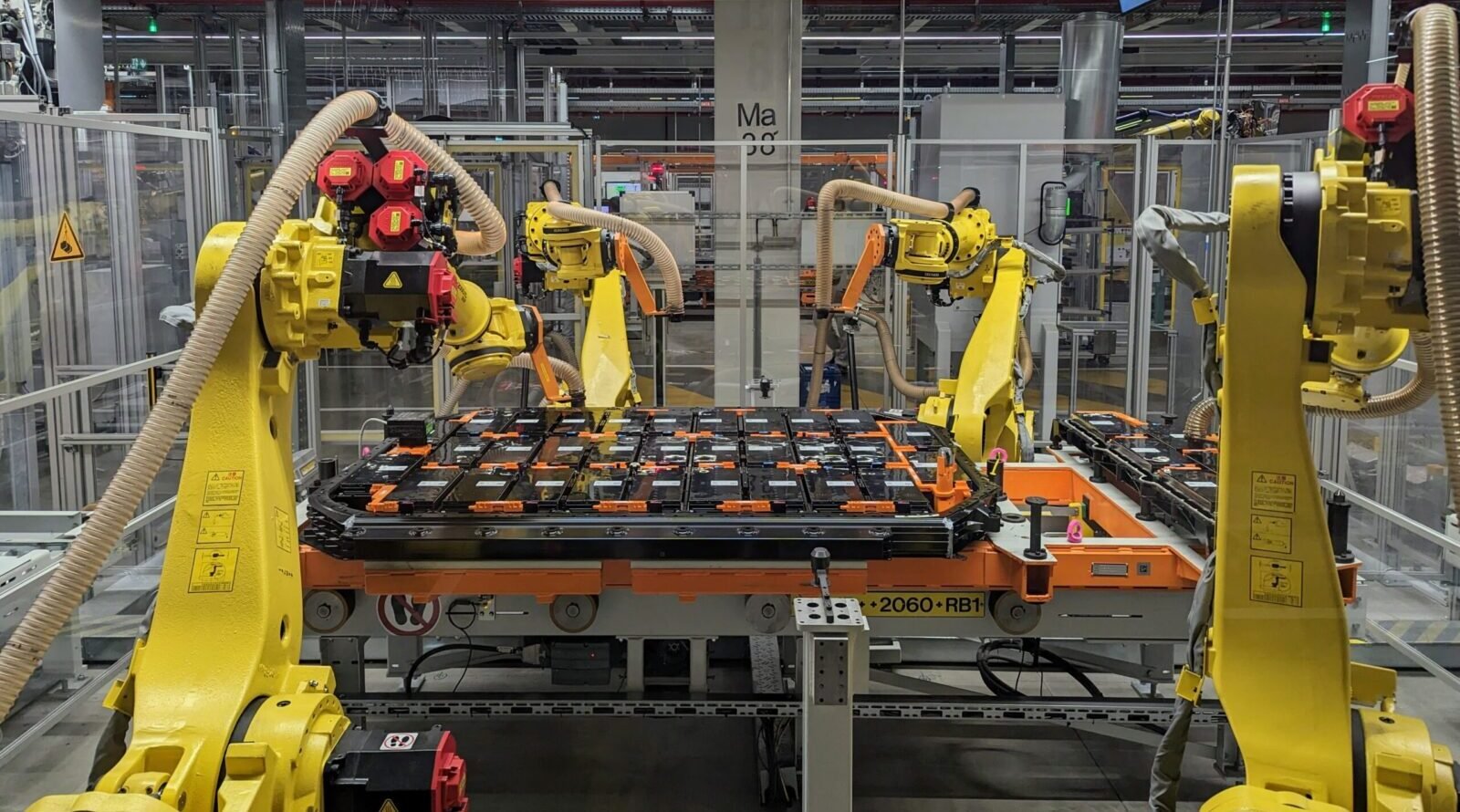
A new briefing assesses carmakers’ implementation of the EU Batteries Regulation due diligence obligations. As the world continues to shift to renewable energy systems and electric vehicles, which are key to achieving climate neutrality by 2050, ensuring sustainable and responsible battery supply chains is vital. The EU Batteries Regulation due diligence rules, if implemented correctly, will be a turning point for green and ethical batteries. Under these rules, companies will need to identify, mitigate and account for human rights, environmental and climate change impacts in lithium, nickel, cobalt and graphite supply chains of batteries found on the EU market. With the rules due to enter into force in August, and at a time of increased pushback against sustainability requirements, now is the time to keep ambition high, and not lower the bar. This briefing takes a look at carmakers’ implementation of the EU Batteries Regulation due diligence rules to date, showcasing best practice examples and areas for improvement. The analysis, whilst not exhaustive, relies on publicly available data and builds on T&E’s Pedal to the Metal study and Lead the Charge’s Leaderboard results. It finds that: Overall, progress is being made. OEMs have started rolling out supply chain policies and transparency measures, preparing to meet the due diligence requirements. For example, whilst not all automakers are assessing all the necessary risks, the majority have some form of risk assessment in place. The key now will be to ensure that all risks are being assessed throughout entire supply chains in order for a comprehensive risk mitigation to take place. When looking at how individual environmental risks are mitigated, there has also been some progress across different actions. There has been significant progress in disclosing greenhouse gas emissions, with the majority of carmakers disclosing total scope 3 GHG emissions. Headway has also been made in implementing traceability systems. Whilst not all carmakers are tracing their battery minerals all the way back to the mine, a majority have some form of system in place. Nevertheless, gaps remain. Whilst carmakers have general policies on deforestation in their supply chains, only one has a concrete, time-bound commitment. In addition, whilst carmakers generally disclose their own water usage, they don’t disclose water usage by suppliers. Progress in these areas would support risk mitigation. Finally, European automakers are much more advanced in their preparedness compared to Chinese OEMs, with European companies such as BMW and Mercedes, leading across numerous due diligence requirements, such as risk identification and assessment and supply chain traceability. It is therefore more important than ever for the European Commission to get implementation right. T&E calls on the European Commission to: Keep the primary text of the battery regulation due diligence provisions and refrain from any weakening of the obligations, focusing on pure reporting simplification. Finalise the guidelines for implementation of the due diligence requirements, according to best practice and in line with existing international standards, before entry into force of the rules, whilst ensuring notified bodies across all Member States are in place to verify compliance. If delaying the rules is unavoidable, it should be a delay of no more than 1 year. Establish robust and targeted criteria for recognising due diligence schemes, as foreseen under the Regulation. The criteria must ensure schemes can only be recognised if they demonstrate full alignment with the regulation. Download full briefing. Article first published on T&E website. Sign up for CleanTechnica's Weekly Substack for Zach and Scott's in-depth analyses and high level summaries, sign up for our daily newsletter, and/or follow us on Google News! Whether you have solar power or not, please complete our latest solar power survey. Have a tip for CleanTechnica? Want to advertise? Want to suggest a guest for our CleanTech Talk podcast? Contact us here. Sign up for our daily newsletter for 15 new cleantech stories a day. Or sign up for our weekly one on top stories of the week if daily is too frequent. Advertisement CleanTechnica uses affiliate links. See our policy here. CleanTechnica's Comment Policy
Solar Gets Cheaper, Systems Get Bigger: EnergySage Report Maps A Shifting Market

The 20th edition of EnergySage’s Solar & Storage Marketplace Report offers a comprehensive look at the residential solar and storage sector in the US during a turbulent 2024. Drawing from thousands of quotes submitted by vetted installers through EnergySage’s platform, the report tracks real-time market trends across pricing, equipment preferences, financing, and consumer behavior. For industry professionals already fluent in solar and energy storage dynamics, the 2024 findings paint a nuanced picture of contraction, innovation, and regional variability. Market Contraction Amid Macroeconomic Pressure Residential solar installations declined sharply in 2024, dropping 31% year-over-year according to Wood Mackenzie. This contraction, following years of robust growth, was driven by high interest rates, subdued electricity price inflation, and significant policy changes — most notably California’s Net Billing Tariff (NBT), which reduced export compensation for solar-only systems. Despite this slowdown, EnergySage data suggests consumer interest in clean energy remains strong, especially when storage is involved. Record Low Prices For Solar & Storage For the third consecutive six-month period, the median quoted solar price dropped, reaching an all-time low of $2.50/W in H2 2024. Quotes for solar-only systems fell to $2.65/W, while solar-plus-storage quotes dipped even further to $2.40/W — a 7.3% drop from H1 2024. Battery prices also hit historic lows, with the median quoted storage price landing just below $1,000/kWh for the first time. This pricing shift is largely due to falling equipment costs (e.g., a 30% YoY drop in panel prices per Wood Mackenzie), intensified installer competition, and growing market adoption of integrated solutions like Tesla’s Powerwall 3. “Heading into 2025, solar and battery prices had never been lower on the EnergySage Marketplace, and for homeowners, that means more affordable and accessible clean energy solutions. This creates a compelling record-low benchmark to measure against as we begin to see the effects of shifting policies and tariffs take hold this year.” — Emily Walker, Director of Content and Insights at EnergySage Tesla’s Powerwall 3 Redefines Market Dynamics The Powerwall 3’s launch disrupted both storage and inverter segments. With an integrated hybrid inverter, Tesla’s share of the storage market soared to 63% — the highest for any brand in EnergySage history — and made Tesla the second-most quoted inverter provider. The national battery attachment rate reached 45% in H2 2024, also a record high, reflecting the shifting economics and value propositions under policies like California’s NBT. Tesla’s dominance drove overall price reductions, but also raised concerns about future supply shortages and reputational risks stemming from brand controversies, both of which may affect 2025 trends. “Tesla’s emerging dominance in both storage and inverter quotes reflects the market’s appetite for integrated, all-in-one solutions. But as concerns around availability and brand sentiment surface, we’re watching closely to see whether this momentum holds or if consumer backlash will begin to shift installer and homeowner preferences.” — Charlie Hadlow, President and COO of EnergySage Shifts In Equipment: More Power, Fewer Choices The industry continues to pivot to higher-wattage panels: in H2 2024, 33% of quotes featured modules rated over 450 W, up from just 1% a year earlier. Only 14% of quotes included modules below 400 W, compared to 81% in H2 2023. This shift is attributed to improved module efficiencies, larger form factors, and evolving installer preferences. REC emerged as the most quoted panel brand (46% of quotes), overtaking Qcells. On the inverter front, Enphase retained the top spot but lost significant share (down to 53% from 73% in H1), mainly due to Tesla’s gain. Interestingly, installer brand loyalty continues to tighten in panel selection, as 41% of installers offered only one panel brand in H2 2024. However, inverter diversity grew, with fewer installers exclusively offering one brand, reflecting a shift in product strategy driven by hybrid systems and battery integration. Geographic Divergence In Price & System Size State-level differences in pricing and system characteristics were stark: Arizona retained the lowest median solar price at $1.99/W, while Tennessee topped the list at $3.35/W — a spread of $15,640 on an 11.5 kW system. The top solar states — California, Florida, and Texas — had median prices at least $0.25/W below the national median, largely due to high battery attachment rates and Tesla’s market penetration. System sizes increased across all top 10 states, averaging 6.5% growth from H1 to H2. States with high electricity consumption, like Texas and Florida, quoted the largest systems (~14 kW), reflecting rising home electrification and climate-driven energy needs. Financing: A Shift Toward Low-Fee Loan Structures High interest rates dulled demand for solar loans, dropping to 39% of installations nationally, but spurred a shift in loan structure preferences. Low-fee, higher-interest loans (≤3% fees) comprised 47% of EnergySage quotes in H2, up from 40% in H1. Installers increasingly favor lenders like Climate First Bank, Atmos Financial, and Credit Human for offering consumer-friendly loan terms. The most common financing product in H2 was a 20-year loan at 8.49%, signaling that despite high rates, buyers still prioritize long-term affordability and early payoff options. Storage Adoption Soars Beyond California Battery interest reached 73% of shoppers in H2 2024, and 45% moved forward with a purchase, which was more than double the 22% attachment rate a year earlier. While California’s policy changes were a major catalyst (with its attachment rate reaching 79%), other states followed suit due to growing grid instability, shifting net metering, and lower battery prices. Tesla was the most quoted battery brand in all 10 top storage states, even in markets where Enphase had previously dominated. Storage sizes normalized at 13.5 kWh, but pricing and adoption were heavily influenced by regional factors. Heat Pumps: A Complementary Trend EnergySage also reported on its Heat Pump Marketplace, highlighting growing electrification synergies. Heat pump costs varied significantly by state and system size, with ductless systems being more cost-effective in older housing stock markets like Massachusetts. System costs rose sharply above 5 tons, reflecting equipment and labor inefficiencies. Outlook For 2025 The report emphasizes several factors that could influence the 2025 landscape: Tariff uncertainties affecting module supply chains and inverter