Large Solar Power + Energy Storage Projects Completed at Fresno Department of Public Utilities
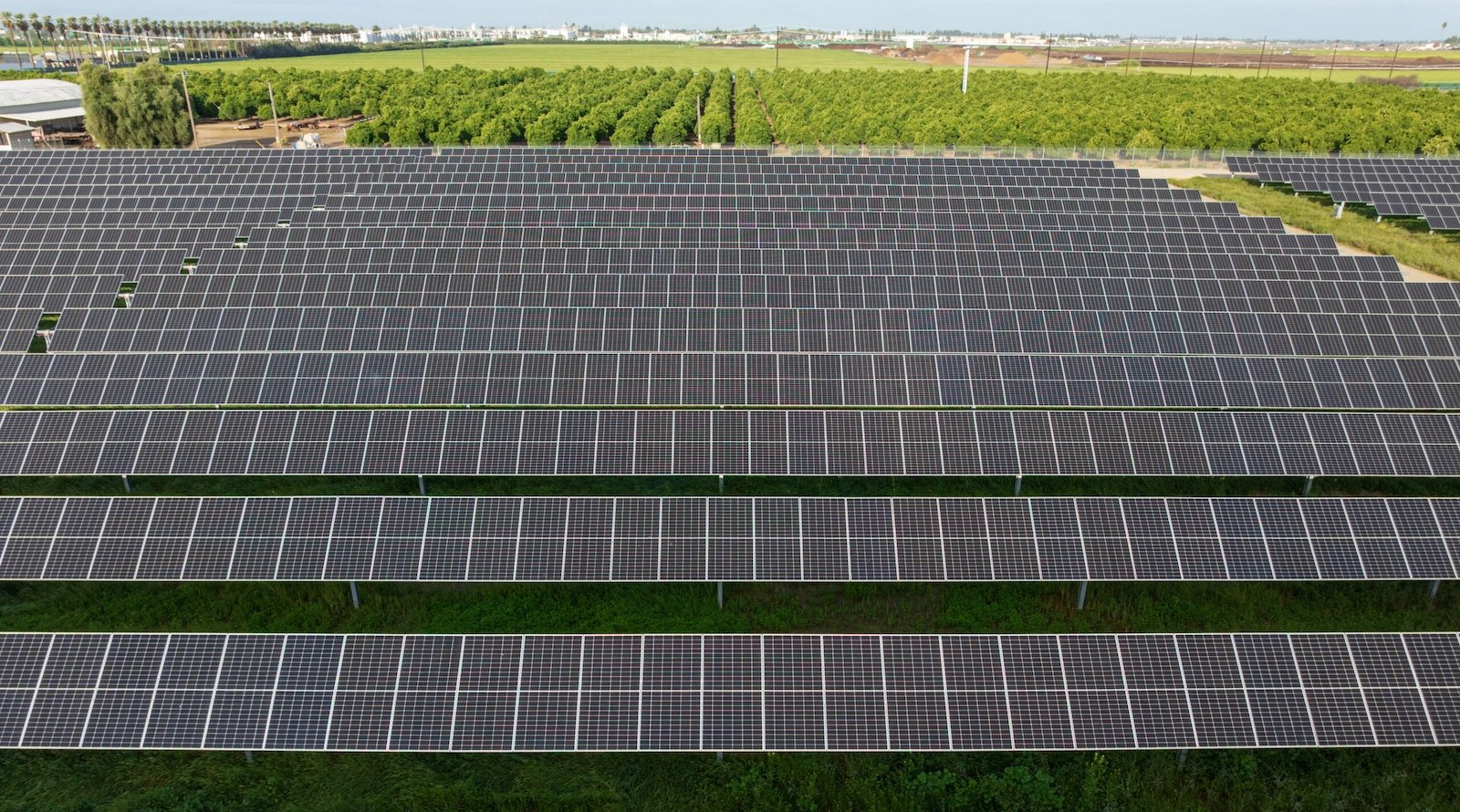
The City of Fresno recently celebrated the completion of several solar power and energy storage projects, which could save taxpayers over $122 million by 2045. The project developer is ForeFront Power. Fresno has about 300 days of sunshine per year and sunlight is a free source of clean, renewable energy. For a little additional context, Fresno has over 540,000 people. Here at CleanTechnica, we have reported about many large or very large solar and energy storage projects. This pairing, or wind power and energy storage, is the present and future solution because it solves the “intermittency” problem. At some point, there won’t be one because energy storage, including long-duration energy storage, is so widely available, cost-effective, and in use. In some cases, as we see here, it is already present and active. Erinne Davis, Senior Project Manager at ForeFront Power, answered some questions about the new solar and energy storage installation for CleanTechnica. Image courtesy of ForeFront Power. What is the solar power capacity for the whole portfolio? The entire City of Fresno DPU solar energy and battery storage portfolio is 27 megawatt-DC (MW-DC). What is the energy storage capacity? The Fresno DPU solar and storage portfolio contains a total of 4.3 MW-AC of battery storage. What is the battery chemistry for the batteries? They are lithium-ion Tesla batteries at the Fresno-Clovis Regional Wastewater Reclamation Facility system, and Sungrow batteries at the Northeast and Southeast Surface Water Treatment Facility systems. Will the batteries only store electricity from solar power? Yes, the batteries are dedicated to storing electricity from the solar energy systems. The batteries’ function is to perform “peak shaving” — to discharge energy during periods of peak demand from the facility in order to stay out of the highest/most expensive pricing tiers of buying power from the grid. What is the solar power capacity and energy storage capacity at each site? The Fresno-Clovis Regional Wastewater Reclamation Facility system contains 17.3 MW-DC of solar capacity and 2.3 MW-AC/4 MWh of battery storage. The Northeast Surface Water Treatment Facility system contains 1.7 MW-DC of solar capacity and 1 MW-AC/2 MWh of battery storage. The Southeast Surface Water Treatment Facility system contains 3.8 MW-DC of solar capacity and 1 MW-AC/2 MWh of battery storage. How many homes can be powered by the whole solar power portfolio? Combined, the DPU projects will generate 46,992,352 kilowatt-hours (kWh) of electricity each year, which is enough to power the annual electricity use of 8,173 homes. How much estimated savings will there be for the whole portfolio over the upcoming decades? At a time of rising electricity costs, these DPU projects are projected to save the City over $122 million in taxpayer dollars by 2045. Who will benefit from the savings? Developing distributed renewable energy solutions like this solar and storage portfolio means that Fresno is less dependent on expensive and high-polluting fossil fuel power plants to meet electrical demand. That translates to lower energy costs for the City, lower electricity bills for ratepayers, and cleaner air for City of Fresno residents. By integrating solar power and energy storage, DPU facilities decrease their reliance on costly grid electricity, leading to lower energy bills. These savings will be passed on to ratepayers, while also reducing the facility’s carbon footprint and enhancing its energy resilience. How many jobs were created during the installation process? The DPU’s “behind-the-meter” portfolio was constructed by local union labor from the IBEW Local 100, creating 120 local jobs in the process. What was the cost of the portfolio? The City of Fresno procured its solar energy projects with no upfront costs by leveraging the Renewable Energy Aggregated Procurement (“REAP”) Program. The REAP Program is managed by SPURR, a joint powers authority dedicated to helping the California public sector control and reduce utility expenses. REAP provides public sector buyers with pre-negotiated contracts, industry-leading pricing, and standardized terms. Through REAP’s integrated RFP process and Power Purchase Agreement (PPA), The City of Fresno selected ForeFront Power to develop, finance, and construct its solar and energy storage portfolio. Under the terms of the PPA, ForeFront Power develops, owns, and maintains the solar energy portfolio and charges the City a fixed, below-market rate for electricity, which is locked in for the 20-year duration of the agreement. The PPA structure enabled the City to develop its project at no upfront cost and without using bond funds. In return, the City achieves a low, fixed rate for electricity as well as budget certainty by avoiding utility rate increases for decades to come. Meanwhile, ForeFront Power will continue to operate and maintain the system for the life of the project, ensuring production and cost savings are delivered. How much CO2 will be avoided by using the solar and energy storage? The DPU’s combined solar and storage portfolio will not only conserve taxpayer dollars but also helps the City of Fresno avoid over 26,000 tons of CO2 emissions each year, which is equivalent to the GHG emissions from over 6,000 gas-powered passenger vehicles annually. That means less air pollution and cleaner air for city residents. Sign up for CleanTechnica's Weekly Substack for Zach and Scott's in-depth analyses and high level summaries, sign up for our daily newsletter, and follow us on Google News! Whether you have solar power or not, please complete our latest solar power survey. Have a tip for CleanTechnica? Want to advertise? Want to suggest a guest for our CleanTech Talk podcast? Contact us here. Sign up for our daily newsletter for 15 new cleantech stories a day. Or sign up for our weekly one on top stories of the week if daily is too frequent. Advertisement CleanTechnica uses affiliate links. See our policy here. CleanTechnica's Comment Policy
Tariffs or Not, Stellantis Hatches Big Solid State Battery Plan
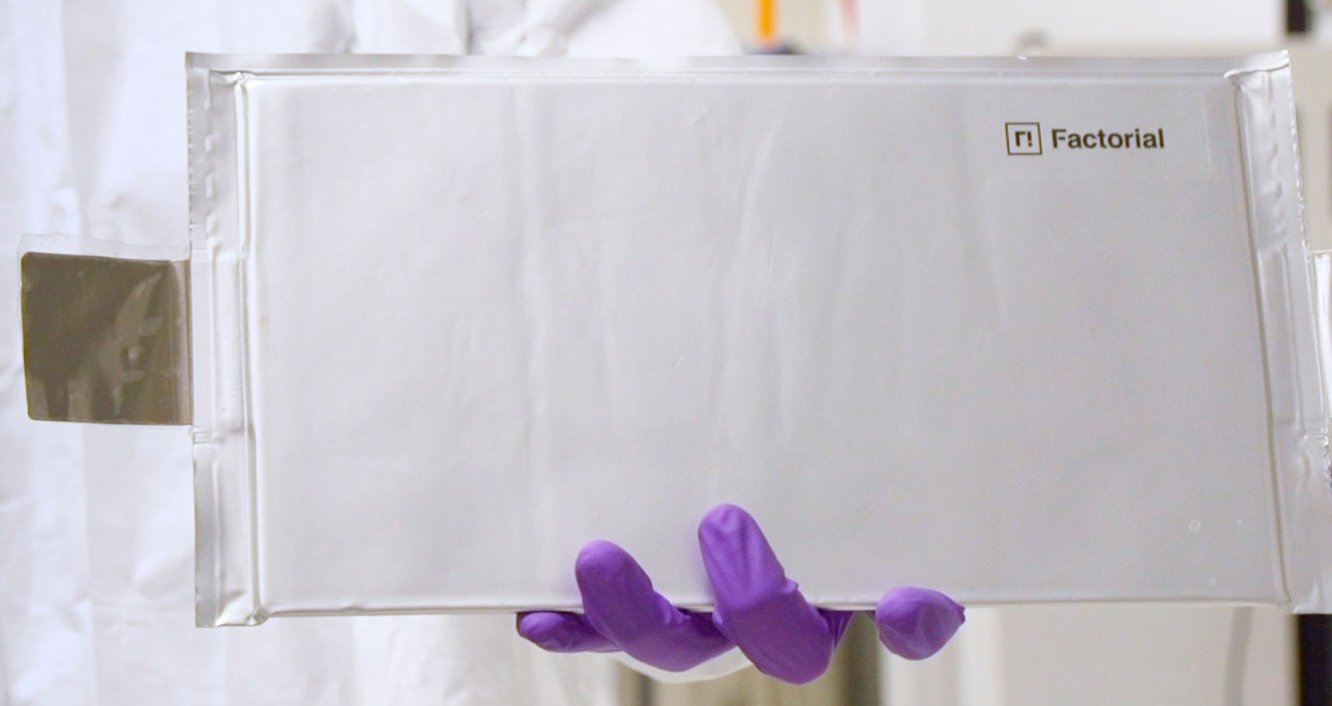
Last Updated on: 24th April 2025, 09:55 am Tariffs, schmeriffs. That’s the message from automaker Stellantis. The company is laying plans for its future even while fighting tooth and nail for a bigger slice of the US auto market. That includes a solid-state battery roadmap, with the aim of introducing the powerful new technology next year in a fleet of electrified muscle cars. Another Milestone For The Solid-State Battery Of The Future Solid-state EV batteries have been a work in progress for the past 10 years or so. Hybrid versions are beginning to appear, but some industry observers generally don’t see a market-ready, all-solid iteration hit the EV industry until the early 2030’s (see more solid-state background here). Stellantis is among the battery stakeholders jumping the solid-state timeline by a few years. In October last year, the company announced plans to introduce its new Dodge Charger Daytona EV in 2026, featuring an all-solid-state EV battery developed by the US startup Factorial Energy. “Factorial’s FEST® offers substantial advantages over traditional lithium-ion batteries including higher energy density, reduced weight, improved performance and a potential for further reduction in total vehicle cost over time,” Stellantis explained in a press statement, neatly summing up the advantages of solid-state battery technology as applied to EVs. One More Step To The Solid-State Battery Of The Future Stellantis is not putting all its EV battery eggs in one basket, having formed a research partnership with the French Alternative Energies and Atomic Energy Commission last August, leveraging its experience in Li-ion battery technology. Still, the pursuit of all-solid-state batteries appears to be heating up. Earlier today, Stellantis and Factorial announced that Factorial’s EV-sized solid-state battery has sailed past a key validation stage. “The validated 77Ah FEST® cells demonstrated an energy density of 375Wh/kg with over 600 cycles progressing towards automotive qualification, a milestone for large-format lithium-metal solid-state battery,” Stellantis explained. If you caught that thing about “progressing towards automotive qualification,” that’s another way of saying that the new battery is not ready for prime time yet. Still, the validation milestone is a significant one, indicating that the two partners are on the right track. “This breakthrough puts us at the forefront of the solid-state revolution, but we are not stopping there,” vowed Stellantis Chief Engineering and Technology Officer Ned Curic in a press statement. As described by Stellantis, the new battery can charge from 15% to more than 90% in 18 minutes at room temperature. While 18 minutes is longer than the fast-charging Li-ion batteries of today, the reward is a superior performance payoff. The 18 minute benchmark is also longer than it takes to fill a coventional sedan, but then again, when was the last time a gas-powered car ever filled itself up? Except for a vanishingly small number of US states that prohibit self service, drivers have to stand by their car, hand on the nozzle to keep the gas flowing, for however long it takes to fill their tank. EV drivers, meanwhile, can simply plug in and stroll over to the nearest convenience store. Stellantis and other automakers in the Ionna consortium are also leveling up the EV charging experience with lounge-style modeling as well. First The Dodge Charger, Then The World Stellantis’s solid-state EV battery plans have been in the public eye since 2021, when the automaker announced a five-year plan to introduce “the first competitive solid-state battery technology” to the EV market. So far it looks like all is going according to plan for the 2026 launch. Although the Charger muscle car will be the focus of attention, Stellantis and Factorial dropped a hint that the future is wide open. “By closely collaborating on pack design and leveraging this disruptive technology, Stellantis and Factorial are optimizing battery pack architecture to reduce weight and improve overall system efficiency for seamless integration,” the two companies explain. “These weight savings directly enhance vehicle range and support more sustainable and affordable EV solutions,” they add. The Tariff Headaches Are Not Forever The next steps for Stellantis and Factorial include testing the new solid-state battery under real-world driving conditions, so stay tuned for more on that. Meanwhile, the US auto market has not been kind to Stellantis. The automaker’s troubles predate the Trump’s unforced trade wars, so it’s not all the fault of the malevolently incompetent Commander-in-Chief who occupies the Oval Office, but the mindless on again, off again juggling of tariffs doesn’t help. “Production at several Stellantis plants has been scaled back in recent weeks after President Donald Trump’s 25% tariffs on imported cars took effect at the start of April,” The Detroit News reported earlier this week.” “The automaker paused production at two major assembly plants, one in Mexico and one in Canada, which triggered about 900 temporary layoffs at several of its American powertrain and stamping facilities,” DTN continued. On a brighter note, yesterday the automotive press reported that Stellantis has restarted its Windsor, Ontario plant, where the Charger EV is produced. The restart enabled about half of the 900 laid-off workers to come back to Stellantis facilities in Michigan and Indiana, which send parts across the border to the Ontario factory. On an even brighter note, US presidents come and go, and President Trump has only 3.75 years left to batter his way through the US Constitution. When he finally leaves office — peacefully — on January 20, 2029, a growing number of US drivers and fleet owners will still want to buy electric vehicles, and US automakers will still be around to keep the assembly lines rolling. For that matter, Factorial will still be around to keep the solid-state EV battery momentum going. So will its other A-list partners in the global EV industry, one recent example being the energy storage powerhouse LG Chem. Right around this time last year, Factorial and LG Chem signed a memorandum of understanding to formalize their collaboration on solid-state battery materials. “The agreement aims to strengthen cooperation in the field of next-generation battery materials
You’re In A New Paradigm! Behave Like It!

Almost every day, I come across a number of articles that claim we can’t address climate change without adding nuclear power plants — or even gas plants. I also come to articles that say we have plenty of renewable energy under development, but we need new transmission lines to get all the electricity they will generate to market; the result is that renewable energy is not being added fast enough. I still come across articles that claim renewable energy is too expensive. I even come across articles saying “the sun doesn’t always shine, and the wind doesn’t often blow.” Clearly (to me), the problem we have, and it may be holding up our dealing with climate change, is that the world has too much drivel in it and not enough real thought. The problem with renewable energy is not that it is intermittent or variable. Those characteristics are just the flip side of the baseload power coin. Solar and wind generators require some sort of backup. But baseload power will nearly never meet demand without a lot of backup of its own. And baseload’s backup is very expensive, compared to batteries. Think. Why is baseload power called “baseload?” The answer to this is that it is there to generate the base load. If you might look this up, you could find that the base load is the smallest load required during a period of time. Why would baseload power be intended to cover the smallest load? Because if you know the amount of power needed in advance, generating that amount is really cheap. How do you get the rest of what you need? With various kinds of backup, which is usually dreadfully expensive. Solar and wind are indeed variable, so they need backup. But the biggest part of the difference is that the backup is dreadfully cheap. Batteries deliver electricity at low cost, while backup plants on the old baseload system deliver it for high cost. The old paradigm used what are now expensive means of production, meaning coal, gas, and nuclear. It needed expensive backup, meaning load-following and peaker plants. So it’s expensive unless it comes from old facilities that have been paid down. Since solar and wind are cheap and so are batteries, its electricity is cheap, even if it comes from new plants. The old paradigm produced electricity of lower quality. I know, I have to explain what that means. In the old days, the guy who watched a dial at the grid operator’s workshop would notice that demand was rising. He would place a call to another guy, who ran the load-following plant, and tell him to increase output. With any luck, the increased output would not be too far from demand for a quarter hour or more. With luck. Without luck, it would mean that power outage would be so bad that it could burn out motors. The new paradigm produces electricity at higher quality. When demand increases beyond what can be produced, a computer tells a battery to allow more electricity onto the grid. The change takes a few seconds. When demand falls, the battery stops supplying and switches to recharging. If needed, solar and wind units can be curtailed. This is not just high quality. It’s cheap. (Unless you own the wind turbine that’s being curtailed.) In the old days, coal and nuclear plants were built a distance from where the demand was centered, just to keep things safe. Coal produced a lot of toxic materials that were emitted into the air (which was why King Edward I banned its use in 1272). This was the “pea soup” smog that killed people by the thousands in London during the 1940s and 1950s. Natural gas has similar issues. Though, they are not as bad for a host city. Nuclear power has its own threat. With something over 20,000 reactor-years of nuclear production so far, worldwide, we should have expected one “core-damage event,” or possibly two, at reactors putting electricity onto a grid. Instead, we have had eleven, that we know of. The old-time planners, however, were wise enough to put nuclear reactors at a distance from the cities they supplied with power. We should contrast these with generating facilities of the current paradigm – solar and wind. Since neither of these produces pollution, they can be safely sited near, or even within, cities. (I will argue about wind-turbine syndrome some other time. For now, suffice it to say that prevailing scientific evidence shows that wind turbines don’t produce it.) This brings us up to locating generating capacity at a distance. I have seen a number of articles about transmission of electricity from such a place as Nebraska to a distant state like Florida. This is economically feasible, but it is not a good idea, because it holds up development of renewable energy. It takes time and effort to get permits for long transmission lines. It can take years, in fact. And sadly, that is possibly one of the biggest things holding up our transition to renewable electricity. If we thought about all these things properly, we would recognize that the old rules of the old paradigm are holding us back. We should not be hoping for development of new electric capacity at a distance. We should be developing it as near home as possible. This means wind turbines as near home as possible and solar capacity in our backyards. Such an approach is not more expensive. In fact, it eliminates much of the problem of transmission lines. So it brings the cost of renewable electricity even lower. In my opinion, we should be developing generating capacity in our own backyards and on our rooftops, or as nearby as possible, to feed it into our own batteries. And that will save money and add resilience and security. Featured image: Lost dinosaur. (Huang Yingone, via Unsplash, cropped) Sign up for CleanTechnica's Weekly Substack for Zach and Scott's in-depth analyses and high level summaries,
Leading Global Battery Expert Kenneth Hoffman to Join Pure Lithium as Special Advisor
Last Updated on: 25th April 2025, 01:23 am Pure Lithium Corporation, a disruptive Boston-based vertically integrated lithium metal battery technology company, announces that Kenneth Hoffman (CFA, CIM) will join the company as a Special Advisor, leveraging his vast experience across the battery value chain to advance our drive towards full commercialization. Mr. Hoffman, who was previously Global Head of Battery Materials at McKinsey, will be a crucial asset for Pure Lithium’s commercialization strategy and development of partnerships. Working directly with Pure Lithium CEO Emilie Bodoin, he will bring a deep understanding of batteries and a unique ability to connect market dynamics with operational decision making that will be invaluable for Pure Lithium. Pure Lithium Founder and CEO Emilie Bodoin said: “I feel very privileged to bring Ken aboard at this crucial time in Pure Lithium’s evolution. He is simply one of the leading experts on batteries, forming partnerships and developing successful businesses in energy storage. We are sure that he going to make a major contribution to Pure Lithium as we move toward commercial production of our next-generation lithium metal vanadium battery.” Mr. Hoffman has spent more than 25 years in investing, managing and directing tens of billions of dollars as a Portfolio Manager, and global Director of Research for various large funds including Millennium Partners and Reservoir Capital. His broad, hands-on experience as an investor and consultant will help Pure Lithium identify and capitalize on business and financial opportunities and bring vast insight to mitigating supply chain risks. In late 2016, Mr. Hoffman agreed to join McKinsey’s Global Energy & Mining practice (GEM) to lead mining company strategy in gold, copper, nickel, manganese and lithium as well as battery raw material value chains. He has worked on more than 100 due diligences from the analysis of lithium assets to the study of more than a dozen direct lithium extraction technologies. He is one of the main presenters at metal and mining forums as well as global battery conferences and global media, including an opening keynote at PDAC, The Future Minerals Forum in Riyadh, Fastmarkets events in Asia, North America, Europe and South America, the London Metals Exchange Week conferences in Hong Kong and London and Australia’s AUSIMM general gathering. Mr. Hoffman is a Director of “The Battery Show,” the largest battery event in North America. About Pure Lithium Pure Lithium is a disruptive Boston-based lithium metal battery technology company led by its founders, inventor and lithium expert, CEO Emilie Bodoin, and world-renowned battery and metallurgical expert, MIT Emeritus Professor Donald R. Sadoway, as full-time CSO. The Company’s novel Brine to Battery™ technology combines metal extraction and anode production, bypassing traditional lithium compound production. The resulting pure lithium metal anode is the core component of our lithium metal vanadium oxide battery, a step-change improvement over today’s lithium-ion technology in cell performance, cost and safety. Additionally, the battery is free of graphite, cobalt, nickel and manganese. For more information, visit www.purelithium.io or email news@purelithium.io. Sign up for CleanTechnica's Weekly Substack for Zach and Scott's in-depth analyses and high level summaries, sign up for our daily newsletter, and follow us on Google News! Whether you have solar power or not, please complete our latest solar power survey. Have a tip for CleanTechnica? Want to advertise? Want to suggest a guest for our CleanTech Talk podcast? Contact us here. Sign up for our daily newsletter for 15 new cleantech stories a day. Or sign up for our weekly one on top stories of the week if daily is too frequent. Advertisement CleanTechnica uses affiliate links. See our policy here. CleanTechnica's Comment Policy
10,000 Jobs, $14 Billion in Clean Energy Investments Nixed as Biden's "Investing in America" Agenda Reversed

The Inflation Reduction Act of 2022 was a great stimulus for new clean energy projects, EV factories, battery factories, etc. It led to massive new investments, reshoring of countless blue collar jobs, and a more vibrant economy for the fast-growing industries of the future. More broadly, as we reported last November, Biden’s “Investing in America” agenda was linked to $988 billion in private sector investments. However, Donald Trump does not want the country or the world transitioning from polluting fossil fuels to clean energy and electric vehicles, and policy changes Republicans are moving through Congress put that preference onto paper, with disastrous results. According to a new analysis from the nonpartisan organization E2, so far this year, businesses have “cancelled or delayed more than $14 billion in investments and 10,000 new jobs in clean energy and clean vehicle factories” due to concerns about policy changes and especially removal of key tax credits. So much for being businesses friendly and supporting manufacturing in the United States. Just in April, as talk of repealing clean energy policies heated up (not to mention the tariffs), $4.5 billion in investments in EV, wind power, and battery projects were cancelled. E2 notes that this is “in advance of the U.S. House’s passage of a massive tax and spending package that would essentially kill federal clean energy tax credits.” In other words, the “One Big Beautiful Bill Act” is going to cost us thousands of jobs and billions of dollars of private sector investment in the US. Ironically, it’s Republican-controlled districts that are being the most hurt by this. “Republican congressional districts, which have benefitted the most from the clean energy tax credits passed in 2022, also are seeing the most cancellations. More than $12 billion and over 13,000 jobs have been cancelled in Republican districts so far.” Yet again, we have a case of Republican politicians doing things that hurt Republican voters — but all the politicians have to do is keep them scared and enraged about things that don’t really harm them and the rest is ignored or forgiven. “Through April, over 61 percent of all clean energy projects announced—along with 72 percent of all jobs and 82 percent of all investments—are in congressional districts represented by Republicans,” E2 adds. “Now is not the time to raise taxes on clean energy and compound the business uncertainty that is clearly taking a greater and greater toll on U.S. manufacturing and jobs,” E2 Communications Director Michael Timberlake commented. “If the tax plan passed by the House last week becomes law, expect to see construction and investments stopping in states across the country as more projects and jobs are cancelled. Businesses are now counting on Congress to come to its senses and stop this costly attack on an industry that is essential to meeting America’s growing energy demand and that’s driving unprecedented economic growth in every part of the country.” One can dream, but “counting on Congress to come to its senses” doesn’t seem advisable. The good news is that so many projects were stimulated by the Inflation Reduction Act and other Investing in America policies that some of them will continue on anyway. Also, frankly, these are growing industries and that’s going to continue to be the case for years to come. “While cancellations continue to rise, companies continue to invest in the potential of America’s clean economy,” E2 writes. “Businesses in April announced nearly $500 million in investments for new solar, EV and grid and transmission equipment factories across six states – including a $400 million investment by Corning to expand a solar wafer factory in Michigan that is expected to create at least 400 new jobs and a $9.3 million investment by a Canadian solar equipment manufacturer for a new plant in North Carolina. Combined, the seven projects announced in April are expected to create nearly 3,000 new permanent jobs if completed.” For tables and tables of data on cleantech projects and cancellations, go here. Sign up for CleanTechnica's Weekly Substack for Zach and Scott's in-depth analyses and high level summaries, sign up for our daily newsletter, and follow us on Google News! Whether you have solar power or not, please complete our latest solar power survey. Have a tip for CleanTechnica? Want to advertise? Want to suggest a guest for our CleanTech Talk podcast? Contact us here. Sign up for our daily newsletter for 15 new cleantech stories a day. Or sign up for our weekly one on top stories of the week if daily is too frequent. Advertisement CleanTechnica uses affiliate links. See our policy here. CleanTechnica's Comment Policy
Tesla bull writes cautious note on Robotaxi launch: 'Keep expectations well contained'
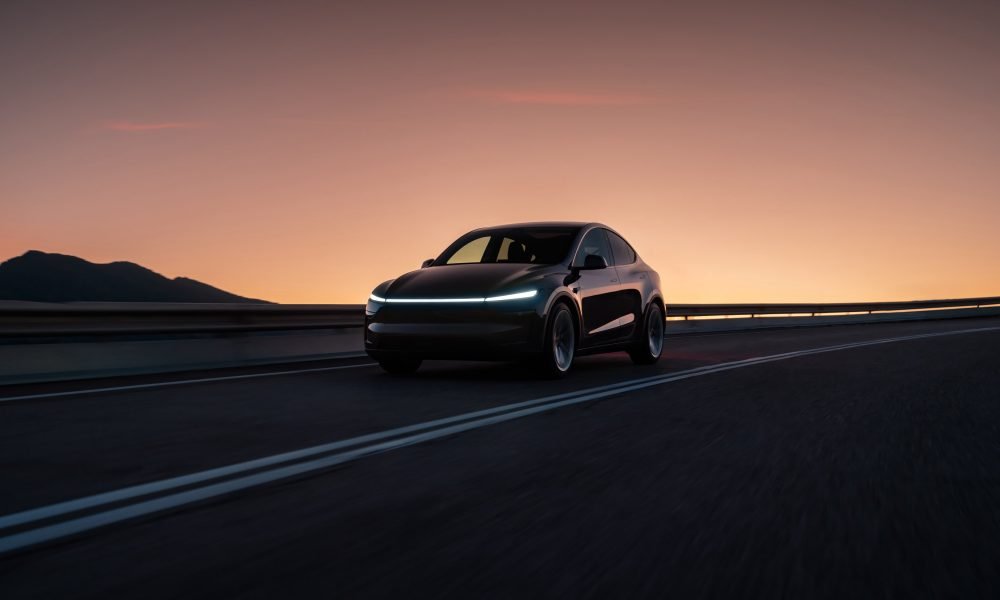
Tesla analyst Gary Black of The Future Fund revealed today that his firm has sold its entire $TSLA holding, marking the first time since 2021 that it has not had a position in the company’s stock. Black has been a skeptic of the company and relatively pessimistic regarding some things many investors would consider catalysts, outlining his concerns and reasoning for selling the shares. Much of Black’s reasoning concerns Tesla’s price-to-earnings ratio, delivery results and potential delivery figures for the future, and other near-term projects that he does not believe will yield as much value as others perceive. We will break down each concern of Black’s below: ‘Disconnected from Underlying Fundamentals’ Black says that The Future Fund sold its holdings at $358 per share. The firm’s current price target is at $310, and he says it will remain there based on “our forecast of 2030 Tesla volumes of 5.4m and 2030 Adj EPS of $12. Main Concern is P/E Ratio The main concern Black and The Future Fund have is that TSLA “now sells at a 2025 P/E of 188x as earnings estimates continue to fall (-5% in the past week, -40% YTD) driven by weak YTD deliveries, including weak April results.” Black says he believes quarterly deliveries will decline by 12 percent, and full-year by 10 percent. This compares to Wall Street’s estimates of a 7 percent decrease for Q2 and a 5 percent year-over-year. Robotaxi Skepticism “We believe the risk/reward associated with the Austin robotaxi test remain asymmetrical to the downside,” Black writes in his post on X. Tesla Robotaxi deemed a total failure by media — even though it hasn’t been released Many believe the Robotaxi platform could be Tesla’s biggest catalyst moving forward, especially as other automakers do not seem to have even close to as robust a solution to self-driving as Tesla. Tesla’s Affordable Models Black says there are concerns the affordable model will be “a stripped-down Model Y priced lower and funded by lower costs rather than a new form factory that expands TAM.” This is confusing, especially considering the cheaper price tag would expand the total addressable market (TAM) to begin with. The Model Y has been the best-selling vehicle in the world for the past two years. Tesla still on track to release more affordable models in 1H25 Introducing an even lower-cost model with some missing features would still likely be a significantly more attractive option than a base model ICE vehicle, especially because the value Full Self-Driving provides would make the car more beneficial. “This increases odds that FY’25 estimates decline further, risking a repeat of 2023-2024, when TSLA reduced EV prices supported by lower costs, and TSLA saw little or no incremental volume growth,” he finishes with.
Hyundai Launches EV Center in India & Rolls Out Electric Buses in Japan

Hyundai continues its semi-leadership in the EV sector this week. It’s not really engaged in groundbreaking developments with electric vehicles (yet), but it’s also far from a laggard in EV world. News this week comes out of India and Japan for a change, showing how willing and eager the company is to go into less advanced EV markets. Hyundai Battery Research in India In India, Hyundai Motor Group is teaming up the Indian Institute of Technology (IITs) on a battery and electrification research initiative. This is taking place at the new Hyundai Center of Excellence for future mobility technology (Hyundai CoE), opened yesterday. The collaboration involves nine joint research projects. However, that’s not even close to the extent of it. The aim is for this partnership with IIT Delhi to expand across India and include 10 universities by the end of this year! The first nine projects cover the following topics: Battery cells, systems and testing Battery management systems (BMS) Energy density enhancement Safety Durability Diagnostic technologies. “The initiative also explores new materials and system components, driving forward innovation in battery design and performance,” Hyundai adds. Here are a few more details from the company on the plans: “Currently, the Group collaborates with three IIT universities (IIT Delhi, IIT Bombay, and IIT Madras), engaging around 30 professors. By December 2025, it aims to expand its reach to 10 universities in India, including non-IIT institutions, with approximately 100 professors participating. “The Group is organizing a range of initiatives to further strengthen this collaborative ecosystem. These include: Technology exchange forums bringing together experts from both India and Korea Global conferences on battery and EV technologies to share insights on trends and policies Policy dialogue sessions that engage key stakeholders from the Indian government, academia, and industry to discuss the future of the mobility and electrification sectors.” Hyundai Electric Buses in Japan A bit further east, in Japan, Hyundai held a ceremony with Iwasaki Group on Yakushima Island, a UNESCO World Heritage Site, to deliver Hyundai ELEC CITY TOWN electric buses. Electric buses? Who knew Hyundai was into that? “Hyundai ELEC CITY TOWN buses are optimized for Yakushima’s environment, with Vehicle Dynamics Control and advanced battery management and cooling systems,” Hyundai writes. The buses are for Tanegashima Yakushima Kotsu, a regional transportation and tourism service provider. One would hope tourism service providers in UNESCO World Heritage Sites around the world would be switching to electric buses by now. “I am delighted to see Hyundai’s ELEC City electric buses running here on Yakushima, contributing towards a cleaner island environment,” said Hyundai Motor Group Vice Chair Jaehoon Chang. “Being part of Yakushima’s zero-emission island initiative is a significant step towards achieving carbon neutrality on the island by 2050.” For now, five buses have been delivered. Each bus includes a 145 kWh battery and a high-efficiency motor with a power output of up to 160 kW/217 PS. “The buses are equipped with Vehicle Dynamics Control to ensure safe and stable driving on the island’s mountainous roads, characterized by steep slopes and sharp curves. The buses also feature advanced battery management and cooling systems, optimized for Yakushima’s hot and humid climate, enhancing charging performance, efficiency and driving range.” Nice. And here’s the cherry on top: “The agreement includes utilizing the ELEC CITY TOWN’s Vehicle-to-Home capabilities to supply power to evacuation shelters and medical facilities during natural disasters such as typhoons or periods of heavy rainfall.” Extra nice. Sign up for CleanTechnica's Weekly Substack for Zach and Scott's in-depth analyses and high level summaries, sign up for our daily newsletter, and follow us on Google News! Whether you have solar power or not, please complete our latest solar power survey. Have a tip for CleanTechnica? Want to advertise? Want to suggest a guest for our CleanTech Talk podcast? Contact us here. Sign up for our daily newsletter for 15 new cleantech stories a day. Or sign up for our weekly one on top stories of the week if daily is too frequent. Advertisement CleanTechnica uses affiliate links. See our policy here. CleanTechnica's Comment Policy
SpaceX hit with mishap investigation by FAA for Starship Flight 9

Tesla CEO Elon Musk has an extremely busy month for himself and his company in June if all goes according to plan. Not only is Tesla planning to launch its Robotaxi platform in Austin, Texas, next month, but Musk is also now indicating that Teslas will self-deliver to customers in June as well. Musk has said for some time that Tesla vehicles would soon be capable of driving to customers without a driver within the car. Initially, it seemed like the company would do this in the areas close to its U.S. factories – the Greater Austin, Texas, area, and potentially in Northern California’s Bay Area of San Francisco, where the company’s Fremont Factory operates. Upon confirmation that Tesla has been testing driverless Robotaxi rides in Austin for the past several days, Musk brought forth a new detail that fans of the company will love to hear: Teslas will soon drive themselves to customers, eliminating the need for trips to the showroom for delivery. How soon? Musk says next month: For the past several days, Tesla has been testing self-driving Model Y cars (no one in driver’s seat) on Austin public streets with no incidents. A month ahead of schedule. Next month, first self-delivery from factory to customer. — Elon Musk (@elonmusk) May 29, 2025 There is no doubt that the bigger news within Musk’s X post is that it is on track for the launch of the Robotaxi platform. Tesla has been touting its prowess in self-driving for several years. As other companies have executed, Tesla has taken a more unorthodox approach by utilizing only cameras and being much more reserved with its rollout of driverless software. While Full Self-Driving is consistently ranked at the top of the current Advanced Driver Assistance Systems (ADAS), it is not fully autonomous. That is set to change, and not only will it yield the results of what will hopefully be a successful Robotaxi fleet, but also a vehicle delivery process that makes buying a vehicle more convenient than it already is from Tesla, with no hassle, no dealership jargon, and no negotiating. The launch of the Robotaxi platform is set for Austin on June 12, according to Bloomberg, where roughly 10 Model Y SUVs will make their way around the city initially. Tesla will expand as safety is proven, which is the utmost priority. Musk also said later on X that people should be able to fly to Austin and hail a Robotaxi by the end of June.
Beat The Tariffs & Save: Redodo’s Earth Day Sale On LiFePO4 Batteries
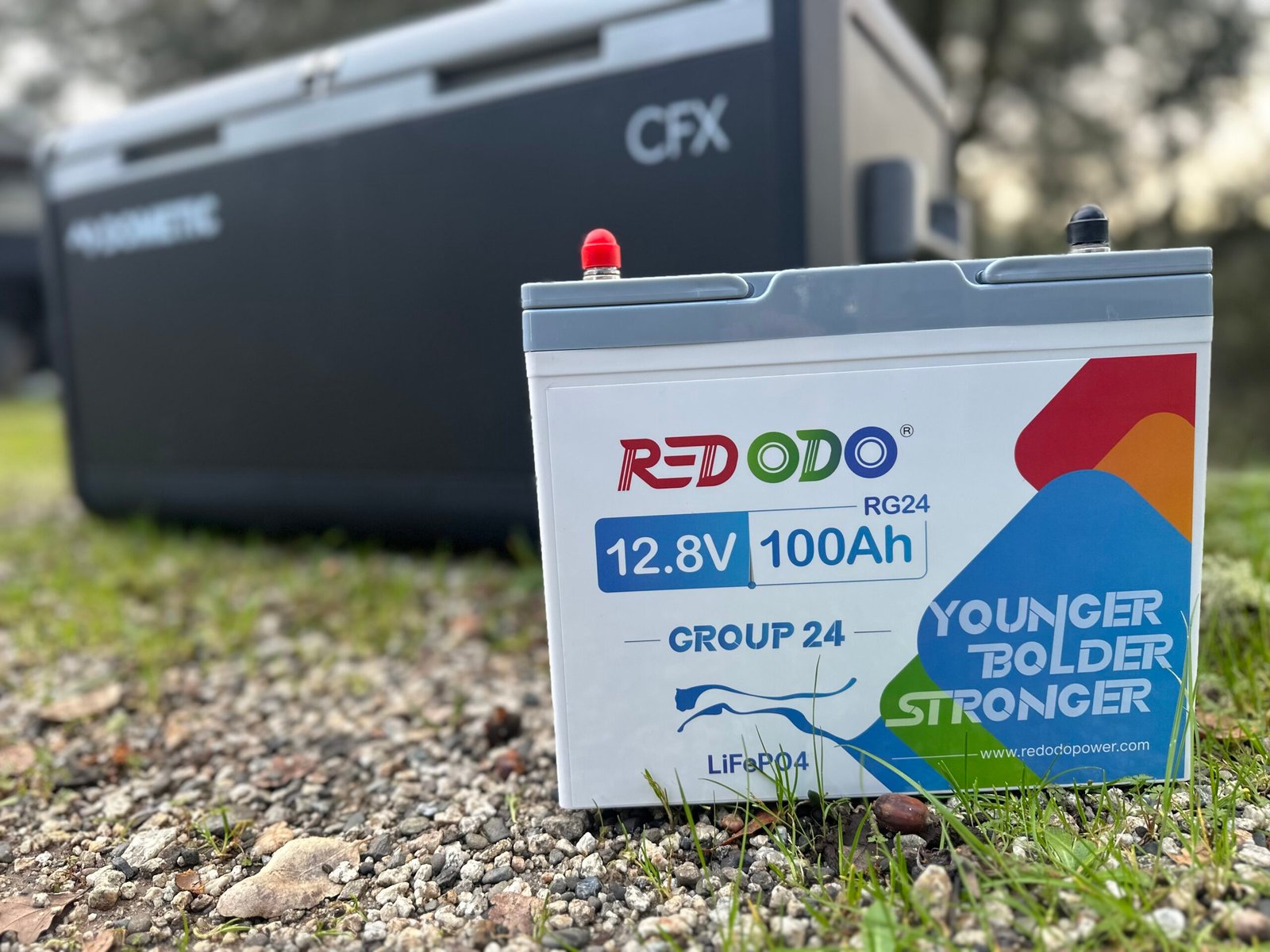
Last Updated on: 25th April 2025, 03:28 pm Right now, Redodo is running its big Earth Day Sale, with up to 50% off on some of the most reliable LiFePO₄ batteries out there. But here’s the kicker — steep tariffs are about to hit the lithium battery market in the US, so this might be your last chance to stock up before prices go through the roof. Why Redodo Batteries Stand Out Redodo has built a reputation for producing dependable LiFePO₄ batteries that cater to various applications, from RVs and marine setups to solar and off-grid systems. Its batteries are known for: Longevity: Offering between 4,000 to 15,000 deep cycles, these batteries are designed to last up to a decade. Lightweight Design: They are significantly lighter than traditional lead-acid batteries, making installation and transport easier. Advanced Safety Features: Equipped with a 100A Battery Management System (BMS), they provide protection against overcharging, over-discharging, and short circuits. Versatility: Suitable for a range of applications, including RVs, marine vessels, solar setups, and off-grid systems. Top Picks From The Sale And, you can get an extra 8% off sitewide with this code at checkout: S8 Tariffs Are About To Change Everything The US is slapping massive tariffs on lithium-ion batteries starting April 2025. We’re talking 156% tariffs on non-EV lithium-ion batteries and even higher for EV-specific packs. While the aim is said to be to strengthen US industries, these tariffs will mean higher prices for consumers and businesses relying on imported batteries. They are also expected to disrupt supply chains and slow the growth of clean energy technologies, including energy storage systems. What that means for the individual consumer is that prices are going up. A lot. So if you’re planning a project, expanding a system, or just like to keep a backup battery or two on hand, now’s the time to buy. Once the tariffs hit, the same battery that’s half-off today could be double the price in a matter of months. Not to mention possible shortages as importers scramble to adjust. Here’s an example of some of the upcoming price changes: Don’t Sleep On This Deals like this don’t last, and with policy changes looming, this might be the best pricing we’ll see for a long time. Whether you’re a solar enthusiast, off-grid adventurer, or someone who just wants more control over their power, Redodo’s sale is a smart, forward-looking move. Check out the full sale here, and grab what you need now — your future self (and your wallet) will thank you. Sign up for CleanTechnica's Weekly Substack for Zach and Scott's in-depth analyses and high level summaries, sign up for our daily newsletter, and follow us on Google News! Whether you have solar power or not, please complete our latest solar power survey. Have a tip for CleanTechnica? Want to advertise? Want to suggest a guest for our CleanTech Talk podcast? Contact us here. Sign up for our daily newsletter for 15 new cleantech stories a day. Or sign up for our weekly one on top stories of the week if daily is too frequent. Advertisement CleanTechnica uses affiliate links. See our policy here. CleanTechnica's Comment Policy
SunTrain Re-Imagines Battery Storage & Clean Energy
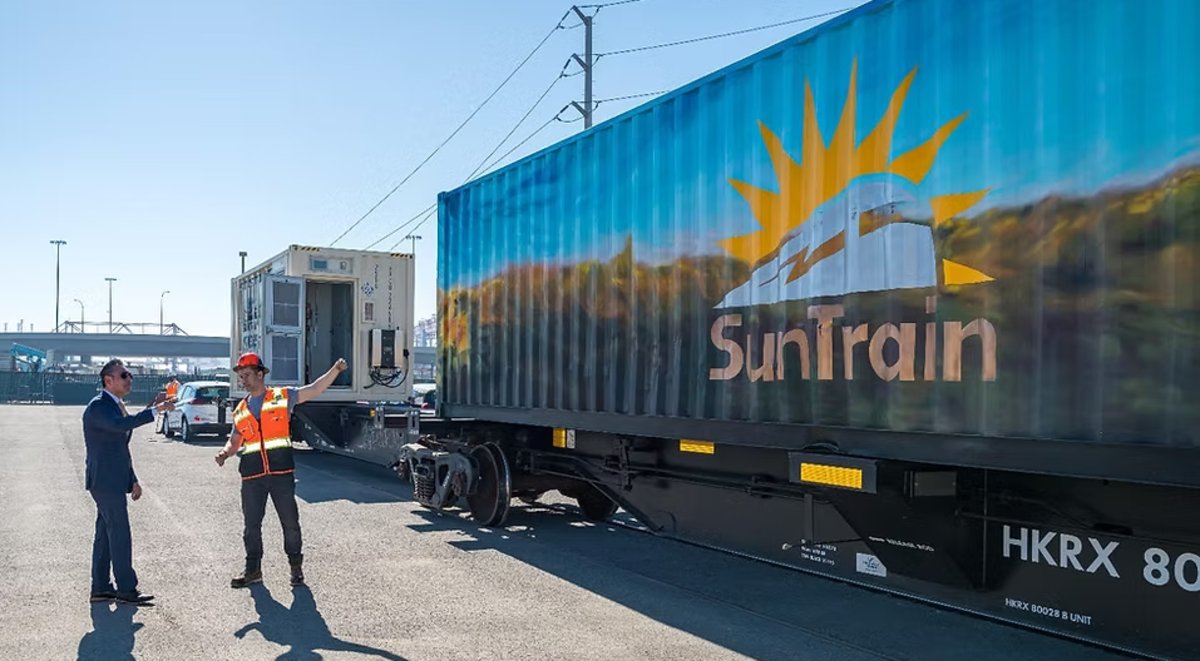
Thermal generating stations keep producing electricity as long as there is fuel to boil water to make steam to spin turbines. They don’t care what the weather is outside. As long as there’s steam, there’s electricity. Over the past 100 years or so, most humans have gotten used to having all the electricity they need available at all times of the day or night. If you need to use your welder at 3:00 am, there’s juice enough to make that happen. Our refrigerators and water heaters and air conditioners need to work at night as well as during the day. As the failed president of the United States loves to point out, the sun doesn’t always shine and the wind doesn’t always blow. New transmission lines could send electricity to where it is needed, but they are expensive and take years to plan, permit, and build. SunTrain thinks it has a better idea. On its website, the company says: “Electric transmission of renewable energy can be the least cost solution to enable emission reductions when it is not burdened by the challenges to construct transmission lines which may include permitting, acquisition of land, working around existing infrastructure, and stakeholder opposition. Rail infrastructure is an existing asset which has historically supported coal generators and now presents an alternative mechanism to deliver clean energy at low cost. SunTrain brings an innovative project development solution that moves grid-ready electricity via utility-scale battery energy storage fixed to rail cars. “SunTrain resolves massive transmission bottlenecks that are throttling renewable energy development and generation. SunTrain seamlessly stores green energy from remote solar and wind farms within customized battery containers that are transported over existing railroad networks. This links generation sites and congested substation nodes, bypassing the conventional transmission system. SunTrain solves the problems of decades long transmission bottlenecks through a new means of green energy distribution — ‘Trainsmission®.'” Now, we know some readers are going to get the heebie jeebies thinking about diesel locomotives hauling railroad cars loaded with fully charged storage batteries back and forth across America, but think about it — the tracks, locomotives, and freight cars are already in existence. Why not use them now instead of waiting for transmission lines to get built 10 or 15 years from now? By doing so, we give the lie to all the bozos who give us “the wind doesn’t always blow and the sun doesn’t always shine” song and dance. If SunTrain could provide enough battery power to support normal grid operations in a major city like Denver, Colorado, would that not be a good enough reason to do this? SunTrain Pilot Project In Denver The energy grid in and around Denver is a microcosm of the US energy grid. Demand for electricity is rising to power data centers and electric vehicles, yet Colorado’s grid can’t keep up with the new amounts of renewable energy that are available, which means much of it goes to waste. The state will need to invest as much as $8.7 billion more in its grid by 2045 according to the Colorado Electricity Transmission Authority. While grid upgrades are underway, SunTrain technology could bridge the gap between the grid of today and the grid of tomorrow. Once the new grid is completed, SunTrain could move to other locations where energy storage is needed. According to Anthropocene Magazine, 20 car battery trains envisioned for SunTrain’s Colorado pilot would shuttle between a pair of power plants. Most likely, they would fill up with surplus energy from Xcel Energy’s solar power facilities near Pueblo, then travel 150 miles on the Union Pacific Railroad to Denver where the trains would release their stored energy at a power plant in the city center. One challenge for SunTrain is automating the train-to-grid connection. SunTrain currently plugs charging cables into its battery storage rail cars by hand. The company is designing an automated system that uses robotic arms trackside to plug into each battery car using charging technology developed for electric buses, trucks, and ferries by Swiss engineering firm Stäubli. One task the company hopes it has already checked off is addressing worries about safety. It says it exclusively uses LFP batteries because they are far less prone to catching fire than NMC batteries. Co-founder Jeff Anderson says a recent 12 day transit from San Francisco helped reassure railroads that its rolling batteries are safe. “We proved that you can actually move power from one place to another and the batteries don’t shake to death. They don’t explode. Everyone’s still alive,” he says. LFP batteries are heavier, but as Anderson notes, “Railroads are really good at moving heavy things.” Diesel locomotives do add a carbon penalty to the equation of about 25 grams of carbon for every kilowatt-hour of power delivered. While not ideal, that’s still 17.5 times cleaner than power from a methane-fired thermal generating plant. SunTrain says it will need about $15 million to build its first train — a challenge today as the federal government slams the door on all spending not related to fossil fuels and national defense. Another Idea For America’s Rail Corridors Utilities and independent transmission developers in New York and New England have completed small sections of power lines next to rail lines, with bigger projects in the works. “There’s potentially a drastic reduction in the need for clearing rights of way. To me that’s a huge win,” said Jacob Lucas, director of transmission system planning at Eversource in New England. Co-locating power and rail is the right thing to do, he says, because doubling up the infrastructure protects natural spaces and communities from unnecessary disturbance. Sharing railroads’ existing rights-of-way also avoids the burden of securing permissions from a multitude of landowners and government agencies. Lucas was involved in two recent projects that tapped rail corridors. One in Connecticut used several kilometers of Amtrak’s high-speed rail corridor near Hartford. Another, part of a joint venture with Danish offshore wind farm developer Ørsted, briefly hopped into the right-of-way
#Oukitel P1000 Plus Introduced: The Most Compact Power Station Leading the World into a New Era
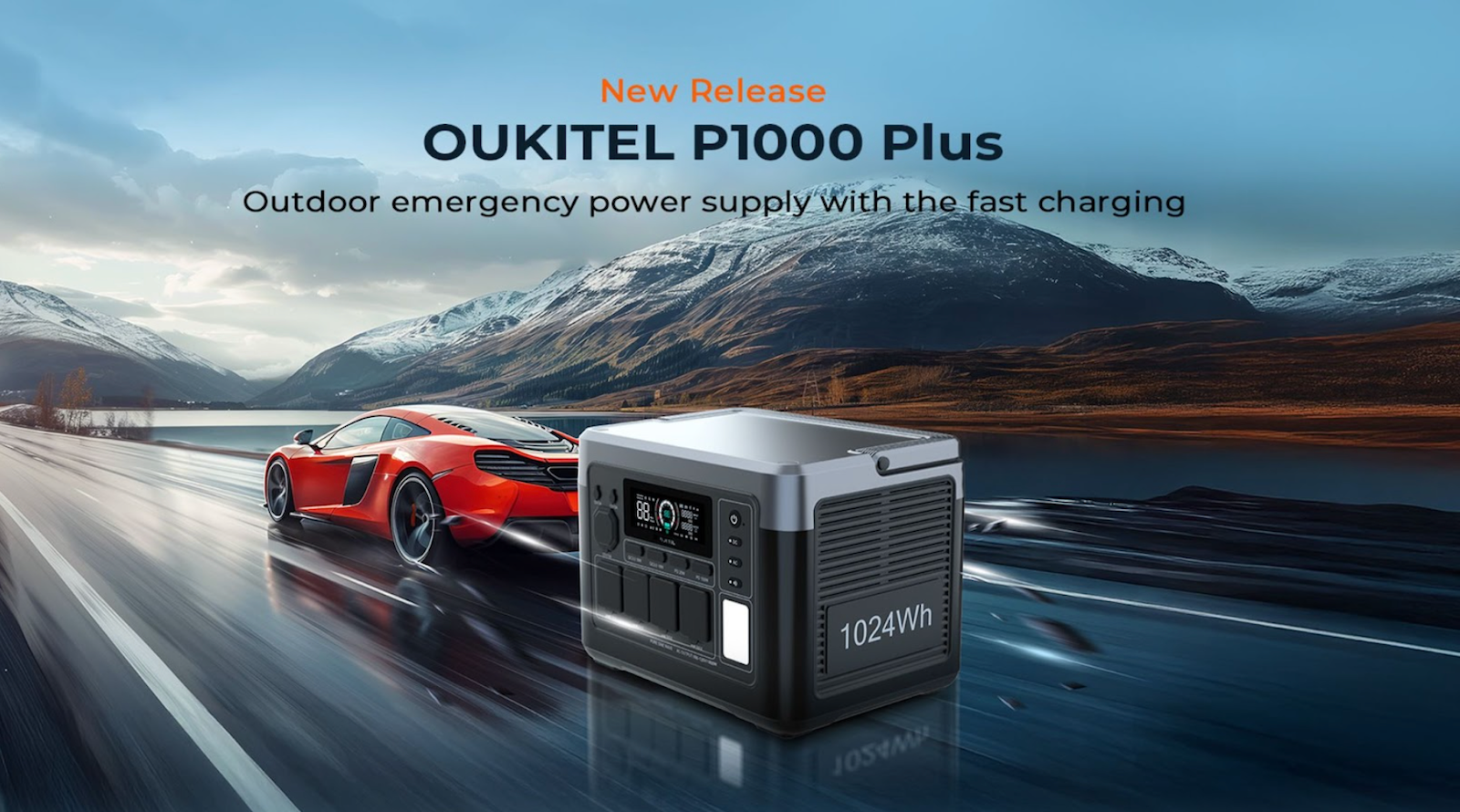
Last Updated on: 30th April 2025, 11:17 am Oukitel, a global leader in innovative energy solutions, introduces the P1000 Plus, the most compact and powerful 1024Wh power station in its class. Designed for those who demand peak performance, this rugged powerhouse delivers a remarkable 1800W output, ensuring unwavering reliability for home backup, off-grid projects, and outdoor adventures. Offering clean, quiet, and uninterrupted power wherever users go, the P1000 Plus empowers them to face any challenge with confidence and without limits. Filling a crucial gap in the market, this device combines massive power capacity, multiple ports, and blazing-fast charging into one portable solution. With its built-in UPS, it removes the worry of power outages, keeping users connected and stress-free. Experience Unmatched Power and Reliability with 1024Wh Capacity The P1000 Plus is in a league of its own, leaving all competitors behind with its superior battery technology. With an impressive 1024Wh capacity and a robust 1800W output, it effortlessly powers almost 99% of household devices from everyday essentials to high-demand appliances. Engineered with military-grade LiFePO4 batteries, it offers up to 4000 charge cycles while retaining 80% of its original capacity, ensuring reliable performance for 10 years. The Ultimate Compact Power Companion for Every Adventure The P1000 Plus is built for ultimate portability, packing exceptional power into a compact 12 kg (26.46 lb) frame, 30% lighter than competing 1000Wh units. Measuring just 13.6 × 8.9 × 9.3 inches, it fits effortlessly into tight spaces like a car trunk or RV compartment. The ergonomic handle ensures a secure, comfortable grip for easy transport. More than just a power station, the P1000 Plus is crafted for seamless convenience, designed to keep pace with every step of users’ adventures. Unleash Incredible Speed with 1200W AC Blazing-Fast Charging The lightning-fast 1200W AC charging reaches 80% in just 39 minutes, minimizing downtime and keeping everything powered up for action. In addition to AC charging, the P1000 Plus offers versatile charging options, including solar, car, and dual AC and solar charging. With various AC and DC outlets, it effortlessly powers up to 10 devices simultaneously, meeting the needs of the entire family with ease. During power outages, it automatically switches to UPS mode in just 10ms, ensuring the fridge and computer continues to run smoothly, so that users can avoid the crisis of food going bad or losing important files. Whisper-Quiet Power, Smart Control for Seamless Living The P1000 Plus operates at an ultra-quiet 29 dB, quieter than a soft library murmur, ensuring a noise-free environment whether users are working, sleeping, or enjoying the outdoors. For a truly intuitive experience, the P1000 Plus also features smart app control, allowing users to effortlessly monitor and control charging status directly from their smartphones. The powerful OUKITEL P1000 Plus is now available for just $469. After entering an exclusive code PLUS50 worth USD50, the final price will be reduced to $416 until May 31st. Take advantage of this exceptional opportunity to own a game-changing power station. Sign up for CleanTechnica's Weekly Substack for Zach and Scott's in-depth analyses and high level summaries, sign up for our daily newsletter, and/or follow us on Google News! Whether you have solar power or not, please complete our latest solar power survey. Have a tip for CleanTechnica? Want to advertise? Want to suggest a guest for our CleanTech Talk podcast? Contact us here. Sign up for our daily newsletter for 15 new cleantech stories a day. Or sign up for our weekly one on top stories of the week if daily is too frequent. Advertisement CleanTechnica uses affiliate links. See our policy here. CleanTechnica's Comment Policy
Mulilo and Scatec win out in BESIPPPP Window 3
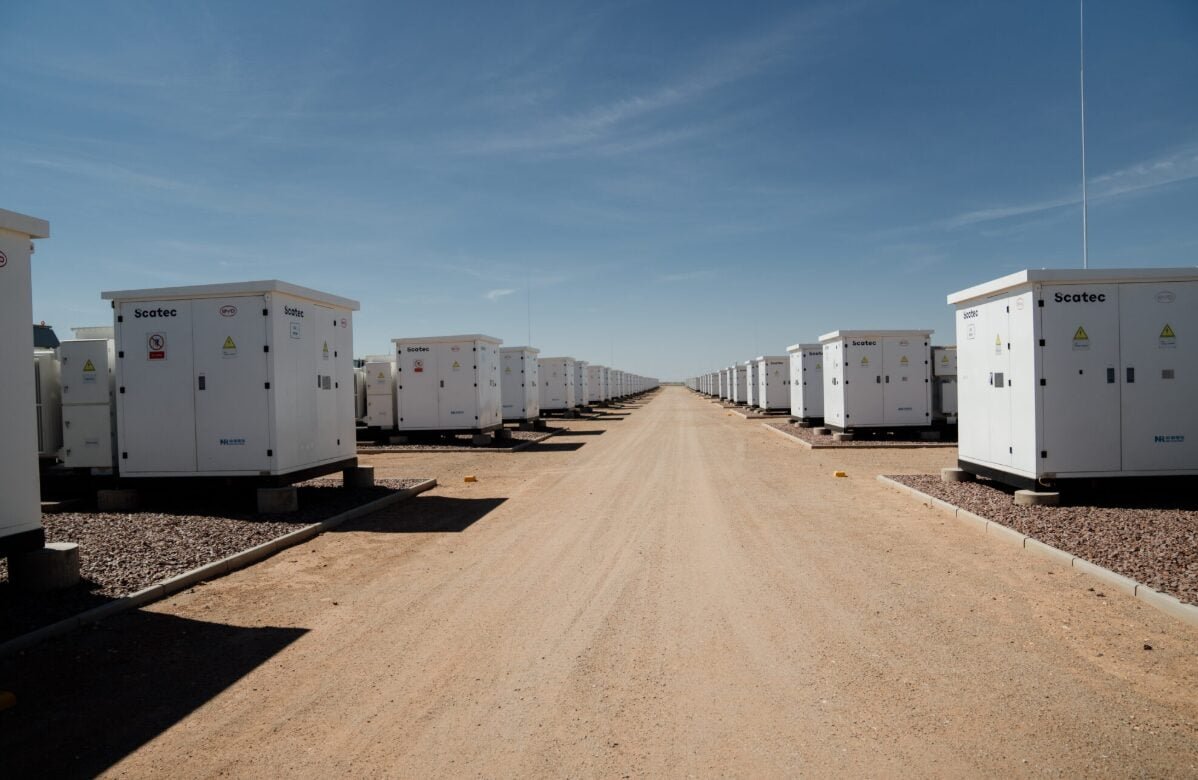
A total of 33 bids for the five battery energy storage system (BESS) projects at transmission system operator (TSO) Eskom substations were received, of which four bids from Mulilo and one from Scatec were successful. Mulilo, which is majority owned by Copenhagen Infrastructure Partners (CIP), is preferred bidder for the Merapi, Theseas, Harvard and Everest projects while Norwegian firm Scatec won the Leander project. All projects are in the Free State Province. The five BESS projects, of 123MW or 124MW each with a 4-hour duration, will require a total investment of ZAR 9.5 billion (US$531 million), Ramokgopa said. ‘Tender speaks to the maturity of South African players’ Although Mulilo is backed by a European investor, its team is local and the Minister highlighted Mulilo’s success in this window as a positive development. “What is significant is that more and more South African companies are putting their hand up and they are very competitive. We had 33 bidders from across the globe and it’s exciting that a South African outfit won four out of five. It talks to maturity of South African players and developers that they are ranked among the best in the world. It’s something we want to encourage,” Ramokgopa said. Commercial close for the five projects is expected in January 2026 and the projects will need to have reached full commercial operations by January 2028, although ‘of course they can do it earlier than that’, the Minister added. The projects will receive payments for making the capacity available to Eskom’s subsidiary National Transmission Company of South Africa (NTCSA) under a 15-year deal. Eskom/NTCSA will use the BESS to balance and support the grid, predominantly via ancillary services Instantaneous Reserves, Regulating Reserves, Ten Reserves and Supplemental Reserves. Mulilo and Scatec building up big portfolios in South Africa Mulilo also won the lion’s share of BESIPPPP Window 2, announced in December 2024, winning five out of eight projects totalling 384MW out of a total 615MW capacity. International IPPs EDF and AMEA Power won the others. Scatec made its own announcement today, saying the capex for its Leander project is ZAR 2.2 billion (US$120 million) of which its engineering, procurement and construction (EPC) contract accounts for 80%. Scatec will also provide operations & maintenance (O&M) and asset management services. The project will be financed by 90% non-recourse project debt and the remaining by equity from the owners. Scatec will own 50.01% of the project equity, with Stanlib’s Greenstreet and Redstreet Funds owning 44.99% and a Community Trust holding 5%. Scatec also won a project in BESIPPPP Window 1, the 103MW/412MWh Mogobe BESS, one of five totalling 513MW of capacity. It is also building solar-and-storage projects in South Africa via the separate Risk Mitigation Power Procurement Programme (RMIPPP) scheme. Its Kenhardt solar-and-storage project is pictured above. Just this week, IPP Globeleq ordered 612MWh of BESS from Sungrow for its Red Sands project, one of the winning bids in BESIPPPP Window 1.
From Darkness to Light: Iberia’s Rapid Grid Recovery Explained

Last Updated on: 30th April 2025, 02:11 am On April 28, 2025, the Iberian Peninsula experienced a significant and sudden blackout, plunging large portions of Spain and Portugal into darkness and disrupting critical infrastructure for millions of people. The outage occurred at around midday, severing approximately 60% of the region’s electricity supply in seconds. The initial cause remains under thorough investigation, with complexities involving interconnected transmission systems, diverse generation sources including nuclear, renewable, gas, and remaining coal capacity, and operational factors that authorities have yet to fully unpack. Like many people engaged in the global energy transformation, as soon as I heard the news I knew that the usual suspects—delayers and nuclear advocates especially—would be blaming renewables despite the lack of any evidence that they contributed. And lo, it has come to pass. My ‘favorite’ was the people who blamed the lack of nuclear in Spain despite there being 4 GW of operating nuclear on the grid that tripped off due to the blackout. However, while causation remains uncertain and speculative at this stage, the technical process used to restore power—known as a black start—offers clear insights into the resilience and sophistication of modern grid management. It also provides some indication of the changes that will be occurring as we move into grids dominated by wind, solar, storage and transmission. I spoke with Mark O’Malley, Leverhulme Professor of Power Systems and co-founder and research head of the Global Power Systems Transformation (GPST) consortium recently about a broad range of topics including black start (part 1, part 2). A black start is fundamentally about restarting a power grid from a completely de-energized state. The analogy often made is jump-starting a car, albeit at a much greater scale and complexity. In practical terms, it involves initiating small, self-sufficient generation units that can independently produce electricity without external grid support. Once these initial generation sources come online, they provide the necessary foundation of stable voltage and frequency that allows progressively larger generating units to reconnect. The eventual goal is a controlled, stepwise re-energization of the entire transmission system, reconnecting individual areas until the grid returns to full operational capability. It’s a carefully orchestrated process, demanding rigorous planning, specialized infrastructure, and exceptional coordination. In Spain and Portugal’s recent outage, the grid operators—REE in Spain and REN in Portugal—activated a well-rehearsed black start procedure. The initial response required quickly mobilizing power stations equipped for independent restart, a role typically reserved for specific generation assets such as hydroelectric dams, gas turbines configured for rapid and autonomous start-up, and small-scale diesel generators strategically positioned at critical nodes. (Before anyone gets excited about the continued need for fossil generation for black start, battery storage is also excellent for this, and the generators can run on biofuels.) Each of these facilities has specific capabilities enabling them to bootstrap the grid back into life without needing significant external energy inputs. Hydroelectric plants, especially those with reservoirs or pumped hydro storage, are uniquely suited for black start duties. Their advantage lies in the minimal initial power needed to begin generation, the inherent frequency provision and the large amount of power they can provide. Typically, a hydro plant requires only a very modest energy input—often provided by small on-site battery systems or auxiliary diesel engines—to open intake gates and energize generator fields. According to industry standards, as described in various technical manuals and operational guidelines from grid operators like REE, these systems can move from a dormant state to supplying substantial quantities of power within minutes. The stored potential energy in water behind dams provides a near-instantaneous generation response, making hydroelectricity an essential backbone in emergency restoration plans. Gas turbines, particularly smaller open-cycle units equipped for rapid start-up, also played a pivotal role in Iberia’s recovery efforts. These turbines require fuel—typically natural gas—but rely on minimal external electrical inputs, provided by batteries or compressed-air starters, to initiate rotation of their internal compressors. Once spinning, the combustion turbine ignites fuel and swiftly transitions from consuming electricity to generating it. Small diesel generator sets offer similar benefits on an even more localized scale, needing only stored diesel fuel and small battery packs for ignition. While individually limited in capacity—often ranging from one to ten megawatts—these diesel sets prove invaluable in energizing local substations and providing initial auxiliary power for larger generation assets. In contrast, large-scale nuclear plants, combined-cycle gas plants, and coal or biomass-fired thermal units are typically incapable of performing black-start functions. Such plants depend on external electrical power for critical auxiliary services, such as reactor cooling pumps, feedwater systems, control-room operations, and emissions mitigation technologies. For example, per guidelines from the International Energy Agency (IEA), a nuclear plant generally needs about ten percent of its total rated capacity to power essential services before reconnecting safely to the grid. Similarly, combined-cycle plants, involving both gas and steam turbines, require five to ten percent of their rated output to energize feedwater pumps and associated auxiliary equipment. These substantial energy needs illustrate why such large thermal plants remain entirely dependent on prior restoration of stable grid voltage and frequency. Renewable generation assets, primarily wind and solar, present a unique paradox during black-start events. While capable of nearly instantaneous power delivery when conditions are favorable, legacy inverter-based technologies cannot independently form or stabilize an isolated grid segment. Instead, they require an existing stable frequency reference from the network to synchronize and start injecting power. Thus, despite their negligible auxiliary power needs, their role in initial grid re-energization has been limited to date. Most existing wind and solar farms become relevant only once grid stability is firmly reestablished by other more robust and controllable generation sources. That’s not inherent to the technology however. Just as the power management systems of wind and solar farms can provide ancillary services if designed and configured to do so, increasingly they are likely to be asked to be grid-forming members and capable of black start re-energizing. They require virtually no power to start and if the sun is shining or
Is Clean Energy Finally Affordable? BLUETTI’s Paying In—And Launching Something New
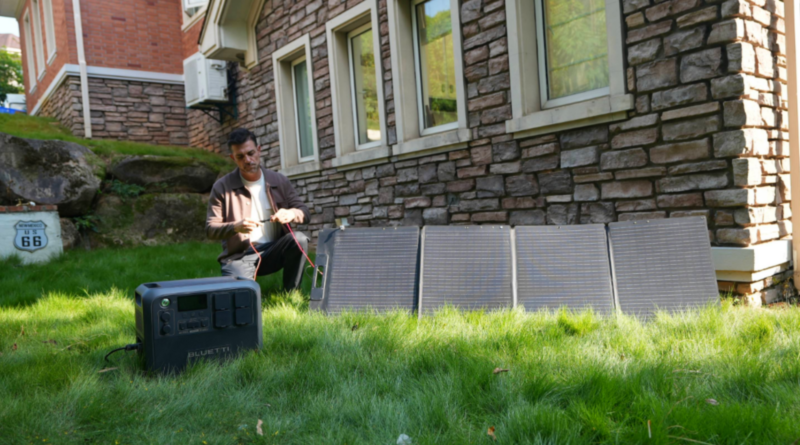
Last Updated on: 1st May 2025, 02:19 am Let’s be honest—clean energy sounds great, but for many people, the price tag doesn’t. In fact, most folks looking into solar generators or home battery systems end up walking away simply because it feels too expensive to start. That’s why BLUETTI is stepping in to make things easier. This Earth Month, they’re helping more people make the switch with affordable, flexible options—starting with their new Clean Energy Incentive Program and the brand-new Apex 300 Portable Power Station. Make the switch easier—with a direct subsidy BLUETTI’s new program is all about making the switch to clean energy a little easier on your wallet. If you’ve got a gas generator sitting around, just share a few details about it and pick a BLUETTI model you’d like to upgrade to—you’ll then get access to a special subsidized price, no extra steps needed. One simple start is the lightweight AC60 Solar Generator (Pioneer 50)—easy to carry, with foldable solar panels for power on the go. It also stands out with: Historically affordable: Only $269 after subsidy 600W output (1000W surge)—ideal for outdoor or emergency use IP65 rating, making it fully water-and dust-resistant Fast charging: 100% charge within an hour Backed by a 6-year warranty, cutting down on waste and replacement costs Expandable to 2,015Wh capacity for powering phones, laptops, and more For households seeking a more advanced home battery backup, models like the AC500 are also included in the new program, offering double savings for your wallet: the new program plus up to 30% in federal tax savings through the U.S. Residential Clean Energy Credit through 2032. Apex 300: the latest innovation in versatile, affordable clean energy In parallel with the incentive program, BLUETTI has also introduced the new Apex 300 Portable Power Station. With a low entry cost, it offers an easy transition to clean energy and long-term value. Here’s why it’s the smart choice: Ultra-efficient 20W AC idle drain extends fridge runtime by up to 24 hours longer and boosts CPAP usage by 2.5x compared to typical units. Built-in 120V/240V dual output with 12,000W bypass that powers 99% of home appliances, even a Tesla EV. 2-year savings sprint when paired with one Solar X 4K Charge Controller for a massive 6400W solar input. Whisper-Quiet at 40dB, no fumes, no fuel. Time-of-use savings made easy—easily schedule and monitor energy usage with a user-friendly app and a clear, intuitive LED screen. Expandable ecosystem—add extra B300K batteries, or smart 700W Hub D 1 to grow your setup as your needs evolve, from whole-home backup to off-grid RV power. From extending refrigerator runtimes during outages to powering multiple car devices on RV trips, the Apex 300 is a power guardian that switches seamlessly, making the most of every watt while saving both money and energy. Ready for a cleaner future? BLUETTI is offering a little help BLUETTI has launched a new Clean Energy Incentive Program. Gas generator owners around the world can submit basic info about their devices and select a clean power product to receive an exclusive subsidy. The compact AC60 and other select models, like the AC180T, AC200L and more, are already available at subsidized prices through the program—a practical step designed to support a smoother, more affordable transition to greener living. Meanwhile, early access to the all-new Apex 300 Portable Power Station is now open through May 19th, ahead of its official launch on May 20th on Indiegogo. Going green isn’t about rushing Sustainability doesn’t have to be a drastic leap. It’s about small, thoughtful choices that build toward something better—for your home, your wallet, and the planet. BLUETTI believes real change happens step by step, just like the LAAF (Light An African Family) Initiative. By walking the same path as those in need, the team can better understand and manage which solutions will most effectively help families who need affordable, sustainable energy. So even if your gas generator still works just fine, it might be worth looking at a smarter backup. The future doesn’t have to be all-or-nothing. It can start with one quiet step with BLUETTI’s solutions, and this simple step could lead to a brighter, more sustainable future for everyone. This article was sponsored by BLUETTI. Sign up for CleanTechnica's Weekly Substack for Zach and Scott's in-depth analyses and high level summaries, sign up for our daily newsletter, and/or follow us on Google News! Whether you have solar power or not, please complete our latest solar power survey. Have a tip for CleanTechnica? Want to advertise? Want to suggest a guest for our CleanTech Talk podcast? Contact us here. Sign up for our daily newsletter for 15 new cleantech stories a day. Or sign up for our weekly one on top stories of the week if daily is too frequent. Advertisement CleanTechnica uses affiliate links. See our policy here. CleanTechnica's Comment Policy
The Future Is Now - Solar Citizens Sausage Sizzle Political Protest
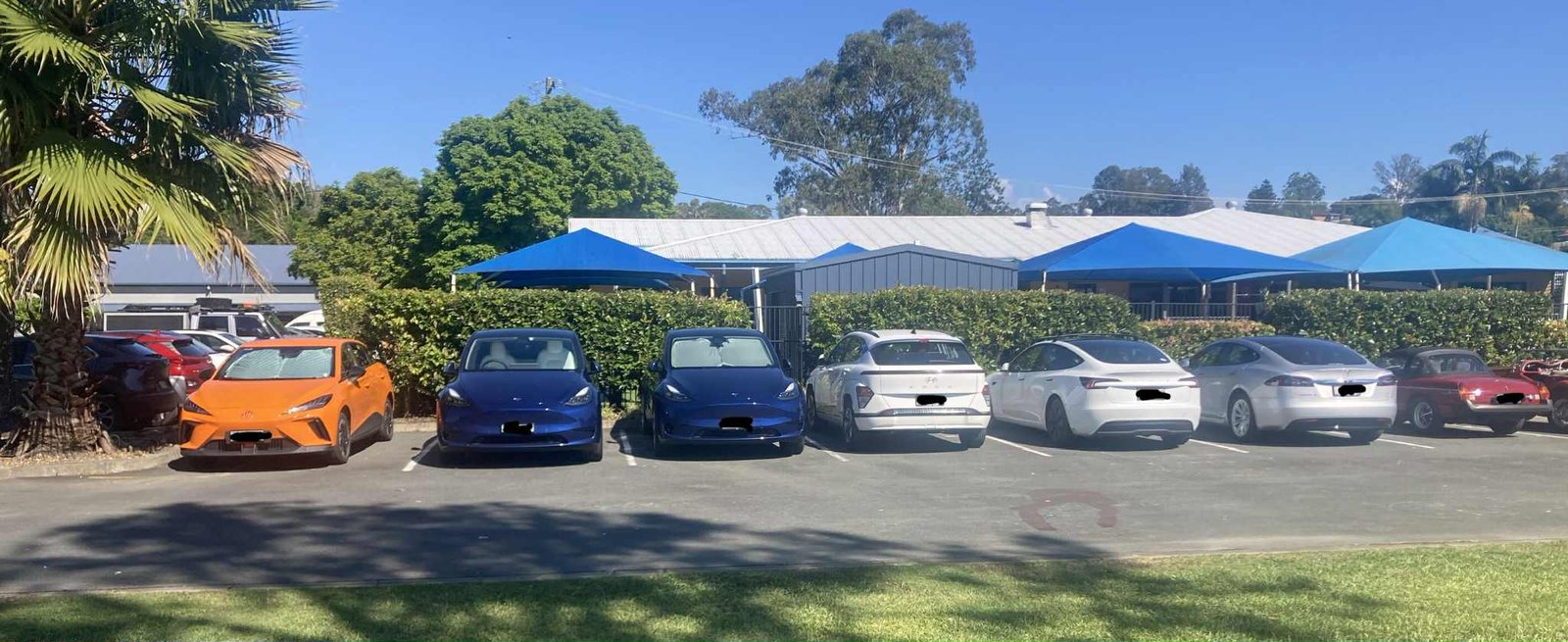
Solar Citizens is a renewable energy lobby group with passion and intellect! With a federal election just days away in Australia, they coud not resist staging an event promoting renewable energy and electric vehicles. The “Future is Now” event was held in the seat of Dickson, currently held by a small margin by the opposition leader, Peter Dutton. Tess is getting an extra charge from the solar panel in the frunk! Photo courtesy Majella Waterworth Mr Dutton is promoting the building of nuclear reactors throughout Australia and also rolling back the recently introduced fuel efficiency standards. He is silent on any support for home batteries. If his party wins the election, it will create a major slowdown in the current progress of renewable energy and the uptake of EVs. His party has openly admitted that their nuclear proposal is actually a proposal to support aging coal-fired power stations to continue. A glow-in-the-dark smoke screen. The importance of this election cannot be underestimated, one party is promoting clean air and clean energy through renewables coupled with home batteries and fuel-efficient cars, the other will prolong the use of gas and coal with nuclear power on the never, never. They are even offering a petrol discount to help people stay with their fossil-fueled cars. The event was attended by guest speakers who are experts in their respective fields. One of these gave his response to Mr Dutton’s discount. Thank you, Adjunct Professor Jake Whitehead, chief scientist at the Electric Vehicle Council. With EVs, you pay even less to fuel your car. Twenty-five cents of electricity can drive your car as far as $1.50 worth of petrol. You can watch the video here. Peter Kilby, senior grid transformation engineer for Energex, touched on Queensland’s success integrating among the world’s highest penetrations of rooftop solar, the imminent availability of bidirectional EV charging and its potential to build on our solar success, and the many exciting career opportunities in the electrical and renewables sector. Despite the distraction of the BYD cooking onions, Peter managed to hold the crowd with his passion and honesty about the opportunity that EVs and batteries and solar offer to the community. Mr Eddie Springer, Director of Springer Solar, also presented. I had the pleasure of meeting with the Springer family for an interview a few years back when they installed a high-speed charger at a local servo. Since then, they have gone from strength to strength. You can read about Springer’s recent projects here. Ellie Smith, independent candidate for Dickson, was there to spread the word and have some fun. Here she is being interviewed by Heidi Douglas, National Director and CEO of Solar Citizens, about affordable home batteries. Ellie points out that over 64% of households in Dickson have solar on the roof. They are in a difficult position, where they are selling their solar electricity cheaply to the grid in the middle of day and having to buy electricity in the evenings when it is expensive (and likely to be generated by fossil fuels). A home battery would solve that problem and also give resilience in storm season. Ellie is supporting a home battery subsidy for that reason. Majella and Independent candidate Ellie Smith in the Tesla frunk. Photo courtesy Ellie Smith. I was interviewed by Heidi about the BYD shark, and I hope to share that video with you in future. Meanwhile, here is a photo Majella took showing the Shark in company with Ford’s F150 Lightning! Speakers shared information about energy efficiency and how to reduce your household bills, experts answered questions about all things electric. Ford F150 Lightning and BYD Shark. Photo courtesy Majella Waterworth Scores of locals wandered through the 26 parked electric vehicles. The MG club actually showed up with their classic vehicles. Altogether there were 8 BYDs, 6 Teslas, 3 MG 4s, 2 Konas, 2 ORAs, 2 Volvos, a Polestar, an Ioniq 5, an Ioniq 6, a Renault Megane eTech, a Shark, and a Ford F 150 Lightning. And let’s not forget the veterans, 2 Mitsubishi iMievs. MG’s old and new. Photo courtesy Majella Waterworth Local organizer Phillipa England intrigued us with her email teaser: “Want to know what’s coming onto the market and how much money batteries – on wheels and in your home – can save you? Still got questions about EVs? Then, join us to talk with industry professionals about what’s trending in electric vehicles; tips and traps when buying a household battery; how Energex is transforming the grid to accommodate household energy and how you can get in on the action.” iMiev leads the charge. Photo courtesy Majella Waterworth As the BYDs powered the BBQ, EV owners answered questions from the public milling about our cars, networked with other EV drivers and enjoyed a sausage on a blanket. Sadly, we got some negative blowback from a recent Channel 7 documentary about poor working conditions in a nickel mine in Indonesia. Investigation showed that the nickel was not battery-grade and so was used to make stainless steel. However, the message that cut through was that electric vehicle owners should be ashamed of themselves for buying an EV. The rebuttals have not cut through the media FUD. Crowds inspecting the EVs. Photo courtesy Majella Waterworth One great conversation was with a couple who said that they had AU$46k to spend, so what could they afford to buy? After explaining that we weren’t dealers, we then talked to them about the MG 4, the Dolphin, and the Great Wall ORA which were sitting there on display. There were the usual questions about when and where we charge, particularly on road trips. And the usual answers about needing to stop to go the loo and to eat. “Oh, you time your charging to the rest breaks!” What seems obvious to us comes as a revelation to the uninitiated. Majella was in her element, showing the interested groups through the Plugshare app. I wandered about in my CleanTechnica t-shirt, handing
Panasonic Steps Away From Solar & Storage, Ends EverVolt Line

Panasonic is officially stepping out of the residential solar and battery storage market, bringing an end to its EverVolt product line. The decision, announced in April, reflects the company’s broader strategy to refocus on core areas where it sees greater long-term potential. Panasonic was once a significant player in the solar space, but its market presence has faded in recent years. According to EnergySage, the company’s share of solar panel installations dropped sharply, from 35% in 2020 to just 6% by 2024. Its battery storage numbers followed a similar trend, falling from 7% to 1%. The company already stopped manufacturing its own solar panels in 2022, shifting to third-party production. Now, with mounting competition and shifting priorities, Panasonic has opted to wind down its entire residential energy offering. For current customers, there’s some reassurance: Panasonic says it will continue to honor product warranties and provide customer support for both installed and pending systems. Support remains available via its website and dedicated email channels. “We have made the decision to discontinue our solar and battery storage business line. This change allows us to focus on areas where we can have the greatest strategic impact. We remain confident in the technology and grateful to our partners and customers who have supported this journey. “We are committed to a smooth transition and will continue to provide customer support to existing customers, as well as future customers who are undergoing installations and commissioning. Please rest assured that all warranties will be honored for both installed products and those not yet installed. Where third-party warranties apply, we will continue to support our customers by providing clear direction and points of contact. Support remains available via our website and our dedicated solar and battery storage email at panasonicsolar@us.panasonic.com.” — Panasonic While the news doesn’t come as a complete surprise to those watching the industry, it does mark the exit of one of the few legacy electronics giants still involved in residential solar. Panasonic’s departure underscores how tough and fast-moving the home energy market has become, even for the biggest names. Sign up for CleanTechnica's Weekly Substack for Zach and Scott's in-depth analyses and high level summaries, sign up for our daily newsletter, and/or follow us on Google News! Whether you have solar power or not, please complete our latest solar power survey. Have a tip for CleanTechnica? Want to advertise? Want to suggest a guest for our CleanTech Talk podcast? Contact us here. Sign up for our daily newsletter for 15 new cleantech stories a day. Or sign up for our weekly one on top stories of the week if daily is too frequent. Advertisement CleanTechnica uses affiliate links. See our policy here. CleanTechnica's Comment Policy
EV Batteries Are Outlasting the Car
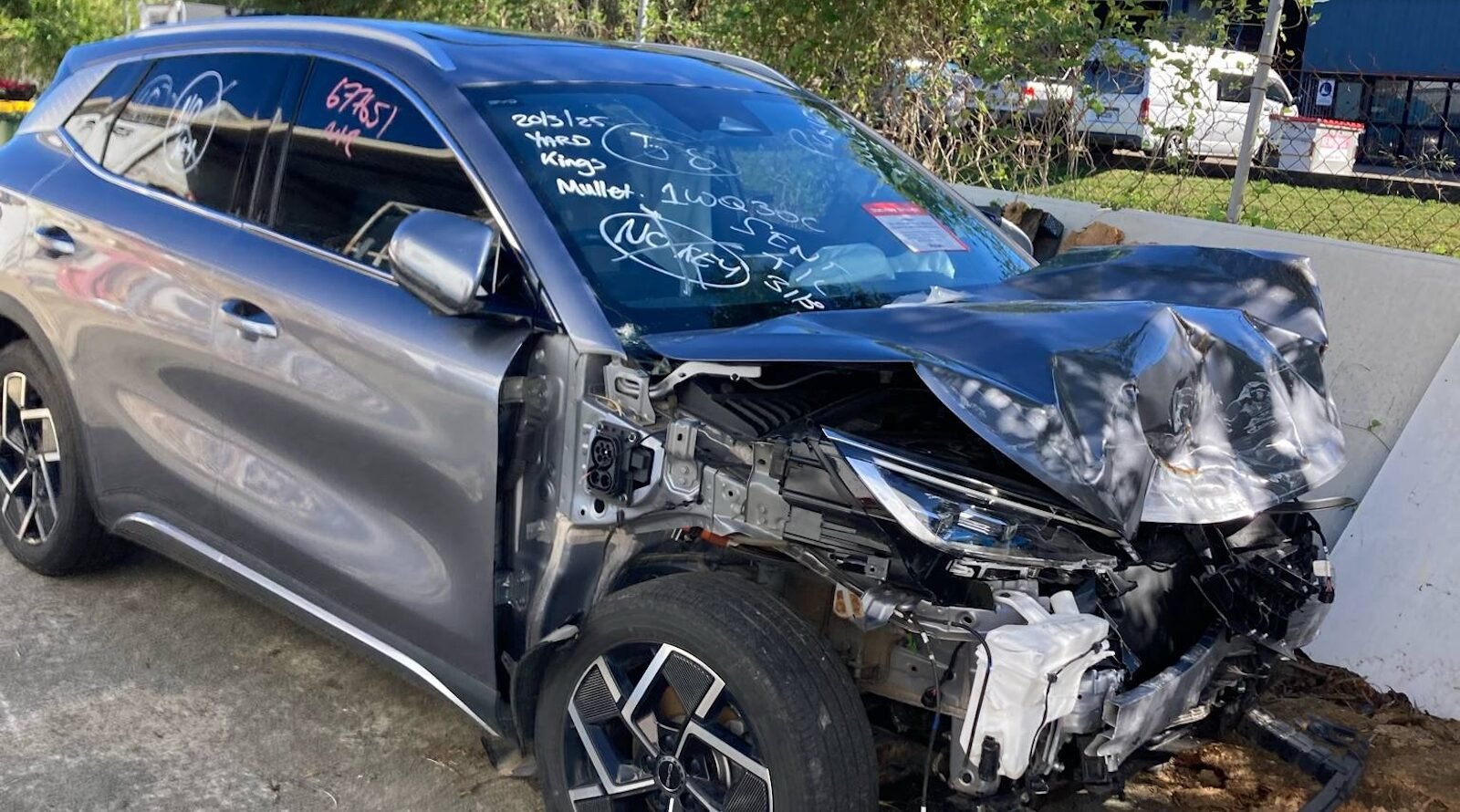
Last Updated on: 30th May 2025, 12:29 am “Saying that EV batteries will end up in landfill is a lie. Even if someone took an electric vehicle battery to the tip, someone else would grab it and sell it. They are too valuable and useful to go into landfill.” So says engineer Francisco Shi. You might remember him from this article. Or this one. “Just by using batteries for energy storage you can turn every grid connection into passive income.” Francisco’s BYD battery stack. Photo courtesy Majella Waterworth So, when he contacted me about his latest project, I popped out to his workshop to check it out. Francisco has built a mini power plant using batteries from wrecked Teslas and BYDs. He says he prefers the BYD batteries because they are easily stackable. BYD batteries are easier to use. For the Tesla batteries, he has to build a frame because the edge is thinner and they have a hump. As well as proving that the batteries-to-landfill FUD is a lie, Francisco is demonstrating that they are safe in a crash and have a practical second life use. He is making money, supporting the grid. It all started when the government contacted a waste management company, and they in turn subcontracted to Francisco. He was tasked with developing a system that would enable the batteries to be fully discharged so they could be shredded safely. The project evolved when all concerned realised that the batteries were far more valuable left whole. Francisco’s Tesla battery stack. Photo courtesy Majella Waterworth. Francisco’s factory is in a post-industrialised area with lots of empty rooftop space and underutilised transformers. “One benefit of doing this is there is no need for infrastructure spending. Just install the batteries in industrial buildings with big grid connections. Just in our street there are 3 transformers that are underutilised. The factories are closed. If on top of that we covered all the roofs with solar panels, we probably won’t need too many solar farms or grid upgrades. The only drawback is power companies don’t make money,” he tells me. How will they get on when this becomes an Aussie backyard trend? “My best so far is AU$1400 in one night. My monthly average is around $1000.” I asked about return on investment. “Depends on how much you pay for the battery. If you buy a wrecked car and sell all the useful parts, the battery is close to free. At the moment I am doing arbitrage at the factory. Our solar doesn’t make enough to cover the consumption, so I need to buy during the day, but then I get far more than what I pay when I sell it back during peak demand.” Francisco started with 20 kW of solar on the roof. So, he was initially buying power in the middle of the day when prices went negative. Batteries from wrecked Teslas make up the mini power station. Photo courtesy Majella Waterworth. Francisco now has 60 kW on the roof, with plans to double it. He wants to demonstrate the potential of batteries from wrecked EVs as a money maker. We talked amongst pallets of EV parts and cars in various stages of deconstruction. He pointed out a pallet of BYD drivetrains. “These are great for conversions and will sell on.” There is an emerging and increasing market for EV parts. Francisco is using a hybrid inverter to get the batteries to talk to the grid. He is using an off-the-shelf inverter which has been approved for connection to the grid. Any inverter that you buy “off the shelf” has been approved — it doesn’t matter what batteries you use. The battery system has been boxed up. He is now working on certification. His energy retailer was concerned about the activity in his workshop — not using any power during the day and yet exporting large amounts during peak hour. They send technicians around to inspect the meters — surely there was a glitch. The technicians inspected the premises and declared that all was okay. AGL may be in trouble. The battery charges during the day from his rooftop solar, then discharges at peak in the evening. “Prices at peak may start at 22 cents but can get as high as $7 a kWh.” He says he is making a killing. My thoughts: as more people do this, there won’t be a peak hour anymore and the business case will decline. However, this appears to be many years off. If enough solar is soaked up during the day means that the prices won’t go negative, then sell into the peak when the best price is available. Australia has recently had an election and voted in a government that has promised to subsidise home batteries. If as many people install a home battery as have solar on their roofs, it will make a significant difference to grid usage. Francisco comments: “At the moment, battery ROI means that they only break even over the life of the battery. Ten years. This will depend on battery price reductions — likely over the next 5 years. The only reason to be on the grid will be to make money by selling your solar.” Getting back to the batteries, I was surprised at how easy it was for Francisco to obtain them and asked how many wrecks were occurring. He told me 4 or 5 a week throughout Australia. I was surprised. I couldn’t find any stats from Google, but here is a view from The Guardian: “Electric vehicles are routinely being written off after minor accidents, as a shortage of skilled mechanics and parts, as well as outdated laws, leads Australian insurers to scrap EVs prematurely instead of repairing them.” Some can still drive, as Francisco demonstrates here. And it is not just EVs — many petrol cars are written off because it was the cheaper option. Francisco pointed out that if an insurance company has to provide a rental car
Sumitomo Electric deploys first vanadium flow battery for a community microgrid in Japan
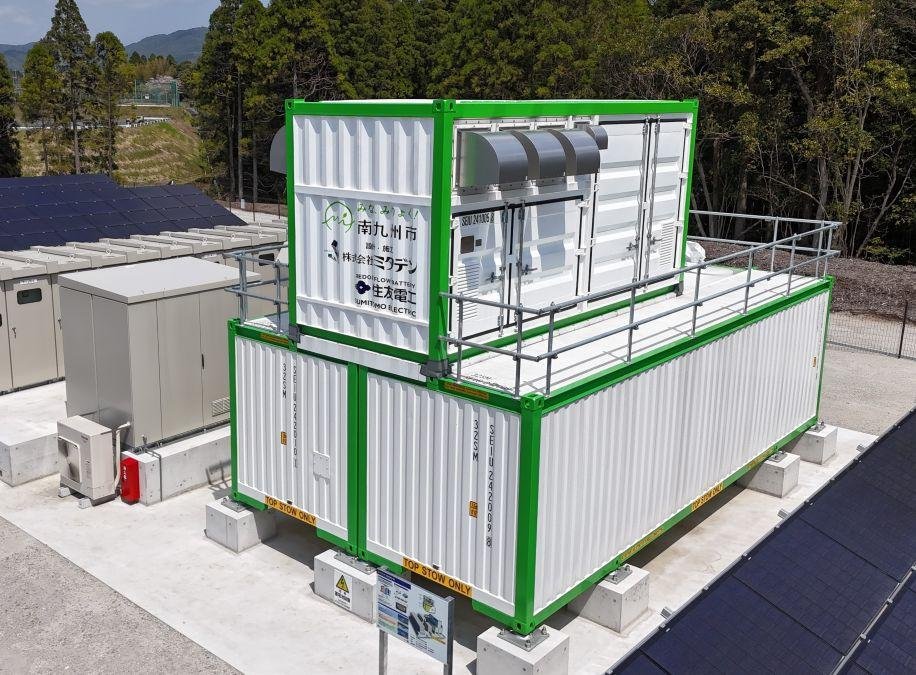
Sumitomo Electric deploys first vanadium flow battery for a community microgrid in Japan - Energy-Storage.News Skip to content