Great Wall Motor sells 102,231 cars in May, NEV contribution at record high
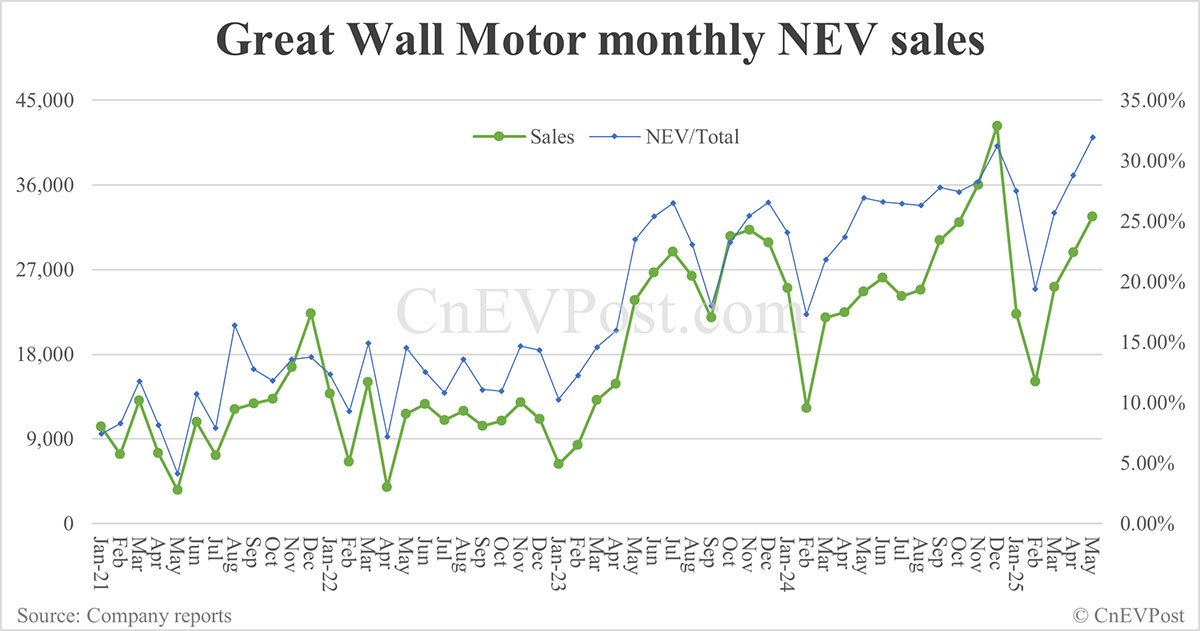
Great Wall Motor sold 32,638 NEVs in May, contributing a record 31.93 percent to total vehicle sales. GWM sold 34,535 vehicles overseas in May, a year-on-year increase of 0.17 percent and a month-on-month increase of 7.37 percent. Great Wall Motor (GWM) saw moderate growth in car sales last month, with significant growth in new energy vehicle (NEV) sales. The automaker sold 102,231 vehicles in May, up 11.78 percent year-on-year and up 2.17 percent month-on-month, according to data released today. NEV sales in May reached 32,638 units, accounting for a record 31.93 percent of total vehicle sales. This represents a year-on-year increase of 32.41 percent and a month-on-month increase of 13.28 percent. This marks the third consecutive month of sequential growth in GWM's NEV sales, and the highest monthly figure so far this year. By brand, the Haval brand sold 57,693 vehicles in May, accounting for 56.43 percent of GWM's monthly sales. The Tank brand sold 20,900 units, contributing 20.44 percent; Wey sold 1,961 units, contributing 6.03 percent; and the Ora brand sold 1,961 units, contributing 1.92 percent. GWM sold 34,535 vehicles overseas in May, representing a year-on-year increase of 0.17 percent and a month-on-month increase of 7.37 percent. From January to May, GWM sold 459,099 vehicles, a year-on-year decrease of 0.54 percent. It sold 124,009 NEVs from January to May, a year-on-year increase of 16.70 percent. Overseas sales from January to May totaled 157,590 vehicles, a year-on-year decrease of 3.55 percent. BYD sold 89,047 NEVs overseas in May, marking the sixth consecutive month of record-breaking sales.
These Long-Range EVs Are Catching Up
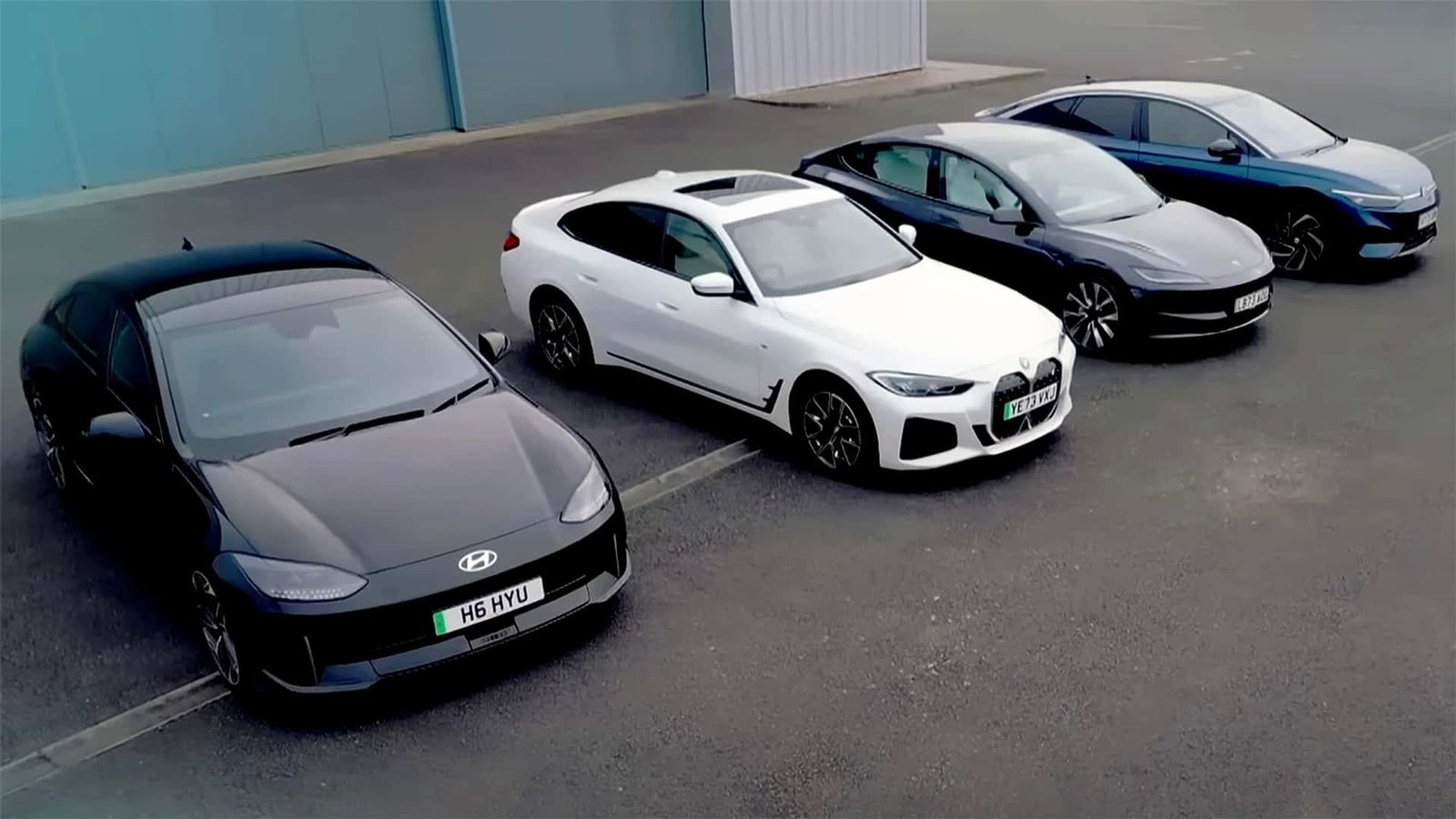
Fifth Gear pits four of Europe's best long-range sedans against one another in a sales rep showdown. The contenders go through several knockout challenges to see which one is the best. The final round sees the BMW i4 face off against the Tesla Model 3. Sales representatives need to cover many miles every day, which is why you don’t often see them driving electric vehicles. But if they were to choose an EV, their best bet would be a long-range electric sedan, and Fifth Gear lined up four of the best three-box EVs available in Europe to see which is the best for long-distance driving. With the very stringent Euro 7 emissions regulations looming, the long-range electric sedan is becoming a hot commodity in Europe. The contenders are the Tesla Model 3 and some of is perennial rivals: the Hyundai Ioniq 6, BMW i4 and Volkswagen ID.7. They were subjected to several tests to rate their worthiness as rep mobiles and, by extension, solid long-distance companions for any driver looking to go electric. The ideal car for this role doesn’t just need to be able to drive for extended periods without needing to stop, but it should also have a nice interior that doesn’t become tiresome to look at and sit in for hours on end. The trunk capacity also matters since, in the case of an actual sales rep, it would need to be able to accommodate their product samples, paperwork and extra clothes that they may need. It should also be able to swallow up a family-sized assortment of travel bags if you go on an extended road trip. This sales rep test is relevant for anyone looking to buy one of these cars, because if it’s good enough for someone who spends their entire day on the road, it’s good enough for your not-as-intense daily needs, such as commuting to work and occasionally going on a longer trip. The two hosts, Jason Plato and Rory Reid, begin the video from the premise that the Tesla Model 3 is the one to beat. We’ve sampled all of these cars in several trims, and we agree that the Model 3 is a great all-rounder that delivers in the areas that matter for a reasonable price. However, while it has the second-longest range in this lineup and is an excellent value for money proposition, it doesn’t have the most luxurious feeling or roomiest interior and it’s also developed a bit of an image problem that may put some people off. The BMW is the most expensive and has the least range, but its interior feels the nicest of the three and is the most traditional of the four. The VW has the most spacious interior with the most rear legroom, but it’s a bit dull to drive and look at. Hyundai certainly made the Ioniq 6 look unique, go far on one charge and be enjoyable to drive, but the two hosts say it has the worst-feeling interior of the bunch and its navigation system was the only one of the four that didn’t find a set location they chose for this test. By the end, the test became a two-horse race between the i4 and the Model 3, after the Ioniq 6 was eliminated for its interior and infotainment and the ID.7 was just nudged out in the ride quality test. The winner depends on who you ask: the Tesla is still the standard-bearer, but the BMW proves the rest of the auto industry has caught up.
लघु बैटरी उद्यमियों के लिए राष्ट्रीय और निर्यात बाजारों में वर्तमान चुनौतियां और समाधान विषय पर 18 वीं पावर ऑन तकनीकी सम्मेलन हैदराबाद मे सम्पन्न
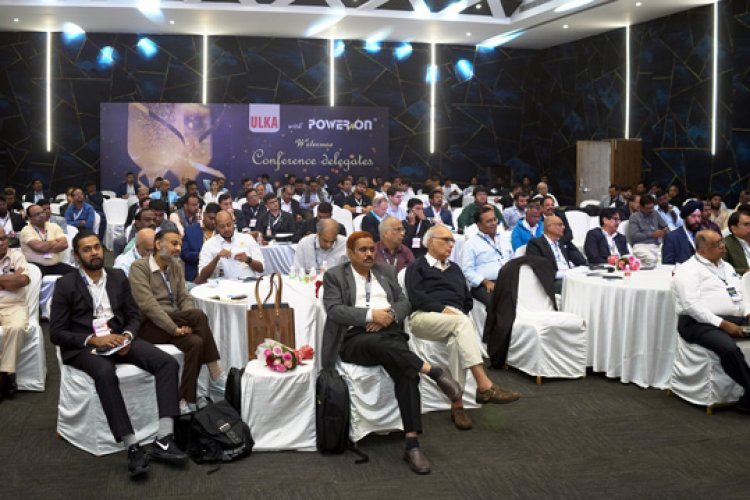
सम्मेलन का विषय रहा लैड बैटरी उद्योग में एसएमई के लिए राष्ट्रीय और निर्यात बाजार चुनौतियां और समाधान । सम्मेलन लघु बैटरी उद्यमियों को व्यापार के नए अवसरों को बताने में सफल रहा। साथ ही बाजार की विषम परिस्थितियों में व्यापार व उद्योग कैसे चलाए- इस ज्वलंत विषय पर भी अनुभवी मार्गदर्शन प्राप्त हुआ। कार्यक्रम की शुरुआत विशिष्ट अतिथियों और बैटरी फेडरैशन के पदाधिकारियों के द्वारा दीप प्रज्जवलन से हुई। बैटरी फेडरैशन के अध्यक्ष श्री हर्ष पाल जी एवं महासचिव श्री नरेश तोमर ने उपस्थित बैटरी जनों का स्वागत करते हुए आशा प्रगट की कि आज का सम्मेलन आशा की किरण ले कर आएगा। कार्यक्रम का संचालन प्रसिद्ध उद्यमी व मार्गदर्शक श्री रमेश नटराजन जी ने किया। तकनीकी विचार विमर्श की शुरुआत इंडियन इंस्टिट्यूट ऑफ साइंस से प्रोफेसर अनिल शुक्ला ने इलेक्ट्रिक रिक्शा (ई-रिक्शा) की बैटरी की समस्या से की। प्रोफेसर शुक्ला के अनुसार इलेक्ट्रिक रिक्शा (ई-रिक्शा) भारत में एक विलक्षण सार्वजनिक परिवहन के रूप में लगातार विकसित हो रही है और इसका नेटवर्क भी लगातार बढ़ता जा रहा है। लेकिन इसके साथ दो समस्याएं सामने या रही है-: एक रेंज की चिंता, क्योंकि वे लंबे समय तक नहीं चल सकते । दूसरी समस्या है सीमित गति जो आम तौर पर अधिकतम 25 किमी / घंटा तक सीमित होती है। इन समस्याओं का हाल भी उन्होंने एक नए पटेन्टेड तकनीकी के रूप में सामने रखा। उन्होंने इसे इस प्रकार विकसित किया है की यह टार्क कनवर्टर के रूप में काम करेगा जिससे ई-रिक्शा की शाफ्ट गति बढ़ाई जाएगी। परिणामस्वरूप बैटरी वर्तमान/ऊर्जा की खपत से ही ई-रिक्शा की गति बढ़ेगी और ई-रिक्शा बैटरी का वजन बढ़ाए बिना लंबी दूरी तय कर सकेगा। ल्युमिनस के वरिष्ठ उप प्रबंधक श्री अमलान कान्ति दास ने भारत सरकार की हर घर सोलर योजना को रेखांकित करते हुए लैड ऐसिड बैटरी बाजार के विस्तार की बड़ी संभावनाओं पर विस्तार से समझाया। उनके अनुसार जल्द ही भारत का बैटरी बाजार आज से कई गुना बढ़ने की व्यापक संभावनाएं हैं। डॉक्टर आर वी जी के सरमा ने भी आगामी भारतीय अर्थव्यवस्था के 5 ट्रिल्यन डालर के आकार का होने पर ऊर्जा खपत का अनुमान बताते हुए संभावित बैटरी बाजार के विस्तार और बैटरी निर्माताओं के लिए संभावनाओंका खाका खींचा। एक बड़ा प्रश्न सब बैटरी जनों के मन में खटकता रहता है की क्या लिथियम बैटरी लैड ऐसिड बैटरी के बाजार को खत्म कर देगी? डॉ. सुगुमारन का कहना था कि काम लागत , आसान रीसाइक्लिंग और स्थापित तकनीकों के कारण लैड बैटरी के बाजार के खत्म होने की संभव नहीं है । तकनीकी विषयों से अलग बाजार की विषम स्थिति को ध्यान में रखते हुए, एक अनुभवी उद्योगपति -श्री हितेन भाई भलारिया को भी विशेष अतिथि वक्ता के रूप में आमंत्रित किया गया था। उन्हें निर्यात के लिए विभिन्न पुरस्कार मिले हैं। उन्होंने अपने अनुभव से समझाया की बाजार की विषम परिस्थितियों में व्यवसाय कैसे करें। उनका सम्बोधन उपस्थित प्रतिनिधियों के लिए एक प्रेरक सत्र साबित हुआ। भारत के उच्चतम बैटरी प्रौद्योगिकी केंद्र, सेंट्रल ऑफ इलेक्ट्रो केमिस्ट्री रिसर्च इंस्टीट्यूट, कराईकुडी, तमिलनाडु के वरिष्ठ वैज्ञानिक श्री सुन्दर लैड बैटरी पर बाजार में उपलब्ध विभिन्न प्रकार के कार्बन के लैड बैटरी पर प्रभाव पर नवीनतम शोध को विस्तृत रूप से बताया। शोध के परिणामों स्पष्ट बात रहे थे की कौन सी बैटरी के लिए कौन स कार्बन बेहतर है। कंप्यूटर प्रोग्राम, ऐप और सोशल मीडिया के उपयोग पर भी दिन-प्रतिदिन के कामकाज को आसान बनाने और ग्राहकों तक प्रभावी पहुंच के साथ बाजार लागत में कटौती करने पर चर्चा की गई। अहमदाबाद से रशीदा मकाती ने प्रभावी ढंग से समझाया की सोशल मीडिया के सशक्त उपयोग से हम काम लागत में ग्राहक तक कैसे अपनी बात पहुँच सकते हैं और उसे सेवा कैसे दे सकते हैं। अमेरिका से आए मिस्टर Nullo Madella ने बैटरी सेपरेटर के एक विशिष्ट प्रकार के बारे में बताया जो अमेरिका और यूरोप पर प्रमुख बैटरी निर्माता उपयोग करते हैं। उन्होंने बताया की यह सेपरेटर अब भारत में भी उपलब्ध है। लक्समबर्ग से विश्व की एक विख्यात बैटरी सेपरेटर निर्माता कंपनी के तकनीकी निदेशक डॉ Adrien comes ने उनकी कंपनी द्वारा विकसित एक नए प्रकार के सेपरेटर की जानकारी सभा को दी। यह सेपरेटर बैटरी को ज्यादा उम्र के साथ साथ ज्यादा विद्युत निर्माण में सहायक है। केन्द्रीय प्रदूषण नियंत्रण विभाग द्वारा लाए गए स्क्रैप बैटरी संकलन के नए नियम को वरिष्ठ सलाहकार श्री आदित्य महावर ने उपस्थित बैटरीजनों को समझाया। सम्मेलन लघु बैटरी उद्यमियों को व्यापार के नए अवसरों को बताने में सफल रहा। साथ ही बाजार की विषम परिस्थितियों में व्यापार व उद्योग कैसे चलाए- इस ज्वलंत विषय पर भी अनुभवी मार्गदर्शन प्राप्त हुआ। नवीन तकनीकी और उत्पादन को समझने और जानने का अवसर मिला। यह भी ज्ञात हुआ की जब देश लगातार आर्थिक महाशक्ति बनाने की और अग्रसर है तब क्या क्या अवसर लघु बैटरी उद्यमियों और व्यापारियों को मिलने वाले है, समग्र रूप से कहे तो सम्मेलन के उद्देश्यों में सफलता मिली।
BYD May sales breakdown: Song 74,949 units, Seagull 60,131
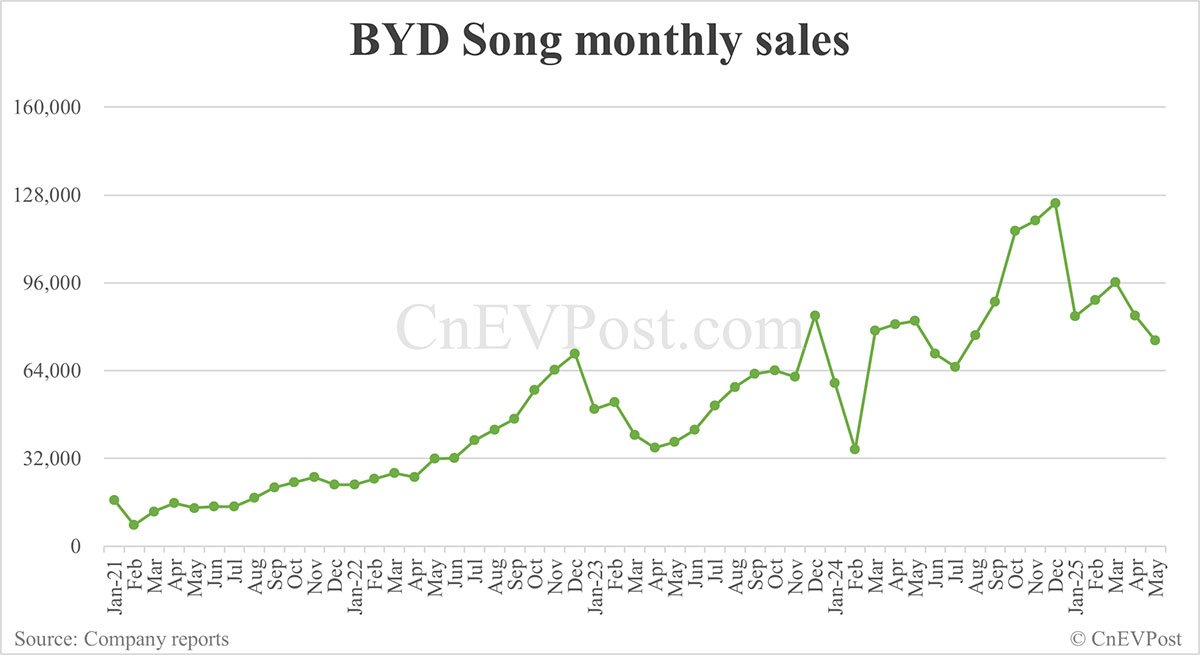
The Song family, Seagull, and Qin family were the top three BYD lineups in terms of sales in May. Denza sold 15,806 units in May, Fang Cheng Bao sold 12,592 units, and Yangwang sold 139 units. BYD (HKG: 1211, OTCMKTS: BYDDY) today announced its May new energy vehicle (NEV) sales figures and subsequently released detailed breakdowns showcasing the performance of different models and sub-brands. The Song family models sold 74,949 units in May, continuing to lead as the top-selling BYD lineup. This represents a year-on-year decrease of 8.79 percent and a month-on-month decline of 10.87 percent. The Song family includes the Dynasty series models Song L EV, Song L DM-i, and Song Pro DM-i, as well as the Ocean series models Song Plus EV and Song Plus DM-i. BYD's Dynasty series Song models sold 34,384 units in May, a year-on-year decrease of 7.74 percent, but a month-on-month increase of 1.85 percent. The Ocean series Song models sold 40,565 units in May, a year-on-year decrease of 9.67 percent and a month-on-month decrease of 19.40 percent. The BYD Seagull sold 60,131 units in May, making it the second-highest-selling BYD model, with a year-on-year increase of 70.01 percent and a month-on-month increase of 9.27 percent. The Qin family models sold 46,746 units in May, making it the third-highest-selling BYD model, with a year-on-year decrease of 18.09 percent while an increase of 2.02 percent compared to April. The BYD Sealion family sold 33,790 units in May, a year-on-year increase of 893.82 percent and a month-on-month increase of 28.87 percent. The first model in the Sealion family, the Sealion 07 EV, was launched on May 10, 2024. The BYD Yuan family sold 31,711 units in May, a year-on-year decrease of 21.18 percent and a month-on-month decrease of 13.52 percent. BYD Seal sold 25,587 units in May, up 78.79 percent year-on-year, but down 1.78 percent from April. BYD Han sold 21,672 units in May, down 1.50 percent year-on-year, but up 2.70 percent from April. BYD Tang sold 19,012 units in May, up 22.83 percent year-on-year and up 3.02 percent from April. BYD Dolphin sold 18,280 units in May, up 72.06 percent year-on-year and up 0.34 percent from April. BYD Xia MPV (multi-purpose vehicle) sold 7,030 units in May, a decrease of 9.29 percent compared to April. BYD Chaser 05 sold 4,836 units in May, a decrease of 85.29 percent year-on-year, but an increase of 11.43 percent compared to April. BYD e2 sold 289 units in May, down 65.22 percent year-on-year and down 52.78 percent month-on-month. BYD's passenger vehicles, including the Dynasty series and Ocean series, sold a total of 344,033 units in May, up 9.16 percent year-on-year but down 0.09 percent month-on-month. The Dynasty series sold 160,555 units in May, a year-on-year decrease of 6.68 percent and a month-on-month decrease of 1.83 percent. The Ocean series sold 183,478 units in May, a year-on-year increase of 28.21 percent and a month-on-month increase of 1.48 percent. BYD's premium Denza brand sold 15,806 units in May, up 29.31 percent year-on-year and up 2.72 percent month-on-month. Denza's May sales included 9,935 units of the D9 MPV, 959 units of the Z9 series, 4,617 units of the N9, and 295 units of the N7. BYD's personalized sub-brand Fang Cheng Bao sold 12,592 vehicles in May, up 418.19 percent year-on-year and up 25.43 percent month-on-month. This included 5,598 Tai 3 units, 5,125 Bao 5 units, and 1,869 Bao 8 units. BYD's ultra-luxury sub-brand Yangwang sold 139 vehicles in May, a year-on-year decrease of 77.14 percent, but an increase of 2.96 percent compared to April. The Yangwang U8 SUV sold 94 units in May, the U9 electric supercar sold 12 units, and the U7 sedan sold 33 units. BYD sold 89,047 NEVs overseas in May, marking the sixth consecutive month of record-breaking sales.
The Cheapest Chevy Silverado EV Is The One To Get
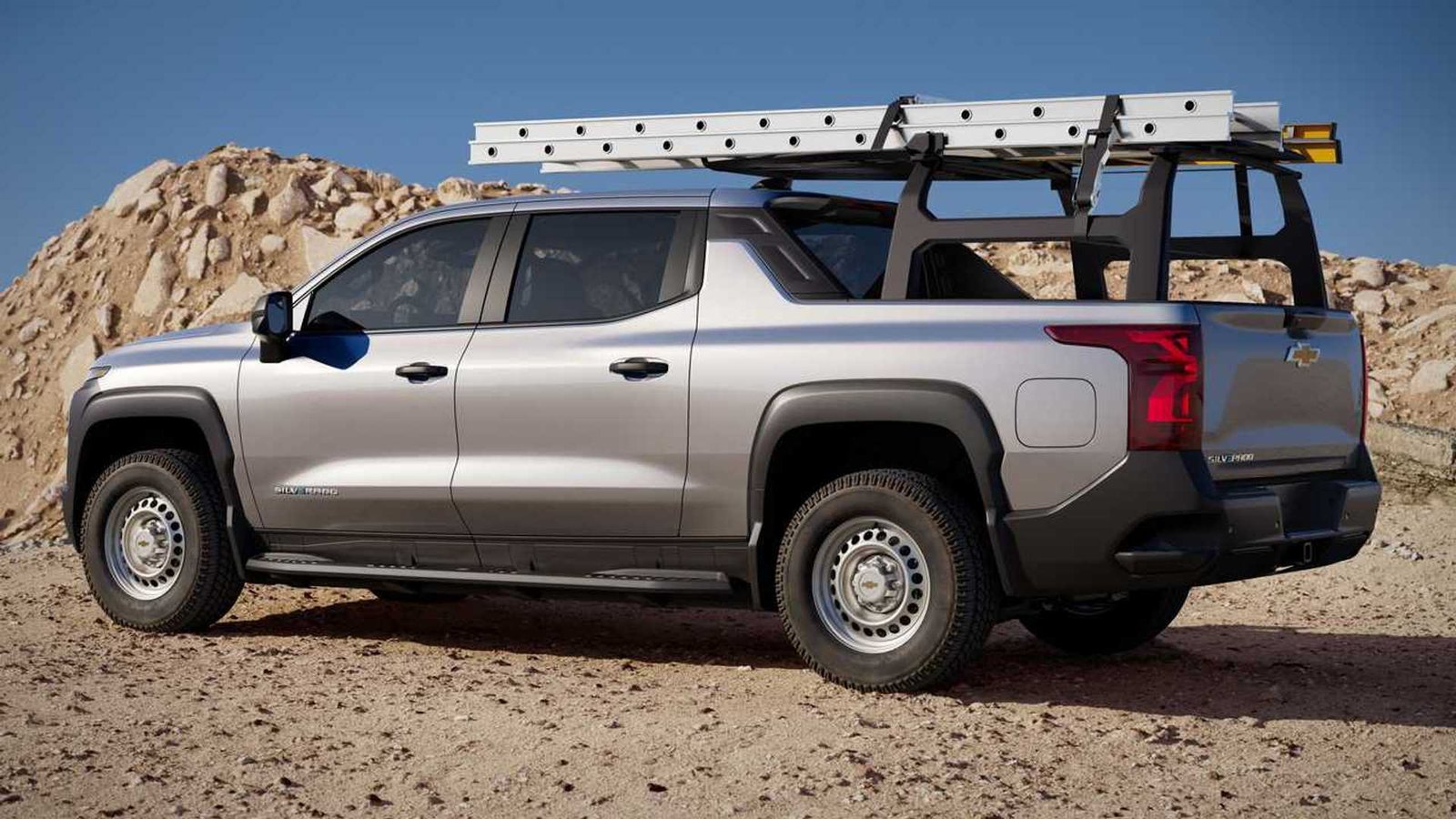
The Chevy Silverado EV RST First Edition attracted plenty of attention when it launched. General Motors' mainstream electric pickup offered 440 miles of range, an interior loaded with tech features and a neat mid-gate. But at $96,395, it was just too expensive to get excited about. That's why I think the best Silverado EV is not the flagship model, but the bog-standard Work Truck. Like every modern truck, it's best to avoid paying for every possible bell and whistle. For 2026, the Silverado EV Work Truck starts at $54,895. That's $8,100 cheaper than the cheapest LT model. Both come with the Standard Range battery, offering 286 miles of range in the Work Truck. That should be enough for most buyers, but if you want to truly never worry about range, you can get a Work Truck Extended Range with 424 miles of EPA range for $68,295. Factor in the $7,500 federal clean vehicle tax credit—while you can—and you can get an electric truck with 424 miles of range for just $60,795. 20 Of course, that may still be a premium compared to a gas truck. A four-wheel-drive, crew-cab Silverado with the 5.3-liter V-8—a model with comparable capabilities—starts at right around $50,000. That alone doesn't make the Work Truck a great deal, as it's still pricier than an internal-combustion truck. But there are two things worth considering. First off, to get a truck with over 400 miles of EV range from any other automaker, you need to spend more than $83,900 on a Rivian R1T with the Max Pack. That doesn't qualify for the tax credit, either. Now, the Rivian's a nicer truck to be in and drive. But if you just need to lug a trailer a couple of hundred miles consistently, the Chevy will do that for $23,000 less. It'll go further than any electric truck with a Ford or Tesla badge, and if 424 miles somehow isn't enough, you can step up to a version with a whopping 493 miles of range. Of course, you can also get that level of endurance on the higher-trim Silverado and Sierra EVs. But the value proposition gets wonky when you opt for an $85,000 or $90,000 truck. You expect luxury and perfection, and while he liked the Sierra EV, InsideEVs editor-in-chief Patrick George wasn't convinced by the Silverado EV RST as a luxury experience. It is, however, a great tool. All of these trucks offer over 400 miles of range. Source: Autotrader new vehicle listings. Photo by: InsideEVs More importantly, because so many buyers look for style and tech over functionality, work truck models are cheaper in the real world. It's relatively easy to find them listed for far under their MSRP, giving you the opportunity to scoop up a do-anything electric truck for significantly less than $60,000. That's not going to win over people who are still dead-set on a gas truck, but if you want an EV truck, Chevy is offering a real multitool at a lower price than an extended-range Ford F-150 Lightning. And with Ram's electrified trucks delayed and Tesla and Rivian targeting upscale buyers only, the Chevy starts to look a lot better. There's even a special bonus for keeping things simple. While higher-trim Silverado EVs don't get Apple CarPlay and Android Auto, work trucks do. You might need a smartphone app on your job site, and Chevy recognizes that. So if you're the type of buyer who keeps a truck for a long time and doesn't want to worry about subscribing to get Google Maps data down the road, the Work Truck is your best option from GM. I'll admit: The interior ain't too fancy. Now, I still don't often recommend an electric truck to every buyer. The carbon-reduction benefits are real, but many EV trucks are all pretty much first-generation products—and they feel like it. The Silverado EV and Sierra EV are extremely heavy, and some trims can be pricey. The Lightning doesn't charge fast enough and isn't great for long-haul towing. The Rivian and Tesla are better-resolved EVs, but not exactly built to replace your average construction boss' work truck. And all of these trucks are too expensive. If you are willing to deal with those drawbacks, however, driving an electric truck rocks. A Lightning or Silverado EV offers smooth, seamless electric power and better tech than internal-combustion trucks. A Rivian will conquer most trails you'd be willing to attempt in your own car, and the Cybertruck is pretty nice to daily drive. All are cleaner and more sustainable than gas trucks, and all will be pretty cheap to run. So if you want to get one, you should. For my money, I'd pick the cheapest Silverado EV I could find. Contact the author: Mack.Hogan@insideevs.com.
New EPR rules are taking shapes under PMO directive to make Battery Scrap recycling more efficient and accountable.
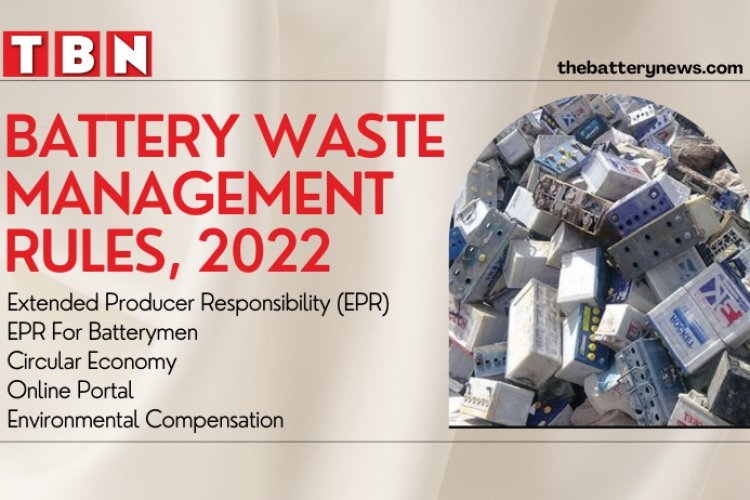
As per the provision under Rule 4 (1), Producer has the obligation of Extended Producer Responsibility (EPR) for the Battery that they introduce in the market to ensure the attainment of the recycling or refurbishing obligations. Extended Producer Responsibility (EPR) is a policy that holds manufacturers and importers of electronic products responsible for the entire lifecycle of their products. This includes managing the waste generated from those products. The Battery Waste Management Rules and EPR are a significant step towards the realization of the announcement made by Prime Minister Shri Narendra Modi to implement the Circular Economy in full force. Unlike the traditional linear economy, which operates on a “take-make-dispose” model. The Battery Waste Management Rules, 2022 were published on 22nd August, 2022 by the Ministry of Environment, Forest & Climate Change and replaced the Batteries (Management and Handling) Rules, 2001. The circular economy encourages us to rethink our approach towards production, consumption, and waste management to keep resources in use for as long as possible and extract maximum value from them. This makes the circular economy a viable alternative to traditional linear economic models and a feasible solution to our environmental challenges, as it focuses on sustainability, resource conservation, and activities like reusing, recycling, repairing, sharing, and leasing. The circular economy is important for sustainable development as its adoption will lead to minimizing environmental harms, promoting economic opportunities and individual empowerment, reducing waste from the traditional linear economy, boosting business satisfaction through corporate social responsibility, and shifting towards renewable energy. What is the Circular Economy: The circular economy is a model of production and consumption, which involves sharing, leasing, reusing, repairing, refurbishing and recycling existing materials and products as long as possible. Reusing and recycling products would slow down the use of natural resources & reduce landscape and habitat disruption and help to limit biodiversity loss.; How the circular economy can help the environment by: Reducing carbon emissions Reducing toxic waste Regenerating nature Protecting the environment Improving material recovery Key Highlights of Battery Waste Management Rules, 2022: EPR for lead scrap recycling involves: Collecting and sending all waste batteries for recycling or refurbishment Prohibiting disposal in landfills and incineration Recycling waste materials to make new batteries What is Extended Producer Responsibility (EPR): These rules are based on the concept of Extended Producer Responsibility (EPR), which is an approach designed to hold manufacturers accountable for the environmental impact of their products once they are no longer useful to consumers. Under EPR for batteries, the battery manufacturers and importers are responsible for collecting, and recycling or refurbishing the waste batteries and for using the materials recovered from waste batteries to make new batteries. The EPR prohibits disposal of waste batteries in landfills and incineration. Applicability: These rules apply to the producer, dealer, consumer, and entities involved in the collection, segregation, transportation, refurbishment, and recycling of waste batteries and to all types of batteries, regardless of their chemistry, shape, volume, weight, material composition, and use. Online EPR Portal: As per these rules, the Central Pollution Control Board (CPCB) has developed a centralized web portal (eprbatterycpcb.in) for the registration of entities, the generation of EPR targets and credits, the exchange of EPR credits between producers and recyclers, and the filing of returns. Registration on EPR Portal: Under these rules, it is mandatory for all battery producers, importers, refurbishes, and recyclers to apply and register on the online portal developed by CPCB. The battery producers and importers shall apply as “Producer” and their application processing and registration will be done by CPCB, whereas the battery recyclers and refurbishes shall apply as “Recycler” and their application processing and registration will be done by the State Pollution Control Board (SPCB). Post Registration Process: After getting registration, the Producer shall generate the EPR targets for the financial year and meet those targets on the EPR portal. These EPR targets will be generated based on the sales data provided by the Producer. To fulfil the EPR targets, producers must purchase/obtain the EPR credits from the recyclers. The producer will have to file an annual return regarding the waste batteries collected and recycled or refurbished to fulfil the EPR obligations. Whereas the Recycler after getting the registration certificate shall generate the EPR credits for the financial year, these credits will be generated based on the material recovered and sold by the Recycler. Recyclers have to sell/transfer the EPR credits to the producers and file returns quarterly regarding waste batteries collected, recycled, and material recovered. Violations and Penalties: On the basis of the Polluter Pays Principle, environmental compensation will be imposed on entities carrying out activities without having a valid registration under these rules, entities providing false information or forged documents at the time of registration under these rules, entities engaged in collection, segregation, and treatment with respect to not following sound handling of waste batteries, and entities for not fulfilling their EPR targets, responsibilities, and obligations set out under these rules. The complete Battery Waste Management Rules, 2022 can be accessed on the EPR portal i.e. eprbatterycpcb.in A Note from author: Here are the Summary of thr steps for registering on the EPR portal: Complete the application form Attach all necessary documents with your application CPCB will review the application If CPCB requires more information, please provide it Upon successful document verification, CPCB will issue your certificate For more information on EPR battery registration process contact RSM Experts. Email: rsmexperts@gmail.com, Ph.no.: +91 99999 75549.
BYD sells 382,476 NEVs in May, overseas sales hit new high
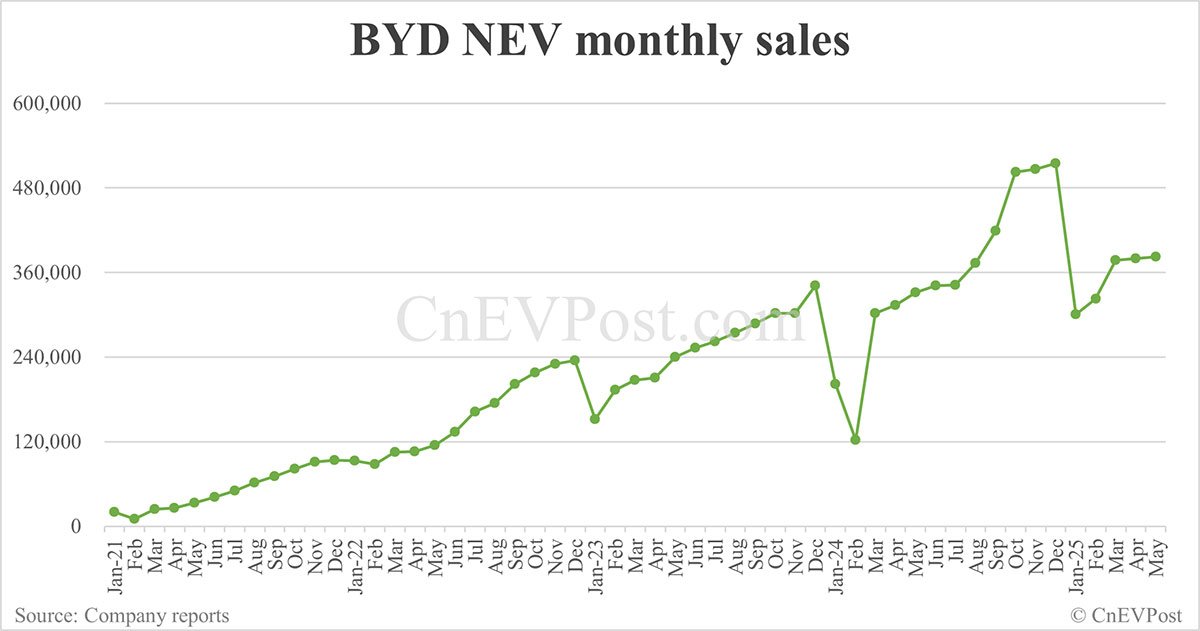
This article is being updated, please refresh later for more content. BYD sold 89,047 NEVs overseas in May, marking the sixth consecutive month of record-breaking sales. BYD's passenger BEVs saw a year-on-year increase of 39.60 percent in May, while PHEVs declined by 6.26 percent. BYD (HKG: 1211, OTCMKTS: BYDDY) reported new energy vehicle (NEV) sales in May that were largely flat from April, with overseas sales showing strong growth. The company sold 382,476 vehicles in May, representing a year-on-year increase of 15.27 percent and a month-on-month increase of 0.63 percent, according to data released today. BYD ceased production and sales of vehicles powered solely by internal combustion engines in March 2022, shifting its focus to the production of plug-in hybrid electric vehicles (PHEVs) and battery electric vehicles (BEVs). BYD's NEVs include both passenger vehicles and commercial vehicles. Passenger NEVs sold 376,930 units in May, up 14.05 percent year-on-year and up 1.16 percent month-on-month. Commercial NEVs sold 5,546 units in May, up 317.31 percent year-on-year but down 25.80 percent month-on-month. Among passenger NEVs in May, BEV sales reached 204,369 units, up 39.60 percent year-on-year and up 4.41 percent month-on-month. BYD's passenger PHEV sales in May totaled 172,561 units, down 6.26 percent year-on-year and down 2.44 percent month-on-month. This marks the second consecutive month of year-on-year decline in BYD's passenger PHEV sales, as well as the second consecutive month of sales below BEVs. The company sold 89,047 NEVs overseas in May, marking the sixth consecutive month of record-breaking sales. This represents a year-on-year increase of 137.46 percent and a month-on-month increase of 12.60 percent. In addition to being China's largest NEV manufacturer, BYD is also China's second-largest power battery manufacturer. BYD's battery pack and energy storage battery installations in May totaled about 28.476 GWh, up 101.12 percent year-on-year and up 7.55 percent month-on-month. BYD's car sales target for 2025 is 5.5 million units, including more than 800,000 in overseas markets, according to local media.
The Kia EV4 Will Be Made In Korea, Exposing It To U.S. Tariffs
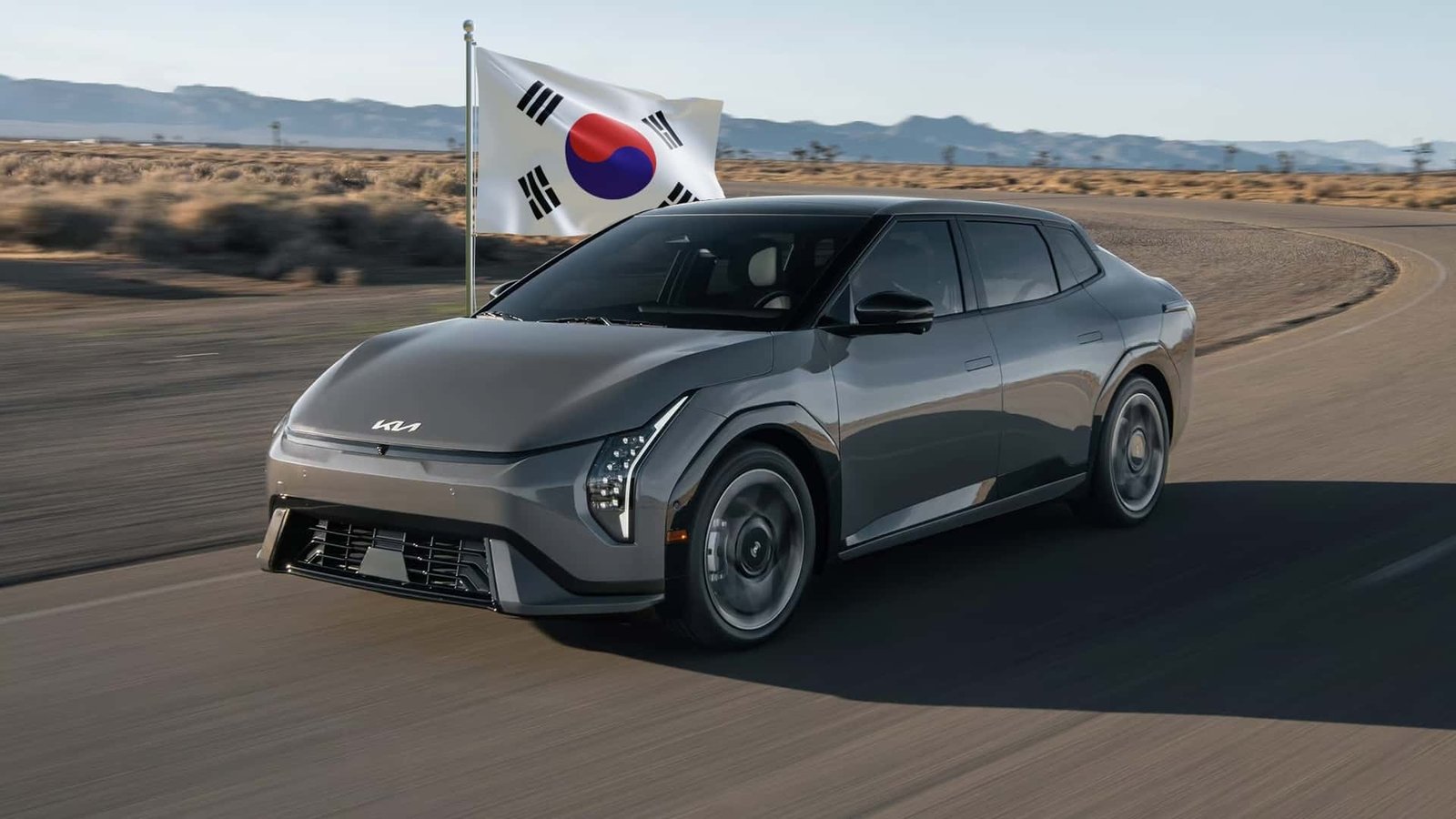
The Kia EV4 is supposed to be the company's affordable EV sedan. Hyundai's Ioniq 6 is already one of the best EVs on sale, and a Kia version with sharper styling, a lower price and better tech could be a great option for many buyers. But Kia just confirmed to journalists that U.S.-market EV4s will be built in South Korea. The K4's product planner said that EV4 sedans will only be made in Korea, while hatchbacks will be made in Slovakia. "For now, we are planning to introduce only the sedan for North America," she added. 12 Source: Kia That will make the "lower price" component tricky. Vehicles imported to the United States from outside of North America face additional 25% tariffs imposed by President Donald Trump. Since the Ioniq 6 is built there, it'll be affected too, meaning it may be tougher for Hyundai to match the price of U.S.-built rivals like the Tesla Model 3. I had hoped that the EV4 would be built in the U.S. to address this, as Kia has a flexible manufacturing footprint in the U.S. But the company is likely doing what most companies do: Save precious U.S. manufacturing resources for the profitable, larger SUVs. Ironically, this means that it's the cheapest cars that are bearing the brunt of new taxes. And that isn't even its only problem. Like so many exciting new EVs, the EV4 is arriving at a time when the future of the $7,500 federal tax incentive is deeply in doubt. With at least one House of Congress and the President behind it, the latest Congressional budget plans to phase it out. Now, because it won't be built in the U.S., the EV4 was already going to be ineligible for the tax credit for people who purchase it. Confusingly, however, all EVs still qualify for the credit if they are leased. That's part of why Hyundai has offered incredible lease deals on the Ioniq 6. But the so-called "leasing loophole" is likely to get closed this year. That makes the affordability problem much tougher to solve. Kia will have to pay 25% more to import the cars already, and then lose access to the massive $7,500 incentive as well. All of that will make it extremely difficult to sell the EV4 at an affordable price and profitably at the same time. The EV3 crossover is also supposed to come to the U.S. with an affordable price tag, but it still hasn't arrived. Photo by: Kia Perhaps this is why we still don't know how much the EV4 will cost. Kia must now choose between how much it wants to raise prices and how much it is willing to eat in losses on each car. Moreover, the company has to decide this without knowing whether the 25% tariff is a negotiating tactic or a long-term fixture of U.S. policy. That makes it a tough time to be an automaker. But it's also a tough time to be a consumer. Buyers need to plan out their purchases, and with so many companies promising compelling affordable EVs but so few able to deliver, it's getting harder to wait. The good news is that the EV tax credit still does exist, and if you want an affordable car in the meantime there are great options like the Kia Niro EV, Chevy Equinox EV and the Hyundai Kona Electric. Not only that, but used EVs are cheaper and better than ever. So regardless of what happens with the trade war, the affordable EV dream won't die. Brian Silvestro contributed reporting. Contact the author: Mack.Hogan@insideevs.com
ईपीआर अनुपालन पर सीपीसीबी के नए निर्देश - केंद्रीय प्रदूषण नियंत्रण बोर्ड ने बैटरी रिसाइक्लर्स के सीटीओ को वापस लेने का निर्देश दिए
बैटरी वेस्ट मेनजमेंट रुल्स 2022 के अनुसार प्रदूषण नियंत्रण बोर्ड (CPCB) ने 26 फरवरी, 2024 को सभी SPCB/PCC को ऐसे बैटरी रिसाइक्लरों की CTO को वापस लेने का निर्देश जारी किया, जो ऑनलाइन EPR पोर्टल पर EPR क्रेडिट का सृजन कर जारी करने के लिए आवश्यक दस्तावेज और चालान अपलोड नहीं कर रहे हैं। हाल ही में बैटरी अपशिष्ट प्रबंधन नियम, 2022 (Battery Waste Management Rules 2022) के अनुसार एक पत्र द्वारा केंद्रीय प्रदूषण नियंत्रण बोर्ड (CPCB) ने 26 फरवरी, 2024 को सभी SPCB/PCC को ऐसे बैटरी रिसाइक्लरों की CTO को वापस लेने का निर्देश जारी किया, जो ऑनलाइन EPR पोर्टल पर EPR क्रेडिट का सृजन कर जारी करने के लिए आवश्यक दस्तावेज और चालान अपलोड नहीं कर रहे हैं। इसके अतिरिक्त, CPCB ने सभी SPCB/PCC को EPR पोर्टल पर बैटरी रिसाइक्लरों द्वारा अपलोड की गई जानकारी को भी सत्यापित करने का निर्देश जारी किया है। इन जानकारी में प्लांट-मशीन और उसकी उत्पादन क्षमता की जानकारी के साथ खरीदी गई स्क्रैप बैटरी की मात्रा और उससे प्राप्त कच्चे माल की बिक्री के दस्तावेजों और चालान सम्मलित है। ये निर्देश ईपीआर बैटरी पोर्टल पर प्रकाशित किए गए हैं। इससे पहले, 7 फरवरी, 2024 को CPCB ने सभी राज्यों के SPCB/PCC को उन सभी बैटरी रिसाइक्लरों को नोटिस जारी करने का निर्देश दिया था जो बैटरी वेस्ट मैनेजमेंट (BWM) नियम, 2022 के तहत पंजीकरण के बिना काम कर रहे है। इसके साथ ही ऐसे रिसाइक्लरों बंद करने का नोटिस जारी करने तथा अनौपचारिक/अवैध बैटरी रिसाइक्लरों की पहचान करने और उन्हें बंद करने के लिए अभियान चलाने और इन रिसाइक्लरों को औपचारिक रीसाइकलर में बदलने की सुविधा प्रदान करने का भी निर्देश दिया था। बैटरी अपशिष्ट प्रबंधन नियम, 2022 (Battery Waste Management Rules 2022) BWM रुल्स को पर्यावरण, वन और जलवायु परावर्तन मंत्रालय द्वारा 22 अगस्त, 2022 को अधिसूचित किया गया था। इन नियमों के अनुसार सभी बैटरी रिसाइक्लरों के लिए ऑनलाइन EPR पोर्टल पर पंजीकरण करना अनिवार्य है। पोर्टल पर पंजीकरण करने के बाद, रिसाइक्लरों को पोर्टल पर EPR क्रेडिट उत्पन्न करने के लिए खरीदी गई अपशिष्ट बैटरी, उस से बरामद कर बेची गई प्रमुख बैटरी सामग्री के बारे में जानकारी प्रदान करनी होगी। इन EPR क्रेडिट को बैटरी उत्पादक को उनके EPR लक्ष्यों को पूरा करने के लिए स्थानांतरित कर दिया जाएगा। संपूर्ण बैटरी अपशिष्ट प्रबंधन नियम, 2022 को ईपीआर पोर्टल यानी www.eprbatterycpcb.in पर एक्सेस किया जा सकता है इस विषय पर अधिक जानकारी के लिए आप RSM Experts से संपर्क कर सकते हैं: ईमेल : rsmexperts@gmail.com मोबाईल: - 9999975549
BYD to build 15,000 1-MW ultra-fast chargers with partners
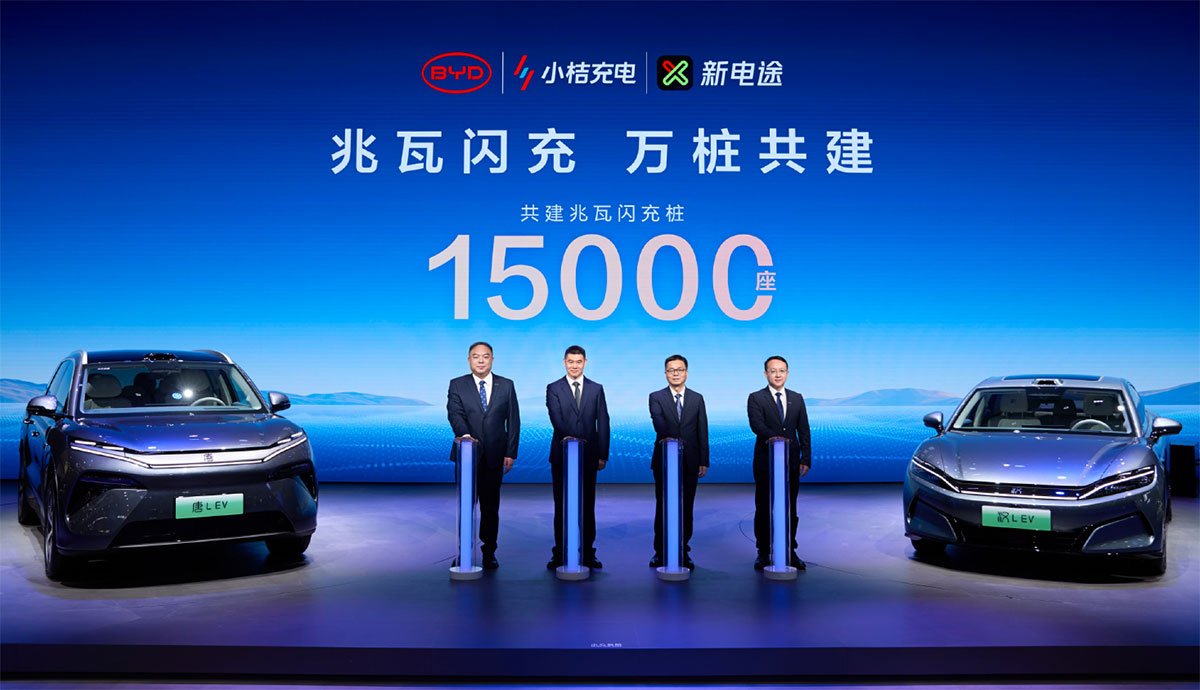
These ultra-fast chargers can add 400 kilometers of range to an EV in just 5 minutes. BYD will collaborate with Xiaoju to build 10,000 1-MW chargers and with LongShine to build 5,000. (Image credit: BYD) BYD (HKG: 1211, OTCMKTS: BYDDY) will collaborate with partners to build chargers with a power output of up to 1,000 kW, or 1 MW (megawatt), to accelerate the deployment of this ultra-fast charging infrastructure. On the first day of the Guangdong-Hong Kong-Macao Greater Bay Area International Auto Show, or the 2025 Shenzhen auto show, on May 31, BYD announced at the event venue its collaboration with Xiaoju Charging and LongShine. BYD will collaborate with Xiaoju to build 10,000 1-MW chargers and with LongShine to build 5,000, according to an announcement by the new energy vehicle (NEV) manufacturer today. Xiaoju is the charging infrastructure operator of ride-hailing giant Didi, with over 8,400 partner merchants and more than 34 million users served. LongShine has access to over 90 percent of public chargers in China, covering over 400 cities. BYD unveiled its ultra-fast charger supporting up to 1-MW charging power on March 17, claiming it can add 2 kilometers of range to an EV in one second or 400 kilometers in five minutes. The charging power of this ultra-fast charger is twice that of Tesla's (NASDAQ: TSLA) latest V4 supercharger, which has a peak power of 500 kW. BYD said at the time that it planned to build over 4,000 such facilities but did not mention a specific timeline. BYD will equip the ultra-fast charging station with energy storage facilities, enabling the 1-MW charging power to be achieved even in areas with insufficient power capacity. To date, BYD has constructed over 500 1-MW charging stations, covering more than 200 cities. BYD launched the Han L EV and Tang L EV on April 9, the first models to support 1-MW peak charging power. In their first month on the market, the Han L and Tang L sold 10,483 and 11,406 units respectively, driving the total April sales of the Han and Tang families to over 40,000 units, BYD announced today. BYD's Super e-Platform uses redesigned blade batteries and supports a charging multiplier of up to 10 C. The official launch of the Han L, Tang L will be in early April.
Rivians Will Get Seamless Plug-And-Charge At Ionna Stations
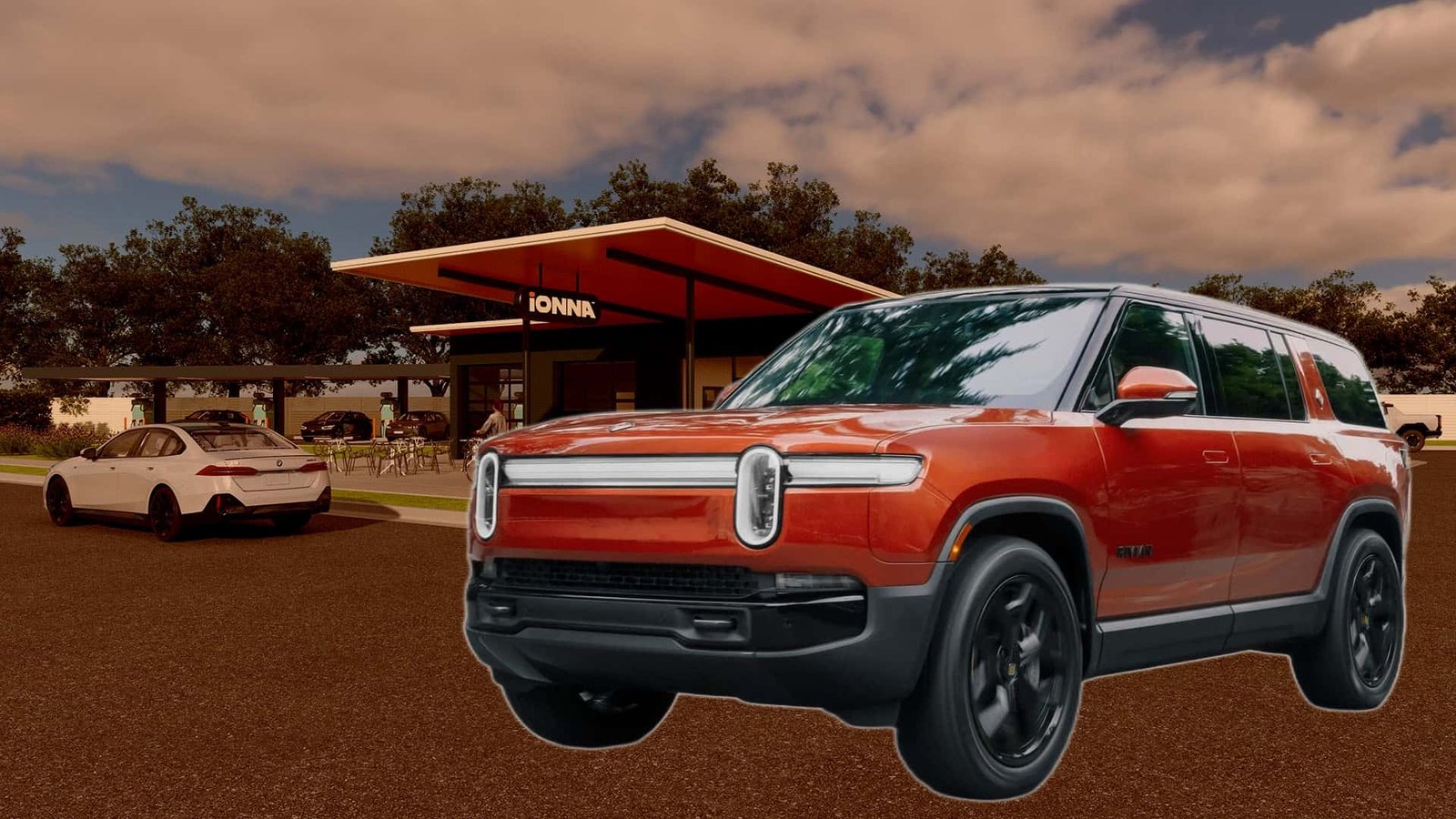
Rivian partnered with Ionna, the DC fast charging networked backed by several automotive heavyweights. For R1T and R1S owners, this means they'll be able to plug and charge seamlessly at Ionna Rechargeries. Rivian owners are about to have an even easier time on their upcoming road trips. The startup automaker has partnered with the nascent charging network Ionna to enable plug-and-charge functionality at those stations, reported by Tech Brew. This essentially means that drivers will just have to plug in, and the charging session will start automatically, as long as a payment method has been set up in the smartphone app. Ionna is a new DC fast charging network backed by eight of the largest automakers in the world: BMW, General Motors, Honda, Hyundai, Kia, Mercedes-Benz, Stellantis, and Toyota. The charging consortium’s goal is to blanket the United States with 30,000 charging bays by 2030. Ionna's so-called Rechargeries have canopies, lighting, and restrooms. Photo by: InsideEVs Currently, Ionna has 12 charging stations in the U.S. offering 400-kilowatt chargers with both Combined Charging System 1 (CCS1) and North American Charging Standard (NACS) connectors. Some locations have restrooms, food and beverage amenities, and a full canopy, making them feel more like traditional gas stations than barebones EV chargers. The fact that Rivian partnered with an up-and-coming charging network doesn’t mean the EV startup will abandon its own charging networks. The company runs the Rivian Adventure Network of DC fast chargers, as well as the Rivian Waypoints network of Level 2 chargers, which are slower. “We continue to invest in the Rivian charging network and provide that seamless experience to our customers,” Wassym Bensaid, Rivian’s chief software officer, said yesterday at Tech Brew’s Power Shift event in New York City. “But then, in parallel, we are big believers in a seamless, open ecosystem. And we want to provide choices and options for our customers.” Rivian’s software chief added that the Ionna partnership will follow a similar approach to the Tesla Supercharger integration, which offers a seamless digital experience from the vehicle, with access to live data and the ability to just plug in and charge. “Customers don’t need to think about it, it just works,” Bensaid said. Last year, Rivian was one of the first non-Tesla automakers to gain access to the Supercharger network, which is widely regarded as the most reliable DC fast charging network in the United States. With a charging adapter, Rivian EV owners can plug into select Superchargers for a quick top-up on the road.
CPCB directs all SPCBs/PCCs to withdraw CTO of Battery Recyclers for not complying with EPR
Battery Waste Management Rules 2022 The Central Pollution Control Board (CPCB), under battery waste management Rules 2022, on February 26, 2024 issued a direction to all SPCBs/PCCs to withdraw the consent to operate of such waste battery recyclers who are not uploading the necessary documents and invoices required for the generation of the EPR credits on the online EPR portal. Additionally, CPCB directed the SPCBs/PCCs to verify the installed plant & machinery and the capacities of the waste battery recyclers, as well as the documents, invoices, and information uploaded by these recyclers regarding the quantity of waste collected and key battery material recovered and sold for the generation of EPR credits on the EPR portal. These directions are published on the EPR battery portal. Earlier, on February 7, 2024 CPCB had directed all SPCBs/PCCs issue notice to all the battery recyclers operating without having registration under the Battery Waste Management (BWM) Rules, 2022 and followed by issuing show cause notice/closure of such entities, to physically verify the recyclers and carry out drives to identify and close informal/illegal waste battery recyclers and facilitate the transformation of these recyclers into formal recyclers. The Battery Waste Management Rules 2022 were notified by the Ministry of Environment, Forest and Climate Change on August 22, 2022. As per these rules it is mandatory for all battery recyclers to register on the online EPR portal. After registering on the portal, the recyclers have to provide information regarding the waste batteries procured, key materials recovered, and material sold in order to generate EPR credits on the portal. These EPR credits will then be transferred to the battery producer to meet their EPR targets. The complete Battery Waste Management Rules, 2022 can be accessed on the EPR portal i.e. eprbatterycpcb.in For more information on EPR battery compliance contact RSM Experts. Email: rsmexperts@gmail.com, Ph.No. +91 99999 75549.
Xpeng delivers 33,525 cars in May, up 230% year-on-year
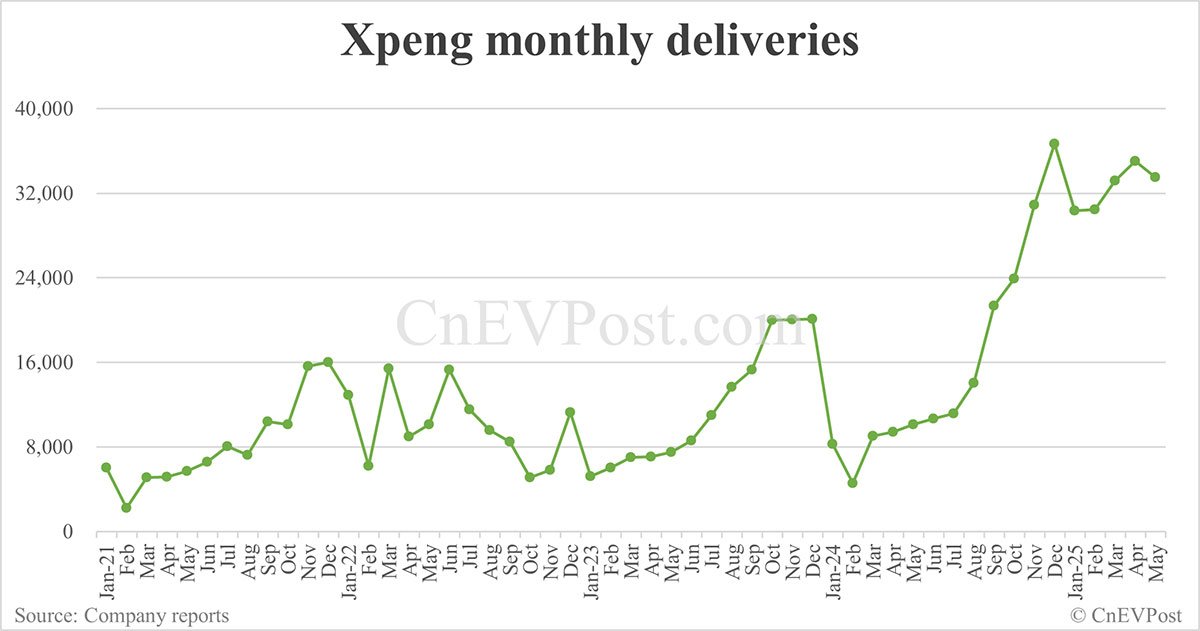
This article is being updated, please refresh later for more content. In the first five months of the year, Xpeng delivered 162,578 vehicles, up 293 percent year-on-year. Xpeng (NYSE: XPEV) delivered 33,525 vehicles in May, up 230 percent year-on-year, despite a 4.34 percent decrease compared to April. In the first five months of the year, Xpeng delivered 162,578 vehicles, up 293 percent year-on-year. Xpeng X9 MPV (multi-purpose vehicle) sold 3,227 units in May, representing a year-on-year increase of 99 percent and a month-on-month increase of 35 percent. Below is its statement, as the CnEVPost article is being updated. XPeng Inc. (“XPENG” or the “Company,” NYSE: XPEV and HKEX: 9868), a leading Chinese smart electric vehicle (“Smart EV”) company, today announced its vehicle delivery results for May 2025. In May 2025, XPENG delivered 33,525 Smart EVs, representing growth of 230% year-over-year, surpassing 30,000 units for the seventh consecutive month. For the first five months of 2025, XPENG delivered 162,578 Smart EVs, marking a 293% increase compared to the same period last year. On May 28th, the Company launched the MONA M03 Max. MONA M03 Max lowers the entry barrier for urban AI smart driving to the 150,000 RMB range for the first time, making advanced vehicle technology more accessible to younger users. The MONA M03 Max is also the first XPENG model equipped with the AI Tianji XOS 5.7.0, offering over 300 new features. XNGP achieved a monthly active user penetration rate of 85% in urban driving in May 2025. Notably, the XPENG MONA M03 Max debuted the application of human-machine co-driving, enabling both ADAS and drivers to share control, providing a seamless collaboration between manual driving and smart driving. Xpeng has launched new Max and Plus variants for the Mona M03, with the Max variant offering capabilities similar to Tesla's FSD.
Tesla EVs Will Deliver Themselves To Customers Soon: Elon Musk
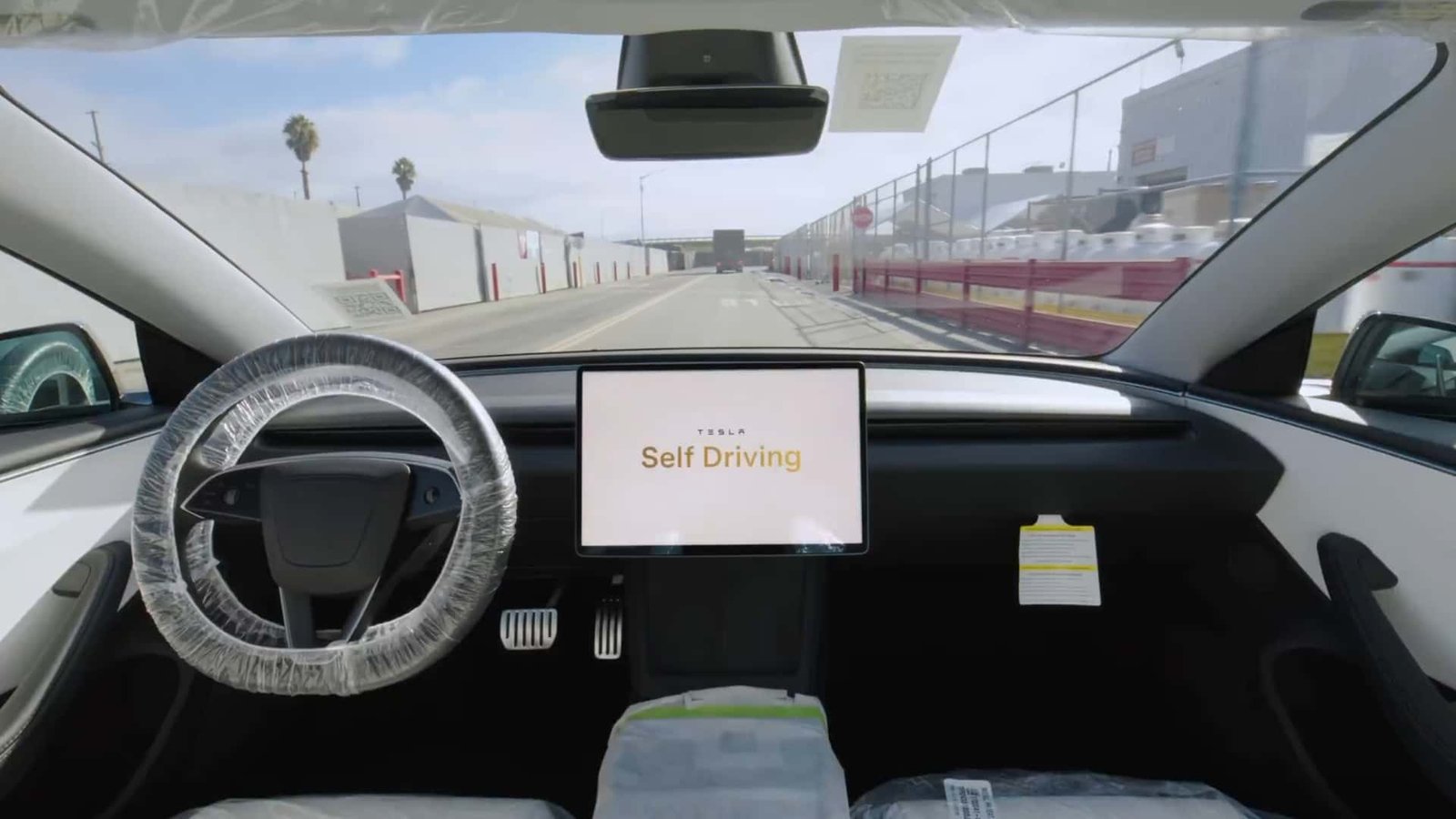
Tesla's CEO said the company's cars will deliver themselves to customers. Starting next month, new Tesla EVs will somehow navigate autonomously to their customers. July. That’s when new Teslas will allegedly drive themselves from the factory to customers. At least, that’s the latest claim coming from the company’s outspoken CEO, Elon Musk, who went on his personal social media platform, X, to deliver the news from what feels like the future. It’s a very cool scenario, and one that could take all the hassle out of the traditional vehicle purchase and delivery process. You order the car online, get a delivery date, and then the car comes to you. No greasy salesmen trying to bamboozle you with fake upgrades–you just get the car at your doorstep. Now, it's just a question of whether this is real or not, or another promise to be unfulfilled. “Next month, first self-delivery from factory to customer.” That’s what Elon Musk said yesterday as a closing sentence to the announcement that Tesla has been testing self-driving Model Ys without backup drivers on the public streets of Austin, Texas, for a few days. The message came as the American company is preparing to launch a commercial robotaxi service in Austin sometime next month. Musk didn’t elaborate on how new Tesla EVs will make their way to customers. At the beginning of the year, the automaker posted two videos showing newly built cars driving unsupervised on a 1.2-mile route from the Fremont factory to their designated dock lanes. However, the self-driving in those videos happens on the factory grounds, and not on public roads, where legislation is currently one of the biggest hurdles toward releasing driverless cars into the wild. That said, Tesla could just offer a kind of factory delivery option for new vehicles and call it a day. The cars drive themselves to a designated point, and the customers pick them up and drive them back home. That’s not exactly game-changing, but it would mean that, at least in theory, Musk’s statement would be correct—and it's still a pretty novel approach. The dream of self-driving cars is still very much in the making. Tesla plans on deploying a minuscule fleet of driverless taxis in Austin next month, all of which will be monitored by teleoperators. The initial 10-12 cars will be joined by “thousands” more in the following months, according to Musk, who maintains that people will be able to buy a Tesla and send it out in the world on its own to make money for its owner. That promise is already a few years old, and it hasn’t happened yet.
MSME schemes to uplift upgrade and receive moral and financial support to SME units by Nilesh Trivedi
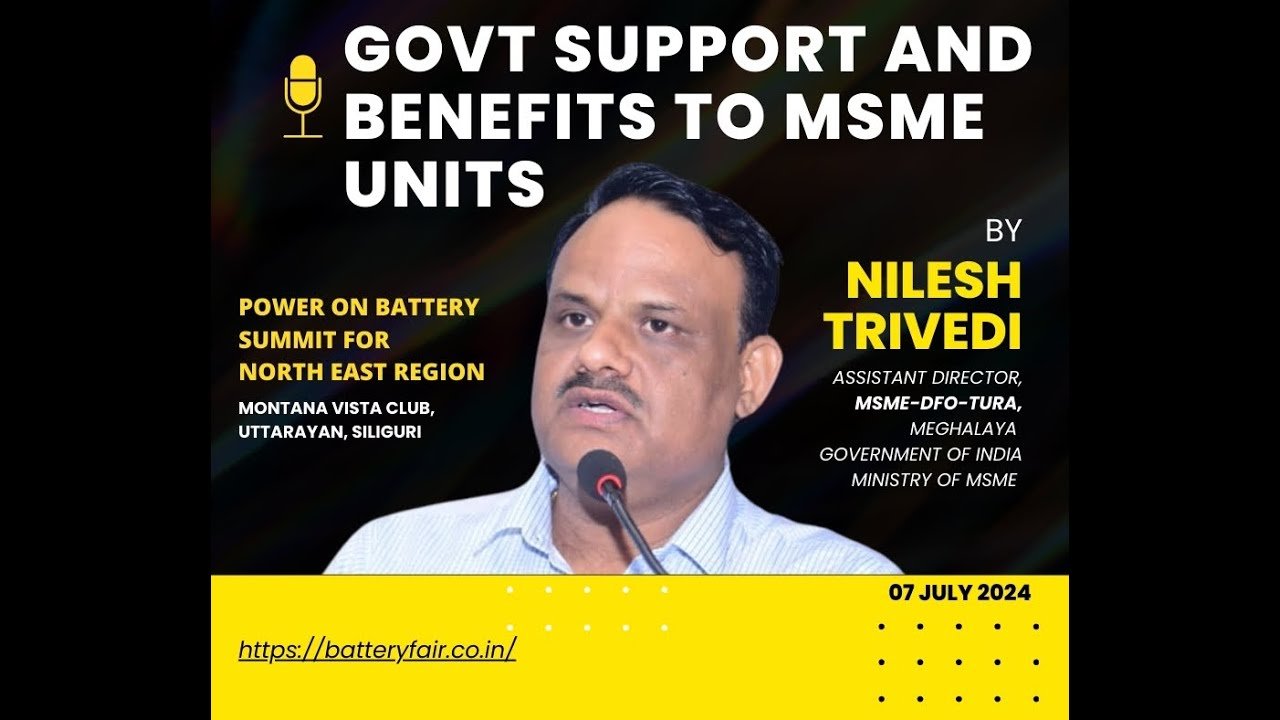
Sh. Nilesh Trivedi, Asstt Dir., MSME-DFO Tura Meghalaya Government of India discussed various beneficial schemes for MSME units to uplift, upgrade, and receive moral and financial support at the Power On Battery Summit for the North East Region in Siliguri on 7th July 2024. Sh. Nilesh Trivedi discussed various beneficial schemes for MSME units to uplift, upgrade, and receive moral and financial support at the Power On Battery Summit for the North East Region in Siliguri on 7th July 2024. Nilesh Trivedi currently serves as Assistant Director at MSME-DFO Tura, Meghalaya, under the Government of India, Ministry of MSME. With 28 years of industrial experience, he has worked with renowned organizations such as Ranbaxy Lab Ltd, Nicholas Piramal India Limited, and Asian Paints Ltd. Presently, he serves The DC MSME, Govt of India, Ministry of MSME. Nilesh Trivedi joined the Government of India in 1997 through the Staff Selection Commission and was then selected by UPSC to the post of Assistant Director in O/O THE DC MSME, GOVT OF INDIA, MINISTRY OF MSME. He has served in various locations including Mumbai, Kolhapur, Indore, Bhopal, and Delhi. With deep insight and knowledge, he guides entrepreneurs in setting up their units by providing technical and managerial consultancy and organizing various training programs, workshops, and seminars for entrepreneurs, industry associations, and students.
Zeekr investors unhappy with Geely's privatization proposal, report says
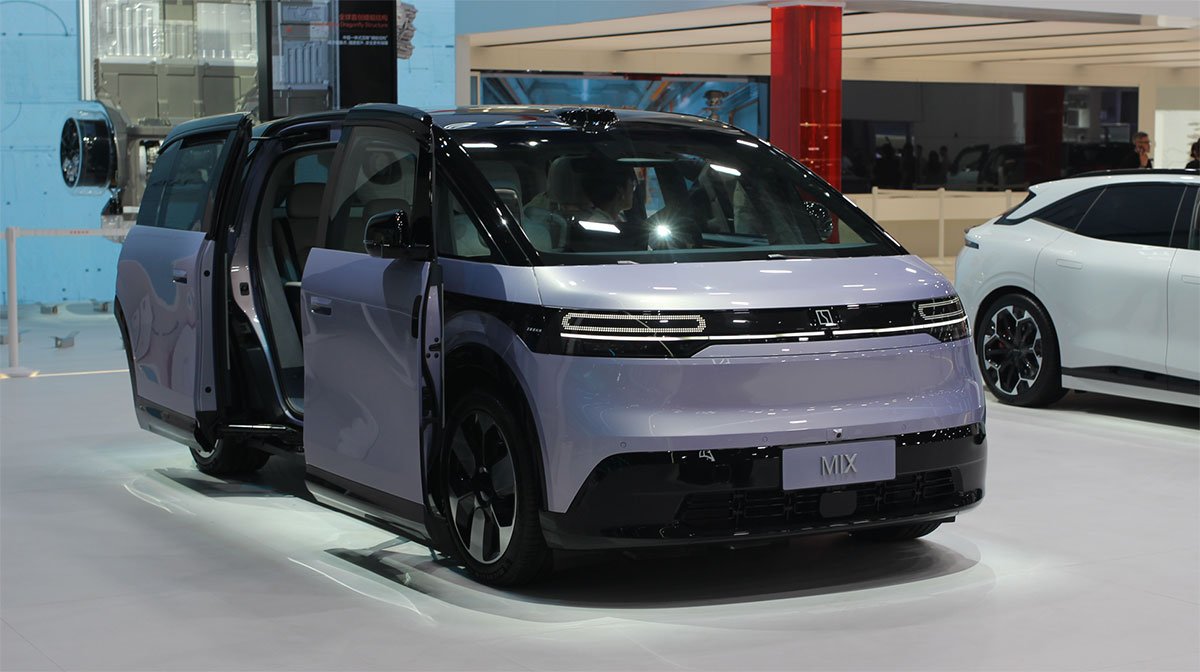
Five early investors in Zeekr have said that Geely's privatization offer undervalues the EV unit, according to Reuters. These five investors participated in Zeekr's first round of external financing in 2021, when Zeekr was valued at $9 billion. (A Zeekr Mix displayed at the Shanghai auto show in April 2025. Image credit: CnEVPost) Geely Automobile Holdings (HKG: 0175) is reportedly facing investor dissatisfaction with its privatization proposal for Zeekr (NYSE: ZK), with investors believing the offer to be too low. Five early investors in Zeekr have written to its board, stating that Geely's $2.2 billion privatization offer undervalues the premium electric vehicle (EV) unit, Reuters reported today, citing three sources directly familiar with the matter. Investors including CATL (SHE: 300750), Intel Capital, and Boyu Capital, who participated in Zeekr's first round of financing, have sent two joint letters to Zeekr and its newly established special committee, stating that the privatization price is too low to reflect Zeekr's fair value, according to the report. In the first letter sent last week, the five investors said that the privatization price values Zeekr at just $6.5 billion, far below peers such as Li Auto (NASDAQ: LI), Nio (NYSE: NIO), and Xpeng (NYSE: XPEV), according to the three sources. They noted that Zeekr's cash flow and profit prospects are better than those of its peers and urged that the transaction only proceed with the approval of a majority of "independent minority" shareholders. Two of the sources said the investors sent a second letter this week reiterating what they said in the first letter and urging Zeekr's special committee to carefully review and evaluate the offer. The five investors participated in Zeekr's first round of external financing in 2021, which raised $500 million, valuing the company at $9 billion. At the time, they collectively held a 6 percent stake in the company, as noted in the Reuters report. A subsequent round of financing valued Zeekr at $13 billion in 2023, but a year later, the company's valuation at the time of its IPO was just $5.5 billion, less than half of its pre-IPO valuation. Two sources said that Y2 Capital, an investor in Zeekr's IPO, had also sent a similar letter to Geely's leadership expressing concerns, according to Reuters. However, analysts noted that given Geely Auto's 65.7 percent stake in Zeekr, the company may have sufficient voting rights to proceed with privatization without the approval of other shareholders. Geely announced on May 7 that it had submitted a non-binding offer letter to Zeekr proposing to privatize the EV unit. The proposed purchase price was $2.57 per Zeekr share or $25.66 per American Depositary Share (ADS). This price represents a premium of about 13.6 percent over Zeekr's closing price on the US stock market on May 6. Geely currently holds about 65.7 percent of Zeekr's shares. If the privatization is completed, Zeekr would become a wholly-owned subsidiary of Geely and will delist from the New York Stock Exchange. The proposed purchase price is $25.66 per Zeekr ADS, a premium of 13.6 percent from the last trading session.
Bill Ford Has A Warning For Congress On EV Batteries
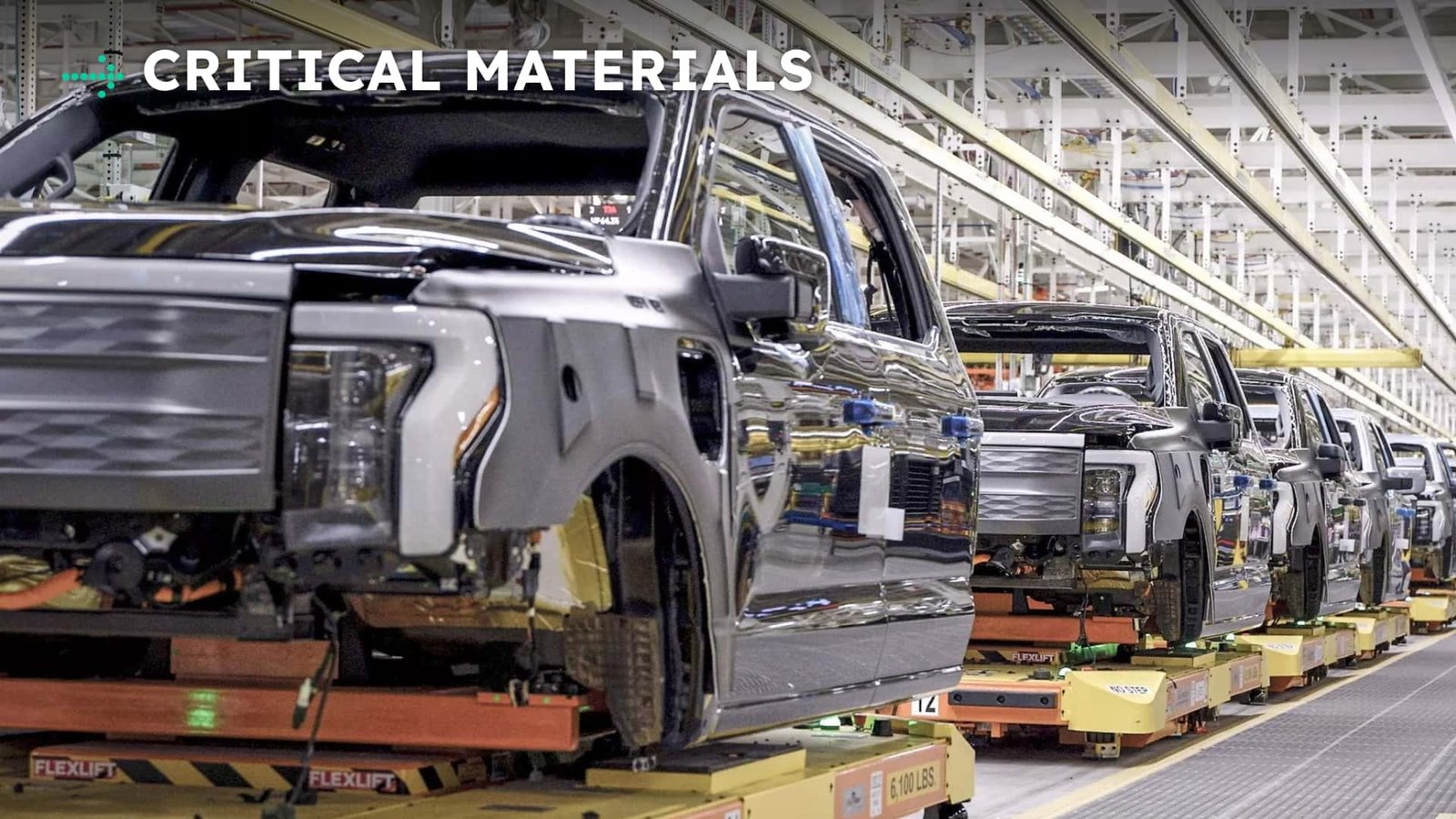
For low-cost, mass-market electric vehicles, lithium-iron-phosphate (LFP) batteries are a clear favorite. They skip pricey materials like nickel and cobalt, offer reasonable energy density, better thermal stability and last far longer. U.S. automakers want to build them here, but they can’t do it without federal subsidies and China’s help. Now, as those subsidies are under the woodchipper, Ford’s joint battery plant with Chinese battery maker CATL in Michigan is on shaky ground. That could spell trouble for its affordable EV plans. Welcome to the Friday edition of Critical Materials, your daily round-up of news and events shaping the world of electric cars and technology. Also on our radar today: Hyundai is considering price hikes across its U.S. model range to soften the blow of tariffs. Plus, Tesla is urging Senate Republicans to avoid abruptly ending the federal clean energy tax credits, which could blow a hole in the company’s profits and manufacturing capabilities. 30%: Ford Distressed Over End Of EV Production Credits Photo by: Ford Ford’s EV plans are going off the rails. The automaker planned to build a $3.5 billion LFP battery plant in collaboration with Chinese battery juggernaut CATL by licensing its technology, promising some 2,500 jobs and a boost to Michigan’s economy. After EV sales started growing at a slower pace than once estimated, Ford scaled back the size of the BlueOval Battery Park in Marshall, Michigan, reducing the investment to around $2.2 billion and the number of jobs to 1,700. It was initially promised around $1 billion in incentives for the plant—that amount was later slashed by half. The plant also drew political ire for CATL’s alleged ties to the Chinese Communist Party and suspected human rights violations. Now the Trump administration’s “big, beautiful bill” could gut the manufacturing credits, which would have helped Ford build the plant—that’s if the Senate doesn’t make crucial changes to it before it gets passed. The executive chairman of the automaker, Bill Ford, is ringing the alarm bells over the potential demise of the manufacturing credits. Here’s more from Automotive News: “We have built the business case on Marshall around that,” the chairman told reporters after a panel discussion at the Mackinac Policy Conference. “My point is politicians can agree or disagree whether those kind of things are desirable, and that’s fine. But don’t change the rules once you’ve already made the investment, because that to me is just a question of fairness, and that’s unfair.” Bill Ford said he is not sure whether the tax credits for the Marshall plant will ultimately be protected. “I don’t know the likelihood, but I do know that if it goes away, it puts in peril the plant and the jobs in Michigan,” he said. It’s hard to overstate how crucial low-cost batteries are to bring the price of EVs down to gas-car levels. High purchase price remains the biggest barrier to mainstream EV adoption and LFP batteries offer a real shot at bringing that down. In China, 81.5% of installed EV battery capacity now comes from LFP cells. Most new EVs are equipped with LFP batteries in the country. And Chinese battery makers like CATL and BYD have rapidly advanced the tech—what was once seen as a low-energy-density option now consistently delivers longer-range EVs. For Ford, GM, Hyundai, Tesla and others, government subsidies have been key to scaling up local EV and battery production. The manufacturing credits haven’t just created jobs and boosted local economies, they’ve also helped automakers absorb the upfront costs of electrification and could still soften the blow from tariffs. If Ford’s Michigan battery plant collapses, it would be a major setback for its plans to deliver affordable EVs that are made in America. 60%: Hyundai May Increase Prices Starting Next Week Photo by: Tim Levin/InsideEVs If you’ve been EV-shopping lately, you may have noticed that Hyundai and Kia have extensive hybrid, plug-in hybrid and fully electric options to choose from. Even though most of their new EVs are now manufactured in the U.S. at Hyundai Motor Group’s plants in Georgia, they still use plenty of parts sourced from overseas. With the Trump administration’s blanket 25% tariffs on imported vehicle parts and foreign-made cars, experts have said that car prices could soon increase. Now Automotive News has reported that Hyundai is considering a 1% price hike across the board starting next week on newly built models. Vehicles currently in the inventory would remain unaffected, but new models could cost hundreds of dollars more. Here’s more from that report: “This period marks our regular annual pricing review, guided by market dynamics and consumer demand, independent of tariffs,” the company said in a statement. “We will continue to adapt to shifts in supply and demand, and regulations, with a flexible pricing strategy and targeted incentive programs.” The company had previously said prices would hold through June 2, but automakers are now recalibrating—looking for ways to absorb tariff costs without taking a major hit to profits. Some of that cost burden, it seems, will be paid for by American consumers. 90%: Tesla Breaks Silence On The End Of Energy Tax Credits Photo by: Tesla Tesla has issued its strongest warning yet against the current administration’s war against clean energy programs. The automaker said ending federal tax credits could deal a major blow to America’s energy independence. The alarm comes as CEO Elon Musk wraps up his brief but disruptive run as the government’s cost-cutter-in-chief—a move that’s bruised Tesla’s brand and sent its sales and profits into freefall. One outlet phrased it perfectly: the CEO and the company are now on an “image rehab tour.” Here’s what Tesla Energy posted on X on Thursday: Abruptly ending the energy tax credits would threaten America’s energy independence and the reliability of our grid - we urge the senate to enact legislation with a sensible wind down of 25D and 48e. This will ensure continued speedy deployment of over 60 GW capacity per year to support AI and domestic manufacturing growth. It’s an important point.
जीएसटी परिषद ने मेटल स्क्रैप खरीद पर आर सी एम प्रस्तावित किया
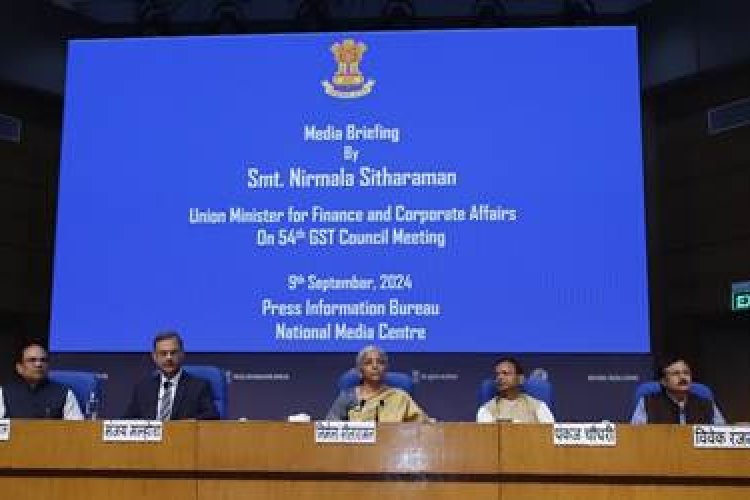
जीएसटी परिषद की 54 वीं बैठक मे निर्णय लिया गया की अपंजीकृत विक्रेताओं से धातु स्क्रैप की खरीद पर रिवर्स चार्ज मैकेनिज्म (आरसीएम) शुरू लागू होगा । स्क्रैप का खरीदार आरसीएम के तहत कर का भुगतान करने के लिए उत्तरदायी होगा, भले ही स्क्रैप विक्रेता जीएसटी में पंजीकृत न हो या उसका व्यवसाय जीएसटी पंजीकरण की सीमा से कम हो। लैड रीसाइक्लिंग उद्योग की लंबे समय से प्रतीक्षित मांग पूरी हो गई है। RSM Experts for EPR Assistance 9999975549 लैड स्क्रैप खरीद पर अब जीएसटी का भुगतान खरीदने वाले को करना होगा लैड रीसाइक्लिंग उद्योग ने फारवर्ड चार्ज के आधार पर स्क्रैप पर जीएसटी को मौजूदा 18% से घटाने की मांग की थी। आल इंडिया लघु बैटरी फेडरैशन - ने वित्त मंत्री श्रीमती निर्मला सीतारमण को कई बार इस संबंध मे पत्र लिख कर लैड रीसाइक्लिंग उद्योग की इस परेशानी से अवगत भी कराया था व उन्हे लैड स्क्रैप की खरीद पर रिवर्से चार्ज मेकनिज़म लागू करने का भी अनुरोध किया था। जयपुर की ग्रेवीटा व मेटल रीसाइक्लिंग एसोसिएशन के श्री नवीन इस विषय मे लगातार प्रयास कर रहे थे। संगठन के माध्यम से उन्होंने निर्मला जी से मिल कर इस मुद्दे पर उद्योग की समस्या व समाधान - दोनों ही रखे थे। जीएसटी परिषद ने इस मुद्दे को परखने के लिए एक फिटमेंट समिति का गठन किया। समिति ने इस विषय पर विचार विमर्श के लिए एक पैनल की स्थापना की । पैनल के संबंधित व्यापारिक वर्गों व संस्थाओं के अनुरोध का अध्ययन कर आवश्यकताओं के अनुरूप निर्णय को फिटमेंट समिति को प्रस्तावित किया जिसे फिटमेंट समिति ने जीएसटी परिषद को भेज दिया था। इस प्रस्ताव में पंजीकृत संस्थाओं के बीच व्यापार पर धातु स्क्रैप की आपूर्ति पर 2% टीडीएस और अपंजीकृत व्यक्तियों के बीच आपूर्ति पर आरसीएम का प्रस्ताव किया गया था। इस निकाय का सुझाव है कि यदि आपूर्तिकर्ता जीएसटी का भुगतान करने के लिए उत्तरदायी नहीं है, तो स्क्रैप माल के प्राप्तकर्ता को जीएसटी देयता का निर्वहन करना होगा। जीएसटी परिषद ने 54वीं बैठक में फिटमेंट समिति की सभी सिफारिशों को स्वीकार किया। केंद्रीय वित्त और कॉर्पोरेट मामलों की मंत्री श्रीमती निर्मला सीतारमण की अध्यक्षता में नई दिल्ली में 54 वीं जीएसटी परिषद की बैठक हुई। बैठक में केंद्रीय वित्त राज्य मंत्री श्री पंकज चौधरी, गोवा और मेघालय के मुख्यमंत्री; अरुणाचल प्रदेश, बिहार, मध्य प्रदेश और तेलंगाना के उपमुख्यमंत्री; इसके अलावा राज्यों और केंद्र शासित प्रदेशों के वित्त मंत्री (विधायिका के साथ) और वित्त मंत्रालय और राज्यों/केंद्र शासित प्रदेशों के वरिष्ठ अधिकारी सम्मिलित हुए। जीएसटी कर दरों में परिवर्तन/स्पष्टीकरण: अपंजीकृत विक्रेताओं से धातु स्क्रैप की खरीद पर रिवर्स चार्ज मैकेनिज्म (आरसीएम) शुरू किया जा रहा है। स्क्रैप का खरीदार आरसीएम के तहत कर का भुगतान करने के लिए उत्तरदायी होगा, भले ही स्क्रैप विक्रेता जीएसटी में पंजीकृत न हो या उसका व्यवसाय जीएसटी पंजीकरण की सीमा से कम हो। जब भी व्यापारी का कारोबार 40 लाख रुपये (माल के लिए) की सीमा को पार कर जाता है तो आपूर्तिकर्ता जीएसटी के साथ पंजीकरण करेगा। पंजीकृत व्यापारियों के बीच धातु स्क्रैप की आपूर्ति में 2% का टीडीएस लागू होगा। 54 वीं जीएसटी परिषद की बैठक में अनुशंसित धातु स्क्रैप पर 2% टीडीएस के नए प्रावधान पर स्पष्टीकरण, मुख्य बिंदु, मोडस ऑपरेंडी और अक्सर पूछे जाने वाले प्रश्न डाउनलोड करें. :लिंक लेख के अंत में स्थित