The first 'true' electric flying car could be here by the end of 2025
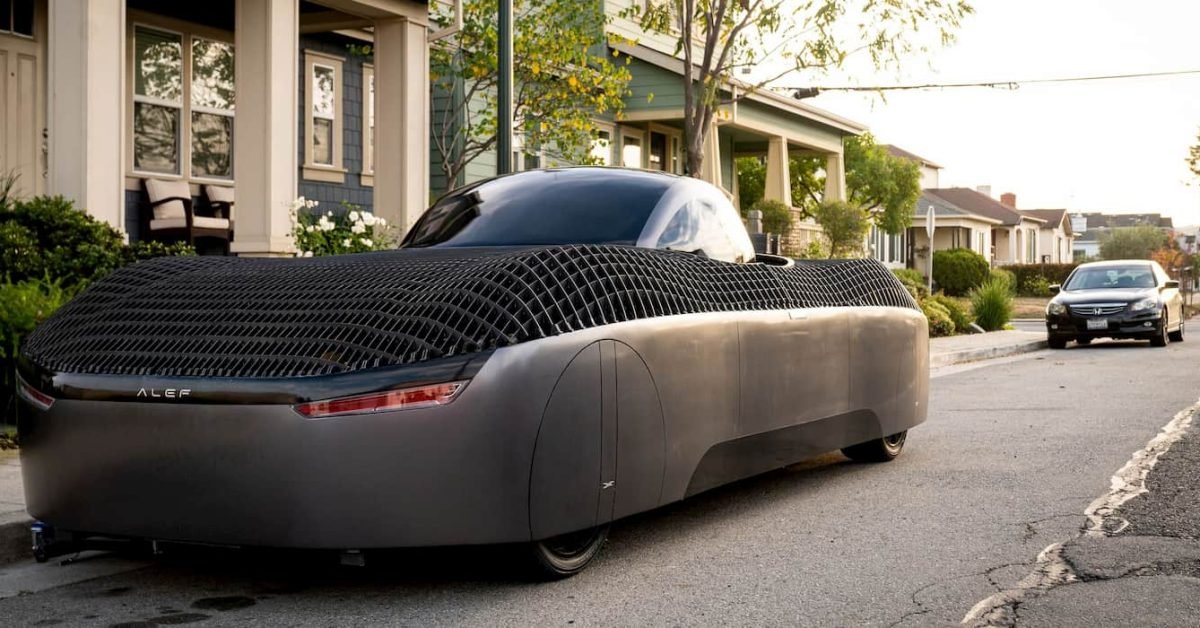
The flying car is no longer a Sci-Fi fantasy. It’s becoming a reality, and it could be here by the end of the year. Alef Aeronautics is now building pre-production models of what it’s calling “the first true flying car,” and it’s 100% electric. The company even claims that its flying car uses less energy than a Tesla or any other EV. Alef prepares first “true” electric flying car for launch San Mateo-based Alef Aeronautics has been developing flying cars for about a decade, but now it’s ready to bring them to life. The company unveiled its first prototype, the “Model A,” in October 2022, claiming that the electric flying car can travel up to 220 miles with a 110-mile flight range. After kicking off pre-orders the same month, the Model A secured 440 reservations by the end of the year. According to the company’s latest update, the flying car has now secured over 3,400 pre-orders, valued at around $1 billion in total. Advertisement - scroll for more content The orders include businesses and individuals, including a car dealership in California. Alef became the first company to sell a modern aircraft through a car dealership with pre-orders. You can reserve a spot in the “regular” queue for $150, or $1,500 for the “priority” waiting list. Alef has begun pre-production at its facility in Silicon Valley and expects to start producing customer models soon. Alef Model A electric flying car on display (Source: Alef) “If everything goes according to plan, and no major external changes, Alef plans to start production of the first vehicle by the end of 2025 or Q1 of 2026,” the company said (via KTVU), with deliveries set to follow. Alef says the Model A is the first road-legal passenger car that can also take off and land. The company even claims that “On average, the Alef flying car uses less energy per trip than a Tesla or any other EV.” CEO Jim Dukhovny introduces the Model A electric flying car at the Detroit Auto Show (Source: Alef) Since the Model A is classified as “ultralight,” it doesn’t require a certification to fly on roads legally, Alef told KTVU. It does have other restrictions, however, including the ability to fly only during the day and limited flying zones. Ultralight vehicles can not fly over densely populated areas. We got a sneak peek of the electric flying car in action for the first time earlier this year. Alef released a video of the flying car hopping over another vehicle on a public street in California. Alef’s electric flying car hops over another vehicle in California (Source: Alef Aeronautics) It looked fake, but Alef promises it was the “first-ever video in history of a car driving and vertically taking off.” Other flying cars have appeared in videos with tethered flights and other gimmicks to make it seem like they’re actually in flight. The Model A starts at $300,000, but Alef says costs “should drop down drastically,” adding “eventually below levels of Toyota Corolla or Ford Focus.” Alef Model A electric flying car top view (Source: Alef) Production and manufacturing costs are initially high due to the “hand-made in-house level,” the company explained. The startup secured a mass manufacturing agreement with PUCARA Aero and MYC for aviation-grade parts last year, which supplies industry leaders such as Boeing and Airbus. Alef’s flying cars underwent a “major technical update” this week, with more details to follow soon. Following the Model A, Alef is already working on its second flying car, the Model Z, which is expected to be priced closer to $35,000. However, it could be a while before we see it with an expected 2035 launch. Source: KTVU, Alef Aeronautics FTC: We use income earning auto affiliate links. More.
Don’t let Congress undo West Virginia’s energy progress

A West Virginia residential solar installation by Solar Holler. In the hills of West Virginia, families are finally starting to see real relief from high energy bills — thanks to programs that make solar energy accessible and affordable. But now, Congress is threatening to roll back the very policies that have made that progress possible. The Trump Administration has a stated goal of American Energy Dominance, but the House Reconciliation Bill’s severe cuts to the energy tax credits threatens to bring energy chaos instead. The bill passed by the House will decimate the energy manufacturing boom, increase electricity costs for families and businesses and put the nation at risk of energy shortages as we try to keep up with rapidly growing energy demand. Senator Capito and Senator Justice should not let that happen and instead support common-sense approaches to the commercial and residential energy tax credits that are benefitting West Virginians. In West Virginia, lower-income household energy burdens are among the highest in the country and many are struggling to afford increasing utility bills. According to the Clean Energy Buyers Association, the House Reconciliation Bill will increase electricity prices over the next decade. The electric utilities trade association, the Edison Electric Institute, has also stated that maintaining the energy tax credits will help lower utility bills by $45 billion through 2032. As scary as those cost increases are, it may be far worse for West Virginia because those don’t account for the “dramatic increases in future energy demand” forecast by PJM, the region’s wholesale electricity market, due to data center development, new manufacturing and increasing use of electricity in transportation. That rising demand coupled with slower deployment of cost-effective new energy resources, which includes solar and energy storage, will increase utility rates across the region. It is simple supply and demand — if we don’t bring on enough energy resources then costs will go up and that will be a drag on West Virginia’s economy. Solar Holler and PosiGen are utilizing the 48E and 25D energy credits to reduce energy costs for families across West Virginia. For example, Mary West, who lives just outside of Charleston, was able to install solar on her home through a lease structure that required no credit check, income requirement and will provide immediate savings on her bills. Removing the option for families to lease, which the House bill does, will simply put energy savings out of reach for those who need it the most. Mary’s story is powerful, but not unique. It represents thousands of households across West Virginia looking for stability in an unpredictable energy market. We are also proud of the growth in American energy manufacturing across the country, including West Virginia, due to the energy tax credits. We use domestically-manufactured equipment in every installation and we continue to see more and more of the solar supply chain come to the US because of the policies that are in place to support onshoring. This is critical not just for the economic benefits, but also for our national security. Our residential solar projects create demand for domestically-produced solar panels, inverters and racking, including from Georgia, Texas, Florida, South Carolina, Washington, New Mexico, Ohio and Arizona, which has led to the several hundred solar manufacturing facilities that are under development or are operating today. A sudden reversal of long-term energy policies will create a policy whiplash that puts those manufacturing facilities and jobs at risk. Businesses are investing in projects and factories across the country, many of which would be negatively impacted by the near immediate elimination of the energy tax credits. Congress should not punish businesses by pulling the rug on those investments. The economic impact is real and being felt in West Virginia with each family that we serve. At a time when we need all energy sources to meet rising energy demand and to keep energy affordable, our Senators should take a holistic approach to Energy Dominance that includes a reasonable approach to the 25D and 48E credits that directly benefit West Virginians.
Charged EVs | Clearing the electrical service bottleneck for EV charger installation
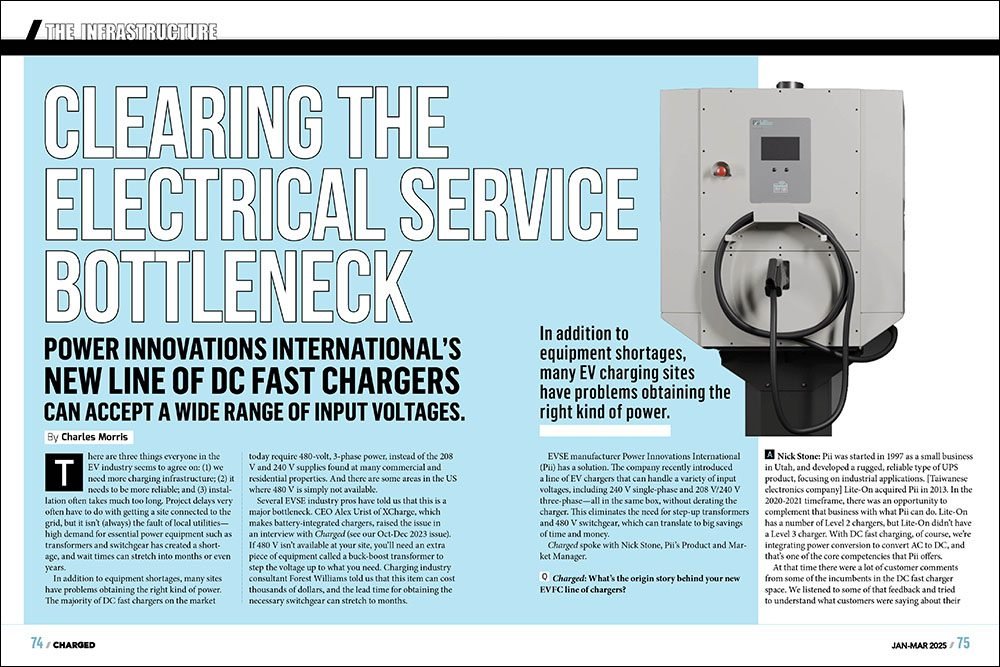
Power Innovations International’s new line of DC fast chargers can accept a wide range of input voltages. The utility connection bottleneck has become the bête noire of the EVSE world. But sometimes the problem isn’t getting enough power, but rather getting the right kind of power—and sometimes the real bottleneck is getting the transformers and switchgear needed to work around these issues. Power Innovations International has a solution—its new line of EV chargers can handle a wide range of input voltages, eliminating the need for step-up transformers and 480 V switchgear, which can translate to big savings of time and money. Pii’s new chargers have several other features that customers have been asking for, including a modular architecture that’s designed to simplify installation and improve reliability. There are three things everyone in the EV industry seems to agree on: (1) we need more charging infrastructure; (2) it needs to be more reliable; and (3) installation often takes much too long. Project delays very often have to do with getting a site connected to the grid, but it isn’t (always) the fault of local utilities—high demand for essential power equipment such as transformers and switchgear has created a shortage, and wait times can stretch into months or even years. In addition to equipment shortages, many sites have problems obtaining the right kind of power. The majority of DC fast chargers on the market today require 480-volt, 3-phase power, instead of the 208 V and 240 V supplies found at many commercial and residential properties. And there are some areas in the US where 480 V is simply not available. In addition to equipment shortages, many EV charging sites have problems obtaining the right kind of power. Several EVSE industry pros have told us that this is a major bottleneck. CEO Alex Urist of XCharge, which makes battery-integrated chargers, raised the issue in an interview with Charged (see our Oct-Dec 2023 issue). If 480 V isn’t available at your site, you’ll need an extra piece of equipment called a buck-boost transformer to step the voltage up to what you need. Charging industry consultant Forest Williams told us that this item can cost thousands of dollars, and the lead time for obtaining the necessary switchgear can stretch to months. EVSE manufacturer Power Innovations International (Pii) has a solution. The company recently introduced a line of EV chargers that can handle a variety of input voltages, including 240 V single-phase and 208 V/240 V three-phase—all in the same box, without derating the charger. This eliminates the need for step-up transformers and 480 V switchgear, which can translate to big savings of time and money. Charged spoke with Nick Stone, Pii’s Product and Market Manager. Charged: What’s the origin story behind your new EVFC line of chargers? Nick Stone: Pii was started in 1997 as a small business in Utah, and developed a rugged, reliable type of UPS product, focusing on industrial applications. [Taiwanese electronics company] Lite-On acquired Pii in 2013. In the 2020-2021 timeframe, there was an opportunity to complement that business with what Pii can do. Lite-On has a number of Level 2 chargers, but Lite-On didn’t have a Level 3 charger. With DC fast charging, of course, we’re integrating power conversion to convert AC to DC, and that’s one of the core competencies that Pii offers. At that time there were a lot of customer comments from some of the incumbents in the DC fast charger space. We listened to some of that feedback and tried to understand what customers were saying about their chargers. Of course, uptime is certainly imperative, but we wanted to add some other features. We spent some time around 2022 developing some rectifiers that we use across our product lines, and leveraging the same power supply topology that Lite-On uses in the data center space. This gives us one million hours demonstrated MTBF [Mean Time Between Failures, a measure of reliability] within the data center. We wanted to take that same type of power supply topology that’s been demonstrated in mission-critical applications and integrate that into a DC fast charger. One of the things that our firmware team does is a lot of embedded control. One of the competitors in this space builds a UL 508 A panel where your power supply and power meter are DIN rail-mounted, and you open it up and it’s a maze of wires. We wanted to take all the control and the power conversion that’s doing the auxiliary power and integrate that into one solution that sits on top of our power conversion. We spent some time developing that to where you take AC power coming into our power conversion block, measure the AC power, do all your low-voltage conversion—12, 24 and 48 volts for all the internal power needs and the auxiliary loads—bring that down to our power supplies, bring it back up through the high-voltage line, back through that same controller, and to the CCS1 output. Charged: The low-voltage auxiliary loads are things like the video screen and the user interface? Nick Stone: Yes. Our modem, the display, the buttons, the e-stop, the heat exchangers—all of those are coming from a central power supply that’s built in. There’s no need for a separate DIN rail power supply or a whole bunch of other wiring. Conversion of any type of AC voltage is a core competency that Lite-On has, and we integrated that into our overall design. We don’t have external wires come and go to the power supply, then come out and feed all these loads—we’re doing it all in an integrated, clean solution. Now, of course, we need an enclosure, we need thermal management, environmental protection, a display, some type of user interface. That’s where we spent some time listening to customers and installer partners. They were saying, “I don’t like to do filter replacements.” Okay, we will integrate that into our design. We will have a way to do thermal management that requires no maintenance. They
2026 Toyota C-HR First Look: Toyota’s Coolest EV Yet?
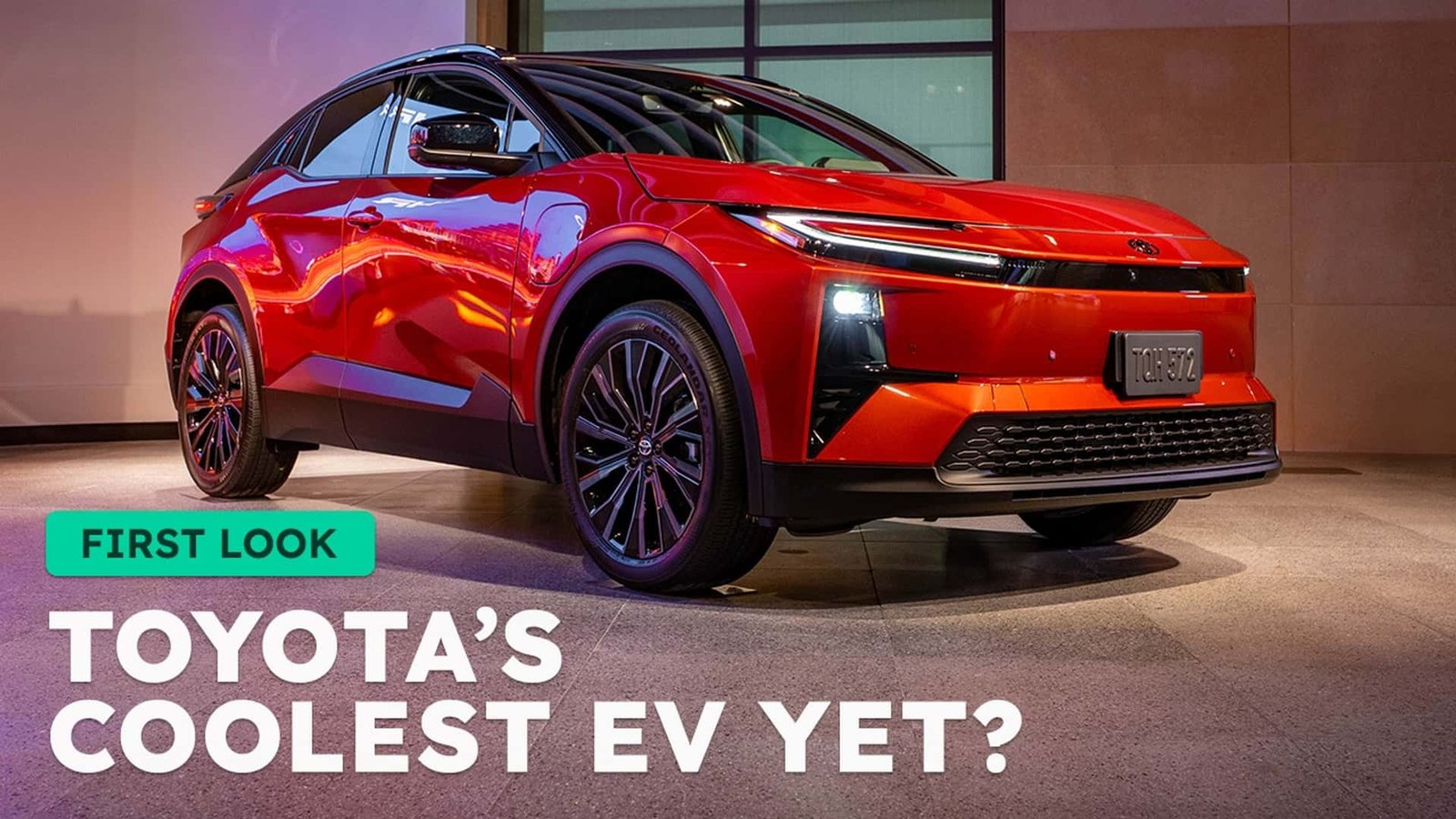
The Toyota C-HR is back. And this time, it's not an awkward-looking and boring crossover. Toyota has revived the nameplate as an all-electric model after discontinuing the gas version in 2022. Watch our walk-around video above for all the details on how the new C-HR looks and feels in person. The last Toyota C-HR sold in America was an awkward-looking compact four-door crossover. While it was great at sipping gas, it wasn't especially great at finding buyers. In 2022, its last year on sale, Toyota sold only around 12,000 units, which was a 60% drop from the previous year. The C-HR continued on in Europe, but we haven't missed it much over here. Now it's 2025, and the C-HR name is back. But this time, it's not what you think. I got to check one out at Toyota's U.S. headquarters in Plano, Texas, recently, and I came away pretty impressed. 15 Source: Suvrat Kothari The C-HR has been resurrected in an all-electric crossover with some real sporting potential. Apart from some subtle design cues, it has nothing in common with the old model. And now, it brings Toyota's U.S. EV lineup to two models, with more coming soon. The updated C-HR shares the e-TNGA platform with the refreshed (and larger) Toyota bZ. Along with the other new EVs Toyota and Lexus have in the pipeline, it could help the automaker become a real force in the competitive electric crossover market. The coupe-like sloping roofline, supplemented with blacked-out elements all around and the horizontal light bars on both ends, give the crossover a unique personality and style. At 177.9 inches long, it's about 6.7 inches shorter than the bZ, so it's pleasantly compact and would make for a great city car. But don't let its compact dimensions fool you—the C-HR packs plenty of performance and would be a happy highway cruiser. Photo by: Suvrat Kothari All-wheel drive is standard and its dual electric motors combine for 338 horsepower, enough to make it sprint from 0-60 miles per hour in just 5 seconds—it will easily smoke its gas-powered predecessor in a straight line and is as fast as the Toyota GR Corolla, which is a proper hot hatchback. The C-HR's suspension tuning is also unique, including the spring and damper settings and the stiffness of the anti-roll bars. The bZ is geared towards comfort, whereas the C-HR will be sporty. Driving range isn't class-leading, but it's still significantly improved over the current bZ4X, which is capped out at an EPA-estimated 252 miles. The C-HR gets the same 74.7 kilowatt-hour battery as the refreshed bZ and will deliver 290 miles of Toyota-estimated range. That's slightly lower than the bZ's 314 miles of maximum range, but still near enough to the 300-mile mark that should be table stakes for any modern EV. Photo by: Toyota The maximum charging speed is 150 kilowatts, but Toyota says it has improved the charging curve to make it charge faster—it will go from 10-80% in 30 minutes in ideal conditions. Most importantly, it gets the Tesla-developed North American Charging Standard port right from the factory, opening up access to thousands of Superchargers in the U.S. It also has the charging port on the correct side, so owners won't have to double park at Superchargers. The only seeming drawbacks to the C-HR so far are interior space and the placement of the gauge cluster. Because the C-HR is a sportier and smaller bZ, the room inside isn't the best. But it won't be a dealbreaker for most owners—average-sized and tall-ish passengers should be comfortable at the rear. The boot space is also slightly compromised—only the bZ without the JBL speakers has slightly more cargo room. The bZ has 27.7 cubic feet of luggage space, whereas the C-HR has 25.4 cubic feet. Photo by: Suvrat Kothari The gauge cluster placement, on the other hand, seems frustrating. The steering wheel, in all its different adjustable positions, blocks the view of the gauge cluster, making it effectively obsolete because you can't read any information from it. Although the larger 14-inch infotainment screen felt slick and easy to use on the bZ—the C-HR will get the same unit. We'll save our final judgment for when we drive it. Other features like panoramic sunroof and heated seats are welcome additions too. Overall, however, that's a lot of power and a good amount of range in a small, compelling package. I'm eager to see how it does when it finally hits the road. The C-HR will be made in Japan and is expected to go on sale in the U.S. early next year. Prices will be announced closer to launch. Have a tip? Contact the author: suvratkothari@insideevs.com
DESIGN ASPECTS OF AGM VRLA BATTERIES
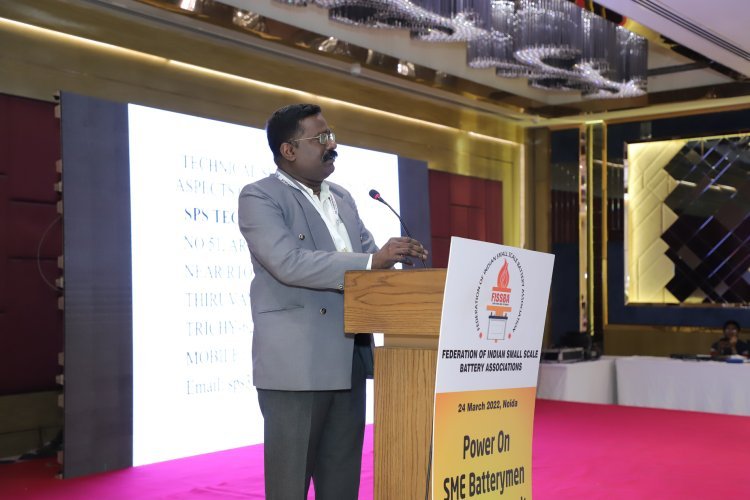
SPS technologist is the leader in providing technology for packaged power in India. They are supporting for a wide range of advanced technology of lead acid batteries for almost all kinds of applications such as Railways, Standby, Solar, and Motive power etc. The company is situated in Trichy. The world-class manufacturing methods are being used to support our customers to make batteries. Presentation by S. Palaniswami during 17th Power On Battery Technology Conference The lead acid battery The lead acid battery is made of a positive plate, negative plate, and sulphuric acid Positive plate: PbO2 Negative plate: Pb Sulphuric acid: H2SO4 Electrochemical reactions Basic electrochemical reactions taking place within the battery can be described by double sulfate reactions as PbO2+Pb+H2SO4 <---> PbSO4+PbSO4+2H2O Basic designe features Special corrosion resistance alloy has been used for both positive and negative plate Pasted positive plate with high porosity and more surface area to have the very good initial capacity and life. Ultra strong container and lid both abs and PPCP AGM separators Good quality oxide and paste ingredients Stringent checks at every stage of operations to have optimum performance and life Improved design of venting systems Basic constructions AGM SMF VRLA cells/batteries consist of pasted positive plates and pasted negative plate, absorbent glass matt separators, injection/compression molded container and lid and safety valve with venting systems Container The containers are made of good raw materials properties of melt flow, heat deflection, and density as per ASTM standards. Highly reinforced design withstands impacts during transportation and during handling of the battery. Ribbed constructions give extra strength and durability. Positive plate The pasted positive plate with good alloy composition in the grid and with proper aging before pasting, The pasting and curing are processed at very controlled conditions to have better performance. Our unique paste composition enhances high-rate performances and cyclic life Negative plate Negative plates are of interlocking grids frame constructions and made of special alloy The grids hold maximum active material to match the positive plate It is accurately balanced to the pasted positive plate for optimum life and capacity. Special expanders have been used to counter the contraction and drastic reduction of gassing during the life of the battery Battery Separators Separators are of AGM and have good insulating properties. It has high porosity for maximum conductivity It has a low electrical resistance It is highly inert to sulphuric acid and is extremely durable. It ensures good service life and long shelf life. Safety valve It should be made from fluoro rubber preferably from EPDM and must have Very good tensile strength, good heat resistance, The good acid resistance characteristics. The good silicone oil resistance Consistency in opening and closing pressure. Flame arresters It is being used along with a safety valve for higher-capacity batteries. It condenses most of the acid and water back into the cell Each cell is provided with one flame arrester along with a safety valve to achieve gas recombination efficiency and eliminate the topping up of di water in the cell/battery during the life of the battery. Curing of positive and negative plates Curing is to be done in a controlled atmosphere. As per the curing schedule humidity and temperature must be set, readings should be taken with definite intervals and recorded Free lead must be checked before the plates are going for drying and the free lead must be less than 2%. The drying is also to be done at a controlled temperature preferably from 50 to 60 ċ After drying is completed, please check it for moisture and it should be less than 1%, Store all the plates in dust-free conditions till the assembly of plates. Acid preparation Water and acid should conform to is 266 & 1069 respectively Always add acid to water, never add water to acid Stir the liquid well with a lead-lined wooden rod during mixing. Allow the acid to cool down to room temperature before filling While handling acid wear protective clothing such as a rubber apron, goggles, rubber gloves and gumboot. To prepare 1.200 acid, mix 4.4 parts of water with 1 part of 1.835 acid by volume Mix 1.1 parts of water with 1 part of 1.400 acid by volume Acid filling The specific gravity of the acid is to be ensured as per the specification with respect to the type of batteries and applications Please make sure that the acid temperature is maintained at 30 digree centigrade or below before filling into the cells Fill the acid as per the specified volume/cell Allow the cells to cool down for 06 to 12 hours If need be please ensure the forced air cooling arrangements. Jar formation We recommend for cured plate assembly and charging instead of plate formation to overcome handling, damages, and environmental issues, Connect the batteries for charging at a specified rate for the specified duration and as per the schedule The charging step is formulated with 10 to 12 steps including charge, discharge, rest, and finally capacity test and recharge before the batteries are shifted to final assembly, approximately around 100 hours, Forced air cooling must be placed in the charging area to avoid the temperature rise in the batteries, The batteries which are passing the capacity requirement in the final step should go to the next stage of operation. The temperature of the battery should be below 50‘ c during If the temperature is above 45‘c, reduce the rate of charge, and should it be above 50‘c discontinue the charging for some suitable period and proportionately increase the time
BYD launches Seal 06 EV sedan, starting at $15,270
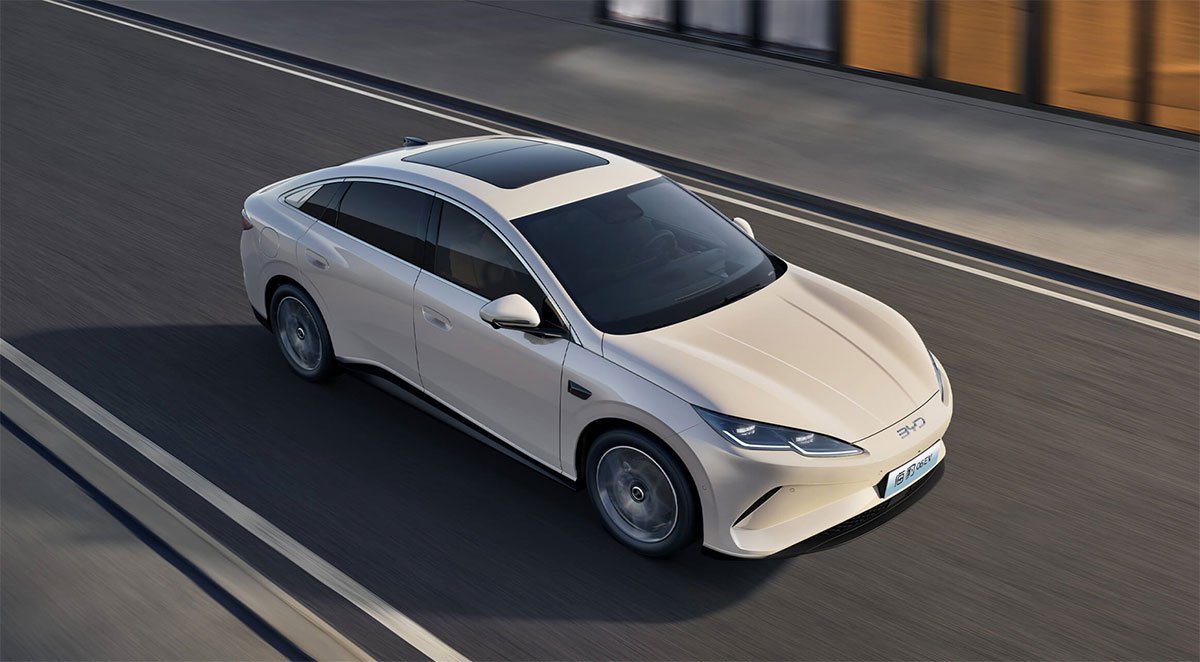
The Seal 06 EV is BYD's latest affordable electric sedan, with a range of up to 545 km. The sedan measures 4,720 mm in length and is equipped with BYD's God's Eye C smart driving system. (BYD Seal 06 EV. Image credit: BYD) BYD (HKG: 1211, OTCMKTS: BYDDY) has officially launched the Seal 06 EV, its latest affordable electric sedan. The Seal 06 EV, which belongs to BYD's Ocean series, was launched at the Chongqing auto show today and is the sister model of the Qin L EV from BYD's Dynasty series. The electric midsize sedan offers three options, with starting prices of RMB 109,800 ($15,270), RMB 119,800, and RMB 129,800. All three variants are equipped with BYD's lithium iron phosphate (LFP) blade batteries, with capacities of 46.08 kWh, 56.64 kWh, and 56.64 kWh, respectively, and CLTC ranges of 470 km, 545 km, and 545 km. The Seal 06 EV measures 4,720 mm in length, 1,880 mm in width, and 1,495 mm in height, with a wheelbase of 2,820 mm. All three variants are rear-wheel-drive models, with motor peak power ratings of 110 kW, 160 kW, and 160 kW, and maximum torques of 220 Nm, 330 Nm, and 330 Nm, respectively. The entry-level variant can accelerate from 0 to 50 km/h in 4.1 seconds, while the other two variants achieve this in 3.1 seconds. The Seal 06 EV supports fast charging, with a peak charging power of 103 kW, enabling it to charge from 30 percent to 80 percent in 24 minutes. The electric sedan is equipped with BYD's God's Eye C smart driving system, with the smart driving solution being DiPilot 100. This solution does not use LiDAR but instead employs a camera-based vision solution. The launch of the Seal 06 EV marks a further expansion of the Seal family lineup, as BYD intensifies its efforts in the affordable EV market. The Seal originally started as an electric sedan and has since expanded into a family of multiple sedan models. Prior to the Seal 06 EV, the Seal family included the hybrid Seal 05 DM-i, the hybrid Seal 06 DM-i, the hybrid Seal 07 DM-i, the all-electric Seal 06 GT, and the all-electric Seal, with starting price ranges from RMB 79,800 to RMB 239,800. BYD sold 382,476 vehicles in May, representing a year-on-year increase of 15.27 percent and a month-on-month increase of 0.63 percent. The Seal family sold 25,587 units in May, marking a year-on-year increase of 78.79 percent, but a month-on-month decrease of 1.78 percent. ($1 = RMB 7.1896) BYD's prices in overseas markets are relatively stable, which is beneficial to the company's profitability, said Wang Chuanfu.
Tesla stock plunges as Trump and Musk turn to blows

Now, the White House is looking to broker “peace talks” between the two billionaires. By Stewart Burnett Tesla shares plunged 14% on Thursday, wiping out approximately US$150bn in market value, as a simmering feud between chief executive Elon Musk and President Trump escalated dramatically. Shares in Frankfurt subsequently rose 5.6% on Friday after Politico reported White House aides had scheduled a call with Musk to broker peace. Subscribe to Automotive World to continue reading Sign up now and gain unlimited access to our news, analysis, data, and research Subscribe Already a member? Join our LinkedIn Group Let us help you understand the future of mobility "*" indicates required fields
Who passed— and failed — on this fashion sustainability scorecard

No fashion brand deserves an A for effort to wind down its dependency on fossil fuels for energy and materials, according to activist group Stand.earth. H&M Group earned a class-leading grade of B+ in the watchdog’s third Fossil-Free Fashion Scorecard of 42 fashion brands, suggesting that even a fast fashion business can make sustainability strides. That contrasts with seven overall F’s handed down, including one for ultra-fast brand Shein. That company’s Scope 3 indirect emissions are skyrocketing as it continues a heavy dependence on polyester. The report graded each company in five categories: climate commitments and transparency; renewable energy transition; advocacy; materials and circularity; and clean shipping. (Stand’s methodology included cross-referencing public reports with a survey it sent to businesses. Reviews by independent experts informed its letter grades.) H&M stood out for financially backing suppliers’ attempt to slash emissions. It also scored an A+ for climate commitments and transparency, as it was the only company with a renewable energy target for emissions from raw material processing, that is, Tier 3 in the supply chain. Similarly, sportswear and outdoor brands did best with climate commitments and transparency, including seven of the dozen brands with renewable energy targets for their supply chains. Patagonia and Puma each scored a C+. Yves Saint Laurent parent Kering, also with a C+, had the best showing among luxury brands, which tend to be cagey about their supply chain details. Mass market brands such as Eileen Fisher fared better than those in other categories by a full letter grade. They also nabbed better marks for use of low-carbon materials and circularity efforts. Fossil fuels are woven into every step of apparel manufacturing, which makes up 4 percent of total greenhouse gas emissions, outpacing even the aviation industry, according to Stand’s report. The group advances a vision in which fashion phases out petroleum and coal, supports a “just transition” to a low-carbon economy and better engages the communities within their supply chains. Stand was founded as ForestEthics in 2000. The San Francisco-based group, which originally targeted companies’ paper sourcing policies, takes credit for influencing 140 apparel businesses to ramp up their demand for renewable energy in manufacturing. In this year’s report, the nonprofit issued a warning: “Unless brands act now to fund and enable the manufacturers and workers in their supply chain to deliver rapid climate action, building a more equitable model for the industry, this combination could create the perfect storm that sets the industry’s sustainability journey back, while leaving brands open to serious investor and reputational risk.” Hall of fame — and shame Eileen Fisher of Irvington, New York, came in second place overall with a B-. The only two A+ grades in one of the five sub-categories that Stand identified were H&M for commitments and transparency and Mammut for clean shipping. Three companies received a C+ overall, including Gucci parent Kering, Levi Strauss and Patagonia. The top three companies on Stand.earth’s 2025 fashion scorecard. At the bottom of the pack, Boohoo of Manchester, England, received Fs across the board. Barely beating it, Aritzia, Shein and Columbia each scored Fs in three categories, with a D- for materials and circularity. “Dangerously out of step with climate action,” according to the report, Abercrombie & Fitch, Aritzia and Columbia Clothing have not even set targets for slashing Scope 3 emissions. The bottom three companies on Stand.earth’s 2025 fashion scorecard. Key progress areas Here are highlights from each of the five categories that Stand analyzed: “Climate and energy commitments and transparency” — Two-thirds of brands maintain net zero goals, but only five companies revealed near-term, concrete steps to reach that achievement. “A fair renewable and energy-efficient manufacturing transition” — More than half of the companies are actively helping suppliers decarbonize. But only H&M offers financing beyond loans. “Climate and renewable energy advocacy” — H&M scored an A, followed by Bs for Eileen Fisher and Nike. H&M, Kering and LVMH were the only brands satisfying U.N. criteria for the integrity of their net zero targets. “Low-carbon and deforestation-free materials” — Average grades rose to D from F since 2023, and 95 percent of brands offer resale or repair. Nearly one-third of the brands are actively pursuing circular textiles, but only Puma has set a deadline (2030) for using a specific share (30 percent) of textile-to-textile recycled polyester. Only six companies are seriously pursuing a majority of materials without petroleum-based synthetics. “Greener shipping” — Almost two-thirds work upstream shipping into their Scope 3 emissions targets. However, just nine brands explain the modes of transport they use, and only six pledged to reduce air shipping. Heavy emissions continue, with no end in sight, for Fast Retailing, Inditex, Prada, Puma and Shein. In all its phases, material production spews out more than half of fashion’s greenhouse gas emissions, according to Stand.earth’s report. Recommendations for fashion purveyors Stand shared seven recommendations for apparel and footwear companies seeking to accelerate decarbonization: 1. Create “just climate transition” plans detailing near-term steps for 2030 and long-term steps for 2050 toward net zero goals. 2. Work with other brands to help smaller companies along the supply chain to ditch coal in favor of efficient and renewable energy technologies. 3. Enhance equity in dealings with suppliers. This includes helping to finance decarbonization efforts, including favorable loan rates and financing that suppliers don’t need to pay back. Stand also advises providing long-term agreements. 4. Focus more on climate adaptation efforts tailored to localities, helping workers “through the impacts of climate breakdown.” 5. In manufacturing centers, boost collaborative advocacy for policy and infrastructure that helps suppliers use more renewables. 6. Stick with a plan to get rid of synthetic materials. The report called out “the limitations of false solutions like recycled polyester.” 7. Use less polluting transportation by creating emissions targets and planning for slower, less-polluting shipping.
Automated Building Management Systems' role in sustainability for manufacturing facilities

These intelligent systems offer a range of benefits for manufacturers. Manufacturers are under increasing pressure to reduce their environmental impact, optimize resources, and improve energy efficiency. As sustainability becomes more of a strategic priority for manufacturers, leveraging cutting-edge technology to meet sustainability goals has become essential. One such technology that is making a significant impact on manufacturing operations is the Automated Building Management System (BMS). These intelligent systems offer a range of benefits for manufacturers looking to reduce their environmental footprint, enhance energy efficiency, and achieve sustainability objectives. What is an Automated Building Management System (BMS)? An Automated Building Management System (BMS) is a centralized system that manages and controls various building systems and operations in a manufacturing facility. These systems typically manage areas like heating, ventilation, and air conditioning (HVAC), lighting, energy consumption, security, water management, and access control. BMS integrates these functions into a cohesive platform, allowing real-time monitoring, control, and optimization. By using sensors, automation, and data analytics, BMS helps facilities make informed decisions, improve efficiency, and monitor the overall health of building systems. In terms of sustainability, BMS acts as a vital tool for reducing resource consumption and minimizing a facility’s environmental footprint. The backbone of sustainability Energy usage is one of the most significant costs in manufacturing, and managing it effectively is crucial for achieving sustainability. A BMS enhances energy efficiency by automating the control of heating, cooling, and lighting systems to ensure that energy is used only when necessary. Real-time energy monitoring and control Through continuous monitoring of energy use, BMS systems can detect energy inefficiencies and automatically adjust operations to minimize waste. For example, lighting systems can be automatically dimmed or turned off in unoccupied areas, and HVAC systems can adjust their operations based on the real-time temperature and humidity levels within the facility. These energy-saving measures help ensure that energy consumption is minimized, especially during non-peak hours when the facility may not be fully operational. Demand-response and peak load management One of the key features of an advanced BMS is demand-response capabilities, which enable the system to respond dynamically to fluctuations in energy demand. By adjusting the use of HVAC, lighting, and other systems, the BMS can reduce energy consumption during peak hours when the grid is under strain. Manufacturers can use this feature to avoid high energy costs and reduce their environmental impact by using energy more efficiently during critical times. Load shedding and optimization BMS also helps to manage peak demand through load shedding—reducing non-essential energy consumption during periods of peak demand. This can significantly reduce the overall energy consumption of the facility while maintaining operational efficiency. Manufacturing facilities, particularly those that rely heavily on energy-intensive processes, contribute significantly to carbon emissions. In addition to improving energy efficiency, BMS plays an integral role in helping manufacturers reduce their carbon footprint. Renewable energy integration Many manufacturing facilities are now incorporating renewable energy sources, such as solar panels or wind energy, into their operations to further reduce their carbon impact. A BMS can play a crucial role in managing the integration of these renewable energy sources. By prioritizing renewable energy usage when available and balancing it with grid electricity, the system ensures that the facility uses as much clean energy as possible, reducing reliance on non-renewable resources. Water conservation and waste management Water is another crucial resource that many manufacturing facilities rely on for processes such as cooling, cleaning, and production. As water conservation becomes increasingly important, a BMS helps manage water usage effectively. BMS systems track and monitor water usage in real-time, alerting facility managers to wasteful practices or water leaks. By identifying areas where water is used inefficiently, such as excess cooling or leaky connections, manufacturers can take steps to reduce consumption. Additionally, BMS can provide automated control over water-based systems, ensuring that they are used optimally throughout the day. For facilities with on-site wastewater treatment systems, a BMS can assist in monitoring and controlling wastewater processes, ensuring they run efficiently. By optimizing water treatment, BMS systems can help ensure that water reuse is maximized, contributing to sustainability efforts and lowering operational costs. Predictive maintenance and preventing waste and downtime Manufacturing facilities rely heavily on machinery and equipment to keep operations running smoothly. However, poorly maintained equipment can lead to inefficiencies, increased energy consumption, and even premature failure. BMS plays a critical role in predictive maintenance, which helps avoid these issues and contributes to long-term sustainability. Using real-time data analysis, BMS systems can identify potential issues with equipment before they become critical, enabling proactive maintenance. This minimizes unplanned downtime, reduces the need for emergency repairs, and extends the lifespan of equipment, reducing the need for replacement and cutting down on waste. Predictive maintenance also ensures that equipment runs at peak efficiency, avoiding overuse of energy due to malfunctions or inefficiencies. This can significantly reduce energy waste and lower overall energy consumption, directly supporting sustainability efforts. Compliance with green building standards As sustainability regulations become more stringent, manufacturers are often required to meet specific green building certifications, such as LEED (Leadership in Energy and Environmental Design) or BREEAM (Building Research Establishment Environmental Assessment Method). A BMS helps facilities stay compliant with these standards by providing valuable data on energy consumption, water usage, and overall environmental impact. Pathway to a sustainable future In the quest for sustainability, manufacturers must leverage technology to optimize resource usage and minimize waste. Automated BMS are an essential tool in achieving these goals, offering real-time monitoring and control of energy, water, and equipment. By automating critical systems, BMS help manufacturers reduce their carbon footprint, lower energy costs, and improve operational efficiency. Monitoring and managing resources efficiently through BMS gives manufacturers a competitive edge, not only by helping them meet regulatory standards but also by reducing operational costs and contributing to a more sustainable future. As we move toward a greener industrial landscape, BMS will play a pivotal role in driving sustainability efforts and ensuring that manufacturing operations are as efficient and environmentally responsible as possible.
Tesla's head of Optimus humanoid robot leaves the '$25 trillion' product behind
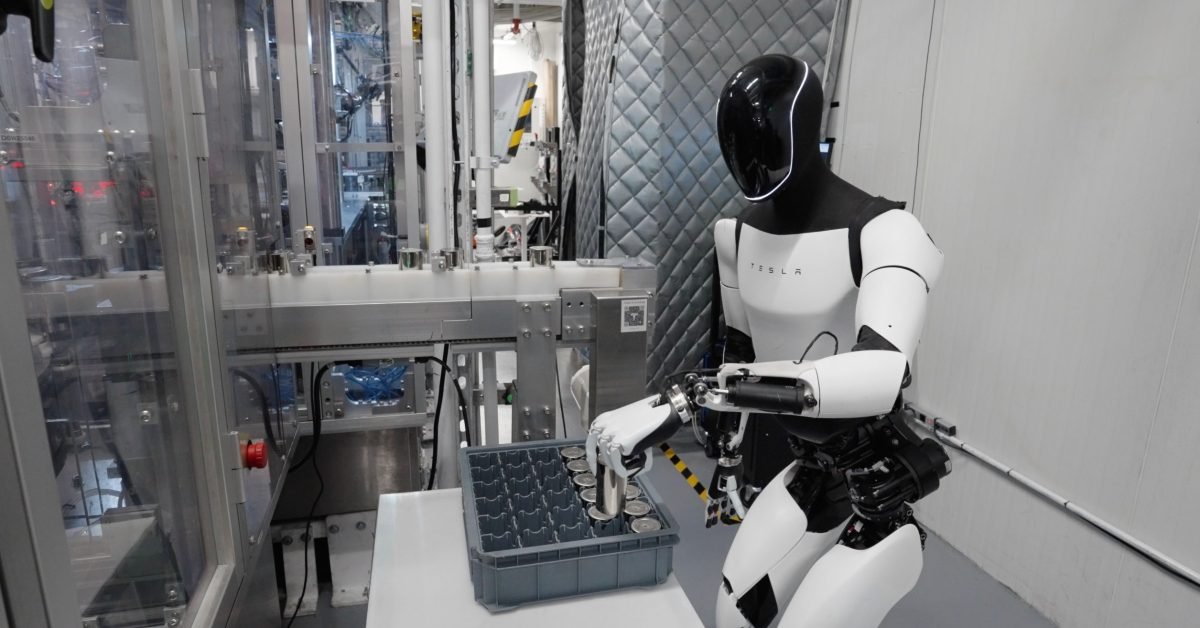
Tesla’s head of Optimus humanoid robot, Milan Kovac, announced that he is leaving the automaker after 9 years. It leaves just as CEO Elon Musk claimed that the humanoid robot is going to make Tesla a”$25 trillion company.” Electrek first reported on Tesla hiring Kovac back in 2016 to work on the early Autopilot program. At the time, we noted that the young engineer had an interesting background in machine learning. He quickly rose through the ranks and ended up leading Autopilot software engineering from 2019 to 2022. Advertisement - scroll for more content In 2022, he started working on Tesla’s Optimus humanoid robot program. Late last year, he was promoted to Vice President in charge of the complete Optimus program, as CEO Elon Musk began to tout the program as critical to Tesla’s future. Musk claimed that Optimus could generate $10 trillion in revenue per year and make Tesla a $25 trillion company. These claims are largely unsubstantiated as the humanoid robot market is still in its infancy. Most market research firms currently estimate the size of the humanoid robot market to be in the low single-digit billions of dollars, with growth projections through 2032 ranging from $15 billion to $80 billion. That would represent impressive growth, but nowhere near what Musk is touting to investors. Today, Kovac announced that he is leaving Tesla for personal reasons: This week, I’ve had to make the most difficult decision of my life and will be moving out of my position. I’ve been far away from home for too long, and will need to spend more time with family abroad. I want to make it clear that this is the only reason, and has absolutely nothing to do with anything else. My support for Elon Musk and the team is ironclad – Tesla team forever. Kovac has been regarded as one of the top new technical executives at Tesla, which has seen a significant talent exodus of top engineers. The company has made progress with the Optimus program over the last year. Still, many have been skeptical, as Tesla has been less than forthcoming about using teleoperation in previous demonstrations. Kovac is not the only Optimus engineer to leave Tesla recently. Figure, another company developing humanoid robots, has recently poached Zackary Bernholtz, a 7-year veteran at Tesla and most recently a Staff Technical Program Manager. Electrek’s Take This is a significant loss for Tesla. Kovac was one of Musk’s top technical guys and literally the head of the program he claimed would bring Tesla to the next level – although I think most people have been understandably skeptical about these claims. I’ve been bullish on humanoid robots, and I could see Tesla being a player in the field, but it’s nowhere near the opportunity that Musk is claiming, and there’s also plenty of competition with no clear evidence that Tesla has any significant lead, if any. In China, Unitree has been making impressive progress, and it is already selling a humanoid robot. In the US, Figure has also been making a lot of progress lately: I think it’s a smart space to invest in for manufacturing companies like Tesla, but there’s going to be a lot of competition. It’s too early to say who will come out on top. As for Kovac leaving, I’m sure his personal reason is correct. However, we often see people claim that and then they quickly turn up at another company. If he believed that his product would soon become a multi-trillion-dollar opportunity, I doubt he would be leaving, but you never know. 9 years at Tesla is some hard work and it’s impressive for anyone. Congrats. FTC: We use income earning auto affiliate links. More.
New Mexico opens $5.3 million commercial energy efficiency loan program

The New Mexico Energy, Minerals and Natural Resources Department announced it is accepting applications for loans to finance energy-efficiency upgrades in commercial buildings that serve a community purpose. Solar and electric panel upgrades are eligible for loans as part of a comprehensive energy efficiency project plan. EMNRD received $5.3 million from the U.S. Dept. of Energy to create an Energy Efficiency Revolving Loan Fund (EERLF), which offers low-interest loans ranging from $250,000 to $1 million to eligible organizations across the state. Eligible organizations include nonprofit and for-profit entities that own or operate commercial buildings that serve a public service, such as education, recreation, healthcare or cultural services. “This loan fund is one more way we are supporting Gov. Lujan Grisham’s goal of boosting New Mexico’s economy while also protecting its environment,” said EMNRD Sec. Melanie Kenderdine. “These loans will ensure the recipients’ economic viability by lowering the costs for building upgrades while simultaneously reducing their carbon footprints.” The EERLF offers loans at a fixed rate of 2% to cover energy efficiency upgrades such as smart thermostats, new HVAC systems, insulation, air sealing, lighting and building envelope improvements. Applicants must demonstrate that more than 50% of their revenue is earned in New Mexico or that more than 50% of their services are provided in the state. EMNRD’s Energy Conservation and Management Division (ECAM) is partnering with the New Mexico Finance Authority to administer the program. Interested applicants should complete an RLF Interest Form or email ECAM staff at emnrd-ecam@emnrd.nm.gov. ECAM staff will contact applicants within 48 hours of receiving an application to discuss their energy efficiency project. News item from EMNRD
Charged EVs | A closer look at inductors and chokes In EVs
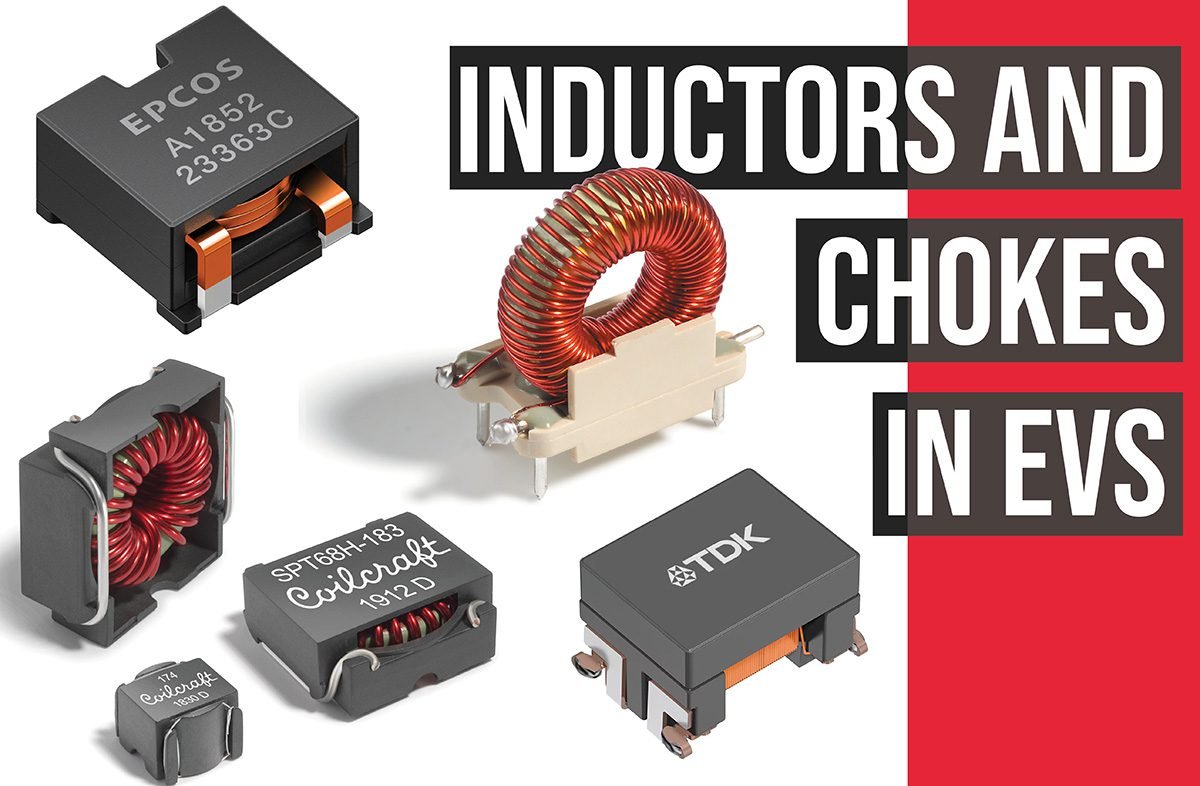
Traction motors and transformers are the magnetic components that seem to get all the attention, but the humble inductor/choke is just as critical a component in modern power converters, and it has surprisingly profound effects on performance, reliability and cost. Another temptation for the bewildered design engineer (or one that is just short on time—but isn’t that all of us?) is that there are numerous inductors/chokes available COTS (Commercially Off The Shelf), which is generally not the case for transformers, and choosing a COTS part isn’t necessarily a bad option—specialist suppliers offer very high-quality magnetic components, and possibly for much less than a bespoke component, even in production quantities. The humble inductor/choke is a critical component in modern power converters, and it has surprisingly profound effects on performance, reliability and cost. However, that doesn’t absolve the design engineer from verifying the suitability of a COTS component in a given application, as the last thing you want is for a component you barely vetted to become an occult source of inefficiency, unreliability, or that most dreaded of outcomes: to cause the device to fail Electromagnetic Compatibility Compliance (EMC) testing. While a choke is technically a specific type of inductor (one that can handle significant DC bias before fully saturating), the term is frequently abused (e.g. the “common mode choke” found in pretty much all AC mains filters never sees DC, so it is not a choke). Therefore, it’s probably best to treat the terms inductor and choke as interchangeable. That said, inductors are broadly used for three major functions in EVs: in conventional low-pass LC filter networks for producing (reasonably) clean DC outputs in switchmode power converters; in tuned (aka resonant) LC networks, either in explicitly-resonant converter topologies, or just to reduce losses during the switching transitions in PWM topologies (aka quasi-resonant or soft-switching); and in EMI filters for blocking the emission (or reception) of radio-frequency noise. These applications place very different demands on inductors, hence the earlier admonition that just because you can get one COTS doesn’t necessarily mean it will work all that well in the specific part of the circuit you’ve dropped it into. The edgewound flat wire construction is preferred at higher current ratings, especially at moderate switching frequencies under 150 kHz. The vast majority of inductors used in power converters, regardless of topology, will have a ferromagnetic core—that is, not be a simple coil of wire—and most of the time that core will be in a shape such that the magnetic flux from the windings can follow a completely closed loop (a toroid is the classic example here). The latter feature might not be necessary for the functioning of the circuit, but it is key if you want to pass EMC compliance testing, because any flux lines that don’t escape the core are bound to cause noise issues elsewhere. For example, the now-ubiquitous drum-core SMT inductors that might look ideal for use in low-power auxiliary converters don’t have a closed magnetic loop—the flux lines must pass through air to complete their circuit—which can turn these little devils into miniature “EMI cannons” (an actual sobriquet I’ve heard used to describe them). Choosing a core shape that closes the flux loop is only part of the battle, though, as other parameters and design goals are often mutually exclusive, so compromise is inevitable. For example, core materials that are optimized for low AC losses (hysteresis and eddy) tend to have a lower saturation flux density, so will require more core area for a given inductance and power handling ability, which in turn increases the amount of stray capacitance, and so on. The main function of the series inductor in an LC output filter is to reduce the amount of AC ripple seen by the shunt capacitor that follows it without also being overwhelmed by the DC flowing through it. This increases the importance of minimizing the DC losses of the windings over the AC losses of the same, and of the core. A single layer of conventional magnet wire (using multiple strands in parallel if necessary to achieve the target current rating) will typically work well. Also possible (at the expense of higher stray capacitance) is the edgewound flat wire construction—this type is preferred at higher current ratings, especially at moderate switching frequencies (under 150 kHz), though it tends to have a higher stray capacitance. As for the core itself, almost any “power material” will work here (as opposed to materials optimized for RF/tuned circuits or, worse, EMI filters), as long as there is either an explicit or distributed air gap to prevent saturation from the DC bias. The gap is explicit (i.e. a literal gap) in ferrite cores, and cores with standard gap lengths are available COTS from most manufacturers, though there is little penalty in specifying a custom gap as long as you buy enough of them, and can wait to have them machined, as it takes diamond tooling to cut ferrite. Note, however, that a discrete gap will be a potent emitter of EMI, so it will almost certainly need to be shielded by the windings (at the cost of increased AC losses in them), hence the gap is almost always cut into the center leg of (for example) pot- or E-shaped cores; shimming the core halves might be fine for prototyping, but not for production. Cores using a mix of powdered metal and a binder typically have a distributed gap which can be adjusted by the manufacturer by varying the ratio of the two. As with ferrites, there are several standard gaps available (specified indirectly via the permeability), though here there is a much higher cost penalty for custom values, so one is strongly advised to stick with the standard offerings. Inductors used in tuned (resonant) LC networks aren’t subjected to any DC bias, but are typically operated at much higher frequencies, that being one of the main goals of resonant (or quasi-resonant) operation, after all. Consequently, rather more emphasis is placed on minimizing
Fixing The Old Tesla Model 3’s Biggest Flaw: ‘It Feels Amazing’
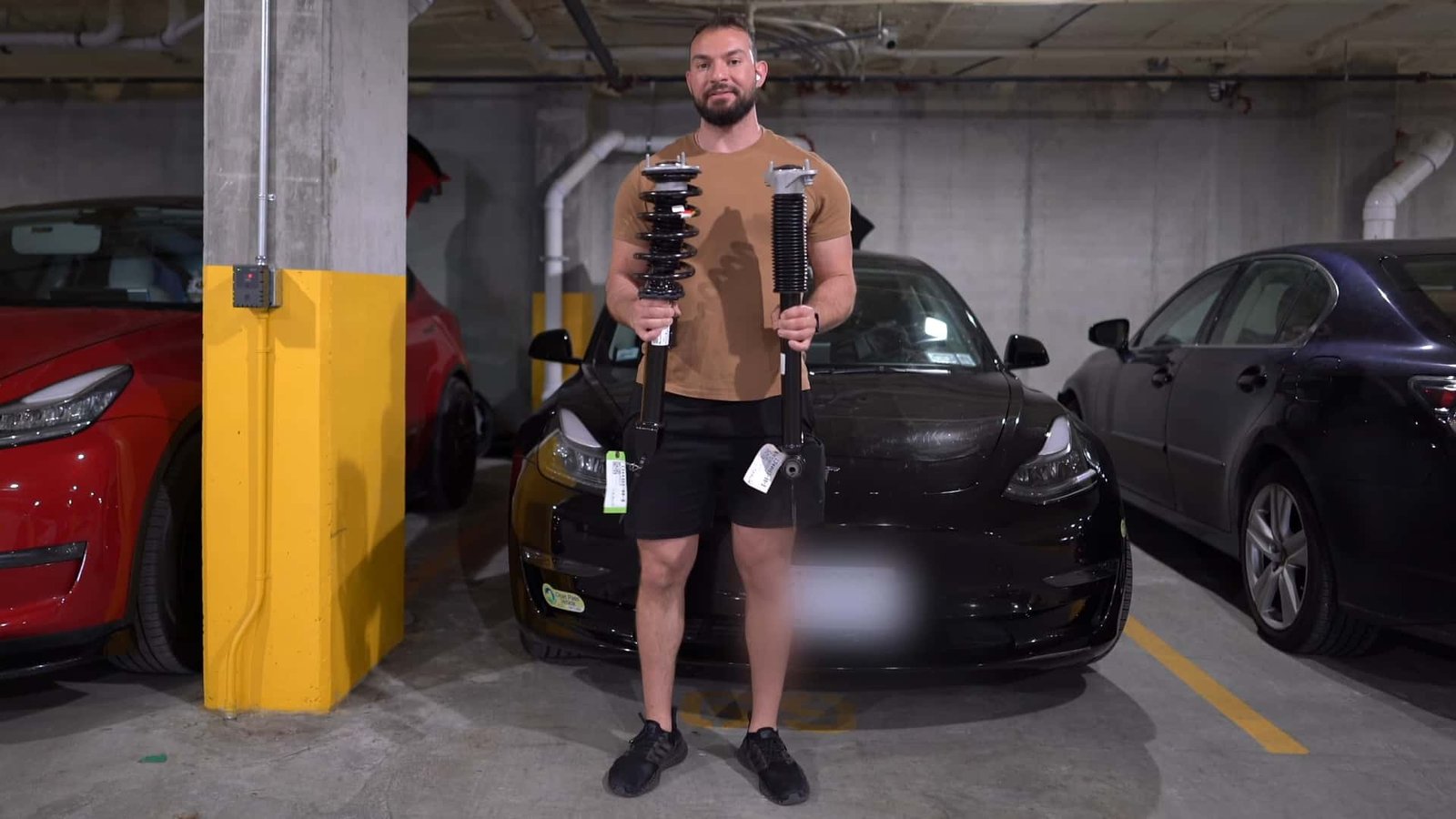
The original Tesla Model 3 is great, but has one big flaw. Before the Highland refresh, its suspension was too stiff for a daily driver. Now though, owners can retrofit the new, softer suspension, onto the old Model 3. A used Tesla Model 3 is one of the best–if not the best–deals out there. It’s like the Apple iPhone of cars. It does a lot of things very well at a reasonable price, but there are some things that could be improved. Ever since deliveries started in 2017, the biggest complaint about the Model 3 has been its suspension. It’s too firm, making long rides on bumpy roads a hassle and spoiling the otherwise peaceful driving experience. The pre-facelift Tesla Model 3 is one of the best used cars on the market. When the refreshed Model 3 came along in 2023, the issue was fixed, thanks to revised dampers and springs, as well as different bushings. And, as some owners have already found out, the suspension of the new Model 3 fits perfectly on the older versions, making for a quick, easy, and relatively cheap way to massively improve the ride comfort. For roughly $600, one could buy a set of front shocks and springs, plus a set of rear shocks, directly from Tesla. And with a little elbow grease, the same suspension that’s found in the new Model 3 can be fitted at home on any old Model 3 in a few hours. By comparison, Unplugged Performance’s Luxury Suspension Kit retails between $1,075 and $1,395 without installation. Meanwhile, T Sportline’s Comfort Suspension costs $890, but for this price, you’re only getting the shock absorbers. So, staying away from the aftermarket makes a lot of sense if you’re budget-conscious. That said, even if you’re doing the job at home, an alignment will be needed after everything is said and done, so keep that in mind when doing the math. In the RSymons video below, for instance, a pre-facelift Model 3 was fitted with upgraded springs and dampers on the front, and upgraded dampers on the rear. After driving an old Model 3 with standard suspension, a new Model 3 and an old Model 3 with new suspension back to back, the results are clear. The ride is definitely better, and it’s nearly identical to the refreshed model’s performance. However, bear in mind that the so-called Highland Model 3 also has better sound insulation and different bushings compared to the older versions, so it still has the edge. Another video, posted by The Fit IT Guy, shows just how easy it is to change the parts. There’s no need for adapters or extra bits, just the struts and springs bought directly from Tesla. This mod is a great way to make a used Tesla Model 3 about 90% as comfortable as the newer version, but for a fraction of the cost. Used Model 3s go for around $20,000 to $25,000, while a new one starts at roughly $43,000 without the federal tax credit. So if you want a better ride but don't have that kinda cash, you now have another option.
इंडियन नेवी और इंडियन आर्मी इनकी बैटरी लेती है!

Industry News सिर्फ 50 बैटरी से शुरू हुआ ब्रांड Energion Powermax Batteries Pvt. Ltd. आज के समय मे भारतीय बाजार मे बैटरी के नामी उत्पादक और व्यापारी है| Power Max के बैटरी उत्पादन का सफर 2015 मे K.E Selucos द्वयर शुरू किया गया। वह 22 वर्षों से बैटरी इंडस्ट्री मे कार्य करते आए थे जिसके द्वयरा मिले अनुभव से उन्हे बैटरी उत्पादन का प्लांट लगाया। Energion Powermax Batteries Pvt. Ltd. यह Automotive, Solar, Tubular, OEM और E- Rickshaw की बैटरी बनाते है। इनकी बैटरी इसलिए कारगर और टिकाऊ है क्योंकि प्रत्येक बैटरी तकनीकी जांच करके ही बनाई जाती है, रॉ मटेरियल से लेके असेंबली तक हर एक प्रक्रिया पूर्ण रूप से जांच करके की जाती है। इनकी 2 बैटरी असेंबली लाइन है जिसमे हर बैटरी का HRD तकनीक से परीक्षण किया जाता है। सिर्फ 8 वर्षों मे इसका नाम होना सिर्फ इसका एक प्रोडक्ट के वजय से नहीं पर उस प्रोडक्ट की गुणवत्ता बनाए रखना है। गुणवत्ता को बनए रखने के लिए K.E Selucos ने बड़ी कंपनी जैसे Exide और Amaron के अनुभवी लोगों की केमिकल और टेक्निकल टीम रखी है जो बैटरी की गुणवत्ता मे समझोत नहीं होने देते। इससी के साथ DSC, PCD, Curing चार्जर, यूनीक डबल फिलिंग मशीन और ऐसिड फिलिंग जैसी मशीनों का प्रयोग किया जाता है। Power Max के ग्राहक लिस्ट मे इंडियन नेवी और इंडियन आर्मी भी शामिल है। इंडियन नेवी और इंडियन आर्मी मे काफी समय से इन्ही की बैटरी का उपयोग होता आ रहा है। इससे के साथ साथ भारत के 12 से 13 राज्यों मे भी यह अपनी बट्टरिओ की सप्लाइ करता है। इसका लक्ष्य ऐसे उत्पादों का निर्माण करना है जो ग्राहक के जेबों पे कम असर करे, लंबे समय तक चले और भिन्न प्रकार के इन्डस्ट्री के काम आने लायक हो। इस लक्ष्य पूर्ण करने के लिए यह प्ररतेक नई टेक्नॉलजी को अपनाते और लागू करते है और यही लक्ष्य के साथ उत्पादन की क्षमता जल्द ही भविष्य मे दुगनी करने योजना बना रहे है जो फिलहाल 10 हजार बैटरी प्रति मास के उत्पादन चल रहा है।
BYD Fang Cheng Bao teases new SUV
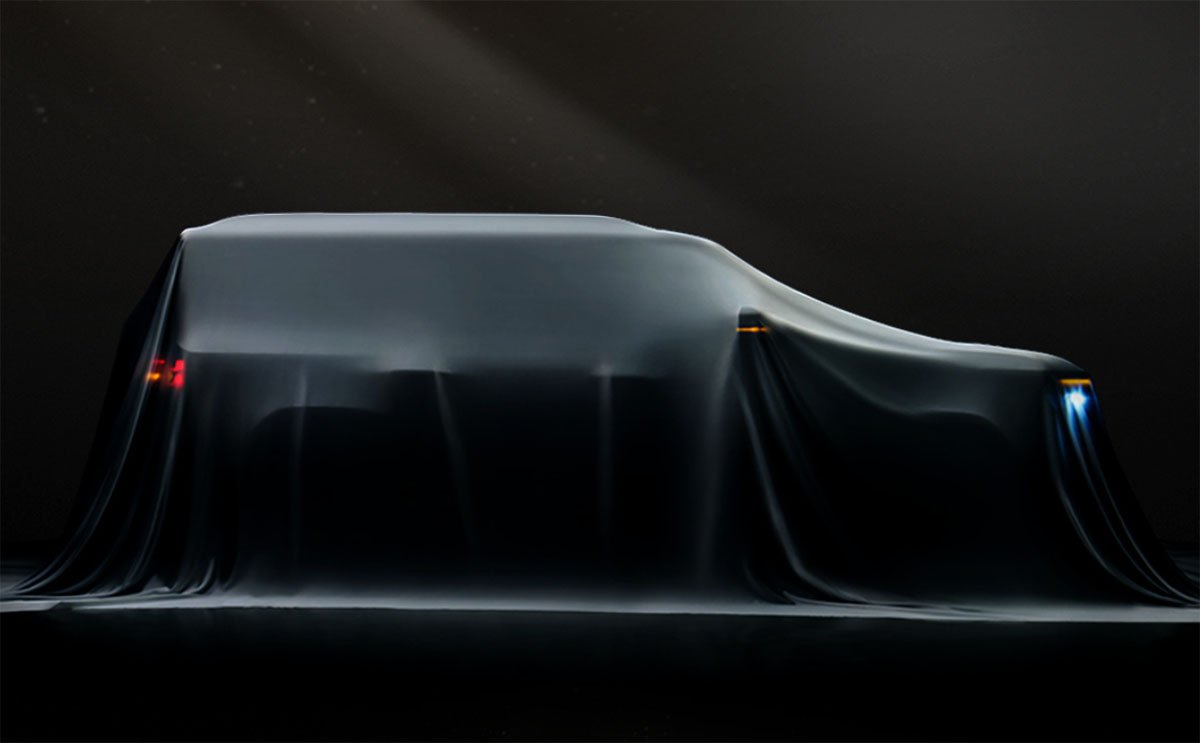
Fang Cheng Bao has teased a new model, potentially the Tai 7, the second model in the Tai series. Fang Cheng Bao sold a record 12,592 vehicles in May. (Image credit: Fang Cheng Bao) Fang Cheng Bao has teased a new model as the BYD (HKG: 1211, OTCMKTS: BYDDY) sub-brand recently reached the milestone of delivering 100,000 vehicles. Fang Cheng Bao hinted at a new SUV (sport utility vehicle) in a poster posted on Weibo today, suggesting that its name will include the number 7. In the comments section of the Weibo post, many speculated that the SUV could be the Tai 7, the second model in the Tai series following the Tai 3. BYD officially launched the Fang Cheng Bao brand and its DMO technology platform on August 16, 2023, and debuted the brand's first model, the Bao 5 off-road SUV. The Bao 5 was officially launched on November 9, 2023, and began deliveries by the end of the same month. On November 12, 2024, Fang Cheng Bao launched the Bao 8 off-road SUV, its second model following the Bao 5, and the first model under BYD's umbrella to feature Huawei's driver assistance system. On April 16, Fang Cheng Bao launched the Tai 3, the first model in the Tai series, expanding its product range from off-road SUVs to include family SUVs as well. On May 20, Fang Cheng Bao announced that it had reached the milestone of delivering its 100,000th vehicle. Fang Cheng Bao sold a record 12,592 vehicles in May, bringing its cumulative sales to 103,943 units, according to data compiled by CnEVPost. From January to May, Fang Cheng Bao sold 41,843 vehicles, representing a year-on-year increase of 168.17 percent. Fang Cheng Bao will debut its sedan lineup by the end of 2025, with more models in the Tai lineup coming later this year.
Goldman Sachs reduces Tesla price target to $285
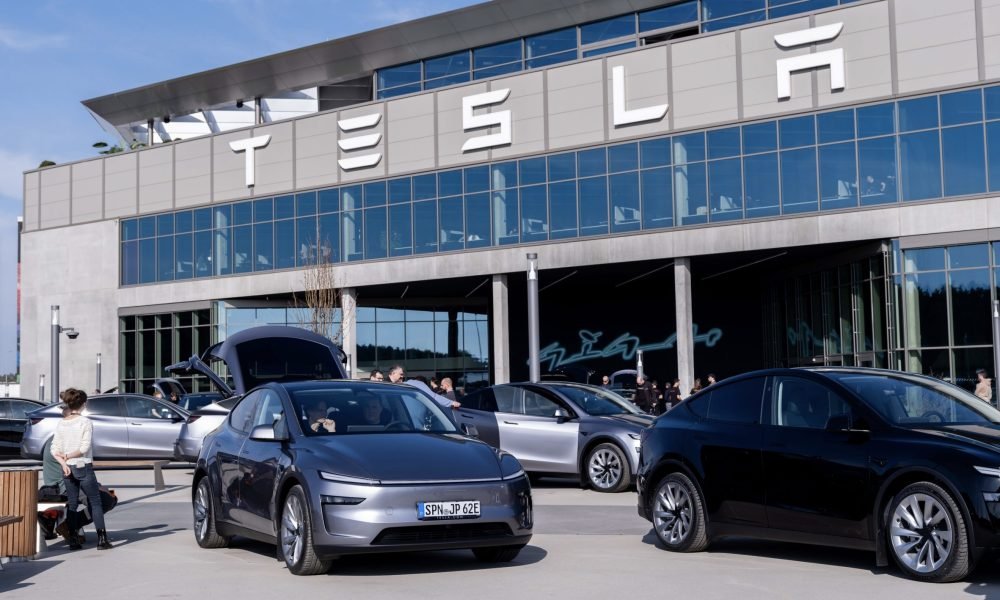
Tesla shares are up nearly 20 percent in the past month, but that is not stopping the only trillion-dollar automaker from attracting all types of new potential sectors to disrupt, at least from an investor and analyst perspective. Morgan Stanley’s Adam Jonas is not one to shy away from some ideas that many investors would consider far-fetched. In a recent note, Jonas brought up some interesting discussion regarding Tesla’s potential in the eVTOL industry, and how he believes CEO Elon Musk’s answer was not convincing enough to put it off altogether. Tesla’s Elon Musk says electric planes would be ‘fun problem to work on’ Musk said that Tesla was “stretched pretty thin” when a question regarding a plane being developed came up. Jonas said: “In our opinion, that’s a decidedly different type of answer. Is Tesla an aviation/defense-tech company in auto/consumer clothing?” Musk has been pretty clear about things that Tesla won’t do. Although he has not unequivocally denied aviation equipment, including planes and drones, as he has with things like motorcycles, it does not seem like something that is on Musk’s mind. Instead, he has focused the vast majority of his time at Tesla on vehicle autonomy, AI, and robotics, things he sees as the future. Tesla and China, Robotics, Pricing Morgan Stanley’s note also discussed Tesla’s prowess in its various areas of expertise, how it will keep up with Chinese competitors, as there are several, and the race for affordable EVs in the country. Tesla is the U.S.’s key to keeping up with China “In our view, Tesla’s expertise in manufacturing, data collection, robotics/ physical AI, energy, supply chain, and infrastructure are more critical than ever before to put the US on an even footing with China in embodied AI,” Jonas writes. It is no secret that Tesla is the leader in revolutionizing things. To generalize, the company has truly dipped its finger in all the various pies, but it is also looked at as a leader in tech, which is where Chinese companies truly have an advantage. Robotics and the ‘Humanoid Olympics’ Jonas mentioned China’s recent showcasing of robots running half marathons and competing in combat sports as “gamification of robotic innovation.” Tesla could be at the forefront of the effort to launch something similar, as the analyst predicts the U.S. version could be called “Humanoid Ninja Warrior.” Pricing Tesla is set to launch affordable models before the end of Q2, leaving this month for the company to release some details. While the pricing of those models remains in limbo with the $7,500 tax credit likely disappearing at the end of 2024, companies in China have been able to tap incredibly aggressive pricing models. Jonas, for example, brings up the BYD Seagull, which is priced at just about $8,000. Tesla can tap into an incredibly broader market if it can manage to bring pricing to even below $30,000, which is where many hope the affordable models end up. During the Q3 2024 Earnings Call, Musk said that $30,000 is where it would be with the tax credit: “Yeah. It will be like with incentive. So, 30K, which is kind of a key threshold.”
India's Coal & Gas Decline Signals Accelerating Renewable Energy Transition
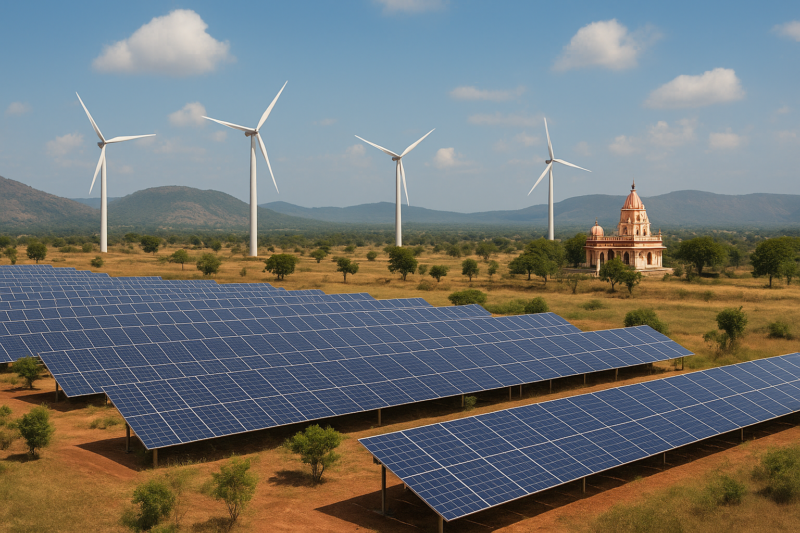
India’s energy landscape is at a pivotal crossroads, exemplified by the notable recent decline in coal- and gas-fired power generation, which in May 2025 marked the steepest year-over-year drop since COVID-19. The rapid contraction in coal usage, attributed to an amalgamation of economic slowdowns, surging renewable deployment, and increasingly cost-competitive solar and wind projects, suggests India may finally be reaching a tipping point towards substantial decarbonization. While coal remains deeply embedded within India’s power sector, these developments underscore a trajectory toward a cleaner, more sustainable, and economically resilient energy system. Sankey diagram of India’s energy flows in 2023 by author India’s energy system in 2023, the last year for which full data is currently available, was still heavily fossil-dependent, with coal, crude oil, and natural gas collectively dominating national primary energy supply. Coal, in particular, underpinned nearly half of the total energy input, fueling India’s industrial powerhouse sectors such as steel, cement, and power generation. The inefficiencies associated with coal-fired electricity generation were profound, with roughly two-thirds of coal’s primary energy content dissipating into the atmosphere as waste heat. This loss was not just an environmental concern, but a significant economic and resource inefficiency, driving a compelling argument for transitioning towards more efficient and sustainable energy sources. The rest of India’s energy mix in 2023 presented a complex blend of traditional biomass, oil-based fuels, and natural gas, alongside growing but still modest contributions from renewables like wind, solar, and hydroelectric power. Despite aggressive policy ambitions for renewable expansion, renewables comprised less than a quarter of electricity generation, highlighting the significant scaling challenge that still lay ahead. Biomass, historically crucial for residential cooking, had gradually declined as LPG access improved, but still accounted for a substantial portion of household energy usage. Transportation, predominantly dependent on imported oil, represented a significant source of both economic vulnerability and environmental impact, given India’s reliance on fossil-fuel-based road transport and rapidly increasing vehicle fleets. Sankey diagram of India’s projected energy flows in 2050 by author Looking ahead towards a potential energy landscape for 2050, the vision for a fully electrified Indian economy powered predominantly by renewable sources presents a transformative opportunity. Central to this future is a dramatic shift toward wind and solar power, supported strategically by expanded hydroelectricity and maintained nuclear generation at current modest levels. Such an electrified economy would capitalize on substantial efficiency gains inherent in electrification itself, particularly in the transport, residential, and commercial sectors. Electric vehicles, known for their significantly higher energy efficiency compared to internal combustion engines, could dramatically reduce overall transport energy demand. Similarly, widespread adoption of heat pumps with a coefficient of performance around three times that of traditional heating methods would markedly diminish electricity demands for environmental heating and cooling. Integral to this transition is the explicit utilization of ambient environmental heat, leveraged by heat pumps in residential and commercial sectors, significantly reducing net electricity requirements and thus overall energy system demands. By explicitly tracking and utilizing these ambient energy flows, India could achieve dramatic reductions in primary energy needs, transforming wasteful energy practices into highly efficient end-use applications. Geothermal energy, particularly when paired with heat pumps, holds significant potential for India’s heating and cooling needs. While much attention is given to high-profile renewable technologies, geothermal systems offer a reliable and efficient solution for thermal energy demands, as I noted in my recent series assessing the technology. By using the stable temperatures beneath the earth’s surface, ground-source heat pumps can provide consistent heating and cooling, reducing reliance on fossil fuels and enhancing energy security. Incorporating geothermal solutions into India’s energy strategy could play a crucial role in achieving decarbonization goals and meeting the country’s growing energy demands sustainably. Biomass would see a fundamentally altered role in this electrified future, strategically reoriented from widespread inefficient domestic use towards highly focused, sustainable biofuel production for sectors that remain challenging to electrify fully, long-haul aviation and shipping. This targeted use not only preserves valuable agricultural and forestry resources but also maximizes biomass’s value as a niche fuel in critical applications where electrification faces technological and logistical limitations. The infrastructure underpinning this new energy model would require significant investment in electricity storage and grid modernization to accommodate high penetrations of variable renewable energy. While energy storage systems inevitably introduce some inefficiencies — storage round-trip losses and modest grid losses — such drawbacks remain substantially smaller than the extensive losses characteristic of the current fossil-based system. The overall efficiency and flexibility provided by a modernized grid would facilitate a smooth integration of large-scale renewable energy sources, creating a resilient and responsive energy system capable of balancing supply and demand dynamically. My own experience engaging with India’s energy transition, including my seminar series with the India Smart Grid Forum (ISGF), has underscored the complexities and immense opportunities inherent in India’s shift towards renewables. Since its foundation, the ISGF has played a critical role in convening stakeholders, policymakers, and technology leaders, fostering dialogue, disseminating best practices, and addressing technical and regulatory barriers to renewable integration and grid modernization. As I noted recently in a discussion, the ISGF was integral to right-sizing batteries to bus routes and electrification of two-and-three wheelers due to its 2010s studies. Through these collaborative efforts, India’s transition toward a sustainable energy economy is gaining critical momentum, catalyzing the kind of systemic changes necessary for deep decarbonization. India’s climate ambitions have evolved substantially in recent years, reflecting a growing commitment to balancing economic development with environmental sustainability. At COP26, Prime Minister Narendra Modi announced a target for India to achieve net-zero emissions by 2070, accompanied by interim goals such as reducing emissions intensity by 45% from 2005 levels and achieving 50% of electric power from non-fossil-based sources by 2030. These targets have been bolstered by significant investments in renewable energy, with India adding a record 29.52 gigawatts of clean energy in the fiscal year 2024–25, bringing the total installed renewable energy capacity to 220.10 gigawatts as of March 31, 2025. Despite these advancements, challenges remain, including the need for
Genesis begins construction on 200MWh BESS in New Zealand
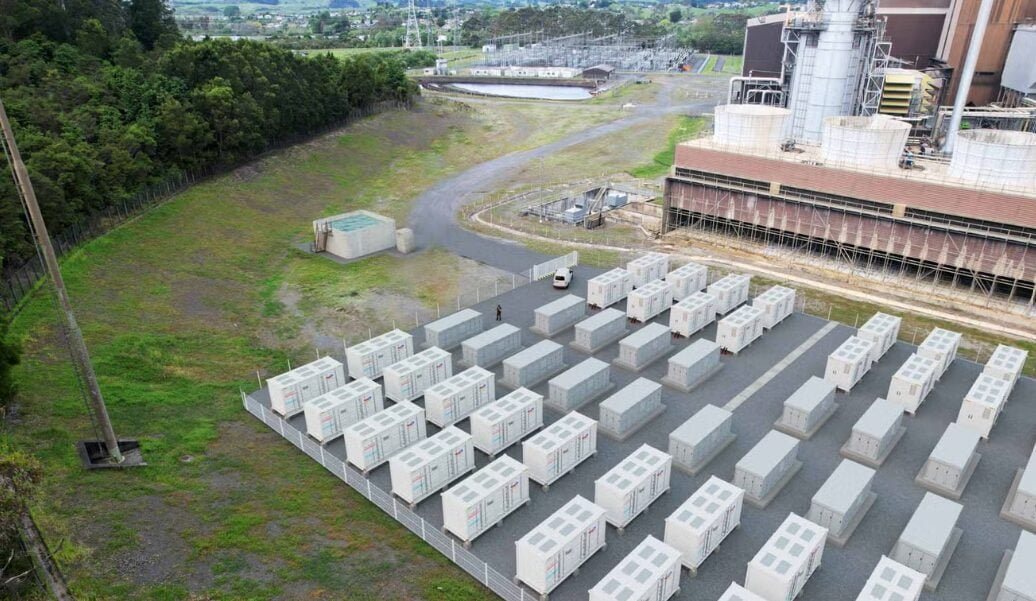
Genesis begins construction on 200MWh BESS in New Zealand - Energy-Storage.News Skip to content