Driving EV Development with a Twin-Battery Approach
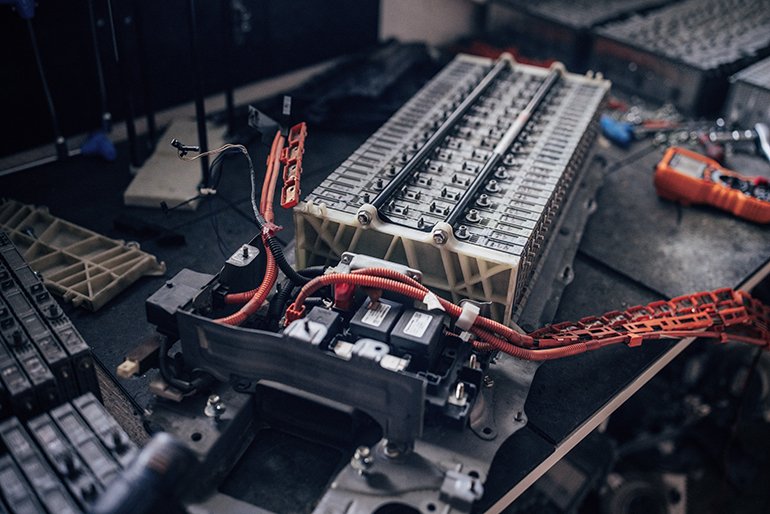
Using multiphysics simulation, IAV has designed a novel dual-chemistry EV battery system that opens up new possibilities for car manufacturers and battery designers. By Joseph Carew Avoiding the rare raw materials required for the production of traditional batteries without sacrificing energy density is a major goal for those looking to electrify the world. Lithium-ion batteries power most of today’s electric vehicles (EVs)1 but are associated with high costs as well as sustainability and environmental concerns. Engineers and developers in the battery industry are investigating alternative chemistries and designs to find new approaches that address these concerns and reduce costs while fulfilling the demands of most lithium-ion applications. IAV is one of the world’s largest engineering companies. Within an extensive portfolio geared toward the future of mobility, battery development plays a critical role. A team of IAV engineers including Jakob Hilgert, a technical consultant at the company, felt that, with the right approach, IAV could achieve better battery designs. The team leaned on its understanding of what makes existing single-chemistry designs successful — as well as what holds each back — to develop a novel approach to solving battery energy density, sustainability, and thermal management issues: a twin-battery design. Instead of turning solely to lithium-ion cells, IAV engineers thought a pair of alternative battery chemistries could be combined to form a less expensive and more ecofriendly system that could handle EV applications. With this approach in mind, IAV turned to multiphysics simulation to successfully design and validate its twin-battery solution. Avoiding Lithium-Ion Battery Pain Points While lithium-ion batteries (Figure 1) are often used for their high energy density2, their creation can have environmental drawbacks. Open-pit mining for lithium removes vegetation, creates toxic soil, and releases dust that elevates the risk of illness in animals and people3. Producing these batteries is also an expensive prospect1 and reliant on a relatively rare material. IAV engineers looked to avoid these concerns when choosing the technologies to be included in their twin-battery approach. Figure 1. Lithium-ion batteries in a repair shop. “We need to be prepared for batteries that have a larger focus on recycling and resources,” Hilgert said. “We cannot always take the highest-energy-density cell that is theoretically possible and use that as our solution.” Instead, the team at IAV chose to pair a sodium-ion battery (SIB) and a lithium iron phosphate (LFP) solid-state battery (SSB) for its design because of the chemistries’ unique ability to complement one another. SIBs are typically cheaper, more sustainable to source, and easier to recycle than conventional lithium-ion batteries4; however, they tend to have comparatively lower energy density and a shorter cycle life. Meanwhile, traditional LFPs are known for their stability and long cycle life but also lack in energy density when compared to conventional lithium-ion batteries. Finally, SSBs are known for having higher energy density than traditional lithium-ion battery chemistries. By combining an SIB with an LFP-SSB, the resulting design should theoretically have an improved environmental footprint (Figure 2), cost less money to create, and feature a relatively strong energy density for demanding applications such as powering EVs. Figure 2. A comparison of the two battery technologies used in the twin-battery approach. Image courtesy of IAV and modified by COMSOL. “The development of batteries for automotive use is progressing rapidly. It goes hand in hand with a rising demand for scarce raw materials,” Hilgert said. “Diversification of cell chemistries is a promising approach to respond to market fluctuations and at the same time minimize system costs.” Creating Thermal Compatibility IAV’s twin-battery design was also developed, in part, to test the thermal compatibility between an SIB and LFP-SSB. The idea was that channeling the waste heat from the SIB into the LFP-SSB would rapidly activate the latter’s solid-state cells and push them into the higher temperature ranges where they perform best5 — while simultaneously keeping the SIB from exceeding its maximum operating temperature and increasing the system’s overall energy efficiency. “If we have some cells that can operate at high temperatures and some cells that can operate at low temperatures, it is beneficial to take the exhaust heat of the higher-running cells to heat up the lower-running cells, and vice versa,” Hilgert said. “That’s why we came up with a cooling system that shifts the energy from cells that want to be in a cooler state to cells that want to be in a hotter state.” Cells with liquid electrolyte have limited thermal stability and require cooling (true for both sodium and lithium cells), and temperatures above ~60°C need to be avoided. Solid-state cells can operate at higher temperatures because of their solid electrolyte, and these need an elevated temperature to reach usable ion conductivity. Therefore, the SIB cells in this concept need cooling while the SSB cells need heating, and both cells benefit from the mutual heat exchange. IAV engineers knew that this interaction in particular would be a significant optimization challenge and felt that modeling and simulation would be essential to easing the complexity. For this, the team turned to the COMSOL Multiphysics® software. Designing the Battery System IAV first began using COMSOL Multiphysics® more than a decade ago to improve its design workflow. “We were using a large quantity of different specialized tools for different specialized topics,” Hilgert said. “When we started working with batteries, it was time to say, ‘We need one tool to deal with all of these topics.'” The platform’s comprehensive workspace gives IAV the opportunity to avoid building unnecessary prototypes for clients and easily optimize its designs. With the twin-battery model, IAV engineers can tweak different parameters (whether, for example, they impact the cooling of particular circuits or the maximum power that cells at a certain temperature produce) and alter the design to ensure that any real-world creation is as efficient as possible. “If you have this knowledge and you do not have to guess at all of these parameters, then the technology readiness level of the prototype will be a lot higher,” Hilgert said. Because of the multiphysics nature of battery modeling, the COMSOL® software’s capabilities
I went behind the scenes at EUNORAU's headquarters to see where e-bikes come from
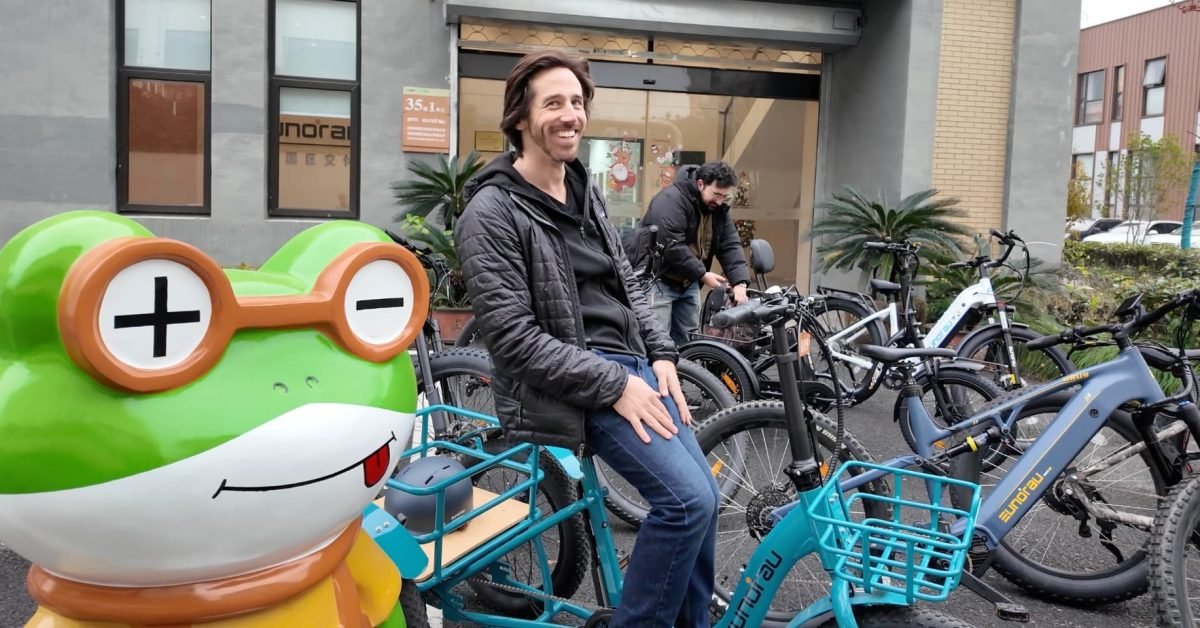
While I enjoy covering news and reviews related to new e-bikes and other micromobility vehicles, my favorite part of working in this industry is actually getting to go deeper behind the scenes, often pulling back the curtain to see what lies behind some of the biggest companies in the market. Most only show us their polished front-facing image, but there’s so much more to the story than that. From the people who build and operate these brands to the way new ideas work their way through the design pipeline and into bike boxes headed to our doorsteps, there are countless untold stories just waiting to be revealed. And that’s exactly what I set out to do when I visited the headquarters of EUNORAU, one of the most prolific e-bike makers in the world. Companies like EUNORAU don’t necessarily have the same flashy marketing or brand awareness as big hitters like Lectric eBikes or Rad Power Bikes, and that’s one of the reasons that their innovations and unique stories often fly under the radar. But when you look a bit deeper, there’s a lot to see! You may not realize it, but EUNORAU actually makes dozens of models of e-bikes and related micromobility products that are sold all over Europe, North America, and Oceania. They’re one of the biggest recognizable e-bike companies around the world, certainly when measured by the breadth of their catalog. And with operations since 2009, they’ve ridden around the block time and time again, seeing firsthand just about every fad, trend, and update to the e-bike world in the last decade and a half. I’ve personally reviewed at least half a dozen of their models, from chunky fat tire e-bikes to smaller folders and even electric tricycles. Now I wanted to see where they came from. Advertisement - scroll for more content EUNORAU CMO Vic Erdinc (left) helps translate customer desires into real features I’ve visited e-bike factories before, and to be honest, many of them functionally look the same. So instead of going straight to EUNORAU’s factory, I headed a few hours over and went to their headquarters to meet the team and check out their showroom as well as design/operations center. There I met Kevin Fang and Vic Erdinc, EUNORAU’s CEO and CMO. The two are like a pair of mad scientists, but for e-bikes, and their skills definitely complement each other. Few in the e-bike industry are better connected than Kevin, who knows just about every bike factory, component maker, supplier, subsupplier, and more. If someone in the e-bike has ever considered making an e-bike part, Kevin has probably had a meal with them. Combining that network with his in-depth technical knowledge of bicycles and electric drive systems makes for a potent combination that has helped EUNORAU innovate from the early days of the industry. Vic, as the company’s CMO, should ostensibly be mostly concerned with marketing. But in just the day I was there it was obvious how many hats he wears on a regular basis. In addition to leading the company’s marketing, Vic is also the main bridge between very divergent groups within the company, facilitating the interdepartmental communication that helps quickly respond to the market. Vic is constantly the go-between, relaying customer questions and concerns to the product development team, helping to improve designs in real-time and pushing out rolling updates. He interfaces between the technical teams and marketing teams, and has a surprisingly strong influence on the types of bikes that EUNORAU sets out to develop. With so much focus on customer needs from a marketing perspective, it turns out he’s the perfect guy to inform the designers what needs to come next. The first part of my tour took me through EUNORAU’s expansive showroom, which is absolutely brimming with e-bike models. Dozens and dozens of e-bikes from every category imaginable are lined up along the walls, with even more on elevated tables and mounted on the walls. And it sounds like Kevin or Vic, or both, had a personal hand in the design of each. Kevin’s deeper understanding of the componentry and drive systems has resulted in many of these models sporting powerful motors and extremely long all-electric battery ranges. Vic’s coordination between customers, marketing, and designers has helped further massage the various models into their final forms laid out before us. I was constantly surprised by just how deeply involved in the details he is with these different models. As we walked past the newest version of EUNORAU’s popular adult e-trike, Vic pointed to the fenders and remarked to me “those are because of you.” Apparently after my otherwise positive review of the trike took a dig or two at the old fenders, he went to the design team and made sure they were updated to improve them. Vic Erdinc (left) and Kevin Fang (center) share with me new features on a EUNORAU electric bike But Vic doesn’t only have to think about the bike’s functionality. He also has to consider every other step along the way of producing and delivering the e-bikes. “The only problem with this one is the shipping,” he says as we pour over a slick-looking recumbent electric trike that I want to drop everything and ride immediately.” This one costs a lot to ship.” I surmised that the bike was also probably pretty expensive too, as recumbent e-trikes seem to be one of the costliest categories. “Not really,” he responds. “It’s not that much more expensive. The other companies just don’t have much competition yet, so they can charge a lot.” That’s become a hallmark of EUNORAU. The company has an e-bike to match just about any model out there, but at quite competitive prices. They may not have the cachet of the fancy European companies, but they sure do have the connections and team to build competing bikes at much better prices. Looking around the showroom makes me feel like a kid in a candy store. Or rather, an
Greenskies virtual net metering solar project serves multiple Connecticut colleges
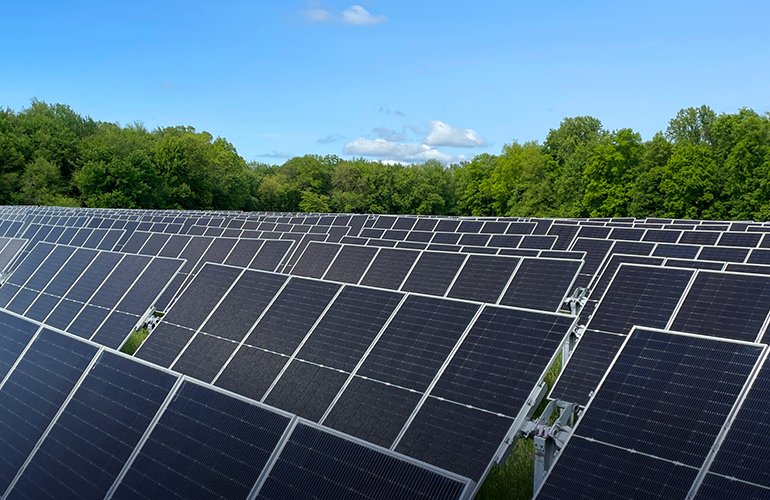
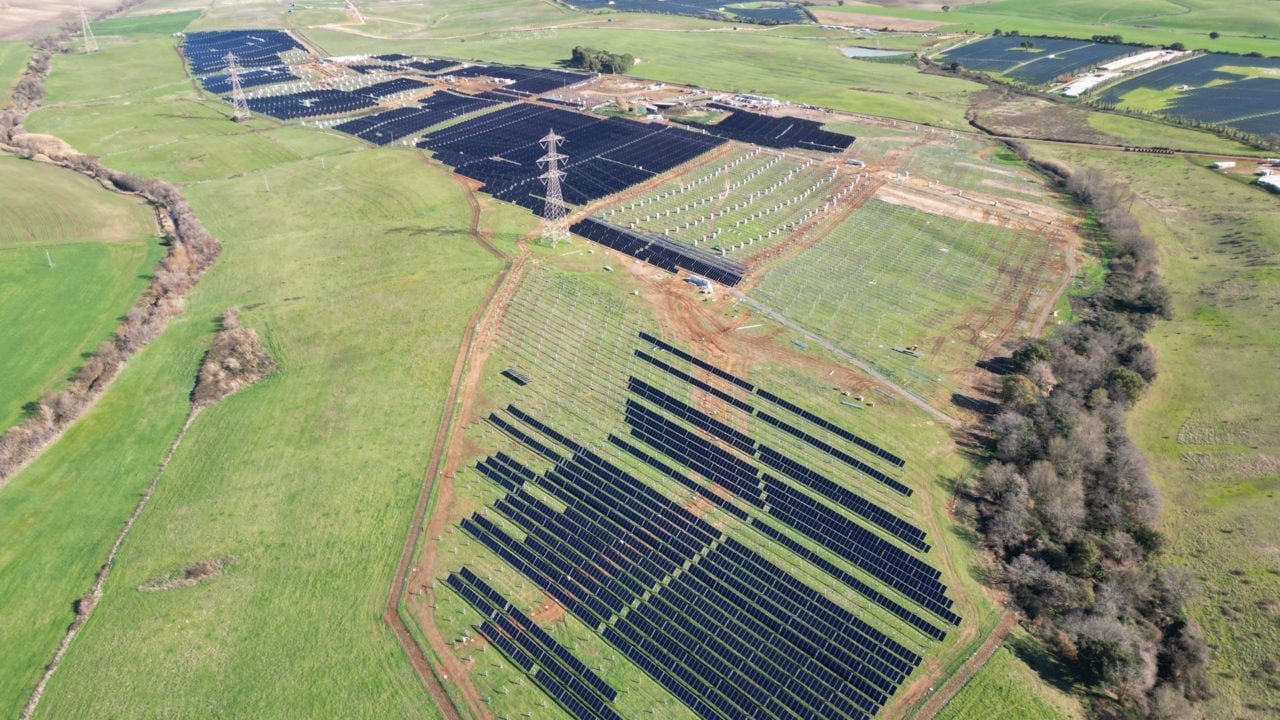
Greenskies Clean Focus completed a 2.32-MW ground-mount solar project in Orange, Connecticut. The energy produced will benefit Connecticut State Colleges and Universities (CSCU), saving the schools an estimated $6 million in energy savings over 20 years of operation. Credit: Greenskies Clean Focus The Orange solar array leverages Connecticut’s virtual net metering (VNM) program, which lets the energy generated at a remote site offset its energy consumption at other locations. The VNM contract enables this solar array in Orange to serve two CSCU campuses in New Haven, as well — Gateway Community College and Southern Connecticut State University. “CSCU is excited to continue its partnership with Greenskies and identify ways to further offset electric utility costs at two of its campuses,” said CSCU Chancellor Terrence Cheng. “CSCU is committed to finding ways of utilizing clean, sustainable energy and reducing operating costs across our system through public-private partnerships like this.” In addition to the financial benefits, this system will generate over 3 million kWh of clean, renewable energy each year. “This project represents another step forward in Connecticut’s transition to a clean energy future,” said Ryan Linares, VP of real estate at Greenskies. “By leveraging solutions like virtual net metering, we are helping institutions like CSCU reduce energy costs and carbon emissions while supporting the state’s renewable energy objectives. We deeply appreciate CSCU’s continued partnership, which has now resulted in over 14.5 MW of successful distributed solar projects that demonstrate the power of collaboration in advancing sustainable energy solutions.” News item from Greenskies Clean Focus
Charged EVs | BASF’s new Ultramid Advanced N for high-voltage connectors in EVs boasts reduced corrosion
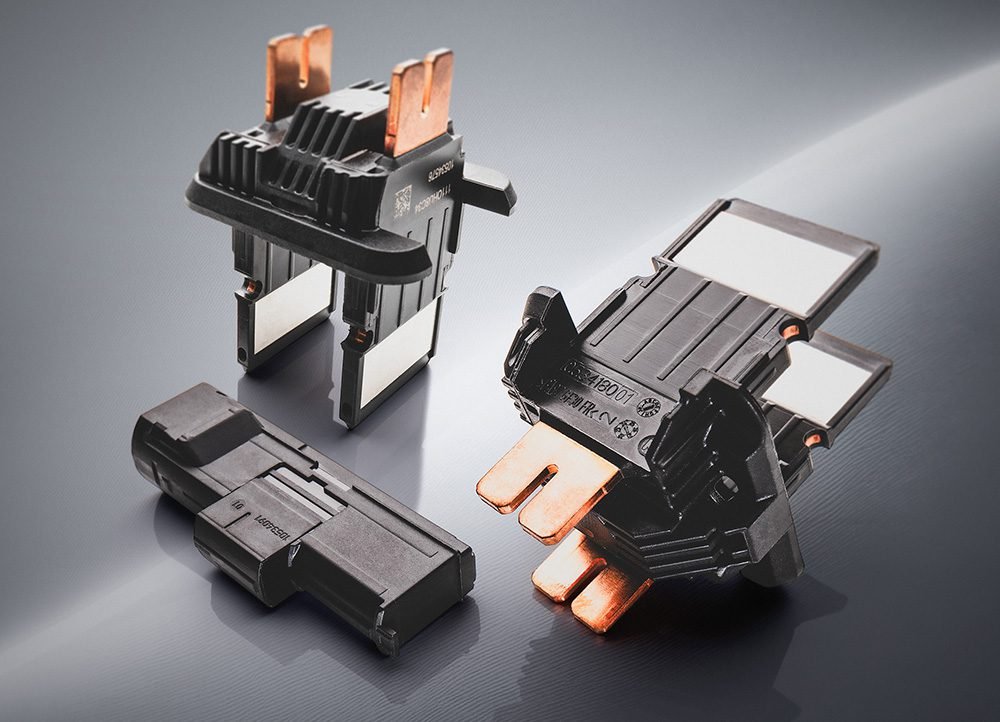
Chemical industry giant BASF has added a new product to its portfolio of PPAs (polyphthalamides, a type of thermoplastics). The new Ultramid Advanced N3U42G6, a polyamide 9T with non-halogenated flame retardant, is designed to minimize electro-corrosion of metal contacts in electric and electronics parts for e-mobility. BASF says its new PPA increases the safety and durability of high-voltage connectors in EV components including inverters, DC-DC converters and battery packs. “Due to its high strength and stiffness over a broad temperature range, its outstanding chemical resistance and dimensional stability, the Ultramid Advanced N grade enhances the robustness and reliability of thin-walled high-voltage connectors, meeting growing industry needs for halide-free components used in warm and humid conditions,” says BASF. Ultramid Advanced N3U42G6 is available uncolored with UL-certified masterbatches, or pre-colored. It boasts high color stability and excellent color retention after heat ageing. German automotive supplier KOSTAL Kontakt Systeme uses the new Ultramid Advanced N in several components in its high-voltage connector KS22 Class 4 for high-current modules. The company’s HV-connector, the smallest in its performance class, benefits from the BASF PPA in several ways: the new PPA enables miniaturization and saves installation space, as it shows good flowability at thin wall thickness; it provides the connector with very high electrical insulation—superior to that of aliphatic polyamides, especially at elevated temperatures. Finally, it has a high elongation at break so that there is no stress whitening when the different components are mounted. Ultramid Advanced N3U42G6 is halide-free (according to EN 50642), so it prevents contact corrosion and extends the lifetime of electrical and electronic components. The PPA achieves fire protection class UL94 with V-0 at 0.25 mm. It also enables long-lasting color coding—in in-house tests, color stability was confirmed after 1,000 hours at temperatures of up to 150° C. “Our new non-halogenated grade combines the excellent properties of our superhero Ultramid Advanced N with better colorability, long color stability and outstanding anti-corrosion effect,” says BASF’s Volker Zeiher. “With this optimized PA9T, our customers can develop innovative, best-in-class components supported by BASF’s proven flame-retardant expertise and material know-how for electronics manufacturing.” Source: BASF
Chevrolet Is Breathing Down Tesla’s Neck In U.S. EV Sales
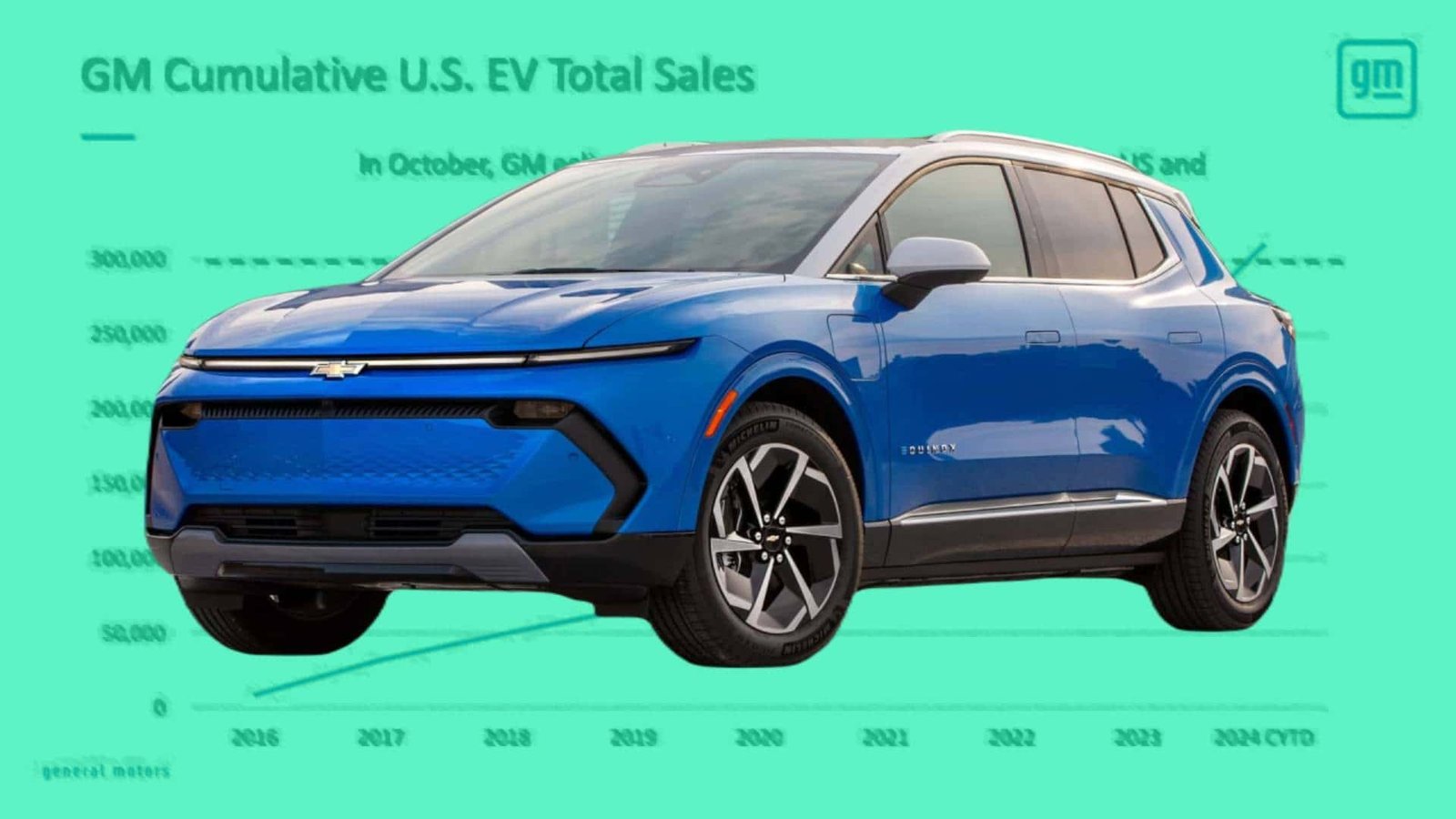
Chevrolet continues its impressive sales streak. After the first five months, Chevy surpassed Ford in EV sales to become the #2 EV brand in the U.S. Now, GM has its sights set on Tesla. Chevrolet is now the second-best-selling electric car maker in the United States, surpassing Ford and getting a little closer to the number one spot that has long been occupied by Tesla. In the first five months of this year, Chevrolet sold over 37,000 EVs in the U.S., leaving Ford, with its estimated 34,000 EVs, in the dust. Meanwhile, General Motors, Chevy’s parent company, sold a combined 62,000 EVs thanks to its strong portfolio of battery-powered cars that includes no fewer than 13 models. The Chevrolet Equinox EV was GM's best-selling EV in the first five months of 2025. Photo by: Mack Hogan/InsideEVs The American automaker’s EV bets seem to be paying off during a time of immense uncertainty in the industry due to tariffs and the increasing difficulty of sourcing affordable raw materials. In the first quarter, Chevrolet was the fastest-growing domestic EV brand, with sales up 14% thanks mostly to the Equinox EV and Blazer EV. Meanwhile, GM had its second-best month in history for EV sales in May, which comes hot on the heels of an impressive 94% year-over-year growth in the first quarter. But that’s not all, with GM saying that its EV market share more than doubled year-over-year in April and May, reaching 15.5%, which is just a smidge away from GM’s overall market share of 17%. “Customers are responding in record numbers to our world-class portfolio of electric and gas-powered vehicles,” said Rory Harvey, executive VP and president of global markets. “In the first two months of the second quarter, we more than doubled our EV sales compared to the same period last year.” All this being said, however, it’s still very much an uphill battle for GM if it wants to dethrone Tesla as the number one EV company in America. In the first quarter alone, Tesla sold an estimated 128,100 EVs in the U.S., according to Cox Automotive, which is double what GM sold in the first five months. That said, Tesla saw an 8.6% decrease in sales, while GM–and Chevrolet, for that matter–are putting in stronger numbers month after month. It’s unlikely that GM will surpass Tesla as the year goes into its second half, and only time will tell what will happen by the end of December. Tesla has the refreshed Model Y at its stores, and with the recently introduced Long Range Rear-Wheel Drive version, it could regain some of the ground it lost recently. We’ll have to wait and see what happens in the battle for the best-selling EV companies in the U.S., but one thing is certain: the competition is breathing down Tesla’s neck harder than ever before.
Automakers' share of China NEV market in May: BYD No. 1 with 28.5%, Tesla No. 8 with 3.8%
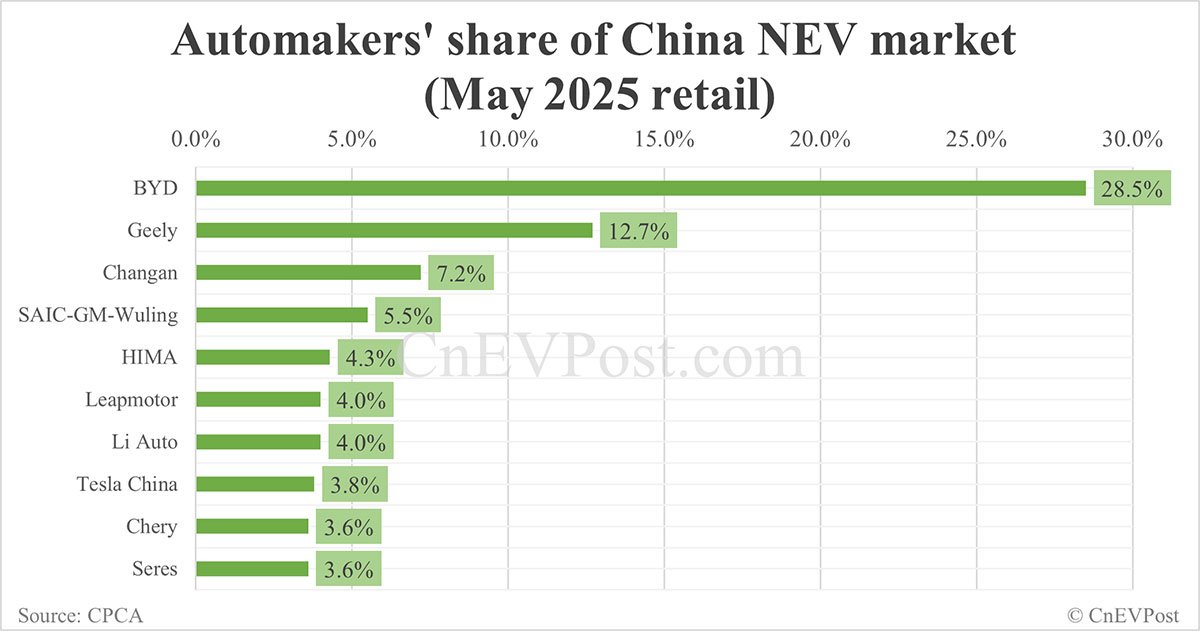
Tesla's market share in China's NEV market in May was higher than its 3.2 percent share in April but lower than the 6.9 percent share in the same period last year. In the first five months of the year, BYD's market share in China's NEV market was 28.9 percent, while Tesla's was 4.6 percent. BYD (HKG: 1211, OTCMKTS: BYDDY) maintained its position as China's largest new energy vehicle (NEV) maker in May, while Tesla (NASDAQ: TSLA) retained the same ranking as in April. BYD's NEV retail sales in May totaled 293,021 units, up 9.2 percent from 268,226 units in the same period last year, according to rankings released today by the China Passenger Car Association (CPCA). The company continued to lead the market with a 28.5 percent share in May, though down from 29.7 percent in April and 33.4 percent in May 2024. Tesla's retail sales in China in May were 38,588 units, a decrease of 30.1 percent from the 55,215 units sold in the same period last year. The US electric vehicle (EV) maker ranked eighth in China's NEV market in May with a 3.8 percent market share, maintaining the same ranking as in April. This share was higher than the 3.2 percent in April but lower than the 6.9 percent in the same period last year. Geely's NEV retail sales in May totaled 130,398 units, up 132.1 percent from 56,172 units in the same period last year, ranking second with a 12.7 percent market share. In China, NEVs include plug-in hybrid electric vehicles (PHEVs), battery electric vehicles (BEVs), and fuel cell vehicles. BYD and Geely produce both BEVs and PHEVs, while Tesla only produces BEVs. Changan Automobile ranked third in China's NEV market in May with 73,993 NEV retail sales and a 7.2 percent market share. Leapmotor (HKG: 9863) ranked sixth in China's NEV market in May with 41,409 retail sales and a 4.0 percent market share. Li Auto (NASDAQ: LI) ranked seventh in China's NEV market in May with 40,856 retail sales and a 4.0 percent market share. In the first five months of the year, BYD ranked first in China's NEV market with 1,257,961 retail sales and a 28.9 percent market share. Geely ranked second in China's NEV market in the first five months of the year with 570,990 retail sales and a 13.1 percent market share. Changan ranked third in China's NEV market with 291,175 NEV sales and a 6.7 percent market share from January to May. Tesla ranked fifth in China's NEV market with 201,926 sales and a 4.6 percent market share from January to May. In the overall passenger vehicle market, which includes traditional internal combustion engine vehicles, BYD ranked first in retail sales in May with a 15.1 percent market share. Geely ranked second in May with 205,093 units sold and a 10.6 percent market share. Changan ranked third with 135,330 units sold and a 7.0 percent market share. Nio Inc, which includes the Nio, Onvo, and Firefly brands, saw 4,340 insurance registrations last week, a decrease of 19.63 percent from the previous week.
xAI targets $5 Billion debt offering to fuel company goals

Cathie Wood shared that Tesla is her top stock pick. During Steven Bartlett’s podcast “The Diary Of A CEO,” the Ark Invest founder highlighted Tesla’s innovative edge, citing its convergence of robotics, energy storage, and AI. “Because think about it. It is a convergence among three of our major platforms. So, robots, energy storage, AI,” Wood said of Tesla. She emphasized the company’s potential beyond its current offerings, particularly with its Optimus robots. “And it’s not stopping with robotaxis; there’s a story beyond that with humanoid robots, and our $2,600 number has nothing for humanoid robots. We just thought it’d be an investment, period,” she added. 🤔I mean, there is a reason why Elon Musk believes Optimus will be Tesla's biggest product. Its potential is just that immense.pic.twitter.com/jK7tMjcyci— TESLARATI (@Teslarati) May 21, 2025 In June 2024, Ark Invest issued a $2,600 price target for Tesla, which Wood reaffirmed in a March Bloomberg interview, projecting the stock to reach this level within five years. She told Bartlett that Tesla’s Optimus robots would drive productivity gains and create new revenue streams. Elon Musk echoed Wood’s optimism in a CNBC interview last month. “We expect to have thousands of Optimus robots working in Tesla factories by the end of this year, beginning this fall. And we expect to scale Optimus up faster than any product, I think, in history to get to millions of units per year as soon as possible,” Musk said. Tesla’s stock has faced volatility lately, hitting a peak closing price of $479 in December after President Donald Trump’s election win. However, Musk’s involvement with the White House DOGE office triggered protests and boycotts, contributing to a stock decline of over 40% from mid-December highs by March. The volatility in Tesla stock alarmed investors, who urged Musk to refocus on the company. In a May earnings call, Musk responded, stating he would be “scaling down his involvement with DOGE to focus on Tesla.” Through it all, Cathie Wood and Ark Invest maintained their faith in Tesla. Wood, in particular, predicted that the “brand damage” Tesla experienced earlier this year would not be long term. Despite recent fluctuations, Wood’s confidence in Tesla underscores its potential to redefine industries through AI and robotics. As Musk shifts his focus back to Tesla, the company’s advancements in Optimus and other innovations could drive it toward Wood’s ambitious $2,600 target, positioning Tesla as a leader in the evolving tech landscape.
Battery swapping for commercial vehicles expands in Japan
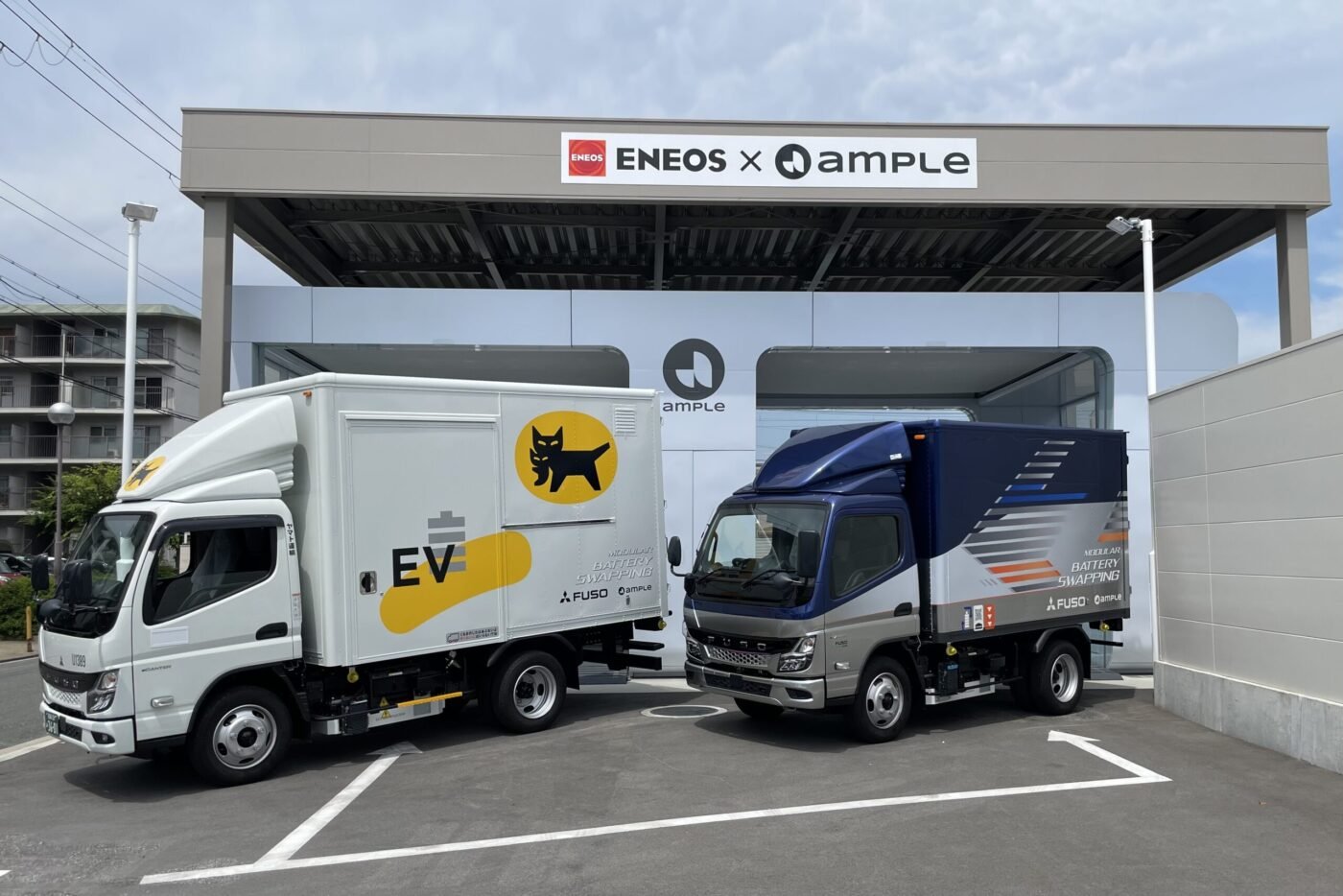
Mitsubishi Fuso Truck and Bus Corporation (MFTBC), Mitsubishi Motors, Ample and Yamato Transport announce a multi-year pilot program to start in September 2025 that will see the deployment of more than 150 electric commercial vehicles with swappable batteries and 14 modular battery swap stations in Tokyo. The deployment of 150 electric commercial vehicles and battery swapping infrastructure involves Mitsubishi Fuso electric eCanter light-duty trucks and Mitsubishi Motors’ Minicab EV, which is a kei-car-class (very small vehicle) commercial electric vehicle with monobox design, as pictured above. This project follows another pilot program from 2024 in Kyoto that was announced in 2023. This initial project trialled a single eCanter light-duty truck with exchangeable battery modules and battery swapping stations from US manufacturer Ample, operated by the courier service Yamato Transport on public roads for collection and delivery journeys. Yamato Transport, which Mitsubishi Fuso describes as “Japan’s largest shipping and logistics group,” began its efforts to commercialise battery swapping for fleets even earlier, in 2022. The Kyoto demonstration, the partners say, validated the system’s operational benefits, as well as the ability of Ample’s platform to operate simultaneously across different vehicle types and brands. In addition to increasing the operational scale, this next phase of piloting now also includes Mitsubishi Motors as well as Mitsubishi Fuso Truck and Bus Corporation. Mitsubishi Fuso Truck and Bus Corporation (MFTBS) was formed in May 2023 when Japanese commercial vehicle manufacturers Mitsubishi Fuso Truck & Bus and Hino Motors merged for commercial vehicle development, procurement and production with a view to electrification. Daimler Truck and Toyota, which own the above-mentioned brands, have made equal investments in the Fuso and Hino listed holding company. In Europe in 2024, Mitsubishi Fuso captured a 9% share of the very diverse European light commercial vehicle market. In March just passed, Ample announced it was setting up battery swapping stations in Tokyo in collaboration with Mitsubishi Fuso Truck and Bus Corporation and Mitsubishi Motors Corporation. At the time, Khaled Hassounah, CEO of Ample, explained, “Tokyo is one of the world’s most advanced cities in sustainable urban development and one of the largest markets for commercial deliveries, making it the perfect place for our next deployments as we expand our presence in Japan.” He sees the company’s efforts in Tokyo as setting an example with a scalable solution for commercial fleets, showing how densely populated cities can electrify. The benefits of battery swapping for commercial vehicles are many-sided. The obvious advantage for the transport provider is that it minimises downtime for vehicles in operation since they can swap batteries in 5 minutes without even having to exit the vehicle. Battery swapping also makes it easier for operators to ensure the batteries stay in good health, so that batteries can be easily evaluated and taken out of automotive service and into either second-life applications, or directly to recycling, without relying on the efforts of vehicle operators. For local grids, battery swapping stations offer important advantages. Battery swapping stations can charge the batteries at low speeds when grid demand is low, whereas megawatt charging presents sucks a large amount of grid power very quickly in the moment the driver needs it. Battery swapping stations are also ideal grid balancers. In addition to charging the batteries when demand is low and/or when renewable energy production is high, for example, they can also feed energy back into the grid when demand is high. The statement released by the partners reveals, “Future deployments of swapping stations may also provide grid services,” without going into further detail. Now, a fleet of 150 Fuso eCanter electric vehicles and Mitsubishi Kei-car trucks will make use of 14 Ample battery swapping stations with the stated goal “to demonstrate how battery swapping stations can support the real-world demands of commercial EV operators and to establish a backbone for commercial battery swapping in Japan’s largest city.” The project partners emphasise in their statement that the project remains open to additional automotive companies, fleets and logistics operators, even providing a contact email for interested parties. mitsubishi-fuso.com
India's energy storage story - Energy-Storage.News
As of May 2025, India’s power capacity stands at 50% thermal (coal + gas), 47.3% renewable energy (wind, solar, hydro, biomass combined) and 2% through nuclear. But if we convert this metric to electricity, India is still powered by 75% coal, 13% through wind and solar and 8% through hydro. Through an installed capacity of 108GW of Solar, 51GW of Wind and 48GW of hydro, India manages only 22% of its electricity supply through renewable sources (hydro included). Figure 1. India’s present and forecasted power generation capacity. The Central Electricity Authority, through its National Electricity Plan document, estimates that if India is to achieve its COP 26 goals, it will need 292GW of solar, 100GW of wind, accompanied by 41.7GW/228.5GWh of battery storage capacity along with 18GW of pumped hydro, ranging between 6-8 hours of storage. In doing so, India will achieve a generation share of renewables that rises to 44% while that of fossil fuel energy (coal + gas + nuclear) will be 56%. India will require a total investment of US$55 billion between 2022 and 2032 to realise the same for energy storage systems (ESS, including BESS and pumped hydro). This, from an installed base of 500MWh of BESS and 4.8GW of PSP. i.e. almost nothing! Government frameworks and support India has acknowledged the need to ramp up energy storage fast, with multiple policy and regulatory enablers. As a measure to accelerate demand, India has introduced (1) Energy Storage Obligation (ESO). It aims to facilitate renewable energy deployment by enhancing grid stability and managing the variability of solar and wind power. India’s ESO targets are set to increase from 1% in the financial year (FY) 2023-24 to 4% by FY 2029-30, with an annual increase of 0.5%. In addition, India introduced an advisory that (2) all new solar installations in the country have to be coupled with 10% ESS (2-hour duration). This is expected to increase in the coming years; the advisory also includes rooftop solar. The government has also introduced a (3) Viability Gap Funding (VGF) scheme to support standalone BESS projects of a total capacity of 13.5GWh, for which the Government will fund 30% of the project CAPEX, payable at tranches of construction and operation. A second phase of the VGF support has just been announced today by the Ministry of Power (MoP) too, to support an additional 30GWh of projects with 16% support on CAPEX. The support has also been extended to 15 states and major power producer NTPC to integrate BESS with their existing thermal fleet to better utilise the plants. India’s government has, over time, defined (4) standard bidding guidelines for such projects and (5) created a framework for ESS projects and developed (5) a separate policy for PSP development, along with talks of introducing VGF for PSP development too. Figure 2. India’s energy storage framework India has well understood that only accelerating demand would still make the country dependant for resources from other countries; to further focus on ‘Make in India,’ the government introduced a Production Linked Incentive (PLI) scheme for US$2.1 billion to domestically manufacture 50GWh of Advanced Cell Chemistry (ACC) batteries in the country, paid on demonstration of 65% value creation within the country in phases. As of today, 40GWh has been successfully awarded, and 10GWh is pending to be awarded. India formed a critical mineral mission, identified 30 critical raw minerals for the country, and is looking out for partnerships with countries to tie up for processing/ refining these raw minerals. Multiple tax exemptions have been introduced, and Basic Customs Duties (BCD) have been implemented to encourage players to make in India and not import from outside. Tenders driving India’s ESS market transformation ESS installations in India are driven by tenders floated by central government identified agencies called nodal agencies, and states, too. The identified central nodal agencies act as intermediary bodies, derisking the power procurement process and payment mechanism. The central nodal agencies are namely SECI, NTPC, NHPC and SJVN. Along with the same, India’s states have also come forward in sharing ESS tenders, namely Gujarat, Rajasthan, Maharashtra, Tamil Nadu. Kerala, Madhya Pradesh, Telangana, Andhra Pradesh, Bihar, Uttar Pradesh, Odisa. Figure 3. Types of ESS tender in India. The tenders in India are broadly of 3 types Standalone BESS/ PSP tenders: where for a tenor of 12-15 years (40 years for PSP) a developer must build-own-operate (BOO) a BESS/ PSP project (often build-own-operate-transfer, or BOOT, for PSP), off-taker is often defined in such tenders, and the bidder has to quote capacity charge value to bid (INR/MW/month or INR/MWh/year). The charging power to charge the BESS or pump water in the reservoir is given by the procurer free of charge. Generally, the tenders require 2-cycle operation for 2 hours for BESS with allowed degradation of 2.5% annually, whereas for PSP the discharge duration is typically 5 hours continuous, with the requirement to pump for 8 hours. The reverse auction system is followed for all tenders to select the winner of the tender, who is thus awarded the project and must commission it in 18 months (five years for PSP). These tenders are further assisted by VGF of 30% on CAPEX by the government, which further makes them attractive and more attractive for multiple players to bid for. The graph below shows the success of such tenders from the pre-VGF era to the post-VGF era, where a price drop of 66% have been seen over two years to a further drop of 38% through the introduction of VGF. Figure 4. Results for standalone BESS tenders in India Firm and Dispatchable Renewable Energy (FDRE) tenders: These tenders are basically Solar + Wind + ESS tenders with some specific requirements. The concept came from making renewables firm and dispatchable. FDRE is of four types: (a) Assured peak model – in such a tender off-taker will take whatever power the developer gives through out the day, in peak hours (identified and communicated to the developer on a day ahead basis), for 4
SpaceX to debut new Dragon capsule in Axiom Space launch
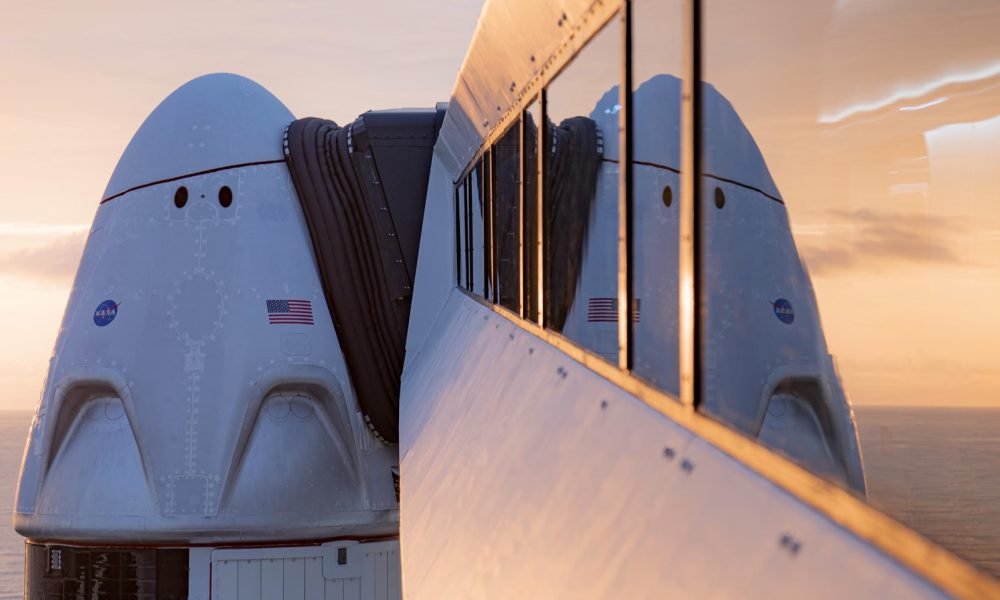
Axiom Space’s Ax-4 mission targets the International Space Station (ISS) with a new SpaceX Crew Dragon capsule. The Axiom team will launch a new SpaceX Dragon capsule atop a Falcon 9 rocket from NASA’s Kennedy Space Center in Florida on Wednesday at 8:00 a.m. EDT (1200 GMT). The Ax-4 mission launch was initially set for Tuesday, June 10, but was delayed by one day due to expected high winds. As Axiom Space’s fourth crewed mission to the ISS, Ax-4 marks the debut of an updated SpaceX Crew Dragon capsule. “This is the first flight for this Dragon capsule, and it’s carrying an international crew—a perfect debut. We’ve upgraded storage, propulsion components, and the seat lash design for improved reliability and reuse,” said William Gerstenmaier, SpaceX’s vice president of build and flight reliability. Watch Falcon 9’s launch of Axiom Space’s Axiom Mission 4 (Ax-4) to the International Space Station from Launch Complex 39A (LC-39A) at NASA’s Kennedy Space Center in Florida on Wednesday, June 11. : pic.twitter.com/gO2DrvOppO — TESLARATI (@Teslarati) June 10, 2025 Axiom Space is a Houston-based private space infrastructure company. It has been launching private astronauts to the ISS for research and training since 2022, building expertise for its future station. With NASA planning to decommission the ISS by 2030, Axiom has laid the groundwork for the Axiom Station, the world’s first commercial space station. The company has already begun construction on its ISS replacement. The Ax-4 mission’s research, spanning biological, life, and material sciences and Earth observation, will support this ambitious goal. Contributions from 31 countries underscore the mission’s global scope. The four-person crew will launch from Launch Complex 39A, embarking on a 14-day mission to conduct approximately 60 scientific studies. “The AX-4 crew represents the very best of international collaboration, dedication, and human potential. Over the past 10 months, these astronauts have trained with focus and determination, each of them exceeding the required thresholds to ensure mission safety, scientific rigor, and operational excellence,” said Allen Flynt, Axiom Space’s chief of mission services. The Ax-4 mission highlights Axiom’s commitment to advancing commercial space exploration. By leveraging SpaceX’s Dragon capsule and conducting diverse scientific experiments, Axiom is paving the way for its Axiom Station. This mission not only strengthens international collaborations but also positions Axiom as a leader in the evolving landscape of private space infrastructure. The post SpaceX to debut new Dragon capsule in Axiom Space launch appeared first on TESLARATI.
LS Materials presents charging station with buffer storage system
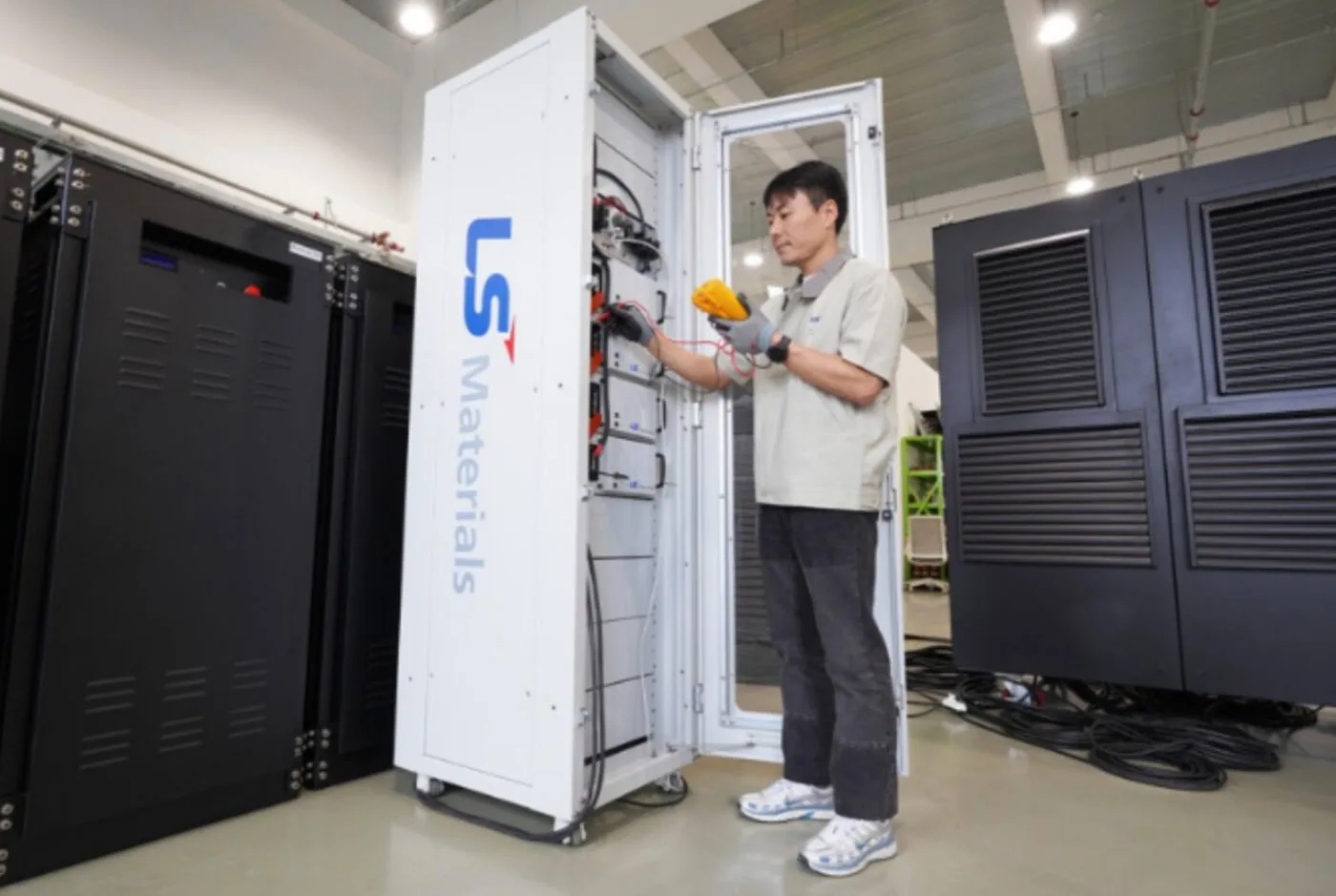
Fast charging stations with a battery as a stationary storage unit connected to the grid are becoming increasingly popular as they can buffer grid power during peak usage periods. The Korean company LS Materials has developed a new hybrid energy storage system (H-ESS) for electric vehicle charging stations, which it claims is cheaper, more compact and significantly longer-lasting than conventional stationary storage systems for charging stations. For its charging plus stationary storage hybrid storage system, LS Materials has combined lithium-ion batteries with capacitors specially designed for fast charging and discharging. These capacitors can quickly absorb energy from the grid between two charging processes to make it ready for the next vehicle. The H-ESS should enable “stable charging of several vehicles even at peak times”. The subsidiary LS Cable & Systems was also involved in the development. Operating the hybrid system should also be safer and cheaper than conventional stationary storage systems for charging stations. According to LS Materials, the new hybrid system minimises heat generation, reduces the risk of fire and has a service life 5 to 10 times longer than conventional energy storage systems (ESS) when used as a buffer for charging stations. The company explains that existing ESSs are prone to rapid heat generation and performance degradation during repeated rapid charging and discharging. This results in a short lifespan, high risk, and operational costs when used in EV charging stations. The project was supported by the South Korean Ministry of Trade, Industry and Energy, as the development of infrastructure for electric vehicles is seen as a “national task”. LS Materials said the company can also imagine its H-ESS used outside the field of electromobility. “We will expand the application to areas that require rapid response, such as AI data centers and ESS related to renewable energy, and intensify our efforts to develop the global market with a focus on North America and Europe,” says Hong Young-ho, CEO of LS Materials. LS Materials founded a joint venture with Hammerer Aluminium Industries from Austria in 2024 to manufacture lightweight aluminium parts for electric cars, such as parts of the bodywork, but also battery housings. The new storage units are also to be manufactured at the joint venture HiMK’s factory in Gumi, a city in the North Gyeongsang Province of South Korea. businesskorea.co.kr, lsmaterials.co (in Korean)
Tesla tops Cathie Wood’s stock picks, predicts $2,600 surge
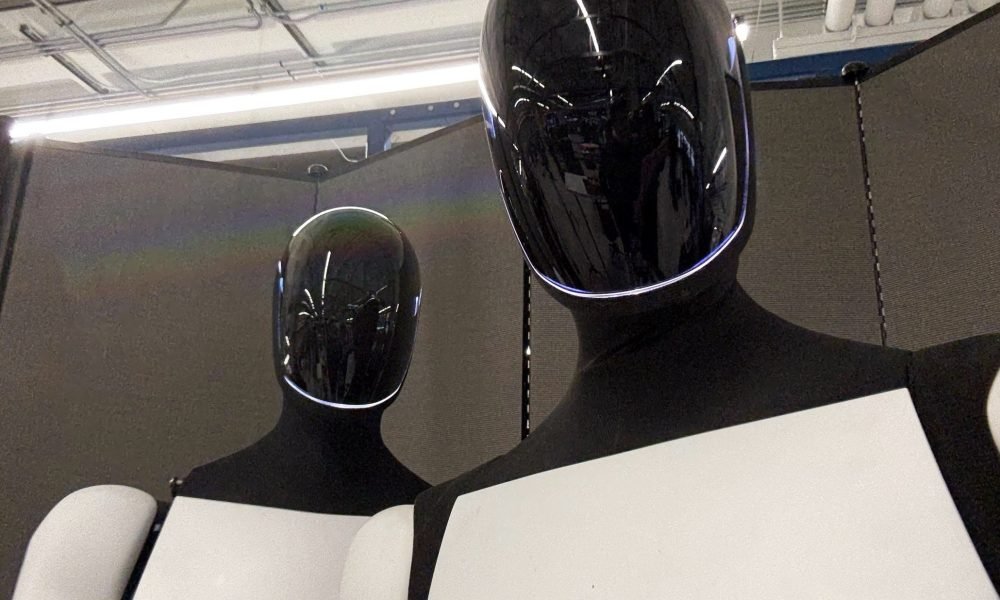
Cathie Wood shared that Tesla is her top stock pick. During Steven Bartlett’s podcast “The Diary Of A CEO,” the Ark Invest founder highlighted Tesla’s innovative edge, citing its convergence of robotics, energy storage, and AI. “Because think about it. It is a convergence among three of our major platforms. So, robots, energy storage, AI,” Wood said of Tesla. She emphasized the company’s potential beyond its current offerings, particularly with its Optimus robots. “And it’s not stopping with robotaxis; there’s a story beyond that with humanoid robots, and our $2,600 number has nothing for humanoid robots. We just thought it’d be an investment, period,” she added. 🤔I mean, there is a reason why Elon Musk believes Optimus will be Tesla's biggest product. Its potential is just that immense.pic.twitter.com/jK7tMjcyci— TESLARATI (@Teslarati) May 21, 2025 In June 2024, Ark Invest issued a $2,600 price target for Tesla, which Wood reaffirmed in a March Bloomberg interview, projecting the stock to reach this level within five years. She told Bartlett that Tesla’s Optimus robots would drive productivity gains and create new revenue streams. Elon Musk echoed Wood’s optimism in a CNBC interview last month. “We expect to have thousands of Optimus robots working in Tesla factories by the end of this year, beginning this fall. And we expect to scale Optimus up faster than any product, I think, in history to get to millions of units per year as soon as possible,” Musk said. Tesla’s stock has faced volatility lately, hitting a peak closing price of $479 in December after President Donald Trump’s election win. However, Musk’s involvement with the White House DOGE office triggered protests and boycotts, contributing to a stock decline of over 40% from mid-December highs by March. The volatility in Tesla stock alarmed investors, who urged Musk to refocus on the company. In a May earnings call, Musk responded, stating he would be “scaling down his involvement with DOGE to focus on Tesla.” Through it all, Cathie Wood and Ark Invest maintained their faith in Tesla. Wood, in particular, predicted that the “brand damage” Tesla experienced earlier this year would not be long term. Despite recent fluctuations, Wood’s confidence in Tesla underscores its potential to redefine industries through AI and robotics. As Musk shifts his focus back to Tesla, the company’s advancements in Optimus and other innovations could drive it toward Wood’s ambitious $2,600 target, positioning Tesla as a leader in the evolving tech landscape.
Toshiba delivers first battery samples with niobium-titanium oxide anode
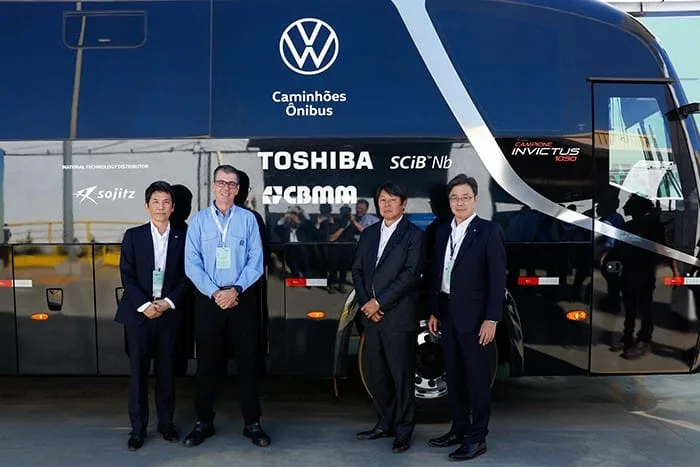
Toshiba is developing a rechargeable lithium-ion battery with a niobium-titanium oxide anode and has now started to deliver cell samples to manufacturers. The ‘SCiB Nb’ is said to be similar to LFP cells in terms of volumetric energy density, but has clear advantages in terms of fast charging and service life. Toshiba wants to position its lithium-ion battery with a niobium titanium oxide anode as an alternative to today’s widely used Li-ion batteries with a graphite anode, particularly in the commercial vehicle market. LFP batteries also belong to this category. According to Toshiba, the anode made of niobium titanium oxide (NTO) instead of graphite gives the battery a volumetric energy density that is comparable to LFP batteries, but it should be better able to withstand repeated, faster charging. Specifically, the developers claim an 80 per cent charge in ten minutes for the ‘SCiB Nb’. Even with repeated fast partial charging, it should have an estimated service life of 15,000 cycles. Toshiba is working closely with two strategic partners to develop its new battery: the Brazilian company CBMM, one of the world’s largest producers of niobium, and the Japanese Sojitz Corporation, one of CBMM’s shareholders and CBMM’s sole representative for the Japanese market, where the company “built a stable niobium titanate supply system and cultivates applications, and is now ready to bring this rapid-charging, long-life product to market,” according to Toshiba. The partnership is initially aimed at use in commercial vehicles, where high availability and dense operating cycles are important. “Frequent charging at designated points along the route allows reductions in number of installed batteries, while long-life performance is expected to lower the total cost of ownership by decreasing the need for frequent battery replacements due to degradation,” Toshiba advertises. The samples now ready for delivery are specifically 50 Ah cells with a nominal voltage of 2.3 volts and an output power of 1 kW. Toshiba puts the volumetric energy density at 350 Wh/L and the gravimetric energy density at 130 Wh/kg. The cell measures 98 x 280 x 12 millimetres and weighs around 860 grams. The Japanese company specifies a charging capacity of 5C, which corresponds to a ten-minute charge to 80 per cent SoC. The operating temperature is said to be between -30 and +60 degrees. Toshiba also explains in more detail why batteries with NTO anodes are said to be superior to current graphite-based lithium-ion batteries, especially LFP batteries: Although these could provide the required energy density, repeated rapid charging leads to lithium deposits on the anode, “which increases the risk of a short circuit in the cell, especially when the batteries start to degrade.” According to Toshiba, the NTO anode, on the other hand, does not cause metallic lithium deposits and should be safe to use for a long time even with repeated fast charging. An initial trial with an electric bus prototype is said to have already taken place: Toshiba claims to have already trialled its new battery development in a vehicle at the CBMM industrial plant in Araxá, Brazil. In addition to the ‘SCiB Nb’, Toshiba has already commercialised a cell called ‘SCiB’. This is a lithium-ion cell with a lithium titanate anode. global.toshiba
Tesla named official AV operator in Austin ahead of robotaxi launch
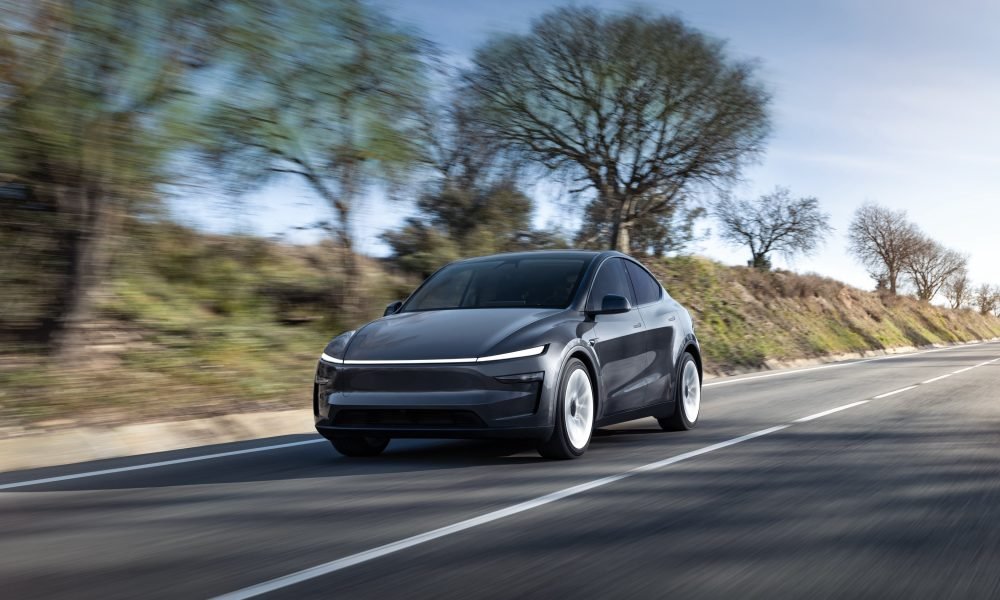
Tesla was kind enough to offer me a Cybertruck ‘Beast’ for an entire weekend after the company started offering 48-hour test drives of the vehicles across its lineup. I got a call from my local showroom asking if I would like to partake in a weekend of fun with perhaps the coolest truck around, and of course, I said yes. It was a little different from past weekend Demo Drives in the sense that I picked up the Cybertruck in the morning on Saturday instead of the evening, when the showroom would be closed, and I would have to have it back at open time on Monday. I had my full Saturday with it; I took it for a round of golf, I took it to dinner with my Fiancè and parents, and it truly gave me a full-fledged feel of what it would be like to own one. There were a lot of things I liked, and there were a handful of things I’d like to change. I’ll go through all of those in this article: First Impressions This was the second time I had ever driven Cybertruck, with the first being at early Demo Drives last August when I drove to West Chester, PA. I picked it up at 10 am on Saturday morning, and the team at Tesla Mechanicsburg had me in and out in less than five minutes. I grabbed my paperwork and was on my way, and I took my best friend with me as he had never been in one. He was never a fan of the Cybertruck’s look, but could not deny the interior’s clean and minimalistic appearance. This Cyberbeast was in terrific shape. I do wish the inside was vacuumed, the windshield was cleaned, and the wiper fluid reservoir was full, but these were all things I took care of myself after I got home. I would love to know how some Cybertruck owners clean their windshields, as I could get most, but not all. The bottom portion remained a tad smudged-up, but it was nothing unusual. It was fun to pull into my local diner near my house, and about 45 minutes away from the Mechanicsburg showroom, to see all of the people nearby turn their heads just to get a look at this thing. Of course, I knew it would be soon that I’d get some middle fingers, but for now, it was all friendly. Smiles, waves, and fun. It was genuinely a fun experience. My Weekend in the Cybertruck First things first, I had an afternoon tee time with some buddies of mine who did not know that I was getting the Cybertruck for the weekend. They were all surprised to see it, to say the least! They had never been inside one, and did mention that the interior was just plain awesome. The glass ceiling was among their favorite features of the Cybertruck, but conditioning the cabin to be nice and cool as we finished up on the 18th was awesome too. Their cars do start remotely, but do not feature adjustable climate settings. This kept me cool on my entire ride home, and is something all Teslas feature. It’s among the best little additions, especially as the Summer months approach. A reader and follower told me to throw my clubs in the frunk next time. I will do that. After golf, it was time to pick my Fiancè up from the house and my parents as well, where we drove about an hour to Hampstead, Maryland, for a nice dinner to celebrate my better-half’s graduation from nursing school. My parents were truly blown away by the Model Y a few weekends ago, so this was what I was really looking forward to for them, because their reaction is genuinely so exciting. My favorite thing about driving this truck was the positive reactions I got from many. I got a lot of waves, a lot of people wanting me to honk the horn, one of my neighbors even said, “Do you mind if I look inside of it?” I showed him all the cool features like the tonneau, the power frunk, and the size of everything. Of course, I also had a handful of people who made their feelings about the car very apparent with a quick fling of the middle finger toward me as I drove by. I never understood flicking people off over a car: maybe how they drive, or maybe if they have a weird bumper sticker. I wasn’t around any of the middle finger-givers long enough for them to assess my driving, and the Cybertruck was void of any stickers or decals. Oh well. Sunday was a lengthy, 300-or-so-mile drive from my house to the Flight 93 National Memorial in Shanksville, PA. I try to go twice a year to pay my respects to the heroes, but I also saw it as a good time to test the range, experience Supercharging, see how the Cybertruck handled a longer day, and see how I felt in the car after the drive. My first Supercharging stop was in Fort Littleton, PA, where v4 Supercharger stalls were placed in what was very obviously a small, rural, and predominantly blue-collar town. It was pretty fun to see a Supercharger in such a rural area. I had great speeds, as you can see, and we topped out at upwards of 330 kW. It was nice to sit there and feel what charging would be like as opposed to driving a gas car and having a quick stop at a gas station. I’ll be honest: it’s not at all what a gas station experience is like, which is quick, painless, and easy. However, stopping for ~20 minutes to grab some mileage was also a nice break from the drive. It let me take a few minutes to wind down because the weather was awful, and driving in the rain is never super fun. This was one of two
APM Terminals electrifies port logistics with the help of CATL

Port operator APM Terminals and battery manufacturer CATL want to jointly develop battery-electric container technology. The Dutch port specialist expects this to offer further electrification potential for its global terminal network. Both parties are entering into a strategic partnership to integrate CATL’s battery technologies into the Dutch company’s port logistics. For example, the Chinese group will provide batteries and system solutions that will be installed in container handling equipment. In this way, APM Terminals intends to use more electric terminal tractor units in future, for example. CATL and APM Terminals are already cooperating in the Zero Emission Port Alliance (ZEPA), whose members also aim to reduce emissions in ports worldwide. The cooperation between the two partners, which is now also being stepped up bilaterally, “covers the full lifecycle of the batteries, from the development of advanced battery products to after-sales support and battery recycling,” according to an accompanying press release. One of the pilot terminals is the Aqaba Container Terminal in Jordan, where the first CATL technology is already being used to electrify port logistics. APM Terminals currently has more than 60 terminals in operation or under development worldwide. At the same time, the company is aiming to reduce its greenhouse gas emissions to net zero by 2040. Those responsible want to achieve this by “deploying battery-electric equipment powered by renewable energy sources such as solar and wind, while also reducing energy consumption through more efficient operations, shorter dwell times and energy-efficient buildings.” APM Terminals has already become active at the Maasvlakte II container terminal in the port of Rotterdam. The company will soon be testing a robotic charging solution from manufacturer Rocsys to supply 30 automated terminal lorries with electricity. The latter will be provided by the Dutch specialised vehicle manufacturer Terberg in cooperation with Embotech, a provider of technologies for autonomous vehicles. Those responsible have the following to say about the cooperation with CATL that has now been put on track: “We’re happy to extend our strong partnership with CATL through this strategic agreement, which supports our aim to decarbonise terminal operations with battery-electric container handling equipment,” said Grant Morrison, Head of Global Asset Category Management at APM Terminals. “APM Terminals and CATL have been on a journey to accelerate the adoption of battery-electric container handling equipment through the Zero Emission Port Alliance and shared our initial learnings earlier this year,” added Akin Li, Executive President of CATL Overseas Car Business. “We expect the strategic partnership to further accelerate the development of industry-leading solutions and reduce greenhouse gas emissions at terminals.” catl.com, apmterminals.com
I took a Tesla Cybertruck weekend Demo Drive
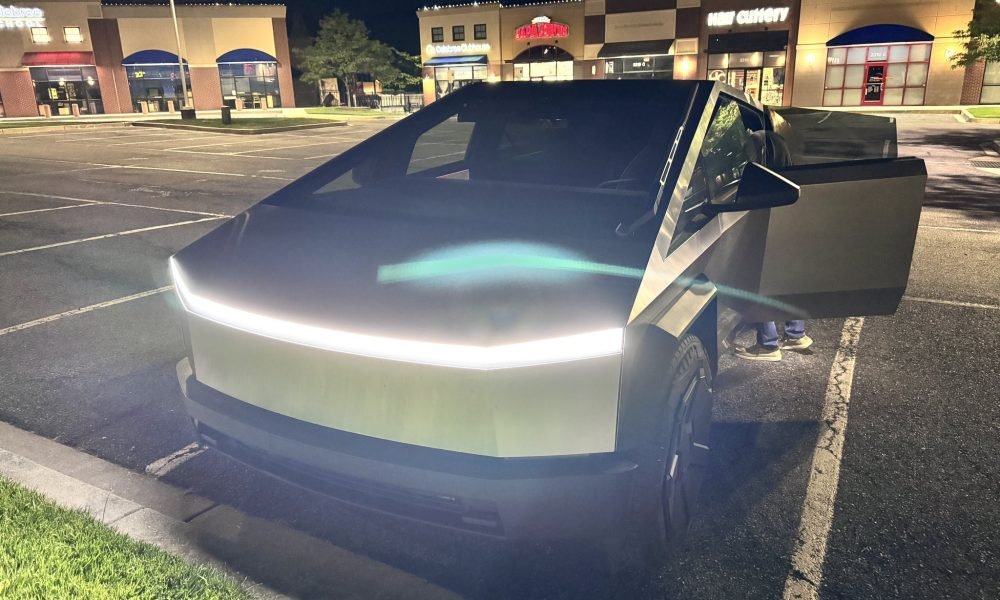
Tesla was kind enough to offer me a Cybertruck ‘Beast’ for an entire weekend after the company started offering 48-hour test drives of the vehicles across its lineup. I got a call from my local showroom asking if I would like to partake in a weekend of fun with perhaps the coolest truck around, and of course, I said yes. It was a little different from past weekend Demo Drives in the sense that I picked up the Cybertruck in the morning on Saturday instead of the evening, when the showroom would be closed, and I would have to have it back at open time on Monday. I had my full Saturday with it; I took it for a round of golf, I took it to dinner with my Fiancè and parents, and it truly gave me a full-fledged feel of what it would be like to own one. There were a lot of things I liked, and there were a handful of things I’d like to change. I’ll go through all of those in this article: First Impressions This was the second time I had ever driven Cybertruck, with the first being at early Demo Drives last August when I drove to West Chester, PA. I picked it up at 10 am on Saturday morning, and the team at Tesla Mechanicsburg had me in and out in less than five minutes. I grabbed my paperwork and was on my way, and I took my best friend with me as he had never been in one. He was never a fan of the Cybertruck’s look, but could not deny the interior’s clean and minimalistic appearance. This Cyberbeast was in terrific shape. I do wish the inside was vacuumed, the windshield was cleaned, and the wiper fluid reservoir was full, but these were all things I took care of myself after I got home. I would love to know how some Cybertruck owners clean their windshields, as I could get most, but not all. The bottom portion remained a tad smudged-up, but it was nothing unusual. It was fun to pull into my local diner near my house, and about 45 minutes away from the Mechanicsburg showroom, to see all of the people nearby turn their heads just to get a look at this thing. Of course, I knew it would be soon that I’d get some middle fingers, but for now, it was all friendly. Smiles, waves, and fun. It was genuinely a fun experience. My Weekend in the Cybertruck First things first, I had an afternoon tee time with some buddies of mine who did not know that I was getting the Cybertruck for the weekend. They were all surprised to see it, to say the least! They had never been inside one, and did mention that the interior was just plain awesome. The glass ceiling was among their favorite features of the Cybertruck, but conditioning the cabin to be nice and cool as we finished up on the 18th was awesome too. Their cars do start remotely, but do not feature adjustable climate settings. This kept me cool on my entire ride home, and is something all Teslas feature. It’s among the best little additions, especially as the Summer months approach. A reader and follower told me to throw my clubs in the frunk next time. I will do that. After golf, it was time to pick my Fiancè up from the house and my parents as well, where we drove about an hour to Hampstead, Maryland, for a nice dinner to celebrate my better-half’s graduation from nursing school. My parents were truly blown away by the Model Y a few weekends ago, so this was what I was really looking forward to for them, because their reaction is genuinely so exciting. My favorite thing about driving this truck was the positive reactions I got from many. I got a lot of waves, a lot of people wanting me to honk the horn, one of my neighbors even said, “Do you mind if I look inside of it?” I showed him all the cool features like the tonneau, the power frunk, and the size of everything. Of course, I also had a handful of people who made their feelings about the car very apparent with a quick fling of the middle finger toward me as I drove by. I never understood flicking people off over a car: maybe how they drive, or maybe if they have a weird bumper sticker. I wasn’t around any of the middle finger-givers long enough for them to assess my driving, and the Cybertruck was void of any stickers or decals. Oh well. Sunday was a lengthy, 300-or-so-mile drive from my house to the Flight 93 National Memorial in Shanksville, PA. I try to go twice a year to pay my respects to the heroes, but I also saw it as a good time to test the range, experience Supercharging, see how the Cybertruck handled a longer day, and see how I felt in the car after the drive. My first Supercharging stop was in Fort Littleton, PA, where v4 Supercharger stalls were placed in what was very obviously a small, rural, and predominantly blue-collar town. It was pretty fun to see a Supercharger in such a rural area. I had great speeds, as you can see, and we topped out at upwards of 330 kW. It was nice to sit there and feel what charging would be like as opposed to driving a gas car and having a quick stop at a gas station. I’ll be honest: it’s not at all what a gas station experience is like, which is quick, painless, and easy. However, stopping for ~20 minutes to grab some mileage was also a nice break from the drive. It let me take a few minutes to wind down because the weather was awful, and driving in the rain is never super fun. This was one of two charging
Wärtsilä to supply propulsion for electric ferries in San Francisco Bay
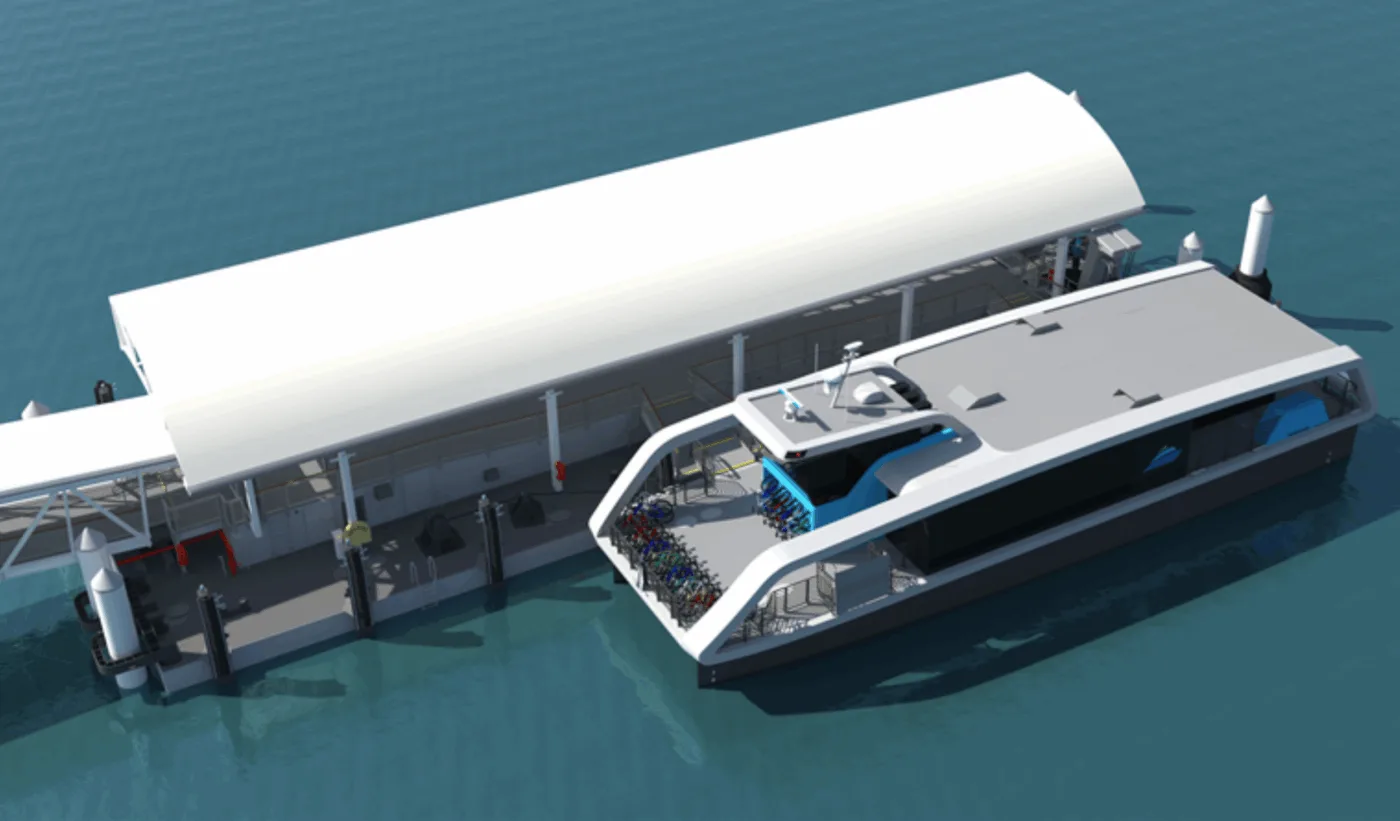
Wärtsilä has been contracted to supply the propulsion systems for three all-electric high-speed ferries to be deployed in San Francisco Bay. These will be the first all-electric high-speed ferries to be built and operated in the US. Wärtsilä’s contract partner is All American Marine (AAM) on behalf of San Francisco Bay Ferry, the largest public ferry operator in California. The three zero-emission vessels with Wärtsilä propulsion systems are part of San Francisco Bay Ferry’s Rapid Electric Emission Free (REEF) Ferry Program. The electric ferries will operate on new routes that connect two of San Francisco’s fastest-growing neighbourhoods, Treasure Island and Mission Bay, to SF Bay Ferry’s Downtown S.F. ferry hub. Wärtsilä says it will work within the REEF project team to finalise the vessel and charging system concepts. The propulsion system provided by the Finnish company includes the energy and power management system (EPMS), the integrated automation system (IAS), batteries, DC Hub, transformers, E-Motors, and the shore power supply. The initial concept design of the ferries was created by Aurora Marine Design, especially for SF Bay Ferry. Teknicraft is responsible for the more detailed design of the vessels that will be built to USCG Subchapter T standards. The electric ferries will transport passengers across San Francisco Bay at 24 knots, powered by dual 625-kilowatt electric motors. The zero-emission marine vessels will be 100 feet long with a 26-foot beam and a 5.9-foot draft, states Wärtsilä. The Finnish company, which manufactures and services power sources and other equipment in the marine and energy markets, recently provided plug-in hybrid systems for two ferries for Scandlines. The electrification of ferry services is slowly picking up adoption internationally. Wärtsilä also provided propulsion systems for a 130-metre vessel that is being built for the South American shipping company Buquebus, planned to begin operation between Argentina and Uruguay this year. Smaller electric ferries are being put into operation across the globe by a number of different companies specialising in zero-emission marine craft. wartsila.com
Japan’s Daiwa invests in Enfinity Global battery storage projects in US, Europe
Japan’s Daiwa invests in Enfinity Global battery storage projects in US, Europe - Energy-Storage.News Skip to content