New Iveco test centre opens in the Czech Republic
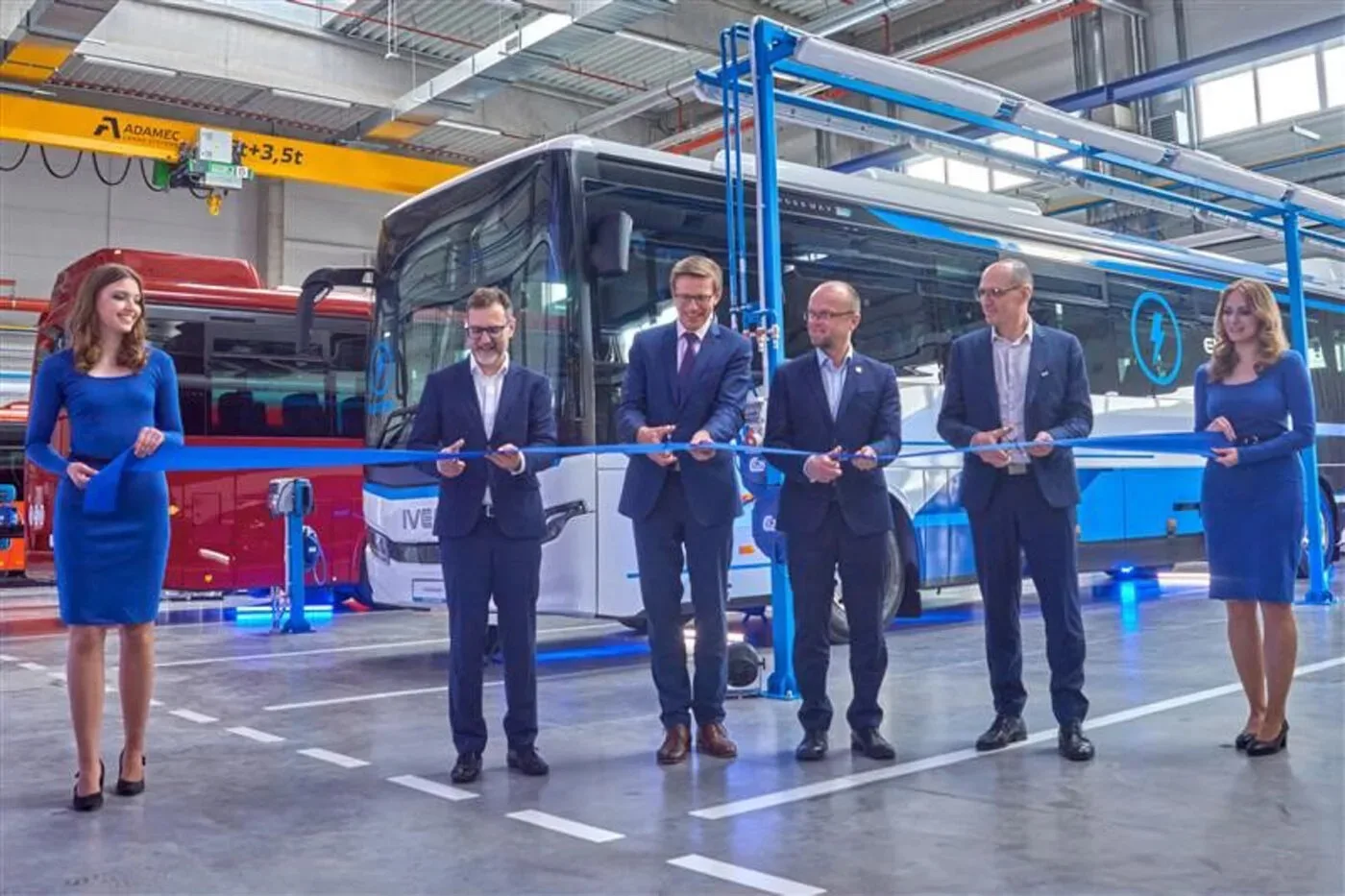
Iveco Bus has inaugurated a new prototype and testing centre at its Vysoké Mýto facility in the Czech Republic. The site has been designed to accommodate all types of powertrains, including battery-electric and hydrogen-powered vehicles. The two-storey facility now offers double the previous workspace, spanning 4,100 square metres, and can handle prototypes up to 18 metres in length, according to the company. It includes twelve dedicated workstations, each equipped with overhead platforms to enable ergonomic access to the vehicle roofs—where battery packs and hydrogen tanks are typically located in buses. The new testing centre also features a thermal chamber, where vehicle air conditioning systems can be tested in conditions of up to 50 degrees Celsius. With its installed test benches, Iveco Bus says it can conduct a wide range of procedures, including internal and external noise measurements, vibration testing, driving behaviour analyses, and energy consumption assessments. The prototype and testing facility was built in 18 months and currently employs over 50 people, including 20 engineers. Iveco adds that staff will receive comprehensive training in alternative drivetrains and new energy technologies. In the future, employees at the Czech site will collaborate closely with other Iveco Bus R&D centres—particularly for validation tests not carried out at Vysoké Mýto. For example, testing of heating systems and electronic components is undertaken at the Vénissieux site in France, while the centre in Turin focuses on durability assessments. This distributed approach is intended to support the development of new bus models. “This new Prototype & Testing Center in Vysoké Mýto is of strategic importance for the development of future vehicle models equipped with the latest technologies, regardless of the propulsion energy,” said David Kříž, Managing Director of Iveco Czech Republic. The testing centre is located at one of Iveco Bus’s major production sites. The Vysoké Mýto plant builds the Crossway and Evadys model ranges, most of which are destined for export markets. ivecogroup.com
Sodium Batteries Are Coming For Your Gasmobiles

Last Updated on: 11th June 2025, 09:56 am The battle against EVs is a losing one. Automotive innovators just keep on coming up with new ways to improve the EV experience, with battery safety, cost, performance, and supply chain being particular areas of focus. The latest example is the California startup Unigrid, which is one giant step closer to manufacturing next-generation sodium batteries at scale for stationary energy storage, with emerging EV markets also in its sights. California Places A $3 Million Bet On Sodium Batteries Unigrid is casting a wide net for its new sodium-ion battery formula. The initial focus is on stationary storage for residential use, with commercial, industrial, and utility scale batteries as next steps. The company also includes EV batteries for two-wheelers, three-wheelers, passenger cars and off-road vehicles on their to-do list for emerging markets, so it will be interesting to see if they can pull it off. Sodium batteries have faced a number of technology challenges including weight, which generally works against the idea of mobility applications. Still, Unigrid does state that its new anode formula provides for greater energy density compared to conventional sodium batteries. Other innovators have also indicated that mobility applications are in sight. For the time being, the California Energy Commission is banking on the stationary storage market. In April, CEC approved a grant of almost $3 million for Unigrid to set up a pilot scale production line for its sodium batteries in San Diego, tasked with producing from 250 to 750 batteries per day to be deployed for stationary energy storage in homes. “This agreement will fund the design, build-out, and validation of a Low-Rate Initial Production line in San Diego to manufacture advanced Sodium-ion Batteries suitable for residential energy storage with a greater volumetric energy density than is commercially available due to their proprietary electrolyte and anode chemistry,” reads the CEC award resolution. The pilot line will produce cylindrical batteries, in accord with Unigrid’s goal of producing drop-in replacements for other battery formulas. Sodium Batteries Vs. Lithium-Ion Batteries Conventional lithium-ion batteries have shouldered the lion’s share of the electrification movement, including residential energy storage systems as well as EV batteries, so it’s worth asking why CEC decided to put up almost $3 million towards something new and different. In its grant application material, Unigrid takes note of obstacles standing in the way of marketability. The allure of a sodium battery lies in its use of a cheap, abundant material, namely, salt. However, that doesn’t make sodium batteries necessarily less expensive than their lithium-ion cousins. In fact, Unigrid notes that the two formulas are roughly equivalent in cost, at least for the present. Nevertheless, cost is just one element that CEC factored into its search for an improved home energy storage platform. In its grant request form, Unigrid takes note of three widely recognized areas of in which sodium batteries represent an improvement over Li-ion technology. Safety is one concern. As Unigrid indicates, today’s Li-ion batteries are safe as-is. However, extraordinary circumstances can touch off a risk event. “They present safety hazards, such as battery failure or fire during a short circuit or when operated under harsh environments and extreme temperatures,” Unigrid observes. Unigrid also takes note of supply chain issues involving imported lithium, cobalt, and other materials that raise “ethical concerns about extraction methods and labor practices.” The third area of concern is the use of volatile substances and other hazardous materials in Li-ion batteries. “They are hazardous to the environment due to the toxic materials used in their16 fabrication,” Unigrid states. How Close Are We To Sodium Batteries In EVs? As for cost, Unigrid also appears to be on track to resolve that issue. Without giving away too many details, the company states that its proprietary NIB (sodium-ion battery) formula has the potential to cut costs when manufactured at full volume, as applied to residential energy storage. Unigrid pegs the current cost of commercially available Li-ion batteries with LFP (Lithium-Iron-Phosphate) cathodes at more than $100 per kilowatt-hour, compared to a projected cost of $75 per kilowatt-hour for its sodium batteries. “This Agreement will lead to technological advancement and breakthroughs to overcome barriers to the achievement of the State of California’s statutory energy goals by producing a sodium-ion battery of reduced cost and environmental burden, and increased supply chain security, safety, and energy density,” Unigrid states, noting that its new, proprietary anode has “five times the density (7.3 g/cm3) and three times the capacity (>800 mAh/g) compared to conventional hard carbon anodes.” “This alternative anode enables the NIB to be produced with high volumetric energy densities (350 Wh/L) which is greater than conventional sodium-ion batteries (200-250 Wh/L) and comparable to state-of-the-art LFP batteries (300-35038 Wh/L), while still reducing overall costs,” the company adds. Unigrid further states that its sodium batteries provide “all the environmental and safety benefits of NIBs” while beating — not just meeting — Li-ion batteries with LFP cathodes. “Additionally, sodium-based materials can be sourced domestically, reducing the import reliance and supply chain challenges faced by conventional LIB materials, such as lithium and cobalt,” Unigrid emphasizes. While the grant application focuses on residential stationary storage, Unigrid also dropped a hint that it does aim to compete against the Li-ion/LFP batteries emerging in the EV field among other applications. Losing The War On EVs The latest AAA driver survey suggests a souring environment for EV sales in the US. However, the AAA survey is just one survey. Other surveys indicate a more positive outlook, particularly among fleet operators. Then there’s the iconic US restaurateur Waffle House, which recently announced plans to install EV charging stations at 50 of its restaurants next year. Cracker Barrel and Dennys are among many other traveler-oriented food purveyors jockeying to attract a new generation of EV drivers. What do they know that we don’t? In addition, to the extent that the AAA survey reflects the wheels-on-the-ground situation, one might say the mood has soured for just about any major purchase among many
Hopewind talks European distributed PV and storage and streamlined offerings
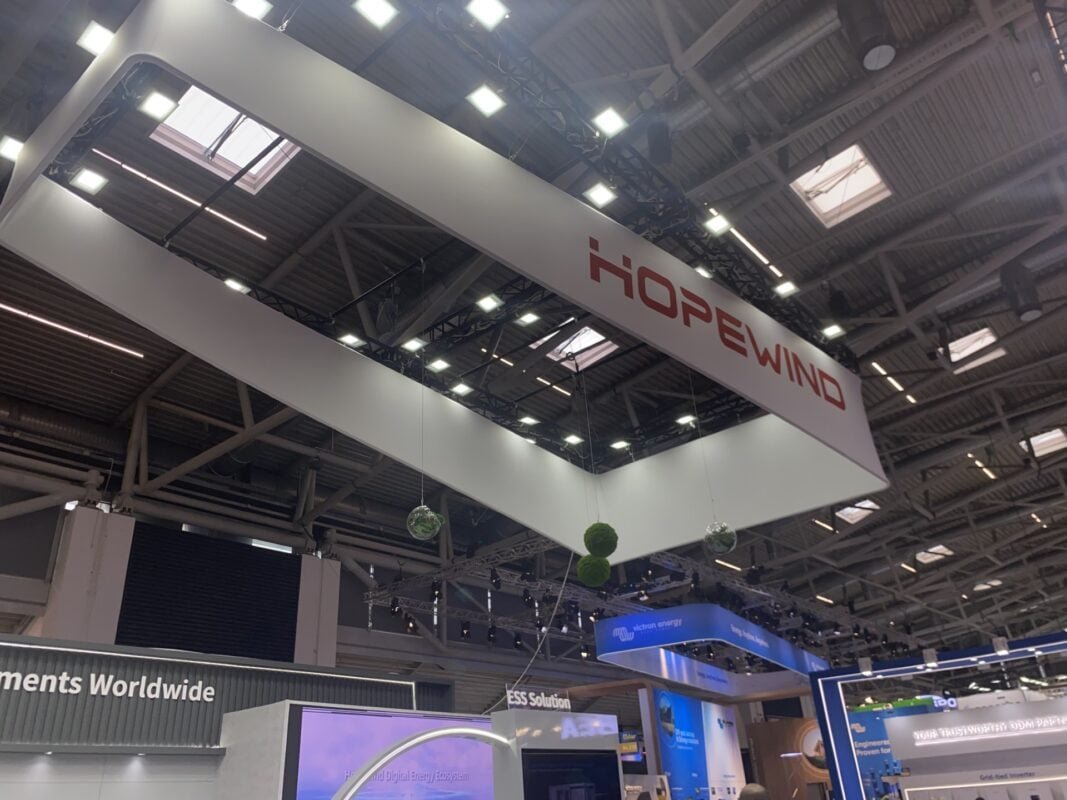
We spoke about the European solar and storage markets, in particular the fate of the corporate & industrial and residential sectors; the challenges and opportunities of the coming 12 months; the importance of innovation and cybersecurity, and the unique offerings Hopewind brings to the space. ESN: How are you approaching the European distributed solar & storage market in 2025? Zalewski: I’m observing more and more interest in BESS solutions. I don’t quite want to say that the market is mature right at this moment, but what I’m observing is that people are asking very detailed questions about the systems. Before [at previous shows], they were asking how it works, because they realised they needed something, but they didn’t know what it was. Now, they know about the batteries – about the capacity and the technology types – so they come to us asking for price, availability, technical specifications. To me, that shows that this market is changing very fast, faster than even a few months earlier. In the past, with PV and inverter technology, things moved quite slowly, and there were not so many innovations. Right now, every week gives something new [in BESS innovation]. I am expecting that the BESS market will mature this year, like the PV market is mature now. For example, our 130kW C&I Power Conversion System and Next-Gen On-Grid Inverter (60–110kW) combine IP66/C5 protection with AFCI 4.0, which is ideal for commercial and industrial applications. Europe’s energy transition demands adaptable, high-performance solutions. We are inventing products tailored specifically for European market demands. In a maturing market, how is Hopewind offering different technology from its competitors? We are always following the market and trying to deliver devices the market can utilise. We offer both liquid- and air-cooled power conversion systems (PCS), including a 130kW rack version that is perfect for C&I scenarios and a liquid-cooling 215kW PCS which can be installed inside the battery container. We also offer a common, direct solution for a PCS which can be easily installed into the storage cabinet. We offer an all in one solution for utility BESS scenario. This kind of all-in-one BESS container offers the Battery and PCS integrated into one container and with the internal cable connection prefabricated, it is a DC&AC combination solution. It has significant advantages for onsite commissioning and shortens the grid connection cycle for utility-scale BESS projects. Every product is developed through rigorous market research and testing. This ensures they solve specific challenges, like harsh environments or grid instability. In short, we don’t just follow trends—we shape them, delivering solutions that meet today’s demands and tomorrow’s opportunities. What are the main challenges facing European distributed solar market players, in light of slower growth and changing priorities? The money is the key, I think. Return on investment (ROI) is one of the major questions right now; if I buy a system, how long will I wait for a return on that? We as a supplier are shortening the ROI, for example by giving customers devices which are more powerful and more reliable, which will ensure better power generation and benefit. The same goes for PCS systems. Simultaneously, Hopewind is diversifying its offerings as a company. We have multiple product series, including wind power converters, PV inverters, BESS, hydrogen power solutions, and VFD, which ensures resilience against sector-specific slowdowns. We can see the [European] market is experiencing some stagnation, but this depends on the country. For example, in Poland, my colleagues hear complaints about the residential market but there are still between 9,000 and 13,000 residential installations monthly, so the market is still there. How does Hopewind ensure its inverters and BESS solutions are cybersecure? Cybersecurity is a non-negotiable priority for Hopewind. For our inverters in the residential and C&I sector we use our own cloud system called Hope Cloud, and our servers are located in Frankfurt and we have certifications that everything is safe and we are not transferring data to outside [sources]. Hopewind has certificates under IEC 62443 and is SGS cybersecurity certified, as well as other global frameworks for secure grid communication and data integrity. We invite stakeholders to engage directly with our technical team for detailed protocols, underscoring our commitment to transparency and trust.
Tesla Lathrop Megafactory celebrates massive Megapack battery milestone
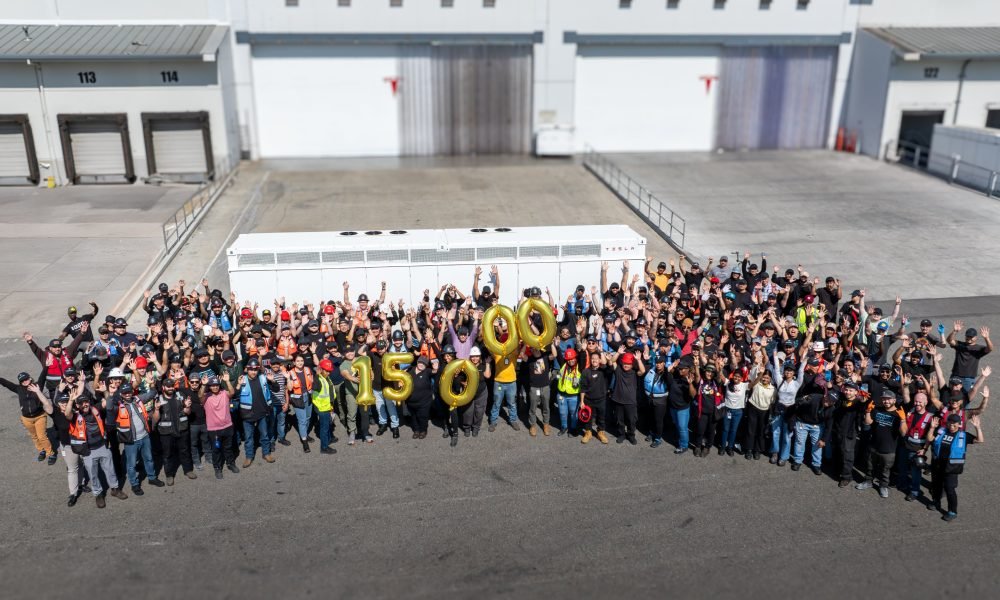
Tesla Megapack batteries will power the xAI Colossus supercomputer in Memphis to ensure power stability. The collaboration between Tesla and xAI highlights the synergy among Elon Musk’s ventures. The artificial intelligence startup has integrated Tesla Megapacks to manage outages and demand surges, bolstering the facility’s reliability. The Greater Memphis Chamber announced that Colossus, recently connected to a new 150-megawatt electric substation, is completing its first construction phase. This transition addresses criticism from environmental justice groups over the initial use of natural gas turbines. “The temporary natural gas turbines that were being used to power the Phase I GPUs prior to grid connection are now being demobilized and will be removed from the site over the next two months. “About half of the operating turbines will remain operating to power Phase II GPUs of xAI until a second substation (#22) already in construction is completed and connected to the electric grid, which is planned for the Fall of 2025, at which time the remaining turbines will be relegated to a backup power role,” the Chamber stated. xAI’s rapid development of Colossus reflects its ambition to advance AI capabilities, but the project has faced scrutiny for environmental impacts. The shift to Megapacks and grid power aims to mitigate these concerns while ensuring operational continuity. The Megapack deployment underscores the collaboration among Musk’s companies, including Tesla, SpaceX, Neuralink, and The Boring Company. Tesla appears to be the common link between all of Musk’s companies. For example, The Boring Company built a tunnel in Giga, Texas. In addition, Musk has hinted at a potential collaboration between the Tesla Optimus Bot and Neuralink. And from January 2024 to February 2025, xAI invested $230 million in Megapacks, per a Tesla filing. Tesla Energy reported a 156% year-over-year increase in Q1 2025, deploying 10.4 GWh of storage products, including Megapacks and Powerwalls. Tesla’s plans for a new Megapack factory in Waller County, Texas, which is expected to create 1,500 jobs in the area, further signal its commitment to scaling energy solutions. As xAI leverages Tesla’s Megapacks to power Colossus, the integration showcases Musk’s interconnected business ecosystem. The supercomputer’s enhanced stability positions xAI to drive AI innovation, while Tesla’s energy solutions gain prominence, setting the stage for broader technological and economic impacts.
Philippines gains its first all-electric taxi service
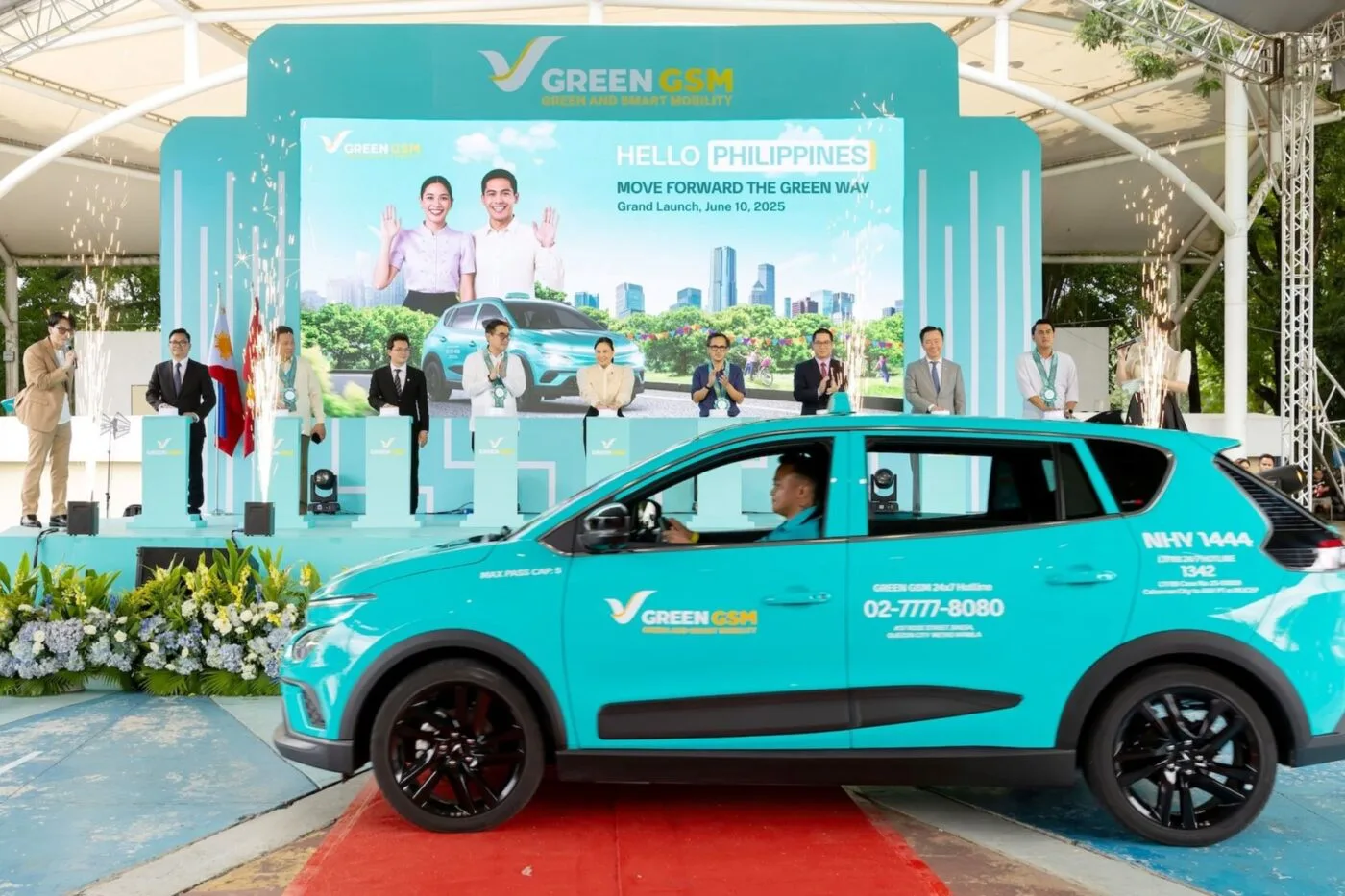
VinFast has launched an electric taxi service in the Philippines. The company offers zero-emission rides under its Green GSM brand. The service will operate in ten of the 16 cities and districts that make up Metro Manila. The new fleet will be made up entirely of VinFast Nerio Green EVs, the commercial version of the VF e34 sub-compact SUV. These Vietnam-made BEVs utilise a 110kW electric motor and a 42kW lithium battery, with a range clocking in at around 285km on one charge. Each vehicle is equipped with a Secure to Safe (S2) monitoring system which provides real-time monitoring and AI safety features. In terms of pricing, each vehicle is fitted with a taxi meter that is linked to the Green GSM app, which the firm says gives transparency to both users and drivers as to the cost of their trip. Customers will be able to book a ride via the official app, or by calling a hotline or hailing a ride from a dedicated pick-up point. As a celebratory launch offer, VinFast is giving first-time Green GSM users in Metro Manila 500 Green Points worth 500 pesos (23 euros). They can redeem the points on the first seven trips until 31 August. Green GSM will serve a catchment area populated by more than 13 million people, providing pure electric transport to many for the first time. The Philippines is the fourth country that Green GSM will operate in, as well as Vietnam, Laos, and Indonesia. “The Philippines marks a strategic chapter in our Go Green Global journey,” said Nguyễn Văn Thanh, the Global CEO of GSM. “But more than expanding to a new market, our true goal is to ignite a real transformation – shifting from traditional mobility to an electric future that is cleaner, smarter, and more socially responsible.” techinasia.com, manilatimes.net, vingroup.net
Powin files for Chapter 11 bankruptcy protection and spins off project services business
Powin files for Chapter 11 bankruptcy protection and spins off project services business - Energy-Storage.News Skip to content
Tesla launches "TeslaVision" video contest to celebrate Model Y deliveries
xAI’s supercomputer in Memphis faces pushback from local leaders and environmental groups over concerns about air pollution despite its promise of economic growth. xAI’s Memphis facility was touted as the world’s largest supercomputer. It has sparked opposition from the NAACP, Sierra Club, and Mississippi Democratic Party Chairman Cheikh Taylor. State Rep. Taylor spoke at a Southaven church press conference recently, arguing that the xAI facility in Memphis, Tennessee, would disproportionately harm black residents in north Mississippi. “In the State of Mississippi, the goal is to separate Republicans and Democrats on race alone. So, if you’re a Democrat in this state, you probably look like me,” Taylor said. He also criticized prioritizing economic gains over environmental health, asking, “Can you trust Elon Musk to tell the truth?” Tennessee State Rep. Justin J. Pearson echoed these concerns, linking the opposition to a broader fight against pollution. “The paltry money xAI has dangled in front of our short-sighted leaders is not worth the cost of breathing dirty and–in some cases–deadly air,” Pearson said. These local leaders and environmental groups are urging local governments and the Environmental Protection Agency to deny xAI’s air permit applications for 45 to 90 methane gas turbines in the Memphis and Southaven areas. xAI has not directly addressed the criticism but has taken steps to power its Colossus supercomputer sustainably. Last month, the Greater Memphis Chamber announced that Tesla Megapack batteries would stabilize the facility’s power, with a new 150-megawatt electric substation completing its first construction phase. “The temporary natural gas turbines that were being used to power the Phase I GPUs prior to grid connection are now being demobilized and will be removed from the site over the next two months,” shared the Chamber. An additional 160+ Megapacks were delivered to xAI’s Memphis facility for the Colossus 2 data center within the same month. Announced in June 2024, the xAI facility was hailed by Greater Memphis Chamber CEO Ted Townsend as the largest capital investment by a new-to-market company in Memphis history. Despite its economic promise, environmental concerns continue to fuel opposition, highlighting tensions between technological innovation and community health in the Deep South’s emerging AI hub.
The US Produced More Energy than Ever Before in 2024
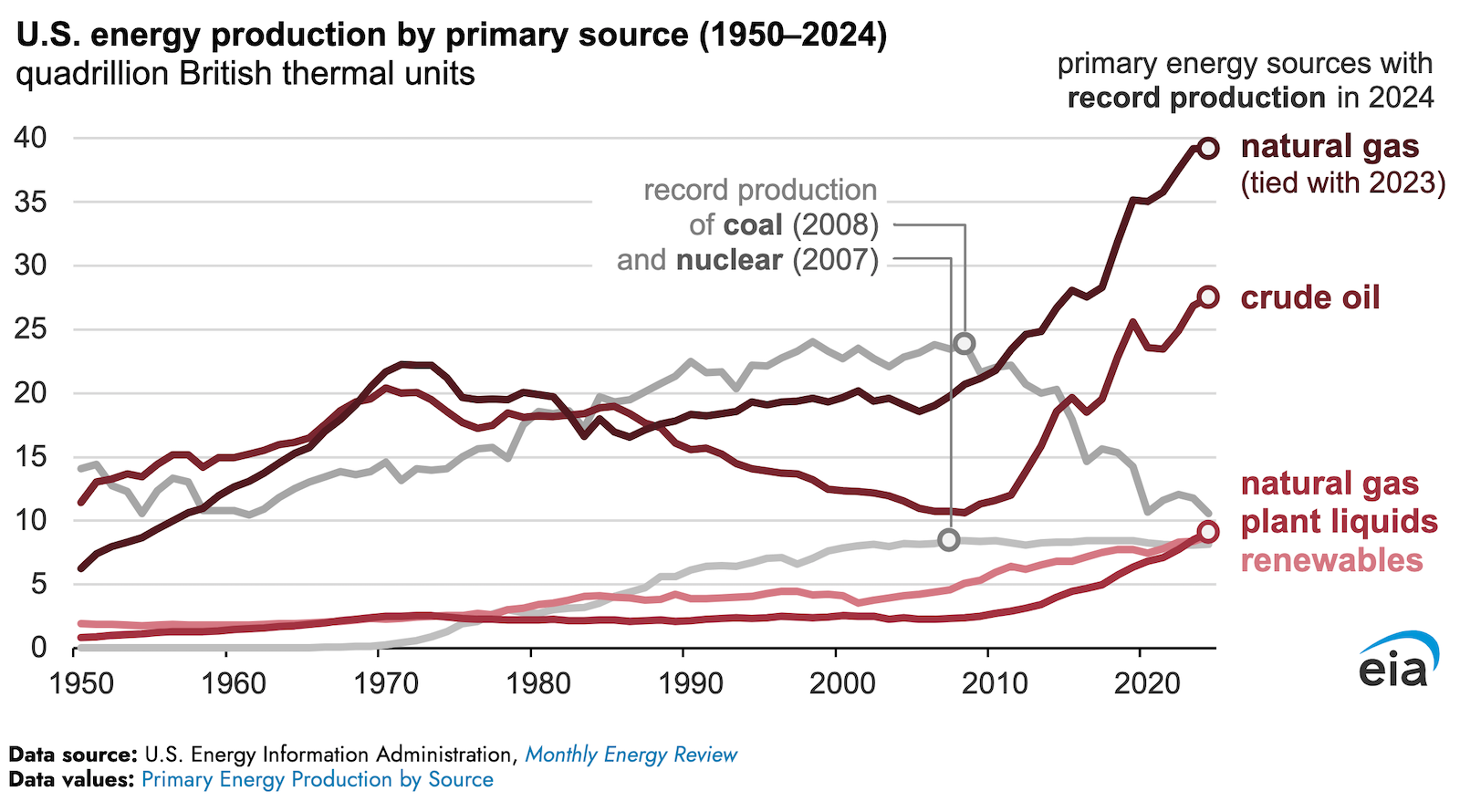
Last Updated on: 11th June 2025, 12:36 am In 2024, the United States produced a record amount of energy, according to data in our Monthly Energy Review. U.S. total energy production was more than 103 quadrillion British thermal units in 2024, a 1% increase from the previous record set in 2023. Several energy sources—natural gas, crude oil, natural gas plant liquids, biofuels, solar, and wind—each set domestic production records last year. Data source: U.S. Energy Information Administration, Monthly Energy Review. Data values: Primary Energy Production by Source. Natural gas accounted for about 38% of U.S. total energy production in 2024 and has been the largest source of U.S. domestic energy production every year since 2011, when it surpassed coal. U.S. dry natural gas production was nearly 38 trillion cubic feet, about the same as in 2023. Domestic crude oil accounted for about 27% of U.S. total energy production in 2024, as the United States continues to be the world’s top crude oil-producing country. U.S. crude oil production was a record 13.2 million barrels per day in 2024, 2% more than the previous record set in 2023. Almost all of the production growth came from the Permian region that spans parts of New Mexico and Texas. Coal accounted for about 10% of U.S. total energy production in 2024. At 512 million short tons, last year’s coal production was the lowest annual output since 1964. Coal was the largest source of U.S. energy production from 1984 through 2010. Natural gas plant liquids (NGPL), which includes fuels such as ethane and propane that are associated with natural gas processing, accounted for about 9% of U.S. total energy production in 2024. NGPL production was a record 4 trillion cubic feet in 2024, up 7% from 2023. Domestic NGPL production have increased every year since 2005 as U.S. natural gas production and processing capacity have increased. Biofuels, wind, and solar production each set records in 2024, contributing to record total renewable energy production in the United States. In 2024, U.S. total biofuels production, which includes ethanol, renewable diesel, biodiesel, and other biofuels such as sustainable aviation fuel (SAF), was a record 1.4 million barrels per day, up 6% from previous records set in 2023. In 2024, U.S. solar and wind production increased by 25% and 8%, respectively, as new generators came online. Output from other energy sources that are primarily used for electric power generation either peaked decades ago (hydropower and nuclear) or fell slightly from their 2023 values (geothermal). We convert sources of energy to common units of heat, called British thermal units, to compare different types of energy that are usually measured in units that are not directly comparable, such as barrels of crude oil and cubic feet of natural gas. Appendix A of our Monthly Energy Review has the conversion factors that we use for each energy source. Article from Today in Energy. Principal contributor: Mickey Francis Sign up for CleanTechnica's Weekly Substack for Zach and Scott's in-depth analyses and high level summaries, sign up for our daily newsletter, and follow us on Google News! Whether you have solar power or not, please complete our latest solar power survey. Have a tip for CleanTechnica? Want to advertise? Want to suggest a guest for our CleanTech Talk podcast? Contact us here. Sign up for our daily newsletter for 15 new cleantech stories a day. Or sign up for our weekly one on top stories of the week if daily is too frequent. Advertisement CleanTechnica uses affiliate links. See our policy here. CleanTechnica's Comment Policy
Battery Power Online | Finalists Announced for Best of Show Awards at Advanced Automotive Battery Conference Europe 2025
By Battery Power Staff June 11, 2025 | Finalists have been named in the first Best of Show People’s Choice Awards competition at the Advanced Automotive Battery Conference Europe, June 23-26, in Mainz, Germany. Attendees at the event are invited to identify exceptional innovation in technologies in the battery space, voting on the most impactful new products of the year. The awards competition is open to all Advanced Automotive Battery Conference Europe exhibitors with new products that are available for purchase at the event. Companies entered their products for consideration in advance of the event, and eleven finalists have been chosen by the Battery Power Online editorial team. Attendees are encouraged to explore the novel technologies and solutions firsthand in the exhibit hall and vote for the People’s Choice Award once the conference begins. Please note, selection is not based on level of sponsorship or exhibit participation. Winners will be chosen by on-site community voting during the event. Voting links will be available at finalists’ booths and throughout the event. Voting will open when the exhibit hall opens on Tuesday, June 24, at 10:00. Winners will be announced on Wednesday, June 25, during the 13:30 Dessert Break in the Exhibit Hall. Addionics | Smart 3D Current Collectors | Booth 1002 https://www.addionics.com/ Addionics improves rechargeable batteries by redesigning their architecture, enabling higher performance and cost efficiency. The company’s patent-protected, scalable, Smart 3D Current Collectors fabrication method enhances battery performance including capacity, safety, charging time, and lifetime – for any kind of battery chemistry, existing or emerging. The company’s Al-based, drop-in technology is designed for production and is seamlessly integrated into any existing assembly line, allowing battery makers to reduce production costs while increasing manufacturing capacity. Addionics’ solution enables the industry to move to a more efficient and cost-effective era, driving a step change in battery performance and the acceleration of technologies that support a sustainable and decarbonized future. ANDRITZ Sovema | Gigaform Modular Formation System 1.0 | Booth 901 https://www.sovemagroup.com/ ANDRITZ fully automated and scalable cell formation plant for cylindrical cells includes four formation chambers per module, for a total of a customizable number of chambers connected with a fully automated intralogistics system. Each thermally controlled chamber is dedicated to the initial charging and discharging of cylindrical cells. In compliance with high level safety standards, the advanced power electronics solution offers an energy efficiency of 85% from grid to cell and cell to grid respectively, and of 92% from cell to cell. No water cooling is required for power electronics cabinet. The system is also available for pouch and prismatic cells. Battery Dynamics GmbH | HRT-S + EIS option | Booth 1112 http://battery-dynamics.de Our HRT-S ultra-high precision battery cyclers now come with the option of advanced Electrochemical Impedance Spectroscopy (EIS). For the first time, EIS measurements can be combined with High Precision Coulometry (HPC) measurements to boost the development of fast charging protocols. Charging times can be reduced substantially while preventing degradation related to unwanted lithium plating. For HPC analyses, it is essential to maintain a precise charge neutrality after each impedance measurement, which other state-of-the-art potentiostats are not capable of. Moreover, we can perform nonstationary EIS with a powerful drift correction and provide sinusoidal excitations with lowest-in-class distortions. Within seconds, you have recorded your EIS spectrum. With NONLINEAR EIS, we are bringing the latest advances from research into commercially available battery testers, enabling you to push your fast charging to new levels. Breathe Battery Technologies | Breathe Model | Booth 502 https://breathebatteries.com/ Breathe Model is a next-generation battery simulation tool built to deliver fast, low-cost, and high-confidence answers to complex system-level engineering problems. Fully parameterised and validated in as little as four weeks, it empowers battery teams to make better decisions without the burden of maintaining in-house models or relying on extensive empirical testing. Built on a physics-based framework, Breathe Model provides granular insight into internal battery states – such as anode and cathode potentials – supporting deeper understanding of electrochemical behaviour. This enables engineers to optimise battery system performance across varied applications, without compromising on cost or timelines. What sets Breathe Model apart is its scalability and speed. Our synchronised model and parameterisation design allows delivery at the volume and pace demanded by dynamic product portfolios. Engineers gain transparent accuracy, with clear validation reports outlining performance across the full parameterised range. Key parameters – like OCV, geometry, and particle dimensions – are shared alongside documentation of model equations (excluding core IP), giving users clarity and trust in the results. Breathe Model also introduces agility into battery development, allowing teams to quickly assess “what if” scenarios and adapt to shifting product requirements or late-stage changes – eliminating the need for repeated empirical verification. With Breathe Model, battery teams can shift from reactive testing to proactive design, reduce reliance on expensive empirical testing, and free up engineering resources to focus on what matters most: delivering better, faster, and more cost-effective battery systems. Delfort | IonPort for Secondary Batteries | Booth 1114 https://delfortgroup.com/specialty-paper-products/battery-separator-papers/ Fiber-based Separators – The Key to Efficient Manufacturing and Enhanced Battery Performance Often disregarded but crucial in every aspect – separators play an important role in battery production and development. delfort’s IonPort separators bring significant benefits to both manufacturing efficiency and battery performance. As a leading supplier of ultralight specialty papers, delfort has developed cutting-edge separators specifically designed for secondary batteries. With its exceptional thermal stability and ability for rapid electrolyte absorption, IonPort separators contribute effectively to enhanced and energy-saving cell production. Thanks to their exceptionally high heat resistance, IonPort separators feature almost no shrinkage even at temperatures of up to 320°F (160°C). They maintain their integrity as well as their pore and fiber structure without compromise. This makes IonPort safe and the ideal separator for jelly-roll or stack drying and cell baking – manufacturing process steps that allow for the minimization of dry room requirements and, consequently, the associated investment and operating costs. Cells with the thermally-stable IonPort separator can be dried
Tesla CEO Elon Musk reveals new details about Robotaxi rollout
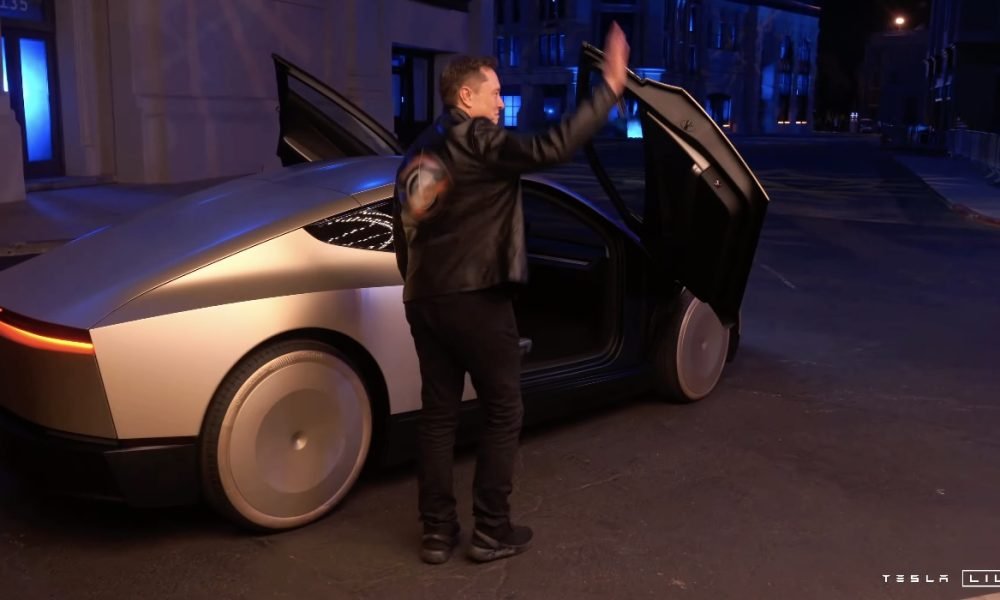
Tesla CEO Elon Musk says the automaker’s Robotaxi platform launch later this month will essentially force other companies to license Full Self-Driving to achieve their own goals of achieving autonomy. Musk’s statement comes as a video captured today showed the first Tesla Robotaxi test mules on public streets in Austin, Texas, just one day after the City officially listed the company as an autonomous vehicle operator. A prediction by investing YouTube and Tesla community member Dave Lee stated that “at least one automaker by end of year” will license Full Self-Driving from the Musk-led company, as it will give rivals the confidence to use the software to run their own self-driving operations. Lee detailed his theory by stating that the company that chooses to commit to FSD licensing will not be able to integrate the hardware and sell those units immediately. Instead, it will take two years or so to solve the engineering and design applications. First Tesla driverless robotaxi spotted in the wild in Austin, TX Musk revealed his true thoughts on other automakers’ attempts at vehicle autonomy, and said many are being told that Robotaxi is not real or that they can solve their problems with hardware orders to Nvidia. He went on to say that companies will be forced to turn to Tesla at some point or another, because Robotaxi will be widespread and their solutions to figuring out an effective deployment will prove to be failures: “The automakers keep being told that this isn’t real or that just buying some hardware from Nvidia will solve it. As Tesla robotaxis become widespread and their other solutions don’t work, they will naturally turn to us.” The automakers keep being told that this isn’t real or that just buying some hardware from Nvidia will solve it. As Tesla robotaxis become widespread and their other solutions don’t work, they will naturally turn to us. — Elon Musk (@elonmusk) June 10, 2025 Musk has not been shy to respond to speculation regarding the video of the Robotaxi, which was shared on X earlier today. This is perhaps one of the more fiery things he revealed. He seems ultra-confident in what Tesla will prove and achieve in the near future with the launch of the Robotaxi platform. Many believe it will be rolled out this month. Bloomberg reported recently that Tesla was internally aiming for June 12. The company has not directly responded to these rumors. Tesla has discussed on several occasions that it is in talks with an automaker about licensing Full Self-Driving, but it has never revealed who. The company first revealed discussions with another automaker in early 2024 when Elon Musk said: “We’re in conversations with one major automaker regarding licensing FSD. It really just becomes a case of having them use the same cameras and inference computer and licensing our software. Once it becomes obvious that if you don’t have this (FSD) in a car, nobody wants your car. It’s a smart car… The people don’t understand all cars will need to be smart cars, or you will not sell, or nobody would buy it. Once that becomes obvious, I think licensing becomes not optional.” Tesla confirms it is in talks with major automaker for potential FSD licensing Many, including us, suspected that Ford was the company that Tesla was speaking of due to Musk’s relationship with Jim Farley, which resulted in the legacy automaker being the first major car company to adopt Tesla’s North American Charging Standard (NACS), which gave them access to the Supercharging Network. This catalyzed an onslaught of companies choosing to make the same move as Tesla had truly set itself apart in terms of charging infrastructure. Companies may be forced to make a similar decision if it can make the same type of statement with the rollout of Robotaxi.
AESC kicks off battery production at Douai gigafactory
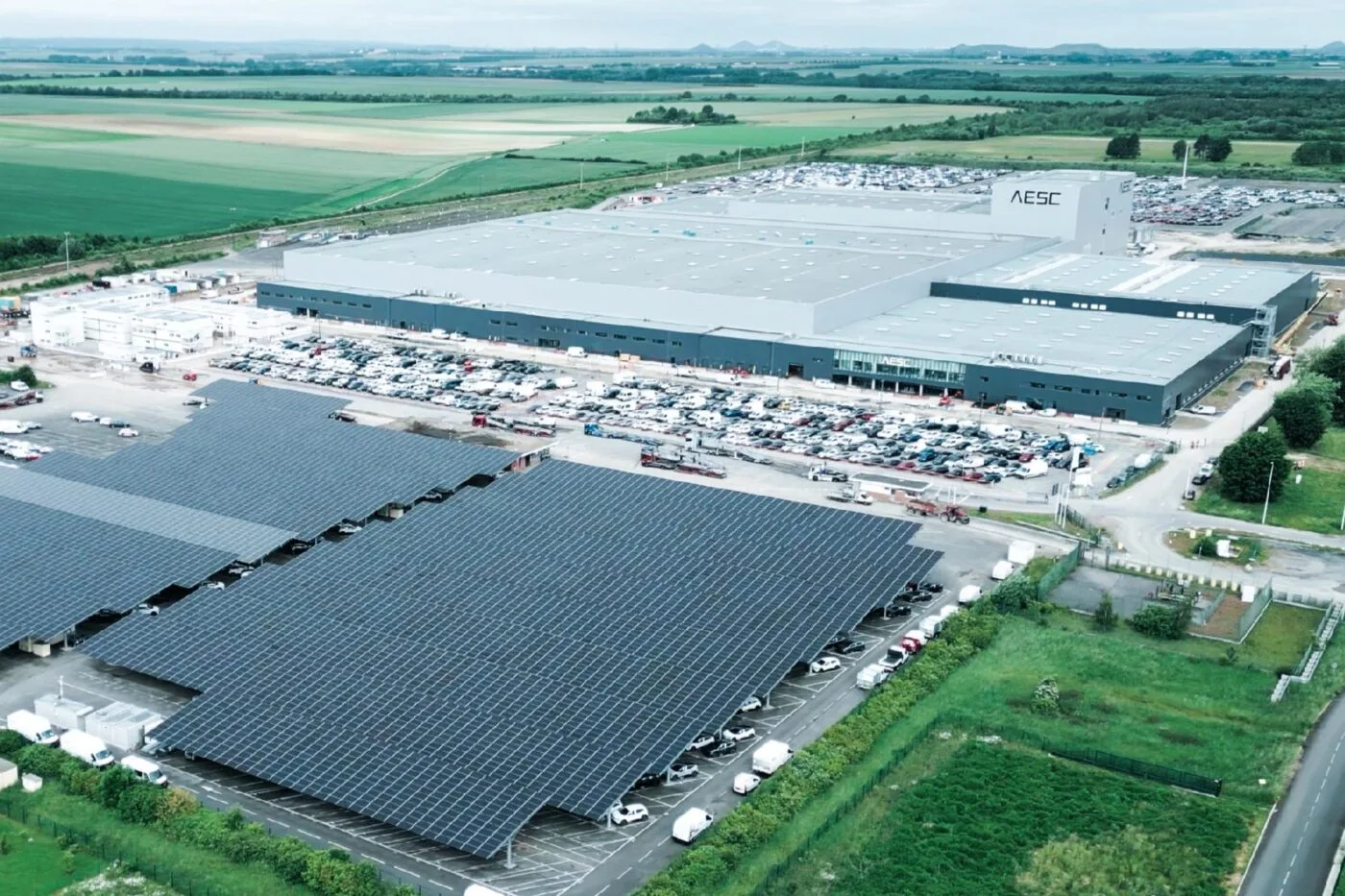
AESC has started production at its new 10 GWh battery plant in Douai, France. The facility supplies Renault and is expected to employ up to 1,000 people as part of France’s industrial strategy for electric mobility. Automotive Energy Supply Company (AESC) has commenced battery production at its newly completed gigafactory in Douai, France. The facility, which has an annual capacity of 10 GWh, will supply advanced lithium-ion batteries for Renault electric vehicles. At full scale, it will have the potential to power up to 200,000 EVs per year. French President Emmanuel Macron attended the official Start of Production (SOP) event, underscoring the site’s strategic role in France’s industrial and energy transition. “Here in Douai, we are turning a new page in the history of French industry,” said President Macron. “The inauguration of the AESC gigafactory—launched as part of Choose France in 2021—is the culmination of eight years of determined effort. This flagship project reflects a uniquely French vision of ecological transition: one that unites innovation, development, job creation, and sustainable ambition.” The project is backed by several financial partners, including Bpifrance, Caisse des Dépôts et Consignations, the European Investment Bank, and a syndicate of commercial banks. And, maybe more importantly, the EU Commission approved a grant of 48 million euros from the French government earlier this year. The site currently employs 650 staff, with AESC expecting to increase this to 1,000 as production ramps up. The plant is located in the Hauts-de-France region, a traditional automotive stronghold now being positioned as a hub for electric mobility production. The facility is powered by renewable electricity and includes integrated manufacturing processes such as electrode production, cell assembly, and module integration. AESC will manufacture lithium-ion cells and battery modules for Renault, namely the more affordable NMC cells with for volume vehicles in the battery factory in Douai. The battery cells will initially be used for the all-electric Renault R5. Renault will continue to source performance cells from long-standing battery partner LG Energy Solution. “The start of production at our Douai gigafactory marks a pivotal step in AESC’s commitment to advancing France’s reindustrialization and leadership in the global energy transition. By investing in cutting-edge battery technology and skilled talent, we are proud to help accelerate the decarbonization of transportation worldwide. France’s bold vision for clean mobility continues to inspire us every day”, said Lei Zhang, Chairman of AESC. According to earlier information, the investment for the site amounts to 1.3 billion euros. In 2023, the European Investment Bank (EIB) granted loans totalling 450 million euros for the project. Meanwhile, the construction of the company’s battery factory in South Carolina, USA, has been put on hold. The 1.6 billion dollar project was to supply BMW with cylindrical cells and create around 1,600 jobs. The reason cited for the temporary halt to construction is uncertainty regarding US economic policy and market conditions. aesc-group.com
Artificial Intelligence Models Improve Efficiency of Battery Diagnostics
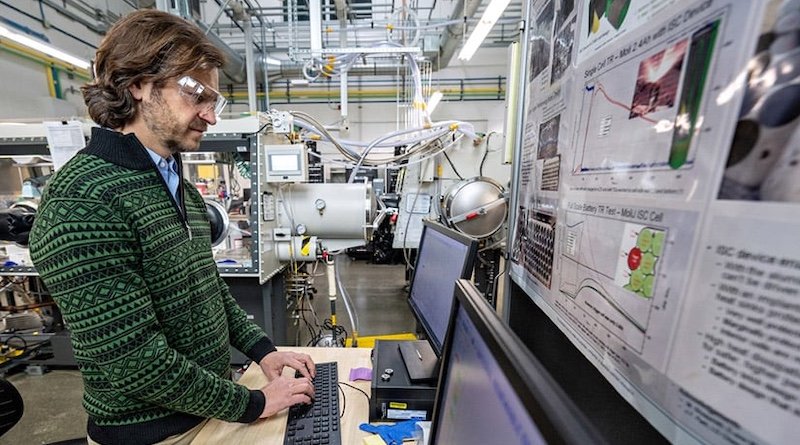
Last Updated on: 11th June 2025, 12:05 am NREL-Developed Neural Networks Uncover New Insights Into Battery Health Resilient energy systems depend on reliable batteries. The lithium-ion (Li-ion) batteries powering our world must endure the steady strain of time, charge cycles, and environmental conditions that gradually wear them out through degradation. Understanding the health of a battery can help manufacturers, researchers, and consumers alike optimize its lifetime performance. Yet diagnosing a battery’s state of health is no easy feat, as each cell is a complex system of chemical reactions and physical changes that standard evaluation models struggle to capture with speed and precision. National Renewable Energy Laboratory (NREL) researchers have developed and demonstrated a groundbreaking physics-informed neural network (PINN) model that can predict battery health nearly 1,000 times faster than traditional models. NREL’s battery researchers are turning to cutting-edge artificial intelligence models to optimize battery performance for a new generation of energy storage. Photo by Werner Slocum, NREL. “Li-ion battery lifetime and aging dynamics vary significantly with chemistry, operating conditions, cycling demands, electrode design, and operational history, which makes optimal handling, design, and maintenance difficult,” said Kandler Smith, who leads electrochemical modeling and data science research at NREL. “It’s especially difficult to understand the physical degradation mechanisms of a battery during use without opening it up. We need reliable methods to check in on batteries’ internal state in a nondestructive way.” NREL’s PINN replaces the traditional, resource-intensive battery physics model with a powerful artificial intelligence approach that mimics the interconnected neurons of our brains to analyze nonlinear, complex datasets. This deep learning process can enhance battery health diagnostics by quantifying physical degradation mechanisms and pave the way for more efficient, scalable approaches to manage battery aging. Traditional Models and Limitations NREL researchers have created a vast array of battery lifespan models to diagnose battery health, predict battery degradation, and optimize battery designs. For years, the team has been on the cutting edge of physics-based machine learning techniques to optimize predictive modeling for advanced battery research. Two such models, the Single-Particle Model (SPM) and the Pseudo-2D Model (P2D), are widely used and accepted approaches to providing a window into how a battery’s internal health parameters—such as electrode inventory and kinetics, Li-ion inventory, and Li transport paths—evolve over time. However, directly using these models is an intensive process that requires massive amounts of computations and limits their ability to offer rapid diagnostics. “Instead of a physics model, we proposed a PINN surrogate model to separate out a battery’s internal properties from its output voltage,” said NREL Computational Science Researcher Malik Hassanaly, who collaborated closely with the battery research team. “This approach drastically reduces the computational time and resources required, allowing researchers to quickly diagnose battery degradation and provide real-time feedback on battery health.” The NREL-developed PINN surrogate combines the predictive power of artificial intelligence with the rigor of physics-based modeling. The resulting two-part study published in the Journal of Energy Storage demonstrates how researchers trained and tested the PINN surrogate using conventional SPM and P2D models. This multifaceted approach allowed NREL researchers to train the PINN surrogate on a wide range of internal battery properties. The resulting open-source model offers critical insights into changes that occur during battery aging, helping quickly estimate how long a battery might last in a different setting. What makes this development especially revolutionary in battery research is the integration of physics-informed principles into neural networks. Traditional neural networks are data-driven models that excel at pattern recognition but often lack the ability to enforce physical laws, which are crucial for accurately simulating battery behavior. PINNs, however, are designed to understand and follow these physical laws by embedding them directly into the model’s training procedure, enabling it to predict battery parameters with a level of scientific rigor previously achievable only by complex, time-intensive models. With the PINN surrogate, techniques typically constrained by high resource requirements can now be applied on a broad scale, bringing real-time insights into battery health within reach. Applications and Next Steps The success of NREL’s PINN surrogate offers wide-ranging implications. For battery diagnostics, the PINN surrogate can provide rapid state-of-health predictions, allowing for faster decision-making across battery applications. By drastically lowering the computational barriers to battery diagnostics, the PINN surrogate model paves the way for widespread, scalable, and efficient energy storage management—helping ensure energy is available when and where it is needed. “This approach unlocks new capabilities in battery diagnostics, paving the way for onboard diagnostics of batteries in use,” Smith said. “This means that batteries of the future may include systems to extend their useful life by identifying degradation signals and adapting fast-charge limits with age.” Currently, researchers are working to transition the PINN surrogate from controlled simulations to real-work data validation, using batteries cycled within NREL’s laboratories. By bridging this gap, researchers hope to deploy PINN-based diagnostics across a wide range of battery systems, enhancing battery performance monitoring and extending lifespans. Future research will focus on refining the PINN model to handle highly dimensional problems, allowing it to predict a broader array of internal battery parameters with increased precision. This means creating models that can both respond to diverse current loads and scale effectively to future battery designs and usage patterns. Learn more about NREL’s energy storage and transportation and mobility research. And sign up for NREL’s quarterly transportation and mobility research newsletter to stay current on the latest news. Article from NREL. By Rebecca Martineau Sign up for CleanTechnica's Weekly Substack for Zach and Scott's in-depth analyses and high level summaries, sign up for our daily newsletter, and follow us on Google News! Whether you have solar power or not, please complete our latest solar power survey. Have a tip for CleanTechnica? Want to advertise? Want to suggest a guest for our CleanTech Talk podcast? Contact us here. Sign up for our daily newsletter for 15 new cleantech stories a day. Or sign up for our weekly one on top stories of the week if daily is too frequent. Advertisement CleanTechnica uses affiliate links. See our policy here. CleanTechnica's Comment Policy
Elon Musk reveals date of Tesla Robotaxi's first rides open to public
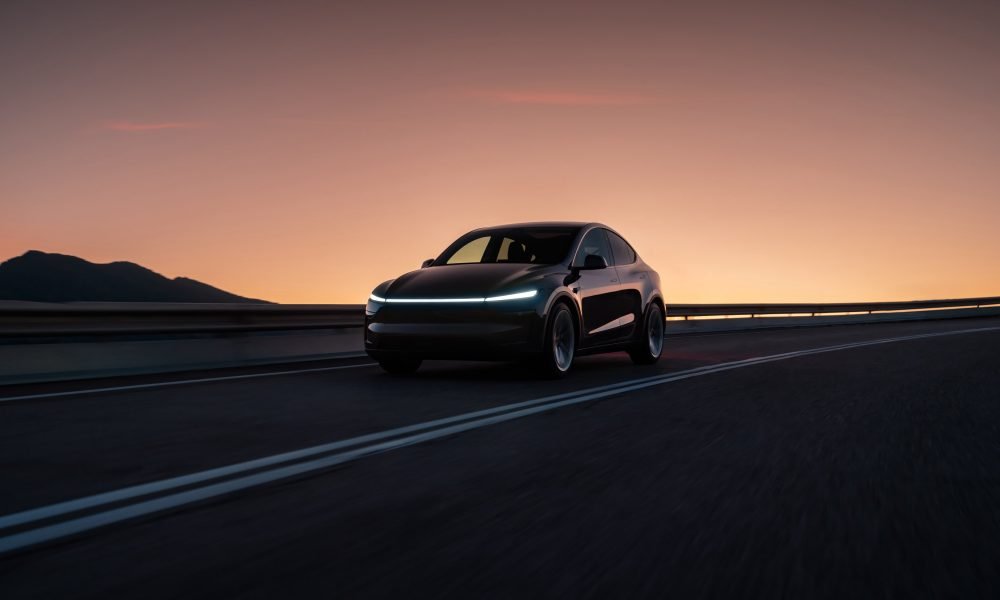
Tesla CEO Elon Musk says the automaker’s Robotaxi platform launch later this month will essentially force other companies to license Full Self-Driving to achieve their own goals of achieving autonomy. Musk’s statement comes as a video captured today showed the first Tesla Robotaxi test mules on public streets in Austin, Texas, just one day after the City officially listed the company as an autonomous vehicle operator. A prediction by investing YouTube and Tesla community member Dave Lee stated that “at least one automaker by end of year” will license Full Self-Driving from the Musk-led company, as it will give rivals the confidence to use the software to run their own self-driving operations. Lee detailed his theory by stating that the company that chooses to commit to FSD licensing will not be able to integrate the hardware and sell those units immediately. Instead, it will take two years or so to solve the engineering and design applications. First Tesla driverless robotaxi spotted in the wild in Austin, TX Musk revealed his true thoughts on other automakers’ attempts at vehicle autonomy, and said many are being told that Robotaxi is not real or that they can solve their problems with hardware orders to Nvidia. He went on to say that companies will be forced to turn to Tesla at some point or another, because Robotaxi will be widespread and their solutions to figuring out an effective deployment will prove to be failures: “The automakers keep being told that this isn’t real or that just buying some hardware from Nvidia will solve it. As Tesla robotaxis become widespread and their other solutions don’t work, they will naturally turn to us.” The automakers keep being told that this isn’t real or that just buying some hardware from Nvidia will solve it. As Tesla robotaxis become widespread and their other solutions don’t work, they will naturally turn to us. — Elon Musk (@elonmusk) June 10, 2025 Musk has not been shy to respond to speculation regarding the video of the Robotaxi, which was shared on X earlier today. This is perhaps one of the more fiery things he revealed. He seems ultra-confident in what Tesla will prove and achieve in the near future with the launch of the Robotaxi platform. Many believe it will be rolled out this month. Bloomberg reported recently that Tesla was internally aiming for June 12. The company has not directly responded to these rumors. Tesla has discussed on several occasions that it is in talks with an automaker about licensing Full Self-Driving, but it has never revealed who. The company first revealed discussions with another automaker in early 2024 when Elon Musk said: “We’re in conversations with one major automaker regarding licensing FSD. It really just becomes a case of having them use the same cameras and inference computer and licensing our software. Once it becomes obvious that if you don’t have this (FSD) in a car, nobody wants your car. It’s a smart car… The people don’t understand all cars will need to be smart cars, or you will not sell, or nobody would buy it. Once that becomes obvious, I think licensing becomes not optional.” Tesla confirms it is in talks with major automaker for potential FSD licensing Many, including us, suspected that Ford was the company that Tesla was speaking of due to Musk’s relationship with Jim Farley, which resulted in the legacy automaker being the first major car company to adopt Tesla’s North American Charging Standard (NACS), which gave them access to the Supercharging Network. This catalyzed an onslaught of companies choosing to make the same move as Tesla had truly set itself apart in terms of charging infrastructure. Companies may be forced to make a similar decision if it can make the same type of statement with the rollout of Robotaxi.
Commercial megawatt charging project launched in Europe
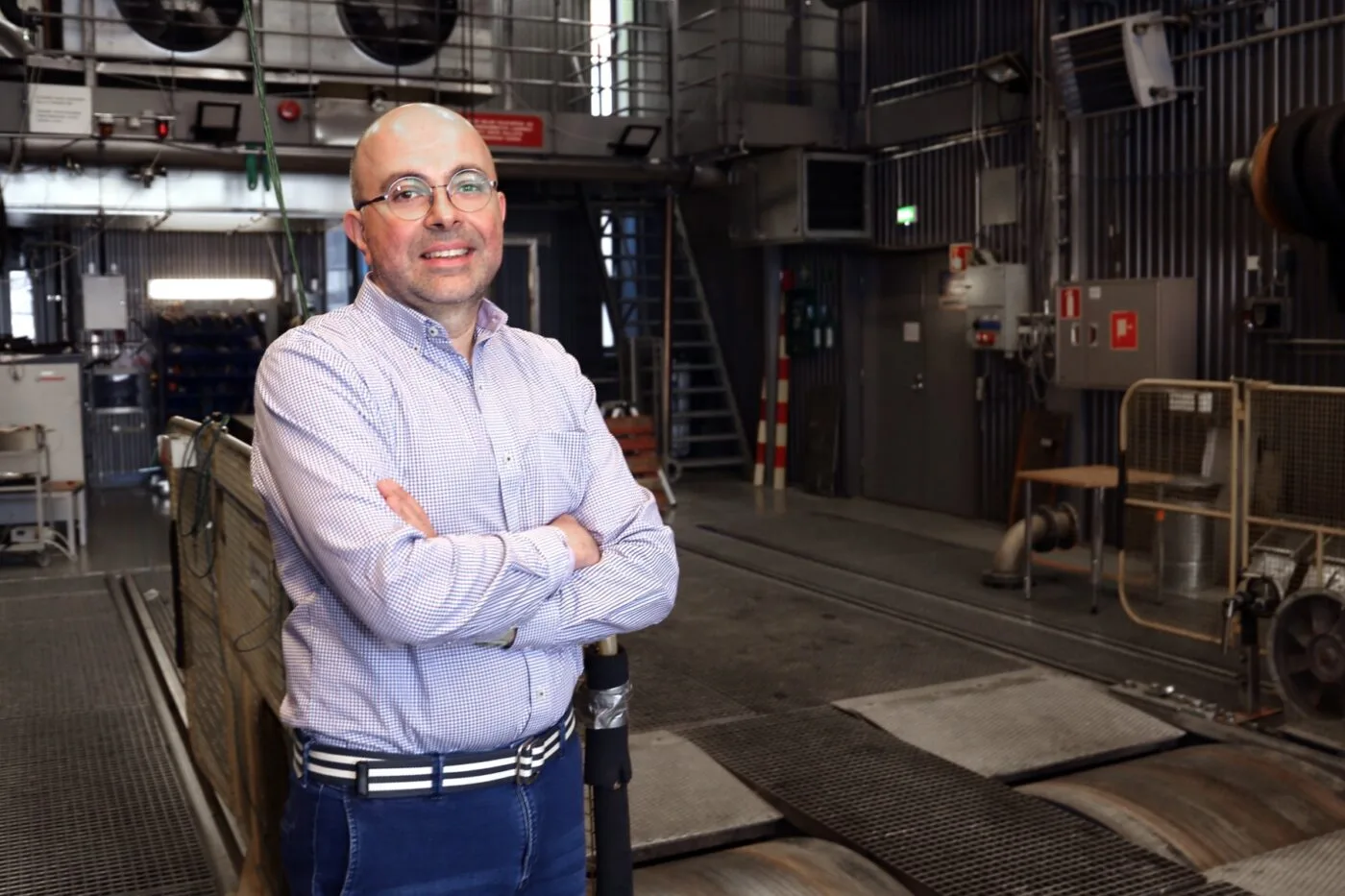
A European Commission-backed project will deploy €10 million in funding to develop megawatt charging systems. The research aims to establish an electric truck charging network in Europe by 2030. The project has been named the Multipoint megAwatt Charging for Battery Electric Truck Hubs (MACBETH) initiative, and is being led by the VTT Technical Research Centre of Finland. The project is set to run until January 2029, and includes a range of European partners such as PostNord Denmark, MAN Truck & BUS SE, Power Electronics Espana, and others. Its primary focus will be to develop solutions for megawatt charging systems (MCS) that can be deployed at multi-user charging hubs. This will be achieved through what the project is calling ‘two large-scale demonstration pilots’. In essence, this will see the creation of ‘hybrid charging stations’ – which here refers to the provision of charging for both heavy- and medium-duty commercial vehicles, as well as private vehicles. These charging stations will act as the basis for testing a range of relevant technologies being developed by partner companies. For instance, the Dutch firm Rocsys aims to test a robotic charging arm which enables drivers to rest during charging. Joost van der Weijde of Rocsys said: “Currently, drivers must exit their vehicles, handle heavy charging cables, and interrupt their break time. By automating the charging process, we’re addressing critical ergonomic, operational, and safety challenges in electric heavy-duty transport.” Another partner of the scheme is Kempower, which already deploys DC charging solutions for both passenger EVs and commercial vehicles. Their most closely aligned products include a number of pantograph DC systems for overhead charging of buses; a space-saving cable arm for charging trucks and lorries; plus the ChargEye charging management software which streamlines the management of public and fleet depot charging. These could therefore have a role to play in the pilot charging stations that are part of the project. Ville Naumanen, Kempower Research Director, commented: “We’re bringing crucial equipment and expertise to the table. Currently, megawatt charging infrastructure is very rare in Europe, and our technologies will be key to bridging this critical gap.” At this early stage, further technical details on the project remain scant. But the project’s coordinator, Yancho Todorov – a senior scientist at VTT (pictured) – has said it will involve a holistic approach to the technology, and that the project aims to develop a scalable basis for these solutions. Todorov said: “To create a functional charging infrastructure, we need to investigate many aspects, including various charging hub designs, hardware systems, plug standards, safety enabling robot technologies, as well as practical experiences of logistics companies in operating electric trucks.” Either way, it marks a big step forward for MCS technology in Europe, which lags behind the likes of China when it comes to offering the technology publicly. However, there are a number of early private initiatives kicking off across the continent. Earlier this month, BYD announced that it plans to build a network of megawatt chargers for electric cars in Europe, but these would not be designed for commercial vehicles. Shell is also currently constructing an MCS test centre in Hamburg. It will be Germany’s most powerful test centre for heavy-duty charging infrastructure, and aims to enable charging capacities of up to five megawatts in future. There are several other private companies working on the technology, including Milence, Gruber Logistics, Ionity and others. Despite this, the MACBETH initiative remains one of the first major MCS initiatives in Europe to focus on hybrid private-commercial use and be backed by the European Commission – which in itself should help move deployment of megawatt charging forward. vttresearch.com, current-news.co.uk
Rising costs, tariffs, overseas production behind closure of AESI
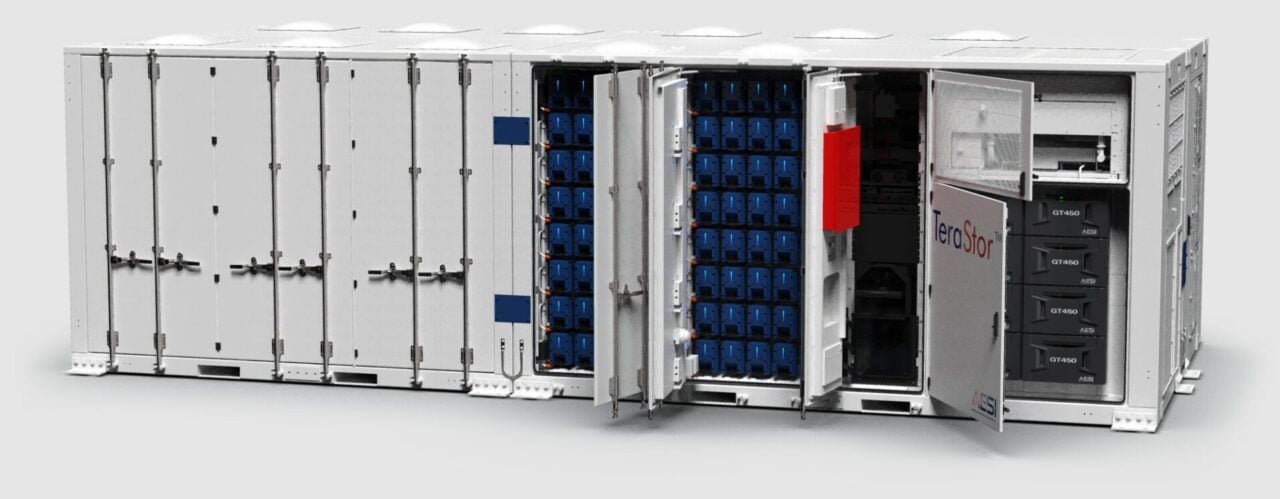
But, both could point to a sign of things to come for others in the US battery ecosystem as the effects of US-China tariffs and a potential repeal of clean energy tax credits start to bite. American Energy Storage Innovations (AESI) voluntary wind-down As Energy-Storage.news exclusively reported earlier this month, US-headquartered BESS technology firm AESI made the decision to wind down its business. All its employees’ contracts were terminated before a General Assignment for the Benefit of Creditors was executed on 12 May. We’ve learnt since that the decision was taken in light of the rising costs of materials, tariffs, and the fact it produces its technology overseas, primarily China and Malaysia. Despite the company’s name, CEO Bud Collins was adamant that China was the only economical place to build its product in an interview with us last year (Premium access), in which he discussed the company’s ‘Terastor’ AC block technology and manufacturing process in detail. The company’s board decided to go for a wind-down and liquidation of the business in order to maximise potential recoveries for its creditors. Physical assets will be liquidated while a sales process for its intellectual property (IP) and business pipeline assets is ongoing. Up for sale are its IP and components of the platform, as well as its sales pipeline, while its EMS, BMS, SOC/SOH/SOB algorithms are also available for a carve-out. The company claims a total sales pipeline of over US$18 billion, on top of a committed orders of US$93 million with high-likelihood orders of another U$306 million. It announced 1.5GW of letters of intent with utility and power generation firm ESB for projects in Scotland in the UK last year, though it’s not clear which part of the pipeline this might come under, if any. AESI has 4GWh of contracted manufacturing capacity in Suzhou, China, and was set to double that with another 4GWh in Malaysia in early 2026. Li-Cycle files for Chapter 15 bankruptcy protection Meanwhile, North American battery recycling firm has filed for Chapter 15 bankruptcy protection in the US and received a cease trade order (CTO) from the Ontario Securities Commission (OSC), where it is listed on the stock market. The Chapter 15 process kicked off in mid-May and protects it from creditor claims while it aims to find a buyer for its assets via a court-supervised sale and investment solicitation process (SISP). The company announced plans to sell its assets on 1 May, when founder and CEO since 2016 Ajay Kochhar stepped down. ‘Li-Cycle requires additional financing to meet its obligations and repay its liabilities arising from the ordinary course of business operations when they become due in order to continue as a going concern,’ the company said on 1 May. ‘Considering the Company’s current circumstances, Li-Cycle will need to significantly modify or terminate its operations and may need to dissolve and liquidate its assets under applicable insolvency laws or otherwise file for insolvency protection.’ Problems for Li-Cycle first emerged in late 2023 when it announced it would pause construction on its main recycling ‘hub’ facility in New York (Premium access article) in light of soaring costs. Though it has continued to derive revenues from its ‘spoke’ black mass production facilities, with US$28 million in 2024, it has not been enough to continue it as a going concern. The CTO from the OSC is due to failure to file periodic disclosures as per the stock market’s rules. Li-Cycle had argued to Energy-Storage.news earlier this year that US-based recycling would ‘help bolster energy independence and national security’ and was also growing the percentage of its feedstock from the BESS industry. One source commented that one big mistake Li-Cycle made was opting for a proprietary battery recycling technology approach when more off-the-shelf options were available, which helped explain the soaring costs for the New York hub.
Elon Musk says Tesla Robotaxi launch will force companies to license Full Self-Driving
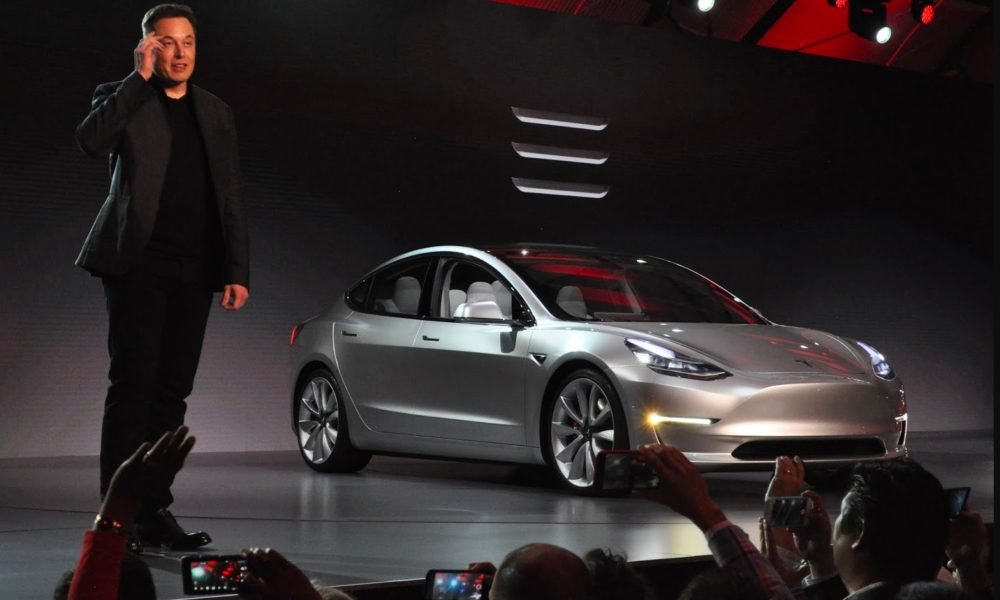
Tesla CEO Elon Musk says the automaker’s Robotaxi platform launch later this month will essentially force other companies to license Full Self-Driving to achieve their own goals of achieving autonomy. Musk’s statement comes as a video captured today showed the first Tesla Robotaxi test mules on public streets in Austin, Texas, just one day after the City officially listed the company as an autonomous vehicle operator. A prediction by investing YouTube and Tesla community member Dave Lee stated that “at least one automaker by end of year” will license Full Self-Driving from the Musk-led company, as it will give rivals the confidence to use the software to run their own self-driving operations. Lee detailed his theory by stating that the company that chooses to commit to FSD licensing will not be able to integrate the hardware and sell those units immediately. Instead, it will take two years or so to solve the engineering and design applications. First Tesla driverless robotaxi spotted in the wild in Austin, TX Musk revealed his true thoughts on other automakers’ attempts at vehicle autonomy, and said many are being told that Robotaxi is not real or that they can solve their problems with hardware orders to Nvidia. He went on to say that companies will be forced to turn to Tesla at some point or another, because Robotaxi will be widespread and their solutions to figuring out an effective deployment will prove to be failures: “The automakers keep being told that this isn’t real or that just buying some hardware from Nvidia will solve it. As Tesla robotaxis become widespread and their other solutions don’t work, they will naturally turn to us.” The automakers keep being told that this isn’t real or that just buying some hardware from Nvidia will solve it. As Tesla robotaxis become widespread and their other solutions don’t work, they will naturally turn to us. — Elon Musk (@elonmusk) June 10, 2025 Musk has not been shy to respond to speculation regarding the video of the Robotaxi, which was shared on X earlier today. This is perhaps one of the more fiery things he revealed. He seems ultra-confident in what Tesla will prove and achieve in the near future with the launch of the Robotaxi platform. Many believe it will be rolled out this month. Bloomberg reported recently that Tesla was internally aiming for June 12. The company has not directly responded to these rumors. Tesla has discussed on several occasions that it is in talks with an automaker about licensing Full Self-Driving, but it has never revealed who. The company first revealed discussions with another automaker in early 2024 when Elon Musk said: “We’re in conversations with one major automaker regarding licensing FSD. It really just becomes a case of having them use the same cameras and inference computer and licensing our software. Once it becomes obvious that if you don’t have this (FSD) in a car, nobody wants your car. It’s a smart car… The people don’t understand all cars will need to be smart cars, or you will not sell, or nobody would buy it. Once that becomes obvious, I think licensing becomes not optional.” Tesla confirms it is in talks with major automaker for potential FSD licensing Many, including us, suspected that Ford was the company that Tesla was speaking of due to Musk’s relationship with Jim Farley, which resulted in the legacy automaker being the first major car company to adopt Tesla’s North American Charging Standard (NACS), which gave them access to the Supercharging Network. This catalyzed an onslaught of companies choosing to make the same move as Tesla had truly set itself apart in terms of charging infrastructure. Companies may be forced to make a similar decision if it can make the same type of statement with the rollout of Robotaxi.
VinFast boosts sales in Q1 but still incurs high net loss
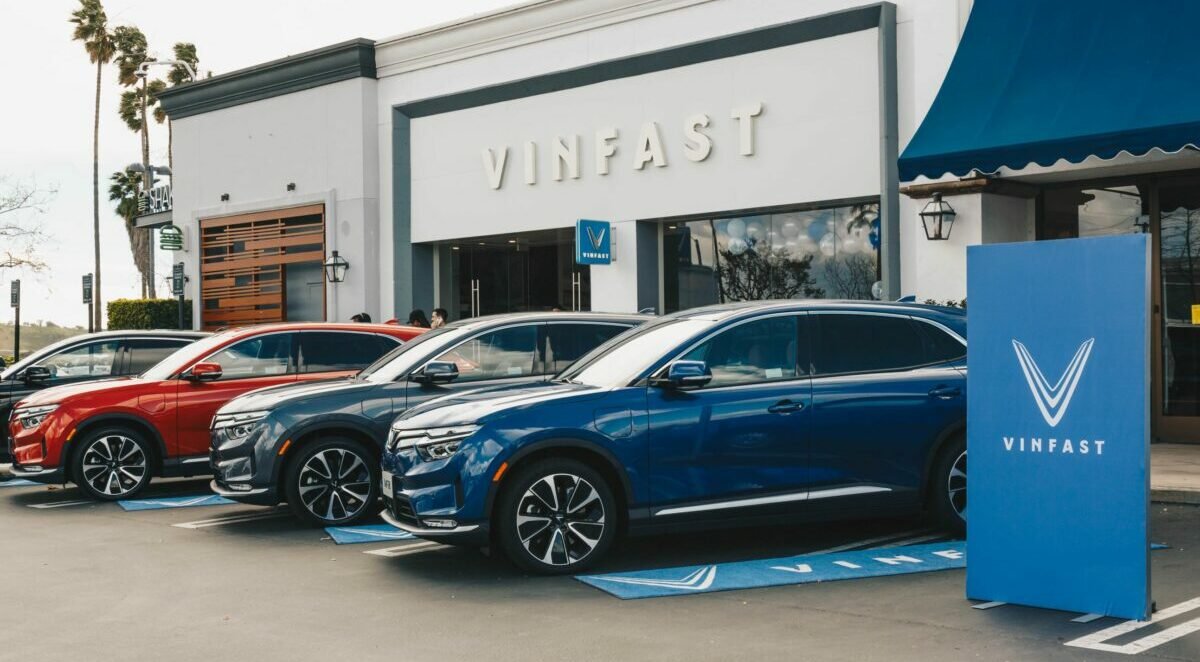
VinFast continues to struggle reconciling ambitious global expansion strategies with high financial losses. By Will Girling Another quarter, another ambivalent report from Vietnam’s leading electric vehicle (EV) manufacturer, VinFast. According to its Q1 2025 results, published on 9 June, the company delivered 36,330 cars—up almost 300% from the same quarter a year ago—as well as 44,904 e-scooters. This translated to revenues of VND 16.3bn (US$656.5m), up almost 150% year-on-year. Subscribe to Automotive World to continue reading Sign up now and gain unlimited access to our news, analysis, data, and research Subscribe Already a member? Join our LinkedIn Group Let us help you understand the future of mobility "*" indicates required fields
Study finds "profound" secrecy in corporate climate lobbying

A new AI-powered study of more than 8,500 listed companies has revealed a “profound” lack of disclosure and governance around climate-related lobbying. One result of the secrecy, argue the report’s authors, is that companies often lobby in a way that undermines their own climate strategies. The report, produced by climate-tech non-profit Danu Insight, used natural-language processing and AI to examine around 250,000 annual reports, disclosure statements, web pages and other documents. The report identified and rated evidence that each company disclosed specifics of its climate lobbying activity and implemented oversight of it. Silent majority A large majority were found to be completely silent: 78 percent provided no public disclosure about their climate lobbying, and 75 percent showed no evidence of a relevant governance process. At the other end of the spectrum, just 6 percent achieved the top score — four points — on transparency, including disclosure of policies lobbied for or against, lobbying mechanisms used and outcomes sought. On governance, less than 1 percent earned four points on such issues as mechanisms for aligning lobbying with broader goals. Companies with top scores for both transparency and governance included BASF, BP, Delta Air Lines, Holcim, Nestlé and Toyota. Performance on the ratings varied significantly across industries. Source: Danu Insight “Companies operating in sectors generally understood to be highly exposed to climate-related policy and transition risks tend to demonstrate higher levels of disclosure,” the report noted. “This suggests that companies facing more climate pressure (from regulators, transition challenges or stakeholder scrutiny) are more likely to disclose their lobbying activities and implement governance structures.” The uncovered level of secrecy is possible in the U.S. because lobbying disclosure laws focus on the amount of money spent rather than on what it is used for, said Thomas O’Neill, founder of Danu Insight. The European Sustainability Reporting Standards, which are followed by companies that report under the region’s Corporate Sustainability Reporting Directive, require disclosure of lobbying that is material to sustainability efforts. Those rules, though, are in the process of being implemented, and the results are not reflected in the report’s data. Lobbying the lobbyists One target audience for the report is investors, who can use its information to assess and compare companies’ climate strategies, said O’Neill. The report also serves as a useful guide — and cautionary note — for sustainability professionals interested in shaping their company’s lobbying. Government relations units are often siloed, limiting the influence of sustainability teams and allies. One common result is that companies can be relatively passive members of trade groups, such as the U.S. Chamber of Commerce and the Business Roundtable, which have lobbied against climate legislation that is critical to the success of company sustainability goals. “The government relations people have their agenda, and it’s usually to hold back regulations, to protect the company,” said O’Neill. Like other advocates for climate lobbying reform, O’Neill argued that companies should work to change the trade groups they are members of rather than leave them. “There are lots of things they could be doing, conversations that could be had,” he said. One template for action is the attempts of Microsoft and others to influence Chamber of Commerce lobbying on climate legislation enacted under President Joe Biden.