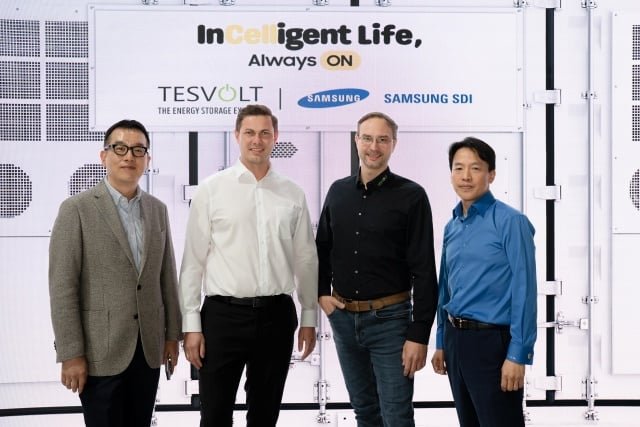
Samsung SDI signs large-scale battery storage supply deal with Germany’s Tesvolt
Samsung SDI signs large-scale battery storage supply deal with Germany’s Tesvolt - Energy-Storage.News Skip to content
Aviloo launches next-gen battery certificate
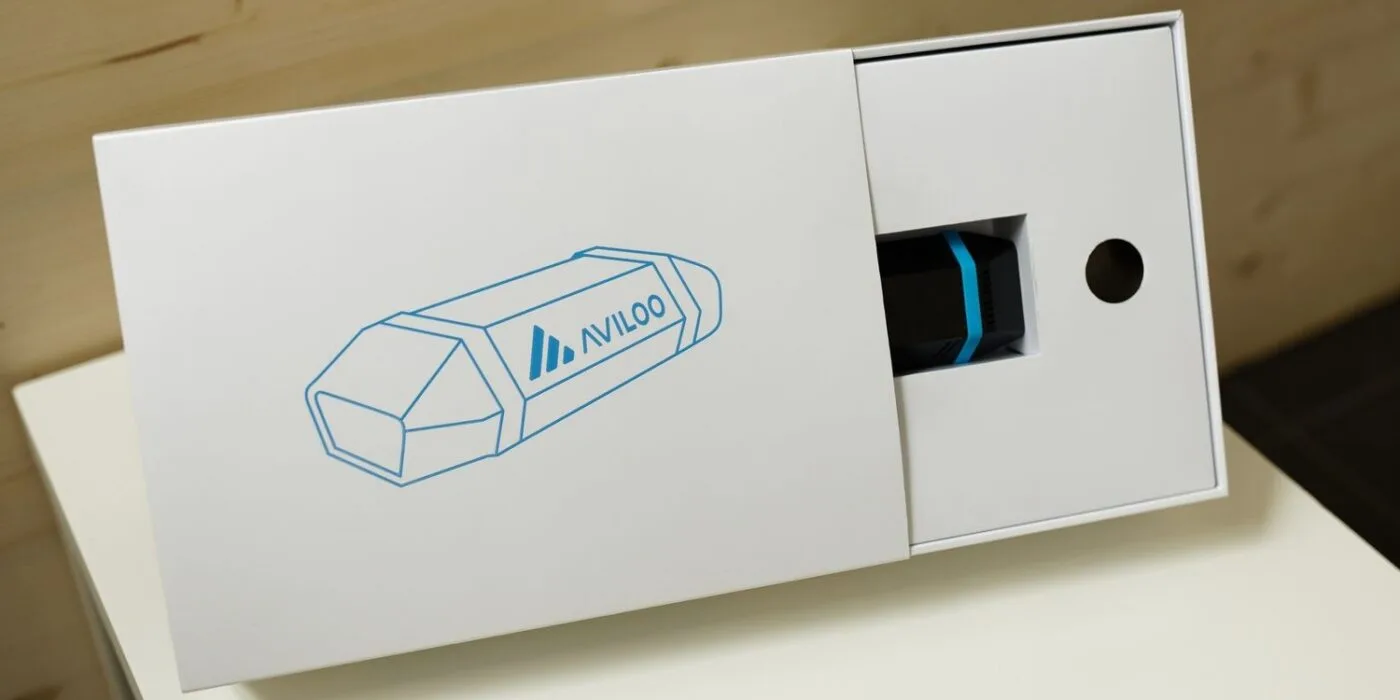
Austrian battery testing company Aviloo will introduce a major upgrade to its battery diagnostics for EVs and plug-in hybrids. The revised ‘Flash Test’ and enhanced battery certificate aim to set new benchmarks in transparency, accuracy, and safety for the second-hand electric vehicle market. The revamped offering, available from 23 June, promises a new level of accuracy and usability in assessing the health of batteries in electric and plug-in hybrid vehicles. At the heart of the update is a redesigned battery certificate, now bundled with the ‘Aviloo Certified’ seal – a quality mark designed to instil confidence in used EV transactions, the company says. Aviloo has developed a manufacturer-independent diagnostic procedure for traction batteries in electric and plug-in hybrid vehicles. It says that the revised diagnostic process delivers results faster and in a more intuitive format through what it calls the ‘Aviloo Preview’. Unlike many OEM-based tools that simply extract data from the vehicle’s internal system, Aviloo independently calculates the battery’s State of Health (SoH). This distinction is crucial, the company states, as it enables far more granular analysis and helps identify “red flags” that might otherwise go undetected. Enhanced algorithms and a rapidly expanding test database – growing since 2019 – now underpin the latest version of the ‘Flash Test’, providing a richer, more precise data foundation. The updated battery certificate now also includes benchmarking metrics, comparing the tested battery’s performance to others of the same make, age, and mileage. This is made possible by Aviloo’s extensive dataset, which includes hundreds of thousands of entries from global test cycles. The certificate introduces a heatmap that displays the condition of each battery cell, highlighting any anomalies with severity indicators—enabling users, including non-specialists, to interpret results at a glance. Another new feature is real-world range reporting. Aviloo states that the test certificate now displays the vehicle’s achievable range, benchmarked against WLTP values and peer vehicles from the company’s database. This gives customers an immediate sense of how the EV is likely to perform under actual driving conditions, removing guesswork from purchasing decisions. “The Aviloo battery test elevates battery diagnostics to a new technological level,” says CEO Marcus Berger. “Through our detailed analysis process, customers receive an accurate and independent assessment of their vehicle’s battery health—something that cannot be achieved through a standard SoH readout.” Furthermore, Berger underscores the broader market impact: “An international study from 2024 shows that recognised, independent battery certificates lead to profit increases of €550 to €1,100 for dealers. More importantly, customers place greater trust in remarketers who use Aviloo – making used EV sales both faster and more secure.” The enhanced certificate will be automatically activated for existing FLASH Test license holders at no extra cost. Target users include fleet operators, leasing firms, auction houses, and used car dealers—all stakeholders in a second-hand EV market that is becoming increasingly competitive and regulation-driven. Aviloo currently offers two different tests – the ‘Flash Test’ and the ‘Premium Test’. The latter test is a more complex procedure, where the ‘Aviloo Box’ collects detailed measurements of the vehicle’s battery during a test drive. The ‘Flash Test’ also uses the ‘Aviloo Box’, but is carried out within three minutes while the vehicle is stationary. The box reads several parameters from the vehicle and compares them with previously recorded comparative data from similar vehicles. aviloo.com (PDF)
Terralayr on its tolling deals with Vattenfall and RWE
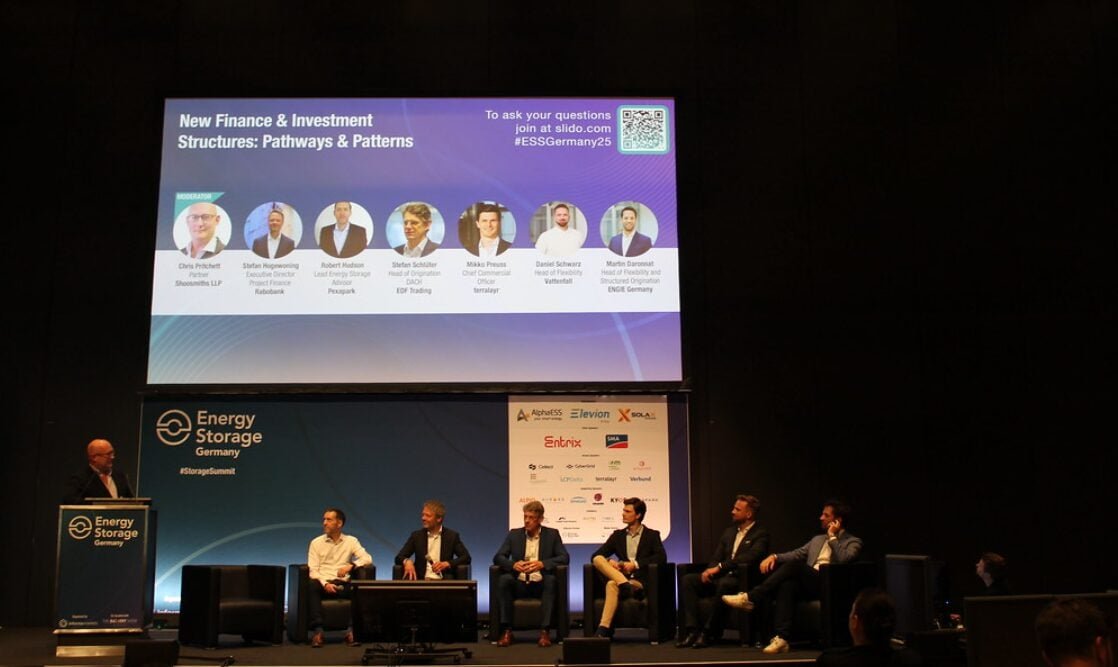
“The world has seen tolling deals before, but we believe these are the first with this kind of set up,” Preuss said at the three-day event, which was co-located with Solar Media parent company Informa’s The Battery Show Europe 2025 (3-5 June). Indeed, tolls are becoming increasingly common in the battery energy storage system (BESS) industry, in Germany and elsewhere, as owner-operators look to secure project financing from banks and more risk-averse investors like pension funds, infrastructure funds and the like. Terralayr’s recently announced toll deals with Vattenfall and RWE covered capacity from multiple projects in Germany which is unique, but again not new: Octopus and Gresham House’s major deal last year covered 14 projects in the UK. So how is Terralayr’s different? Disentangling asset owner, tech provider and offtaker paradigm Preuss said: “We combine a fleet of underlying assets into one amount of capacity, 55MW in the case of Vatenfall, and have provided both the assets and tech platform to manage them. We are disentangling those roles of asset owner, platform provider and offtaker.” The key difference is providing both the assets and the tech platform, Preuss explained. Octopus Energy has its own mature tech platform, Kraken, which might explain why it is the only major multi-project deal we had heard of before Terralayr’s announcements. “The toll is not on an individual asset. Our overall strategy is to contract out 50% and create a clean slice for the offtaker. We’ve earned the trust of counterparties and that means a lot, and is something we can take forward beyond these initial toll deals,” Preuss added. Preuss and CEO Philipp Man discussed Terralayr’s platform in detail in an interview last year. Offtakers connect to Terralayr’s API through which they can steer the capacity of the contracted BESS capacity across all relevant markets. The firm offers its solution for third party BESS owners as a service product, though these deals have so far covered its own projects. Not tied in to a specific project The tolls are also relatively unique in that they are tied to BESS capacity via the platform and not BESS capacity from a specific project or projects. This should in theory mean better availability, since if one site goes down, you can more easily swap its capacity out for another, assuming there is enough capacity on the overall platform. “The toll deal is structured so that if a 10MW asset goes down you can replace it with another one, that is something the offtaker gets. There are obviously contractual obligations about megawatts and performance specs, but it doesn’t matter which physical asset is being used,” Preuss explained. “The offtakers actually don’t even want to know which asset it is, partially as doing it that way allows them to circumvent lease liability accounting, because the asset is virtual.” What about project owners? That all concerns offtakers and what they get, so what about project owners in Germany looking to put their BESS projects on the platform? Energy-Storage.news asked Preuss if Terralayr’s long-term ambition was for its own platform to be a bankable offtaker counterparty for project owners to then secure project financing, rather than the actual offtakers themselves. “We are working towards that, but it might take some years,” Preuss said, explaining what Terralayr offers to project owners before that point. “We already now can offer solutions to third-party developers and investors. If Developer A develops a 100MW asset, their target structure is 70% tolling, you could enter a 70% toll with a bankable counterparty via our platform and have merchant optimisers for the remaining 30% onboarded onto our platform to trade the battery in the short term. By this, you can combine the best of both worlds.”
Hybrid assets & grid-forming BESS: Fluence on Australia’s NEM
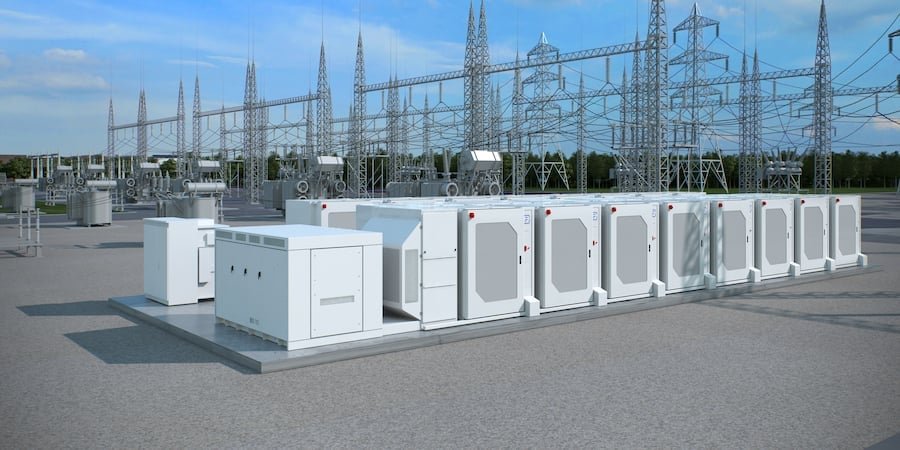
This growing interest from the international community has given rise to several trends in the NEM, particularly the rise of hybrid assets and the grid-forming capabilities of BESS. In this blog, ESN Premium speaks with Fluence’s Rob Hills, APAC vice-president of engineering and commissioning, and Sam Markham, growth manager, Australia and New Zealand, about the rise of hybrid assets and some trends being witnessed across Australia’s NEM. Hybrid projects becoming ‘more prominent’ Australia and the broader global energy landscape have seen a steady rise in the number of hybrid power plants being developed. These often see BESS combined with solar or wind to create either solar-plus-storage or wind-plus-storage. For Hills, the hybrid system concept is becoming more prominent in optimising a power plant. “It [hybrid projects] is definitely something we are seeing more in the market. For me, there are a few natural drivers around that,” Hills begins. “The growth of the industry, people becoming more experienced, and technology becoming more mature enable hybrid systems to be developed. All those things come together and drive the growth of the hybrids we’re seeing.” In addition, Markham believes a rule change introduced by the Australian Electricity Market Operator (AEMO) in 2021 has helped spur growth in hybrid projects in Australia. This code change allows multiple assets to share a core connection point to the grid. “One of the benefits of that is reduced curtailment risk of existing assets that might have an abundant amount of resources, but it cannot get out of the gate at certain times,” Markham says. “Having it located behind the same connection point means that you can take advantage of that abundant resource when it may not be able to be dispatched into the market.” Despite the positives of having these hybrid assets, Hills admits that this does make the grid connection process, which ESN Premium has already heard described as rigorous recently, that extra bit harder. However, in a lighter spin on the situation, Markham adds that this rigorous process means that potential challenges an asset could face once it comes online can be avoided. “I’d say it’s a lot of challenge, but there’s probably a good reason for it,” Markham says. How to develop a successful hybrid asset Developing hybrid assets, particularly in Australia, can be challenging. However, Hills and Markham believe companies can adopt specific measures to increase the likelihood of success and mitigate issues on the way to completion. For Hills, leveraging international expertise can significantly impact the success of a hybrid project, incorporating understandings from other markets, such as the US and Europe, and vice versa. “For me, the real success factor is having experienced people operating on the network and taking systems through those processes. It definitely helps. When I look at our organisation, we draw on global experience,” Hills says. “As much as Australia is one of the most rigorous processes you have to work through, I think the experience out of Europe, particularly around grid-forming capability, does help. We work as a global team, and having access to that global experience helps meet similar requirements in Australia.” In addition, Markham believes that a unified approach to “developing the asset and how that asset will be operated” from the outset can help simplify some of the decision-making and maximise the trading approach for the asset. “There are some decisions you can make now in developing a hybrid asset that can maximise or take advantage of a trading approach,” Markham says. “It’s important to consider whether you’re selecting AC versus DC coupling and what the engineering risk of taking those two approaches is: that’s really in the development phase. But then, also, how are you planning on operating those assets? “Choosing between those two decisions might take you down a particular path. In the past, you might have been able to build an asset and then develop a trading strategy, but now we’re starting to see a bit more of it coming together, particularly in hybrids.” ‘Money-making periods’ stretch into Australia’s shoulder seasons Fluence has also identified several key trends across Australia’s NEM over the past few years. This has coincided with significant growth in the energy storage space and the utility-scale renewable energy generation sector. Markham notes that one of the primary changes in the NEM she has witnessed stems from a shift in the “money-making period” of the summer months, which is now stretching into other parts of the year, specifically the shoulder seasons of spring and autumn. “From a market’s perspective, we have gone from summer being the money-making period to now, which is not necessarily just summer, but also the shoulder season. We have seen this in the last couple of years across different times of the year,” Markham says. “This kind of concentration risk and trying to ensure that your BESS is there when it needs to be are becoming increasingly critical because you cannot just rely on the summer period. That’s an exciting trend highlighting the increasing need for high-performance BESS that can be quite flexible to market and system needs.” Alongside a shift in money-making periods, Markham states that there is an increase in projects leveraging existing infrastructure to develop utility-scale projects, particularly BESS. Indeed, with Australia’s shift away from coal-fired power, which is anticipated to be achieved in 2038, although Cornwall Insight debates this, believing some coal plants will continue operating well into the 2050s, these decommissioned power stations are well suited to hosting energy storage assets. One of the most notable of these projects is Australian utility major Origin Energy’s 2.8GWh Eraring BESS, which, when completed, will be one of the largest systems in Australia. The project is being developed on the site of New South Wales’s largest black coal-fired power plant, with a generation capacity of 2.8GW. Fluence has also been involved in several other utility-scale BESS on the site of decommissioned and soon-to-be-decommissioned coal-fired power plants. Markham believes locating BESS at these power plants could become more prevalent as more
Tesla Model Y is China's best-selling SUV in May
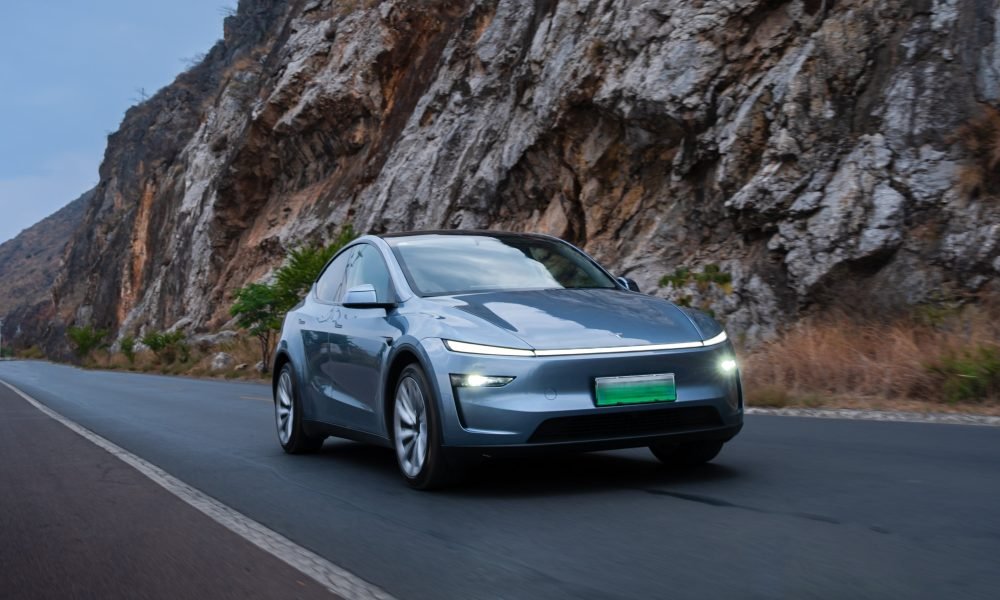
The Tesla Model Y claimed its position as China’s best-selling SUV in May, with 24,770 units registered, according to insurance data from China EV DataTracker. The Model Y edged out competitors like the BYD Song Plus, which recorded 24,240 registrations, as well as Geely’s gasoline-powered Xingyue L, which took third place with 21,014 units registered, as noted in Car News China report. Return To The Top The Model Y’s return to the top of China’s SUV market follows a second-place finish in April, when it trailed the BYD Song Plus by just 684 units. Tesla China had 19,984 new Model Y registrations in April, while BYD had 20,668 registrations for the Song Plus. https://twitter.com/daltybrewer/status/1932171519817621536 For the first five months of 2025, Tesla sold 126,643 Model Ys in China, outpacing the Song Plus at 110,551 units and BYD’s Song Pro at 80,245 units. This is quite impressive as the new Tesla Model Y is still a premium vehicle that is significantly more expensive than a good number of its competitors. Year-Over-Year Challenges Despite its SUV crown, Tesla’s year-over-year performance in China is still seeing headwinds. May sales totaled 38,588 units, a 30% year-over-year decline. From January to May, Tesla delivered 201,926 vehicles in China, a 7.8% drop year-over-year. These drops, however, are notably affected by the company’s changeover to the new Model Y in the first quarter. https://twitter.com/Tesla/status/1932171187700084910 Exports from Tesla’s Shanghai Gigafactory also fell, with 90,949 vehicles being shipped from January to May 2025. This represents a decline of 33.4% year-over-year, though May exports rose 33% to 23,074 units. China’s electric vehicle market, meanwhile, showed robust growth. Total NEV sales, which includes battery electric vehicles (BEVs) and plug-in hybrids (PHEVs), reached 1,021,000 units in May, up 28% year-over-year. BEV sales alone hit 607,000 units, a 22.4% increase. Considering the fact that China’s BEV market is extremely competitive, the Tesla Model Y’s rise to the top of the country’s SUV rankings is extremely impressive.
Tritium introduces TRI-FLEX fast-charging system in Europe
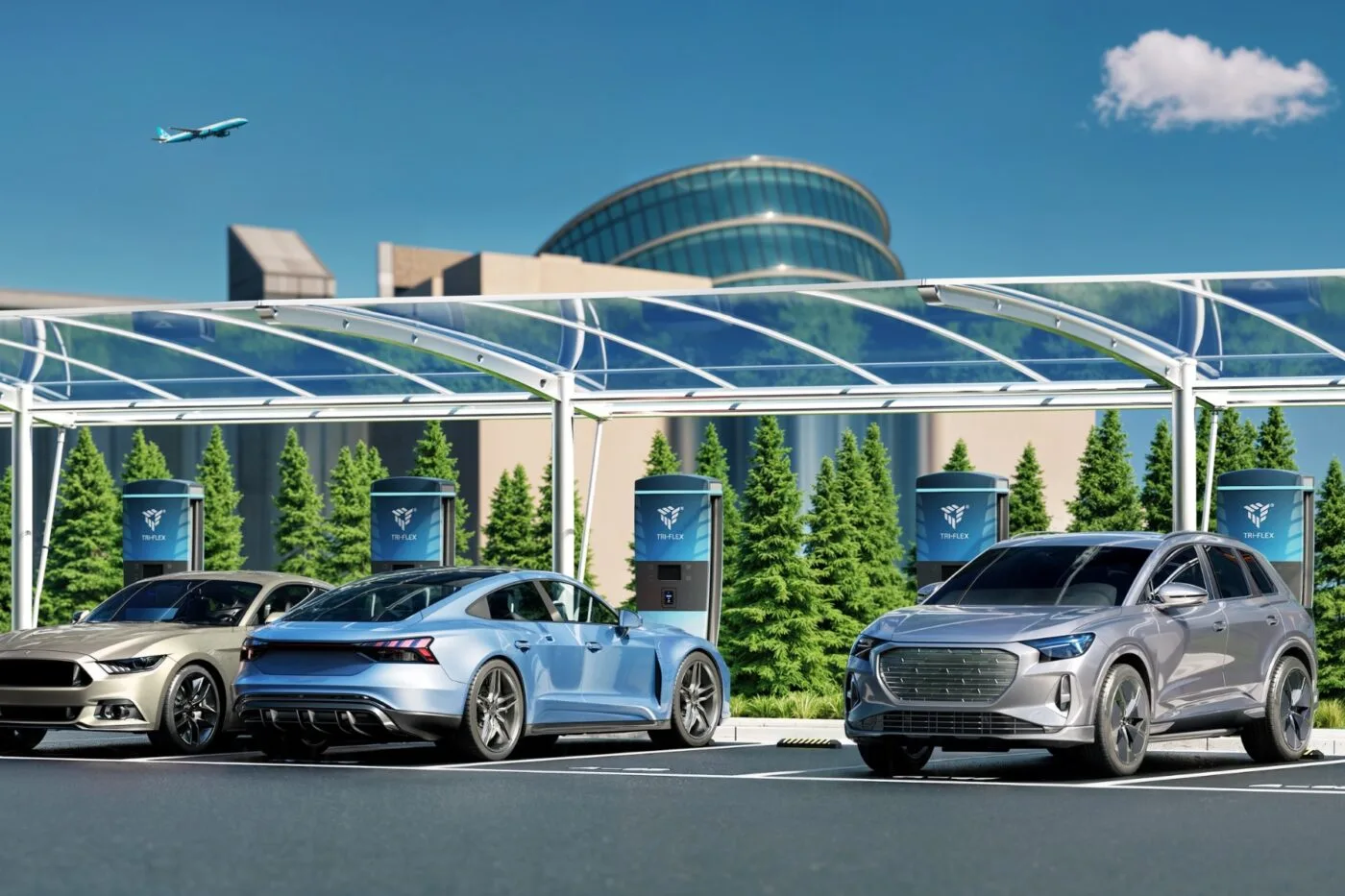
Tritium has announced the European launch of its TRI-FLEX DC fast-charging platform. The new system is designed to meet EU infrastructure requirements and will be presented at EVS38 in Gothenburg, Sweden, from 15 to 18 June 2025. The TRI-FLEX platform is intended to support operators with modular scalability and reduce the need for costly infrastructure upgrades. It supports 2 to 32 dispensers per charging hub, allowing for up to 64 simultaneous charge points. The architecture is compatible with 100 kW, 200 kW and 400 kW DC dispensers and allows phased deployment. TRI-FLEX is engineered for grid and climate resilience. It supports integration with battery storage and renewable energy systems and includes smart grid functionality with 25 kW load balancing resolution. The system operates in ambient temperatures ranging from -35°C to +55°C and is rated IP65 for environmental protection. Liquid cooling is used for thermal management and reliability. The platform includes support for over 30 advanced driver assistance functions and has been designed for both urban and rural deployments. Tritium states that the system is compatible with various site configurations and business models, enabling operators to adapt to evolving usage patterns and energy supply constraints. “The EV revolution will move at the speed of its infrastructure,” said Arcady Sosinov, CEO of Tritium. “TRI-FLEX is designed to grow with demand, optimise grid impact, and meet Europe’s regulatory environment.” He added: “Without a fundamental shift in charging architecture, the infrastructure will not keep pace with vehicle adoption. We believe TRI-FLEX addresses these challenges.” At the initial launch at the ACT Expo in California earlier this year, Tritium said that at the centre of the charging system is the TRI-FLEX Hub. It is a power conversion unit supporting AC input from 400 kW to 1.6 MW, and delivering up to 3.2 MW of DC output. At the time, Tritium also said that TRI-FLEX is MCS-capable, with full support for MCS connectors to follow based on market uptake. “Due to the limited number of MCS-capable vehicles registered globally, our customers serving heavy duty vehicles will have access to a 640kW dispenser, and we will release a MCS dispenser when there is sufficient demand in the market,” Arcady Sosinov, CEO of Tritium, said in April. There is no mentioning of MCS in the press release concerning the European launch. What is mentioned is that the system meets the EU’s Alternative Fuels Infrastructure Regulation (AFIR) requirements and complies with DC metering standards, including Germany’s Eichrecht and EU MID. According to Tritium, this regulatory readiness allows for streamlined deployment across multiple European markets. Tritium will exhibit the TRI-FLEX platform and its components at the 38th International Electric Vehicle Symposium & Exhibition (EVS38) alongside other charging and infrastructure solutions. globenewswire.com
Acen Australia wins consent for 640MWh wind-plus-storage site
Acen Australia wins consent for 640MWh wind-plus-storage site - Energy-Storage.News Skip to content
First Tesla driverless robotaxi spotted in the wild in Austin, TX
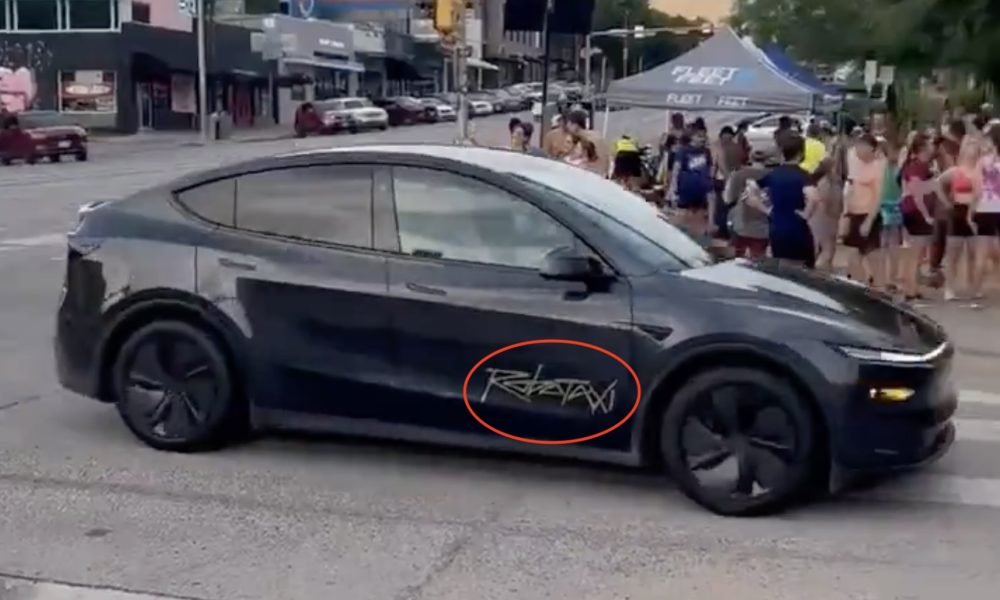
A recent video posted on X has provided a first look at Tesla’s driverless robotaxi, which is expected to be deployed in Austin, Texas, this month. The vehicle was a new Tesla Model Y, which was followed by what appeared to be a manned chase car. The short clip suggests that Tesla may be ramping up its preparations for its robotaxi rollout in Austin. The First Robotaxi Sighting It was evident from the short clip that the Tesla robotaxi was operating completely driverless. In the video, which was posted on X by @TerrapinTerpene, the driverless Tesla could be seen confidently making a turn. The vehicle looked and behaved like any other car on the road, save for the fact that there was no one in the driver’s seat. HOLY CRAP ITS A #ROBOTAXI!!@SawyerMerritt @WholeMarsBlog @DirtyTesLa @niccruzpatane pic.twitter.com/slfAsu0AQl — Terrapin Terpene Col (@TerrapinTerpene) June 10, 2025 Interestingly enough, the short video also provided a teaser on where Tesla will place its “robotaxi” logo on its self-driving cars. Based on the video, the robotaxis’ logo will be tastefully placed on the front doors, making the vehicles look sleek and clean. Initial Rollout Imminent Recent reports have suggested that Tesla is already starting the testing phase of its robotaxi service in Austin, Texas. Expectations are also high that Tesla’s initial fleet of self-driving vehicles will be utilizing a lot of teleoperation to ensure that they operate as safely as possible. Elon says by end of June, the public should be ready to take a Robotaxi in Austin without an invitationInitial launch will be small and riders will be picked by Tesla https://t.co/zEQOkXnE6s — TESLARATI (@Teslarati) May 29, 2025 Updates to Austin’s official website recently have hinted at Tesla’s robotaxi launch. Just this Monday, Tesla was listed as an autonomous vehicle (AV) operator on Austin’s official Department of Motor Vehicles (DMV). Other AV operators listed on the site are Waymo and Zoox, among others. Elon Musk, for his part, has noted that by the end of June, the public in Austin should be ready to take rides in Tesla robotaxis without an invitation. He also noted in late May that Tesla has been busy testing driverless cars on Austin’s city streets without any incidents. The post First Tesla driverless robotaxi spotted in the wild in Austin, TX appeared first on TESLARATI.
Ample rolls out battery swapping stations in Madrid
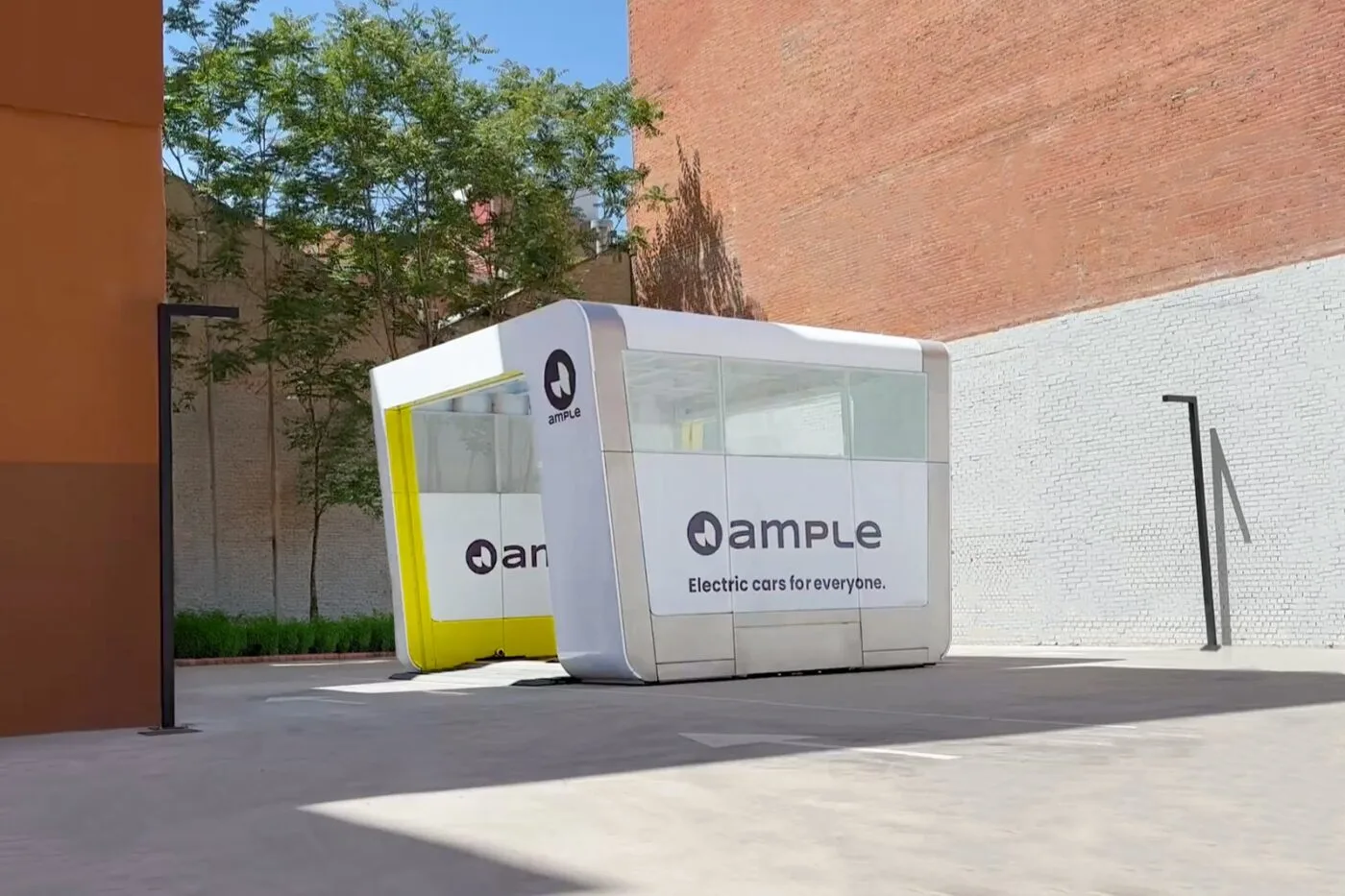
Ample has launched its modular battery swapping technology in Madrid, supported by €9.76 million in funding from Spain’s IDAE through the Moves Singulares programme. The system is said to swap EV batteries in five minutes, targeting urban fleets and infrastructure scalability. Ample, a US-based specialist in battery swapping technology, has begun deploying its modular battery swap stations in Madrid, marking its first European deployment. The first stations are already operational, with several more planned across the city centre. According to Ample, the stations are built for rapid urban deployment and can be installed within three days. The company aims to help alleviate major barriers to EV adoption in cities, including long charging times, range concerns, and space constraints for infrastructure. The battery swapping system offers full vehicle recharging in five minutes. The technology is modular and vehicle-agnostic, designed to replace depleted battery packs with fully charged ones without driver intervention. Ample emphasises that the system is particularly well-suited for high-utilisation fleet applications in densely populated urban areas. “This grant is a tremendous step forward for Ample and the electric mobility space in Spain,” said Khaled Hassounah, CEO of Ample. “By partnering with the Spanish government, we are not just meeting the immediate infrastructure needs of Madrid’s growing population, but also laying the groundwork for a future-proof, sustainable urban mobility ecosystem.” The Spanish government has identified battery swapping as a key enabler in its strategy to reach 5.5 million EVs on Spanish roads by 2030 and reduce emissions by 65% in urban centres. Madrid currently leads the country in EV registrations and is accelerating infrastructure projects to meet its climate targets. Ample is also expanding its collaboration with Stellantis in Madrid, supporting the launch of a carsharing service based on swappable Fiat 500e vehicles. The agreement was first announced at the end of 2023. The project brings together Stellantis’ Fiat brand, Free2move mobility services, and Free2move Charge, the group’s tailored charging network. The carsharing fleet will rely on Ample’s fast-swap stations to maintain availability and uptime. Just a few months ago, Ample also announced that it was setting up swapping stations in the Japanese capital of Tokyo. There it partners with Mitsubishi Fuso Truck and Bus Corporation and Mitsubishi Motors Corporation, while the focus is on the logistics and commercial sector. Ample and MFTBS announced their cooperation in July 2023 and tested the technology in the Japanese city of Kyoto last year. For the trial, a Mitsubishi Fuso eCanter light-duty truck was fitted with swappable batteries. Ample unveiled the latest design of its battery swapping station in 2023. It says that it can swap out batteries in just five minutes. Moreover, the design differs from Nio’s stations, for example. In case of the latter, EVs have to back in. With the Ample station, electric vehicles can drive in from one side and out the other, making it more suitable for commercial vehicles. businesswire.com
Sungrow launches PowerTitan 3.0 with modular design
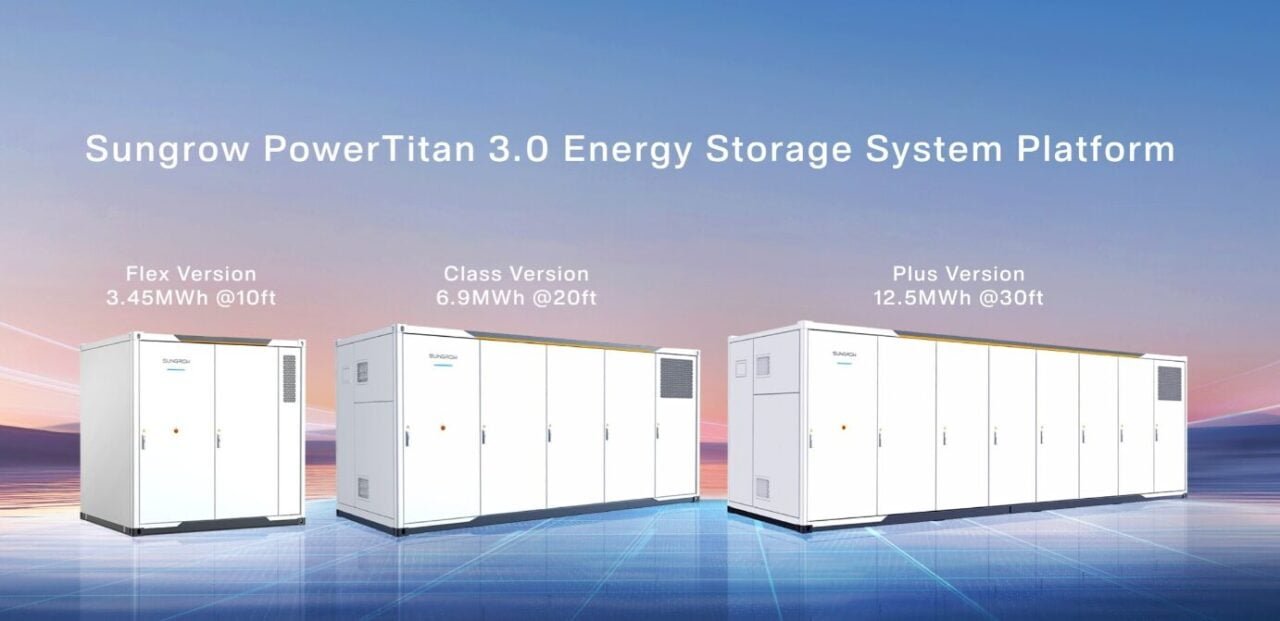
Sungrow launches PowerTitan 3.0 with modular design - Energy-Storage.News Skip to content
xAI Colossus supercomputer stirs debate in Memphis
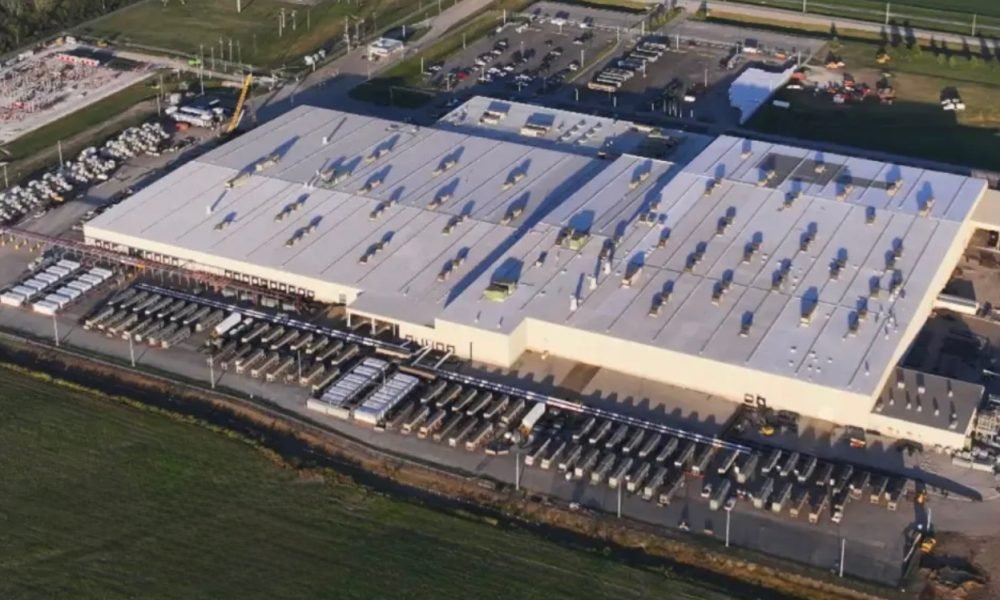
xAI’s supercomputer in Memphis faces pushback from local leaders and environmental groups over concerns about air pollution despite its promise of economic growth. xAI’s Memphis facility was touted as the world’s largest supercomputer. It has sparked opposition from the NAACP, Sierra Club, and Mississippi Democratic Party Chairman Cheikh Taylor. State Rep. Taylor spoke at a Southaven church press conference recently, arguing that the xAI facility in Memphis, Tennessee, would disproportionately harm black residents in north Mississippi. “In the State of Mississippi, the goal is to separate Republicans and Democrats on race alone. So, if you’re a Democrat in this state, you probably look like me,” Taylor said. He also criticized prioritizing economic gains over environmental health, asking, “Can you trust Elon Musk to tell the truth?” Tennessee State Rep. Justin J. Pearson echoed these concerns, linking the opposition to a broader fight against pollution. “The paltry money xAI has dangled in front of our short-sighted leaders is not worth the cost of breathing dirty and–in some cases–deadly air,” Pearson said. These local leaders and environmental groups are urging local governments and the Environmental Protection Agency to deny xAI’s air permit applications for 45 to 90 methane gas turbines in the Memphis and Southaven areas. https://www.teslarati.com/xai-tesla-megapack-colossus-2/ xAI has not directly addressed the criticism but has taken steps to power its Colossus supercomputer sustainably. Last month, the Greater Memphis Chamber announced that Tesla Megapack batteries would stabilize the facility’s power, with a new 150-megawatt electric substation completing its first construction phase. “The temporary natural gas turbines that were being used to power the Phase I GPUs prior to grid connection are now being demobilized and will be removed from the site over the next two months,” shared the Chamber. An additional 160+ Megapacks were delivered to xAI’s Memphis facility for the Colossus 2 data center within the same month. Announced in June 2024, the xAI facility was hailed by Greater Memphis Chamber CEO Ted Townsend as the largest capital investment by a new-to-market company in Memphis history. Despite its economic promise, environmental concerns continue to fuel opposition, highlighting tensions between technological innovation and community health in the Deep South’s emerging AI hub.
Daimler Truck and Toyota to merge Fuso and Hino operations

After more than two years of negotiations, the agreement is final. Daimler Truck and Toyota will merge their Japanese commercial vehicle subsidiaries, Mitsubishi Fuso and Hino Motors. The newly formed holding company is set to launch in April 2026. Daimler Truck and Toyota Motor Corporation first announced their intention to integrate Mitsubishi Fuso and Hino Motors as equal partners in May 2023. The aim of this close collaboration is to enhance operational efficiency across development, procurement and manufacturing – including in the ongoing electrification of both product portfolios. The finalised agreement includes the formation of a new holding company to oversee the merger on equal terms. Both brands will be brought under one corporate roof, with the parity of the merger explicitly highlighted. The holding company will own 100 per cent of the shares in both Mitsubishi Fuso and Hino. Daimler Truck and Toyota each intend to retain a 25 per cent stake in the holding. The remaining 50 per cent could potentially be floated on the Prime Market of the Tokyo Stock Exchange, although it remains unclear if this portion will be offered to public investors or whether another strategic investor will come on board. What is confirmed is that the new, as yet unnamed, holding company will be headquartered in Tokyo. Longtime Daimler executive and current Fuso CEO Karl Deppen will sign on as CEO. Further details on the scope of the cooperation, including the new company’s official name, will be revealed in the coming months. The agreement is still subject to approvals from relevant boards, shareholders and authorities. If all goes to plan, the holding will begin operations in April 2026, aligning with the start of the Japanese fiscal year. Focus on CASE technologies The new entity aims to address challenges around carbon neutrality and logistics efficiency in the commercial vehicle sector, delivering added value for customers, stakeholders and the wider automotive industry. The strategic emphasis will be on developing CASE technologies – Connected, Autonomous, Shared and Electric – with hydrogen explicitly named as a pillar of the electrification strategy. Mitsubishi Fuso currently offers the eCanter, a light-duty battery-electric truck, and is also participating in a Japanese consortium exploring battery-swapping solutions for commercial vehicles. Hino, meanwhile, is pursuing both battery-electric and hydrogen fuel cell technologies across its markets from North America to Asia. Hydrogen plays a notable role in Japan’s national energy strategy, and Toyota is considered a pioneer in fuel cell development. At the start of the merger talks, Daimler Truck was led by Martin Daum. His successor, Karin Rådström, has since advanced the plans and now describes the integration of the two Japanese truck makers as “truly historic”. “We are bringing together two strong partners to form an even stronger company and to successfully shape the decarbonization of transportation. Together, Mitsubishi Fuso and Hino Motors have great potential to leverage scale – and scale is key to win in the technological transformation of our industry,” said the Daimler Truck CEO. Toyota CEO Koji Sato added: “We believe that the future is for us to build together. Today’s final agreement is not the goal but the starting line. Our four companies, aiming to achieve a sustainable mobility society, will continue to create the future of commercial vehicles together.” Karl Deppen, the incoming CEO of the new holding, also shared his perspective: “We are shaping the industry by bundling our strengths. With a strong new company we combine our two trusted brands, our resources, competencies and expertise to even better support our customers in their transportation needs in the future.” daimlertruck.com, hino-global.com (PDF), mitsubishi-fuso.com (PDF)
California’s Fresno County introduces ‘fire mitigation payments’ for BESS projects
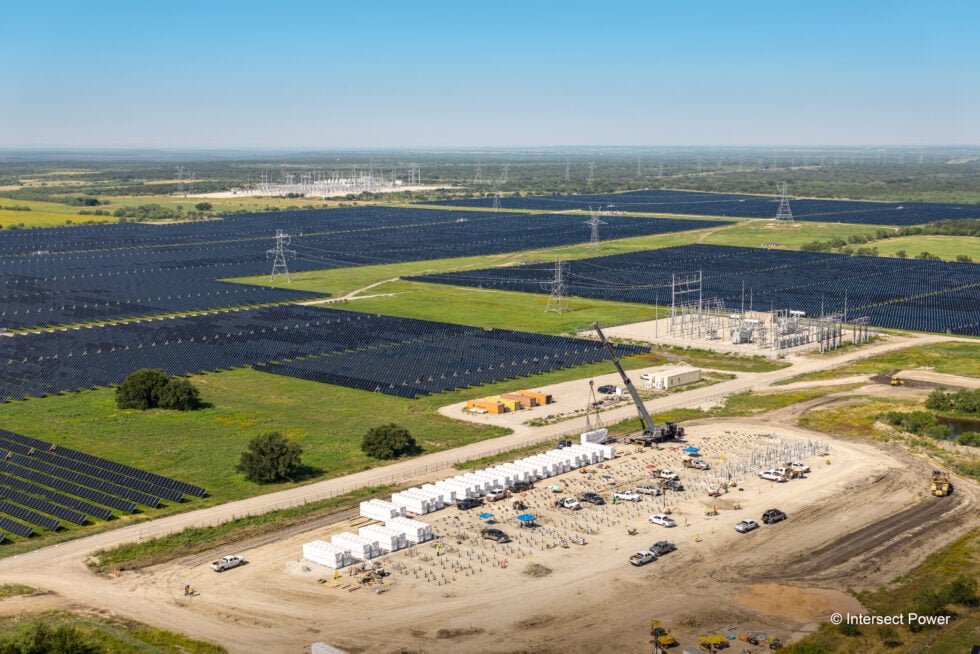
California’s Fresno County introduces ‘fire mitigation payments’ for BESS projects - Energy-Storage.News Skip to content
Starlink India launch gains traction with telecom license approval

xAI’s supercomputer in Memphis faces pushback from local leaders and environmental groups over concerns about air pollution despite its promise of economic growth. xAI’s Memphis facility was touted as the world’s largest supercomputer. It has sparked opposition from the NAACP, Sierra Club, and Mississippi Democratic Party Chairman Cheikh Taylor. State Rep. Taylor spoke at a Southaven church press conference recently, arguing that the xAI facility in Memphis, Tennessee, would disproportionately harm black residents in north Mississippi. “In the State of Mississippi, the goal is to separate Republicans and Democrats on race alone. So, if you’re a Democrat in this state, you probably look like me,” Taylor said. He also criticized prioritizing economic gains over environmental health, asking, “Can you trust Elon Musk to tell the truth?” Tennessee State Rep. Justin J. Pearson echoed these concerns, linking the opposition to a broader fight against pollution. “The paltry money xAI has dangled in front of our short-sighted leaders is not worth the cost of breathing dirty and–in some cases–deadly air,” Pearson said. These local leaders and environmental groups are urging local governments and the Environmental Protection Agency to deny xAI’s air permit applications for 45 to 90 methane gas turbines in the Memphis and Southaven areas. xAI has not directly addressed the criticism but has taken steps to power its Colossus supercomputer sustainably. Last month, the Greater Memphis Chamber announced that Tesla Megapack batteries would stabilize the facility’s power, with a new 150-megawatt electric substation completing its first construction phase. “The temporary natural gas turbines that were being used to power the Phase I GPUs prior to grid connection are now being demobilized and will be removed from the site over the next two months,” shared the Chamber. An additional 160+ Megapacks were delivered to xAI’s Memphis facility for the Colossus 2 data center within the same month. Announced in June 2024, the xAI facility was hailed by Greater Memphis Chamber CEO Ted Townsend as the largest capital investment by a new-to-market company in Memphis history. Despite its economic promise, environmental concerns continue to fuel opposition, highlighting tensions between technological innovation and community health in the Deep South’s emerging AI hub.
CaetanoBus unveils new electric buses with CATL batteries and CRRC drive systems
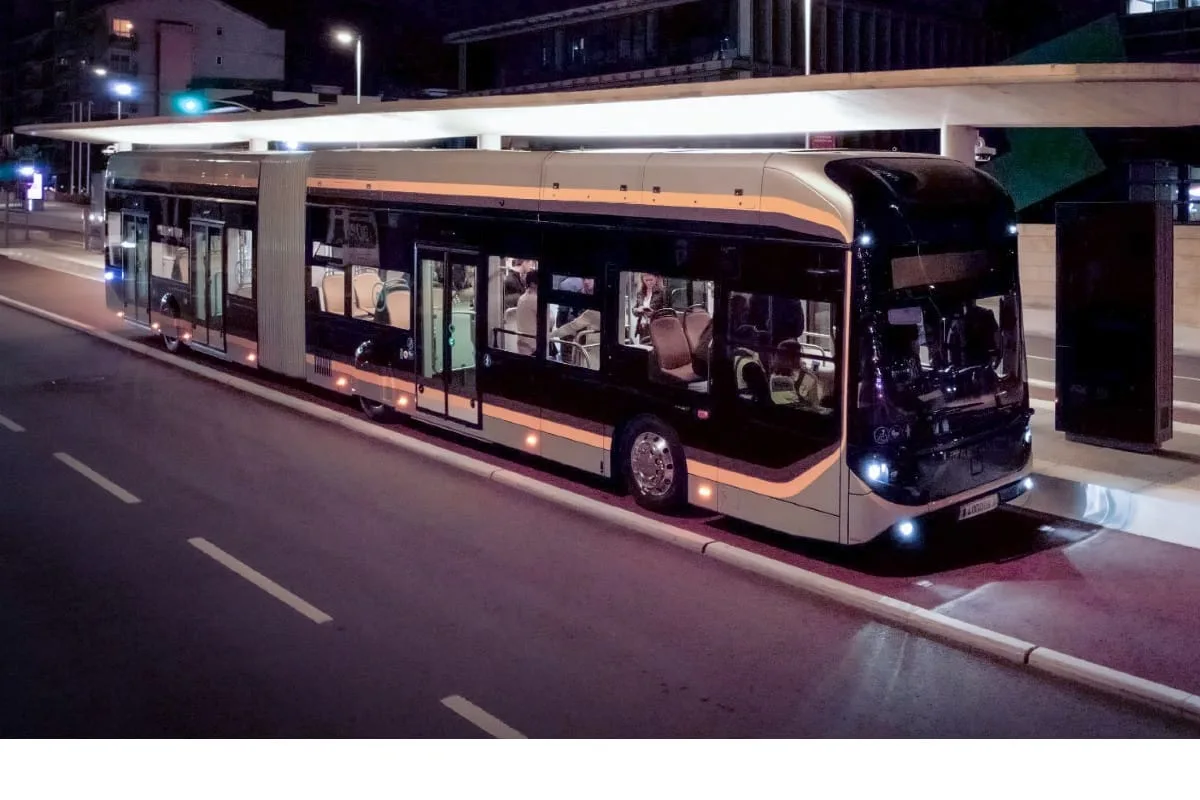
CaetanoBus launched a new generation of electric buses in 8.5, 12, and 18-metre variants. All three sizes are available with a battery-electric drive, while the 12- and 18-metre models are also offered as hydrogen-powered vehicles. The key drivetrain components now include new suppliers. The Portuguese manufacturer expanded its urban bus portfolio and revised its powertrain configurations. For the first time, all zero-emission buses in the new generation will be equipped with LFP batteries from CATL, replacing the previously standard NMC cells. Additionally, CaetanoBus is switching from Siemens to a CRRC motor for its battery-electric (BEV) and hydrogen fuel cell electric (FCEV) buses. However, the hydrogen components in the H2 City Gold model will continue to come from Toyota. CaetanoBus has received numerous orders for hydrogen buses and describes itself as a pioneer in hydrogen drivetrain integration. Battery-electric orders also continue to be placed, including for the e.City Gold from Lisbon. With the new generation, the company is transitioning to alternative drivetrain suppliers. The BEV models will now use CATL’s so-called BC5 battery system, offering up to 465 kWh for the 12-metre variant, up to 700 kWh for the 18-metre version, and up to 266 kWh for the 8.5-metre buses. CATL’s BC5 system features LFP cells designed for durability. CaetanoBus claims that “these batteries support ultra-long cycle life exceeding 4,000 charge cycles, with minimal degradation over time, ensuring reliable performance over more than a decade of operation.” The new drivetrain will be supplied by CRRC, utilising a 6-in-1 system that integrates the motor with other performance components and controls into a single unit. CaetanoBus states this highly integrated approach will make the system up to 70% lighter. The solution is based, in part, on CRRC’s high-voltage IGBT technology and direct liquid cooling. For the hydrogen buses, Toyota’s fuel cell technology remains the core of the powertrain. The latest generation features the Toyota 2.5 stack with 70 kW output. This is now combined with a CRRC drivetrain and CATL battery packs—up to 130 kWh in the 12-metre model and up to 170 kWh in the 18-metre bus. CaetanoBus has also confirmed that the 18-metre model will be available in a Bus Rapid Transit (BRT) configuration, featuring doors on both sides, among other specifications. Nuno Lago de Carvalho, CCO and Executive Committee member at CaetanoBus said: “Through the joint development efforts of CaetanoBus and CRRC, combined with rigorous software-in-the-loop and hardware-in-the-loop testing, the new generation of CAETANO buses represents the forefront of e-mobility engineering.” He added: “We are equally proud of our ability to scale this innovation across the entire CAETANO product range, from 8.5m to 18m buses, using a common platform that supports both battery-electric and hydrogen fuel cell technologies. This unified approach ensures maximum flexibility, efficiency, and the seamless integration of cutting-edge systems across all vehicle configurations”. CaetanoBus is part of Toyota Caetano Portugal and Mitsui & Co. and has been co-branding with Toyota since 2021. The brand is best known for its urban and airport buses. In collaboration with Temsa, CaetanoBus also plans to introduce a hydrogen-powered coach in the near future. sustainable-bus.com
Trump’s 2025 R&D Retreat Ignores Key Lessons from "The Entrepreneurial State"
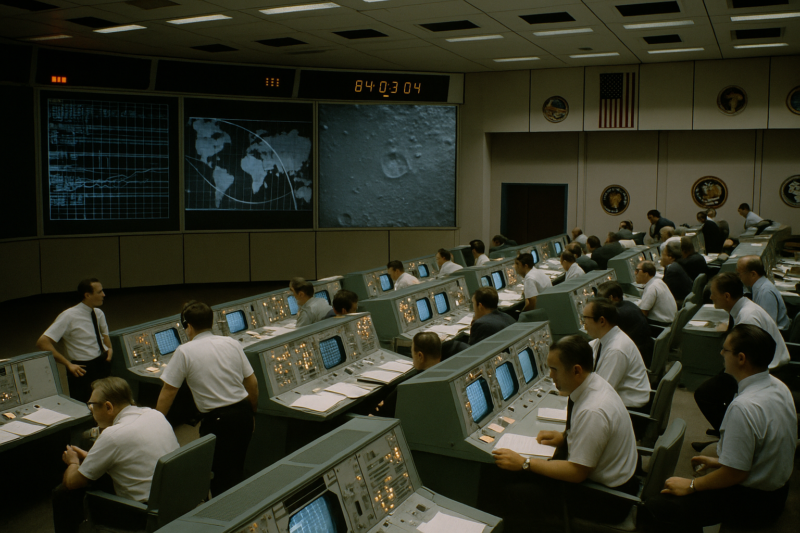
Last Updated on: 11th June 2025, 02:28 pm Having just finished Mariana Mazzucato’s 2024 book The Entrepreneurial State, I was struck by how powerfully it illuminated the reality behind state-led innovation, starkly contrasting with the Trump administration’s current approach of scaling back government investment and hoping that corporate R&D can independently fill the gap. Mazzucato thoroughly dismantles the popular myth that breakthrough innovation is primarily the domain of private firms, carefully documenting the critical role governments have historically played in shaping transformative technologies and new markets. Mazzucato argues persuasively that it is the state, not the private sector, that typically shoulders the significant risks of radical innovation. Private companies, focused heavily on quarterly earnings and immediate market demands, lack the incentive or appetite for long-term investments in uncertain technologies. The book provides numerous vivid examples — most notably, the creation of the internet. Early-stage technologies such as TCP/IP protocols were developed and financed through sustained funding by government agencies, notably DARPA, at a time when private firms saw no clear path to profit. Without that substantial early commitment of public funds, Silicon Valley, as we understand it today, simply wouldn’t exist. Mazzucato’s critique of venture capitalism offers an essential corrective to overly simplistic narratives about entrepreneurial risk-taking. Contrary to popular mythology, venture capitalists typically enter the innovation cycle relatively late, once foundational, risky research funded by the public sector has already proven viable. While venture capital firms are critical in scaling technologies, Mazzucato emphasizes they rarely fund truly uncertain, early-stage innovation, preferring safer bets with clearer paths to profitability. As she highlights, venture capital is often mischaracterized as the prime mover of innovation, overlooking the crucial role of government-funded research in bearing initial risks and laying technological foundations. A compelling example Mazzucato discusses is the pharmaceutical industry, where public investments in basic scientific research lay the foundation for virtually every breakthrough medication. Take biotechnology. The foundational knowledge and initial technological advances, such as recombinant DNA techniques, came directly from government-funded laboratories and universities, with private firms stepping in only later to commercialize and scale these advances. Despite popular narratives of heroic entrepreneurs and visionary venture capitalists, it was consistent, high-risk government funding that first opened these markets. The industry often privatizes the profits while relying heavily on socialized risks. The critique extends to energy technologies as well. Solar photovoltaic panels, wind turbines, and lithium-ion batteries all emerged from decades of patient, publicly funded R&D programs before becoming commercially viable. Companies like Tesla, which benefit enormously from advances in battery technologies, depend fundamentally on a platform of technologies originally supported by government funding. Elon Musk’s success, celebrated widely as a triumph of entrepreneurial capitalism, in fact rests on decades of prior, patient government investment in battery research and electric vehicle technology. Mazzucato’s inclusion of fracking as an example further underscores the critical yet underappreciated role of government-backed innovation. While many regard the shale gas boom as a triumph of free-market entrepreneurship, the reality is markedly different. Early research and technological development in hydraulic fracturing and horizontal drilling were initially funded and nurtured through extensive federal support starting in 1974 after the OPEC oil crisis by Gerald Ford. Decades of governmental money for foundational, high-risk experiments paved the way for private companies to later capitalize on commercially viable shale extraction. Contrasted against these historical lessons, the Trump administration’s 2025 policies represent a dangerous departure from a proven pathway to innovation. The administration has drastically cut funding to crucial science and technology agencies, including the NIH, NSF, and Department of Energy, while claiming that private enterprise alone can shoulder the innovation burden. This approach ignores the proven reality that transformative innovation, particularly early-stage research, rarely fits neatly into the quarterly financial goals of private firms. The administration’s ideological stance seems less about prudent budgeting and more about a deliberate withdrawal from a state role that history shows is crucial to innovation. Without robust federal investments, the foundational research necessary for future transformative innovations is at risk. Companies, forced to rely solely on internal R&D budgets, typically prioritize incremental innovations rather than revolutionary breakthroughs. This incrementalism risks stagnation in vital sectors like biotechnology, renewable energy, semiconductors, and artificial intelligence. Mazzucato emphasizes the importance of mission-oriented government investments. She highlights examples like the Apollo mission to land on the moon, where the U.S. government didn’t just correct market failures, it actively created entirely new markets through sustained, ambitious investments. A mission-driven approach catalyzes extensive cross-sectoral innovation, spurring breakthroughs that private actors later leverage. The Apollo mission led to numerous technological breakthroughs, including advances in computing technology, miniaturization of electronics, thermal management systems, materials like flame-resistant textiles, and improved telecommunications systems. American businesses later capitalized on these publicly funded innovations, developing commercial products ranging from personal computers to advanced firefighting gear and satellite communication technologies. Today, such a mission-driven approach could be critical to tackling global climate change or advancing quantum computing, yet Trump’s policy shotgun ignores ambitious public goals in favor of ideological purity and short-term budgetary cuts, along with tax cuts for the already rich and an increasingly bloated deficit and debt-balance. On that point, Carmen Reinhart along with Kenneth Rogoff famously pointed to a “red line” at around 90 percent debt-to-GDP, asserting that once a nation’s debt surpasses that threshold, its economic growth tends to slow dramatically, roughly halving in pace. Currently, the United States carries a debt-to-GDP ratio of approximately 106 percent, well above that threshold. While crossing such a boundary doesn’t guarantee doom, history shows it often brings a sustained drag on growth, underscoring the urgency of aligning innovation and economic policies with fiscal realities. Trump’s approach also fosters a corrosive skepticism toward science, damaging the trust between researchers, institutions, and government agencies. This breakdown in trust and coherence is detrimental. Historically, when political ideology has overpowered evidence-based policy — such as during periods of anti-science sentiment like China’s Cultural Revolution, the Soviet Union’s Lysenkoism, or Hitler’s purges of Jewish scientists — it has undermined innovation capacity. Mazzucato warns against ideological narratives that diminish
Growing need for BESS quality control, risk management strategies
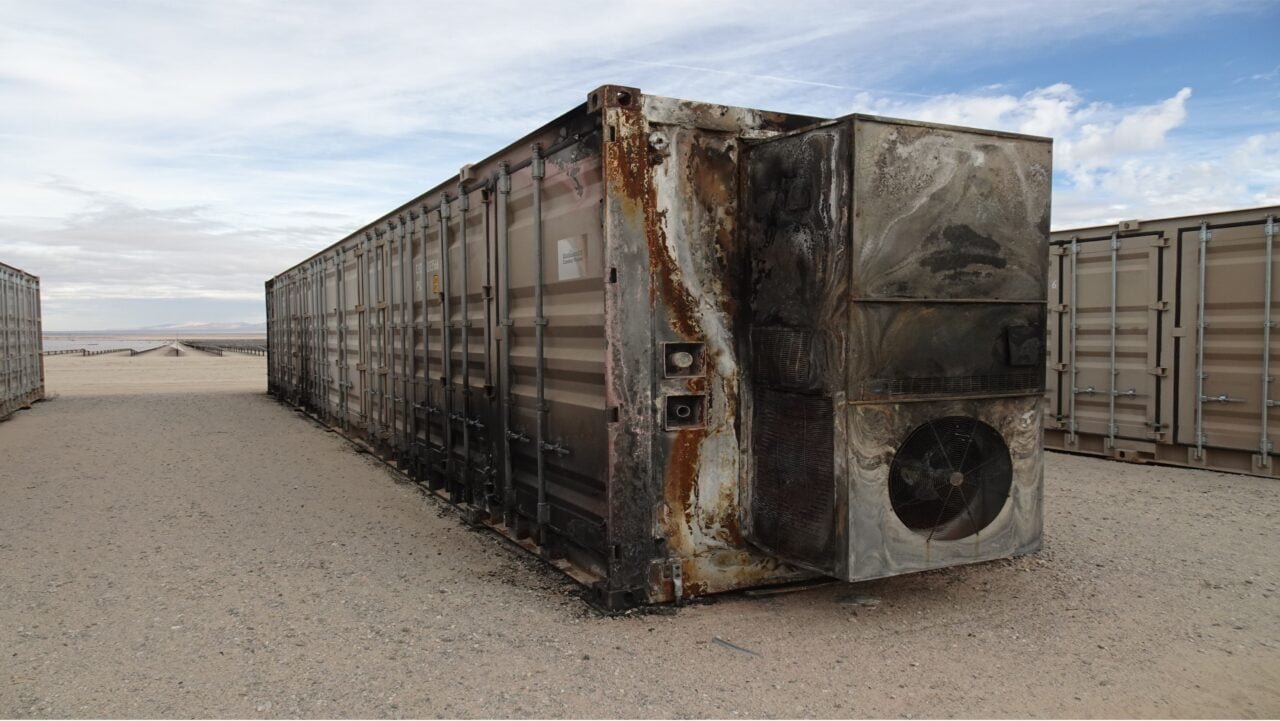
Growing need for BESS quality control, risk management strategies - Energy-Storage.News Skip to content
Tesla Full Self-Driving's European launch frustrations revealed by Elon Musk

Tesla CEO Elon Musk says the automaker’s Robotaxi platform launch later this month will essentially force other companies to license Full Self-Driving to achieve their own goals of achieving autonomy. Musk’s statement comes as a video captured today showed the first Tesla Robotaxi test mules on public streets in Austin, Texas, just one day after the City officially listed the company as an autonomous vehicle operator. A prediction by investing YouTube and Tesla community member Dave Lee stated that “at least one automaker by end of year” will license Full Self-Driving from the Musk-led company, as it will give rivals the confidence to use the software to run their own self-driving operations. Lee detailed his theory by stating that the company that chooses to commit to FSD licensing will not be able to integrate the hardware and sell those units immediately. Instead, it will take two years or so to solve the engineering and design applications. First Tesla driverless robotaxi spotted in the wild in Austin, TX Musk revealed his true thoughts on other automakers’ attempts at vehicle autonomy, and said many are being told that Robotaxi is not real or that they can solve their problems with hardware orders to Nvidia. He went on to say that companies will be forced to turn to Tesla at some point or another, because Robotaxi will be widespread and their solutions to figuring out an effective deployment will prove to be failures: “The automakers keep being told that this isn’t real or that just buying some hardware from Nvidia will solve it. As Tesla robotaxis become widespread and their other solutions don’t work, they will naturally turn to us.” The automakers keep being told that this isn’t real or that just buying some hardware from Nvidia will solve it. As Tesla robotaxis become widespread and their other solutions don’t work, they will naturally turn to us. — Elon Musk (@elonmusk) June 10, 2025 Musk has not been shy to respond to speculation regarding the video of the Robotaxi, which was shared on X earlier today. This is perhaps one of the more fiery things he revealed. He seems ultra-confident in what Tesla will prove and achieve in the near future with the launch of the Robotaxi platform. Many believe it will be rolled out this month. Bloomberg reported recently that Tesla was internally aiming for June 12. The company has not directly responded to these rumors. Tesla has discussed on several occasions that it is in talks with an automaker about licensing Full Self-Driving, but it has never revealed who. The company first revealed discussions with another automaker in early 2024 when Elon Musk said: “We’re in conversations with one major automaker regarding licensing FSD. It really just becomes a case of having them use the same cameras and inference computer and licensing our software. Once it becomes obvious that if you don’t have this (FSD) in a car, nobody wants your car. It’s a smart car… The people don’t understand all cars will need to be smart cars, or you will not sell, or nobody would buy it. Once that becomes obvious, I think licensing becomes not optional.” Tesla confirms it is in talks with major automaker for potential FSD licensing Many, including us, suspected that Ford was the company that Tesla was speaking of due to Musk’s relationship with Jim Farley, which resulted in the legacy automaker being the first major car company to adopt Tesla’s North American Charging Standard (NACS), which gave them access to the Supercharging Network. This catalyzed an onslaught of companies choosing to make the same move as Tesla had truly set itself apart in terms of charging infrastructure. Companies may be forced to make a similar decision if it can make the same type of statement with the rollout of Robotaxi.