Marine Battery Basics: Starting, Deep Cycle, Dual Purpose & More

Choosing the right battery for your boat isn't just about size or brand—it’s about understanding your power needs, battery types, and how to maintain optimal performance. Here’s a breakdown of the key categories and tips to help you make informed decisions. 1. Starting Battery (Cranking Battery) Purpose:Delivers a short burst of high current to start the boat’s engine. Features: High Cold Cranking Amps (CCA) Thin lead plates for maximum surface area Not designed for deep discharge Best For:Outboard or inboard motor starting only, not suitable for powering appliances or trolling motors. 2. Deep Cycle Battery Purpose:Designed for continuous, long-duration power delivery, ideal for running equipment and electronics. Features: Thicker plates for deep discharge and long cycle life Lower CCA, but higher reserve capacity Built for repeated draining and recharging Best For:Trolling motors, fish finders, lighting, navigation systems, onboard appliances 3. Dual Purpose Battery Purpose:A hybrid battery that can both start engines and run accessories. Features: Compromise between cranking power and deep cycle performance Good for boats with limited space Best For:Smaller vessels, weekend boaters, or applications with light accessory loads 4. Battery Chemistry Types Chemistry Pros Cons Flooded Lead-Acid (FLA) Inexpensive, proven technology Requires maintenance, venting needed AGM (Absorbent Glass Mat) Maintenance-free, spill-proof, vibration resistant Heavier, costlier than FLA Gel Cell Good for deep discharge, very stable Sensitive to charging, limited output LiFePO₄ (Lithium Iron Phosphate) Lightweight, long life, fast charging High upfront cost, needs smart BMS 5. Key Battery Ratings to Watch When buying or comparing marine batteries, look for these important specifications: CCA (Cold Cranking Amps): How much current the battery can deliver in cold weather to start the engine. RC (Reserve Capacity): How many minutes the battery can supply 25 amps before dropping below 10.5V. Ah (Amp-Hours): Total capacity—how long the battery can run a device that draws 1 amp. Cycle Life: Number of full discharge/recharge cycles before capacity degrades. Voltage (V): Most marine batteries are 12V; some systems use 24V or 48V configurations. 6. Tips for Getting the Best Performance from Your Marine Battery ✅ Choose the right charger – especially for AGM and Lithium types; use smart chargers. ✅ Avoid full discharge – never drain your battery below 50% (except LiFePO₄, which allows deeper discharge). ✅ Secure your batteries – prevent movement and vibration damage. ✅ Clean terminals regularly – avoid corrosion and poor connectivity. ✅ Store properly off-season – charge to 100%, store in a cool dry place, and disconnect cables. ✅ Use a Battery Monitor System (BMS) – track voltage, current, and remaining capacity.
Hino/Fuso merger creates Japanese trucking powerhouse
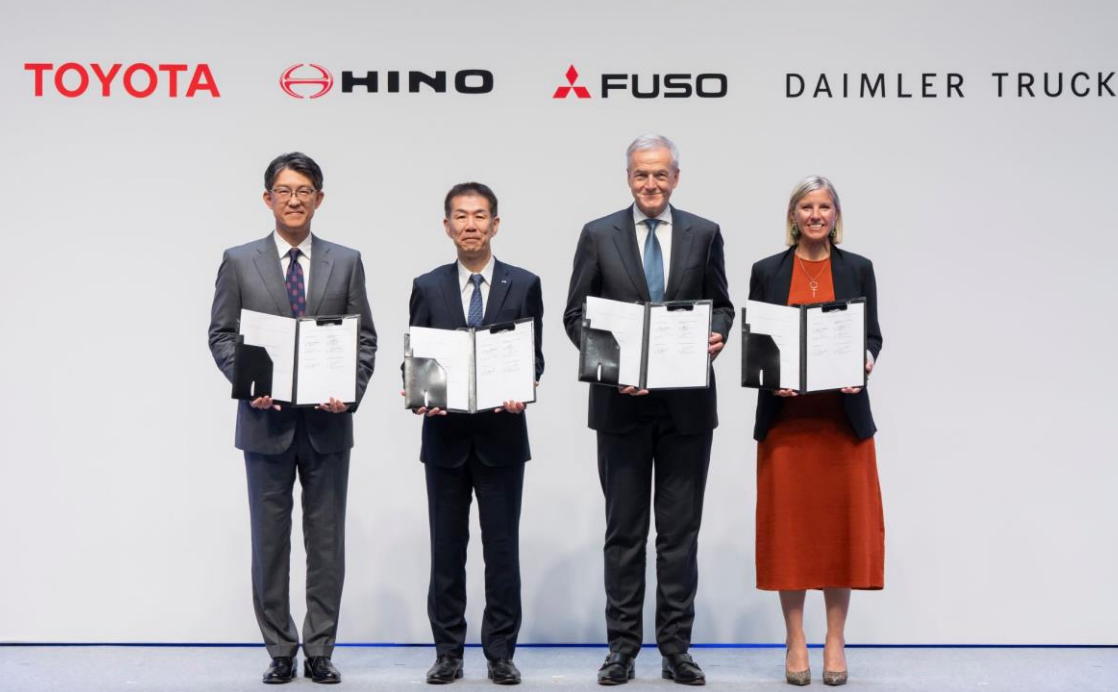
After some delay, Toyota and Daimler have finalised plans to merge Hino and Mitsubishi Fuso. By Megan Lampinen A new Japanese commercial vehicle powerhouse is about to emerge as Daimler Truck and Toyota finalise plans to merge their respective subsidiaries Mitsubishi Fuso and Hino Motors. The step marks a continuation of the consolidation trend that has played out within the trucking sector over the past few decades, and is likely to continue. Subscribe to Automotive World to continue reading Sign up now and gain unlimited access to our news, analysis, data, and research Subscribe Already a member? Join our LinkedIn Group Let us help you understand the future of mobility "*" indicates required fields
The business-school professor who wants to tear down Scope 3
One day during the Covid winter of 2020, with his travel plans derailed, Karthik Ramanna sat down to read the Greenhouse Gas Protocol. Ramanna is an expert in financial accounting systems and corporate leadership at the University of Oxford. On this occasion, he’d been asked to step outside his field and comment on a piece of sustainability research. He expected to find himself on familiar ground: The front of the protocol, he recalled, declared in large type that it was an accounting standard. But it wasn’t accounting in the way he or his peers understood it. “Imagine you pick up a book that says ‘The Astronomy of Mars’ and then you start looking at it and you think, ‘Wait a minute, this is astrology, not astronomy’,” he told Trellis. “It was very, very jarring.” That moment was the genesis for a research partnership that has produced an alternative to the existing system for emissions accounting. It’s an effort that has won praise from experts and been piloted in multiple countries. It’s also produced plenty of pushback, with critics asserting Ramanna and colleagues fail to appreciate the strengths of the existing system, which their disruptive behavior is putting at risk. ‘We should work on this’ After reading the protocol and the research he’d been asked to assess, Ramanna joined a Zoom gathering to share his thoughts. He had no major problem with the research, he told those in attendance, but the system that underlay it did not qualify as accounting. Sitting in the virtual audience was Robert Kaplan, an academic credited with some of the most significant accounting innovations of the past half-century and a former colleague from Ramanna’s time at Harvard. “He sends me a note and he says, ‘I couldn’t agree more with you and we should work on this,’” Ramanna said. “Now, Bob Kaplan has worked on some pretty important problems. For him to say that, I was like, oh, maybe I’m onto something here.” At the heart of Ramanna and Kaplan’s idea, which first appeared in an academic paper in August 2021, is a solution to what the pair have described as the “fatal flaw” of reporting under the GHG Protocol: Scope 3. To a traditional accountant, the idea of a company having to quantify an activity taken by other organizations in a value chain, as the Scope 3 rules require, is nonsensical. Instead, companies should be asked to quantify only emissions associated with what they produce — their Scope 1 emissions, in other words. E-liabilities Consider the supply chain behind a steel car part, beginning with a mine that produces iron ore. The mining company is responsible for measuring emissions from its operations. In Ramanna and Kaplan’s system, when it sells the ore to a steel producer, it also transfers an appropriate fraction of those emissions — known, by analogy to financial accounting, as liabilities. The steel producer then measures its own emissions from the processing of the ore into steel and adds them to the emissions it inherited from the mining company. When it sells a batch of steel to the next company in the chain, the producer allocates a fraction of the total to each shipment. The process continues down the chain, with each company measuring, adding and allocating emissions. When the auto company purchases the car part, alongside the invoice comes a statement of the emissions liabilities. One benefit of this “E-liabilities” approach — “E” for “environmental” — is that each company focuses on the emissions it controls. In the existing Scope 3 system, every company in the value chain needs to at least estimate the emissions of every other company. Under E-liability, the measurement happens once, at source, and is passed on. Academic proposals to overhaul accounting systems don’t necessarily make a splash, but Ramanna credits Kaplan with a gift for framing problems in a way that decision-makers find useful. The pair’s provocative language didn’t hurt, either: Their paper was titled “How to Fix ESG Reporting” and a follow-up, published later the same year in the Harvard Business Review (HBR), was described as “the first rigorous approach to ESG reporting.” In the business community, this approach struck a chord: Kaplan and Ramanna won the 2021 HBR McKinsey Award, which goes to the review’s best article of the year. Companies began to offer to test the system. In subsequent HBR articles, Ramanna and colleagues report on E-liabilities pilots carried out in conventional spheres (cement and tires), as well as more unusual ones (security services in Afghanistan). Hitting the brakes Reaction within the sustainability community has been more circumspect — particularly from those who spent years establishing the GHG Protocol as the foundation for how companies report on emissions. Perhaps the most notable critique came from Janet Ranganathan, a managing director at the World Resources Institute and a lead author of the GHG Protocol. Her 2024 commentary on E-liabilities opens with a warning, in bold, that “E-liability is not a replacement for the GHG Protocol.” Like other critics, Ranganathan noted that double-counting in Scope 3 is a feature, not a bug: Companies that take responsibility for value-chain emissions are incentivized to collaborate with suppliers and customers on decarbonization solutions. “While it is important to remain open to new ideas,” she concluded, “we shouldn’t be too quick to throw the baby out with the bathwater.” Others have questioned the practicality of Ramanna and Kaplan’s ideas. “The e-liability system is brittle, as each company depends on every other company operating upstream of it in a value chain to also estimate emissions and engage with the E-liability registry,” wrote Michael Gillenwater, co-founder of the Greenhouse Gas Management Institute and an advisor to the GHG Protocol. Objections such as that from establishment figures have likely slowed attempts to evaluate E-liabilities, but the idea continues to pick up adherents. Other academics have weighed in with supportive commentary, ranging from proposals for incorporating use of carbon removals to suggestions that E-liabilities could drive investments in supply-chain decarbonization. And pilots
Roland DGA launches two new VersaSTUDIO desktop devices
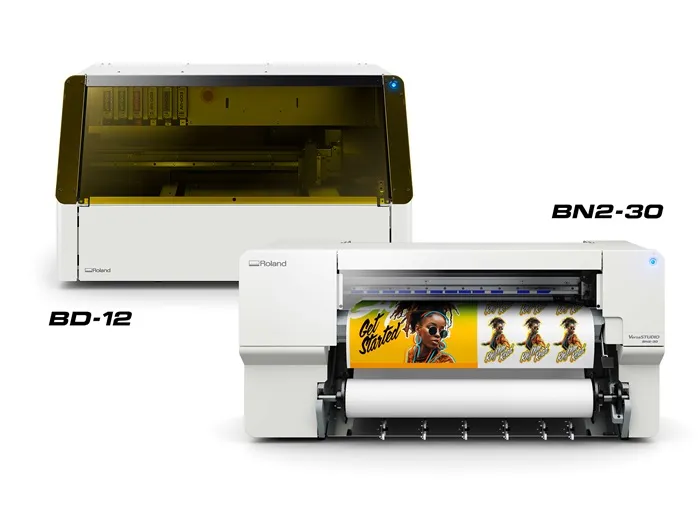
Newly added BN2-30 printer/cutter and BD-12 UV flatbed printer increase creativity and profitability for users. Roland DGA has introduced two new models in its VersaSTUDIO Series of compact desktop printers: the BN2-30, a 30-inch eco-solvent printer/cutter, and the BD-12, a UV direct-to-object printer with a 12.2” x 8.3” print bed. These models offer larger work areas than previous versions and are designed to support a range of printing applications. The 30-inch BN2-30 is a compact device that combines print and contour-cutting capabilities, suitable for producing T-shirt transfers, signs, posters, labels, and custom-shaped graphics. Its space-efficient design supports use in smaller print environments while offering the functionality needed for efficient output. The BN2-30 is compatible with Roland DG’s Eco-Sol MAX 2 eco-solvent inks, available in CMYK and White. The BD-12 UV flatbed printer supports direct-to-object printing on a variety of three-dimensional items up to A4 size and 102 mm in height, such as smartphone cases, notepads, and promotional goods. Optional rotary attachments allow printing on cylindrical objects up to 50 mm in diameter. It uses EUV5 UV inks in CMYK and White, suitable for materials ranging from fabric and leather to wood and plastic. Clear ink enables gloss, matte, and textured effects, while an optional Primer ink improves adhesion on glass and metal surfaces. Both the BN2-30 and BD-12 are equipped with technologically advanced printheads that deliver high-resolution output and offer multiple print modes ideal for different applications, making it easy for anyone to achieve professional-quality results. These machines are also designed for simple operation and optimum convenience. Each device has only a single power button – all other functions are performed with the included Utility software, which features easy-to-understand icons and quick, intuitive access to menu items. The BN2-30 and BD-12 also come standard with FlexiDESIGNER VersaSTUDIO Edition software that can be used for everything from design creation to printing, as well as VersaWorks 7 – Roland DG’s most advanced, user-friendly RIP software to date. VersaWorks 7, which now supports both Windows and macOS, is packed with powerful tools and features that help maximize print quality, improve efficiency, and increase productivity. With FlexiDESIGNER and VersaWorks 7 included, even those who have never used design and output software before can create the items they desire quickly and easily. Users also have access to Roland DG Connect, a comprehensive cloud-based platform that enables print professionals to manage their entire print operations with a single app. Roland DG Connect provides you with a detailed understanding of your printers while keeping your devices running at peak performance, reducing downtime, and maximizing efficiency. It also puts everything you need to create, optimize, and grow – from real-time monitoring and business insights to inventory management tools and seamless support – at your fingertips. The BN2-30 and BD-12 are priced to be affordable for first-time users. Both products are also backed up by comprehensive manufacturer warranties, and optional extended maintenance contracts are available for extra peace of mind. To learn more about Roland DGA, visit rolanddga.com.
China breaks records as global EV sales hit 7.2 million in 2025
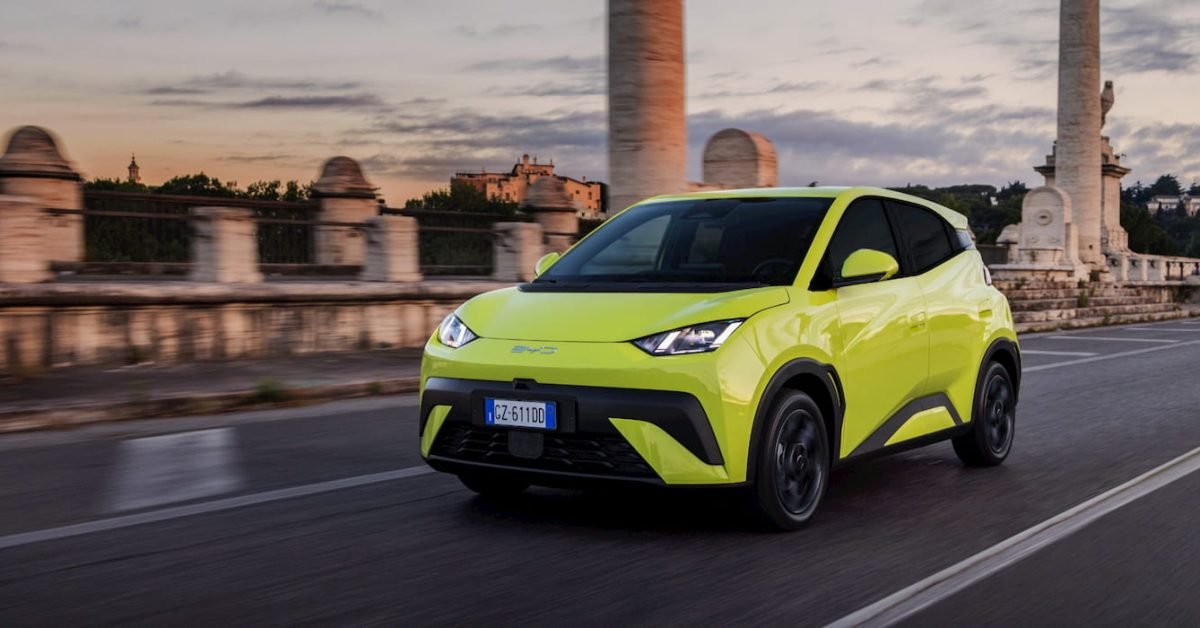
BYD Dolphin Surf EV for Europe (Source: BYD) Global EV sales surged in May 2025, hitting 1.6 million units sold, according to the latest data from EV research house Rho Motion. That brings the total for the year so far to 7.2 million EVs, a 28% increase compared to the same period in 2024. The big winner: China. The country sold a record-breaking 1 million EVs in May alone. That’s a 33% jump year-over-year, and a 10% boost compared to April. The rest of the world saw solid gains too, but North America lagged far behind, mainly due to slashed incentives in Canada. Rho Motion’s Charles Lester broke it down: “The story this month with global vehicle sales is the continued chasm between Chinese market growth, which saw 1 million vehicles sold in May, versus the faltering market in North America.” Let’s take a closer look: Advertisement - scroll for more content Europe holds steady, with help from Spain and Italy. Europe is up 27% year-to-date, with 1.6 million EVs sold from January through May. Countries like Germany (+45% YTD) and the UK (+32% YTD) are helping lead the way, but southern Europe is really stepping on the accelerator. Spain saw a whopping 72% growth in EV sales so far this year, and Italy isn’t far behind at 58%. Germany just rolled out a new set of EV incentives focused on commercial fleets. With corporate vehicles making up more than half the German auto market, those tax breaks and special depreciation offers could supercharge sales in the coming months. North America stalls out. The US, Canada, and Mexico are dragging, with just 3% growth YTD. That’s mostly due to Canada’s pause on EV subsidies, which caused a steep 20% sales drop. The US is holding on with 4% growth, helped by the federal EV tax credit that remains in place through the end of the year. But those credits start phasing out in 2026 and will disappear by 2027, if the Republicans don’t kill them even sooner. Expect a late-year bump as buyers rush to cash in while they still can. China dominates again. China continues to be the EV powerhouse. In May, it became the first country this year to break the 1-million-EVs-sold-in-a-month mark. It first hit that level in August 2024, and it hit the milestone again just ahead of the summer push. Chinese automakers aren’t slowing down either. BYD is expanding its presence in Europe with new BEVs and plug-in hybrids. Its tiny budget EV, the Dolphin Surf (called the Seagull in China), just launched in Europe with a price tag around $25,000, and it’s not subject to new EU tariffs on Chinese EVs, since it’s a hybrid. Here’s how 2025 EV sales stack up through May: Global: 7.2 million (+28%) China: 4.4 million (+33%) Europe: 1.6 million (+27%) North America: 0.7 million (+3%) Rest of World: 0.6 million (+36%) Read more: 1 in 4 cars sold in 2025 will be EVs, and that’s just the beginning If you live in an area that has frequent natural disaster events, and are interested in making your home more resilient to power outages, consider going solar and adding a battery storage system. To make sure you find a trusted, reliable solar installer near you that offers competitive pricing, check out EnergySage, a free service that makes it easy for you to go solar. They have hundreds of pre-vetted solar installers competing for your business, ensuring you get high quality solutions and save 20-30% compared to going it alone. Plus, it’s free to use and you won’t get sales calls until you select an installer and share your phone number with them. Your personalized solar quotes are easy to compare online and you’ll get access to unbiased Energy Advisers to help you every step of the way. Get started here. –trusted affiliate link* FTC: We use income earning auto affiliate links. More.
California fast-tracks permitting on gigawatt-scale solar + storage project in Fresno County
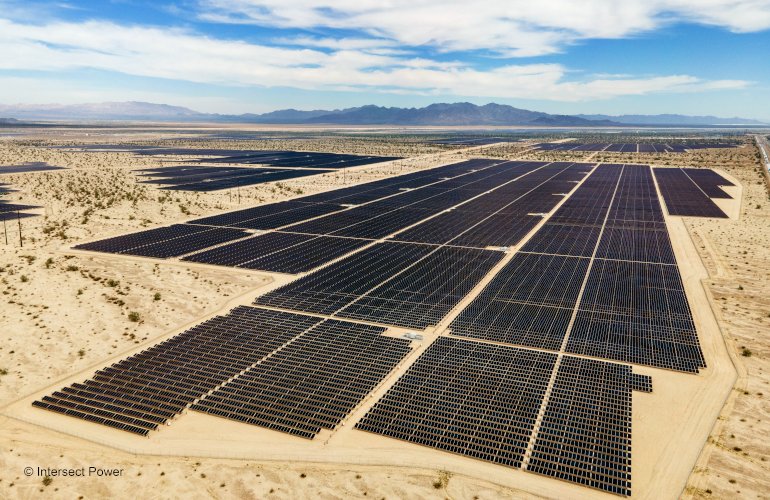
The California Energy Commission (CEC) has approved a 1.1-GW solar and 4.6-GWh storage project for Fresno County that is the first project to be permitted under the state’s Opt-In Certification program. The Oberon Solar + Storage project completed by Intersect Power in 2023. Authorized under Assembly Bill 205, the Opt-In Certification program provides a consolidated state permitting option for eligible clean energy projects, supporting California’s transition to 100% zero-carbon retail electric sales by 2045, as required by Senate Bill 100. Under statute, the environmental review for a project must be completed within 270 days from the point the project application is deemed complete, unless significant project changes arise that require more time to review. “California is moving faster than ever before to build the clean energy we need – now with the world’s largest solar and battery project,” said Governor Gavin Newsom. “With a record amount of clean energy capacity added last year, we’re creating jobs and supporting local communities – all while building a cleaner, more reliable power grid.” The Darden Clean Energy Project (DCEP) will be built on 9,500 acres of land in western Fresno County that is no longer able to support agricultural production. The project includes a 1,150-MW solar facility with approximately 3.1 million panels and up to 1,150 MW (4,600 MWh) of battery storage – enough to power 850,000 homes for four hours. The project owner is IP Darden I LLC, a subsidiary of Intersect Power. Projects seeking approval through the Opt-In Certification program are required to provide community and economic benefits. The DCEP includes: $2 million in community investments over the next decade starting with a $320,000 commitment to Centro La Familia Advocacy Services, a nonprofit supporting crime victims, family wellness and civic engagement in rural communities. More than 2,000 prevailing-wage construction jobs to support the local workforce throughout the construction period, which will last from 18 months to three years. An estimated $169 million in economic benefits to the local area over the project’s lifetime, estimated at 35 years. “Today’s clean energy projects must do more than just deliver megawatts. They should create value in the communities where they’re built,” said CEC Commissioner Noemí Gallardo. “This project exemplifies a community-focused approach that advances the state’s energy goals while creating benefits for local workers and residents.” The Darden project builds on a series of clean energy records recently set in California. On three out of every five days last year, California’s main grid hit 100% clean energy for some portion of the day. That momentum continues in 2025. So far this year, the main grid has reached 100% clean energy on 138 of 151 days, or 91% of days through May. In 2024, the state added 7 GW of clean energy capacity to the grid – the largest single-year increase in state history – and added 25 GW of capacity over the past five years. News item from CEC
Charged EVs | EPC releases inverter to bring GaN power to medium-voltage motor drives
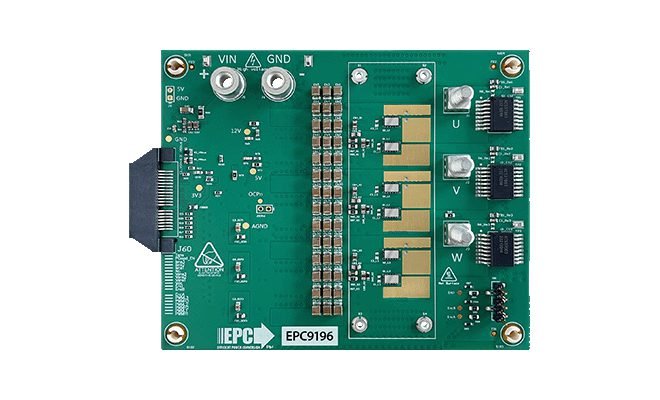
US-based Efficient Power Conversion (EPC), which supplies enhancement-mode gallium nitride (eGaN) power devices, has released a high-performance 25 ARMS, 3-phase BLDC motor drive inverter reference design. Powered by the EPC2304 eGaN FET, the EPC9196 inverter is designed for medium-voltage (96-150 V) battery-powered motor drive applications, including steering systems in automated guided vehicles (AGVs), traction motors in compact autonomous vehicles and precision motor joints in robotics. The release offers system designers a compact, efficient, and ready-to-deploy solution that accelerates development and optimizes system performance in the lower end of the 25-400 ARMS application range, according to the company. EPC recently introduced its EPC2367 100 V eGaN FET. The EPC2304 is a 200 V-rated, 3.5 mΩ (typical) eGaN FET in a thermally enhanced QFN package chosen for its low RDS(on) and high performance in compact form factors. It enables the EPC9196 to deliver up to 35 Apk (25 ARMS) phase current at switching frequencies up to 100 kHz. This performance translates to low switching losses, minimal dead time and a smooth, low-noise motor drive profile even at high PWM speeds. EPC said. Key features of the EPC9196 include a wide input voltage range from 30-170 V, integrated gate drivers, housekeeping power, current and voltage sense, over-current protection and thermal monitoring and dv/dt control optimized for motor drive applications (<10 V/ns). The inverter is compatible with multiple motor drive controller platforms from Microchip, ST, TI and Renesas. It is ready for use in sensorless or encoder-based control configurations. “With the introduction of the EPC9196, we’re enabling engineers working in robotics, AGVs, and compact EVs to take full advantage of GaN’s superior performance without redesigning for high current,” said Marco Palma, Director of Motor Drive Systems and Applications at EPC. Source: EPC
Toyota's Chairman Says EVs Pollute More Than Hybrids. Is He Right?
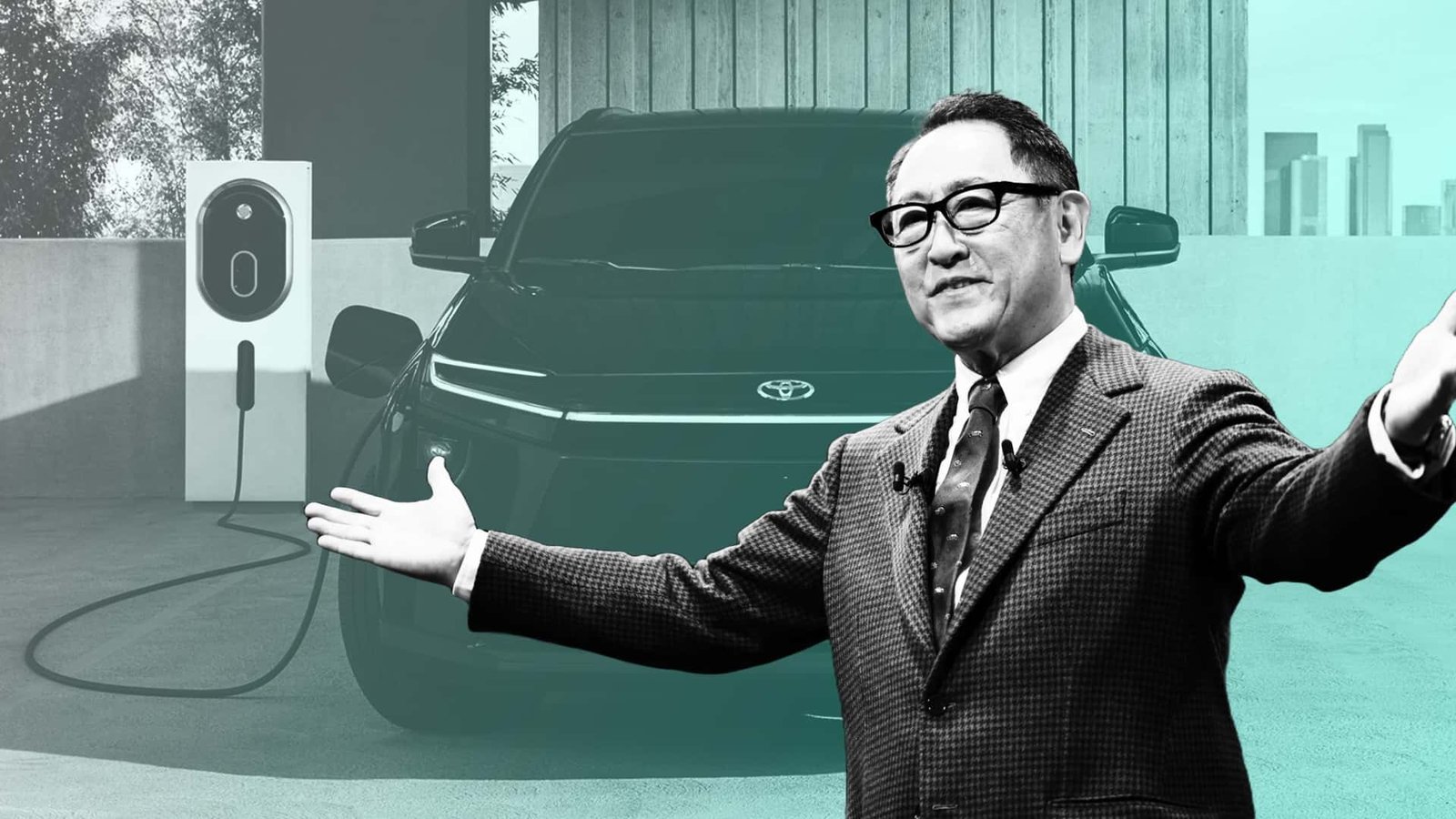
Scientists have long settled the debate of whether electric cars are better for our environment than combustion engine cars—the answer is a resounding yes. In cities where adoption rates are high, air pollution has significantly declined. Yet the same tired discussion keeps resurfacing, sometimes even from the highest ranks of the world’s largest car company. In an April interview with Automotive News that recently went viral, Toyota Chairman Akio Toyoda said that nine million electric vehicles have the same emissions impact as 27 million hybrids. That means one EV pollutes as much as three hybrids, according to him. The chairman also expressed a strong desire to reduce emissions through what Toyota calls a “multi-pathway” approach: many different car powertrains, including more efficient gas engines, hybrids, hydrogen and, yes, EVs. It seems like Toyoda was referring to the emissions generated from production and charging in Japan specifically, where electricity has historically been generated from fossil-fuels. However, the share of renewables in the country’s energy mix has also been surging lately. Still, many media outlets jumped on Toyoda’s comments, framing them as “damning admission” and “carbon bombshell” to discredit EVs more broadly. We took a deeper look to find out if EVs really generate more emissions than hybrids over their lifespan on a broader scale outside of Japan—especially here in the U.S. Photo by: InsideEVs Now, it’s true that comparing EVs to hybrids and plug-in hybrids (PHEVs) gets more complicated than a simple EV vs. gas car matchup. Regional electricity mix, driving patterns and battery usage all have a role to play. But let’s break it all down for clarity. (We reached out to Toyota to ask about how the company reached that conclusion, but did not hear back at the time of writing.) The biggest anti-EV argument stems from the emissions generated during the mining, refining and processing of the raw materials used in high-voltage batteries. EV batteries use materials such as lithium, cobalt and nickel that require hazardous, water-intensive mining processes. So when an EV rolls off a production line, it’s already born “dirtier” than the average gas or hybrid vehicle, for now. It comes with a bigger “carbon debt,” a term that researchers use to calculate the emissions vehicles gather before even hitting the road. A research paper published in the scientific journal IOP Science says that gas and hybrid vehicles create six to nine metric tons of carbon dioxide emissions in their manufacturing, depending on the vehicle segment. EVs, on the other hand, generate 11 to 14 metric tons of CO2 emissions before going into the hands of customers. But that’s only part of the story. Once EVs hit the road, they begin paying off that carbon debt and their overall “emissions” start decreasing. Hybrids and gas vehicles, on the other hand, head in the opposite direction, growing their carbon emissions over time. After a certain number of miles, an EV can potentially clear that debt entirely. How long that takes, exactly, can depend on who you ask. A 2023 Argonne National Laboratory study found that it can take an electric car 19,500 miles to mitigate the emissions made during manufacturing. That’s less than two years of typical American driving, according to FactCheck.org. Another study in the journal Nature put that number higher, with carbon reductions beginning around 28,000 miles. Either way, considering how long Americans keep their cars, EVs become the far cleaner option over time. Photo by: Toyota Now, remember that not all hybrids are the same. Traditional hybrids like the Toyota Prius get a small lithium-ion battery pack and can drive on electric power for short distances before the gas engine kicks in. Plug-in hybrids (PHEVs) get a larger battery pack that owners can recharge. They can cover longer distances on battery power, usually between 30 and 50 miles, before the gas engine powers on. They both slot in between EVs and gas-only vehicles in terms of the carbon emissions they accrue in production. As EV skeptics love pointing out, the power source matters, but not as much as you think. The U.S. was rapidly moving towards renewable energy until late last year. In fact, 43% of the country’s electricity mix at the end of 2024 came from clean sources, according to energy think tank Ember, as cited by Reuters. But still, the electricity mix varies widely from state to state. West Virginia and Kentucky rely massively on coal-fired thermal power plants for electricity. California and Texas lead the country in terms of solar and wind output. So yes, you can orchestrate scenarios where hybrids are cleaner than fully electric cars in certain conditions—but those cases are limited and shrinking by the day. The 8,500-pound Chevy Silverado EV driving in West Virginia could be dirtier than a Toyota Prius that’s driving at slow speed for short distances, frequently reusing its battery, which gets charged by the engine and with regenerative braking. But when you do an apples-to-apples comparison, EVs are cleaner than hybrids even when the source of electricity is extremely nasty. Photo by: Tesla According to the Department of Energy’s emissions calculator, which takes into account tailpipe and grid emissions, a Tesla Model Y driven in West Virginia produces lower greenhouse gas emissions (149 grams of CO2 per mile) than a Toyota Prius Plug-In Hybrid (177 grams of CO2 per mile). If you look at the CO2 footprint of the Model Y in California, which has a much cleaner grid, the Model Y will obliterate any hybrid or PHEV in terms of overall emissions. In Los Angeles, the Model Y only generates about 80 grams of CO2 per mile, whereas the Prius Plug-In Hybrid generates 130 grams of CO2 per mile—and that’s assuming that owners regularly charge the PHEV batteries, of which there’s little evidence. And we haven’t even touched upon operational efficiency yet. Gas vehicles accrue emissions not only from manufacturing, but also the emissions associated with drilling, fracking and refining fossil fuels that are required to power them. Plus, burning gas during
Xpeng working to integrate its Turing smart driving chip into some VW models in China, report says

Xpeng is working to integrate its Turing chip into some of Volkswagen's models planned for launch in China next year, according to the Financial Times. The company is also in discussions to supply chips to other automakers. (Image credit: Xpeng) Xpeng (NYSE: XPEV) said that its in-house developed Turing AI (artificial intelligence) smart driving chip will be open to partners, and it now appears that Volkswagen may be one of the first to adopt it. The company is working to integrate its Turing chip into some of the models Volkswagen plans to launch in China next year, according to a report by the Financial Times today, citing Xpeng chairman and CEO He Xiaopeng. "Developing chips is fundamentally a long-term commitment, as Xpeng envisions doing a lot of things across cars, aircraft and robotics," Mr. He said in an interview with the Financial Times. "We need a type of chip that can support these platforms and also power our [AI] large language model," he said. The company is also in talks to supply chips to other automakers. "We are looking for long-term partners," He said. Following the interview, Xpeng clarified that talks with Volkswagen and other companies about using the chips were ongoing, the Financial Times noted. "As announced, Volkswagen and Xpeng are jointly developing two Volkswagen brand cars for the mid-class segment. Both parties contribute their respective strength. These cars will be launched next year," the Financial Times quoted a Volkswagen spokesperson in China as saying. Xpeng debuted the G7 yesterday and began pre-sales of the SUV (sport utility vehicle) in China. One of the G7's key selling points is that it is the first model to feature Xpeng's in-house developed Turing AI chip, with a single chip delivering computing power equivalent to three mainstream autonomous driving chips. Its Ultra variant is equipped with three Turing AI chips, delivering over 2,200 TOPS of effective computing power, making the G7 the world's first AI car to achieve L3 computational power, Xpeng said. The three Turing AI chips can power both the autonomous driving models and the cockpit models, with AI computing power 26 times greater than that of other flagship models in the industry, meaning users will experience unprecedentedly smooth autonomous driving and instant cockpit responses, the company said. Mr. He said at yesterday's event that Xpeng was open to providing its Turing AI chips to partners for use. Volkswagen is one of Xpeng's key partners, announcing in July 2023 that it would invest $700 million in the Chinese EV maker and jointly develop EVs. Xpeng's domestic peer Nio (NYSE: NIO) has already incorporated its in-house developed Shenji NX9031 smart driving chip into five of its models. A single Shenji NX9031 chip has the same computing power as four Nvidia Orin X chips, Nio previously said. The G7 is equipped with up to three Turing AI chips developed in-house by Xpeng, with computing power exceeding 2,200 TOPS.
Econergy enters Germany with 100MW/200MWh of BESS
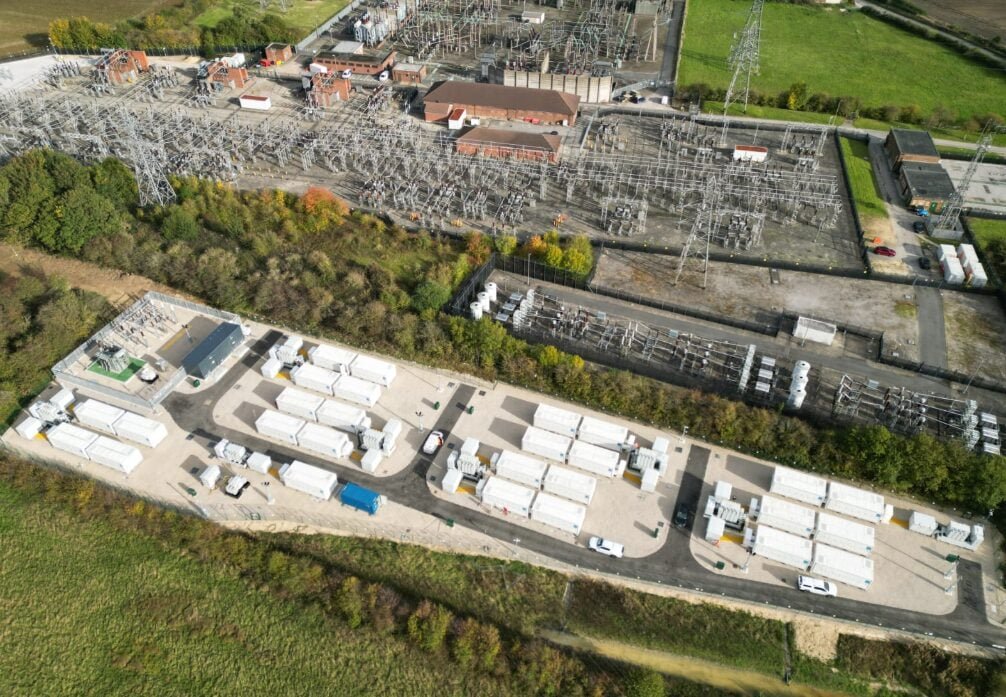
The two projects are scheduled to begin construction by the end of 2025 for a commercial operation date (COD) in Q1 2027. It didn’t reveal which developer it acquired the projects from. Econergy is investing €73 million (US$84 million) in the two projects, which are expected to generate annual revenues of €13.7 million and an average EBITDA of €11.9 million during the first five full years of operation, the company said. The investment equates to around €365,000 per MWh of capacity. Eyal Podhorzer, CEO of Econergy, said: “We’ve been evaluating the German market for quite some time, waiting for the right opportunity. With demand for storage accelerating, we’re proud to enter with two high-quality projects and look forward to establishing a strong local presence by bringing our best practices, execution capabilities, and storage expertise to the market.” It brings the company’s energy storage pipeline to 4GW, building on its existing presence in the UK and Poland. The firm has a 102MWh BESS in England, called Swangate, and is building a similar-scale project in Poland co-located with solar PV. The company has a strong presence in Europe’s solar PV market, and is considering adding BESS to much of that in light of an increasing solar ‘duck curve’ across the continent, something the firm’s head of energy storage Joshua Murphy discussed with ESN Premium earlier this year. The Germany acquisition is the latest in a flurry of large-scale BESS project developments there this past week, following Eco Stor putting the largest BESS in the country online, and asset manager MEAG acquiring and selecting the optimiser for a similarly-sized one. These have coincided with our publisher Solar Media putting on the inaugural Energy Storage Summit Germany 2025, co-located with parent company Informa’s The Battery Show Europe 2025, in Stuttgart last week (3-5 June). Big talking points included regulatory challenges, the Capacity Market (CM) and structures for tolling and offtakers.
Electrification Won’t Crash On Copper: Debunking Latest Claims
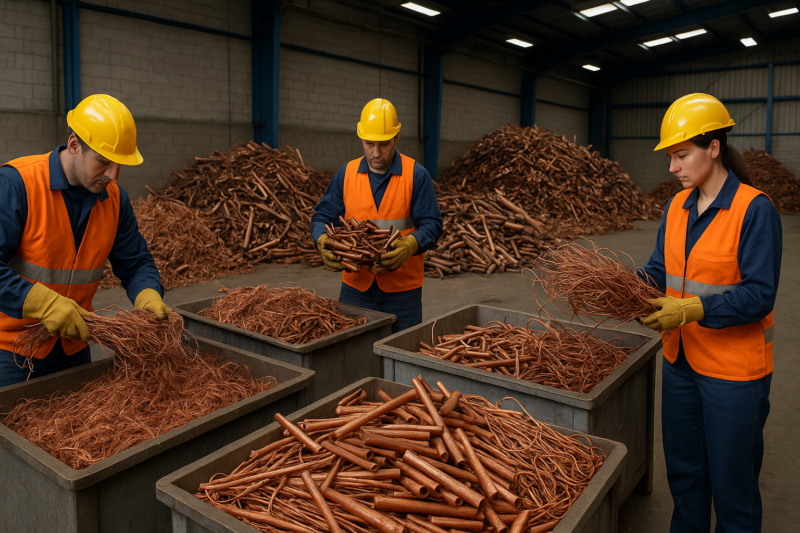
The April 2025 paper by Cathles and colleagues in SEG Discovery, Copper: Mining, Development, and Electrification, examining global copper supply constraints in the context of electrification and renewable energy, is rapidly becoming influential in industry and policy circles. It is important to closely scrutinize its assertions and underlying assumptions, as it could inadvertently shape future investment decisions and policy directions in ways that might impede rather than support the global energy transition. Why? It’s off by a factor of 100 at minimum on copper requirements for energy storage. It’s off by a less egregious but still large factor on copper requirements for electric vehicles. It ignores substitutability of copper with aluminum and other materials, and the zero-copper sodium-ion batteries increasingly being deployed, and instead leans into a copper maximalist solution as if it were the only solution. Then it underplays copper recycling by a considerable amount as well, maximizing the new mining required. Its conclusions aren’t remotely credible as a result. To begin with, the authors assume electric vehicles will always require around 80 kg of copper per vehicle, positioning themselves at the high end of current industry usage. Electric vehicles have historically contained between 60 and 80 kg of copper, spread across battery packs, wiring harnesses, and electric motor windings. While copper’s high conductivity makes it an obvious choice, it is increasingly clear that innovation and smarter design can dramatically reduce this dependence. Oddly, in a 2024 paper he used 60 kg per vehicle, yet in this paper he used 80 kg. It’s clear he and his co-authors were considering the absolutely worst case scenario, not a remotely realistic one. A range of emerging technologies and strategies mean that electric vehicles will push copper requirements as low as 20 to 30 kg per vehicle, perhaps lower. For instance, shifting to higher-voltage architectures (800 volts or greater) reduces the necessary cable thickness, saving 6-10 kg of copper per vehicle. Porsche Taycan, Hyundai Ioniq 5, Kia EV6, Lucid Air, and various upcoming models from GM and Ford all include this. Tesla and GM are already proving the viability of aluminum wiring, cutting copper use by 10-15 kg per vehicle in wiring harnesses. The wires are lighter and cheaper, but slightly thicker and slightly less efficient at conducting electricity, with the end result being a net overall gain. Further gains are achievable through integrated battery architectures, such as cell-to-pack or cell-to-chassis designs, pioneered by Tesla’s 4680 and BYD’s Blade batteries. These configurations eliminate intermediate wiring, reducing copper usage by as much as 10 kg per vehicle. While the 4680s are likely to be a dead end, BYD’s Blade batteries are very much on the road. Advanced motor designs, including axial-flux motors or aluminum-based windings, also promise to slash copper requirements by up to 50% compared to traditional radial motors, providing another 8-10 kg advantage. Busbar optimization is another practical lever to significantly reduce copper consumption in electric vehicles. Leading battery manufacturers such as CATL, BYD, and LG Energy Solution are already deploying improved busbar designs, including optimized geometries, enhanced thermal management, and increasingly, aluminum and composite materials. These innovations alone can realistically eliminate 5 to 8 kg of copper per battery pack, contributing directly to lighter, more cost-effective, and sustainable electric vehicle manufacturing. When coupled with higher energy-density battery chemistries, including silicon-rich anodes and emerging solid-state cells, the overall battery pack size shrinks, further trimming copper requirements. There are already 300 wH/kg LFP batteries on the market, and 500 wH/kg is commercially available from CATL today. That’s another 5-8 kg per battery. Replacing traditional wiring harnesses with wireless communications systems inside electric vehicles offers a practical route to further copper reduction. Firms like Aptiv and Bosch are already deploying zonal architectures and wireless control technologies that drastically simplify wiring. By eliminating extensive harnesses previously required to connect sensors, control units, and actuators, wireless approaches can realistically trim another 5 to 10 kg of copper per vehicle, streamlining assembly processes and reducing material costs. Innovations in thermal management systems present further copper-saving opportunities. Tesla’s Octovalve cooling design is an example of this shift, using aluminum and composite plastic materials instead of traditional copper-based cooling circuits. Such solutions, with advanced materials and optimized heat transfer technologies, can easily remove an additional 2 to 5 kg of copper per vehicle. These incremental innovations aren’t theoretical. They are in vehicles today, removing copper requirements. The more copper is a constraint, the more of these will be used. The solution to limited availability of copper is high copper prices. The likelihood is that copper per EV will be a quarter or less than Cathles et al. conclude. This is before we get to advances in labs, where enormous amounts of attention is being paid to increasing efficiencies, reducing costs, and substituting materials. A recent advance in carbon nanotube (CNT) coil technology developed by the Korea Institute of Science and Technology could significantly reduce copper demand in electric motors. By using liquid-crystal–purified CNT coils that can power a motor without any metal, researchers have demonstrated stable rotational control in an actual motor, offering a lightweight, high-efficiency alternative to traditional copper winding. If this pans out, that could eliminate the 10-25 kg in electric motor winding as well, effectively removing copper constraints entirely from the equation. As a note on this, Cathles should understand at least the basics of innovation. He’s been involved in fracking his entire academic career, and the advances in horizontal drilling, materials, drill heads, control systems and the like that unlocked the shale revolution he wants climate action to depend heavily on didn’t exist. Of course, most of those advances were much smaller increments over much longer periods of time than electrification cycles allow, so he and his co-authors may think that reduction of copper, if possible, would take decades. What are the authors arguing for instead? Hybrid cars that continue to burn fossil fuels. Solutions which burn fossil fuels, just less of them, are a feature of Cathles’ preferred solution set, making it
Tesla teases new Model Y seating option potentially coming soon
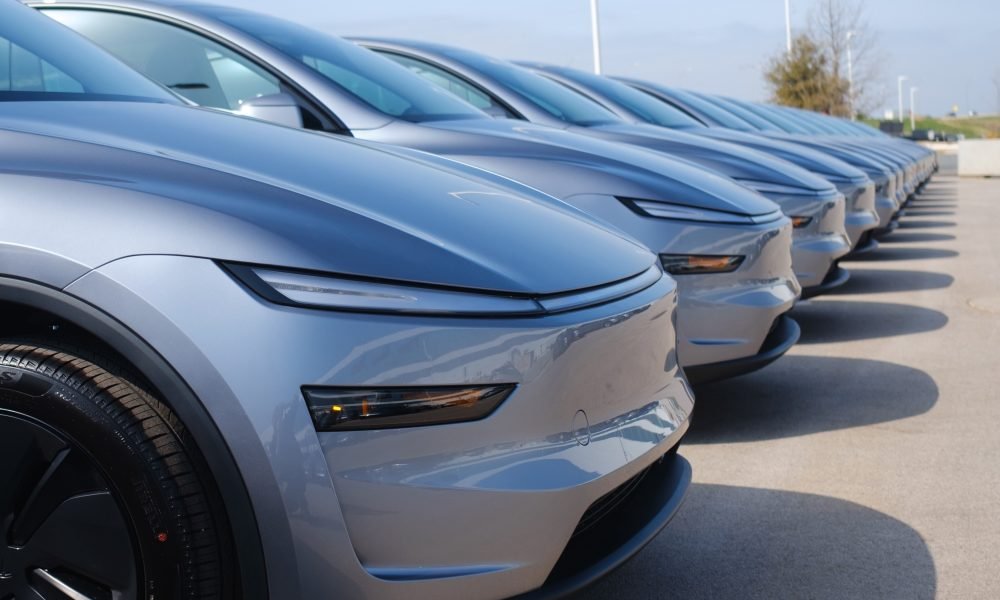
Tesla teased a new Model Y seating option earlier this week in a promotional email, potentially hinting that it could introduce an arrangement offered on the legacy version of the vehicle. Back in 2021, Tesla started offering a seven-seat configuration of the Model Y, and there was a lot of speculation about its orientation and the space it would provide. The two additional seats were truly a tight fit for anyone, even kids, as the space for a third row was extremely limited in the Model Y. Tesla Model Y third-row seats first impressions shared by EV owner Eventually, Tesla started building the seven-seater with forward-facing seats and very tight legroom dimensions. It was beneficial for some, but many still considered the arrangement to be too confined for their needs. The company confirmed earlier this year in an interview with Jay Leno that the car would get other configurations, including Rear-Wheel-Drive, which has already launched, a Performance trim, which has been spotted with bumper covers several times this year, and a seven-seat version: 🚨CONFIRMED: Tesla will launch the new Model Y 7-Seater and new Model Y Performance later this year. pic.twitter.com/AA5ZPa7K4q — TESLARATI (@Teslarati) February 10, 2025 The new seven-seater could be coming soon as well, according to a recent email Tesla sent to customers and fans. In it, Tesla writes: “Ready for anything with long range seating for up to seven and enough room for everyone’s gear.” Tesla did have a mysterious Model Y roaming around the Fremont Factory’s test track recently with covered bumpers and what appeared to be strange dimensions. We thought it might be the compact, affordable model that is set to launch in the first half of the year, but now it seems that the car could have either been the Model Y seven-seater or the Model Y Performance configuration, as they are both expected soon. We are interested to see if Tesla can squeak out a few more inches of legroom in the new seven-seater, but we’re not holding our breath. Nevertheless, the new Model Y came with quite a few improvements, including suspension changes, acoustic-lined glass for a better cabin experience, and a front and rear bumper redesign, among other things. There is no doubt it will be a better car than the legacy version.
Tesla sues former Optimus engineer for stealing trade secrets

Tesla CEO Elon Musk says the automaker’s Robotaxi platform launch later this month will essentially force other companies to license Full Self-Driving to achieve their own goals of achieving autonomy. Musk’s statement comes as a video captured today showed the first Tesla Robotaxi test mules on public streets in Austin, Texas, just one day after the City officially listed the company as an autonomous vehicle operator. A prediction by investing YouTube and Tesla community member Dave Lee stated that “at least one automaker by end of year” will license Full Self-Driving from the Musk-led company, as it will give rivals the confidence to use the software to run their own self-driving operations. Lee detailed his theory by stating that the company that chooses to commit to FSD licensing will not be able to integrate the hardware and sell those units immediately. Instead, it will take two years or so to solve the engineering and design applications. First Tesla driverless robotaxi spotted in the wild in Austin, TX Musk revealed his true thoughts on other automakers’ attempts at vehicle autonomy, and said many are being told that Robotaxi is not real or that they can solve their problems with hardware orders to Nvidia. He went on to say that companies will be forced to turn to Tesla at some point or another, because Robotaxi will be widespread and their solutions to figuring out an effective deployment will prove to be failures: “The automakers keep being told that this isn’t real or that just buying some hardware from Nvidia will solve it. As Tesla robotaxis become widespread and their other solutions don’t work, they will naturally turn to us.” The automakers keep being told that this isn’t real or that just buying some hardware from Nvidia will solve it. As Tesla robotaxis become widespread and their other solutions don’t work, they will naturally turn to us. — Elon Musk (@elonmusk) June 10, 2025 Musk has not been shy to respond to speculation regarding the video of the Robotaxi, which was shared on X earlier today. This is perhaps one of the more fiery things he revealed. He seems ultra-confident in what Tesla will prove and achieve in the near future with the launch of the Robotaxi platform. Many believe it will be rolled out this month. Bloomberg reported recently that Tesla was internally aiming for June 12. The company has not directly responded to these rumors. Tesla has discussed on several occasions that it is in talks with an automaker about licensing Full Self-Driving, but it has never revealed who. The company first revealed discussions with another automaker in early 2024 when Elon Musk said: “We’re in conversations with one major automaker regarding licensing FSD. It really just becomes a case of having them use the same cameras and inference computer and licensing our software. Once it becomes obvious that if you don’t have this (FSD) in a car, nobody wants your car. It’s a smart car… The people don’t understand all cars will need to be smart cars, or you will not sell, or nobody would buy it. Once that becomes obvious, I think licensing becomes not optional.” Tesla confirms it is in talks with major automaker for potential FSD licensing Many, including us, suspected that Ford was the company that Tesla was speaking of due to Musk’s relationship with Jim Farley, which resulted in the legacy automaker being the first major car company to adopt Tesla’s North American Charging Standard (NACS), which gave them access to the Supercharging Network. This catalyzed an onslaught of companies choosing to make the same move as Tesla had truly set itself apart in terms of charging infrastructure. Companies may be forced to make a similar decision if it can make the same type of statement with the rollout of Robotaxi.
Resch aims to cut battery module costs by one-third
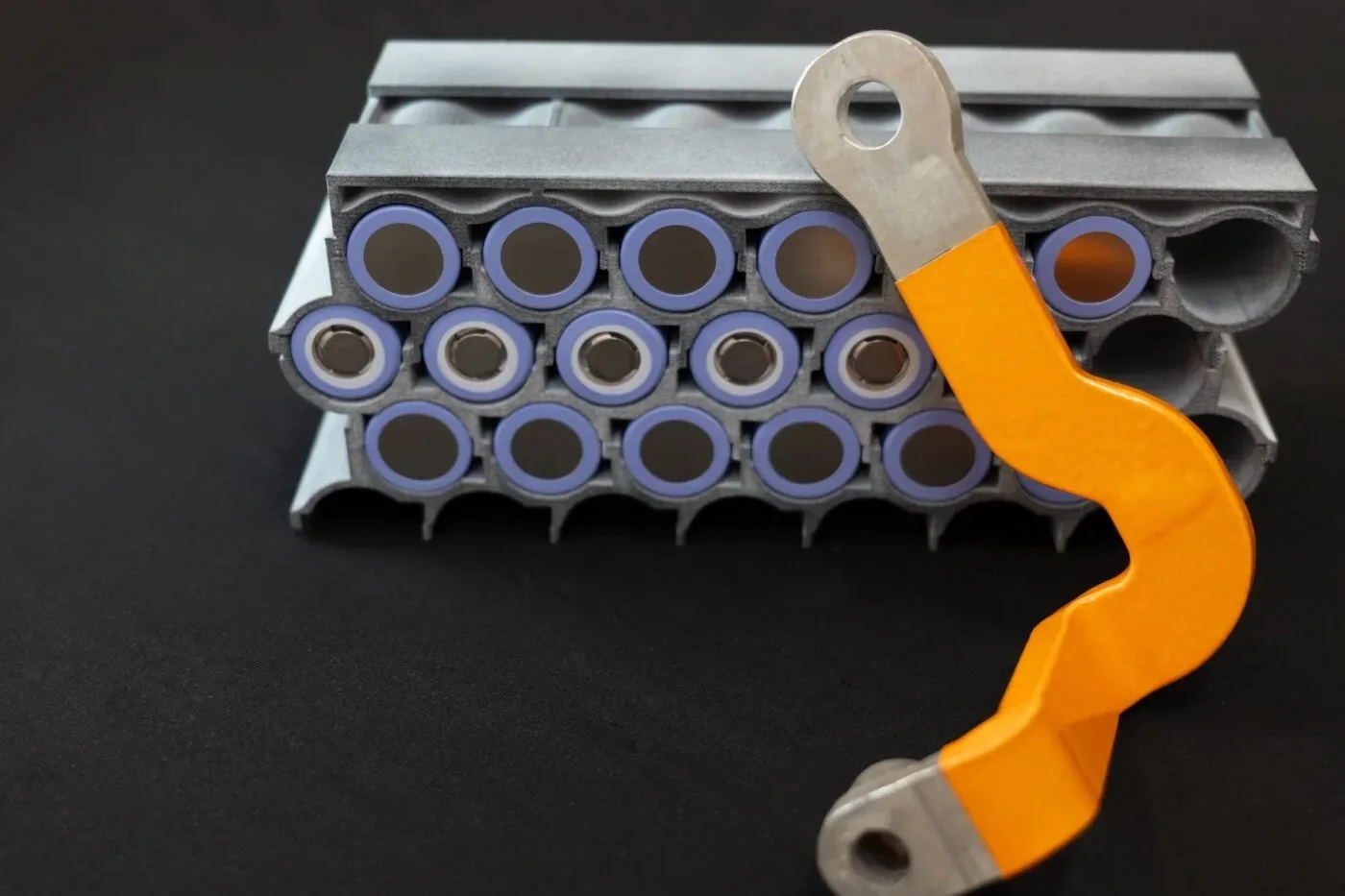
The supplier Resch has developed a battery module that, unlike conventional solutions, does not require adhesives or welded connections. The Austrian company expects cost savings of around one-third if the solution enters series production. The relatively small technology firm Resch, based in St. Stefan, Styria (Austria), has developed a battery module that, unlike typical solutions from Asian manufacturers, does not require adhesives or welding – a potential game-changer. According to the company, several automotive OEMs are currently evaluating the solution for series production. Resch states that Asian battery manufacturers favour adhesive bonding and welding to maximise efficiency and minimise design variance, resulting in stable yet rigid units. This makes the replacement of individual defective cells nearly impossible. Resch’s approach addresses this exact issue: the family-run business began developing a new type of battery module back in 2023 – a “revolutionary concept,” said Gerald Resch, who runs the company together with his wife, Andrea Resch. The most distinctive feature of the solution compared to conventional modules is the complete elimination of adhesives and welds. “Instead, the cells are assembled mechanically, allowing for targeted replacement of individual defective cells without needing to discard the entire module. Think of it like Lego,” explained Resch. This design also aims to simplify recycling at the end of the battery’s life cycle. Another advantage, according to Resch, is that the new battery module is compatible with all standard cell formats. “We’ve completely rethought the battery module – also with the goal of launching a market-ready solution from Europe,” says Gerald Resch. The principle has not only been realised technologically but, in the event of series production, is expected to reduce costs by up to one-third compared to conventional approaches. The solution may also have applications beyond the automotive sector. “Wherever electric batteries are involved – from aircraft and ships to stationary battery storage – our process can be applied,” added Resch. The innovation is not just intended for small-scale but also for high-volume production: “The module has been designed from the ground up for fully automated manufacturing,” explained the managing director of the 25-year-old firm. The construction process begins with a baseplate that can accommodate all common cell types. A modular carrier structure follows, allowing for variable lengths depending on cell count and power output. The assembly is completed by an end plate with integrated cooling. Another key element is the safety concept for preventing thermal propagation – the spread of thermal runaway from one cell to adjacent ones. “When one cell overheats and ignites, it can cause a chain reaction,” the managing director explained. The new module prevents this with a folding mechanism that channels gases and particles downwards, combined with an insulating barrier that blocks heat transfer,” added Gerald Resch. automagazin.at (in German)
Arizona town's planning dept denies BESS project application- Energy-Storage.News
Arizona town's planning dept denies BESS project application- Energy-Storage.News Skip to content
MAN to unveil Lion’s City 10 E with next-gen batteries at UITP Summit
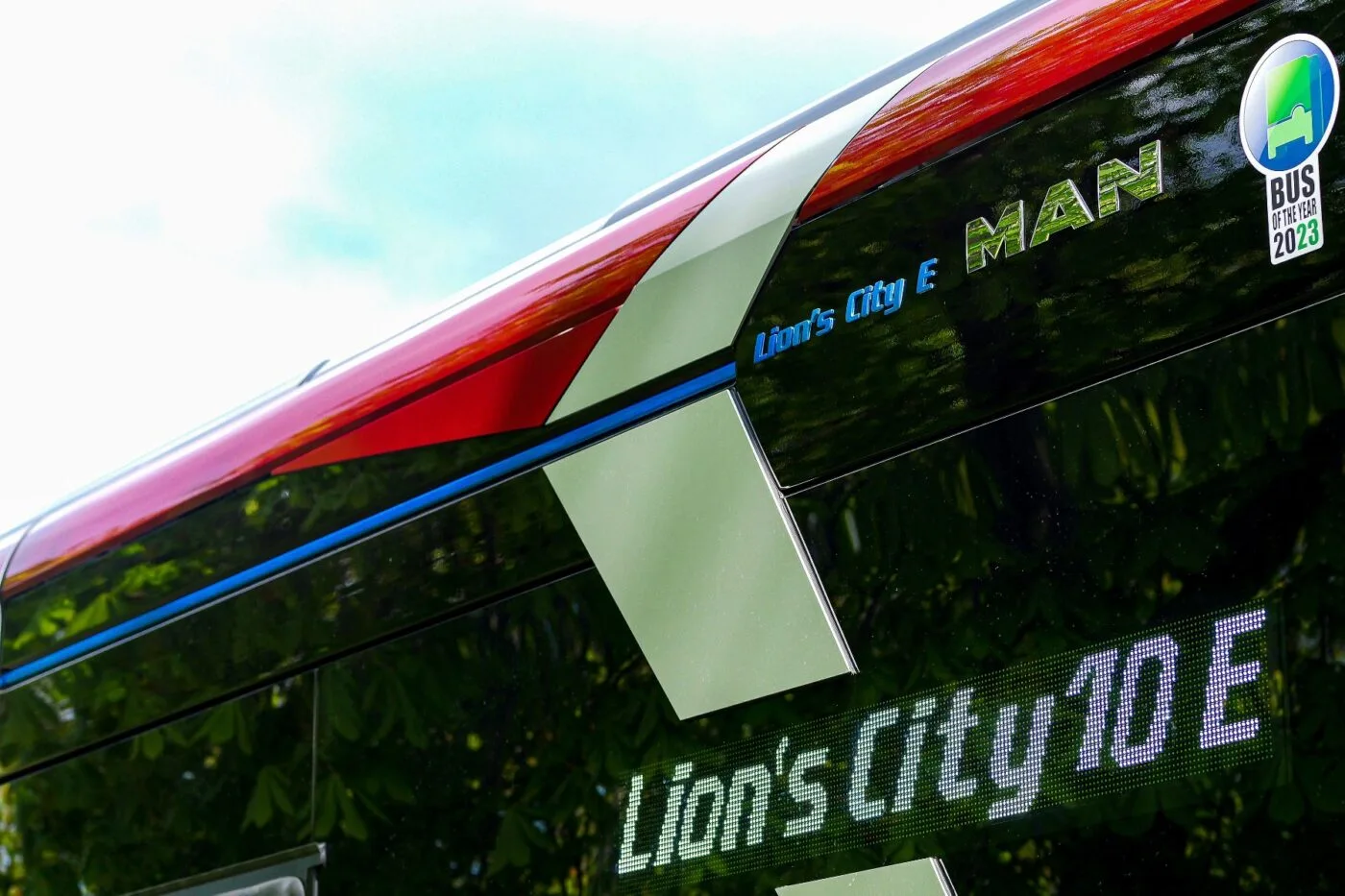
At the upcoming UITP Summit in Hamburg, Germany, MAN Truck & Bus will present the Lion’s City 10 E for model year 2025, featuring a new battery generation from its Nuremberg facility. Moreover, MAN plans to install its 89 kWh battery from the eTruck in all of its electric buses and trucks in the future. At this year’s UITP Global Public Transport Summit in Hamburg in northern Germany, MAN Truck & Bus will unveil the updated Lion’s City 10 E electric bus for model year 2025. Making its debut from 16 to 18 June in Hall A4, the compact 10.5-metre vehicle will be presented with a next-generation lithium-ion battery system developed and manufactured in-house at MAN’s plant in Nuremberg. MAN introduced the Lion’s City 10 E in 2023 as a slightly shorter bus alternative to the standard solo bus. Since then, the Munich-based company’s fully electric Lion’s City E city bus series has consisted of 10.5-metre, 12.2-metre and 18.1-metre versions. The midibus has been produced at MAN’s city bus plant in Starachowice, Poland, since the beginning of 2023 and is based in many respects on the 12-metre equivalent. However, the maximum energy content has been slightly lower at 400 kWh. MAN has stated the range as a maximum of 300 kilometres to date. However, these specs are in the past: Designed for flexible inner-city deployment, the new Lion’s City 10 E will feature four newly developed battery packs offering a total installed capacity of 356 kWh. The batteries are based on the latest NMC (nickel-manganese-cobalt) chemistry and deliver increased energy density and improved depth of discharge. That enables greater range with fewer packs, reducing vehicle weight while creating additional space for passengers. The bus offers seating for 27 passengers and standing room for 54, rivaling many 12-metre vehicles but with superior manoeuvrability and a smaller traffic footprint. But back to the battery: Specifically, the new battery is the same 89 kWh battery pack used in the MAN eTruck, which can be charged via CCS with up to 375 kW DC. Series production of the battery system has been ramping up in Nuremberg since April. According to MAN, its new BatteryPack system is engineered for a service life of up to 14 years or one million kilometres. With up to 96 per cent of materials recoverable, sustainability is a key part of the product concept, the manufacturer emphasises. MAN will also use the UITP platform to spotlight its all-round eMobility consulting services. Through MAN Transport Solutions, operators receive comprehensive 360° support—from fleet planning and infrastructure development to digital tools for real-time fleet monitoring. mantruckandbus.com
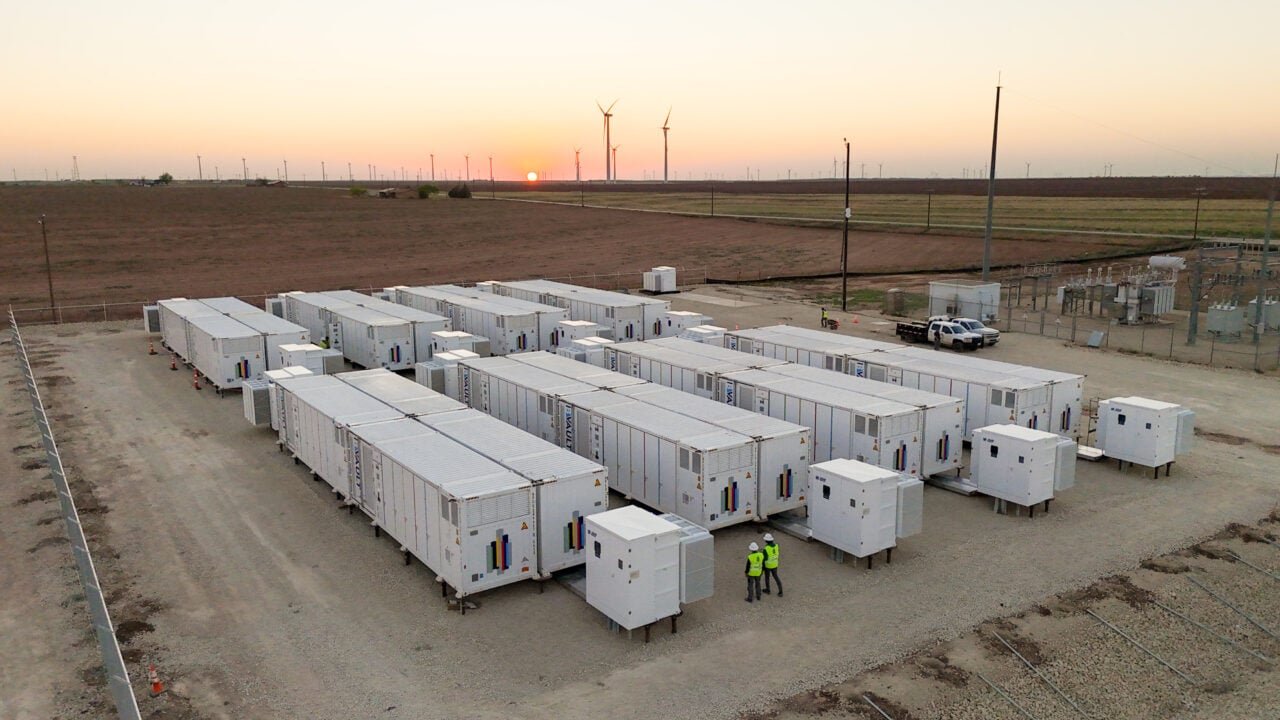
Energy Vault, Agilitas Energy commission Texas BESS projects
Energy Vault, Agilitas Energy commission Texas BESS projects - Energy-Storage.News Skip to content
New high-voltage battery sensor from LEM aims to reduce costs
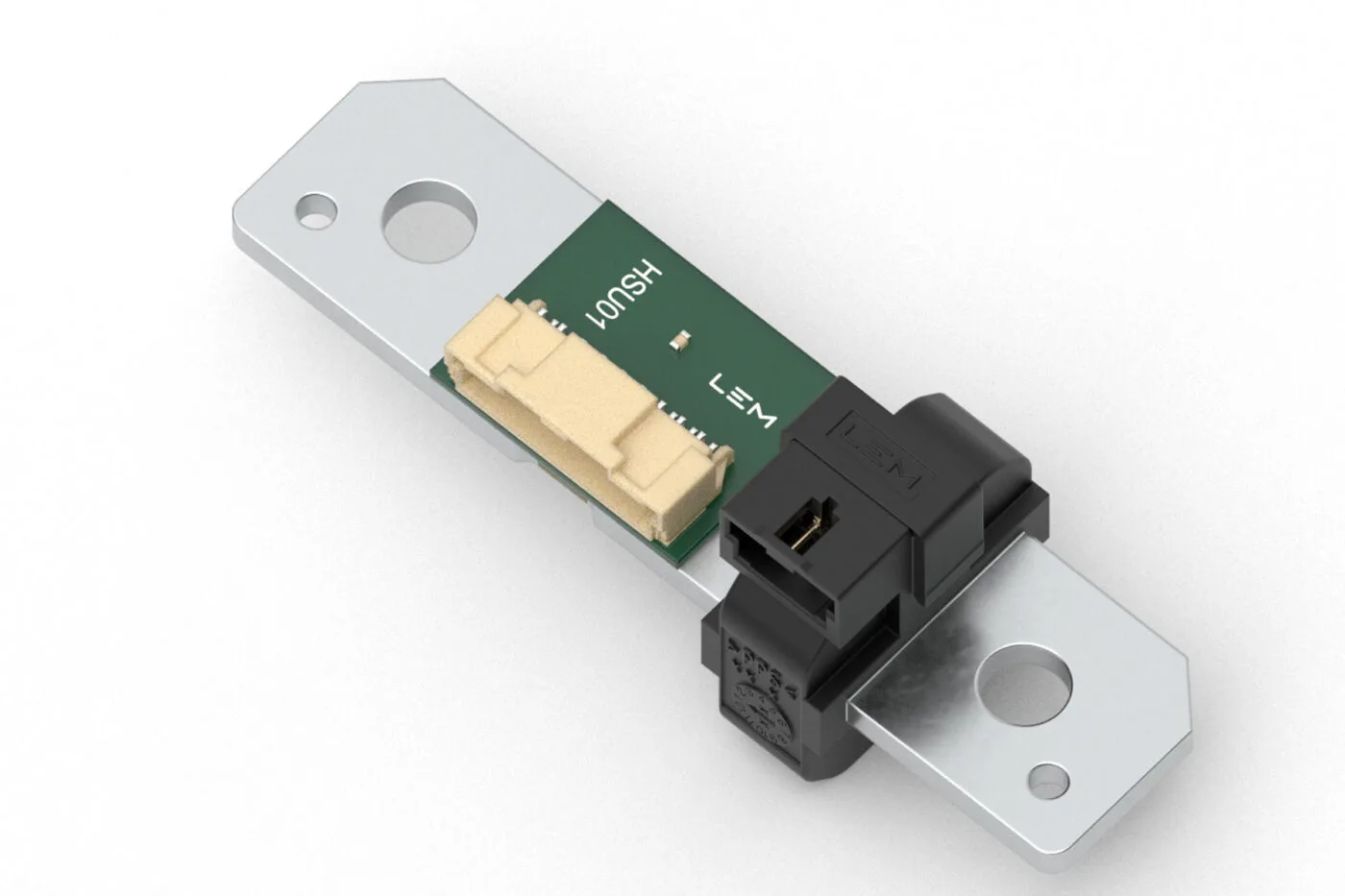
Swiss measurement technology specialist LEM has developed a new current sensing unit for battery management in electric vehicles that combines shunt and Hall-effect technologies in a single component. The goal is to make the sensor more compact and cost-effective. LEM (short for Life Energy Motion) specialises in electrical measurement solutions for energy and mobility applications. The company’s products are also used in electric vehicles and related components. The newly introduced high-voltage battery sensor is designed to expand LEM’s offering in this segment. The component integrates shunt and open-loop Hall effect technologies into what LEM calls a ‘Hybrid Supervising Unit’ (HSU). These technologies are typically housed in separate components, but the HSU is intended to meet the requirements for reduced space, lower costs, and high safety in EV battery management systems, according to the company. Shunt technology enables current measurement, while the Hall effect is used for precise magnetic field detection. For safety reasons, battery management systems (BMS) in electric vehicles currently use both a shunt for current measurement up to 2,000 A and a fully galvanically isolated current sensor—until now, as two separate parts. LEM’s new development is designed to combine the function and performance of both technologies into a single unit. Within the battery pack, the HSU is integrated into the Battery Disconnect Unit (BDU). Although it is a single component, the BMS can independently read both signals—shunt and current sensor. According to LEM, the HSU is “the only component on the market to combine both technologies in a standard shunt footprint.” Initially, two variants are available—HSU00 and HSU01—both designed for compatibility with the most common BDU busbars. The HSU00 measures 84 mm × 36 mm × 3 mm, while the HSU01 (shown above) measures 84 mm × 20 mm × 3 mm. Sample units of both models are available immediately, LEM reports. The company also plans to expand the range using new technologies, “for example by combining a shunt with a coreless Hall-effect component.” The goal is to further reduce component size and cost while improving performance. “The HSU represents a significant innovation in sensor technology, being the first to combine shunt and Hall effect sensing into a single component. This integration simplifies system architecture, enhances safety, and allows for seamless upgrades without altering the mechanical layout,” said Jérémie Piro, Product Manager Battery Management Systems and Battery Storage at LEM. “Additionally, it reduces the total bill of materials (BOM) and minimizes cycle time at the customer’s end.”