Rockwell Automation launches OptixEdge for industrial data processing
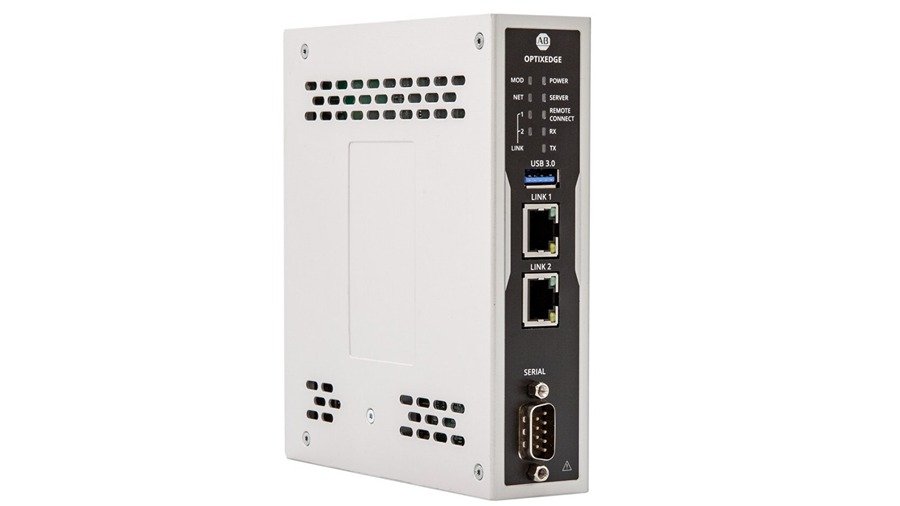
Advanced edge gateway solution transforms the way data is processed, enabling time and cost savings. Rockwell Automation, Inc. announced the global launch of OptixEdge, an edge gateway solution designed to support data processing for industrial applications. Modern smart machines generate large volumes of data, but according to Rockwell’s latest State of Smart Manufacturing Report, only 44% of this data is used effectively. Many organizations encounter obstacles such as network constraints, security issues, and storage expenses that limit their ability to make full use of available data. Typically, data is processed in remote cloud servers, which can introduce additional costs and inefficiencies. OptixEdge processes data at the machine level in real time, helping users manage information closer to its source. Integrated with Rockwell’s FactoryTalk Optix software, it connects to control systems to collect, analyze, and transmit data to the cloud. This setup allows users to access and review machine or system data from various locations, supporting more responsive analysis and decision-making. Key capabilities of OptixEdge include: Built-in Wizard App: A pre-installed FactoryTalk Optix application simplifies the data collection process and allows for easy configuration using only a web browser, cutting down on engineering time. It also offers the ability for users to build and deploy custom applications, if preferred. Designed for efficiency: Allows lightweight applications to run in tandem with included software. Secure remote access and troubleshooting: Remote assistance is available through FactoryTalk Remote Access, allowing remote engineers and maintenance teams to program, configure and troubleshoot systems over a secure VPN connection. Open and flexible: OptixEdge can be utilized in conjunction with a plant or machine’s existing Rockwell hardware or third-party graphic terminals and controllers. Cost savings and network performance improvement: OptixEdge offers users the ability to send less data to the cloud, which can help save money on storage and improve network performance. For more information, visit rockwellautomation.com.
Opel Grandland Blitz AWD EV should give US Jeep fans hope
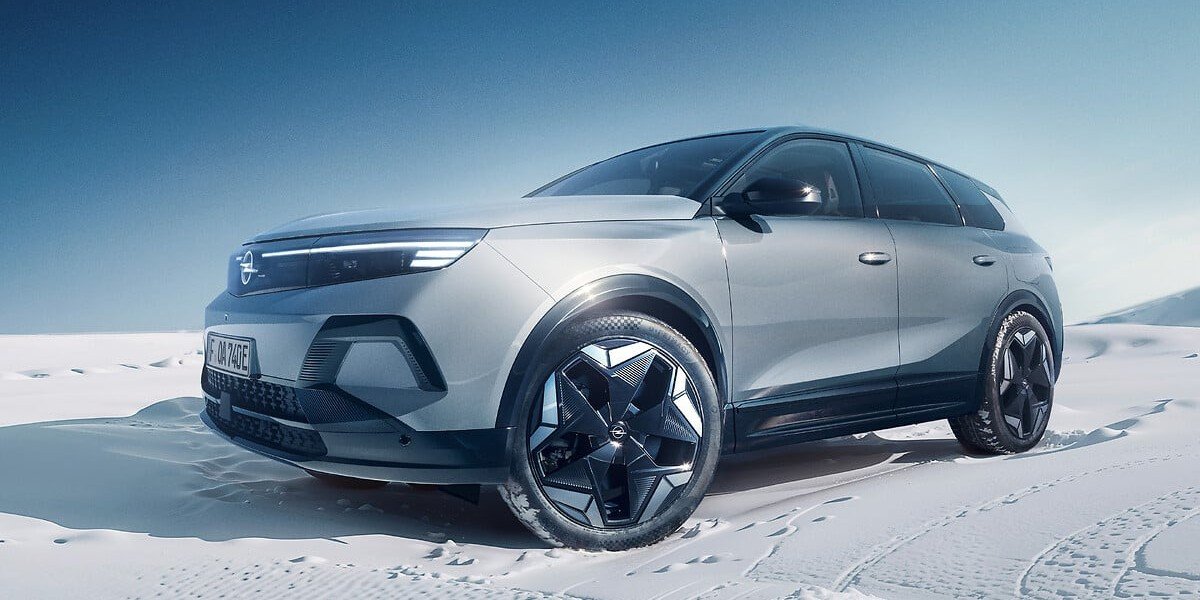
After becoming the first European brand to offer fully electric versions of every model it sells — and at the same price as the ICE models — Opel is going even further, with a new, AWD electric SUV that should give American Jeep fans hope for a new electric Cherokee! Now part of the Stellantis, rather than GM portfolio of brands, Rüsselsheim-based Opel showed off the first official pictures of its new Opel Grandland Electric AWD — the company’s first all-electric SUV to feature the “Blitz” performance emblem and all-wheel drive. “Our top-of-the-range Grandland SUV is a milestone for Opel,” says Opel CEO Florian Huettl. “Customers already have a choice of battery-electric drive, plug-in hybrid and hybrid with 48-volt technology. We are now offering even more choice with the Grandland Electric AWD and thus ensuring that our customers can enjoy maximum efficiency and safety in diverse weather and road conditions, combined with plenty of driving fun.” Stellantis gets it right in Europe Opel says its new, AWD Grandland is its most aerodynamically efficient model yet, with a drag coefficient (Cd) of just 0.278. That efficiency, paired with similarly efficient electric motors and a 73 kWh li-ion NMC battery give the electric crossover a 501 km (311 mile) WLTP range, while a combined 325 hp and 375 lb-ft of torque should make for suitably spirited acceleration to go along with all that green cred. Advertisement - scroll for more content Suspension and handling, too, are promised to deliver on what Opel claims is a “typical” Teutonic driving experience in the Grandland AWD: Both driving pleasure and comfort are further emphasized by dampers with frequency selective damping technology. This unique technology comes as standard on the Grandland Electric AWD and incorporates a second hydraulic circuit in the damper chamber to mechanically adapt the damping force in relation to the frequency. Depending on the situation, road surface conditions and driving style, it enables different damping characteristics for comfortable gliding at high frequencies – i.e. with short impacts such as on cobblestones or a manhole cover – as well as for a sporty, ambitious driving style with more direct contact with the road at low frequencies. The Grandland reacts even more immediately and directly to any command from the driver and, as is typical for Opel, remains stable when braking, cornering and at high speeds on the Autobahn. OPEL PRESS RELEASE The Opel Grandland Electric AWD ships with four standard drive modes that include “normal,” eco, sport, and 4WD mode, which simulates locking axles and true 4×4 off-road performance. The ESP and traction control systems adopt specific settings to enhance grip in 4WD mode as well, and maximum power and torque are instantly available. Electrek’s Take 2026 Jeep Cherokee Electric SUV; via Chat GPT. As you maybe could tell by now, feeding European Stellantis EVs into an AI image generator and asking it to “make them into Jeeps” is one of my new favorite things to do. This new Opel is no different, and the resulting image (above) paired with the models’ stated specs give me hope that the next wave of Jeep EVs will do better than the Wagoneer S at attracting buyers. All they really need, I think, is the right name — and the right price, to be winners. SOURCE | IMAGES: Opel. Your personalized solar quotes are easy to compare online and you’ll get access to unbiased Energy Advisors to help you every step of the way. The best part? No one will call you until after you’ve elected to move forward. Get started, hassle-free, by clicking here. FTC: We use income earning auto affiliate links. More.
Nexamp cuts ribbon on first "Community-Driven Community Solar" project in Illinois
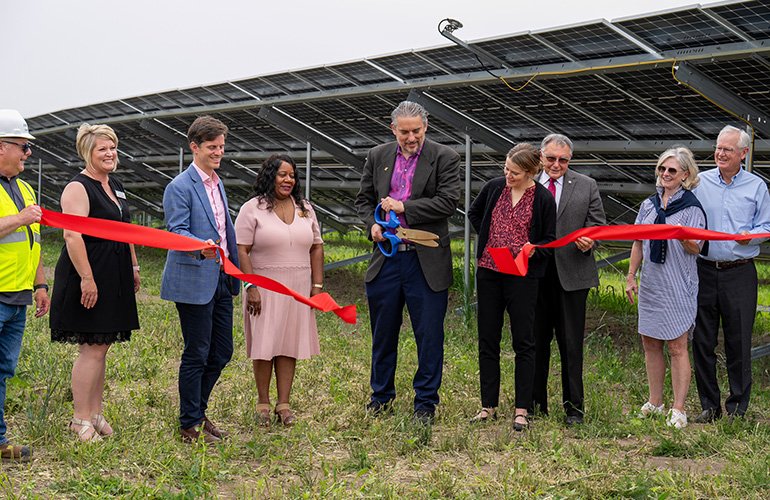
Nexamp and Trajectory Energy Partners this week celebrated the opening of Blue Grama Solar, a 4.7-MW community solar farm that marks a significant step forward in Illinois’ clean energy transition. As the first Community-Driven Community Solar (CDCS) project energized under the Illinois Shines program, Blue Grama Solar, located in Galesburg, Illinois, prioritizes community involvement and local benefit, setting a new standard in renewable energy development. The Blue Grama Solar project features more than 8,000 solar panels and will generate enough electricity to offset the annual power needs of more than 700 Illinois households. CDCS projects are designed to provide tangible benefits for local communities, including workforce opportunities, regional investment and continued participation in the clean energy economy, driven by long-term engagement with Galesburg and Knox County area leaders. “This is the kind of project that demonstrates how solar can be a win for everyone,” said Jessica Collingsworth, Central Policy Director at Nexamp. “By putting community needs at the center of the development process, Blue Grama Solar delivers more than clean energy — it delivers ownership, opportunity, and pride. We’re honored to work with partners like Trajectory to help lead Illinois toward a more powerful and adaptable energy future.” Blue Grama Solar supports the goals set forth in Illinois’ landmark Climate and Equitable Jobs Act (CEJA), which commits the state to achieving 100% clean energy by 2050. Projects like this, built with community leadership and benefit in mind, are key to achieving those ambitious targets. The launch of Blue Grama Solar follows Nexamp’s announcement last year of its second headquarters in Chicago, further cementing the company’s commitment to the state. News item from Nexamp
Charged EVs | Allison Transmission to acquire Dana's off-highway business, expanding EV and hybrid drivetrain capabilities
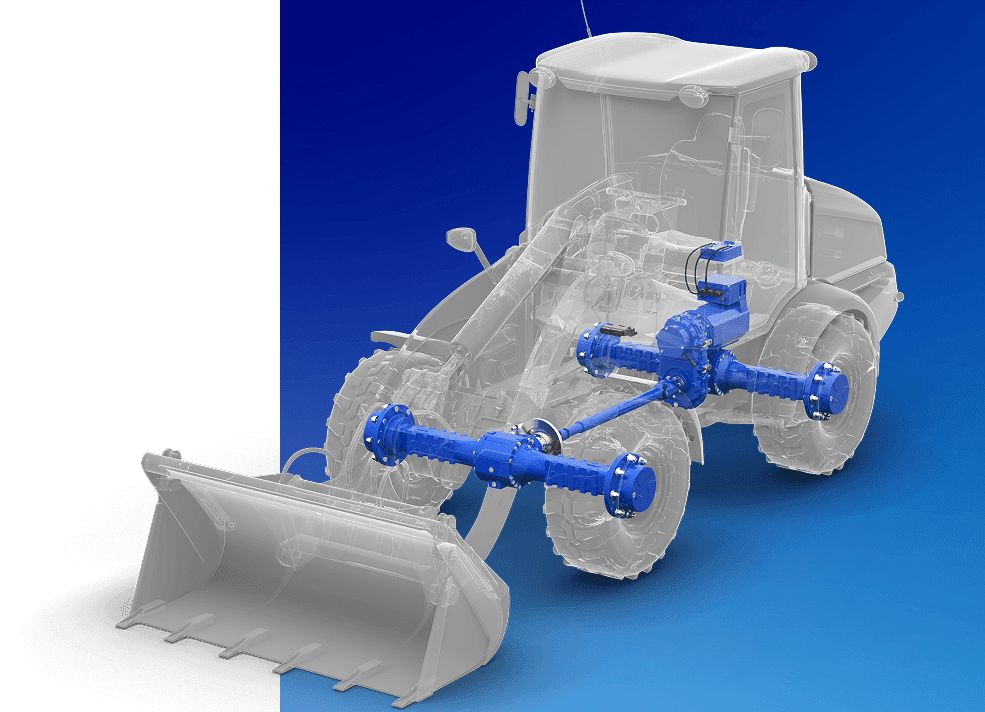
Allison Transmission has announced a definitive agreement to acquire Dana’s Off-Highway business for approximately $2.7 billion. The acquisition, anticipated to close late in the fourth quarter of 2025 pending regulatory approvals, aims to expand Allison’s existing powertrain and electrification product lines, significantly enhancing capabilities in hybrid and electric drivetrain systems for commercial and industrial applications. Dana’s Off-Highway business develops drivetrain, propulsion and electrified solutions, serving customers across construction, agriculture, forestry, specialty vehicles, aftermarket, industrial, and mining industries. The division operates in over 25 countries, employs approximately 11,000 individuals, and is recognized for its hybrid and electric drive technologies, including axles, drivetrain components and custom propulsion solutions. According to Allison, the acquired business is expected to generate annual run-rate synergies of approximately $120 million and to be immediately accretive to diluted earnings per share. Allison plans to finance the acquisition through a combination of cash on hand and debt. “Dana’s off-highway business has long been committed to delivering innovative solutions for off-highway applications, and we are confident that under Allison’s ownership, the team will be well-positioned to continue that legacy,” said R. Bruce McDonald, Dana Chair and CEO. “This agreement represents a strategic opportunity to ensure the ongoing success of the business, while allowing Dana to focus on our core priorities. We look forward to seeing the off-highway business thrive under Allison’s leadership.” Following the integration, Allison intends to use its broader global presence and bolster its existing product portfolio, catering directly to evolving customer requirements in heavy-duty equipment markets, including electrification trends in commercial vehicles and industrial machinery. Allison Transmission specializes in propulsion solutions for commercial, defense, and off-highway vehicles, including fully automatic transmissions and electrified systems for on-highway trucks, buses and construction equipment. Headquartered in Indianapolis, Indiana, the company has global manufacturing and electrification engineering centers supporting a range of emerging EV and hybrid applications. Source: Allison Transmission
I'm Obsessed With This High-Tech $3,500 E-Bike
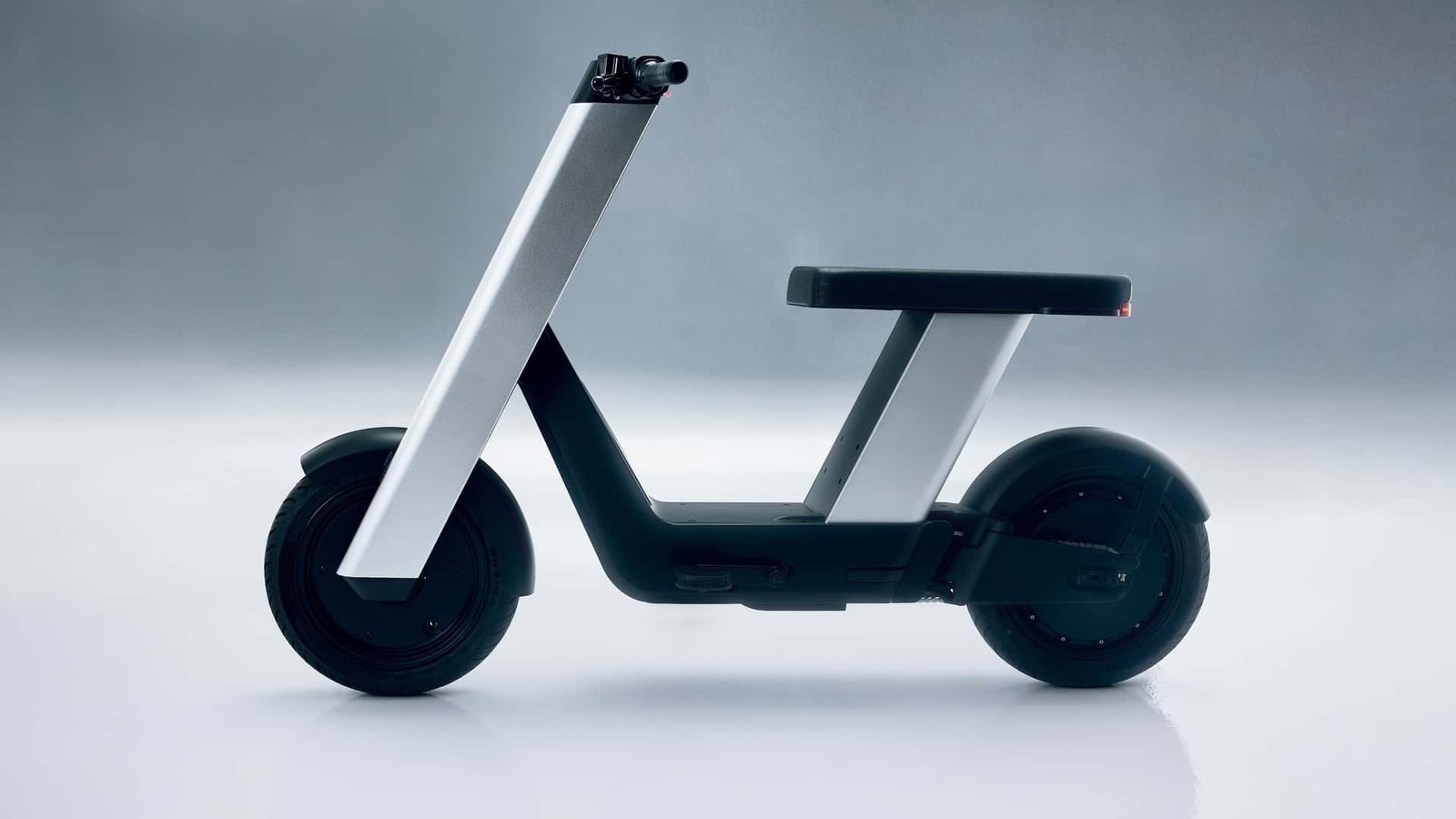
The Olto is a new e-bike from New York City-based startup Infinite Machine. It has phone-as-a-key capability, over-the-air firmware updates, a swappable battery and tons of accessories. It costs $3,495 and arrives this fall. I sold my electric bike a couple of years ago when I moved from New York to the San Francisco Bay Area. And I’ve missed it ever since. It was just a cheap, no-name, made-in-China deal. A piece of crap, if I’m being honest. But it convinced me that e-bikes are the absolute best way to get around a city. On that bike, I’d regularly travel farther than I was willing to under human power alone, all while arriving less sweaty. I’d get places faster than I would’ve on public transit. I loved the freedom of zooming around the city without the burden of needing to find a parking spot. I may have just found my way back into the wonderful world of e-bikes: the Infinite Machine Olto. Announced on Thursday, this high-tech, $3,495 e-bike blows my old ride out of the water in every way. And I’m obsessed. Infinite Machine is a New York-based mobility startup with a mission to create “the most compelling non cars on Earth.” It first gained notoriety for the P1, a futuristic-looking scooter with Tesla Cybertruck vibes. The Olto is its first e-bike. But it’s really more like a bike-lane-approved motorcycle than a bicycle. Photo by: Infinite Machine Photo by: Infinite Machine Photo by: Infinite Machine Like a Vespa or a Honda Ruckus, the Olto has an upright seating position and a step-through frame construction. But it also looks far cleaner and more elegant than those scooters. It has no visible cabling, no extraneous styling elements and is made up of just a few simple shapes. I love it, and I think this is what it would look like if Apple, Tesla or Rivian made an e-bike. (Rivian is doing just that, by the way, through a spinoff startup called Also.) As for the basics, it comes with a 2.0-kilowatt motor embedded in the rear hub and a 33-mph top speed. (All that power is intended for off-road use, and the bike can be software-limited to 750 watts and 20 mph depending on the jurisdiction.) Infinite Machine says the bike will travel 40 miles on a charge thanks to a 1.2-kilowatt-hour battery. It has dual suspension and can be operated via pedal assist or a throttle. Photo by: Infinite Machine Photo by: Infinite Machine Photo by: Infinite Machine But that’s all fairly typical e-bike stuff. The Olto also has a ridiculously long list of thoughtful features that would seem to make it the ultimate commuting or grocery-getting machine. The Olto is equipped to carry two people right out of the box. It comes with a stretched-out seat and an extra set of foot pegs that pop out from the frame. It has an impressive array of security features. The steering and motor lock automatically after a ride. Your phone can act as a key via the company's app, with the bike automatically unlocking itself as you approach. Alternatively, you can tap a keycard. The app lets you GPS track your bike and will alert you if your bike senses someone messing with it. There’s an auxiliary battery that powers an alarm system. Photo by: Infinite Machine That’s important because the battery is removable and swappable. It can recharge fully in 5.5 hours using the included charger—or in three hours using an optional "Super Charger." And the company will even sell you a nifty charging dock, so your battery can stand upright while it fills up. Owners can monitor their battery’s health via the Infinite Machine app. And the bike is even capable of receiving over-the-air firmware updates that tweak things like its battery management system or performance. This really is the ultimate e-bike for EV and tech nerds. Other practical stuff: It has an integrated headlight, brake light and turn signals. It has a motorcycle horn. It has USB ports for charging your phone and under-seat storage. It has integrated under-seat hooks for hanging helmets. It has hydraulic disc brakes. And the pedals magnetize in place to function better as stationary foot pegs. Photo by: Infinite Machine Photo by: Infinite Machine Photo by: Infinite Machine Plus, Infinite Machine invites you to customize your Olto with a variety of bolt-on accessories. That includes racks, a child’s seat, a center stand and a phone mount. The open area between your knees can even be transformed into a cargo bin using a couple of handy side walls. One problem I see is the Olto’s weight. It clocks in at a beefy 176 pounds, so don’t expect to lug this thing down the subway stairs or into your walk-up apartment. The company assures customers that the bike’s weather-proof design and safety features make it OK to park outside. Are all these gizmos a bit overkill for a bike? Some people will definitely feel that way. But I think it's awesome that Infinite Machine developed more than a bike—it made a whole technology, software and accessory ecosystem that makes the Olto a cohesive and feature-packed car replacement. At least, it looks that way to me. I can't say for sure until I can try this thing out for myself. The Olto is available to configure and preorder now with a $100 deposit. The first bikes ship this fall. Contact the author: Tim.Levin@InsideEVs.com
Mercedes recalls 13,447 locally produced EVs in China due to battery thermal runaway risk
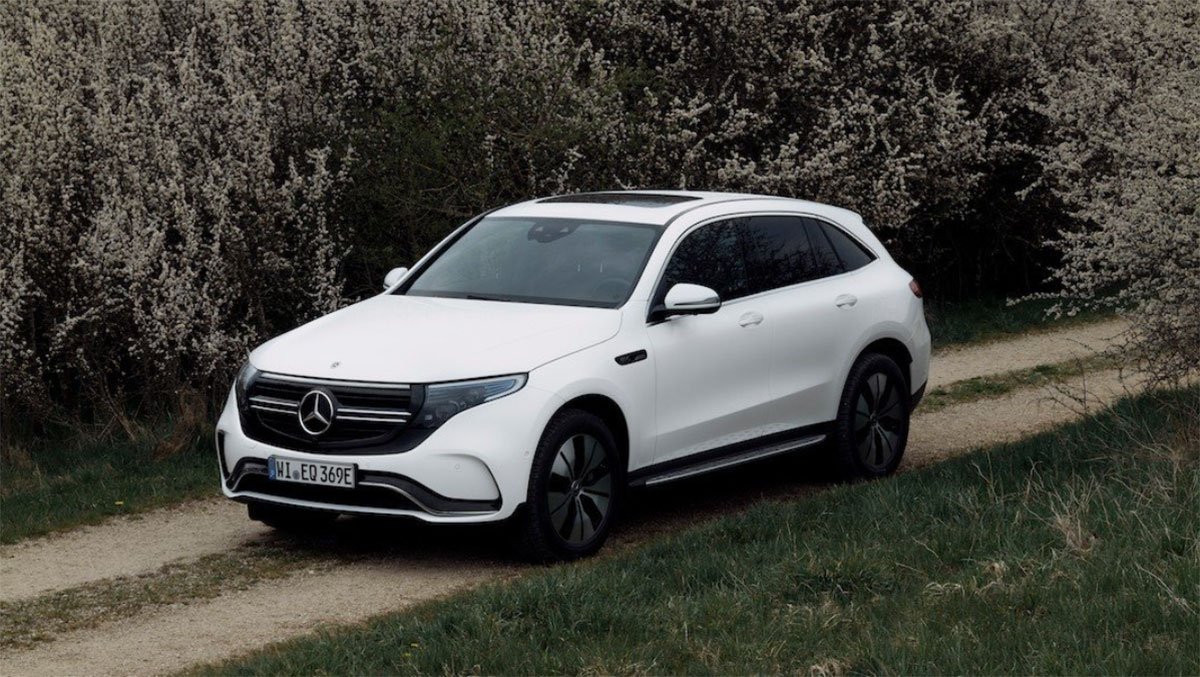
Beijing Benz is recalling 13,447 domestically produced EQC vehicles starting September 27. Due to a design flaw in the battery management system software, the high-voltage batteries may experience thermal runaway under extreme conditions. (An image from Mercedes-Benz's Weibo page shows the EQC.) This is the second recall in the past three months initiated by Mercedes-Benz in China due to battery fire risks. Beijing Benz, Mercedes-Benz's joint venture in China, is recalling 13,447 locally produced EQC vehicles produced between November 30, 2018, and September 17, 2022, starting September 27, according to an announcement today on the website of China's State Administration for Market Regulation (SAMR). Due to a design flaw in the battery management system software, the high-voltage batteries in these vehicles may experience thermal runaway under extreme conditions, according to the announcement. This could lead to vehicle fires and pose a safety hazard, the announcement said. The recall is being conducted under SAMR's defect investigation, and Beijing Benz will upgrade the battery management system software of the affected vehicles through authorized dealers. Before formal recall measures are implemented, Beijing Benz recommends that users set the charging limit of the vehicles to no more than 80 percent. The EQC is Mercedes-Benz's first electric vehicle, initially launched in China in November 2019. In early 2022, Mercedes-Benz faced widespread complaints from Chinese owners over motor issues with the EQC. Mercedes-Benz's last recall announcement involving EVs was in March, when it recalled 12,308 domestically produced EQA and EQB vehicles. Production process issues with the high-voltage batteries in some vehicles increased the risk of internal short circuits in the battery cells, potentially leading to vehicle fires, according to an announcement on March 28. SAMR's website publishes recall announcements almost every month, with battery-related recalls occurring from time to time. Mercedes-Benz said it will cut redundant roles in China, and consolidation of the business will inevitably involve some staff.
MAN focuses on integrated, modular battery manufacturing
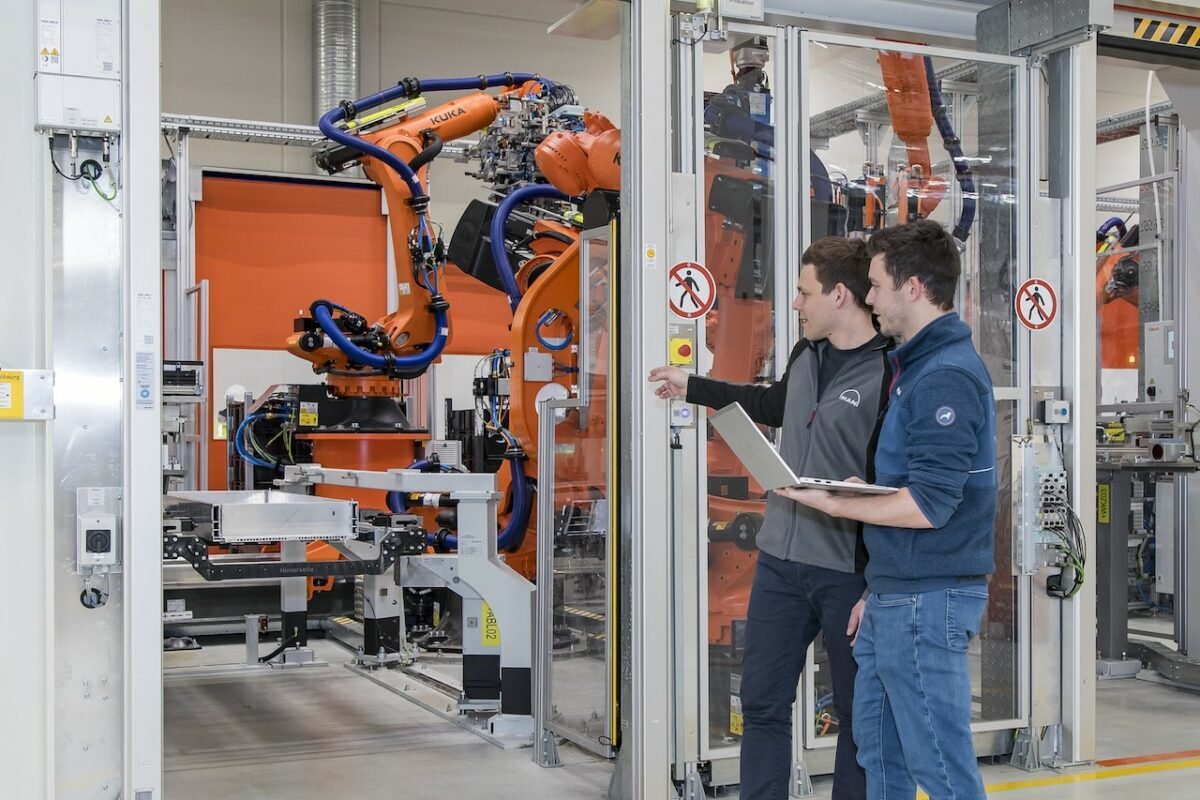
MAN Truck & Bus is bringing a new kind of battery production in-house, but it still maintains a bigger picture of e-mobility’s future. By Will Girling Stakeholders across the automotive industry are in broad agreement that batteries could be the single key technology that will take electric vehicles (EVs) firmly into the mainstream. Unsurprisingly, fast growth is expected in the global battery market: from a value of US$59bn in 2023 to US$111bn in 2032, according to Fortune Business Insights. Subscribe to Automotive World to continue reading Sign up now and gain unlimited access to our news, analysis, data, and research Subscribe Already a member? Join our LinkedIn Group Let us help you understand the future of mobility "*" indicates required fields
Amazon, Google, Meta and Microsoft go nuclear
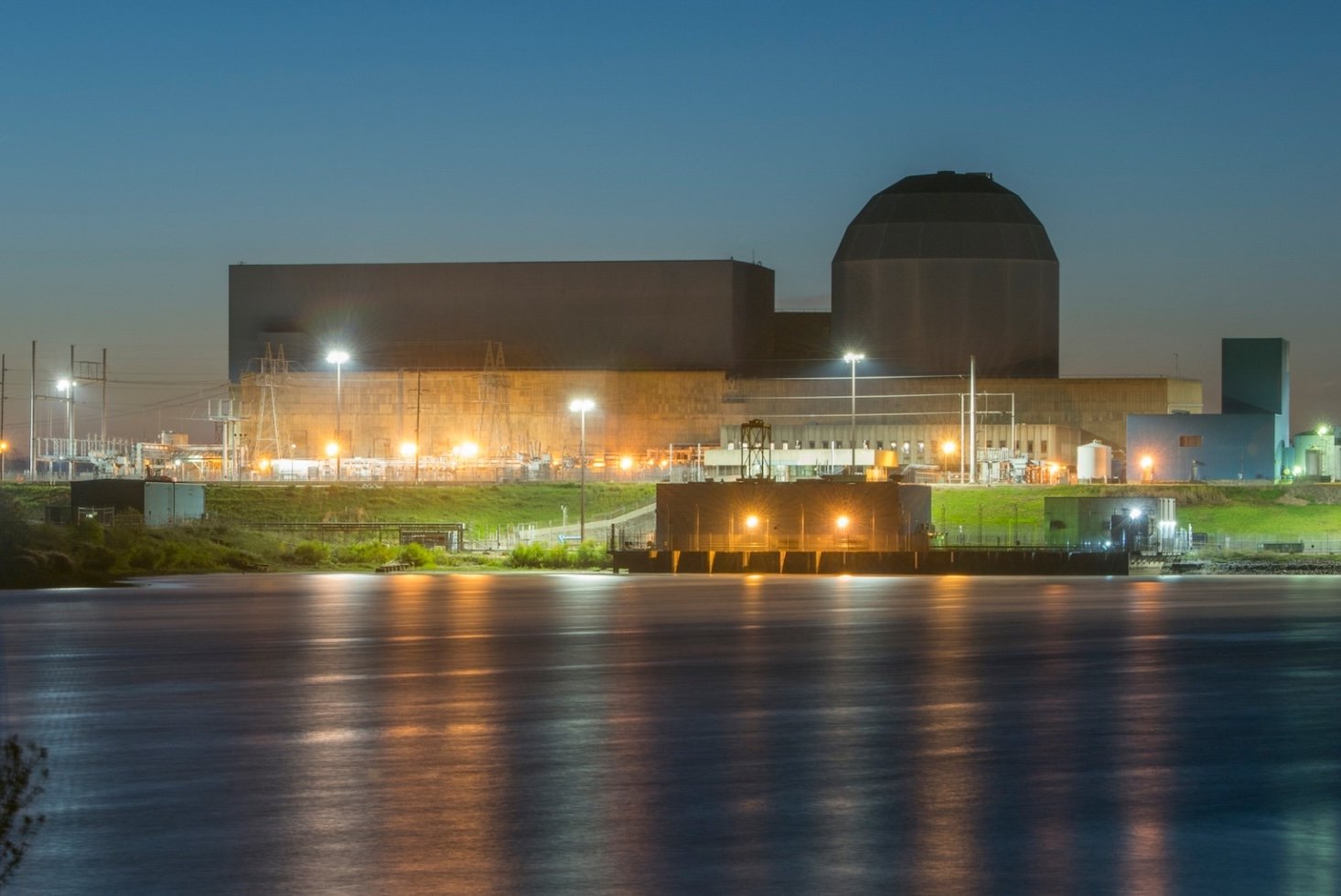
Amazon has added to its portfolio of carbon-free energy purchases with a deal to buy 1.9 gigawatts through 2042 from Talen Energy’s nuclear plant in Susquehanna, Pennsylvania. The goal: to energize new and existing data centers in the region. The power purchase agreement announced June 11 builds on an existing relationship, and it supports Amazon’s plan to invest $20 billion on Amazon Web Services facilities in Pennsylvania. The Talen arrangement hints at another expansion, using small modular reactors, building on investments Amazon disclosed in October. Terms weren’t disclosed. Amazon’s new contract is the third high-profile nuclear deal announced since early May, alongside ones by Google and Meta. Microsoft is also looking for ways to go nuclear: Its biggest move so far was an agreement last fall that will reopen a shuttered reactor at Three Mile Island. All four companies view nuclear energy baseloads as an important addition to their carbon-free energy portfolios alongside solar, wind and geothermal. “There is this really untapped resource of nuclear energy that is existing or that has exited the grid recently because the economics have pushed them off as more renewables come online,” Bobby Hollis, vice president of energy at Microsoft, told Trellis last September. Microsoft’s first publicly announced nuclear deal was in May 2023, with fusion company Helion Energy. Favorable conditions The political climate is conducive to keeping existing plants online or restarting retired ones: President Donald Trump has signed executive orders propping up nuclear, including ones to encourage advanced technologies and expand U.S. nuclear capacity to 400 gigawatts by 2050, compared with 100 gigawatts currently. He even supported the restart of a reactor in Michigan, which received a $1.5 billion rescue loan from President Joe Biden. Nuclear energy could meet up to 10 percent of data center electricity demand by 2035, according to an April Deloitte analysis. A single reactor using legacy technologies generates about 800 megawatts; AI data centers can require up to 5 gigawatts. Interest has also sparked a surge in demand for small modular reactors, which offer about one-third the generating capacity of larger units. The global pipeline of projects was 47 gigawatts at the end of the first quarter, with more than half of the capacity in the U.S., according to projections by research firm Wood Mackenzie. “The surge in data center demand has propelled nuclear small modular reactors to a major player in the future energy mix,” said David Brown, director of energy transition research at Wood Mackenzie. “[They] remain a top priority for the Trump administration and with policy tailwinds, development should accelerate and expand to be a significant source of clean energy.” There is still plenty of uncertainty over whether the projects will actually be built: It will take $300 billion to build the current pipeline of small modular reactors. “Nuclear has had many false starts,” said David Wilson, CEO of Energy Exemplar, which develops energy modeling software. New builds will take years to come online, he noted. “I’m optimistic for the technology, but I’m very pragmatic,” he said. Power producers to watch Well-established utilities and little-known developers are at the center of the nuclear deals announced by Amazon, Google, Meta and Microsoft over the past 18 months. Here are ones making headlines: Constellation Energy The Baltimore-based producer, which operates the largest U.S. nuclear fleet with 21 reactors, is Microsoft’s partner for the Three Mile Island restart. It’s also the supplier for Meta’s 20-year-long power purchase agreement, announced June 3, to buy 1.1 gigawatts of nuclear energy from the Clinton Clean Energy Center in Illinois. Meta’s commitment will support an expansion of the facility’s output and deliver $13.5 million in annual tax revenue, according to the announcement. The site had been slated for retirement. Dominion Energy The Virginia utility operates seven nuclear plants in Connecticut, Virginia and South Carolina. It received approval to extend the operating licenses in Virginia — a data center hotbed — for two decades and is conducting feasibility studies on small modular reactors that could add 300 megawatts of power in the state. Elementl Power This stealthy nuclear development company, located in Greer, South Carolina, and founded in 2022, has been contracted by Google to prepare at least three sites (locations undisclosed) for advanced nuclear installations. Each installation would have a generation capacity of at least 600 gigawatts, and Google would have the option to buy that power, under the agreement disclosed May 7. Elementl’s mission is to bring 10 gigawatts of advanced nuclear online in the U.S. by 2035. It has won favor with the Department of Energy, through the agency’s Gateway for Accelerated Innovation in Nuclear program. Elementl is backed by infrastructure investment firm Breakwater North and Energy Impact Partners, the investment firm created by a who’s-who in the energy industry. Energy Northwest Amazon’s investments in small modular reactors include an October 2024 agreement with this group of utilities, located predominantly in Washington state, that have committed to construct small modular reactors. The Amazon contract will support four projects, with a combined generation capacity of 320 megawatts in the first phase and an option to scale up to 960 megawatts. Kairos Power Google’s first nuclear partnership, announced in October 2024, was with this developer of small modular reactors based in Alameda, California. The plan is to build installations in regions where they can supply electricity to Google data centers, via corporate power purchase agreements. The total pipeline called for under the deal is 500 megawatts — which translates into a half-dozen reactors — with the first site to be built by 2030. Financial terms weren’t disclosed. Kairos is also working closely with Elementl, Google’s other nuclear ally. Oklo Data center developer Switch, which counts big companies including eBay and FedEx among its customers, signed a contract to buy 12 gigawatts of electricity from nuclear projects being built by this Santa Clara, California, nuclear company. Oklo is run by a management team that includes alumni from Apple, Google and Tesla. Its fission technology can use nuclear waste as fuel, and
Mitsubishi debuts EV battery swap network for cars AND trucks
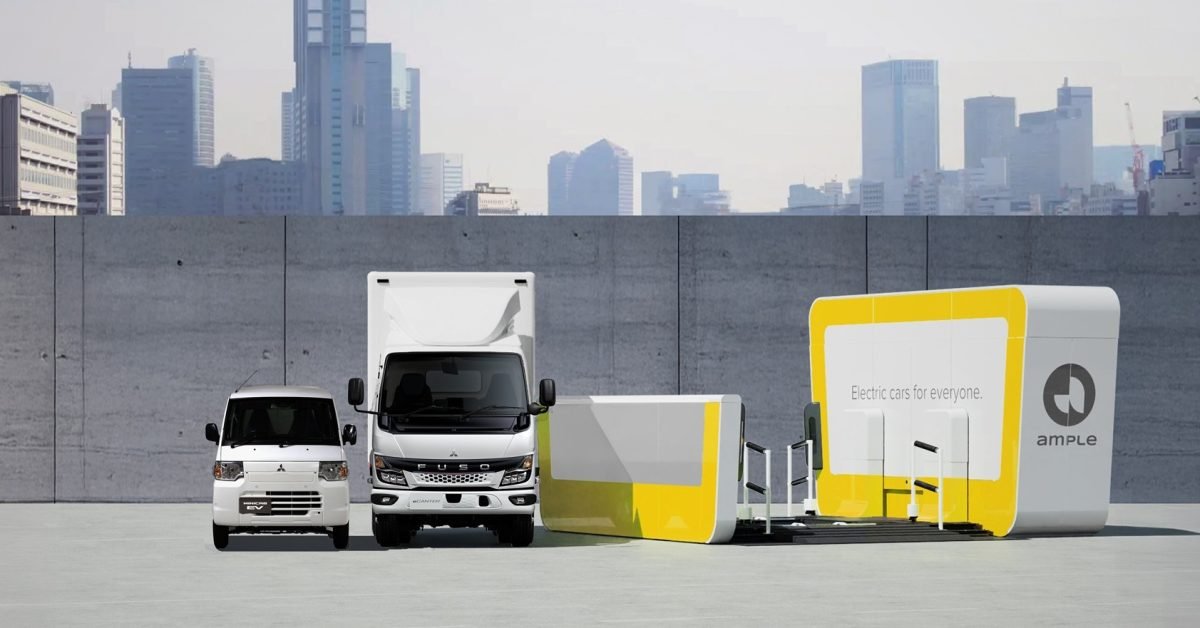
Mitsubishi is partnering with Ample and Yamoto Transports to deploy an innovative new battery swap network for electric cars in its Japanese home market — but it’s not just for electric cars. Mitsubishi Fuso commercial trucks are getting in on the action, too! Despite a number of early EV adopters with an overdeveloped concept of ownership, battery swap technology has proven to be both extremely effective and extremely positive to the overall EV ownership experience. And when you see how simple it is to add hundreds of miles of driving in just 100 seconds — quicker, in many cases, than pumping a tank of liquid fuel into an ICE-powered car — you might come around, yourself. That seems to be what Mitsubishi thinks, anyway, and they’re hoping they’ll be your go-to choice when it’s time to electrify your regional and last-mile commercial delivery fleet(s) by launching a multi-year pilot program to deploy more than 150 battery-swappable commercial electric vehicles and 14 modular battery swapping stations across Tokyo, where the company plans to showcase its “five minute charging” tech in full view of hundreds of commercial fleets and, crucially, the executives of the companies that own and manage them. How battery swap works for electric trucks; via Mitsubishi Fuso. A truck like the Mitsubishi eCanter typically requires a full night of AC charging to top off its batteries, and at least an hour or two on DC charging in Japan, according to Fuso. This joint pilot by Mitsubishi, Mitsubishi Fuso Trucks, and Ample aims to circumvent this issue of forced downtime with its swappable batteries, supporting vehicle uptime by delivering a full charge within minutes. The move is meant to encourage the transport industry’s EV shift while creating a depository of stored energy that can be deployed to the grid in the event of a natural disaster — something Mitsubishi in Japan has been working on for years. Advertisement - scroll for more content Trucks like the eCanter already serve a number of roles throughout the global truck market, including municipal waste collection, regional delivery support, and more. The pilot is backed by Tokyo Metropolitan Government’s “Technology Development Support Project for Promoting New Energy,” with local delivery operator Yamato Transport testing swappable EVs for delivery operations on both its eCanter light-duty trucks and Mitsubishi Minicab kei-class electric vans. Electrek’s Take Fuso eCanter battery swap; via Mitsubishi. Electrifying the commercial truck fleet is a key part of decarbonizing city truck fleets – not just here in the US, but around the world. I called the eCanter, “a great product for moving stuff around densely packed city streets,” and eliminating the corporate fear of EV charging in the wild just makes it an even better product for that purpose. Here’s hoping we see more “right size” electric solutions like this one (and more battery swapping tech) in small towns and tight urban environments stateside somewhat sooner than later. SOURCES | IMAGES: Mitsubishi, Fuso. Your personalized solar quotes are easy to compare online and you’ll get access to unbiased Energy Advisors to help you every step of the way. The best part? No one will call you until after you’ve elected to move forward. Get started, hassle-free, by clicking here. FTC: We use income earning auto affiliate links. More.
Yaskawa America to invest $180 million in Wisconsin manufacturing plant

A rendering of the new building. Governor Tony Evers, together with the Wisconsin Economic Development Corporation (WEDC) and company officials, announced that Yaskawa America will invest at least $180 million and create more than 700 new high-paying jobs in Wisconsin. Yaskawa America is experiencing significant growth driven by innovation in robotics, motion control, AC drives and solar inverters. The company’s newest investment in Wisconsin will consolidate its Illinois and Wisconsin facilities into one campus in Franklin, Wisconsin, over the next eight to 10 years. The project includes relocating its North American headquarters and training facility from Waukegan, Illinois. “I am really excited to be celebrating Yaskawa’s decision to relocate its headquarters to Wisconsin and expand its footprint here in the Badger State, bringing with them millions of dollars in capital investment in Southeastern Wisconsin and hundreds of high-quality, family-supporting jobs,” said Gov. Evers. “Companies from across the globe are choosing Wisconsin to grow and expand because they know we have the best workers making the best products. Wisconsin is continuing to strengthen our position as a leader in advanced manufacturing, and we’re glad to help support this expansion and Yaskawa’s continued success in our state.” This expansion marks a significant milestone as Yaskawa Electric Corporation celebrates its 110th anniversary globally, and Yaskawa America, Inc. celebrates 58 years of sales, innovation, manufacturing, and service in the United States. The Yaskawa America business manufactures industrial robots, motion control products, low and medium voltage AC drives, and solar inverters for numerous industries, including semiconductor, solar, machine tool, automotive, HVAC, pumping, oil and gas and others. “The Drives & Motion Division of Yaskawa America, Inc. is proud to announce the unification of all its current manufacturing and office locations in Wisconsin and Illinois into a single, consolidated campus in Franklin,” said Mike Knapek, CEO of Yaskawa America. “We take pride in our cutting-edge technology, our commitment to quality, and our world-class manufacturing, and we look forward to a strong future of growth and innovation in Franklin.” Governor Evers announced that the Wisconsin Economic Development Corporation (WEDC) is supporting the project by authorizing up to $18 million performance-based Enterprise Zone tax credits. The actual amount of tax credits received is contingent upon the number of jobs created and the amount of capital investment during that period. “Yaskawa joins the growing roster of innovative global companies that are choosing to grow in Wisconsin,” said Missy Hughes, WEDC secretary and CEO. “With their emphasis on advanced manufacturing and cutting-edge technology, they are a perfect fit for our state.” The new campus will include a headquarters, training, and lab building, manufacturing and packaging facilities, and robotics and semiconductor production operations. It will encompass over 800,000 sq. ft, strengthening Wisconsin’s position in advanced manufacturing. Yaskawa is the latest company to invest in Franklin. Milwaukee 7, southeast Wisconsin’s regional economic development organization, also assisted in the company’s expansion efforts. “We’re delighted that Yaskawa has chosen southeast Wisconsin for its expansion and for the new location of its North American headquarters,” said Gale Klappa, co-chair of Milwaukee 7 and Chairman of the Board of WEC Energy Group. “This exciting investment — announced today — is a testament to the region’s strengths in automation and advanced manufacturing.” News item from Yaskawa America
Charged EVs | Download the guide to high-voltage BMS testing with ISO-SPI simulation technology

Sponsored by Chroma. EV battery voltage ratings are trending upward from 400 V to 800 V, while those of large energy storage systems are increasing from 600 V-900 V toward 1,500 V. As test engineers evaluate hardware-in-the-loop (HIL) requirements for the battery management systems that manage these batteries, they face a trade-off between simulated cell channel count and simulation accuracy. High-voltage lithium-ion battery packs for EVs and large ESS typically use a distributed BMS architecture comprising Battery Control Units (BCU) and Battery Management Units (BMU). Download this whitepaper to learn more about using ISO-SPI simulation technology to replicate interactions between BCU and BMU.
EV Fast Chargers Are Growing Much More Quickly Than You Think
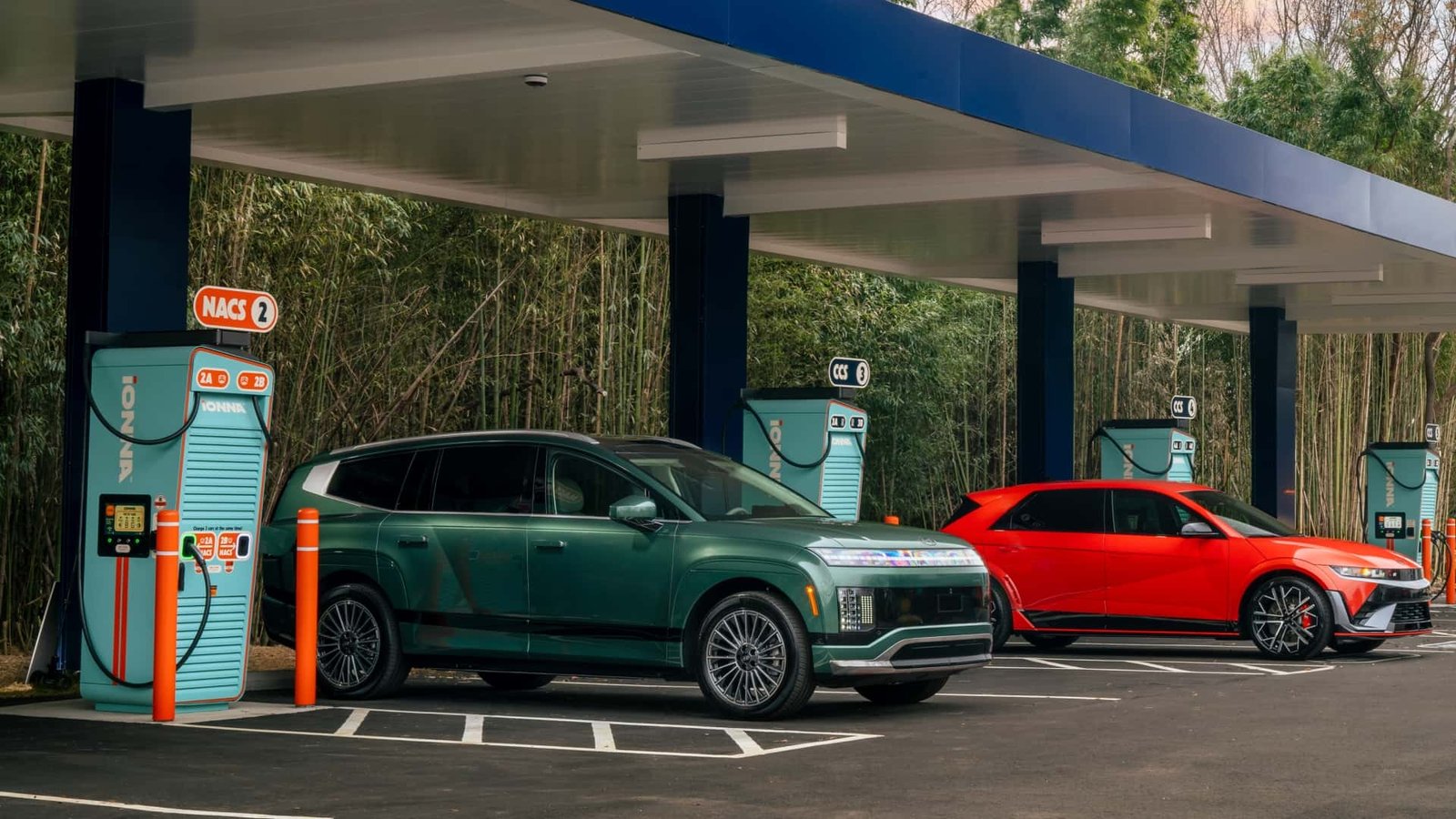
A new study indicates DC fast-charging ports are being installed at the highest pace the United States has ever seen. Tesla alone installed more than 600 new ports in May. The U.S. could see 3,000 more DC fast charging ports installed in 2025 than in 2024. You may think that the electric-vehicle industry has permanently hit the skids in 2025. That after several years of promising (if uneven) growth, a combination of still-high prices, a hostile presidential administration and automakers losing their nerve might keep the EV revolution from truly taking off. While it's true that the American car industry's EV transition faces more headwinds than it did a year ago, there's one big bright spot that proves that this kind of thing isn't going anywhere: public charger installations. That's actually doing better than you may think. New data from the charging data analytics firm Paren indicates that various charging networks are set to deploy as many as 3,000 more DC fast charging ports in 2025 than they did in 2024. Along with affordability, access to charging is widely seen as one of the biggest barriers to EV adoption. And while the U.S. had admirable charger growth last year, the process was infamously bogged down by permitting challenges and other concerns. This led many critics to write EV charger projects off as a kind of boondoggle that would take months to materialize, if they did at all. Now, Paren's chief analyst Loren McDonald indicates that things may be changing for the better. "The fast charging industry is deploying new [DC fast-charging] ports and stations at its highest pace ever in the U.S.," McDonald posted on LinkedIn this week. "Don't believe the FUD. The charging industry is moving full speed ahead, building larger, higher-power stations with amenities, greater reliability, and a better customer experience." Data: Paren Photo by: Paren Interestingly, and despite implementing cuts to its charging team last year, Tesla's Superchargers are driving the lion's share of the installations. "While Tesla could finish 2025 opening fewer new Supercharger ports than in 2024, the company had a monster May with 646 new ports opened, accounting for 42% of all new ports last month," McDonald said. And as we reported recently, the reliability of new chargers is improving dramatically all of the time. That's great to see, especially as more and more automakers pivot to Tesla's North American Charging Standard (NACS) plug and allow their EVs to access the vast Tesla charging network. As my colleague Mack Hogan wrote recently, that hasn't been the silver-bullet solution for charging access that some people hoped, but more ports are always better. And a NACS adapter has saved several of us on our road trips as well. Photo by: Patrick George And other charging providers are quickly leveling up from the "always-broken station located behind the garbage dumpsters at a strip mall" model that felt like the industry standard for so long. As McDonald said, many new players—often backed by automakers—are including covered areas, bathrooms, lounges for resting and other amenities to offer a much more pleasant experience when charging is needed on the road. Those networks include automaker-powered Ionna, Mercedes-Benz High-Power Charging, Walmart, Pilot Flying J, BP Pulse, Rivian and Buc-ee's, among many others. McDonald calls this the "Charging 2.0" era, and it should represent bigger and more serious leaps than what the industry has delivered until now. The reason is simple. Even if EV sales growth isn't expected to continue at some breakneck pace, the technology itself isn't going anywhere, and those owners will always need places to charge. And since study after study indicates EV owners rarely go back to gas-powered cars, they're going to be in this for the long haul. Meanwhile, home Level 2 Charger installations are rising very quickly as well. That's especially true now that many automakers have figured out how crucial it is to toss in chargers when someone buys the car, which can help eliminate a substantial amount of range anxiety. All in all, the charging space seems to be growing up, even if federal funding for it is in the crosshairs of the new administration. And that's great news for anyone looking to break up with gasoline. Contact the author: patrick.george@insideevs.com
SAIC adds new 9,500-car cargo ship, bringing its fleet to 36 car carriers
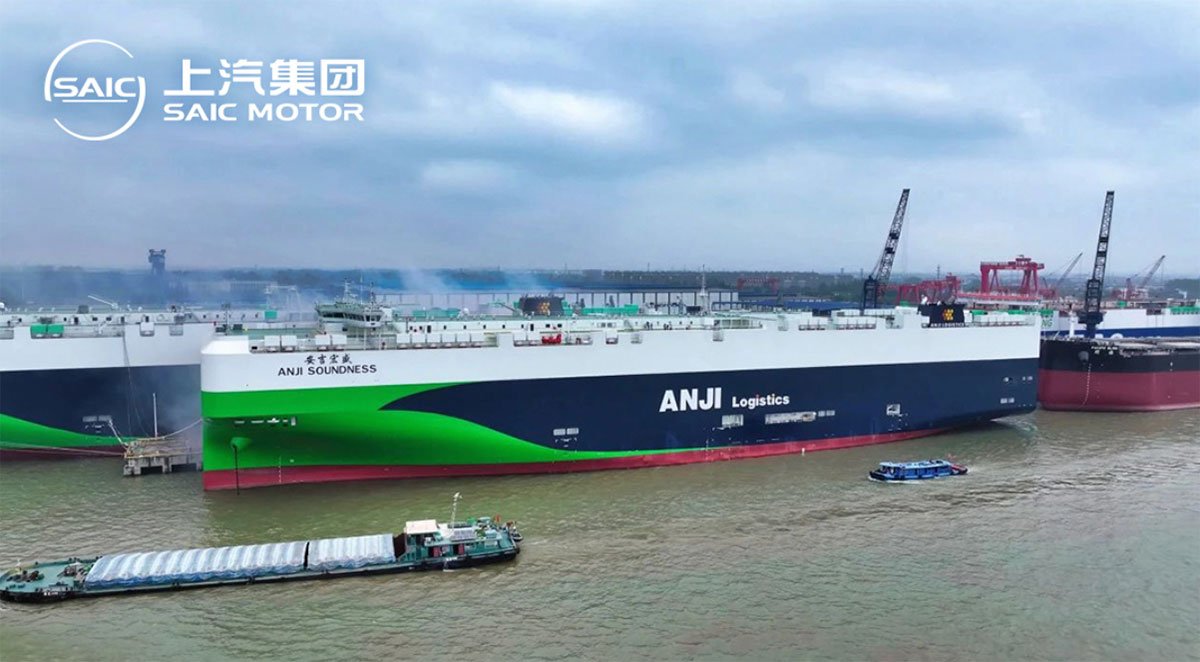
Anji Soundness began its maiden voyage today and will sail to Europe after loading vehicles at Chinese ports. SAIC's other car carrier, the Anji Ansheng, with a capacity of 9,500 vehicles, began its maiden voyage last month. (Image credit: SAIC) SAIC Motor (SHA: 600104), the Chinese automaker with the largest fleet of car carriers, has added a new cargo ship. Anji Logistics' 36th self-operated roll-on/roll-off (ro-ro) vessel was delivered today and commenced its maiden voyage, the logistics unit under SAIC announced today. The vessel, named Anji Soundness, was built by a shipyard under China Merchants Group and is Anji's second ro-ro vessel with 9,500 vehicle spaces. Anji's first 9,500-vehicle capacity car carrier, the Anji Ansheng, commenced its maiden voyage last month. These two cargo ships are sister vessels and are currently the largest and most capable next-generation ultra-Panamax car carriers globally, according to Anji. Anji Soundness will load Chinese-brand passenger vehicles and construction machinery at three Chinese ports in Shanghai, Lianyungang, and Yantai. It will then sail around the Cape of Good Hope and ultimately arrive in European countries including the UK, the Netherlands, Belgium, and Germany, according to Anji's announcement. The entire voyage spans about 16,000 nautical miles, with an estimated sea voyage duration of 40 days. The vessel is equipped with an intelligent ship system capable of collecting data from over 1,300 monitoring points across the entire ship. It also features a methanol fuel system, providing technical support for future carbon-neutral operations, according to Anji. Chinese automobile companies have accelerated the establishment of car carrier fleets over the past two years to meet the growing demand for automobile exports. Geely Auto (HKG: 0175) saw its first self-operated car carrier enter service in late May, carrying over 5,000 vehicles to European countries including the UK, the Netherlands, and Belgium. At the end of last month, BYD's seventh car carrier was launched. Earlier this month, BYD Xi'an and BYD Changsha -- two of BYD's 9,200-vehicle-capacity ships -- began sea trials. BEVs sold 607,000 units in May, up 22.6 percent year-on-year, accounting for 59.5 percent of NEV sales.
Trump scraps California EV mandate as states launch legal fight

GM and Toyota are among the OEMs backing Trump's decision to kill California's 2035 ICE ban as 11 states prepare for court. By Stewart Burnett President Trump's termination of California's 2035 electric vehicle (EV) mandate is triggering substantial backlash on the basis of states' rights, but not from the Republican Party for once. California immediately responded to the news with a legal challenge alongside 10 co-signatory states, filing a federal lawsuit that argues the administration's actions violate established regulatory procedures. Subscribe to Automotive World to continue reading Sign up now and gain unlimited access to our news, analysis, data, and research Subscribe Already a member? Join our LinkedIn Group Let us help you understand the future of mobility "*" indicates required fields
New Texas law threatens viability of battery energy systems
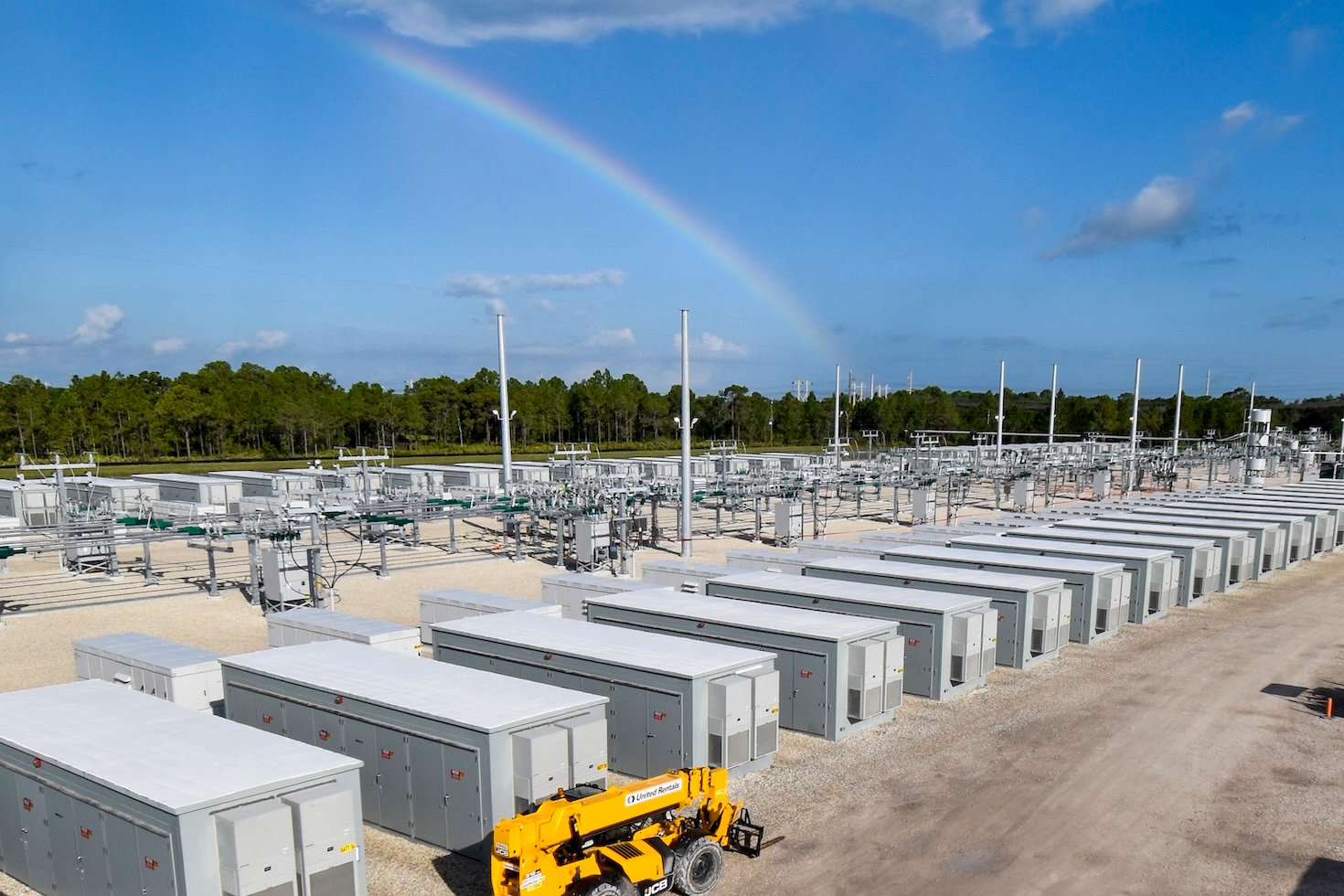
Texas Gov. Greg Abbott signed House Bill 3809 into law May 29, mandating that all battery energy storage systems (BESS) facilities be decommissioned at the end of their lifecycle. This law, which takes effect Sept. 1, applies to both standalone BESS facilities and those co-located with solar and wind power plants, and requires developers to sign a non-waiver clause forbidding any contractual changes. (A somewhat similar bill, SB 1150, was sent by the Texas legislator to Abbott’s desk requiring oil and gas companies to plug abandoned wells after 15 years, although that bill provides more opportunities for flexibility and extensions for the fossil fuel companies.) Fundamentals of HB 3809 HB 3809 is very specific regarding its intended targets. The main provisions of the law are: Mandatory decommissioning of BESS facilities at their end of lifecycle: This process includes the removal of buried cables, transformers and inverters, and all foundations need to be dug at least three feet deeper than the original structure to ensure proper site restoration. Landowners’ right to request additional rehabilitation measures: Landowners can request that the owners of the BESS equipment undertake additional work such as removing internal roads, reseeding land with native plants and rehabilitating the land to agriculture standards. BESS developers must provide financial assurance for decommissioning measures: Projects owners will consult with a third-party engineer to provide a total cost for decommissioning, both before the start of the project and annually until the termination of the lease or the 15th year of the BESS. Texas’ energy reality Texas ranks first in the U.S. in total wind power production, and second nationally for solar capacity. In 2024, wind and solar produced almost 30 percent of the state’s total energy, while coal produced around 11 percent. Gas is the largest source of energy within the state, accounting for more than half of all electricity production in 2024. Infamous for an unreliable grid that fails in extreme weather, Texas solar energy and battery storage provided grid stability during the peak of summer 2024, generating 25 percent of power needs during mid-day hours between June 1 and Aug. 31, according to the Electric Reliability Council of Texas (ERCOT). To store renewable energy, as of 2024 Texas built 6,500 megawatts of utility-scale battery capacity, according to the Energy Information Administration. Economic impact on battery storage What does HB 3809 ultimately mean for the the future of Texas’ battery storage industry? “Its burden falls heaviest on lithium-based storage,” said J. Goldsbury, VP of strategy and development at Renuvi Energy, adding that HB 3809 “is more than just a regulatory shift – it’s a market signal.” Goldsbury explained that developers using lithium-based batteries — the most widely available and market-ready type of battery — will face greater upfront costs due to HB 3809. And any money potentially recouped by selling or recycling the decommissioned lithium is far from certain. “Lithium markets are volatile, and recovery economics are far from predictable,” explained Goldsbury. “Current recycling initiatives are costly and logistically complex with a limited number of companies currently available in the U.S.” “It could make it harder for companies to keep there projects financially viable,” agreed James Allsopp, CEO of iNet Ventures, a PR agency that works closely with battery storage companies. But there are some positive ramifications of the law. “We see this law as a long-overdue recognition of what Renuvi has known from the start: not all battery systems are created equal and infrastructure-based deployments that support the power grid should be designed with typical grid lifecycles in mind,” said Goldsbury. The law incentivizes continued battery storage innovation that will eventually cut waste from the technology. “It encourages eco-friendly practices and careful disposal,” said Allsopp. Of course, a large portion of federal funding to pay for this innovation is up in the air as the Senate continues to edit the House’s reconciliation bill.
The digital twin: making sense of mountains of manufacturing data

SOLIDWORKS Manufacturing Expert Michael Buchli on how and why to use virtual models too optimize complex manufacturing processes. This episode of Manufacturing the Future is brought to you by Dassault Systèmes. Production as we know it today has been around for just over a century, and in that time, the one universal truth and constant has been complexity. Managing complexity, and doing so in a way that maintains profitability, has frequently been the difference between ideas that succeed and those that fail. Until about 1980, only firms with the resource is to afford expensive mainframe and minicomputers could enjoy the benefits of software tools to help make sense of an avalanche of data, but that’s different today. From multinationals to startups, software tools are now available to integrate multiple tasks through the design and production process, and make sense of the vast volume of data generated by manufacturing processes. And it all begins with a virtual, digital model of the manufacturing process. Engineering.com’s Jim Anderton was joined by SOLIDWORKS Manufacturing Expert Michael Buchli to discuss this important issue. * * * Leverage manufacturing data to make informed decisions with accurate insights. Download the 3DS Technology Barometer Manufacturing Data report to learn how.
This new EV charging feature could make apps and cards obsolete
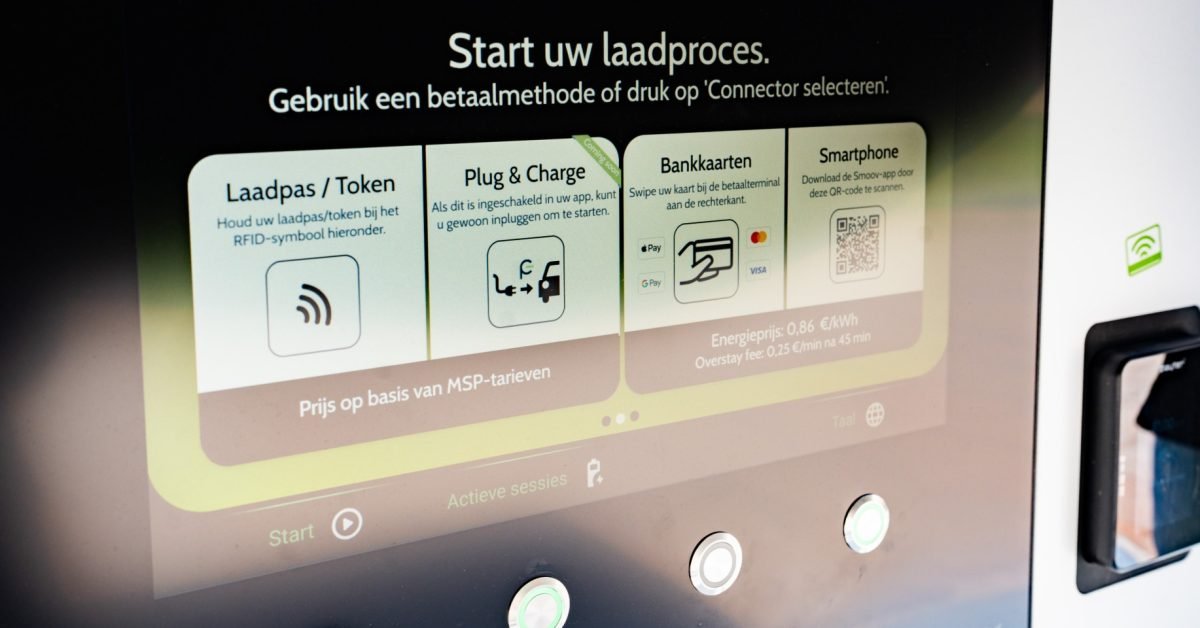
Image: Allego European EV charging provider Allego has launched what is says is Europe’s first rollout of the “world’s safest and most secure” Plug & Charge technology. The new tech is based on the open industry standard OCPP 2.0.1 and promises to make EV charging as easy as, well, plugging in your car. Forget apps, cards, and complicated sign-ins. If your EV is compatible, all you have to do is pull up and plug in. Jean Gadrat, Allego’s CMO, said, “By removing digital friction points, apps, and cards, we give drivers the confidence to travel further and charge more conveniently. Whether in the city, on the highway, or abroad, Plug & Charge delivers the same secure, one-step charging experience.” Here’s how Allego’s Plug & Charge works Plug & Charge is an ISO 15118-based authentication and payment method built by Allego on OCPP 2.0.1, standardizing communication between OCPP-compliant chargers and networks. Advertisement - scroll for more content Once your car is enabled for Plug & Charge, the process is completely hands-off. You plug in, and your EV and the charger swap secure digital certificates to authenticate your account. There’s no need to tap an RFID card, open an app, or even press a button. Allego’s system supports Mutual TLS encryption and certificate-based authentication, so only authorized vehicles can charge. That means no billing mistakes or fraudulent access, which has been a big concern with some older public charging setups. Available across Europe now Allego’s Plug & Charge functionality is at more than 5,000 fast and ultra-fast chargers across Europe, and it also works across partner networks, deploying a truly cross-network Plug & Charge experience. It’s a future-ready platform, too. Thanks to OCPP 2.0.1, the protocol supports remote firmware updates, advanced security, and new features as they become available. So your charger can grow along with your EV. “As new vehicle models and charging technologies emerge, OCPP 2.0.1 ensures your car always ‘speaks the same language’ as the charger,” said Manuel Trotta, Allego’s head of mobility solutions. Allego partnered with Alpitronic, Hubject, and Ford to bring its cross-network Plug & Charge to life. Read more: Waffle House is getting DC fast chargers – and it’s a genius move To limit power outages and make your home more resilient, consider going solar with a battery storage system. In order to find a trusted, reliable solar installer near you that offers competitive pricing, check out EnergySage, a free service that makes it easy for you to go solar. They have hundreds of pre-vetted solar installers competing for your business, ensuring you get high-quality solutions and save 20-30% compared to going it alone. Plus, it’s free to use and you won’t get sales calls until you select an installer and you share your phone number with them. Your personalized solar quotes are easy to compare online and you’ll get access to unbiased Energy Advisers to help you every step of the way. Get started here. –trusted affiliate link* FTC: We use income earning auto affiliate links. More.
Mayfield Renewables announces 2025 Education Summit in Seattle

Engineering consultancy firm Mayfield Renewables announced its second-annual Education Summit will be held Oct. 15-16, 2025, in Seattle, Washington. The Summit is a learning-focused live event for developers, EPCs, manufacturers and industry stakeholders working in commercial and industrial solar + storage. The event will feature two full days of training sessions and networking opportunities. Compared to other states, Washington has not always been known for having a high-megawatt solar queue. But in recent years, it has grown in experience by supporting resilient community microgrid systems. With this year’s Education Summit based in Seattle, attendees can look forward to exploring lessons learned from this region as microgrids become a bigger focus, challenge and opportunity for the national industry. The industry is at an inflection point and shifting away from simple PV systems, and scaling quickly and safely is essential to meeting targets for a resilient and reliable energy future. There is an urgent need for clear technical education. Mayfield is fortunate to have a team and network of industry experts and trainers who can develop and deliver workshops that address this need. “Providing high-quality education for the industry has been an important and fulfilling aspect of my work. As we’ve developed more classes and worked directly with clients, the need for more accessible education has been clear,” said Ryan Mayfield, Founder and SME, Mayfield Renewables. “As the industry grows, there are more gatherings and conferences than ever before. I wanted to create a different space wholly dedicated to adding value for attendees committed to quality C&I solar + storage systems. It is also one of the few industry gatherings dedicated to unbiased technical education,” said Laurel Hamilton, Head of Growth, Mayfield Renewables. “We wanted the summit to be really intentional about teaching the current requirements and how to overcome the challenges of complex projects.” The Summit will feature three tracks: one on PV+ESS codes and standards, one on engineering best practices, and a new track on microgrid development topics. Attendees can select two tracks (one per day). They’ll attend eight of 12 classes and can receive 10 NABCEP continuing education units. The Summit also provides a strong networking element by design. A curated short list of partners will be on hand as a resource, extending the conversations beyond the sessions and into the community space and evening reception. Select partners include Sol-Ark, ELM MicroGrid, Generac, Elexity, Maddox, GridVest, Sulis Energy, Megger, Solar Energy International and WASEIA. By bringing together dedicated, quality-focused subject matter experts and learners, the Education Summit will enable everyone to connect and share lessons learned before, during, and after the sessions. To learn more about the Mayfield Renewables Education Summit and benefit from an Early Bird registration discount (until July 1), click here.