Neoen begins operations at 540MWh BESS in Australia

Neoen begins operations at 540MWh BESS in Australia - Energy-Storage.News Skip to content
NHTSA streamlines autonomous vehicle approval process

Ford and GM both faced lengthy approval waits, with the latter having to file and refile its application multiple times. By Stewart Burnett The National Highway Traffic Safety Administration (NHTSA) announced on Friday it would accelerate the review process for autonomous vehicle (AV) deployment. The agency's decision follows years of regulatory delays that forced automakers and other industry players to withdraw exemption applications repeatedly. Subscribe to Automotive World to continue reading Sign up now and gain unlimited access to our news, analysis, data, and research Subscribe Already a member? Join our LinkedIn Group Let us help you understand the future of mobility "*" indicates required fields
Lululemon signs 10-year deal to secure 20% recycled fibers

Lululemon plans to source nearly one-fifth of its fiber mix from material recycled from used clothing and scraps by 2035. The athleisure giant announced a decade-long agreement June 11 to purchase content from the Australian startup Samsara Eco, which specializes in AI-powered enzymatic recycling. It’s the type of vote of confidence that young textile recycling companies hope for as they navigate the commercialization “valley of death” that has slayed so many, such as Renewcell. The news comes as Samsara Eco brings a new factory online and moves its headquarters from Sydney to Jerrabomberra in the next few months. “Scaling circular materials requires bold partnerships and a shared commitment to rethinking how our industry operates,” said Ted Dagnese, Lululemon’s chief supply chain officer, in a statement. The agreement serves Lululemon’s 2030 goal to use only “preferred materials” that are either recycled or meet sustainable and ethical sourcing standards. Between 2020 and 2023, that has grown from 27 percent to 47 percent of overall fibers. In 2025, the brand is betting that it can reach 75 percent preferred materials, including 75 percent recycled polyester. Last year, Lululemon and Samsara Eco developed the first garment, a peach shirt, from recycled nylon 6,6. Lululemon’s ‘preferred’ materials pursuits Lululemon is engaged in multiple efforts to mass produce non-virgin synthetics. That includes participating in a $100 million series A round of funding for Samsara Eco one year ago. Lululemon has backed other startups, too, including plant-based nylon venture Geno in 2021, and ZymoChem, a synthetic biology firm making biobased materials for nylon 6,6. The company has also used chemicals from LanzaTech, created from captured carbon dioxide emissions, to produce yarn. Its diversified approach to circularity includes a popular branded resale channel enabled by Tersus Solutions’ reverse logistics operation in Colorado. Partnering with Lululemon earlier in 2024, Samsara Eco recycled textiles to make the peach Swiftly top of nylon 6,6 and the purple Anorak polyester jacket. Credit: Lululemon/Samsara EcoSource: Samsara Eco Lululemon’s challenges Sustainability activists have criticized Lululemon for doubling its climate emissions between 2019 to 2023, during which period its revenues nearly tripled. Lululemon also uses virgin synthetics in 67 percent of its materials, according to the Changing Markets Foundation. Whether virgin or synthetic, such textiles leach toxic chemicals into people’s bloodstreams, according to research published in the journal Environmental Science and Technology. As more research on the health impacts of plastic fabrics unfolds, fashion brands such as Lululemon will face new supply chain risks. Synthetic fibers are also a major culprit when it comes to microplastics pollution, although Lululemon participates in The Microfibre Consortium, an industry effort to mitigate the problem. To its credit, the Vancouver-based company did score a C grade, up from a C-minus a year earlier, on Stand.earth’s most recent Fossil Fuel Fashion scorecard. The nonprofit gave the company credit for investing in next-generation and recycled fibers. Meanwhile, the executives tasked with achieving Lululemon’s science-based, validated net zero targets for 2050 have recently changed. Former Nike executive Noel Kinder joined as senior vice president of sustainability earlier this month, about a week after longtime leader Esther Speck left. How Samsara Eco works Founded in 2021, Samsara Eco customizes enzymes to break down mixed polymers into monomer building blocks within 20 minutes. The processes to recycle polyester and nylon are similar, and the startup can manage blends. “We can deal with polyester cotton,” CEO Paul Riley told Trellis in December. “We don’t have an issue with the mixed nature of those garments; we can separate those quite comfortably.” The company advertises a liquid process using low heat and pressure, resulting in a low energy footprint. It has three layers of intellectual property for the enzymes, the process and the machine learning. Across the fabric lifecycle, Samsara Eco’s output has a substantially lower climate footprint than virgin material, and it delivers “true circularity,” Riley said. The end product is meant to be indistinguishable from and “cost-comparable” to traditional materials. Samsara Eco is planning a commercial plant to recycle nylon 6,6 by 2028. It’s also working with Israel-based nylon maker Nilit to spin its recycled polymer pellets into yarn in Southeast Asia. The company has set “a ridiculously ambitious target” to process 1.5 million tons of plastics each year by 2030, Riley noted. “But when you look at the numbers,” he said, “that’s .37 percent of the world’s annual plastics production. It is tiny. So so we need to get there, and we need to get bigger than that if we’re going to resolve the problems that are out there across plastics and across carbon.” Offtake agreements with other brands are in the works, according to Samsara Eco. Meanwhile, rival biorecycling startup Carbios announced offtake agreements of its own, with L’Oréal and L’Occitane en Provence — but for recycled polyester packaging rather than textiles. [Join more than 5,000 professionals at Trellis Impact 25 — the center of gravity for doers and leaders focused on action and results, Oct. 28-30, San Jose.]
Program Development supports UT Dallas hypersonic research

The agreement includes progress updates and image sharing of key CFD results for educational and promotional use. Program Development Company, LLC (PDC), a provider of automated structured mesh generation tools, is collaborating with Dr. Kianoosh Yousefi, assistant professor in the Department of Mechanical Engineering at the University of Texas at Dallas, to support research in hypersonic vehicle simulation. GridPro-generated mesh of Golden Dome interceptor missile concepts — precision blocking for high-fidelity hypersonic simulations. Through this collaboration, Dr. Yousefi will receive a six-month, no-cost academic license for GridPro’s Infinity block module—enabling detailed simulations of high-speed flow phenomena central to hypersonic research. After the initial term, the license may be renewed at reduced academic pricing, providing long-term support for sustained investigations. The agreement also includes regular progress check-ins and image-sharing of key CFD results for educational and promotional use. Dr. Yousefi will play a key role in introducing GridPro to other faculty and students engaged in high-speed aerothermodynamics and related fields. This partnership underscores PDC’s mission to advance aerospace innovation through academic collaboration and access to industrial-grade simulation tools. For more information, visit gridpro.com.
Next Generation Kenworth electric semi gets advanced ADAS

Kenworth has announced the addition of Bendix’ Fusion advanced driver assist system (ADAS) to its line of options on the T680 line of Class 8 commercial semi trucks – a lineup that includes the Next Generation T680E battery electric semi truck. One of the many new trucks revealed at the 2025 ACT Expo in Anaheim, California earlier this year, the Next Generation Kenworth T680E featured the latest advancements in battery-electric technology, an enhanced exterior design, and a suite of new, in-cab technology that extends to the addition of three Bendix Fusion version: ADAS, ADAS PRO, and ADAS PREMIER. All three of the announced ADAS packages offer updated Adaptive Cruise Control (ACC) with ACC Stop and Auto Go™, a new Pedestrian Autonomous Emergency Braking (PAEB) feature, and a new High Beam Assist feature to reduce the likelihood of blinding oncoming drivers supported by the addition of a new forward-looking camera. Those updates are in addition to the ADAS units Autonomous Emergency Braking (AEB), Multi-Lane Autonomous Emergency Braking, Highway Departure Braking (HDB), and Stationary Vehicle Braking (SVB), Lane Departure Warning, and Bendix® Blindspotter® Side Object Detection already available on previous versions of the ADAS-equipped Kenworth. Advertisement - scroll for more content Kenworth migital mirrors Kenworth DigitalVision Mirrors; via Bendix. Now that we’ve got that acronym-loaded word-salad out of the way, we can get to the point: the newest generation of electric trucks is easier and safer to drive – and not just safer for the truck’s operators, but for the people who share the roads with them, too. Kenworth T680E electric semi Next Generation T680E; via PACCAR Kenworth. The Next-Generation T680E is available with up to 605 peak hp and 1,850 lb-ft of torque from a PACCAR Integrated ePowertrain fed from a 500 kWh li-ion battery pack good for more than 200 miles of loaded range. The updated Class 8 BEV is rated up to 82,000 lb. gross vehicle weight ratings (GVWR), and can get that load back up to speed quickly with a 350 kW peak charge rate that means the T680E can charge up to 90% in just two hours. That system isn’t just more efficient than the first generation truck, it’s also more serviceable than it was before. “This move to a fully integrated and ground-up PACCAR design means we were able to design for enhanced serviceability,” explains Joe Adams, Kenworth’s chief engineer. “Providing easier access to the Master Service Disconnects for improved safety and increased uptime and allowing the use of the DAVIE service tool for troubleshooting and diagnostics.” The Next Generation Kenworth T680E electric semi truck is designed for short and regional-haul, LTL, and drayage operations. It’s available as a day cab as either a tractor or straight truck in a 6×4 axle configuration. SOURCE | IMAGES: Kenworth; via Kenworth. Did you know: grid-connected solar systems automatically shut off when the grid fails? That means you won’t have power in a blackout, even with solar panels. To keep the lights on, you’ll need a whole home backup battery – your personalized solar and battery quotes are easy to compare online and you’ll get access to unbiased Energy Advisors to help you every step of the way. The best part? No one will call you until after you’ve decided to move forward. Get started today, hassle-free, by clicking here. FTC: We use income earning auto affiliate links. More.
US ENGIE brand acquired by LS Power, rebrands as Opterra

LS Power has acquired ENGIE Services U.S. and rebranded the business to its previous name, Opterra Energy Services. Opterra has more than 50 years of operational experience, providing energy solutions including energy efficiency upgrades, renewable energy systems, energy storage, microgrids, operations and maintenance, HVAC and lighting. Opterra has completed more than 9,000 public sector projects across North America. “Meeting America’s growing energy demand will require a ‘more-of-everything’ approach, and the energy services market is an integral piece of that puzzle,” said LS Power CEO Paul Segal. “The addition of Opterra brings a rare combination of leadership talent, technical expertise and trusted customer relationships that enhance LS Power’s energy solutions platform. Their cutting-edge capabilities in energy efficiency services and low-carbon offerings are a strategic fit as we continue to expand our portfolio of power and infrastructure solutions.” Opterra joins LS Power’s existing portfolio of energy infrastructure companies that provide energy efficiency and grid reliability services. “Reintroducing Opterra under LS Power marks an exciting new chapter for our legacy team dedicated to serving the public sector,” said Courtney Jenkins, CEO of Opterra Energy Services. “We’re building on a proven foundation to deliver innovative, leading-edge technology solutions that make energy efficiency and low carbon projects accessible and impactful. Through our unique range of in-house experts, we empower our customers to meet aggressive goals around financial savings and energy resiliency that have a positive ripple effect across the communities we serve, fueling accelerated growth for both our customers and our mission.” Opterra is headquartered in Oakland, California, and employs nearly 300 professionals. Its services and solutions have helped customers ranging from municipalities, K-12 education, special districts and state and federal agency partners achieve over $3 billion in guaranteed energy cost savings to date. News item from LS Power
Charged EVs | AMPECO and i-charging partner to deliver NTEP/CTEP-compliant DC charging in the US

EV charging management software provider AMPECO (see our interview with CEO Orlin Radev) has partnered with i-charging, a manufacturer of DC charging hardware, to deliver a fully NTEP/CTEP-compliant EV charging solution. The California Type Evaluation Program and National Type Evaluation Program require EV Charge Point Operators (CPOs) to provide customers with accurate information about the amount of energy delivered and the price (just as gas stations are required to do). Integrating i-charging’s DC hardware with AMPECO’s comprehensive software platform supports CPOs in meeting the stringent regulatory requirements for commercial charging infrastructure throughout the US market, with particular attention to California’s enhanced standards, the companies explain. Since January 1, 2025, US states have enforced the metering and pricing transparency standards described in NIST Handbook 44. The i-charging DC chargers feature displays that deliver real-time pricing information, ensuring that drivers are charged transparently for the energy they use. The system enables CPOs to fully meet NTEP/CTEP requirements, including: Transparent display of all pricing tiers before charging begins Continuous display of pricing and running costs throughout charging sessions Accurate measurement and recording of electrical output in kWh Maintenance of pricing calculations even during internet connectivity loss Clear labeling of maximum power output Field-testable accuracy verification Comprehensive receipts that itemize all charging costs “With regulatory requirements now fully in effect, CPOs must ensure their networks meet compliance standards,” said Michael Greenberg, SVP of Growth at AMPECO. “As a trusted CPMS provider, we’re fully attuned to the federal requirements that shape the landscape. Our cutting-edge solution is engineered to seamlessly integrate with NTEP/CTEP standards, guaranteeing a compliant and future-proof approach.” Source: AMPECO
U.S. EV Sales Slowed For The First Time In April. Here's Why

It’s a strangely tempting time to buy an electric car in America right now. There are more options than ever with generous federal and state tax credits, plus big discounts from automakers. Charging networks are expanding quickly and if you’ve driven a modern EV from any brand, you’d know they’re far better to own and drive than their gas counterparts. And yet, EV sales in the U.S. just slipped for the first time in 14 months. What gives? In the Friday edition of Critical Materials, we talk about how EVs are caught in a perfect storm that may be stalling momentum. Also on our radar: A fight in Congress could kill key battery manufacturing credits, threatening tens of thousands of American jobs that could damage several Republican-dominated states and districts. And while EV sales in the U.S. slow down, global EV demand continues to grow—China sold nearly as many EVs in May alone as the U.S. did in all of last year. 30%: America’s EV Sales Cool In April Photo by: Hyundai After years of rapid growth and consecutive quarters of record EV sales in the U.S., demand seems to have cooled in April for the first time since February 2024. April EV registrations reached 97,833 units, a 4.4% year-over-year decline, according to S&P Global Mobility data cited by Automotive News. America’s EV market share also dropped from 7.4% to 6.6%. While the trend is concerning, it’s not necessarily surprising or alarming. The Trump administration, despite once having Tesla CEO Elon Musk on its team, is attacking EVs in all ways possible, ambushing the industry and stalling its growth. Before we reiterate the administration’s tactics to kill EVs as well as the global headwinds, let’s talk some more numbers, because not every carmaker is suffering. Tesla’s U.S. EV registrations dropped below 40,000 units in April, marking a 16% decline. Chevrolet, on the other hand, is now America’s second-best-selling EV maker—but still far behind Tesla in the second spot—at 9,160 units, managing a 215% year-over-year growth. So this is mostly a case of winners and losers. All mainstream General Motors brands are going well, with Cadillac and GMC also clocking serious year-over-year growth. What’s shocking is BMW surpassing Hyundai in April EV sales, with the Korean automaker now clocking back-to-back months of decline—that’s despite offering far more affordable and modern options than BMW does and throwing heavy discounts on them. Apart from Hyundai and Tesla, the other big automakers facing declining EV sales were Ford, Kia, Rivian and Mercedes-Benz. EVs are really caught in a perfect storm right now. The Trump administration’s budget bill aims to slash federal credits for consumers and for the manufacturing of EVs and battery plants. It passed in the House and now its fate rests in the hands of the Senate. Moreover, Congress passed a bill—which the president signed on Thursday—to block California from phasing out gas-only vehicles from 2035. Eleven other states including Colorado, New York and New Jersey were also following California emissions rules, so those states are impacted, too—all of them have high EV adoption rates. There’s another key reason hurting EV sales, S&P Global Analyst Tom Libby told Automotive News: Libby said that in addition to anxiety over charging and range, consumers are seeing media reports that government support for EVs is on the chopping block and automaker investments in the technology are slowing, undermining confidence in a product that doesn’t yet have significant organic demand. EVs are often popular at launch when they have strong promotions and fresh looks, then they fade out, he said. It’s true that the administration acts and then the media amplifies all of that. They’re succeeding in their messaging, flooding the digital town squares and the news cycles with their vision for the auto industry, then backing it up with legislation in Congress. The exact same thing was happening last year with the pro-EV Biden administration, of course in favor of EVs. Whether this sales slump will linger or prove temporary is anyone’s guess. But when EVs are priced right in popular segments, they sell—just look at the Tesla Model Y or the Chevy Equinox EV. And with more affordable models from both brands on the horizon, it’s far too soon to count out the EV market. 60%: American Jobs At Risk In Republican States Photo by: Patrick George Billions in battery plant investments were supposed to make the U.S. auto supply chain less dependent on China and create tens of thousands of good-paying jobs along the way. But now, Congress is threatening to repeal the manufacturing tax credits that helped get those projects off the ground. The fallout is already being felt. Some $14 billion worth of clean energy projects have been canceled this year alone, as the nonprofit Zero Emissions Transportation Association (ZETA) points out. And it could get much worse. The International Council on Clean Transportation (ICCT) projects the U.S. could lose 130,000 jobs by 2030 if the credits are scrapped. Ironically, Republican-led states like Michigan, Texas, Tennessee, Kentucky and Georgia stand to lose the most. If the tax credits are scrapped, job losses are expected across multiple sectors, from vehicle assembly and parts manufacturing to battery production and charging infrastructure installation and maintenance. 90%: The Rest Of The World Is Running Away With EVs Photo by: Kevin Williams/InsideEVs China sold 1.3 million EVs and plug-in hybrids in May alone, nearly as many as the U.S. sold in all of 2024. Let that sink in. Global EV sales jumped 24% last month, which really must sting for a very solipsistic U.S. While the rest of the world races ahead with high-tech cars, U.S. automakers are being forced to crank out more polluting gas trucks and SUVs instead. As Reuters notes, the surge was driven by BYD’s booming exports to Mexico and Southeast Asia, plus strong demand across Southern Europe. Meanwhile, North American sales took a hit—thanks in part to Canada ending its EV subsidies. 100%: Is This A Temporary Or Prolonged EV Sales Drop? Photo
GAC Toyota to shift new car development decision-making from Japan to China to regain relevance
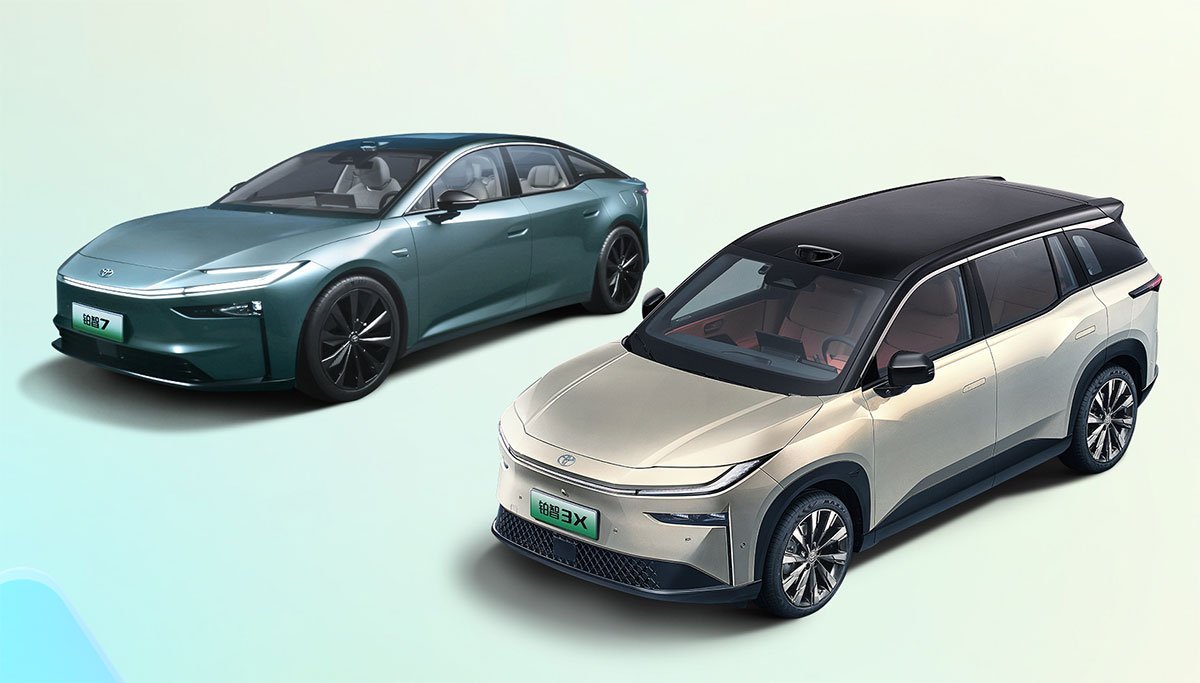
GAC Toyota will appoint local personnel with the deepest understanding of the Chinese market to lead R&D efforts, including new models and facelifts. This will transform Toyota's previous working approach, accelerating the production of better vehicles in China, Toyota said. (Image credit: GAC Toyota) GAC Toyota -- one of Toyota's joint ventures in China -- will transfer decision-making for new vehicle development in China from Japan to China, as the automaker seeks to regain relevance in the world's largest electric vehicle (EV) market. Yoshiaki Konishi, head of Toyota's EV R&D center in China, announced the plan at a technology event hosted by GAC Toyota yesterday, stating that Toyota will implement local R&D tailored to the Chinese market. Toyota will continue to advance its RCE (Regional-Chief Engineer) system, with local personnel who best understand the Chinese market taking the lead in R&D for new models and facelifts. In China's rapidly changing market, Toyota should conduct local R&D independently of global models, Konishi said. This will transform Toyota's previous working methods and accelerate the production of better cars in China, the Japanese automaker said. In recent years, Japanese automakers have begun to be marginalized, with market share being taken by domestic automakers that better understand customer needs. In May, China's new energy vehicle (NEV) retail sales reached 1.02 million units, accounting for 52.9 percent of new vehicle retail sales, according to data from the China Passenger Car Association (CPCA). The penetration rate of NEVs of domestic brands in May in retail sales was 74.6 percent, luxury brands 25.0 percent, while mainstream joint-venture brands only 6.4 percent. Nissan has become one of the first Japanese automotive giants to adjust its strategy in China and has already begun to see results. Nissan's joint venture, Dongfeng Nissan, launched the N7 on April 28, a pure electric sedan developed by a Chinese team, which received over 17,000 orders within 35 days of its launch. For Toyota, it has already seen the benefits of greater localization. The first all-electric model developed by RCE, the bZ3X, sold 15,000 units in its first month on the market, according to GAC Toyota. GAC Toyota launched the bZ3X on March 6, with a starting price of RMB 109,800 ($15,150), making it Toyota's first all-electric SUV priced under RMB 100,000. GAC Toyota's second locally developed model, the bZ7, is expected to launch in the first quarter of 2026. The vehicle will feature Huawei's Harmony cockpit and be equipped with Huawei's DriveONE motor, according to GAC Toyota. The bZ7 will also integrate with Xiaomi's accessory ecosystem, including in-car wireless phone charger, smart walkie-talkies, and high-intensity flashlights. Additionally, Toyota's popular Highlander SUV (sport utility vehicle) and Sienna MPV (multi-purpose vehicle) in China will offer extended-range electric vehicle (EREV) variants, according to GAC Toyota. ($1 = RMB 7.2478) The Toyota bZ5 is the latest comeback by a joint venture automaker in China after the Nissan N7.
Huawei, Xiaomi, Momenta power Toyota's China EV/SDV strategy
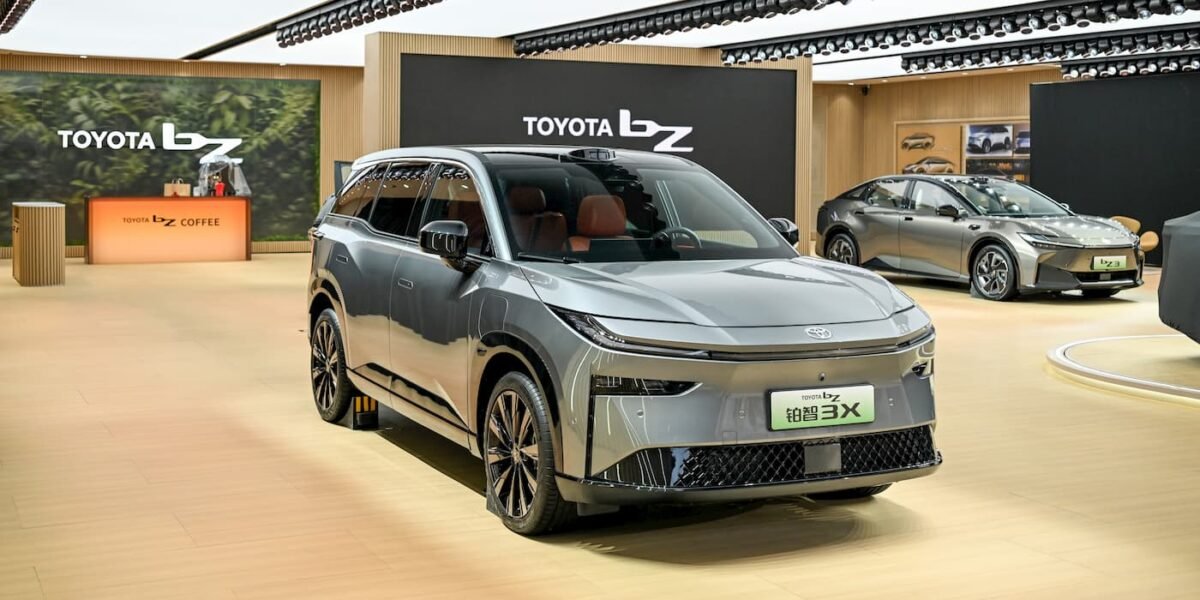
Toyota’s ambitious China R&D 2.0 strategy puts local engineers in charge as the flagship bZ3X EV gains 10,000 orders in its first hour. By Stewart Burnett Toyota has announced partnerships with Huawei, Xiaomi and Momenta to develop its Chinese electric vehicles (EVs), advancing its ongoing strategic shift towards localised technology development in the world’s largest car market. GAC Toyota, the Japanese automaker's local joint venture, unveiled two new energy vehicle platforms and initiated its “China R&D 2.0” strategy at its 2025 Technology Day. Subscribe to Automotive World to continue reading Sign up now and gain unlimited access to our news, analysis, data, and research Subscribe Already a member? Join our LinkedIn Group Let us help you understand the future of mobility "*" indicates required fields
Plastic credits are growing in use and attracting criticism

Trading in plastic credits has emerged as an option to offset businesses’ plastic footprints, but experts say that companies should focus on reducing production of the material before using credit purchases to deal with the plastic pollution crisis. One plastic credit represents one metric ton of waste collected, recycled or upcycled, and can be bought by companies to offset their plastic footprints. India’s plastic credit market is expected to grow 70 percent to $1.7 billion from 2024 to 2030, and Global Market Estimates predicts 48 percent global growth in the credits by 2029. As with carbon credit markets, however, critics are skeptical of this tool’s efficacy to bring systemic, permanent reductions to plastic waste. “I would never argue that plastic credits are the solution to the crisis on their own,” said Sebastian DiGrande, CEO of PCX Markets, which launched in 2021 and has become one of the world’s largest plastic credits marketplaces. “But we do think that credits are an important financing mechanism that will accelerate action downstream and incentivize action upstream.” What is a plastic credit? In 2022, the world generated 268 million metric tons of plastic waste. Eleven percent of that, or about 718,000 jumbo jets by weight, were discarded into the environment. The financing gap to create a circular plastics economy by 2040 is between $426 billion and $1.2 trillion, according to the World Bank. Proponents of credits argue that they address plastic waste today while mobilizing financing for waste infrastructure. Projects that collect plastic waste and meet quality standards can sell credits for each ton they collect. Companies, or individuals, can purchase those credits, funding waste management projects. Online marketplaces such as PCX Markets connect projects with buyers. To date, PCX says, it has facilitated the collection and processing of over 136,000 metric tons of plastic. Projects are usually based in developing nations that have little or no municipal waste collection services and therefore generate more plastic waste pollution. After plastic is collected, what happens to it varies. It might be disposed of in a managed landfill, recycled, upcycled or burned as an energy source. Plastic credit prices are set by project organizers. At PCX, credits sell for an average price of around $200. Cheaper options are generally collection and disposal or burning, while more expensive projects involve upcycling or ocean clean-ups. Other prominent names in the plastic credits market include Verra — a leader in standards-setting in the voluntary carbon market whose methods have attracted scrutiny — and BVRio. “Plastic credits can align financial flows from a range of sources towards high quality plastic waste management projects, particularly in regions that are disproportionately impacted by plastic pollution,” said Komal Sinha, senior director of government and policy engagement at Verra. No cure for plastics pollution Critics dismiss the whole concept. “Plastic credits treat the symptom, waste, rather than the disease, unsustainable production and consumption of single-use plastics,” said Alex Blum, CEO of Applied Bioplastics. “I doubt whether the plastic credit mechanism can contribute meaningfully,” said Sangcheol Moon, plastics researcher at UC Berkeley. “It is not a stable funding mechanism and it can further fragment the governance landscape.” Concerns also emerge at the individual project level. A recent paper by Moon and Neil Tangri, science and policy director at the Global Alliance for Incinerator Alternatives, raises concerns about plastic credits, specifying additionality and permanence issues. The paper argues that some credits “include ongoing waste collection activities that would have occurred regardless of plastic credit incentives,” failing to meet additionality standards. Permanence is another challenge. “Plastic credits are not permanently removing plastic from the environment,” said Tangri. “If plastics go to recycling, which we think is the best possible destination for plastic waste, it gets recycled and within a short time it becomes waste again.” Standards setters such as Verra and PCX try to reconcile these issues by requiring projects to meet additionality requirements, environmental standards and improved worker conditions. “Unless we provide the highest possible level of transparency and trust in what we’re doing, this market will never scale,” said DiGrande. Lack of standards A lack of universal definitions and guidelines, however, remains an obstacle for the industry. “We don’t believe in the effectiveness of plastic credits without a credible, solid, and harmonized global standard,” says a statement on Nestlé’s website. “We believe further research is needed to test the effectiveness of plastic credits,” said a Danone spokesperson. “We also believe that there is a need for standardized methodologies to measure the impact of voluntary initiatives.” Danone’s subsidiary, Danone-AQUA Indonesia, withdrew from a plastic credit partnership last year after community members complained that its alternative fuel plant was releasing toxic smoke. Proponents argue that plastic credits provide communities and workers with steady sources of income, but studies of forest management and soil carbon credit projects “show that worker benefits often don’t materialize,” said Moon. How sustainability leaders approach them “Reduction obviously sits as that first step for us, but we still produced 1.9 million pounds of plastic in 2024,” said Kaley Warner, sustainability manager of Grove Collaborative, a company that produces sustainable household products. “We’re trying to take responsibility for the plastic that doesn’t have a viable alternative yet.” Grove considers itself “plastic neutral” because it recovers an equal amount of plastic through credits as it produces. Meanwhile, upstream efforts led to a 23 percent reduction in Grove’s plastic production from 2023 to 2024. In most countries, plastic waste management programs are voluntary for large companies. However, extended producer responsibility (EPR) regulations are emerging across the world, with governments in Canada, the EU and the U.K. mandating that companies take responsibility for their products after consumer use. In the Philippines — the leading source of ocean plastic pollution in the world — plastic credits are permitted to satisfy EPR requirements. The pros and cons of this approach are being debated in global plastics treaty talks. In the Philippines, new producer responsibility regulations have resulted in more capital being funneled to plastic recycling infrastructure, and the unit
With $25,000 off, is the Jeep Wagoneer S the best EV deal going?
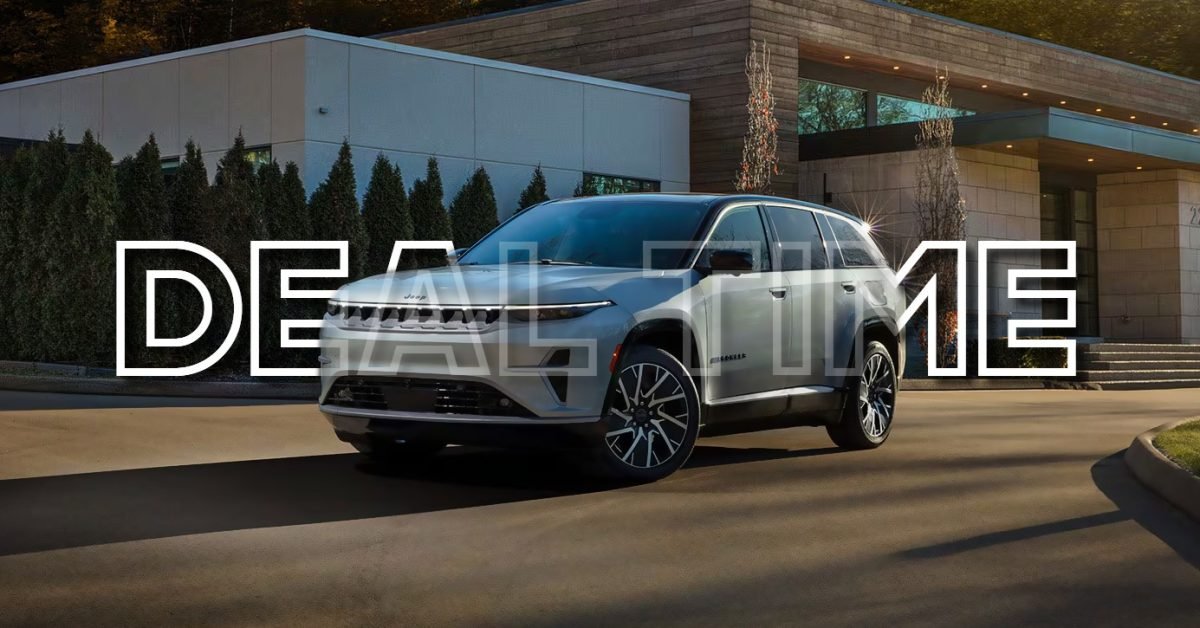
Like a 90s “gifted” kid that was supposed to be a lot of things, the electric Jeep Wagoneer S never really found its place — but with dealers discounting the Jeep brands forward-looking flagship by nearly $25,000, it might be time to give the go-fast Wagoneer S a second look. SKIP THE STORY: get straight to the deals. Whether we’re talking about Mercedes-Benz, Cerberus, Fiat, or even Enzo Ferrari, outsiders have labeled Jeep as a potentially premium brand that could, “if managed properly,” command luxury-level prices all over the globe. That hasn’t happened, and Stellantis is just the latest in a long line of companies to sink massive capital into the brand only to realize that people will not, in fact, spend Mercedes money on a Jeep. That said, the Jeep Wagoneer S is not a bad car (and neither is its totally different, hideously massive, ICE-powered Wagoneer sibling, frankly). Built on the same Stellantis STLA Large vehicle platform that underpins the sporty Charger Daytona EVs, the confusingly-named Wagoneer S packs dual electric motors putting out almost 600 hp. That’s good enough to scoot the ‘ute 0 to 60 mph in a stomach-turning 3.5 seconds and enough, on paper, to convince Stellantis executives that they had developed a real, market-ready alternative to the Tesla Model Y. Advertisement - scroll for more content With the wrong name and a sky-high starting price of $66,995 (not including the $1,795 destination fee), however, that demand didn’t materialize, leaving the Wagoneer S languishing on dealer lots across the country. That could be about to change, however, thanks to big discounts on Wagoneer S being reported at CDJR dealers in several states, according to our friends at the Car Dealership Guy podcast. Jimmy Britt Chrysler Dodge Jeep Ram in Georgia, has a Wagoneer S with an MSRP of $67,590 listed at $43,104 ($24,486 off) In Florida, Taverna Chrysler Dodge Jeep Ram Fiat has a $67,590 Wagoneer S slashed to $43,138 ($24,452 off) Chris Nikel Chrysler Jeep Dodge Ram Fiat in Oklahoma has a Wagoneer S listed for $43,425 ($24,165 off) “Stellantis bet big on electric versions of iconic American brands like Jeep and Dodge, but consumers aren’t buying the premise,” writes CDG’s Marcus Amick. “(Stellantis’ dealer body) is now stuck with expensive EVs that need huge discounts to move, eating into already thin margins while competitors focus on [more] profitable gas-powered vehicles.” All of which is to say: if you’ve found yourself drawn to the Jeep Wagoneer S, but couldn’t quite stomach the $70,000+ window stickers, you might want to check in with your local Jeep dealer and see how you feel about it at a JCPenneys-like 30% off! Jeep Wagoneer S gallery SOURCES | IMAGES: Car Dealership Guy, CarScoops, and CarsDirect. Your personalized solar quotes are easy to compare online and you’ll get access to unbiased Energy Advisors to help you every step of the way. The best part? No one will call you until after you’ve elected to move forward. Get started, hassle-free, by clicking here. FTC: We use income earning auto affiliate links. More.
San José Clean Energy expands Solar Access Program to more than 200 new customers
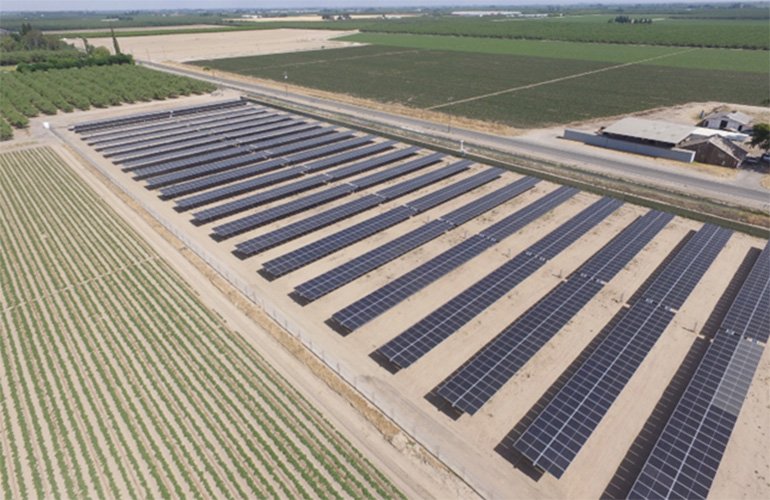
San José Clean Energy (SJCE) has announced a significant expansion of its award-winning Solar Access Program, which provides 100% renewable energy to pollution-burdened, lower-income residents across San José at a 20% discount. While serving over 800 customers since its launch in 2021, the program is set to expand to more than 1,000 customers thanks to a new solar power plant in Merced County and increased energy capacity, funded by the California Public Utilities Commission (CPUC). Residents of the Solar Access program reside in neighborhoods that have historically faced disproportionate environmental burdens, including pollution and limited access to clean air, water, and energy. They are also enrolled in state electric bill assistance programs for low-income households, such as the California Alternate Rates for Energy and the Family Electric Rate Assistance Program. “Expanding access to clean, affordable energy is essential to building a healthier and more equitable San José. Through the Solar Access Program, we’re ensuring that our most pollution-burdened and underserved communities can benefit from clean solar energy. This new solar facility reflects our commitment to sustainability and environmental justice — not just in words, but in action,” said City Manager Jennifer Maguire. SJCE celebrated the ribbon-cutting of West Tambo Clean Power II with developer Renewable America LLC and owner/operator Radial Power last month in Livingston, California, commemorating the 2-MW solar power plant now powering the Solar Access Program. ll. “Every San José resident deserves access to affordable, renewable energy regardless of income or the type of home they live in. Thanks to this new solar power plant and the leadership of San José Clean Energy, we’re not only reducing emissions, but we’re also lowering bills for families who need it most. This is exactly the kind of smart, equitable investment that moves San José forward,” said Mayor Matt Mahan. News item from the City of San José
Charged EVs | Nexperia offers automotive planar Schottky diodes in space-saving CFP2-HP packaging
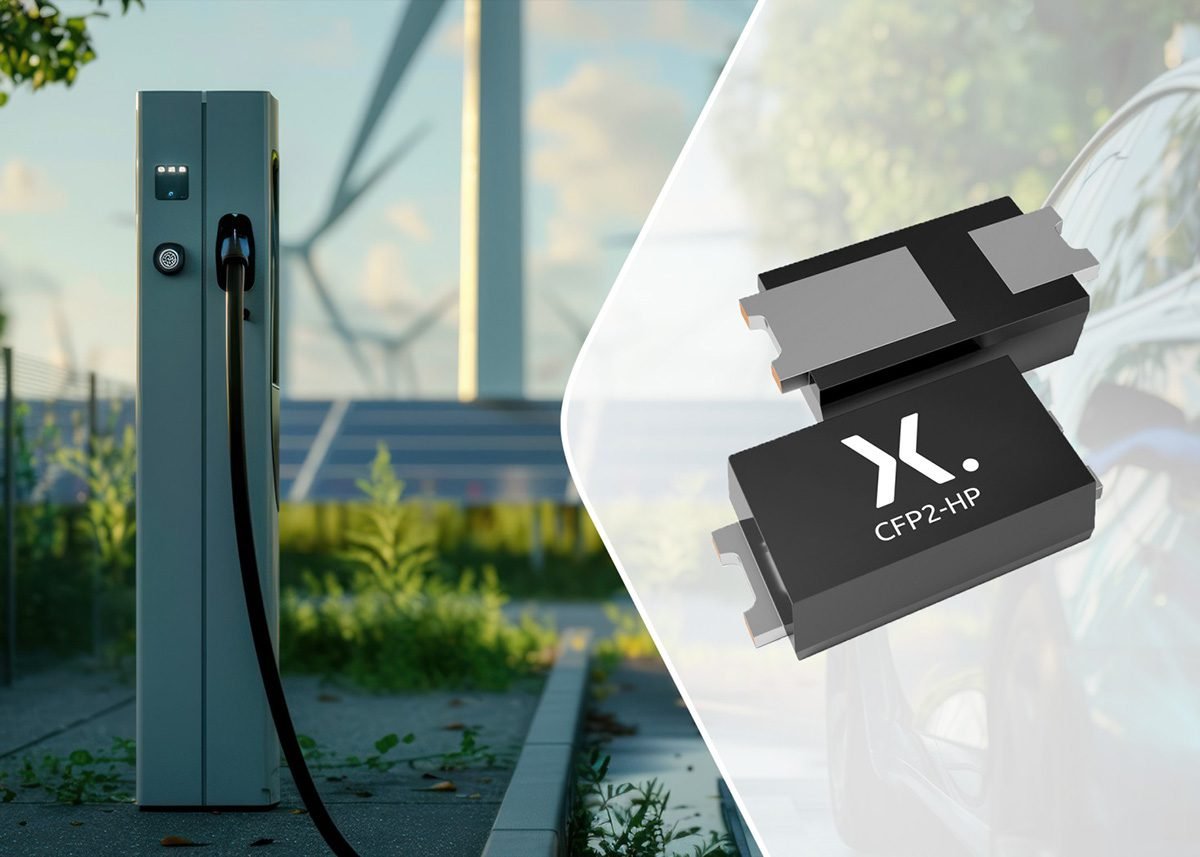
Dutch semiconductor company Nexperia is now offering a portfolio of 16 new low VF optimized planar Schottky diodes in CFP2-HP packaging. The portfolio includes eight industrial (e.g. PMEG6010EXD), as well as eight automotive AEC-Q101 qualified (e.g. PMEG4010EXD-Q) products. The release supports the growing trend for manufacturers to replace devices in SMA/B/C type packaging with smaller footprint CFP-packaged devices, especially in automotive applications, according to the company. The diodes are suitable for use in DC-DC conversion, freewheeling, reverse polarity protection and other applications. For maximum design flexibility, the portfolio extension offers reverse voltages VR(max) ranging from 20 V to 60 V and forward currents IF(average) of 1 A and 2 A. The exposed heatsink of the CFP2-HP enables the highest level of heat dissipation (Ptot) at a small package footprint. The CFP2-HP package dimensions are 2.65 mm x 1.3 mm x 0.68 mm, including leads. Using a copper clip design, the packages aim to meet the challenging demands of efficient and space-saving designs. Nexperia’s Schottky and Recovery Rectifier Diodes use CFP packaging and it will soon extend them to bipolar transistors. Nexperia is also releasing a low IR optimized portfolio of planar Schottky diodes for automotive and industrial applications. “As the industry transitions to multi-layer PCBs, a trend driven by the increasing popularity of high-performance microcontrollers, packaging becomes a crucial part of the thermal system,” said Frank Matschullat, Product Group Manager Power Bipolar Discretes at Nexperia. “Modern CFP packaging technology, designed for multilayer PCBs, offers equal electrical performance on a smaller footprint, reducing part and system costs.” Source: Nexperia
This Legendary Hot Hatchback Returns As An EV
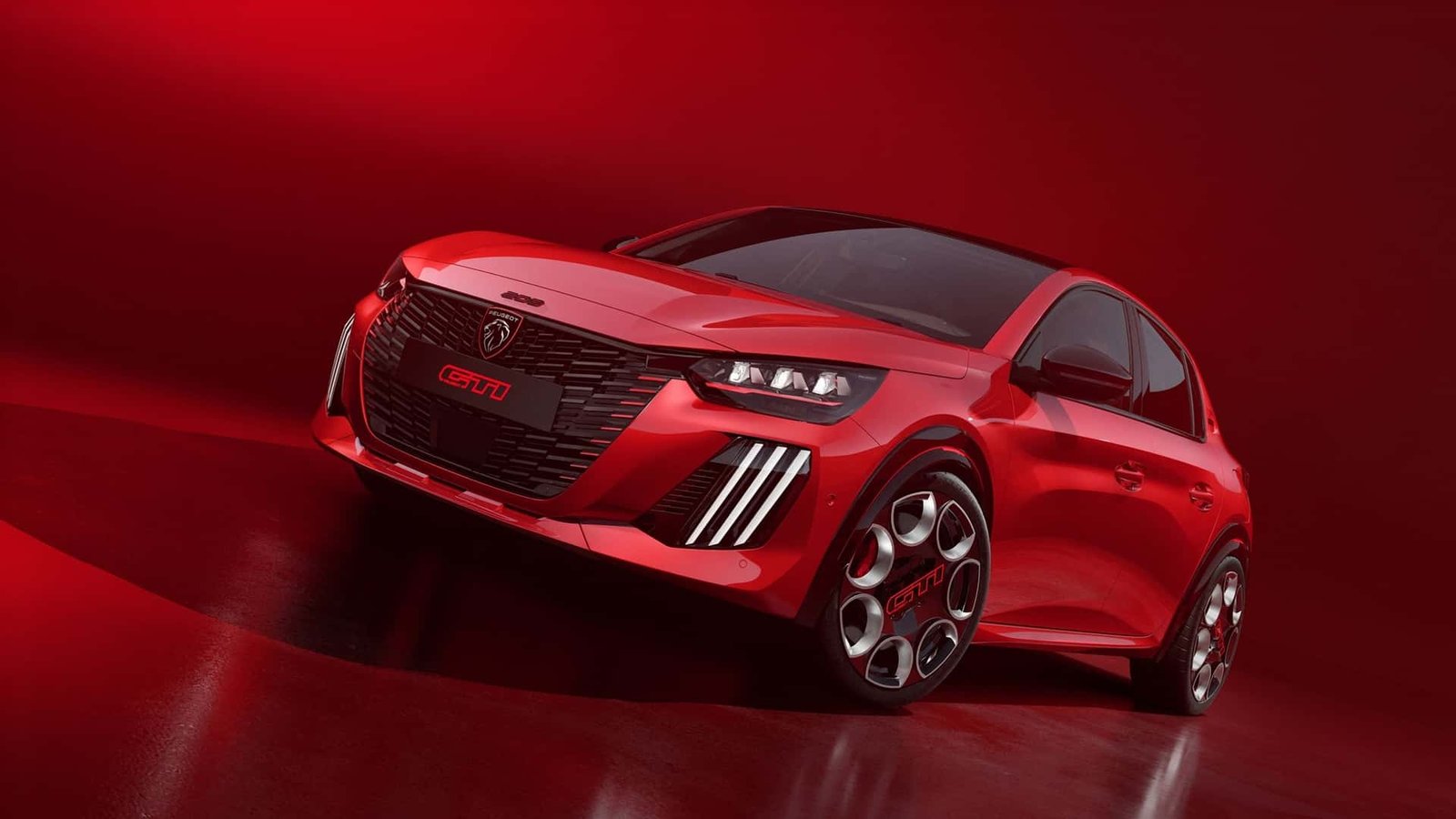
When they think about the famous 205 GTI, Peugeot fans still lick their chops even today. But for many years, the French automaker had refrained from using the high-performance nameplate. Now it's making a comeback in the form of an electric hot hatchback, and fans should be excited. The new Peugeot 208 E-GTi was unveiled during the 24 Hours of Le Mans. It is the first 100% electric GTi. Or as the manufacturer puts it: "The E-208 GTi embodies the spirit of the classic GTi in a contemporary, all-electric form, taking the GTi experience to a new level." Photo by: Peugeot Forty years ago, Peugeot made automotive history with the introduction of the 205 GTi. In its 1.6-liter version (1984) and later in the 1.9-liter version (1986), the 205 GTi paved the way for a new hot hatch concept. Over four decades, the GTi label has shaped Peugeot's history with several production models known for their performance and dynamic qualities—306, 206 (UK), 207 (UK), 205—and the history of motorsports with numerous victories, especially in rallies and rally raids. Photo by: Peugeot Photo by: Peugeot Photo by: Peugeot Like all GTi models over the last four decades, the E-208 GTi is characterized by its strong road presence—lower and wider than its more pedestrian counterpart. The Peugeot E-208 GTi features an exclusive, bright red body color, a nod to the iconic red paintwork popular with the first 205 GTi. The bright red floor, floor mats, and seat belts create a sporty atmosphere in the interior. Photo by: Peugeot The design of the specific front seats with integrated headrests is a tribute to the seat design of the 205 GTi 1.9, with a central red decorative stripe stretching across the seat and backrest. The red mesh on the right side of the seats is reminiscent of that in the 205 GTi 1.6. The compact steering wheel is adorned with perforated red leather in combination with Alcantara and a central red emblem. Alcantara is also found on the sides of the center console. On the powertrain side, there is no real surprise. The key figures are also found in the electric Alfa Romeo Junior Veloce and the Abarth 600e, to name just two examples. The Peugeot E-208 GTi is equipped with the M4+ electric motor, delivering 206 kW (280 hp) and 345 Nm (255 lb-ft) of torque. The result: acceleration from 0 to 100 km/h in 5.7 seconds and a top speed of 180 km/h. Photo by: Peugeot The 54 kWh CATL-sourced electric battery benefits from optimized management to protect it during sporty use and a specific cooling system adapted to the high performance. This gives the GTi version a range of 350 km (217 miles) in Europe's WLTP cycle, which is subject to final certification. The E-208 GTi can be charged in four hours and 40 minutes using a 7.4 kW Level 2 charger. It can also be charged from 20% to 80% in less than 30 minutes using a 100 kW charging station. Peugeot 208 GTi 2025, the interiors Photo by: Peugeot According to Peugeot, the E-208 GTi offers the best power-to-weight ratio in its segment. The chassis, widened by 56 mm at the front and 27 mm at the rear, and the body lowered by 30 mm, together with the springs and shock absorbers with special hydraulic stops, the Michelin Pilot Sport Cup 2 tires, and the rear stabilizer bar, offer an ideal compromise between sporty efficiency and everyday comfort. The ESP system of the E-208 GTi has a special Sport mode that switches off the driver assistance systems to optimize the driving experience, like on the racetrack. The steering sensitivity of the E-208 GTi has been specially calibrated to provide particularly direct response during dynamic driving. Together with the special compact steering wheel, it should contribute to a unique driving experience. The E-208 GTi's price and launch date haven’t been revealed yet, but it's expected to be on sale before the end of 2025.
Xpeng, BP Pulse open their first jointly built charging station
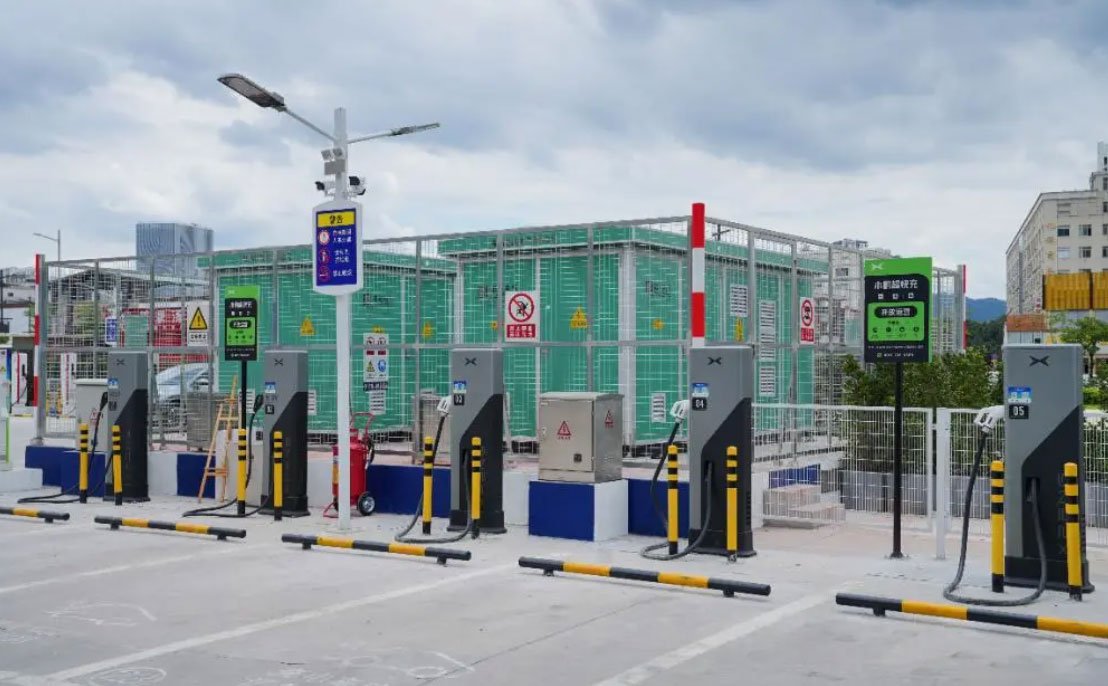
Xpeng and BP Pulse reached a cooperation agreement in January to share their charging networks. They will also accelerate the exploration of overseas collaborations. (Image credit: Xpeng) Xpeng (NYSE: XPEV) and BP Pulse, the EV charging arm of British oil giant BP, have opened their first jointly built charging station following their partnership agreement in January to share their charging networks. The station is located in Guangzhou, where Xpeng is headquartered, and officially opened on June 11, the electric vehicle (EV) maker announced today. It features 30 charging stations, including 50 charging guns, with a maximum charging power of 480 kW. Xpeng and BP Pulse will soon open three more joint charging stations in Beijing, Guangzhou, and Shenzhen, the EV maker said. The two companies will further refine their charging network in China based on the experience from the first joint station, Xpeng said. Additionally, they will accelerate exploration of overseas collaborations, according to Xpeng's announcement. Xpeng announced on January 14 that it had signed a Memorandum of Understanding (MOU) with BP Pulse to mutually open their charging networks. Customers of both companies can access a charging network spanning 420 cities in China with over 30,000 charging terminals, Xpeng said at the time. The two parties will establish pilot projects in key economic hub cities in China, Xpeng said in January. Xpeng is one of the EV manufacturers that has built its own charging network. To date, it operates over 2,270 self-operated charging stations in China, providing 12,200 charging ports. In addition to its partnership with BP Pulse, Xpeng announced on January 6 that it had signed a MOU with Volkswagen to explore strategic cooperation on supercharging network in China. Xpeng and Volkswagen Group China would jointly build one of China's largest supercharging networks, the EV maker said in an announcement at the time. Volkswagen is a supporter of Xpeng, having invested $700 million in it in July 2023 and jointly developing EVs. The launch of the new P7 in China is expected to be in July-August, targeting the RMB 300,000 ($41,600) market.
Ford faces daily struggle with rare earth magnet supplies

Ford boss Jim Farley described a “hand-to-mouth” supply situation after Explorer SUV production was halted at Chicago plant last month. By Stewart Burnett Ford Motor continues to reckon with severe supply constraints for rare earth magnets essential to EV production, forcing some temporary factory closures. In a new interview with Bloomberg, Chief Executive Jim Farley described the situation as critical, while ongoing Chinese export restrictions continue to dramatically affect Western manufacturers. Subscribe to Automotive World to continue reading Sign up now and gain unlimited access to our news, analysis, data, and research Subscribe Already a member? Join our LinkedIn Group Let us help you understand the future of mobility "*" indicates required fields
5 ways to sharpen your company's sustainability strategy

The opinions expressed here by Trellis expert contributors are their own, not those of Trellis. There’s a sentiment I keep hearing over and over these days: “It can be hard to make sense of what’s happening around us.” This notion isn’t new — we’re always looking for ways to interact with an unpredictable world. To help sustainability professionals navigate volatility and turbulence, my colleagues and I at Forum for the Future, a sustainability nonprofit, use what are called applied futures to help create concrete, practical ways forward. Applied futures 101 The central premise of applied futures is that the future doesn’t simply happen to us. It’s based on the decisions and actions we take today. By understanding how the world is changing, we can work out what needs to happen to create the future we want. One of the most common tools we use at Forum for the Future is trajectories. These are pathways we see emerging at any moment in time in the operating context for an organization. The trajectories we use the most were created in 2023 by drawing on insights from our Futures Centre and interviews with business leaders, activists and entrepreneurs. Each trajectory was underpinned by a particular mindset or approach of what could happen. Profit supreme This is a mindset that resists or opts out of change, with a focus on maximizing shareholder value and profits. In many ways Profit Supreme has intensified and become more widespread in recent years. The anti-ESG rhetoric of two years ago has evolved into lawsuits and investor motions. In some parts of the world, the energy transition has been deliberately halted in order to squeeze short-term profits from oil and gas. Response: If Profit Supreme is dominant, contextualize everything through the business case lens. Dip into the vast bank of data points that demonstrate the business case, such as data showing that products featuring sustainable attributes increase revenues by up to 25 percent over other products. Use the framing of resilience and value creation. Shallow gestures This trajectory is characterized by incremental measures that fail to deliver change at scale and pace. As with Profit Supreme, Shallow Gestures has also become more widespread across multiple geographies. This is in part due to the crowding out of sustainability issues by a whole host of short-term pressures, from economic uncertainty, supply chain disruption and legislative uncertainty. For many organizations, bandwidth and resources are diverted away from sustainability (which is to miss the point that sustainability can help deal with these pressures). In some cases, this diversion is simply a function of a real commitment to transformation not actually being there in the first place. Response: Identify actions that don’t fundamentally impact the underlying business model, but shift it by, for example, adopting targets around sustainable products that can be delivered to market with the same, slightly-tweaked business model. Tech optimism This trajectory, in which technology is viewed as a solution to all problems, but an over-reliance on it neglects the need for shifts in social norms, acceptance and behavior change, continues to flourish. In the U.K., for example, scientists are experimenting with outdoor geoengineering as part of a £50m ($67 million) government-funded program. If successful, it has the potential to temporarily reduce the Earth’s surface temperatures. In the UAE, cloud seeding is being used to increase the amount of rain produced by clouds and help mitigate droughts. And in Brazil, the city of Pindamonhangaba has deployed a wide-reaching network of smart sensors that automatically trigger alerts when detecting rising water levels or dangerous temperature spikes. The sensors have already helped save countless lives as well as over a million reais ($174,000) in disaster-related costs. Response: Start with the innovation of a new digital tool, for example, that happens to be less carbon intensive. Or explore how AI could help make operations more energy efficient. Courage to transform Where businesses adopt a transformative mindset, working in partnership with governments, civil society, investors, experimenting with new models and practices, delivering lasting change. Despite a well-funded and sophisticated counter narrative, Courage to Transform is still visible, too. A recent PwC report found that 37 percent of companies are increasing their sustainability ambitions, compared to only 16 percent decelerating their efforts. Despite pessimistic news stories, the report suggests there’s hope, with 80 percent of companies on track to meet their climate goals. There’s also encouraging transformation happening in multilateral settings, with Malaysia supporting Brazil’s BRICS chairmanship priorities, China investing 6.8 trillion yuan ($940 billion) in clean energy last year and Brazil chairing the G20 in 2024 and hosting COP30 in 2025. Response: Identify opportunities to move faster. This could be through innovation, new collaborations and accessing new forms of capital through sustainable finance solutions. All trajectories are in play — so what? The four trajectories can help companies identify the dominant path that is defining their operating context and the dominant mindset driving it. In turn, this can inform what approach and what language companies can use to keep moving ahead. Wherever you are, there are five shifts you can make, no matter the trajectory: Shift the narrative. From complex jargon to simple, relatable words that remind people why sustainability matters. Focus on nature, health benefits, community well being. Shift the words. From “either/or” to “and.” Polarization creates fragmentation and makes it hard to unify movements. Where massive divides exist, either across political lines, generational lines or within communities, it’s hard to see how solutions will scale unless we stop saying net zero is an either/or. It’s a pathway to a thriving and prosperous future — and great for business. Shift the solutions. It’s easy to criticize solutions, particularly when they may not be making progress at the pace we envision. But incremental steps towards a goal can spur change so don’t be afraid to start small. Shift the place. Instead of touting abstract solutions, provide ones that can be applied in cities and that can work at a local level. This is where sustainability gets