Chery to be supplied with 46mm cylindrical cells from LG Energy Solution
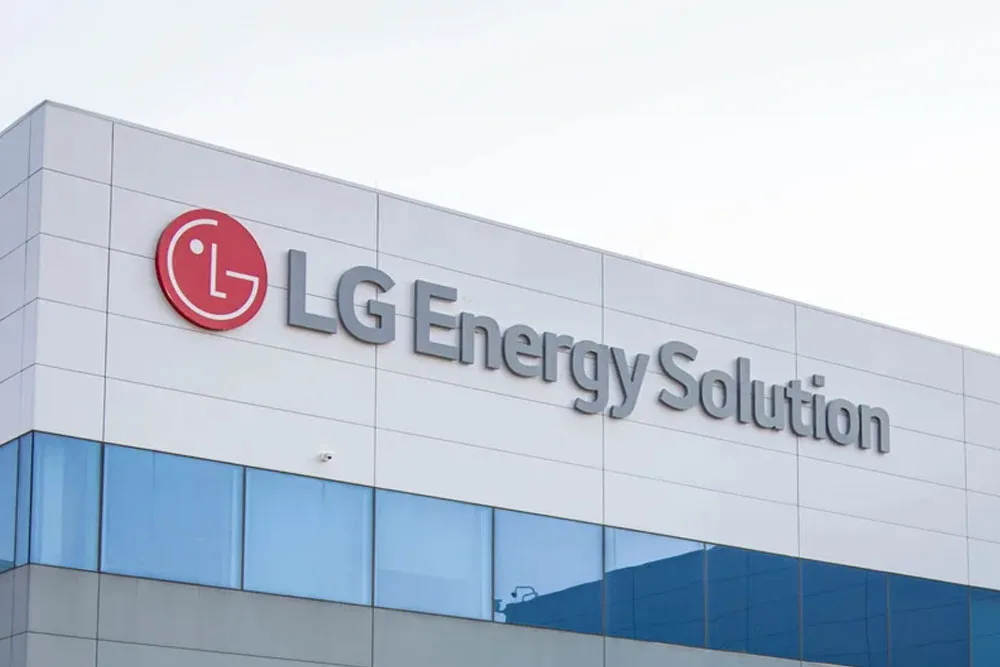
The Chinese car manufacturer Chery uses large cylindrical cells from the Korean supplier LG Energy Solution (LGES). Over the next six years, LGES will supply Chery Automobile with a total of 8 GWh of its cylindrical battery cells with a diameter of 46 millimetres – enough for around 120,000 electric cars. LG Energy Solution (LGES) officially announced the deal with Chery, stating that deliveries have been agreed for six years and are scheduled to begin in2026. The NMC batteries with LGES cylindrical cells will be installed in Chery’s ‘electric flagship models’. The battery maker says the agreed quantity is sufficient for around 120,000 electric vehicles. Although an order value has not been officially announced, industry observers estimate the order value at around one trillion won (around €640 million euros), according to South Korean media. The two companies are also said to be planning to extend their partnership to other electric models from the Chery Group. Kim Dong-myung, CEO of LG Energy Solution, said: “This deal marks a pivotal step in scaling up global adoption of our new 46-series batteries and securing a dominant market leadership.” The South Korean company has been mass-producing cylindrical cells with this diameter since last year. The current production at the Ochang plant in South Korea is to be supplemented by another production facility in Queen Creek, Arizona, in the USA, in the first half of 2026. The main customer for these cells produced in the United States is likely to be Tesla. So far, however, only Rivian has been officially confirmed as a US customer. yna.co.kr, koreajoongangdaily.joins.com, koreaherald.com
Haven Energy and California utility partner to provide free BESS
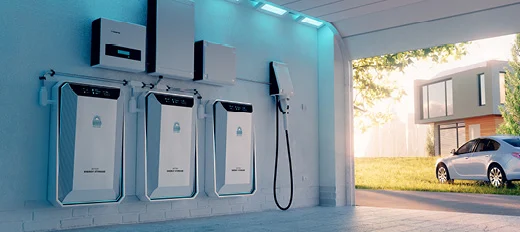
Haven Energy and California utility partner to provide free BESS - Energy-Storage.News Skip to content
xAI supercomputer faces lawsuit over air pollution concerns
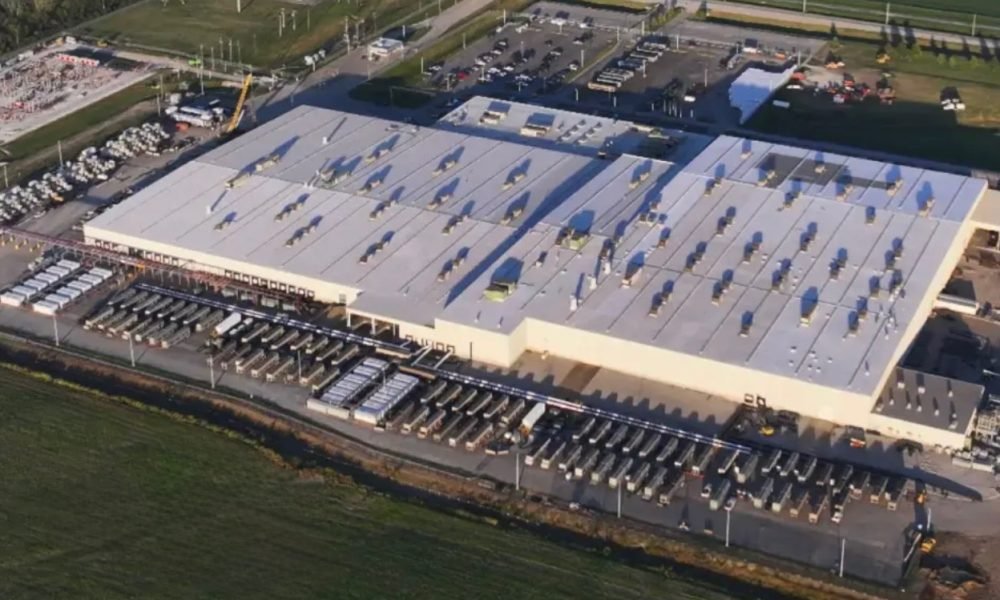
The xAI supercomputer, Colossus, faces a potential lawsuit from the NAACP and the Southern Environmental Law Center over pollution concerns tied to its gas-powered turbines. The facility has sparked debate over its environmental impact versus economic benefits. The xAI data center has been operational since last year. The company used pollution-emitting turbines without an air permit, citing a 364-day exemption. Southern Environmental Law Center attorney Patrick Anderson disputed xAI’s exemption, stating: “there is no such exemption for turbines — and that regardless, it has now been more than 364 days.” The groups issued a 60-day notice of intent to sue under the Clean Air Act, challenging xAI’s permit application under review by the Shelby County Health Department. According to AP, critics argue the turbines emit smog, carbon dioxide, nitrogen oxides, and formaldehyde, worsening health risks in an area with cancer rates four times the national average. “The permit itself says emissions from the site ‘will be an area source for hazardous air pollutants,’” the Southern Environmental Law Center noted, alleging Clean Air Act violations. Opponents claim xAI installed up to 35 turbines—exceeding the 15 requested—without community oversight, straining Memphis’s power grid. xAI responded: “The temporary power generation units are operating in compliance with all applicable laws.” The company highlighted its economic contributions, including billions in investments, millions in taxes, and hundreds of jobs. At an April community meeting, xAI’s Brent Mayo underscored that the “tax revenue will support vital programs like public safety, health, human services, education, firefighters, police, parks, and so much more.” He projected that xAI would generate over $100 million in tax revenue by next year. The company is also investing $35 million in a power substation and $80 million in a water recycling plant. Additionally, xAI is transitioning to sustainable power, particularly Tesla Megapacks. It is actively working on demobilizing the gas turbines. “The temporary natural gas turbines that were being used to power the [xAI’s] Phase I GPUs prior to grid connection are now being demobilized and will be removed from the site over the next two months,” shared the Greater Memphis Chamber. xAI brought Tesla Megapack batteries and a 150-megawatt substation online earlier this year. Despite xAI’s expansion to a second 1-million-square-foot site, the lawsuit threat underscores tensions between innovation and environmental justice.
Canadian city of Brampton to electrify bus fleet in $4bn deal

Brampton, Ontario will partner with fleet electrification firm Zenobē in leading a $4bn CAD overhaul of its public buses. The collaboration aims to deploy 1,000 electric buses in the area to replace the city’s existing diesel fleet. Zenobē (a UK EV fleet and battery storage provider) and the City of Brampton will essentially lead a group of commercial partners (including vehicle OEMs) from the UK and Canada through the first phase of a planned 10-year electrification initiative. Brampton is Greater Toronto’s largest suburb, and the new electric fleet is expected to support existing routes and a passenger base of around 40 million people annually. The partnership will see the city procure electric buses from Canadian supplies with support on planning, software, supply chain and capital from Zenobē. Additionally, a number of UK stakeholders and local electrical and civil engineering teams will provide technical expertise for the roll-out of the vehicles. Details on infrastructure and vehicles are yet to be confirmed, but the first phase of the project is anticipated to go ahead in early 2027. Calling it “one of the largest zero-emission bus programs in North America.” Brampton Mayor Patrick Brown said, “This historic investment marks a turning point for Brampton and for public transit across Canada. By transitioning to a fully electric bus fleet, we’re not only reducing emissions — we’re creating jobs, improving air quality, and building a cleaner, healthier future for our residents.” Steven Meersman, Co-Founder and Director, Zenobē, added: “We bring considerable experience working with local and federal public sector partners to enable and accelerate their transition to electric fleets. Our customized match-funding options, combined with the experience from delivering over 120 electric depots globally, lowers costs and de-risks the inevitable path to zero-emission fleets. We are delighted to grow our presence in Canada, and with Brampton, as we jointly achieve their financial and ecological objectives. We expect this will serve as a model for other projects currently under development.” Zenobē currently retains around a 25 per cent market share of the UK’s electric bus sector, and is the largest owner and operator of electric buses in the UK, Australia and New Zealand. Last year, the company secured millions in debt funding to support the rollout of electric buses across the UK, as well as to develop battery storage projects in North America and Australia. prnewswire.com
Scale Microgrids secures US$275 million for 140MW US projects- Energy-Storage.News
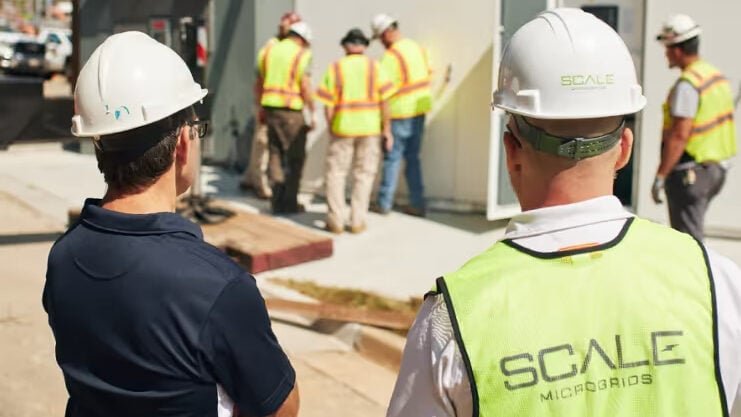
Scale Microgrids secures US$275 million for 140MW US projects- Energy-Storage.News Skip to content
Elon Musk slams Bloomberg’s shocking xAI cash burn claims

The xAI supercomputer, Colossus, faces a potential lawsuit from the NAACP and the Southern Environmental Law Center over pollution concerns tied to its gas-powered turbines. The facility has sparked debate over its environmental impact versus economic benefits. The xAI data center has been operational since last year. The company used pollution-emitting turbines without an air permit, citing a 364-day exemption. Southern Environmental Law Center attorney Patrick Anderson disputed xAI’s exemption, stating: “there is no such exemption for turbines — and that regardless, it has now been more than 364 days.” The groups issued a 60-day notice of intent to sue under the Clean Air Act, challenging xAI’s permit application under review by the Shelby County Health Department. According to AP, critics argue the turbines emit smog, carbon dioxide, nitrogen oxides, and formaldehyde, worsening health risks in an area with cancer rates four times the national average. “The permit itself says emissions from the site ‘will be an area source for hazardous air pollutants,’” the Southern Environmental Law Center noted, alleging Clean Air Act violations. Opponents claim xAI installed up to 35 turbines—exceeding the 15 requested—without community oversight, straining Memphis’s power grid. xAI responded: “The temporary power generation units are operating in compliance with all applicable laws.” The company highlighted its economic contributions, including billions in investments, millions in taxes, and hundreds of jobs. At an April community meeting, xAI’s Brent Mayo underscored that the “tax revenue will support vital programs like public safety, health, human services, education, firefighters, police, parks, and so much more.” He projected that xAI would generate over $100 million in tax revenue by next year. The company is also investing $35 million in a power substation and $80 million in a water recycling plant. Additionally, xAI is transitioning to sustainable power, particularly Tesla Megapacks. It is actively working on demobilizing the gas turbines. “The temporary natural gas turbines that were being used to power the [xAI’s] Phase I GPUs prior to grid connection are now being demobilized and will be removed from the site over the next two months,” shared the Greater Memphis Chamber. xAI brought Tesla Megapack batteries and a 150-megawatt substation online earlier this year. Despite xAI’s expansion to a second 1-million-square-foot site, the lawsuit threat underscores tensions between innovation and environmental justice.
VoltAero presents production version of Cassio 330 electric aircraft

French startup VoltAero has presented the series version of the Cassio 330, a hybrid-electric regional aircraft designed to enable low-emission traffic at existing airports. The aircraft notably breaks away from other air taxi concepts via its conventional take-off and landing method. At the Paris Air Show 2025 in Le Bourget this week, the French aviation company VoltAero presented the series configuration of its hybrid-electric Cassio 330 regional aircraft. With this, the company moves one step closer to producing a sustainable commercial aircraft that operates on conventional runways and is not designed as an eVTOL or air taxi. Technical development and configuration changes The Cassio 330 has undergone considerable further development leading up to this production model, particularly with regards to certification by the European Aviation Safety Agency (EASA). By adapting it to the CS-23 standards for normal aircraft, it became possible to reduce the aircraft’s complexity and improve certifiability. The original parallel hybrid propulsion system, in which an electric motor and an internal combustion engine jointly drive a propeller, has been replaced by a series hybrid system. In the new configuration, two Safran ENGINeUS electric motors drive the engine as ‘pushers’ mounted to the rear of the fuselage. An additional thermal motor acts as a range extender by recharging the batteries during cruise flight. In electric mode, the Cassio 330 flies quietly and with low emissions – particularly during taxi, take-off and initial climb. This combination of electric and combustion propulsion enables a significant reduction in emissions and noise – particularly advantageous for regional airports. Another striking design feature of the new series configuration is the switch from a double boom tail to a classic T-tail. This increases structural safety – especially in the event of propeller damage. Safety, redundancy and application diversity The aircraft offers a high level of redundancy to boost operational safety. This includes two independent battery units and a so-called ‘Half-Engine-Inoperative’ (HEI) feature ensuring safe operation even in the event of a partial engine failure. Inside, the Cassio 330 offers space for a pilot and up to five passengers. The cabin remains modular and can also be adapted for cargo transport, medical flights or public service flights. A spacious entrance also provides access for people with limited mobility. Series production of the Cassio 330 is to take place in a newly built 2400-sq m production facility in Saint Agnant in the Nouvelle-Aquitaine region of France. The plant, which opened in November 2024, is designed for annual production of up to 150 aircraft. In the future, VoltAero hopes to build additional production facilities in other regions and markets. VoltAero: background and objectives Founded in 2017, VoltAero is headquartered in France and led by former Airbus CTO Jean Botti, who acts as both CTO and CEO of VoltAero. The company is supported by a combination of public funding (such as Safran) and venture capital. VoltAero’s goal is to develop a new generation of electric and hybrid aircraft that are both environmentally and economically viable. Besides the 330, VoltAero is working on an entire family of aircraft under the Cassio name, including larger models such as the Cassio 480 and Cassio 600. All versions are based on the same basic principle: sustainable, quiet regional flight with electric support and practical applicability to existing aviation infrastructure – a realistically, technologically achievable step towards the decarbonisation of aviation. voltaero.com
Ilmatar, Nuveen inaugurate 30MW wind co-located BESS in Finland
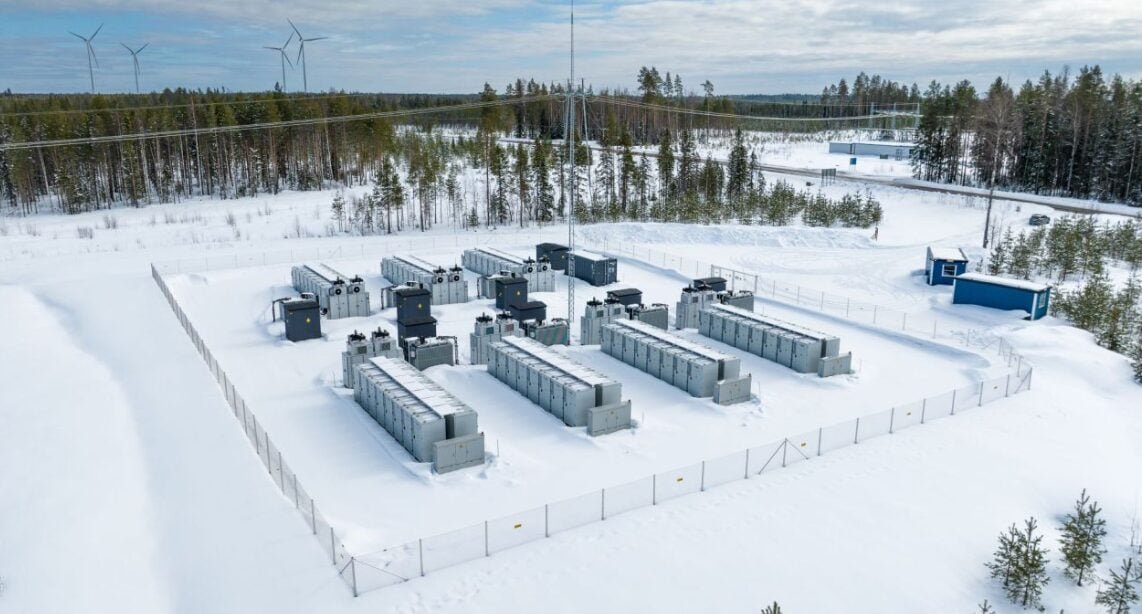
Ilmatar, Nuveen inaugurate 30MW wind co-located BESS in Finland - Energy-Storage.News Skip to content
SpaceX President meets India Minister after Starlink approval

SpaceX is preparing for a new launch date for the Ax-4 mission to the International Space Station (ISS). SpaceX, Axiom Space, and NASA addressed recent technical challenges and announced a new launch date of no earlier than Thursday, June 19, for the Ax-4 mission. The delay from June 12 allowed teams to assess repairs to small leaks in the ISS’s Zvezda service module. NASA and Roscosmos have been monitoring leaks in the Zvezda module’s aft (back) segment for years. However, stable pressure could also result from air flowing across the hatch seal from the central station. As NASA and its partners adapt launch schedules to ensure station safety, adjustments are routine. “Following the most recent repair, pressure in the transfer tunnel has been stable,” a source noted, suggesting the leaks may be sealed. “By changing pressure in the transfer tunnel and monitoring over time, teams are evaluating the condition of the transfer tunnel and the hatch seal between the space station and the back of Zvezda,” the source added. SpaceX has also resolved a liquid oxygen leak found during post-static fire inspections of the Falcon 9 rocket, completing a wet dress rehearsal to confirm readiness. The Ax-4 mission is Axiom Space’s fourth private astronaut trip to the ISS. It will launch from NASA’s Kennedy Space Center in Florida on a Falcon 9 rocket with a new Crew Dragon capsule. “This is the first flight for this Dragon capsule, and it’s carrying an international crew—a perfect debut. We’ve upgraded storage, propulsion components, and the seat lash design for improved reliability and reuse,” said William Gerstenmaier, SpaceX’s vice president of build and flight reliability. The Ax-4 mission crew is led by Peggy Whitson, Axiom Space’s director of human spaceflight and former NASA astronaut. The Ax-4 crew includes ISRO astronaut Shubhanshu Shukla as pilot, alongside mission specialists Sławosz Uznański-Wiśniewski from Poland and Tibor Kapu from Hungary. The international team underscores Axiom’s commitment to global collaboration. The Ax-4 mission will advance scientific research during its ISS stay, supporting Axiom’s goal of building a commercial space station. As teams finalize preparations, the mission’s updated launch date and technical resolutions position it to strengthen private space exploration’s role in advancing space-based innovation.
Electric wheel loader works below Munich’s historic city center

Construction equipment manufacturer Volvo Construction Equipment (Volvo CE) has released information on the first use of its all-electric L120 Electric large wheel loader in Europe. The electric construction vehicle is being used in Munich to build an underground train station beneath the historic German city centre. The L120 Electric is the first electric wheel loader to be launched on the European market with a lifting capacity of 6 tons. The Volvo construction vehicle is operating under exceptional conditions. A connecting tunnel to the existing subway at Munich’s main city square, Marienplatz, is currently being dug at a depth of 27 meters, under compressed air to prevent groundwater from seeping in. Reinhold Boiger, Senior Site Manager Tunnelling of ARGE Marienhof, explains: “Nobody is even allowed in the pressurised area without medical clearance. Only electrically powered equipment may be used under these conditions. Any diesel machine would be an incalculable risk.” The vehicle, which weighs over 20 tons, was brought down by crane with millimetre precision, through a tightly timed logistical bottleneck in the middle of Munich’s historic city centre. “The challenge was clear: a wheel loader that runs emission-free, doesn’t need any cables and delivers enough power – underground and under pressure,” says Jascha Henjes, Key Account Manager at Volvo CE. “This is not a standard construction site. You need special solutions here, and we have delivered them with the L120 Electric.” The L120 Electric matches the powerful performance of its diesel counterpart and offers up to eight hours of battery operation depending on the application. The electric wheel loader transports excavated material from the tunnel head to the skip for transport. The electric motor means the vehicle can operate quietly in the middle of the city, and the lack of emissions eliminates the need for air filtration. An additional improvement on diesel construction vehicles is that the electrically powered vehicle also provides smoother and quieter operation for workers on the site. The benefits of electric vehicles for underground work have long since been discovered by mining companies. Emissions underground provide obvious drawbacks in enclosed spaces for those working at the site. volvoce.com
Long-duration: South Australia opens consultation ahead of tender

Long-duration: South Australia opens consultation ahead of tender - Energy-Storage.News Skip to content
Tesla dominates Cars.com's Made in America Index with clean sweep

Tesla has dominated the Cars.com Made-in-America Index with a clean sweep of the top four spots. All four Tesla vehicles that were eligible for the analysis placed in the top four. The Model 3 overtook the Model Y for first place this year. The all-electric crossover was first in 2024, but the Model 3 managed to overtake its sibling vehicle to claim the top spot in 2025. The Model Y took second, while the Model S took third, and the Model X took fourth. This is an improvement from last year, as the Model Y took first, but the Model S and Model X placed fourth and ninth, respectively. The Model 3 was not in the Top 10 in 2024. 🚨 BREAKING: American-made Index for 2025 is here, and Tesla has swept the TOP FOUR spots with the Model 3 and Model Y leading the way. The Model S and Model X follow. pic.twitter.com/7PRepTHPBe — TESLARATI (@Teslarati) June 17, 2025 “Tesla continues to lead, claiming the top four spots and showcasing its commitment to domestic production. About 25% of the more than 400 vehicles on sale in the U.S. made this year’s AMI, and whether a vehicle is No. 1 or No.99, it contributes to the U.S. economy,” Patrick Masterson, lead researcher for the program, said. More than 400 vehicles were analyzed for this year’s study, with Cars.com officially ranking 117 of them. There were two other EVs in the Top 10, as the Kia EV6 took sixth place, and the Volkswagen ID.4 finished in tenth. This year’s study reflected major geographic and strategic shifts across the automotive industry. Of the 117 vehicles ranked in the program, they were produced at 36 domestic factories, leaving only 11 total factories that did not yield a car on the list. There are 47 assembly plants in operation in the U.S. However, there still has not been a vehicle to quite reach the 100 percent domestic parts content, something that is extremely elusive. Masterson says the global supply chain is still extremely crucial to even the most American-built cars on the market. The average domestic parts content of the Top 10 cars was 83.4 percent in 2006, but that number has shrunk to 70.3 percent in this year’s rankings. Some might wonder where cars like the Tesla Cybertruck or Rivian R1T are on the list. However, these vehicles did not qualify because the study only considers cars under a gross weight of 8,500 pounds.
German PEM project “CellLab” aims to improve battery production

A new project in Germany aims to significantly improve the quality of manufacturing processes for automotive batteries. The Chair of Production Engineering of E-Mobility Components (PEM) at RWTH Aachen University is launching a new research program called “CellLab”. The “CellLab” project will focus on the link between production processes and battery performance. The aim is to establish a modern analytics infrastructure that allows precise insights into the entire production chain and sets new standards in quality assurance. The project will run through till March 2028. “Small and medium-sized industrial companies often lack the resources to set up their own analytics infrastructure for battery production research, which prevents innovations where they would be perfectly possible,” says PEM Director Professor Achim Kampker. The project should enable SMEs that do not have sufficient capital for these kinds of analytics tools to benefit from the project’s results. Such firms will be able to access laboratory data and analyses and use this information to optimise their own production processes.“With CellLab, we are creating the conditions for data-driven innovations in battery production,” explains Kampker. Funded by the state of North Rhine-Westphalia, a laboratory will be set up to ensure the reproducible and safe use of state-of-the-art measuring instruments. This new laboratory will be integrated into the existing “CellFab” research platform, an industry-oriented, prototype production line for battery cells. CellFab already covers the entire process chain from electrode production to cell finalisation. This infrastructure is now being expanded to include highly developed “in-process” sensors and “post-process” analysis tools that provide valuable data on material and product quality during and after production. Other advantages of the project will involve different processes in cell production, as PEM Management Member Professor Heiner Heimes explains, “With the analytical instruments, it will be possible to identify previously hidden characteristics of starting materials, intermediate products, and battery cells without external environmental influences.” Among other things, this should allow more precise predictions to be made about cell performance, which the project partners consider a decisive step towards optimised production. A central goal is to identify previously undetectable sources of error by linking laboratory data and production data, thereby increasing the efficiency of production. “Production data alone is often not enough to develop comprehensive models – for example, for the calendering process,” notes Heimes. The PEM Chair is one of the leading institutions for electromobility in Germany. Chair holder Achim Kampker was once one of the founders of StreetScooter, the e-transporter developed in cooperation with Deutsche Post. The PEM was most recently involved in the “InForm” project, which developed an AI-supported process that should allow battery cell properties to be optimised and assessed much earlier than before. A PEM study on the potential of a solid-state battery industry in Europe also made waves. pem.rwth-aachen.de
RWE puts inertia-capable BESS into operation in Netherlands
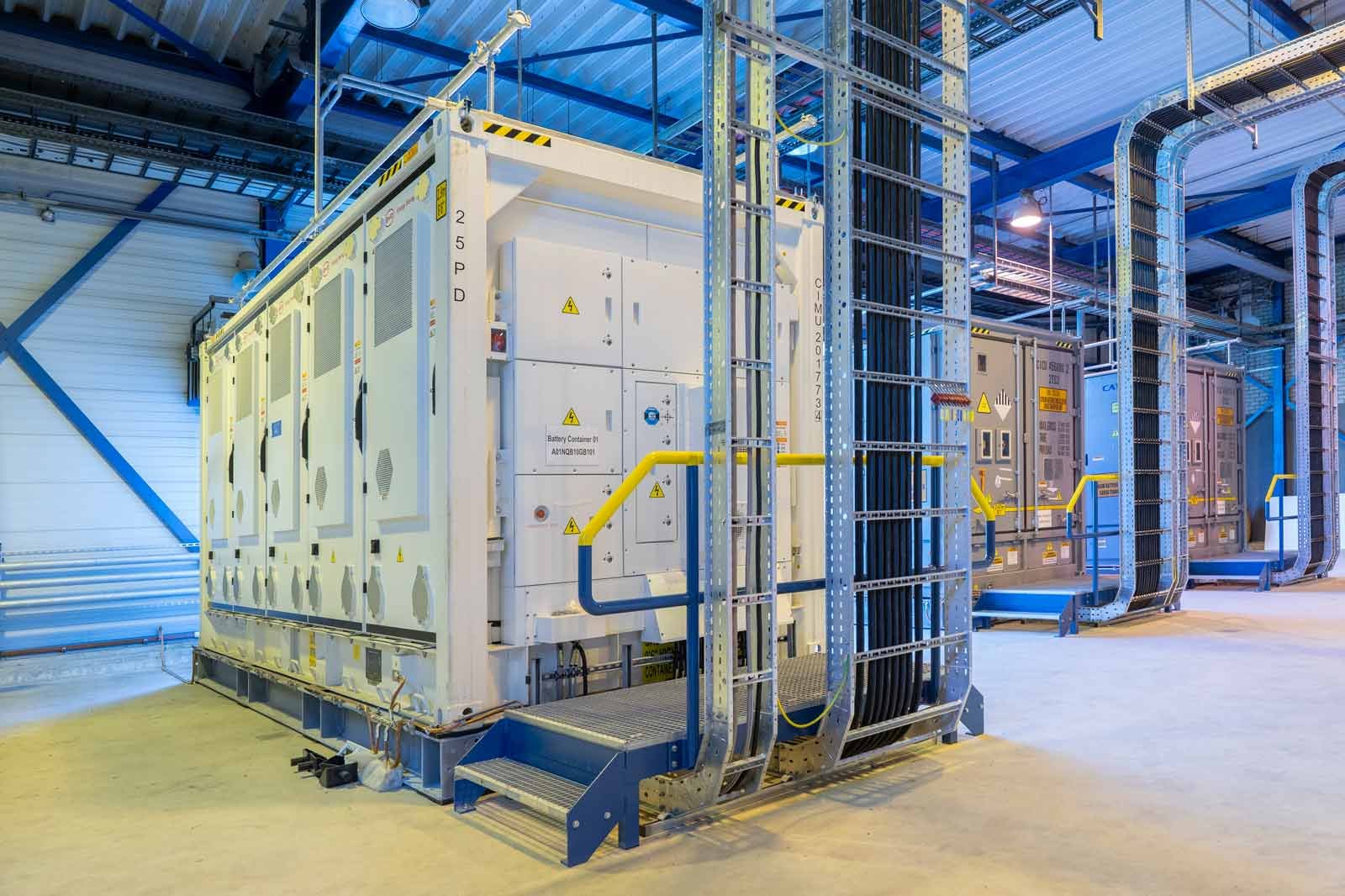
RWE puts inertia-capable BESS into operation in Netherlands - Energy-Storage.News Skip to content
Tesla's Grok integration will be more realistic with this cool feature
Tesla has dominated the Cars.com Made-in-America Index with a clean sweep of the top four spots. All four Tesla vehicles that were eligible for the analysis placed in the top four. The Model 3 overtook the Model Y for first place this year. The all-electric crossover was first in 2024, but the Model 3 managed to overtake its sibling vehicle to claim the top spot in 2025. The Model Y took second, while the Model S took third, and the Model X took fourth. This is an improvement from last year, as the Model Y took first, but the Model S and Model X placed fourth and ninth, respectively. The Model 3 was not in the Top 10 in 2024. 🚨 BREAKING: American-made Index for 2025 is here, and Tesla has swept the TOP FOUR spots with the Model 3 and Model Y leading the way. The Model S and Model X follow. pic.twitter.com/7PRepTHPBe — TESLARATI (@Teslarati) June 17, 2025 “Tesla continues to lead, claiming the top four spots and showcasing its commitment to domestic production. About 25% of the more than 400 vehicles on sale in the U.S. made this year’s AMI, and whether a vehicle is No. 1 or No.99, it contributes to the U.S. economy,” Patrick Masterson, lead researcher for the program, said. More than 400 vehicles were analyzed for this year’s study, with Cars.com officially ranking 117 of them. There were two other EVs in the Top 10, as the Kia EV6 took sixth place, and the Volkswagen ID.4 finished in tenth. This year’s study reflected major geographic and strategic shifts across the automotive industry. Of the 117 vehicles ranked in the program, they were produced at 36 domestic factories, leaving only 11 total factories that did not yield a car on the list. There are 47 assembly plants in operation in the U.S. However, there still has not been a vehicle to quite reach the 100 percent domestic parts content, something that is extremely elusive. Masterson says the global supply chain is still extremely crucial to even the most American-built cars on the market. The average domestic parts content of the Top 10 cars was 83.4 percent in 2006, but that number has shrunk to 70.3 percent in this year’s rankings. Some might wonder where cars like the Tesla Cybertruck or Rivian R1T are on the list. However, these vehicles did not qualify because the study only considers cars under a gross weight of 8,500 pounds.
Inductive charging project with Electreon begins in North Rhine Westphalia

In Germany, in a project called the ERS.T-NRW research project, researchers from the University of Wuppertal are now working with industrial partners Denso Automotive Deutschland, Electreon Germany and Strabag on the wireless charging of electric vehicles while driving. A central component of the project is the construction of a test track up to 400 meters long in Aldenhoven. Along the ERS.T-NRW research project’s inductive charging test track in Aldenhoven in the German state of North Rhine-Westphalia, specially equipped vehicles will test wireless charging under real conditions. Results from previous projects will also be taken into account. The project will run for the next three years and is funded by the state government of North Rhine-Westphalia and the European Union, with a total of around 3.9 million euros. The project is being carried out by BUW Chairs of Electromobility and Energy Storage Systems, Prof. Benedikt Schmülling, and Theoretical Electrical Engineering, Prof. Markus Clemens, as well as the above-mentioned industry partners Electreon Germany GmbH, which is providing the wireless charging solutions, Denso Automotive Deutschland GmbH, which is providing the automotive technology, systems and components and Strabag, a technology group for construction services. The project’s researchers are focusing on testing both the components for pure energy transmission, such as coils and power electronics, as well as the appropriate communication system to enable secure and trouble-free data exchange between the vehicle and the charging infrastructure before, during and after each charging process. “The integration of modern communication technology enables intelligent control of the charging process, protects the vehicle battery and supports flexible and efficient use of the power grids through the exchange of energy data,” says Prof Schmülling. The project aims to ensure that the new technology can be retrofitted not only to new vehicles but also to existing electric vehicles. “Wireless charging while driving and even when stationary makes electromobility more convenient and therefore more suitable for everyday use – especially in urban areas or for vehicles with high energy requirements,” says Prof Benedikt Schmülling, head of the project at the University of Wuppertal. “Our aim is to develop this technology in such a way that it functions reliably, can be easily integrated into infrastructures and makes a real contribution to the transport transition.” The project partners note that wireless charging while driving can be particularly advantageous for services such as taxis, public transport and logistics operations, where charging or refuelling time means being out of service for that period. Wireless charging could enable the constant operation of vehicles without downtime. In this way, wireless charging gives even more value to electric vehicles than their fossil-fuelled counterparts, beyond the many other advantages of emission-free transport. The wireless charging specialist Electreon is also testing wireless charging in another project in Germany, in the state of Bavaria, whereby inductive charging of electric vehicles via embedded coils in the asphalt will soon be tested on the A6 motorway heading towards Nuremberg. The ERS.T-NRW project partners note that, in addition to technology and test operation, knowledge transfer also plays a major role in the communication of their test results. These are to be incorporated into standardisation committees at the end of the project. The partners see this process as an important step towards a uniform standard for wireless charging worldwide. uni-wuppertal.de
Power Anywhere: This Jackery Solar Generator Bundle Is Nearly 50% Off Right Now
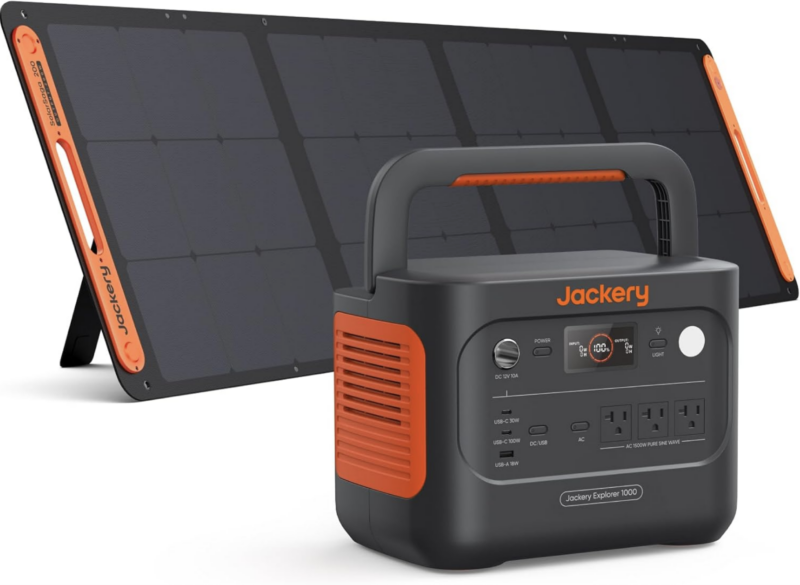
If you’ve been waiting for the right time to invest in a portable power solution, this might just be it. The Jackery Solar Generator 1000 v2, bundled with a 200W SolarSaga panel, is currently on sale for $698.99 — a steep drop from its regular $1,299 price tag. That’s nearly 50% off for a premium solar generator setup built to handle just about anything you throw at it. What Makes This Bundle So Good? 1. Serious Power In A Portable Package: With 1,070Wh of capacity and 1,500W of continuous output (3,000W surge), this thing can power your fridge, charge your devices, run a coffee maker, or even keep your Wi-Fi going during an outage. It’s all backed by a long-lasting LiFePO₄ battery, rated for over 4,000 charge cycles. 2. Super Fast Charging — Solar Or Wall: Jackery’s upgraded fast-charging tech can fully charge the battery in about 1 hour from the wall, or roughly 3 hours from solar with the included 200W panel (under ideal conditions). That’s fast for a battery of this size, and incredibly convenient if you’re on the move or in an emergency. 3. Built Tough For Real Life: Weighing just 23.8 lb, the unit is compact, lightweight, and easy to carry. The durable build, folding handle, and rugged panel make it ideal for camping, off-grid setups, or emergency backup. It’s also quiet, and you can manage it through the Jackery app for extra convenience. Who’s It For? Campers & Overlanders: Power lights, cookers, fridges, or cameras without firing up a noisy generator. Remote Workers: Use it as an off-grid workstation or reliable backup power source. Homeowners: Keep essentials running during a blackout, such as routers, lights, medical devices, and more. Cleantech Folks: No gas, no fumes — just clean, renewable energy from the sun. Why This Price Is a Big Deal High-quality solar generators usually cost a lot more. The Jackery 1000 v2 alone has sold for upwards of $800, and adding a 200W solar panel usually bumps the total over $1,200. Getting the full setup for under $700 is a rare find. And with a premium LiFePO₄ battery that can last for years, you’re making a smart long-term investment. Final Thoughts Between its powerful performance, fast charging, and clean solar capability, the Jackery Solar Generator 1000 v2 bundle is one of the best deals you’ll find in the portable power space. Whether you’re planning your next outdoor adventure or prepping for storm season, this is a piece of gear that earns its keep — and then some. Sign up for CleanTechnica's Weekly Substack for Zach and Scott's in-depth analyses and high level summaries, sign up for our daily newsletter, and follow us on Google News! Whether you have solar power or not, please complete our latest solar power survey. Have a tip for CleanTechnica? Want to advertise? Want to suggest a guest for our CleanTech Talk podcast? Contact us here. Sign up for our daily newsletter for 15 new cleantech stories a day. Or sign up for our weekly one on top stories of the week if daily is too frequent. Advertisement CleanTechnica uses affiliate links. See our policy here. CleanTechnica's Comment Policy
California Energy Commission approves 4.6GWh PV-BESS project- Energy-Storage.News

California Energy Commission approves 4.6GWh PV-BESS project- Energy-Storage.News Skip to content