Dahon unveils bold new electric and folding bike lineup for 2025

At Eurobike 2025 in Frankfurt, folding bike pioneer Dr. David Hon made a major splash by showcasing a completely revamped lineup of Dahon bikes that includes new carbon models, upgraded folding designs, and a growing portfolio of electric two-wheelers aimed at changing how people get around cities. A major part of the reveal centered around Dahon’s latest innovation, a patented frame platform called DAHON‑V, which promises significantly improved stiffness and aerodynamics, especially on folding and road bikes. more…
Disclosure rates rise while progress on target-setting falters, UCLA study finds
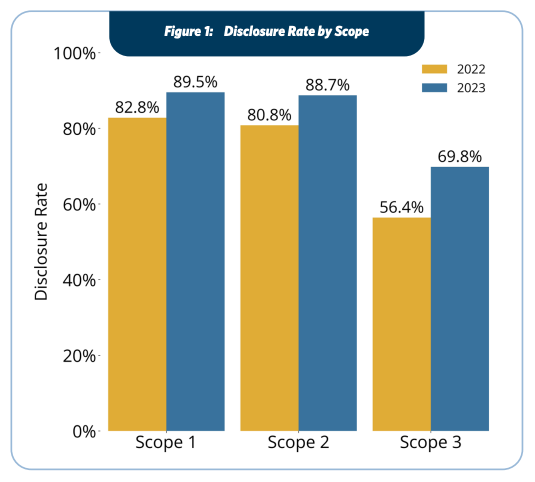
Emissions target setting among America’s largest companies shows limited signs of improvement — and one key metric has declined. That’s according to researchers at the University of California, Los Angeles, who reviewed sustainability reports, climate transition plans and other material from 2023 for S&P 500 companies, which together make up around 80 percent of the value of the U.S. market. Looking up: Disclosure Disclosure of Scopes 1 and 2 is becoming uniform and Scope 3, where disclosure rates have historically been much lower, is catching up. But the headline number for Scope 3 hides inconsistent reporting across the 15 different categories of emissions that make up the scope. The focus on business travel — Scope 3 Category 6 — is likely because the data is relatively easy to collect, suggested the UCLA team, which was led by Magali Delmas, a professor of management. “Category 6 represents just 12.5 percent of overall reported Scope 3 emissions,” the researchers noted, “highlighting a clear disconnect between ease of reporting and emissions significance.” Going nowhere: Target setting Disclosure is intended to be a first step toward setting and implementing targets for emissions reductions. And when it comes to net zero targets, progress on Scope 3 also remains solid, but movement on Scopes 1 and 2 has all but stalled. Net zero commitments typically have a target year between 2040 and 2050. To ensure that companies do not delay taking action, standard setters such as the Science Based Targets initiative require companies to set interim goals, often for 2030. But the number of companies doing so declined between 2022 and 2023. “This is worrisome,” the report noted, “as these near-term goals are crucial for tracking progress and identifying emission-reduction opportunities.” The UCLA study is one of several from the past year to have looked at disclosure and target setting in the private sector, including a PwC survey, which painted a broadly positive of corporate action, and another from Accenture, which surfaced more mixed results. The results are not necessarily contradictory, in part because each study looked at a different sample of companies: PwC surveyed disclosures made by CDP by 7,000 companies and Accenture looked at the largest 2,000 companies by revenue. [Join more than 5,000 professionals at Trellis Impact 25 — the center of gravity for doers and leaders focused on action and results, Oct. 28-30, San Jose.] The post Disclosure rates rise while progress on target-setting falters, UCLA study finds appeared first on Trellis.
Report: Fashion brands are ignoring proven climate fixes
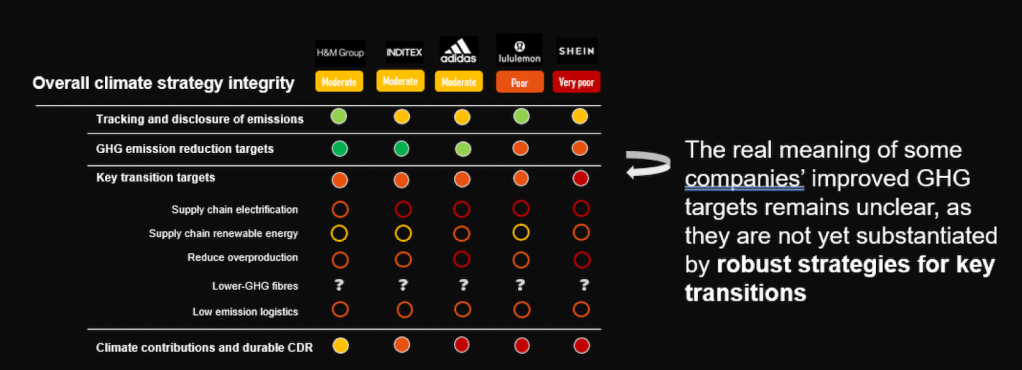
Apparel brands should champion the most powerful strategies to lessen their emissions — or at least slow their rate of increase. For starters, switching to renewables across electrified supply chains would go a long way. So would abandoning wasteful fast fashion business models. And yet major companies are mostly ignoring these proven paths, according to an analysis of Adidas, H&M Group, Inditex, Lululemon and Shein undertaken by two European nonprofits. The New Climate Institute and Carbon Market Watch described significant improvements in fashion decarbonization and circularity over previous years in their annual “Corporate Climate Responsibility Monitor,” released June 25. (The report follows parallel research about the food industry and technology giants earlier in June.) “We’re looking at much better strategies than we were three years ago for the sector, which is great,” said Thomas Day, a climate policy analyst at the New Climate Institute. That’s the good news. The bad: “Fundamental transitions are still missing,” Day added, citing “this exaggerated race-to-the-top dynamic that we have now for corporate claims, where companies just kind of say that everything’s fine, yet in the background might [only] be slowly ramping up their strategies.” Exaggerated targets The Science-Based Targets initiative (SBTi) has validated the net zero targets for each of the five brands. But the goals of Lululemon and Shein lack integrity, the authors found. For example, the emissions of both companies have actually surged in recent years. And while Adidas and Inditex are also aligned with the Paris Agreement, only H&M stands out for backing up its greenhouse gas reduction targets with detailed transition plans, the report noted. With so many corporate targets now validated by the SBTi, there’s little incentive to be a front runner. It’s also difficult to identify good practices when people perceive the standards as watered down, according to Day. “I think at this stage it’s time for a rethink, but that’s what [the SBTi is] currently in the process of doing,” he said. Ridding supply chains of fossil fuels Although H&M, Inditex and Lululemon set targets for renewable electricity in their supply chains by 2030, they lean too hard on Renewable Energy Certificates (RECs), researchers charged. And at apparel plants, companies too often use the “false solutions” of natural gas or biomass to replace coal. “The key thing is to electrify those supply chains,” Day said. “Stop using coal or boilers, but also don’t just switch out coal boilers for biomass or gas — electrify processes. That’s a fundamental step to being able to use renewable energy. This is where companies need to see movement, and we’re not seeing it at all.” H&M is the only major brand breaking down its supply chain energy mix (59 percent fossil gas, 11 percent electricity, and 3 percent each for coal and biomass). Yet even this lacks needed detail, according to the report. Source: Corporate Climate Responsibility Monitor 2025: Fashion sector deep dive Adopting circular business models The authors advocated for business models to change not only to slow the roll of overproduction and waste, but also to transition to more low-emissions fibers across their life cycles. Of note: H&M is the first to publish its (slim) revenue share from resale business models: from .3 percent in 2022 to .6 percent in 2023. Day did note that more brands are providing greater detail than before, now describing exactly how and when they plan to shift to more sustainable fibers. However, companies are generally failing to provide transparency about their progress on circularity, the report found. Overproduction continues Lessening production volumes is not part of any big fashion brand’s public decarbonization plan, the report found. In fact, the ultrafast model perfected by Shein is flatly incompatible with its climate goals. “I wouldn’t necessarily expect any company to move unilaterally on this without being encouraged by regulation,” Day said. That’s starting to happen. On June 10, the French Senate voted 331 to 1 to tax low-cost clothes of high-volume brands, and to ban ads for them. “There are some companies that make a reputation for themselves being more circular and more sustainable,” Day added. “But that’s really a niche, and for the major fashion companies, it’s not a viable approach for them unless they have a level playing field.” Marching orders Companies should put less emphasis on climate targets, such as slashing emissions by 50 percent by a certain year, according to Day. “There are so many ways to cook the numbers and do creative accounting to reach that 50 percent that it becomes impossible to tell companies apart,” he said. Instead, he advised, businesses should talk less about targets and more about concrete things they’ve committed to do. Car makers, for instance, often describe their transition from fossil fuels to electricity instead of trumpeting abstract net zero deadlines. Similarly, the fashion industry can provide tangible examples of replacing coal-powered boilers with heat batteries. And although the expenses of electrifying supply chains is seemingly prohibitive, Day observed, companies should understand that the payoff is worthwhile and “be ready to pay suppliers to pay extra to do things in a sustainable way.” The post Report: Fashion brands are ignoring proven climate fixes appeared first on Trellis.
BoConcept chooses Dassault’s HomeByMe solutions

Dassault Systèmes announced a five-year partnership with BoConcept, a global leader in the affordable premium furniture industry, to bring new 3D room design and product configuration experiences to BoConcept’s customers in 65 countries. BoConcept will integrate Dassault Systèmes’ HomeByMe 3D space planner and product configurator into its customer buying journey, merging the virtual and real worlds in a fluid approach to shopping that centers on inspiration, lifestyle, personalization, collaboration, quality and efficiency. With HomeByMe, BoConcept responds to needs of discerning customers who value both online and in-store shopping experiences by combining endless possibilities to customize furniture to unique tastes and needs, with high-quality service that accelerates delivery. BoConcept can provide the experience and expertise of its designers in a more digital way, helping consumers create their own individual space in a journey that increases their satisfaction and accelerates BoConcept’s sales. HomeByMe solutions include a 3D room planner that vendors can easily and intuitively use to design an interior in 3D, and a web-based product configurator that both vendors and customers can use to select and modify furniture colors, materials and sizes, and view them in a high-definition virtual twin. Customers can visualize their future interior and collaborate with vendors in BoConcept’s 300 stores to finalize the design and purchase of their made-to-order furniture. BoConcept can accelerate the entire process through to delivery by facilitating a closer connection with customers over their designs, eliminating time-consuming manual sales processes, and providing data to the supply chain more efficiently. For more information, visit 3ds.com. The post BoConcept chooses Dassault’s HomeByMe solutions appeared first on Engineering.com.
Navee’s new GT3 Pro smart regen e-scooter at $520 low, Ride1Up 4th of July Sale, Aiper smart pool monitor + robots, lawn care tools, more

We’re closing out this week’s Green Deals leading with a spotlight on Navee’s new GT3 Pro Electric Scooter that sports regenerative braking, Apple Find My, and more at its $520 low during the brand’s Independence Day Sale. Right behind it is Ride1Up’s 4th of July e-bike Sale with up to $500 discounts its lineup of e-bikes starting from $995. From there, we have Aiper’s HydroComm Solar-Charging Smart Pool Monitor in a blue colorway at $350, as well as several of the brand’s pool-cleaning robots. For our final tool deals of the week, we spotted Worx’s Nitro 40V 15-inch PowerShare Pro Cordless Driveshare String Trimmer bundle (two batteries and replacement head), which allows you to use alternate attachments from this brand or others, down at a $230 annual low. We also have Greenworks’ legacy 24V 22-inch Cordless Laser Cut Hedge Trimmer kit at its best price in years for $97. Plus, there’s all the rest of the hangover Green Deals in the links at the bottom of the page, like yesterday’s 4th of July Rad Power e-bike savings, the 48-hour EcoFlow flash sale on three units that will be ending tonight, and more. Head below for other New Green Deals we’ve found today and, of course, Electrek’s best EV buying and leasing deals. Also, check out the new Electrek Tesla Shop for the best deals on Tesla accessories. more…
High-performance interconnect solutions for EV charging applications

Sponsored by TTI. The demand for increased charging power continues to grow as more electric vehicles hit the roadways. Reliable and accessible charging infrastructure is needed to support long-range mileage with fast and efficient, on-demand charging solutions. Samtec offers rugged and high-power solutions for reliable connectivity to support power conversion, thermal management, and the current or future needs of the electric vehicle.
Consumers expect collective action to make sustainable fashion a reality
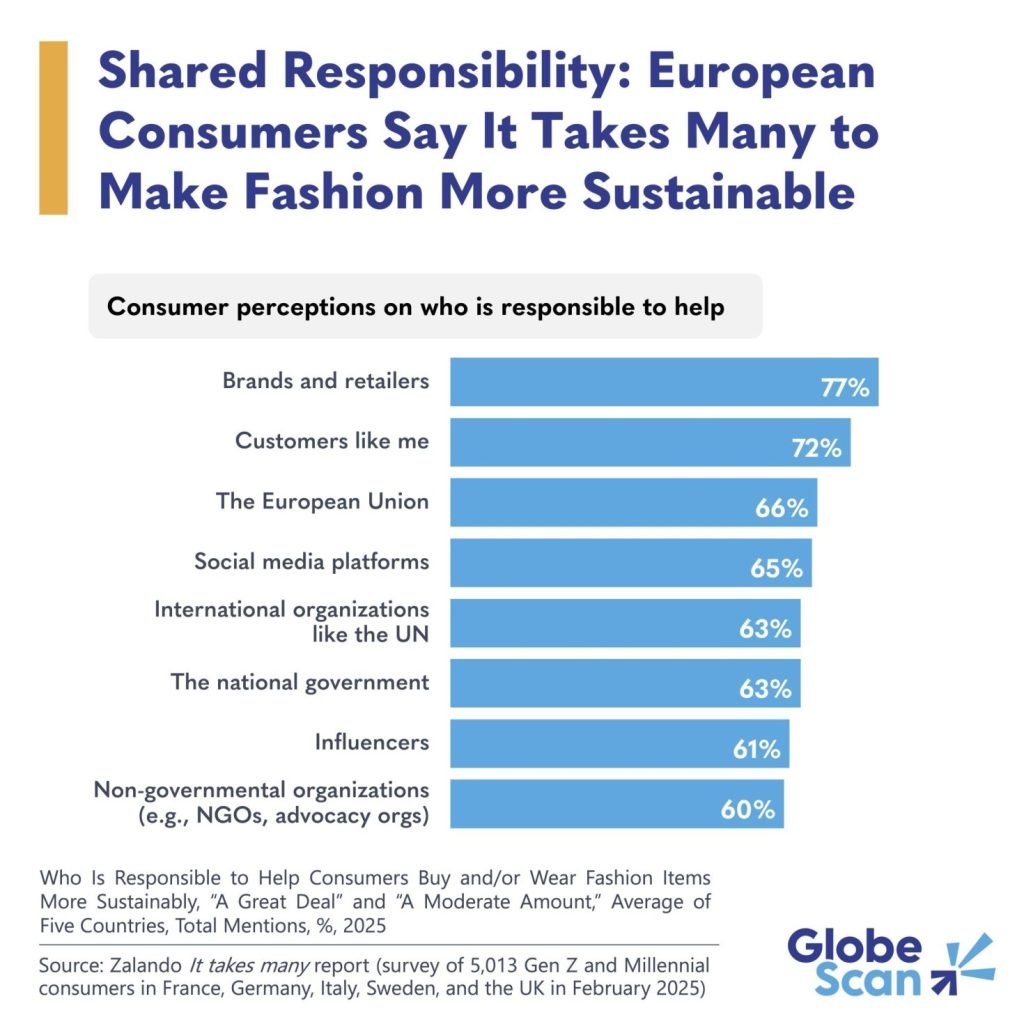
Whose responsibility is it anyway? That’s the question many young consumers in five European markets are weighing in on when it comes to promoting and wearing more sustainable fashion. Trellis data partner GlobeScan recently partnered with European fashion platform Zalando to explore how Gen Z and Millennial consumers view sustainability in fashion. The findings reveal a clear message: consumers who aspire to buy or wear sustainable clothing items see sustainable fashion as a shared responsibility. While most expect action from brands and retailers (77 percent) and individuals such as themselves (72 percent), they also look beyond these actors to create the right conditions for more sustainable fashion to thrive. Many see important roles for: The European Union (66 percent) Social media platforms (65 percent) National governments (63 percent) International organizations (63 percent) Influencers (61 percent) NGOs (60 percent) When it comes to expectations for brands and retailers, consumers want more sustainable fashion to be the default. This includes offering affordable, sustainable products (38 percent), using recycled and lower-impact materials (33 percent), reducing packaging waste (32 percent) and designing durable, repairable items (31 percent). Supportive programs such as recycling schemes, resale platforms or rewards for sustainable behavior are also expected. At the same time, governments and EU institutions are expected to play a more active role. Consumers want them to reduce taxes (lower VAT on more sustainable fashion — 42 percent), fund repair and recycling infrastructure (39 percent) and educate the public on sustainable fashion choices (36 percent). And about one-third of respondents would like to see the introduction of trusted, government-backed eco-labels or product scores. Social media platforms and influencers are also seen as critical enablers, with the potential to help shift the fashion narrative from short-lived trends and overconsumption to styles that are more circular, conscious, and enduring. What this means Closing the attitude-behavior gap in more sustainable fashion requires collective, cross-sectoral action — not just individual or brand-level change. Consumers are ready to make more sustainable fashion choices, but they expect meaningful support from a broad coalition of actors. From governments to social media platforms and influencers, each has a role to play in removing the practical and structural barriers that prevent consumers from turning their aspirations into action. Based on a survey of more than 5,000 Gen Z and Millennial consumers in France, Germany, Italy, Sweden and the UK in February 2025. The post Consumers expect collective action to make sustainable fashion a reality appeared first on Trellis.
QuesTek expands ICMD with titanium alloy modeling capabilities

QuesTek Innovations has added titanium alloy modeling capabilities to its ICMD (Integrated Computational Materials Design) software platform. This update expands the platform’s functionality, supporting materials engineers with deeper insight into the behavior of Ti alloys in sectors such as aerospace, energy, and additive manufacturing. ICMD is a cloud-based platform developed to help reduce risk and support efficient materials development from concept through qualification. Titanium is essential in applications like aerospace components and orthopedic implants, where strength, fatigue resistance, and biocompatibility are critical. ICMD enables data-driven design of titanium alloys to meet these exacting demands. Titanium is widely used in aerospace components and orthopedic implants due to its strength, fatigue resistance, and biocompatibility. ICMD supports the data-driven design of titanium alloys to address these performance requirements. Expanded property modeling tools for Ti alloys The latest ICMD release adds models to estimate mechanical properties of Ti-based alloys—such as elastic modulus, shear modulus, Poisson’s ratio, yield strength, and tensile strength—based on alloy composition and processing data. These tools support early-stage alloy screening and optimization, helping reduce the need for extensive physical testing. Simulating heat treatment effects on microstructure The update includes process-structure models that simulate the impact of heat treatment on alpha-phase development. Users can model the coarsening of alpha laths and the formation of globular alpha during annealing, supporting the design of microstructures with targeted strength, ductility, and fatigue resistance. Supporting better additive manufacturing outcomes Another enhancement provides predictive modeling of dendritic grain morphology under different solidification conditions. This helps engineers anticipate whether a material will form columnar or equiaxed grains, enabling alloy and process designs that reduce anisotropy and improve part performance—particularly for 3D-printed components. These updates further strengthen ICMD as a comprehensive platform for materials innovation and qualification, giving users control over microstructure-driven performance outcomes in demanding applications. For more information, visit questek.com. The post QuesTek expands ICMD with titanium alloy modeling capabilities appeared first on Engineering.com.
Hurricanes, heat domes, and holding up the grid with home batteries

Hurricanes, wildfires, and triple-digit heat domes are stressing America’s energy grid like never before, with millions experiencing rolling blackouts and brownouts as they struggle to keep their collective cool. As rooftop solar and home batteries show up in more and more places, however, we’re building something bigger than a backup: a virtual power plant that can keep things running when the grid can’t. more…
Google holds to ambitious net zero goal despite another big emissions hike
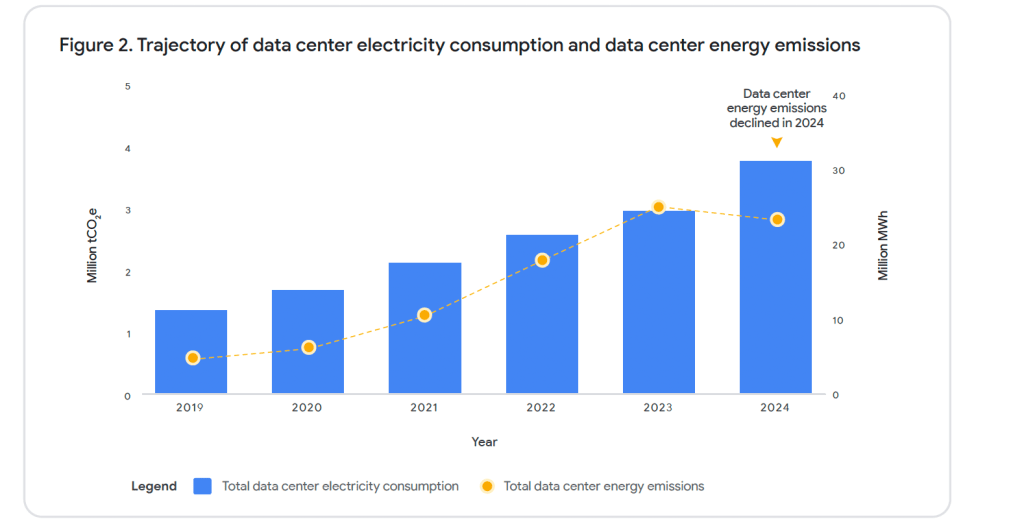
Google remains committed to its “intentionally ambitious” pledge to achieve net zero by 2030 — even though the company’s overall greenhouse gas emissions have increased dramatically since its 2019 baseline year. Google’s emissions reduction strategy, which it says was validated by the Science Based Targets initiative (SBTi) in February, calls for a 50 percent cut to its market-based Scope 1 and 2 emissions (for operations and purchased energy) and to its Scope 3 supply chain footprint. Google plans to “neutralize” the residual emissions with carbon removals. The integrity of that target is unclear, according to an analysis published June 26, and Google’s 2025 environmental report casts further doubt. The tech giant’s total footprint rose 11 percent in 2024, reaching 11.5 million metric tons of carbon dioxide equivalent (CO2e). That total excludes some emissions related to Alphabet’s operations, which aren’t part of Google’s SBTi-validated goal. Without those exclusions, the company reported 15.2 metric tons in emissions. Either way, Google is reporting a cumulative increase of 51 percent since 2019, which is a lot of ground to make up over the next five years, particularly given the hostile U.S. policy climate for clean energy, voracious interest in artificial intelligence and uncertainty over the future direction of greenhouse gas accounting rules. “The thing with a moonshot goal is it is intentionally ambitious,” said Google Chief Sustainability Officer Kate Brandt. “It can seem impossible at the time that it’s set, and we know that this kind of innovation is not going to be linear. It can take longer than expected, but we do really feel like continuing to pursue these moonshots.” Obstacles ahead The biggest drag on Google’s progress in 2024 was the emissions associated with its capital expenditures and use of sold products, which leapt 38 percent to 6.3 million metric tons of CO2e. That’s more than half of Google’s Scope 3 total, and it’s related primarily to construction of new data centers. Another obstacle that’s beyond Google’s control are the fossil fuels-dominant grids in key regions outside the U.S. “Asia Pacific remains a really big challenge, both for our own operations and also for our suppliers,” Brandt said. Google is getting around those obstacles by being “resourceful.” In Singapore, for example, the company is supporting a plant that will burn waste wood along with pilot-scale carbon capture technology. In Taiwan, it is developing a 1 gigawatt solar project portfolio. Some of the power the installations produce may be offered to suppliers and manufacturers in the region, home to many semiconductor plants. It took five years of collaboration to make the partnership possible, Google said. Getting suppliers to transition to clean power is a heightened focus — independent analysis suggests it could be one-third of the company’s footprint — and Google supports a number of projects meant to encourage alignment with its goals. In 2023, for example, it started asking key suppliers to adopt a Clean Energy Addendum that commits them to using 100 percent renewable energy by 2029 for the electricity they use to produce Google products. The company doesn’t have a publicly stated goal for participation, but Brandt said many key suppliers have signed on. Google cut data center emissions 12 percent in 2024 despite a 27 percent increase in electricity consumption. Source: 2025 Google Environmental Report Bright spot: data center emissions One thing that makes Brandt optimistic is the reduction Google reported for its data center emissions, which it cut 12 percent to 3.1 million tons of CO2e in 2024 despite a 27 percent increase in electricity consumption. The biggest story is Google’s contracts to procure carbon-free energy, which aim to achieve 100 percent by 2030; the company’s latest calculations put it at 66 percent. Google signed deals to put 8 gigawatts of geothermal, nuclear, solar and wind power on global grids in 2024, more than in any other year. That’s about four times the company’s incremental load growth between 2023 and 2024. It’s trying to get ahead of demand. From 2010 to 2024, Google contracted for more than 22 gigawatts of power, which is roughly the amount of electricity used by Portugal annually. The impact of those purchases is an estimated 44 million metric tons of CO2e in avoided emissions, according to Google’s report. The company has also invested about $3.7 billion in projects aside from its power purchase agreements; those installations will eventually produce about 6 gigawatts. Energy efficiency measures such as changes to cooling technology, new chips for AI processing and changes to Google’s software coding models for training AI algorithms were equally important for reducing data center emissions. The net effect is that Google’s data centers can deliver six times more computing power per unit of electricity than five years ago, the company said. AI’s emissions-slashing potential Another topic you’ll hear Brandt raise frequently in the months ahead is the potential for Google’s services to enable up to 1 gigaton of emissions cuts for customers. Last year, for example, the company introduced a tool that lets marketers measure the emissions associated with specific campaigns. Google is already using AI to help schedule non-urgent computing tasks — such as processing YouTube videos —where and when emissions are lower. Google has pledged to help cities, businesses, individuals and other partners cut emissions by 1 gigaton of CO2e by 2030. It hasn’t reported its cumulative progress against that goal, but in 2024 five of the company’s AI-enabled products helped others cut emissions by 26 million metric tons. They were the Nest thermostat, Google Earth Pro, a solar planning tool, fuel-efficient routing in Google Maps and the Green Light city traffic optimization resource. “This is indicative of the huge potential we have for AI to be a major environmental solution,” Brandt said. The post Google holds to ambitious net zero goal despite another big emissions hike appeared first on Trellis.
Siemens advances autonomous production with new AI and robotics capabilities

At automatica, Siemens announced plans to integrate its Operations Copilot into driverless transport systems and mobile robots. The Operations Copilot is designed to support machine operation and maintenance. As mobile transport robots increasingly function as autonomous agents using artificial intelligence (AI), the Copilot will provide an interface for users to configure autonomous mobile robots (AMRs) and automated guided vehicles (AGVs), assigning them tasks such as moving materials across the shop floor. This step contributes to broader efforts to enhance factory automation using generative AI. Operations Copilot will be enhanced with agents for AMRs and AGVs Siemens plans to enhance the Operations Copilot with AI agents designed for automated mobile robots (AMRs) and automated guided vehicles (AGVs). These agents will assist with both commissioning and operation of individual units and fleets. Commissioning AGVs can be complex, requiring integration with a factory’s existing IT and OT systems and configuration for specific conditions such as routes and transfer stations. To simplify this, the Operations Copilot uses AGV sensors and cameras to build a detailed view of the environment. It can also access technical documentation and real-time system data through its interface, helping engineers and operators work more efficiently and deploy systems more quickly. Safe Velocity software enables fail-safe speed monitoring of autonomous vehicles (Source: Siemens) New Safe Velocity software enhances safety on the shop floor AGVs use navigation and sensor technologies to operate safely in production and logistics settings without direct human control. They respond to obstacles by slowing down, stopping, or rerouting. Siemens’ Safe Velocity software enables fail-safe vehicle speed monitoring, allowing safety laser scanner fields to adjust dynamically in real time. TÜV-certified and compatible with various AGV platforms, the software supports compliance with industrial safety standards. Safe Velocity can reduce the need for extra safety hardware, helping simplify system design, save space, lower engineering effort, and reduce cabling—while maintaining functional safety. In future implementations, the Operations Copilot will work with AI agents like Safe Velocity to analyze data from safety laser scanners and monitor AGV speed. The Safe Velocity agent oversees autonomous vehicle operations and can coordinate with other agents developed for AGV and AMR use cases. This approach supports the development of a multi-agent system, where the Operations Copilot manages both physical and virtual agents to improve coordination between digital systems and real-world operations. For more information, visit siemens.com. The post Siemens advances autonomous production with new AI and robotics capabilities appeared first on Engineering.com.
HappyRun G300 Pro review: It’s an electric motorcycle with pedals and I’ve got some thoughts
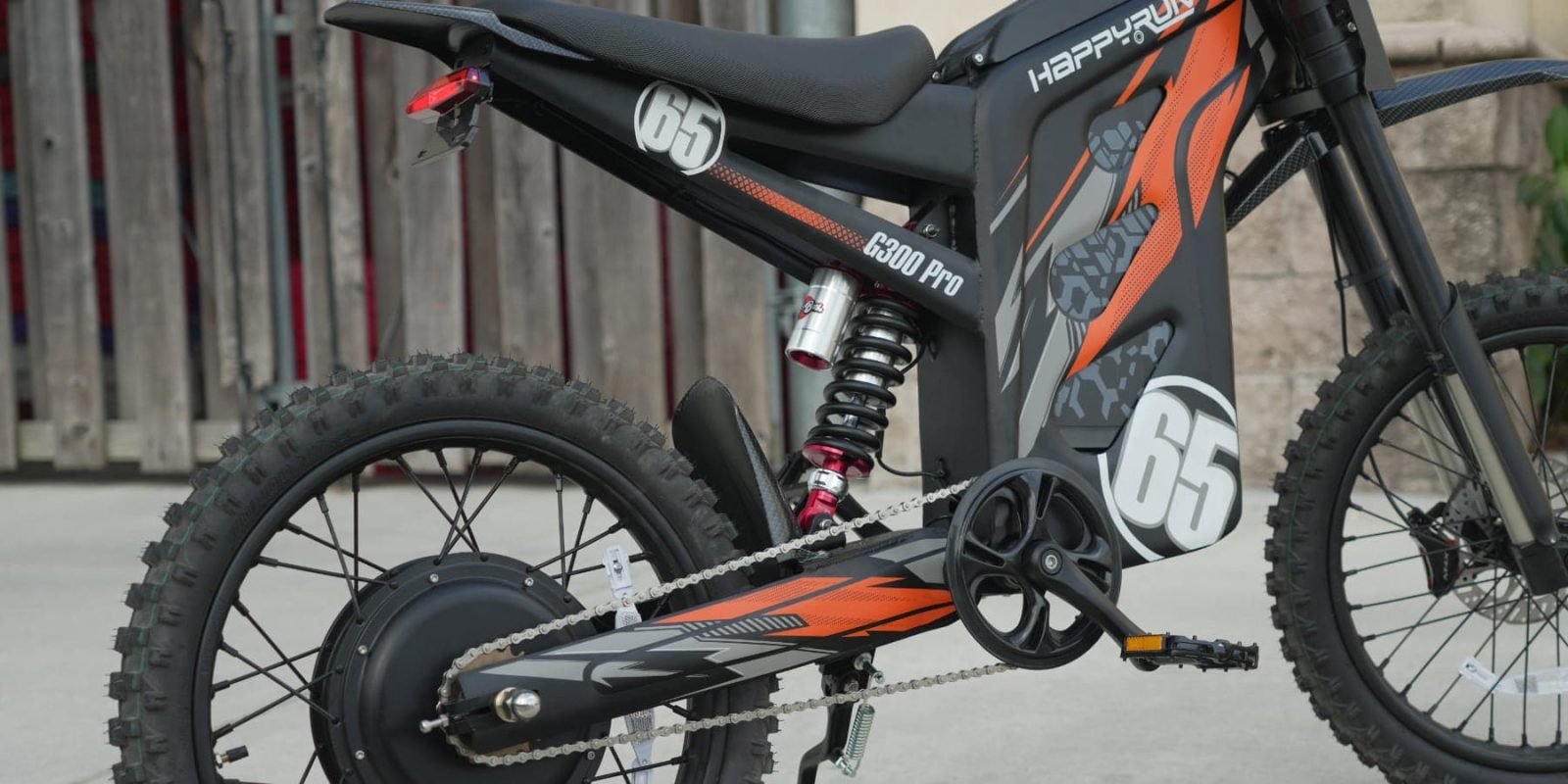
The HappyRun G300 Pro is the epitome of an out-of-class electric bike. That is to say, it has many of the components of an electric bicycle, key among them the functional pedals, but its extremely high power and speed place it well outside the limits of traditional e-bike classifications. The result? Basically, an electric motorcycle with pedals. And I’ve got some thoughts about that. more…
GRAITEC unveils PowerPack for Advance Steel – Release 2026

GRAITEC GROUP has announced the release of PowerPack for Advance Steel – Release 2026, an update aimed at supporting structural engineers, detailers, fabricators, and designers with tools to enhance workflow efficiency, accuracy, and flexibility in steel detailing. The 2026 release introduces updates to railings, cage ladders, balanced stairs, and includes a new Turnbuckle macro to support more practical and detailed design workflows. Key features of PowerPack for Advance Steel – Release 2026 Flexible Turnbuckle bracing: The new Turnbuckle macro allows connections with or without tensioners and supports gusset or direct bolt methods. With integration for custom or supplier-specific parts via the enhanced Special Part Manager, users can save time and improve design accuracy. Smarter railing tools: New features, such as baseplates for concrete stairs, vertical offset options for welded connections, and post-side web connections, ensure precise alignment, faster installation, and reduced manual effort for railing designs. Enhanced Cage Ladder design: The Cage Ladder macro now supports flared entry hoops, adaptive straps, and flexible left- or right-side exits, offering safer and regulation-compliant access configurations. Improved balanced stairs: Engineers can now split stair stringers with weld definitions and utilize rectangular and square hollow sections for construction- ready designs that improve modeling precision and efficiency. These enhancements streamline workflows, reduce errors, and provide users with tools that address common and complex detailing challenges. To learn more about PowerPack for Advance Steel and its impact on detailing workflows, visit the product page at graitec.com/uk/autodesk-advance-steel-plugins. For more information, visit graitec.com. The post GRAITEC unveils PowerPack for Advance Steel – Release 2026 appeared first on Engineering.com.
California cops are teaching kids to ride electric bikes

Electric bikes have exploded in popularity – and so have the risks. In Huntington Beach, California, rising e-bike crashes involving young riders prompted the city’s police department to launch what may be California’s first police-led e-bike safety course for kids, and it might be exactly the kind of inventive community-based program more places need. more…
Roland DGA launches DIMENSE DA-640 dimensional surface printer

Roland DGA has introduced the DIMENSE DA-640, a wide-format dimensional surface printer designed to produce full-color prints with integrated embossing effects. The printer offers a streamlined and cost-effective alternative for creating textured output on demand, suitable for various applications. It is intended for print providers exploring décor markets and interior designers seeking to create custom finishes and textures. Roland DG’s all-new DA-640 dimensional surface printer makes creating one-of-a-kind wallcoverings and other full-color prints with unique embossing effects simple and cost-effective. The DA-640 printer features newly developed printheads and is part of the DIMENSE solution, which includes compatible media that expands up to 2 mm when exposed to heat and a structural ink that controls embossing areas. Designed for ease of use and efficient workflow, the DA-640 includes a 7-inch touchscreen display, a torque-based take-up system for automatic media handling, and a 14-zone heater system for simplified setup and consistent operation. Its design also aims to reduce running costs and media waste, supporting efficient production. The DA-640 enables full-color dimensional printing for on-demand production of textured interior surfaces. It supports a range of project types—from individual prints to high-volume runs—without requiring advanced design skills. Users can work with custom designs, existing artwork, or adjustable templates. The printer also supports embossed effects and offers options for single-pass four-color prints or structure-only, paintable media using the DIMENSE solution, allowing for a variety of textured finishes suited to different applications. DA-640 users can choose from a variety of specialized DIMENSE media available, such as matte, suede, silver, gold, pearl, and chameleon offerings. This lineup includes media that is compliant with the U.S. Type Ⅱ standard, which defines the performance of wallpaper for commercial applications and provides assurance that it offers a high level of scratch resistance. In addition to the DIMENSE media options, users can print on select third-party media, further increasing the DA-640’s versatility and range of applications. Tension fabric and roll-up banners for indoor signs and displays are available for selecting the most appropriate media for different situations. The DIMENSE digital printing solution is eco-friendly. DIMENSE media is PVC-free, the CMYK inks are water-based resin, and the structural ink is butylene glycol-free and meets various safety standards, including AgBB, A+, UL, and GREENGUARD Gold “Unrestricted wallcoverings.” Print data can be created in standard design applications or using the new Roland DG Connect Designer DIMENSE Module, which supports basic designs, embossing layers, and includes a visualizer to preview effects before printing. The DA-640 also comes with VersaWorks 7 RIP software, compatible with both Windows and macOS, allowing users to configure print settings and generate output with minimal setup. Users can also access Roland DG Connect, a cloud-based platform offering real-time device monitoring, usage data, firmware updates, and inventory management tools. Available now through authorized Roland DGA dealers, the DA-640 comes bundled with a BOFA air filtration unit, a set of DA-IA inks, and four different types of DIMENSE media (Matte Extra, Pearl Type II, Pearl Textile and Suede). Supported by Roland DG’s proven reliability, customer support, and a growing ecosystem of digital tools and materials, the DA-640 is designed to help streamline printing operations and support business growth. For more information on Roland DGA, visit rolanddga.com. The post Roland DGA launches DIMENSE DA-640 dimensional surface printer appeared first on Engineering.com.
SorbiForce says its metal-free battery could last for 30 years, serve as fertilizer at end of life

SorbiForce, a self-described Arizona-based Ukrainian startup, has announced a metal-free organic battery prototype that it believes will serve as a counter to the environmental effects of conventional batteries. “We were working for a game-changing technology in the storage market,” the company said, an effort that ended up producing “the optimal system for storing and balancing electric energy.” The batteries can be used for energy storage systems such as battery-backed EV charging stations. The company’s battery uses a closed-loop system that relies on four primary materials: carbon, water, salt and agricultural waste. The company’s sorption batteries use physical processes to move electrons through an ultraporous carbon layer containing carbon-based cathodes and anodes, thereby ensuring the battery is nonflammable. All components can be mined or manufactured in the United States, and production is independent of resource markets and foreign suppliers, the company said. Like a good wine, with apologies to Orson Welles, ultraporous carbon improves with age. Therefore, with periodic water replenishment and no external interference, a SorbiForce battery could potentially last for 30 years. Unlike conventional batteries, 95% of the SorbiForce battery decomposes into organic materials, while the remaining 5% is reusable, according to the company. The company’s products range from 0.12 MW to 1 MW in power output while delivering up to 10 kA in current, 0.5 to 0.7 MWh in capacity and up to 120 kV in voltage. The battery systems measure 20’ (6.1 m) in length; height is 8.6’ (2.6 m) and width is 8’ (2.4 m). Source: SorbiForce
Skycharger to develop 24-port EV charging hub at San Francisco airport

EV charging provider Skycharger has been awarded a lease to develop a fast EV charging facility at San Francisco International Airport (SFO). Skycharger will build the EV Hub to serve electric rideshare drivers as well as airport customers and the general public. Skycharger’s EV Hub will help meet the expected surge in charging demand from rideshare vehicles in response to California’s Clean Miles Standard, which will require 90 percent of Uber and Lyft miles to be traveled by EVs by 2030. Skycharger’s EV Hub will feature 400 kW DC charging ports along with a convenience store. It will be built with the support of engineering, procurement and construction firm Burns & McDonnell. Charging hardware manufacturer Kempower will provide 12 Power Cabinets and 24 Satellite dispensers, enabling dynamic power distribution. “We’re moving quickly to bring this hub online,” said Johannes Copeland, COO of Skycharger. “Kempower’s flexible, high-performance charging technology is the right fit for this mission-critical deployment at one of the busiest airports in the country.” Skycharger, a subsidiary of Skyview Ventures, owns and operates a growing network of EV charging stations in seven states, including the West Coast Highway Corridor DC Fast Charging Network, located at highway exits throughout California. Skycharger recently scored a $10-million grant from the California Energy Commission to design, construct and operate two publicly accessible electric truck stops along I-5 in Southern California. The company will also construct a 70-port electric truck charging hub at the Port of San Diego. Source: Skycharger
Judge temporarily blocks US administration from withholding NEVI funds for EV charging infrastructure

A federal judge on Tuesday temporarily blocked the US administration from withholding funds awarded to 14 states including California, New York, Illinois and Washington under the National Electric Vehicle Infrastructure (NEVI) Formula Program, part of President Joe Biden’s Inflation Reduction Act. US District Judge Tana Lin in Seattle ruled that the states were likely to succeed in a lawsuit alleging that the federal government was illegally withholding billions of dollars awarded to states under the NEVI Formula Program. Lin said in her ruling that states were harmed by the administration’s policy shift because they had dedicated their own resources to EV infrastructure in the expectation of further funding from the federal government. In February, the US Transportation Department suspended the $5-billion NEVI Formula Program, and rescinded prior approval of states’ spending plans. Lin’s ruling did not apply to the District of Columbia, Minnesota and Vermont, which also sued over the funding rescission but did not provide evidence that they would suffer immediate harm as a result of the Transportation Department decision. The states said in their lawsuit that the administration’s withholding of the funds “will devastate the ability of states to build the charging infrastructure necessary for making EVs accessible to more consumers.” “The administration cannot dismiss programs illegally, like the bipartisan Electric Vehicle Infrastructure formula program, just so that the president’s Big Oil friends can continue basking in record-breaking profits,” said California Attorney General Rob Bonta. The federal government is comprehensively dismantling support for the US EV industry. Congress is also moving to end tax credits for EV purchases, repeal vehicle emissions rules, impose new taxes on EV owners, deactivate EV charging stations installed by the General Services Administration, and sell off $1.5 billion worth of EVs that the Postal Service has already bought and paid for. The latest ruling is unlikely to prove more than a temporary setback to the government’s anti-EV crusade. Lin’s ruling will take effect in seven days, giving the administration time to file an appeal and ask an appellate court to block her ruling from taking effect. Source: Reuters