Why 71 percent of Americans feel relaxed and calm in nature

A new report reveals a compelling truth: people connect most deeply with nature when it feels personal and because it helps them feel relaxed and calm. The report, conducted by Trellis data partner GlobeScan and the World Wildlife Fund, shows 61 percent of Americans say that their personal experiences are most influential in shaping their views on nature, followed by: Their family (43 percent) Moral standards (37 percent) Faith/religion (25 percent) Education (23 percent) When asked which feelings they associate most with being in nature, Americans say they feel relaxation and calm (71 percent), joy (49 percent), and gratitude (41 percent). What this means Research shows that when nature is portrayed as a personal and emotional experience, individuals relate to it more deeply. This emotional resonance fosters a stronger sense of connection, which can lead to increased environmental awareness and participation. For NGOs and campaigners, this insight presents a powerful opportunity: to move beyond broad, generic appeals and embrace storytelling that reflects how nature touches everyday life. Whether through memories of childhood hikes, moments of calm in a local park or cherished family traditions, these relatable and emotionally compelling narratives make meaningful engagement and action possible. Based on an online survey of 2,000 adults in the U.S. conducted in July 2025. The post Why 71 percent of Americans feel relaxed and calm in nature appeared first on Trellis.
Mitsui Seiki USA partners with Mitcham Machine Tools
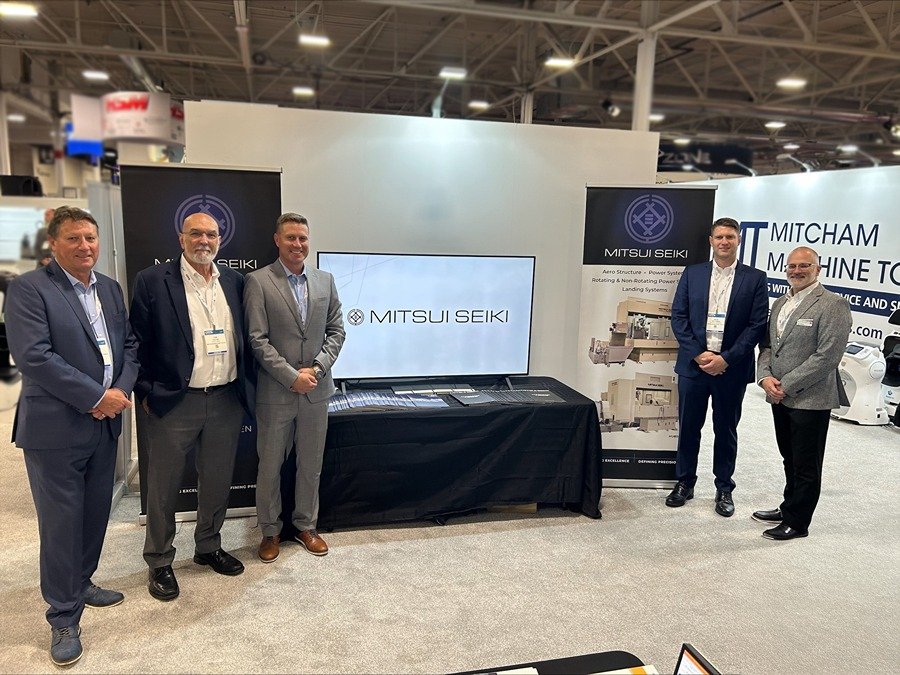
Mitsui Seiki USA and Mitcham Machine Tools (MMT) announced a partnership to provide Mitsui Seiki machines, automation solutions, application engineering, and after-sale support to manufacturers in Eastern Canada, including Manitoba, Ontario, Quebec, New Brunswick, Prince Edward Island, Nova Scotia, and Newfoundland and Labrador. This new partnership combines Mitsui Seiki’s renowned positional accuracy and repeatability technologies with MMT’s premium service and expertise to deliver significant technological and service benefits to manufacturers in the aerospace, mold and die, medical, automotive and optics industries. Mitsui Seiki’s complete line of vertical and horizontal machining centers, jig borers, jig grinders, and thread grinders will be available to MMT customers, tailored to their requirements. MMT’s experienced staff will guide companies through the customization process, as well as automation configuration, application engineering, and after-sale support. For more information, visit mitsuiseiki.com. The post Mitsui Seiki USA partners with Mitcham Machine Tools appeared first on Engineering.com.
You can get antique plates for a first-gen Prius now — feeling old, yet?

This fall marks the 25th anniversary of the US launch of the first-gen Toyota Prius — a car that, arguably, has done more to more to shift the market away from fossil fuels than any other single vehicle (more on that in a minute). That means that, in many states, you can now get “antique” or “historic” plates for a modern hybrid. If that sounds appealing to you, here’s what it might cost to keep that OG Prius on the road for many more years to come. more…
Kempower and EO install 342 charging points for electric buses

Finnish DC fast charging manufacturer Kempower and UK EV infrastructure firm EO Charging have installed 342 electric bus chargers in the past three years, and are building a further 150 charge points across the UK. Around 1,570 new zero-emission buses hit UK roads in 2024, representing a 36% year-on-year increase. The partners aim to ensure that these vehicles have sufficient charging infrastructure. Since 2022, Kempower and EO Charging have collaborated to fit a total of 11 bus depots with fast charging infrastructure, primarily in London and Scotland, working with bus operators like Metroline, Go Ahead and Stagecoach. The total energy delivered to electric buses through the companies’ chargers currently stands at 20.23 GWh. Most recently, the companies partnered to install three pantographs in Scotland. Kempower suppled the technology while EO Charging delivered the installation. The project marked Kempower’s first commercial pantograph installation in the Northern Hemisphere—the company completed its first in Sydney, Australia in July 2024. Kempower’s pantograph offering enables charging speeds of up to 500 kW, facilitating quick bursts of charging and reducing downtime during operating hours. “The successful delivery of pantograph infrastructure in Scotland shows that the UK’s bus networks are ready for fast, automated charging built for reliability,” said Rolle Nieminen, Kempower’s Head of Sales for the UK and Ireland. Source: EO Charging
Tesla Full Self-Driving v14 gets new release date, Elon Musk details

Tesla’s Full Self-Driving version 14 has gotten a new release date after new details from CEO Elon Musk opened up some new perspectives on the suite. Originally slated for an “early wide release” of v14 this past week, then a launch of v14.1 and v14.2 this week and next week, respectively, delays arose after Tesla’s Autopilot team found some issues within the software. Tesla FSD V14 set for early wide release next week: Elon Musk Musk detailed on X this morning that a “last minute bug” appeared before release, which has now pushed FSD v14’s release back to this Monday: Last minute bug cropped up with V14. Released is pushed to Monday, but that gives us time to add a few more features. — Elon Musk (@elonmusk) October 4, 2025 Musk also said the delay would give Tesla the ability to “add a few more features,” which seems like an added advantage, although he did not provide any additional details on what these features could be. In classic Musk fashion, he has teased the capabilities of this version of the FSD suite since it became public knowledge that Tesla was working on it. He said that it is the second most important update for the AI/Autopilot team since FSD v12. V14 will have a parameter count that is ten times what previous iterations were, which should provide more accuracy and a more human-like operation. Tesla is making “significant improvements” in FSD software and plans to increase parameter count by roughly 10x from what people are currently experiencing pic.twitter.com/r974W6ToGi — TESLARATI (@Teslarati) July 23, 2025 Musk has said v14 “feels alive” and has used the word “sentient” to describe its performance. The goal with the new FSD rollouts is to eliminate as many interventions as possible, making it as close to human driving as possible. The post Tesla Full Self-Driving v14 gets new release date, Elon Musk details appeared first on TESLARATI.
Study: Volatile company carbon footprints skew Scope 3 estimates
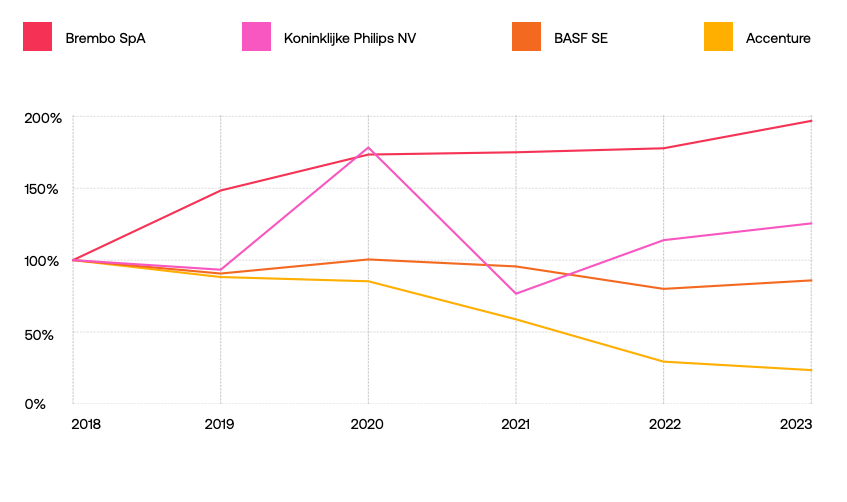
For companies seeking to improve the accuracy of Scope 3 inventories, corporate carbon footprints can offer an upgrade to more commonly used methods. But a new study from European researchers suggests that “unpredictable variation” in company-level data severely limits the usefulness of the approach. To total up Scope 3 numbers — emissions from suppliers, use of products by customers and other indirect sources — companies most often base estimates on activity levels or spending. For a purchase of steel, for instance, a company might multiply the quantity purchased by an estimate of the emissions associated with the production of a typical ton of the material. Use of these emissions factors makes the process relatively easy to implement, but such broad estimates disadvantage suppliers selling lower-carbon versions of a product. As an alternative, a supplier can estimate its total emissions — its corporate carbon footprint — and allocate a fraction of that total to its customers, depending on how much of its output each purchases. The process, which is used by CDP and other standard-setters, ensures the benefits of any emissions reductions implemented by the supplier will be passed on to customers — but it also means many less relevant factors influence the estimate. Unstable estimates Company footprints can fluctuate due to acquisition or divestments, for example. Product lines can be eliminated or expanded, and accounting methodologies change. All would impact a supplier’s footprint — and hence the emissions allocated to customers — but might not change the actual emissions associated with the customer’s purchases. To examine the problem, crtl+s, a Berlin-based sustainability consultancy, teamed up with researchers at the University of St Gallen in Switzerland. They looked at corporate carbon footprint data disclosed to CDP by 62 European companies, all of which had committed to emissions goals with the Science Based Targets initiative. “All 62 companies exhibited strong volatility in specific emissions over the five-year period,” the team concluded in a white paper released this week. “Even among climate leaders, emissions data proved unstable.” Using footprints from 2018 as a starting point, the group plotted percentages changes over the following five years. In the case of tech company Philips, total emissions came close to doubling one year before dropping back below baseline 12 months later. Tracking emissions The team will next search for the cause of such sudden changes. “But I know for sure it’s not specific emission reduction activities,” said ctrl+s CEO Moritz Nill. Changes from such causes are more likely to be in the 2 percent-per-year range, he added. Product footprints are coming The long-term solution, Nill and others say, is to use carbon footprints tied to specific products. Industry groups are collaborating to streamline the creation and sharing of such footprints, including Catena-X in car manufacturing, Mondra in food retail and sector-agnostic systems such as the Partnership for Carbon Transparency, which is being developed by the World Business Council for Sustainable Development. In the meantime, Nill recommends sticking with emissions factors and refining the estimates using information from suppliers about specific emissions-reductions measures they have implemented. The post Study: Volatile company carbon footprints skew Scope 3 estimates appeared first on Trellis.
Teradyne unveils Titan HP system level test platform
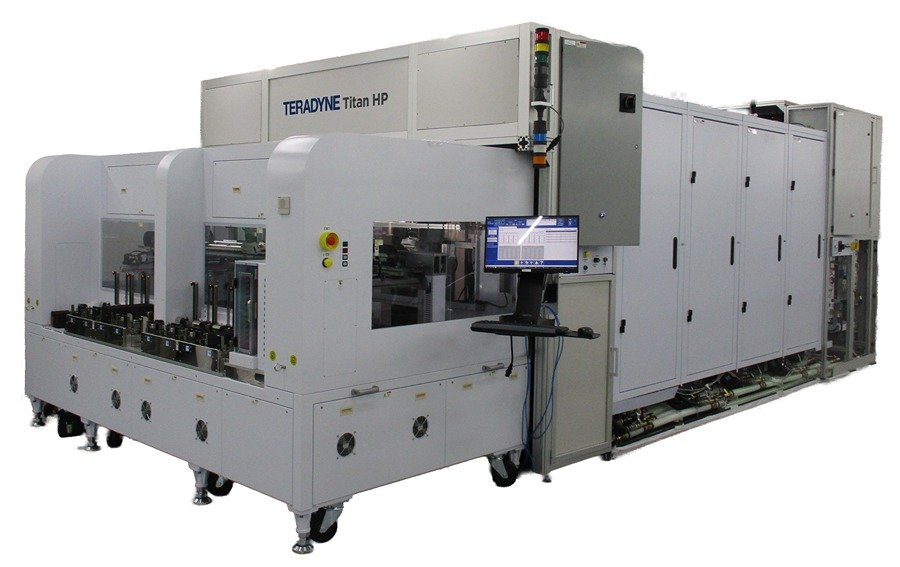
Teradyne, Inc. announced the launch of its Titan HP system level test (SLT) platform, designed specifically for the artificial intelligence (AI) and cloud infrastructure markets. The solution is designed to meet the demands of smaller process nodes and emerging architectures in current technologies. Teradyne Titan HP is a breakthrough system level test solution that addresses the increasing demands of today’s advanced technologies for the AI and cloud infrastructure markets. SLT has become an integral part of the high-volume manufacturing process, as the complex devices used in AI and cloud infrastructure deployments push the boundaries of power consumption and thermal output. Teradyne Titan HP, currently in production at a number of large customers, is purpose-built to test these devices in real-world conditions. Currently supporting up to two kilowatts of power, with a roadmap to support four kilowatts in the near future, customers can be assured that their investment today will meet the demanding requirements of tomorrow’s devices as well. Teradyne Titan HP’s superior thermal control ensures devices meet rigorous quality standards at or above the expected yield. This includes: A multi-branch cold plate architecture, which cools both the device under test (DUT) and non-DUT components for comprehensive thermal management. Asynchronous cooling control with proportional, integral and derivative (PID)-tuned, per-site thermal control, which provides precise, efficient cooling to prevent overheating. A DUT heater option, which enhances the accuracy of automated temperature control (ATC) for more precise thermal testing. Teradyne Titan HP is the world’s leading SLT solution, enabling mission mode testing for next-generation AI and cloud infrastructure devices. As part of Teradyne’s comprehensive portfolio of test equipment, which delivers superior test for every device across every insertion, Teradyne Titan HP ensures that our customers’ capital equipment investments are future-proofed for tomorrow’s evolving market demands. For more information, visit teradyne.com/titan-hp. The post Teradyne unveils Titan HP system level test platform appeared first on Engineering.com.
Rad Power offers $200 discount and up to $210 in FREE bundled gear on e-bikes from $1,399, Exclusive Anker S340 solar cam low, more

It’s another EV-heavy day of Green Deals, headlined by Rad Power’s newly launched Haul-o-ween Sale that is taking $200 off one e-bike, while offering up to $210 in FREE bundled gear with several other new and legacy models, like the Radster Trail Off-Road e-bike and the Radster Road Commuter e-bike getting a $199 free cargo kit for $1,999, while other deals start from $1,399. We also secured up to $280 in exclusive savings on nine Anker eufy security devices, like the SoloCam S340 Solar Security Camera at a new $110 low. We also have new low prices on Heybike’s Hero Carbon-Fiber All-Terrain e-bikes starting from $2,099, an Autel 40A level 2 smart EV charger discount, and more waiting for you below. And don’t forget about all the hangover deals collected at the bottom of the page, like yesterday’s exclusive new Jackery Explorer 3000 v2 (HomePower 3000) low price, and more. Head below for other New Green Deals we’ve found today and, of course, Electrek’s best EV buying and leasing deals. Also, check out the new Electrek Tesla Shop for the best deals on Tesla accessories. more…
WATTALPS immersion cooling battery system is validated by Bureau Veritas for marine use

French battery systems manufacturer WATTALPS has been evaluated by French testing, inspection and certification firm Bureau Veritas as part of the Marine Type Approval process for its advanced immersion cooling battery systems. The audit included a detailed review of the company’s quality management system and supporting documentation, as well as the product quality control procedures and operational management processes at its production site. Bureau Veritas confirmed that WATTALPS’s quality management system meets its rigorous standards, marking a key step in the certification journey for maritime deployment. WATTALPS already supplies batteries with immersion cooling for commercial EVs. “This successful audit underscores our commitment to excellence and reliability in battery manufacturing for demanding applications,” said WATTALPS CEO Matthieu Desbois-Renaudin. Source: WATTALPS
Inside Levi’s and Schneider’s bid to clean up garment supply chains
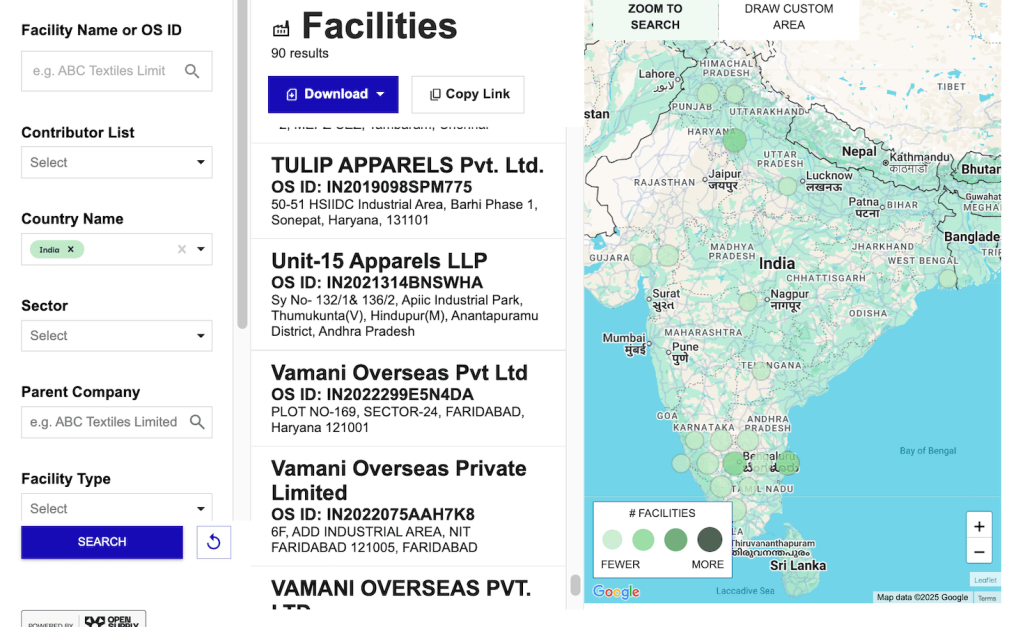
Levi Strauss is teaming up with Schneider Electric to help garment suppliers in India adopt renewable energy. The partnership seeks to engage, educate and assist about 70 suppliers in inking deals over the next three years. The hope is that those suppliers will later roll out the learnings to their own suppliers, driving emissions reductions deep into the Levi’s supply chain. That need gnaws at the fashion industry. Upstream activities — from producing raw materials to producing yarns, fabrics and garments — make up 70 percent of its climate emissions, according to the advocacy group Fashion Revolution. The Schneider-Levi’s LEAP collaboration, announced on Sept. 23, addresses complaints suppliers have expressed about the difficulties of doing away with the dirty coal and gas that is ubiquitous to apparel factories and mills. LEAP, which stands for LS&Co. Energy Accelerator Program, also draws on Levi’s learnings over the past three years from participating in Walmart’s Project Gigaton power purchasing agreement. The San Francisco brand projects that shifting to renewable energy can deliver as much as 20 percent of the supply-chain emissions cuts needed to meet its 2030 target: a 42 percent reduction over 2022 levels. The new project in India would make up about 3 percent of the near-term Scope 3 emissions, according to Levi’s Senior Director of Global Sustainability Jennifer DuBuisson. The proof-of-concept LEAP initiative will help companies either broker power purchase agreements or install solar or other sources onsite. The company plans to “meet suppliers where they are,” she said. “We’re a little bit renewable-energy-mechanism agnostic.” Levi’s and Schneider want to expand LEAP to the European Union or Asia-Pacific nations as soon as 2026. The Schneider factor It’s the first time Schneider has formed such a partnership in fashion. Based outside of Paris, the energy management firm’s other collaborations have touched retail (Walmart’s Project Gigaton), real estate (Blackstone portfolio upgrades), food and beverage (PepsiCo supply chain energy cuts), technology (Microsoft’s 100-percent renewable energy goal) and healthcare (Pfizer efficiency and renewables). Levi’s has already engaged since 2022 with Schneider in Project Gigaton PPA. Through the project, an Orsted wind farm in Kansas is meant to provide most of the electricity needed through 2036 by the U.S. and Canadian plants Levi’s owns and runs. “By extending that experience to their own suppliers through LEAP, Levi’s is building confidence in what’s possible and creating a practical, partnership-driven model that others across the fashion sector, and beyond, can replicate to accelerate decarbonization,” said John Powers, vice president of global cleantech and renewables at Schneider Electric. Sampling Levi’s suppliers A glimpse of more than 90 Levi’s supplier facilities in India. Credit: Levi’s map, Open Supply Hub Ceres Company Network Senior Director Mary Ann Ormond praised the denim maker’s transparency in both its climate transition plan and the co-launch of LEAP. Levi’s was an outlier in its industry for creating a Climate Transition Action Plan in 2024 that details near-term steps toward net zero. That process helped to prioritize emissions-slashing priorities, according to DuBuisson. “This transition plan highlights that it is not about a silver shiny bullet that does not exist,” DuBuisson said. “These are solutions in the market today that we need to be accelerating, and that’s what we’re trying to do with LEAP.” Schneider’s experience appealed to Levi’s, she added. “There’s a whole team with years of expertise sitting on the ground ready to answer suppliers’ questions and help them develop the business cases they need.” In Levi’s other supply chain decarbonization work, it is involved with both the Apparel Impact Institute’s (AII) Carbon Leadership Program and AII’s efforts to advance thermal energy including heat pumps. AII works in India to help textile manufacturers electrify and ditch fossil fuels. India made an ideal launch pad for LEAP in part because it allows for pooled PPAs, according to DuBuisson. “I was just there and continue to be inspired by the amount of innovation and amazing work that’s happening among these suppliers,” she said. Other favorable conditions include incentives for renewable energy purchasing. Fashion emissions With LEAP, Levi’s is taking a stand on the fashion industry’s hidden emissions gorilla within Scope 3. It may have ripple effects across the industry, or at least among the suppliers that serve many other brands, too. “As measures of success, we hope to see a measurable increase in suppliers’ renewable electricity procurement in India and eventual expansion of the program throughout Levi’s supply chain to reduce Scope 3 emissions, increase supply chain resilience and inspire peer companies to take similar actions,” said Ormond of Ceres. However, some critics want multi-billion-dollar brands like Levi’s to back suppliers financially, too. “Fashion brands helping their suppliers overcome barriers to access high-quality, additional renewable energy through mechanisms like onsite solar and PPAs is a sure sign of progress in turning climate targets into tangible action,” said Ruth MacGilp, fashion campaign manager of Action Speaks Louder. “However, technical support without financial investment and fair purchasing practices to fill the gap of upfront costs is unlikely to reduce risk for suppliers at a sufficient scale for deep decarbonization.” DuBuisson pointed out that Levi’s is continuing two programs that help to lower climate-transition financing costs for suppliers — the International Finance Corporation’s Global Trade Supplier Finance and HSBC’s Sustainable Supply Chain Finance Program. “But ultimately we really see LEAP as a play in resiliency for suppliers and the ability to make them more competitive for the many brands they are likely sourcing for,” she said. “All boats rise. A supplier is producing garments for multiple brands and whether it’s a Levi’s program or another program, this is about decarbonization. That’s what we’re after.” The post Inside Levi’s and Schneider’s bid to clean up garment supply chains appeared first on Trellis.
Additive manufacturing, eh?
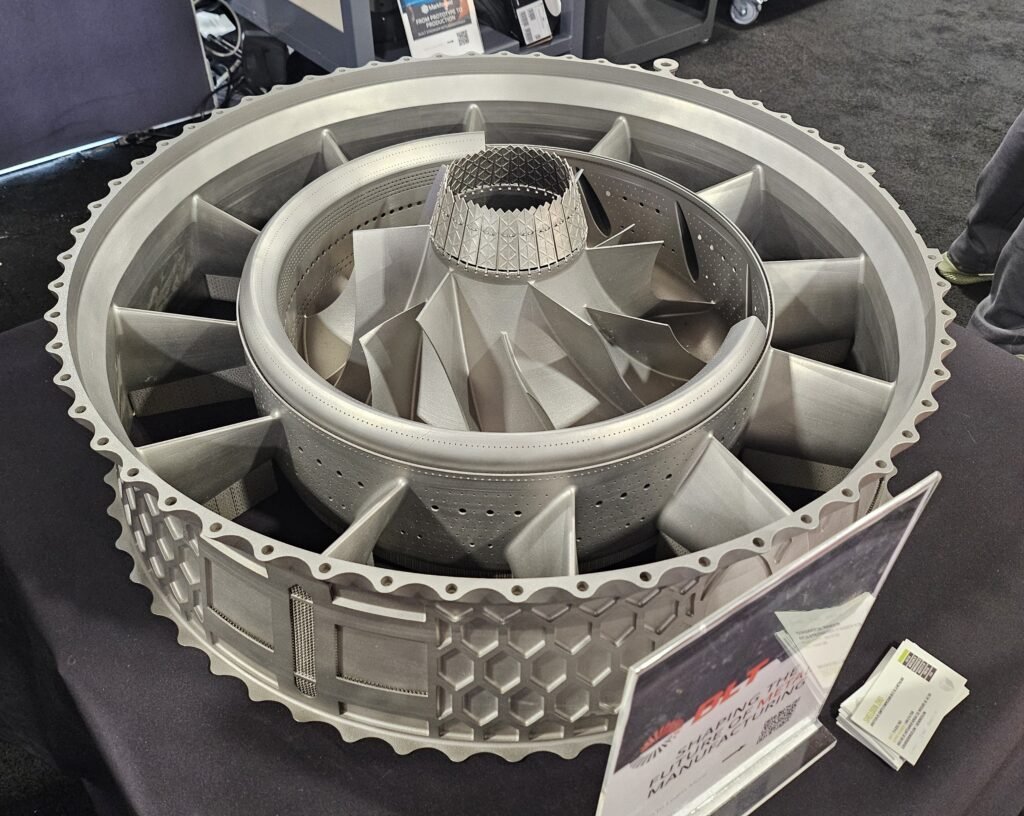
Metal additive manufacturing on the show floor at CMTS. (IMAGE: Author) Let me start by apologizing for the interjection in the headline. I feel very fortunate to live in Canada and, honestly, I cringe at many of the stereotypical markers of our national identity. Nevertheless, I’m admittedly guilty of this particular Canadianism on a regular basis. But more than that, I chose this (undeniably pedestrian) headline because it captures a sentiment I came across repeatedly while walking the floor at this year’s Canadian Manufacturing Technology Show (CMTS). Show floor safari At a glance, one manufacturing trade show looks very much like another. Whether it’s the International Manufacturing Technology Show in Chicago, FABTECH in Las Vegas, or EMO in Hannover/Milan (depending on the year), you’ll probably see more-or-less the same sights: Rows of exhibition booths featuring various components and the industrial equipment that makes them Attendees wandering up and down the aisles, admiring said components and equipment Sales people eagerly trying to engage said attendees however they can, with tables of swag laid out like all-you-can-eat buffets Packs of students dashing from one booth to the next, grabbing said swag and stuffing it into their tote bags (also swag) Trade journalists trying to grab comments and interviews from all of the above, competing for attention while neither selling nor buying (nor giving away) anything ourselves Really, aside from the first two points, what I described probably characterizes 99% of trade shows in any sector, not just manufacturing. Yet despite these superficial similarities, there are significant differences between trade shows, even just within manufacturing. What sets CMTS apart, ironically, is its lack of differentiation. Printing inside the box “I’ve been to different booths [on one side of the hall] and seen a lot of automation,” says Rishabh Sharma, applications specialist at GoEngineer, which had its booth roughly in the middle of the exhibition hall. “Then I went to the other side this morning and saw a lot of really cool innovations with 3D printing. I’ve noticed a lot of people are attracted towards the printers.” Sharma isn’t unique in that impression. Mark Pimentel, senior CAM application specialist at Hawk Ridge Systems, tells me, “I’ve been in the business long enough that I’ve seen interest in certain things grow. For some reason, at this show I’m getting a lot of questions about 3D printing, and there’s a good representation of 3D printing here.” Sample large-scale metal AM part on display at the GoEngineer booth. (IMAGE: Author) Unlike its larger American and European counterparts, CMTS brings a multitude of different manufacturing technologies into a single hall. As a result, a short walk can see you passing booths for software, additive manufacturing (AM), waterjet cutting, CNC machining, contract manufacturers, and universities in the span of just a few minutes. It may not be the biggest or most specialized trade show, but its relatively small size and that lack of specialization make some technologies – such as 3D printing – really stand out. “Compared to four years ago, the show feels tighter,” observes Terral Childs, mechatronics engineer laboratory manager for the engineered solutions group at Mitsubishi Electric. “Right now we’re a bit compact, which is a good thing: the close proximity actually allows more people to see everyone at the show no matter where you’re located.” Yama Fedai, key account manager and industry manager for automotive at TRUMPF, emphasizes the variety of people with vested interests in manufacturing attending the show. “It’s more diverse than other industry trade shows,” he says. “We ran into folks from University of Waterloo, we saw automotive and aerospace folks. In many ways – including AM – what surprised me is the diversity of folks that are here.” CAN AM With so much buzz around additive, one might be forgiven for thinking that there’s some cutting-edge Canadian 3D printing going on. But, for the most part, the people actually in the AM industry at the show noted a lag in the adoption curve above the 49th parallel – a common complaint in the Canadian tech industry more broadly. RIGHT: A raft of Benchy test models produced by exhibitor Nanoscribe using two-photon photopolymerization. LEFT: Close up of the individual models. (IMAGE: Author) “In general, Canada is typically slower to adopt international technology,” says Chris Niedojadlo, director of sales and marketing at 3D Printing Canada. “Trends in Europe and the US today might be six to twelve months ahead of what Canada’s adopting.” David Nolan, founder of Sixpenny Additive, sees an even wider margin: “What I’ve learned is that the States is five years ahead and Europe is like ten years ahead of where we are. Both of those adoption curves are essentially exponential, and we’re still on the flat part of the slope. I think that hesitancy has largely been a result of people not understanding what’s available and not having access to the machinery.” Nolan is aiming to change that with his company, which premiered at CMTS, and aims to act as both a service provider and reseller of metal AM technology. It’s a business model that seems to have become more popular in the AM industry in recent years so, in that sense, Canada lagging behind Europe and the United States could actually be to the advantage of Canadian AM: learning the hard-won lessons of what it takes to drive adoption without the growing pains. Perhaps the most striking suggestion that the Canadian AM industry is growing came from Karim Jassir, content marketing strategist for Renishaw Canada. After telling me that this was the company’s first time back at CMTS in eight years, he mentioned that, “There was an intention from SME to have a separate building focused on just additive manufacturing but, sadly, that had to be reduced because of everything that’s been happening.” Even so, Jassir emphasized that this was the right time for Renishaw to return to CMTS: “There’s a lot of people coming to the show and, so far, we’ve had really good feedback.” The
The era of cheap Chinese solar + storage is ending – here’s why

Solar and storage prices are about to rise after a year and a half of record lows, according to new data from Wood Mackenzie. Equipment procurement costs for solar and energy storage will jump around 9% starting in Q4 2025, marking the end of the bargain pricing developers have enjoyed for the last 18 months. That’s because China is changing the rules. more…
Sila begins automotive-scale silicon anode production to boost domestic EV battery supply chain

Sila has announced it has started operations at its new large-scale silicon anode manufacturing plant in Moses Lake, Washington. The site, which spans over 600,000 square feet on a 160-acre property, is designed to supply advanced battery materials for EV manufacturers and other battery-powered applications. The facility aims to transition silicon anode technology from laboratory development to commercial-scale US manufacturing. The facility will produce initial batches of Titan Silicon, Sila’s silicon-carbon anode material designed to replace graphite in lithium-ion batteries. Sila says its Titan Silicon product enables up to a 20 percent energy density improvement compared to leading graphite-based cells and supports two times faster charging speeds. The plant was engineered to support an initial capacity of two to five gigawatt-hours (GWh), with design flexibility for future expansion up to 250 GWh within five years. The Moses Lake plant sources clean hydropower from the Columbia River and was constructed using integrated safety and environmental controls, as well as automotive-grade quality systems for consistent production of Titan Silicon. “This is not just about building a factory. It is about closing the gap between innovation and manufacturing in America,” said Gene Berdichevsky, CEO and Co-Founder of Sila. Source: Sila
Elon Musk is halfway towards becoming the world’s first trillionaire

Elon Musk has reached a new milestone by becoming the first individual in history to achieve a net worth of $500 billion. Forbes’ Real-Time Billionaires tracker confirmed the record Wednesday afternoon after Tesla stock gained nearly 4%, adding an estimated $9.3 billion to Musk’s net worth in a single day. He now sits more than $150 billion ahead of Oracle co-founder Larry Ellison, whose net worth also stands at a very impressive $350 billion. Tesla stock leads wealth surge Musk’s fortune remains heavily tied to Tesla, which has rallied nearly 100% since April, when the CEO announced he would step back from outside roles to focus more on the EV maker. The company’s market capitalization is back within 10% of its all-time peak, lifting the value of Musk’s 12% stake to about $191 billion. Beyond this, his 2018 compensation package, which was rescinded by a Delaware judge last year but is still under appeal, could unlock additional stock worth more than $130 billion if reinstated, Forbes noted. Investors see Musk’s refocused leadership as a stabilizing force for Tesla as it pursues ambitious global growth. Tesla has also proposed a new compensation plan for Musk that could bring the company’s market cap to $8.5 trillion and add an additional $900 billion to the CEO’s net worth. Elon Musk just became the first person in the world to achieve a half-trillion-dollar net worth.He is the one and only member of the $500 billion exclusive club, and he is projected to be the world’s first trillionaire pic.twitter.com/PHDY0JBJjJ — SMX (@iam_smx) October 1, 2025 SpaceX and xAI boost portfolio value While Tesla drives much of his wealth, Musk’s stakes in SpaceX and xAI have added significant upside to his net worth. SpaceX, his private rocket company, recently hit a $400 billion valuation in a private tender offer, valuing Musk’s 42% stake at $168 billion. Meanwhile, xAI Holdings, which merged with social platform X earlier this year, is worth an estimated $113 billion, giving Musk another $60 billion on paper. These ventures, combined with Tesla’s resurgence, have pushed Musk’s net worth past the half-trillion-dollar mark and highlighted his reach across multiple industries, from clean energy to space, artificial intelligence, brain implants, and tunneling. The post Elon Musk is halfway towards becoming the world’s first trillionaire appeared first on TESLARATI.
Tesla hits record vehicle deliveries and energy deployments in Q3 2025
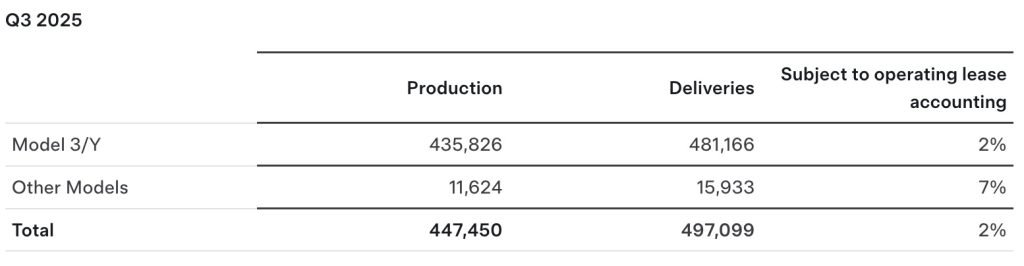
Tesla (NASDAQ:TSLA) reported record-breaking results for the third quarter of 2025, producing 447,450 vehicles and delivering 497,099 units worldwide. The company also deployed 12.5 GWh of energy storage products, setting a new record in its fast-growing energy business. Model 3/Y domination As per Tesla’s Q3 2025 vehicle delivery and production report, the bulk of the company’s numbers came from its mass-market lineup. The Model 3 sedan and Model Y crossover accounted for 435,826 units produced and 481,166 delivered in the quarter. This is quite impressive considering that both the Model 3 and Model Y are still premium-priced vehicles with numerous competitors that are significantly more affordable. Other models, including the Model S, Model X, and Cybertruck, contributed 11,624 vehicles produced and 15,933 delivered. Beyond vehicles, Tesla’s energy business posted its best quarter to date, deploying 12.5 GWh of storage systems. Credit: Tesla Q3 2025 earnings call date Tesla’s third-quarter results are extremely impressive, and they exceed Wall Street’s estimates by a significant margin. As per Benchmark analyst Mickey Legg, who had a delivery estimate of 442,000 vehicles in Q3, Wall Street consensus was at 448,000 units. Even more optimistic analysts estimated that Tesla would only post deliveries in the mid-460,000s. Investors will gain further insight later this month when Tesla reports full financials for the quarter. The company will release Q3 2025 earnings after market close on October 22, followed by a Q&A webcast at 4:30 p.m. Central Time. The post Tesla hits record vehicle deliveries and energy deployments in Q3 2025 appeared first on TESLARATI.
Why Tesla’s Q4 performance could shock many after incredible Q3

Tesla reported vehicle deliveries and energy deployments for the third quarter of 2025 today, blowing analyst estimations from Wall Street firms completely out of the water with its strongest three-month performance in company history. The strong performance, which resulted in nearly half a million vehicle deliveries in the quarter, was largely driven by the momentum of the EV tax credit, which expired at the end of September, marking the end of the $7,500 discount that was previously available. Tesla hits record vehicle deliveries and energy deployments in Q3 2025 This was a massive contributor to Tesla’s record-high in vehicle deliveries, as consumers rushed to take advantage of the credit. There is still some residual impact to be felt as we enter Q4, and there is a potential shock coming to many investors as it could be stronger than what many think: EV Tax Credit Deliveries Will Continue Through Q4 Despite the credit’s expiration, people will still be able to take advantage of it because the IRS changed the rules mid-quarter. Prospective buyers can utilize the credit after September 30 if they place an order for an EV and make a marginal payment on the car. Tesla’s $250 order deposit qualified as the marginal payment, so as long as the order was submitted before the end of the day on September 30, they could still take delivery in Q4 or even Q1 and still take advantage of the credit. Tesla set to win big after IRS adjusts EV tax credit rules With the Model Y Performance launching in the U.S. on September 30, that undoubtedly contributed to some orders. However, there are likely many people who ordered in the latter portion of Q3 and have not yet taken delivery. These will all contribute to Q4 delivery figures. Seasonal Holiday Boost Tesla traditionally has its strongest quarters in Q4, as the company typically introduces initiatives such as price cuts, incentives, and other offers to close out the year strong. Car buyers are more likely to jump at these offers as well, as gifts for either themselves or others. What Tesla does in the final quarter of the year is usually boosted by whatever types of offers it can make. Affordable Model Production Ramp Tesla is likely preparing for the launch of its affordable model, which is essentially a stripped-down Model Y. Some rumors have been circulating within the community, indicating that the company is nearing the sale of this vehicle, which is coded within Tesla’s website as the “Model Y Standard.” Looks like some coding was found on Tesla’s website that seems to hint the affordable Model Y is coming: -Named “Model Y Standard” -$39,990 starting price Initial thoughts: this is completely unconfirmed, but was really hoping Tesla would get this closer to $30,000 — TESLARATI (@Teslarati) October 1, 2025 If Tesla is able to lock in some good pricing on its affordable model, Tesla could see its quarterly figures return to QoQ growth, something that the company has not had in a few years. The post Why Tesla’s Q4 performance could shock many after incredible Q3 appeared first on TESLARATI.
How Salesforce shifted its 2030 climate goals while going all in on AI
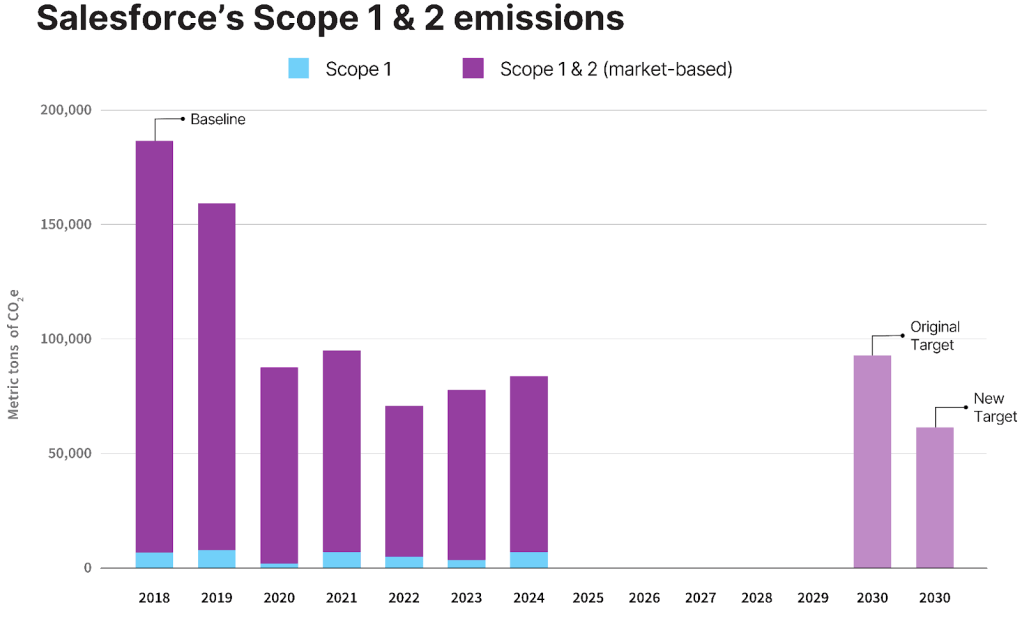
Like many fast-growing companies betting on artificial intelligence, Salesforce is pacing far behind its climate action plan. The $38 billion enterprise software business said in 2021 that it would halve absolute emissions by 2030. Four years later, the company can point to solid progress on cutting emissions from electricity use. But those gains have been entirely canceled out by emissions growth elsewhere, including in the data centers that power its AI products. Special Series Chasing Net Zero ArcelorMittal: Inside the struggle to reach 2030 climate goals Nestlé: On track (holes and all) for a 50 percent emissions cut IKEA: On pace to halve emissions by 2030, while rivals falter GSK: Can it keep the biggest climate promise in pharma? Series Overview & Methodology Against that backdrop, the company has dramatically shifted how it intends to cut the biggest part of its carbon footprint. In the latest installment of Chasing Net Zero, our in-depth series that includes profiles of emissions progress at ArcelorMittal, Nestlé and GSK, we unpack the forces behind the move and explain why some observers are asking whether the switch has weakened Salesforce’s ambition on climate action. Salesforce is now basing its Scope 3 target — which includes data centers and other sources outside its immediate control, such as goods from suppliers — on improvements to emissions intensity rather than absolute reductions. Using this measure (Scope 3 emissions divided by the company’s gross profit) leaves open the possibility that the company’s absolute emissions could increase even if it meets its goal. What’s more, an analysis by Trellis of the company’s new intensity commitment suggests it will likely hit its goal just a year after setting it, raising questions about the depth of its ambition. Salesforce describes its decision to lean into emissions intensity, outlined in its most recent stakeholder impact report, as a “more actionable and pragmatic” route to net zero. “For a high-growth company like Salesforce, this approach is more practical given that growth may outpace the global rate of decarbonization,” said Sunya Norman, senior vice president of impact. Leadership legacy Salesforce became one of the earliest companies from any industry to embrace net zero when co-founder and CEO Marc Benioff signed a splashy 2015 pledge organized by fellow billionaire Richard Branson. Its initial plan, validated by Science Based Targets initiative (SBTi) four years later, called for halving emissions from operations and electricity use (Scopes 1 and 2) by 2030 — a commitment Salesforce achieved several years early thanks to investments in renewables. Subsequently, it has upgraded to a more ambitious 2030 target for Scope 1 and 2. Source: Salesforce annual impact reports. Note: Salesforce discloses emissions by the company’s fiscal year, which ends in January. We have used the previous calendar years here, as most emissions were generated in that time period. The 2019 plan also targeted a 50 percent cut to emissions from use of fuel and energy elsewhere in the company’s value chain. In a 2021 climate action plan, Salesforce expanded that commitment to all upstream and downstream Scope 3 emissions, including electricity consumed by data centers that run its software, but which the company doesn’t own. (The company did not have that broader pledge validated by the SBTi.) To shrink its biggest emissions source — purchased goods and services, including the cloud capacity it sources from Amazon Web Services and Google — and meet a 2019 goal of having 60 percent of Scope 3 emissions come from suppliers with science-based targets, the company uses contracts that require strategic suppliers to cut emissions. Salesforce also turned its climate strategy into a source of business, packaging the system it built to track its emissions into a product called Net Zero Cloud, priced at $210,000 annually. Yet progress on overall emissions has been a victim of financial success. Since setting its first science-based targets, Salesforce has acquired data analytics software provider Tableau and messaging software firm Slack. It’s also merged with AI management player Informatica. The moves helped triple revenues — and contributed to absolute emissions staying stubbornly flat. In 2024, the company’s emissions were just 1 percent below its 2018 baseline inventory of roughly 1 million metric tons. While the company reached its 2030 reduction goals for Scope 1 and 2 two years ago, overall emissions from Scope 3 activities — which made up more than 90 percent of its 2024 emissions — swelled 10 percent between 2019 and 2025. The company also fell short of its Scope 3 fuel and energy use goals, as well as its supply chain coverage goal. Reboot required Salesforce undertook a cross-company review in 2024 to reconsider its science-based targets as part of SBTi’s five-year review requirements. It dedicated a data scientist to analyzing progress and forecasting future scenarios, using internal metrics such as headcount adjustments, expansion plans and revenue projections alongside third-party data including grid decarbonization forecasts. The company’s market-based reduction targets for Scope 1 and 2 are now more ambitious: A 67 percent drop by 2030, compared with the 50 percent reduction previously sought and already delivered, followed by a 90 percent cut by 2041. But it’s in Scope 3, which contributes the large majority of Salesforce’s total emissions, where things get more complicated. Instead of another absolute goal, the company is targeting emissions intensity cuts of 68 percent by 2031 and 97 percent by 2041. Around 80 percent of companies with SBTi-approved plans have absolute reduction goals — and this method is what many investors and stakeholders expect. Still, the initiative’s Corporate Net Zero standard allows Scope 3 intensity goals in high-emitting sectors where growth is projected to be sector-wide and significant. Salesforce is not the first tech company to make the switch: Design software firm Adobe opted for a Scope 3 emissions-intensity target when it updated its commitments in August 2024. Other well-known software developers are considering this option as part of the near-term target reviews that the SBTi requires every five years, according to insiders. The megatrend underlying this thinking: Predictions of soaring
bananaz launches AI design agent for mechanical engineers
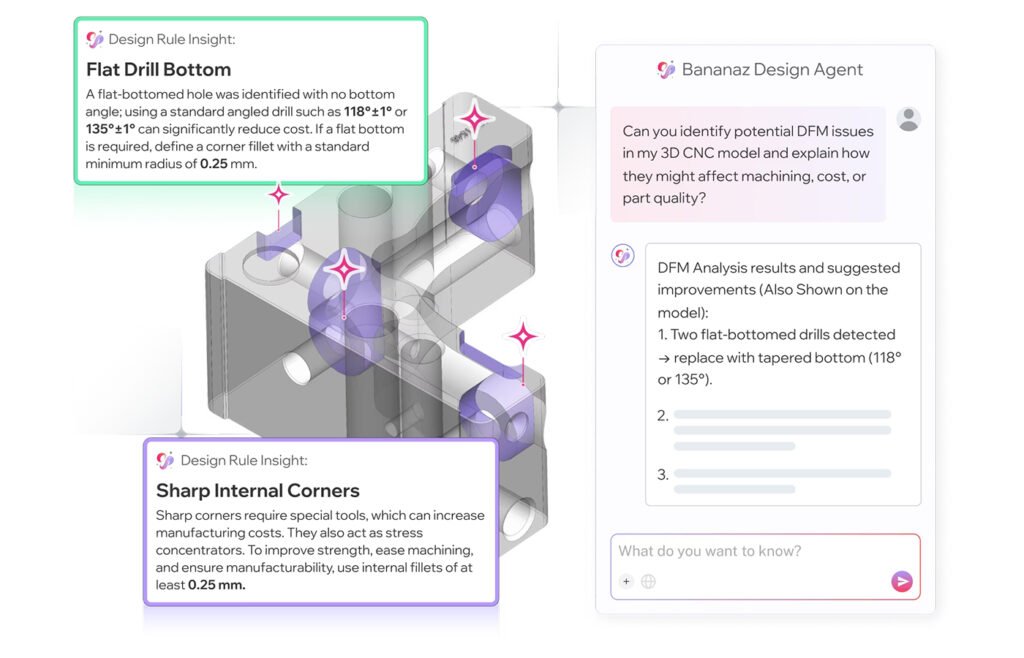
bananaz has launched bananaz Design Agent, the first AI agent built specifically for mechanical engineers. This isn’t another generic chatbot, it’s a specialized tool that understands mechanical logic, CAD files, and engineering standards. Built for the complexity of mechanical engineering While general AI tools excel at broad applications, mechanical engineering presents challenges that require specialized capabilities. True design understanding through AI, computer vision and advanced algorithms bananaz Design Agent processes text descriptions and interprets design files using computer vision and specialized algorithms. When a CAD file or technical drawing is uploaded, the agent reviews: 3D geometries and their spatial relationships Drawing annotations and dimensions Assembly hierarchies and part dependencies Material specifications and manufacturing notes Tolerance callouts and GD&T symbols Team communication history throughout the design and decision-making process Company best-practice rules, including both formal guidelines and informal tribal knowledge. The agent brings together different pieces of information to form a clear understanding of the design. It interprets lines, dimensions, and parts in the context of the overall engineering intent. It’s like having a virtual mechanical engineering expert on your team, 24/7, where decades of engineering expertise are just one question away. Context-aware engineering analysis Unlike tools that work with isolated information, the Design Agent maintains full context across the entire project. It understands how design decisions in one component affect the whole assembly, how tolerance changes impact manufacturability, how material choices influence performance, and how company as a whole designs, operates, and evolves, leveraging past work, existing components, and collective design history. This contextual understanding ensures each answer is based on the design files provided. The agent reviews the files and offers recommendations relevant to the project. Here’s what can be done with bananaz Design Agent The bananaz Design Agent helps streamline mechanical design tasks by allowing users to: Talk to your design With bananaz design agent, CAD files or technical drawings can be uploaded, and questions can be asked in plain language: “What DFM issues should I address before manufacturing?” “Can I replace any custom parts with shelf components?” “Perform a tolerance analysis and identify unnecessarily tight tolerances” “I need general improvements – what do you recommend?” “How should I update my drawing to comply with the company standards?” Instant DFM and mechanical design checks The agent applies manufacturing and design rules in real time, flags violations, and supports cost optimization and production readiness directly within both 2D and 3D CAD. Check the demonstration video in this article. Shelf components assembly matching The agent can search for shelf components and perform cost comparisons on your behalf. It automatically: Matches standard parts and fasteners to your design Identifies suitable suppliers Provides cost insights Verifies fit while considering all design constraints Automated tolerance analysis Generate comprehensive tolerance stack-up reports to ensure assemblies meet their functional requirements before reaching production. The agent provides: Automatic calculation of dimensional chains Risk assessment for assembly functionality Recommendations for tolerance optimization Exportable documentation for manufacturing teams Automated compliance and standards enforcement The agent can perform a complete review of the company’s standards and practices. It can: ISO 1101:2017 geometric tolerancing standards ASME Y14.5:2018 dimensioning specifications Custom organizational design rules Industry-specific manufacturing guidelines Pro-Tip: For a video demonstration of the agent, see the use case section. Beyond the Design Agent: The power of bananaz Copilot Design Agent is part of the broader bananaz Copilot ecosystem, a suite of AI-powered assistants built to transform the entire product development lifecycle. bananaz Copilot seamlessly integrates with CAD, PDM/PLM, and communication platforms to centralize knowledge, enforce standards, and streamline collaboration across engineering, manufacturing, and quality teams. From automated compliance checks to knowledge management and real-time design validation, Copilot ensures that every decision is grounded in data, best practices, and organizational context. Who can use it now bananaz is immediately available for: Mechanical Engineers working on product development R&D teams in mechanical industries Design Teams requiring compliance verification Manufacturing Engineers optimizing designs for production Quality Assurance Teams ensuring standards adherence Dual impact: ROI for the company, growth for engineers bananaz is more than just a technological tool, it’s a dual growth engine. For organizations, it helps reduce development time, lower manufacturing costs, and limit the risk of errors or recalls. For individual mechanical engineers, it reduces repetitive tasks, supports informed decision-making, and allows more focus on engineering and design work. Overall, it aims to improve efficiency for the company while enabling engineers to take on more impactful roles.` Getting started today Here’s how to get started: Visit the page at bananaz.ai/lp/design-agent-lp-table-left Schedule a personalized demo Try the AI Design Agent information about bananaz, visit bananaz.ai. The post bananaz launches AI design agent for mechanical engineers appeared first on Engineering.com.