How small language models can advance digital transformation – part 2
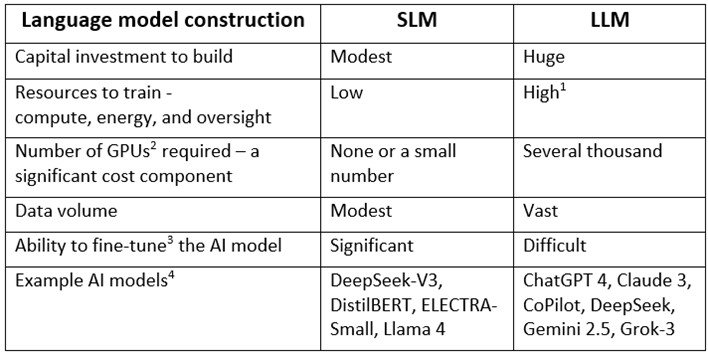
Small language models (SLMs) can perform better than large language models (LLMs). This counterintuitive idea applies to many engineering applications because many artificial intelligence (AI) applications don’t require an LLM. We often assume that more information technology capacity is better for search, data analytics and digital transformation. SLMs offer numerous advantages for small, specialized AI applications, such as digital transformation. LLMs are more effective for large, general-purpose AI applications. Let’s compare SLMs to LLMs for digital transformation projects. To read the first article in this series, click here. Language model construction and operation SLMs are much cheaper to construct than LLMs because they build a model from much less data. This lower cost of SLMs makes them particularly attractive for digital transformation projects. SLMs are much cheaper to operate and perform faster than LLMs because they need to process much less data volume to create inferences. Impediments to implementing an SLM What’s keeping organizations from implementing an SLM for a digital transformation project? Poor internal digital data quality and accessibility. Insufficient subject matter expertise to curate the specialized data required for the contemplated SLM. Too much unstructured paper data. Insufficient AI technical skills. Uncertain business case for the digital transformation project. Immature AI tools and vendor solutions. Immature project management practices. How will SLMs and LLMs evolve? The most likely trends for the foreseeable future of SLMs and LLMs include: Increasing numbers of organizations will use both SLMs and LLMs as the benefits of AI applications become clearer and more organizations acquire the skills to implement and operate the applications. Both SLMs and LLMs will grow in size and sophistication as software improves and data quality increases. Both SLMs and LLMs will improve in performance as software for inference processing improves and incorporates reasoning. The training costs for SLMs and LLMs will decrease as training algorithms are optimized. The limits on the number of words in a prompt will increase. Integration of AI models with enterprise applications will become more widespread. Hosting SLM-based AI applications internally will appeal to more organizations as the price point is achievable and because it mitigates the risk of losing control over proprietary information. Hosting an LLM internally will remain too costly and unnecessary when the organization has published and is enforcing an AI usage policy, as described in this article: Why You Need a Generative AI Policy. The clear distinction between SLMs and LLMs will blur as medium language models (MLMs) or small Large Language Models (sLLMs) are built and deployed. LLMs will reduce hallucinations8 by fact-checking external sources and providing references for inferences. SLMs offer numerous advantages for digital transformation projects, as these projects often utilize domain-specific data. LLMs are more effective for large, general-purpose AI applications that require vast data volumes. Footnotes This high consumption of resources is driving the many announcements about building large, new data centers and related electricity generation capacity. Training an LLM can cost more than $10 million each time. GPU stands for Graphics Processing Unit. GPU chips are particularly well-suited for the types of calculations that AI models perform in great quantity. Fine-tuning is a manual process with automated support where a trained AI model is further refined to improve its accuracy and performance. Selection criteria for choosing an AI model are described in this article: Making smarter AI choices. Performance is also called latency. In either case, it refers to the elapsed time from when the end-user completes the prompt, and the AI application output appears on the monitor. Inference is the term that refers to the process that the AI model performs to generate text in response to the prompt it receives. Sometimes called edge devices or edge computing. The post How small language models can advance digital transformation – part 2 appeared first on Engineering.com.
Yes, an EV really CAN power your home – if it’s one of these [update]
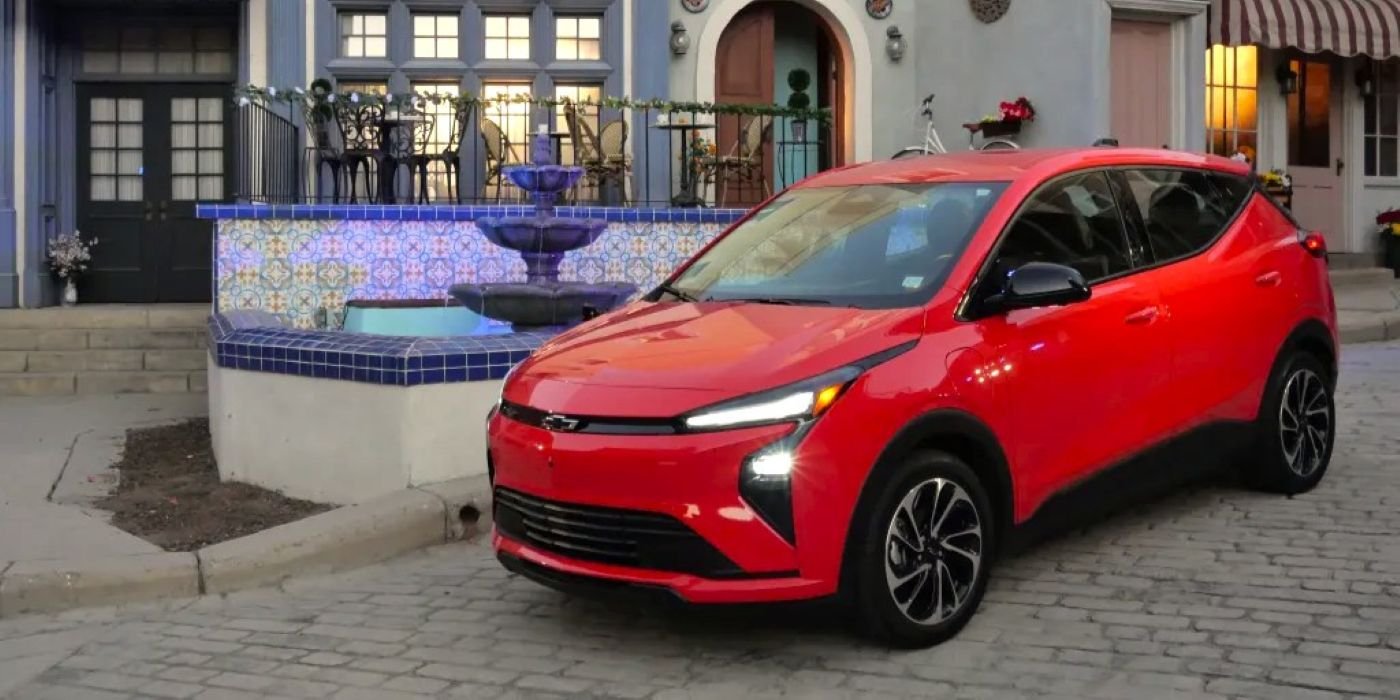
Can an EV really help power your home when the power goes out? It’s one of the biggest FAQs people have about electric cars — but the answer can be a bit confusing. It’s either a yes, with a but – or a no, with an unless. To find out which EVs can offer vehicle-to-home (V2H) tech to keep the lights on or even lower your energy bills, keep on reading. UPDATE: the most affordable new EV in America now packs bi-directional charging! more…
10 most common transporting mistakes for large-format Li-ion batteries

Sponsored by DGeo. Transporting Li-ion batteries? Make room for mastery, not mistakes. Transporting very large format lithium batteries—for electric vehicles, solar power storage, data center backup and other purposes—is a major undertaking. Navigating the process safely, compliantly and efficiently is an ongoing challenge, and it’s not uncommon for mistakes to happen. These mistakes are costly. From penalties for dangerous goods non-compliance to extensive delays to accidents resulting in injuries, mistakes during large-format lithium battery transport can bring about significantly negative financial consequences. To avoid these unforeseen costs and consequences, an organization has to prevent mistakes before they occur. If your organization is involved in the manufacture or transport of large-format lithium batteries, read the ebook 10 Common Transport Mistakes for Large-Format Lithium Batteries and become a master, plus see why some of the world’s largest manufacturers rely on DGeo to help them build a turnkey supply chain program.
Tesla Full Self-Driving v14.1 first impressions: Robotaxi-like features arrive

Tesla rolled out its Full Self-Driving v14.1 yesterday, its first public launch of its most robust and accurate FSD iteration yet. Luckily, I was able to get my hands on it through the Early Access Program. The major changes in FSD v14.1 were revealed in the release notes, which outline several notable improvements in areas such as driving styles, parking, and overall navigation. Here’s what Tesla outlined fully in its release notes: Added Arrival Options for you to select where FSD should park: in a Parking Lot, on the Street, in a Driveway, in a Parking Garage, or at the Curbside. Added handling to pull over or yield for emergency vehicles (e.g. police cars, fire trucks, ambulances). Added navigation and routing into the vision-based neural network for real-time handling of blocked roads and detours. Added additional Speed Profile to further customize driving style preference. Improved handling for static and dynamic gates. Improved offsetting for road debris (e.g. tires, tree branches, boxes). Improve handling of several scenarios including: unprotected turns, lane changes, vehicle cut-ins, and school busses. Improved FSD’s ability to manage system faults and recover smoothly from degraded operation for enhanced reliability. Added alerting for residue build-up on interior windshield that may impact front camera visibility. If affected, visit Service for cleaning! I wanted to try it for myself. My big must-dos were my complaints with v13.2.9, which included parking when arriving at a destination, Navigation when leaving a destination, and definitely a general improvement in the car traveling at an acceptable rate of speed, even when using the “Hurry” driving style. Here’s what I noticed with the new Full Self-Driving v14.1: Speed Profiles are More Realistic I am driving on “Hurry” about 95% of the time when utilizing Full Self-Driving. In past versions, most notably v13.2.9, my Tesla would slowly reach the speed limit, and it would tend to hang out at about 1-2 MPH either above or below it. My first observation with v14.1 was the vehicle’s tendency to get right up to speed and, since I was still on Hurry, drive slightly above the speed limit. It never got out of line; it traveled at speeds I would typically drive at manually. I think this is a big improvement on its own, because I felt that I was pressing the accelerator too frequently in past FSD versions. Oftentimes, it just wasn’t going fast enough to justify the “Hurry” label; it felt more conservative and more like a student driver than anything. Check it out: Tesla Full Self-Driving v14.1 travels at more realistic speeds on local roads. With 13.2.9, even on Hurry, it would hover the speed limit a little too much, often times traveling 1-2 MPH below or over. It now travels at more realistic speeds. The removal of Max Speed and… pic.twitter.com/DPC0oBl3SC — TESLARATI (@Teslarati) October 8, 2025 This was among my favorite improvements, and it was the first thing I noticed as the car navigated me to the Supercharger, where my next positive is. Navigating into parking lots, self-parking at Supercharger One of the changes noted in the Release Notes was the addition of Arrival Options, which allows the car to select the appropriate parking situation. Since I was going to charge, the car had already chosen “Charger” as the parking option. Pulling into a gas station or convenience store, especially during work days, can be stressful, as they are usually congested and full of foot and vehicle traffic. In past FSD versions, I have noticed the car being slightly “jumpy” and even hesitant to proceed through the lot. Driving through parking lots was a noticeable improvement. It seems as if the car is much more confident in making its way through, while still being aware and cautious enough to safely navigate to the Supercharger. It then backed straight into a Supercharger stall, which was recently repaired and is once again active. I was actually upset it chose this specific stall because it had been inactive for a while. However, Tesla got this stall back up and running, the car chose it, and backed into the spot flawlessly: Check out Tesla Full Self-Driving v14 choosing and backing into a Supercharger After selecting this Supercharger at the beginning of my trip, my Tesla had already selected “Charger” as the arrival option pic.twitter.com/jqLNwQ9x0o — TESLARATI (@Teslarati) October 8, 2025 This was super cool to experience, and I think it is a testament to how hard the Tesla AI team has worked. CEO Elon Musk recently stated that FSD would enable automatic parking at Superchargers, which was really awesome to experience firsthand. I decided to leave the Supercharger and go to an auto parts store to pick up some interior cleaner and some microfiber towels. I love keeping my Tesla clean! I also thought it would be a great opportunity to see how it would react to another parking lot, how it would navigate it, and let it choose a parking spot. It did it all flawlessly: Here’s Tesla Full Self-Driving v14.1 navigating to a store, pulling in, choosing a parking spot, and backing right in From v13.2.9, this is a drastic improvement. Typically, manual parking was required in past versions when arriving at retail locations. pic.twitter.com/kgFMu6dxnW — TESLARATI (@Teslarati) October 8, 2025 I had zero complaints about everything here. All of it was done really well. Making a choice after being caught in the middle of an intersection I arrived at a tight intersection in Dallastown, PA, and what my car did next has catalyzed quite a conversation on X. It proceeded out into the middle of the intersection as the light was green. It had to yield to oncoming traffic, and while waiting, the light turned yellow, then red. Most people, including myself, would have turned right and proceeded through the intersection since the car was already past the line. However, FSD chose to back up and wait for the next light cycle, which I felt was also a more than acceptable option: Super cool
Tesla will let you bring back this removed Model 3 part for a price

Tesla is now letting Model 3 owners in the United States bring back one part that the company decided to remove after it refreshed the all-electric sedan last year. Of course, you can do it for a price. With the Model 3 “Highland” refresh that Tesla launched last year, one of the most monumental changes the company made was to ditch the turn signal stalk altogether. Instead, Tesla opted for turn signal buttons, which have been met with mixed reviews. I drove the new Tesla Model 3, here’s what got better The change was widely regarded as Tesla preparing for more autonomous driving in its vehicles, especially as its interiors have gotten even more minimalistic. The lack of a stalk in the new Model 3 was just another move the company made to adjust drivers and passengers to seeing less at the steering wheel column. However, many drivers did not prefer the use of buttons and wanted the stalk reinstalled. Tesla allowed it in several regions, launching a retrofit kit. It has now made its way to the United States: If you really want a stalk on your Tesla Model 3, you can pay $595 for the retrofit kit in the U.S. pic.twitter.com/dyhw4LyQX7 — TESLARATI (@Teslarati) October 8, 2025 It will cost $595 and is available on Tesla’s website. You will have to have a Model 3 on your Tesla account to purchase the stalk retrofit kit. It is interesting to note that despite Tesla’s strategy to remove the stalk with the new Model 3, which was released in early 2024, the company did not choose to make the same move with the new Model Y. The new Model Y launched in the United States in early 2025, and Tesla chose to install a stalk in this vehicle. It seemed as if the turn signal buttons were too much of a polarizing feature, and although the company technically could have given orderers an option, it would not have been the most efficient thing for manufacturing. The post Tesla will let you bring back this removed Model 3 part for a price appeared first on TESLARATI.
Get ready to weigh in on an overhaul of carbon accounting for electricity
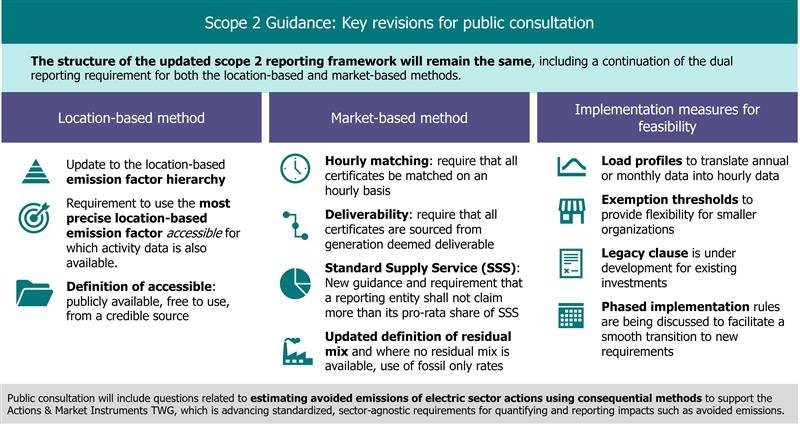
The Greenhouse Gas Protocol, which publishes rules used by 97 percent of companies that calculate and disclose their greenhouse gas emissions, is finalizing proposed revisions to how companies can report on emissions related to their electricity usage. The recommended changes will make it more complicated for companies — especially ones with smaller electricity loads — to claim emissions reductions by signing virtual power purchase agreements, a type of contract that has financed the addition of 100 gigawatts of clean electricity to the U.S. grid since 2014, according to those familiar with the proposal. The existing GHG Protocol methodology, originally published in 2015, lets companies claim emissions reductions for electricity, categorized as Scope 2, by matching their annual consumption with power from renewable sources. The revision being prepared for public comment, drafted by a technical working group and approved over the summer with modifications by the GHG Protocol’s Independent Standards Board, favors requiring companies to match their electricity loads on a much stricter hourly basis using local renewable sources on the same grid as the company’s original consumption, according to those with knowledge of the process. “The most concerning element of this proposal is the lack of procurement options that would support hourly matching for buyers of our size,” said Jay Creech, manager of net zero for retailer REI Co-op, commenting about what is known publicly. “Even now, an organization as large and sophisticated as the co-op may struggle to access corporate procurements, which often have a minimum offtake of more than double our annual electricity need.” Work in progress The GHG Protocol hints that it will exempt smaller organizations from the strictest new requirements in a blog published Sept. 29, allowing companies to take the approach that is most feasible for its individual circumstances. The organization is also considering a legacy clause for existing contracts, which is important for the deals companies are scrambling to close before U.S. tax incentives go away in July 2026. The standards body hasn’t made the details for either of those ideas public, but it plans to present various options when it opens a 60-day period for public feedback. The GHG Protocol plans to start soliciting feedback in October, but a spokesperson declined to share that date. Revisions to the current draft will be circulated in 2026, with a final version anticipated in 2027. It will be several years before the changes take effect, but corporate sustainability professionals and renewable energy financing experts said the proposed revisions will make it more difficult to justify investments in long-term power purchase agreements at a time when the U.S. market already has been hobbled by tariffs and increasingly hostile federal policies. “While we all share the goal of a 24/7 clean energy future, our focus now must be on the path forward,” said Mike Matterra, director of corporate sustainability and ESG officer at Akamai Technologies, referring to the push for a method that more accurately reflects a corporation’s investments in renewable electricity on a local basis. “We must champion an organic evolution of our clean energy resources by deploying them where they can have the greatest impact — on our dirtiest grids — to make our 24/7 goal a reality.” A separate proposal that would provide a way for companies to be recognized for different sorts of deals, such as contracts that include energy storage technology or that add more solar or wind power on grids heavily dependent on fossil fuels, was referred to a different work stream with the GHG Protocol for additional discussion. That metric is no longer part of the Scope 2 revision process but ought to be, given the huge amount of renewable capacity that should be added to the worldwide grid each year to reduce emissions, said Miranda Ballentine, senior advisor with consulting firm Green Strategies. “We have to unleash markets, not hamper markets,” she said. Unintended consequences The GHG Protocol’s rationale for updating the Scope 2 rules “reflect a modern reporting landscape, evolving grids and closer scrutiny of claims,” according to the nonprofit’s blog. Market experts agree that an overhaul is warranted but worry that it will slow down project development at a time when renewable electricity adoption should be accelerated. The Clean Energy Buyers Association, which sent a letter to GHG Protocol in May urging it not to make the revisions too strict, said providing more certainty around whether existing contracts will be exempt under the new rules is crucial for encouraging continued corporate investment in renewable energy over the next three years. “Our basic stance has not changed since we put the letter out, but circumstances have changed dramatically,” said the association’s CEO, Rich Powell, pointing to the decimation of U.S. tax incentives for solar and wind. “We continue to think this will do more harm than good, and risk shrinking the market.” The new rules risk limiting market participation to an elite class of the largest electricity consumers, said Michael Leggett, co-founder of Ever.green, which facilitates corporate renewable contracts, and the author of an exhaustive document that outlines the potential impact of the proposed changes. Among his many points: Fewer than a dozen corporations, including Google, Ingka Group, JPMorgan Chase, Mercedes-Benz and Microsoft do hourly Scope 2 accounting today. Corporations play a critical role in project finance for grid-integrated projects that isn’t adequately considered in the current revisions, and by cutting out all but the largest buyers, “it could slow down, instead of speed up, addressing climate change,” Leggett said. The current revision will motivate some corporate renewable buyers to move away from long-term contracts to instead buy renewable energy certificates from existing projects closer to their operations, which would slow new renewable additions supported by corporate offtake agreements, said Patti Smith, electricity decarbonization lead for advisory firm Carbon Direct. “Some feel it creates a deterrent to renewable energy investment by favoring locations that have greater sources of renewable energy and favoring the organizations that can site themselves near those sources,” she said. Rising prices The changes as
CONTACT Elements 2026.1 boosts performance for industrial software
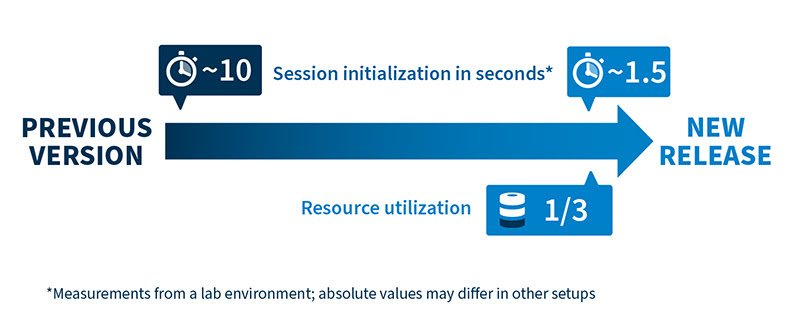
CONTACT Software has released the latest version of its low-code platform, CONTACT Elements 2026.1, introducing performance and efficiency improvements designed to accelerate digital transformation. The latest CONTACT Elements release improves performance and efficiency by transitioning from the Windows client to a fully optimized web architecture. The new CONTACT Elements release delivers a performance leap and reduces resource consumption. (© CONTACT Software) With the new release, CONTACT is positioning itself as a technology leader for the next generation of industrial software. With over 50 flexibly combinable modules, CONTACT Elements creates an end-to-end digital thread that supports companies in efficient product development – both on-premises and in the cloud. The platform also paves the way for AI integration at the enterprise level. Following a re-architecture of its underlying technologies, the platform is more responsive and now uses only one-third of the system resources. These updates improve efficiency in product development and manufacturing, reduce operating costs, and enhance scalability. The platform is suitable for cloud infrastructures and supports the integration of AI applications. Enhanced PLM capabilities for complex product development The new release introduces significant enhancements for product lifecycle management (PLM). The alternative PDF viewer, integrated directly into CIM Database PLM, enables redlining, annotations, and digital signatures within the application. This accelerates document approvals and ensures legally compliant processes. The usage structure displays all assemblies where the component has been installed in a specific version. (© CONTACT Software) Variant management now includes requirements structures, enabling more organized handling of product families and customer-specific configurations. A new usage structure provides transparency regarding dependencies and deployment locations of components and documents. The new solution Catalyst for ALM (application lifecycle management) integrates software repositories into CIM Database, for instance with GitLab. This enables seamless tracking of hardware and software components throughout their entire lifecycle. Optimized manufacturing and service efficiency CONTACT Elements for IoT gains specific enhancements for manufacturing management and IoT applications. Tool management reduces costs through optimized tool life, the production order monitor improves delivery reliability, and the new “Service Planner” view boosts efficiency in service deployment planning. The production schedule simplifies coordination between production and maintenance by displaying planned operations at the workstations. (© CONTACT Software) Installation and removal of asset components have been simplified with new installation positions. Component changes are automatically recorded, providing full traceability of all installed components within an asset. Advanced data analytics and intuitive user experience The new release optimizes the user experience across the Elements platform with enhanced keyboard support and improved accessibility. File management also sees enhancements, including a new history interface, customizable file naming rules, and duplicate checks, all designed to streamline daily document handling. The new release introduces an annual versioning scheme for all products. CONTACT Elements 2026.1 is now available for customers and partners to download. For more information, visit contact-software.com. The post CONTACT Elements 2026.1 boosts performance for industrial software appeared first on Engineering.com.
Dumb Tesla news: “affordable” new Model Y costs $2,000 more than before

On today’s incredibly frustrating episode of Quick Charge, Tesla is making it easier than ever to make fun of them by rolling out a new, “affordable” Model Y that costs $2,000 more than the “expensive” one did last week, thanks to the cancellation of the $7,500 tax credit that Elon Musk (the guy who is so good at business that he’s allegedly worth $1 trillion) spent $200 million campaigning for. more…
Dürr and GROB unveil next-generation battery cell production factory with 50% less footprint
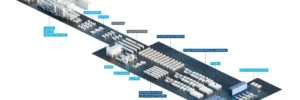
Dürr and GROB have announced a new lithium-ion battery cell concept factory. The system targets the EV segment, featuring dry electrode coating and an advanced Z-folder cell assembly with integrated notching. According to Dürr, the concept factory reduces production space requirements by 50 percent and cuts energy consumption by 70 percent compared to traditional methods. Key technologies include dry coating of electrodes—specifically, Dürr’s X.Cellify DC family, which uses a dry-mixed active material pressed into a free-standing film via calender machines. This process employs the Activated Dry Electrode technology from LiCAP Technologies, eliminating the need for a drying process and solvent recovery. Excess film material can be fully returned to production before lamination, reducing waste. The dry coating proof of concept has demonstrated consistent quality and is scalable, with a proof-of-concept plant operating in a dry room at Ingecal in southern France. Dürr is now seeking pilot partners among industry players for gigawatt-scale projects. Meanwhile, GROB’s new generation Z-folder for cell assembly integrates notching, achieving 95 percent system availability and further increasing throughput while minimizing space needs. The separator is precisely handled with low web tension, which improves reliability. In addition to electrode processing, Dürr reports a new method for electrolyte filling of battery cells, where electrolyte is added at up to 30 bar—two to three times higher than standard industry pressures—enabling more precise dosing and faster filling. For the classic wet coating process, Dürr has also enhanced automation and process control. Sensors provide 0.5 micrometer accuracy in calendering, and laser dryers deliver a 50 percent increase in web speed. Digital tools are also integral, as Dürr and GROB offer digital mapping and simulation of the factory, supporting production planning and quality analysis through manufacturing execution system/manufacturing operations management (MES/MOM) software from Dürr’s iTAC subsidiary. “With our expanded portfolio of highly available machines and systems, we jointly cover almost the entire value chain for battery cell production with our own technologies,” said German Wankmiller, CEO of the GROB Group. Dürr is consolidating its electrode coating and electrolyte filling products under the new X.Cellify platform. Source: Dürr
Elon Musk teases previously unknown Tesla Optimus capability

Elon Musk revealed a new capability that Tesla Optimus should have, and it is one that will surely surprise many people, as it falls outside the CEO’s scope of his several companies. Tesla Optimus is likely going to be the biggest product the company ever develops, and Musk has even predicted that it could make up about 80 percent of the company’s value in the coming years. Teasing the potential to eliminate any trivial and monotonous tasks from human life, Optimus surely has its appeal. However, Musk revealed over the weekend that the humanoid robot should be able to utilize Tesla’s dataset for Full Self-Driving (FSD) to operate cars not manufactured by Tesla: Probably — Elon Musk (@elonmusk) October 5, 2025 FSD would essentially translate from operation in Tesla vehicles from a driverless perspective to Optimus, allowing FSD to basically be present in any vehicle ever made. Optimus could be similar to a personal chauffeur, as well as an assistant. Optimus has significant hype behind it, as Tesla has been meticulously refining its capabilities. Along with Musk’s and other executives’ comments about its potential, it’s clear that there is genuine excitement internally. This past weekend, the company continued to stoke hype behind Optimus by showing a new video of the humanoid robot learning Kung Fu and training with a teacher: Some have wondered if this is ‘staged’ or if Optimus is teleoperated here Elon Musk said this is completely AI — TESLARATI (@Teslarati) October 4, 2025 Tesla plans to launch its Gen 3 version of Optimus in the coming months, and although we saw a new-look robot just last month, thanks to a video from Salesforce CEO and Musk’s friend Marc Benioff, we have been told that this was not a look at the company’s new iteration. Instead, Gen 3’s true design remains a mystery for the general public, but with the improvements between the first two iterations already displayed, we are sure the newest version will be something special. The post Elon Musk teases previously unknown Tesla Optimus capability appeared first on TESLARATI.
Tesla launches two new affordable models with ‘Standard’ Model 3, Y offerings
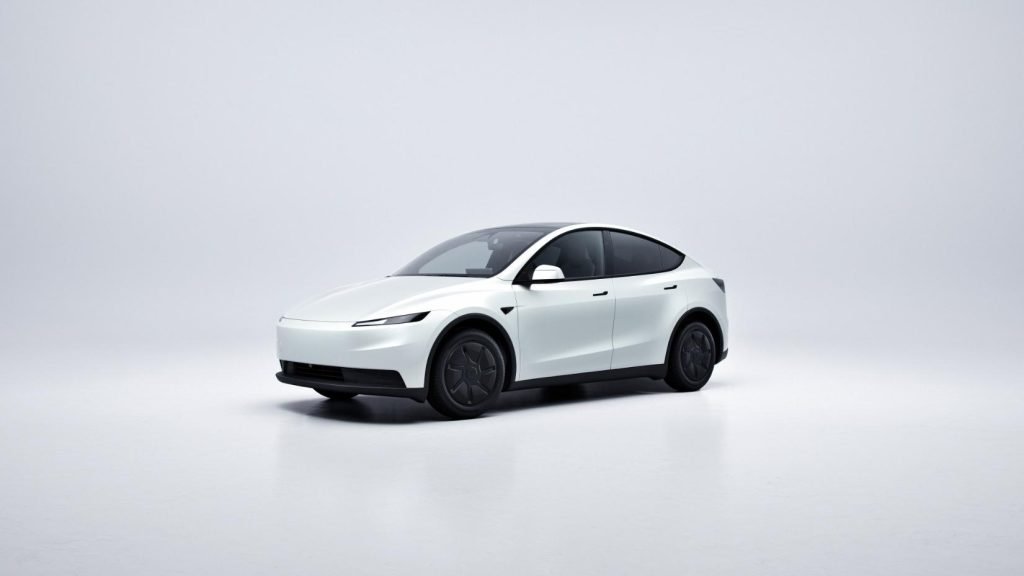
Tesla has officially launched its affordable models with the new Model 3 and Model Y ‘Standard’ versions hitting the company’s Online Design Studio on Tuesday. It is the first time Tesla has revealed any details about what it planned to launch in terms of its new, lower-cost vehicles, which are mainly aimed at countering the loss of the $7,500 EV tax credit. Here’s what Tesla went with for its release of the new affordable models. Tesla Model Y ‘Standard’ The Model Y Standard is a stripped-down version of the all-electric crossover and starts at $39,990. Deliveries are slated for November and December, the company says if you plan to order one, and it comes with a few major changes to improve efficiency and bring down cost for owners. New athletically tuned exterior and new alloy wheels to improve aerodynamics 15.4″ touchscreen in the front, the same as the other trims Available in three colors: Stealth Grey (free), White ($1,oo0 extra), Diamond Black ($1,500 extra) Textile and vegan leather interior Range sits at 321 miles New front fascia Covered glass roof (textile on inside) Windows are not acoustically laminated for a quieter cabin Manual mirrors and seats Smaller frunk No rear infotainment screen No basic Autopilot 69 kWh battery New 19″ Aperture wheels 0-60 MPH in 6.8 seconds 7 speaker stereo, down from 15 speakers in premium models BREAKING: Tesla has launched the new Model Y ‘Standard’ for $39,990 Here’s what’s new: pic.twitter.com/ILxbEsEniX — TESLARATI (@Teslarati) October 7, 2025 Tesla Model 3 ‘Standard’ The Model 3 Standard was a surprise offering from Tesla, as many had only anticipated the company to refine and offer a more affordable version of the Model Y. Coming in at $36,990, it features many of the same changes Tesla made with the Model Y “Standard,” all ways to improve price and make it less flashy than the more premium offerings. Deliveries are also slated for November for this vehicle, and it features relatively the same stripped-down offerings as the Model Y Standard. Available in three colors: Stealth Grey (free), White ($1,oo0 extra), Diamond Black ($1,500 extra) Textile and vegan leather interior Range sits at 321 miles Covered glass roof (textile on inside) Manual mirrors and seats No rear infotainment screen No basic Autopilot 69 kWh battery New 19″ Aperture wheels 0-60 MPH in 6.8 seconds 7 speaker stereo, down from 15 speakers in premium models @teslarati Tesla’s Affordable Models are here! Let’s talk about them! #tesla #fyp #viral #teslaev #elonmusk ♬ Natural Emotions – Muspace Lofi The post Tesla launches two new affordable models with ‘Standard’ Model 3, Y offerings appeared first on TESLARATI.
Three things Tesla needs to improve with Full Self-Driving v14 release
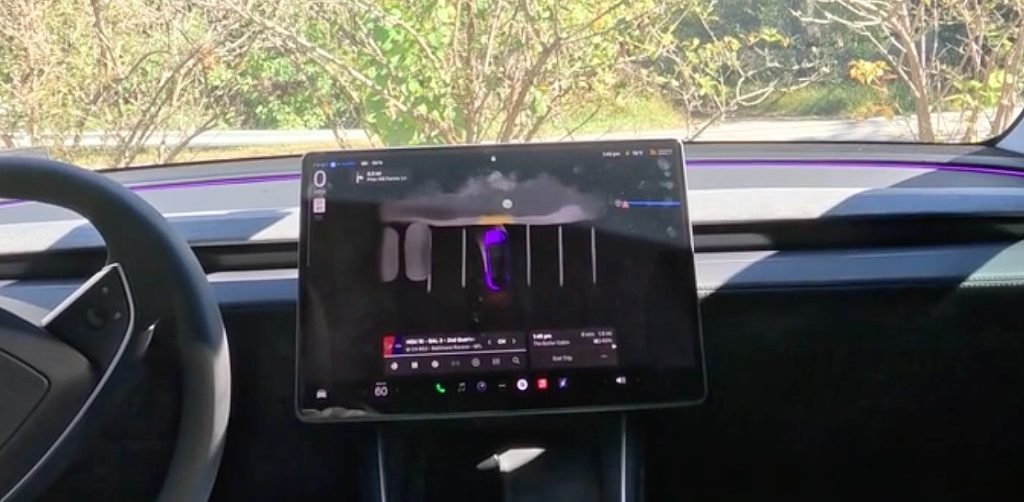
As Tesla plans to release Full Self-Driving version 14 this week after CEO Elon Musk detailed a short delay in its rollout, there are several things that continue to plague what are extremely well-done drives by the suite. Tesla Full Self-Driving has truly revolutionized the way I travel, and I use it for the majority of my driving. However, it does a few things really poorly, and these issues are consistent across many drives, not just one. Tesla Full Self-Driving impressions after three weeks of ownership Musk has called FSD v14 “sentient” and hinted that it would demonstrate drastic improvements from v13. The current version is very good, and it commonly performs some of the more difficult driving tasks well. I have found that it does simple, yet crucial things, somewhat poorly. These are the three things I’d like to see Tesla Full Self-Driving v14 improve. Navigation, Routing, and Logical Departure My biggest complaint is how poorly the navigation system chooses its route of departure. I’ve noticed this specifically from where I Supercharge. The car routinely takes the most illogical route to leave the Supercharger, a path that would require an illegal U-turn to get on the correct route. I managed to capture this yesterday when leaving the Supercharger to go on a lengthy ride using Full Self-Driving: You’ll see I overrode the attempt to turn right out of the lot by pushing the turn signal to turn left instead. If you go right, you’ll go around the entire convenience store and end up approaching a traffic light with a “No U-Turn” sign. The car has tried to initiate a U-turn at this light before. If you’re attempting to get on the highway, you simply have to leave the convenience store on a different route (the one I made the vehicle go in). It then attempted to enter the right lane when the car needed to remain in the left lane to turn left and access the highway. I manually took over and then reactivated Full Self-Driving when it was in the correct lane. To achieve Unsupervised Full Self-Driving, such as navigating out of a parking lot and taking the logical route, while also avoiding illegal maneuvers, is incredibly crucial. Too Much Time in the Left Lane on the Highway It is illegal to cruise in the left lane on highways in all 50 U.S. states, although certain states enforce it more than others. Colorado, for example, has a law that makes it illegal to drive in the left lane on highways with a speed limit of 65 MPH or greater unless you are passing. In Florida, it is generally prohibited to use the left lane unless you are passing a slower vehicle. In Pennsylvania, where I live, cruising in the left lane is illegal on limited-access highways with two or more lanes. Left lanes are designed for passing, while right lanes are intended for cruising. Full Self-Driving, especially on the “Hurry” drive mode, which drives most realistically, cruises in the left lane, making it in violation of these cruising laws. There are many instances when it has a drastic amount of space between cars in the right lane, and it simply chooses to stay in the left lane: The clip above is nearly 12 minutes in length without being sped up. In real-time, it had plenty of opportunities to get over and cruise in the left lane. It did not do this until the end of the video. Tesla should implement a “Preferred Highway Cruising Lane” option for two and three-lane highways, allowing drivers to choose the lane that FSD cruises in. It also tends to pass vehicles in the slow lane at a speed that is only a mile an hour or two higher than that other car. This holds up traffic in the left lane; if it is going to overtake a vehicle in the right lane, it needs to do it faster and with more assertiveness. It should not take more than 5-10 seconds to pass a car. Anything longer is disrupting the flow of highway traffic. Parking Full Self-Driving does a great job of getting you to your destination, but parking automatically once you’re there has been a pain point. As I was arriving at my destination, it pulled in directly on top of the line separating two parking spots. It does this frequently when I arrive at my house as well. Here’s what it looked like yesterday: Parking is one of the easier tasks Full Self-Driving performs, and Autopark does extremely well when the driver manually chooses the spot. I use Autopark on an almost daily basis. However, if I do not assist the vehicle in choosing a spot, its performance pulling into spaces is pretty lackluster. With a lot of hype surrounding v14, Tesla has built up considerable anticipation among owners who want to see FSD perform the easy tasks well. As of now, I believe it does the harder things better than the easy things. The post Three things Tesla needs to improve with Full Self-Driving v14 release appeared first on TESLARATI.
Tesla Optimus steals the show during TRON: ARES premiere

Just a few days ago, Elon Musk shared a video of Tesla Optimus demonstrating some kung fu moves with a human partner. The video was impressive, though some were confused about why the Optimus team was busying itself with what appeared to be a cool but frivolous demonstration. With the premiere of TRON: ARES, we now know that Optimus’ kung fu demonstration was part of the robot’s preparations for the red carpet. Optimus “starts a fight” As noted by X Business on its official account on the social media platform, the TRON: ARES red carpet world premiere was a showcase of today’s AI-powered technologies. With this in mind, xAI, X, Walt Disney, and Tesla collaborated to provide attendees with an immersive experience on real-world AI. This included Optimus engaging with attendees, and even distributing theater concessions. But one black and red painted Optimus unit definitely stole the show. The humanoid robot, in front of several attendees, attempted to “pick a fight” with Jared Leto, who starts in the movie alongside Greta Lee, Evan Peters, and Jeff Bridges. As could be seen in the video of Optimus, the robot’s moves in the red carpet were similar to the kung fu demonstration that Elon Musk showcased last week. Tried to start a fight at the Tron: Ares premiere pic.twitter.com/TvWCOaXIlN — Tesla Optimus (@Tesla_Optimus) October 7, 2025 Optimus has entered the Grid live now at the World Premiere of TRON: ARES pic.twitter.com/eDJy3wzllF — @Movies is ready for Tron: Ares (@Movies) October 7, 2025 Optimus Kung-Fu in the lab vs. on the red carpet pic.twitter.com/vsyTf2oUTp — Jacob Hilton (@jcubhilton) October 7, 2025 TRON: ARES Monique Pintarelli, Head of Americas at X, shared some insights about the event, which ended up being a collaboration of sorts between several Elon Musk-led companies. “This partnership with Disney lets fans and stars experience the world of TRON like never before – turning the red carpet event into a collision between the real world and AI. By leveraging X’s unparalleled real-time engagement and xAI’s cutting-edge technology alongside Tesla’s Optimus robots, we’re creating shared, immersive experiences that redefine storytelling,” the X executive noted. TRON: ARES releases on U.S. theaters on October 10, 2025. The post Tesla Optimus steals the show during TRON: ARES premiere appeared first on TESLARATI.
Tesla plant manager tips off affordable model production

A plant manager at a Tesla factory just tipped off the fact that the company will begin production of an affordable model in the coming weeks, all but confirming that a new car will be unveiled tomorrow. Tesla has been teasing some kind of product unveiling for October 7 on its social media accounts. It has now dropped two separate indications that a new product is coming on its X account. Fans have been anticipating two things: either the company’s planned affordable model, which has been codenamed “E41,” or the Roadster, a long-awaited vehicle that Tesla has kept under wraps for much longer than it would likely care to admit. Tesla all but confirms that affordable Model Y is coming Tuesday André Thierig, Tesla’s plant manager at the German production plant Gigafactory Berlin, tipped off what is likely coming tomorrow at the product unveiling as he revealed during an internal event today that a light version of the Model Y will begin series production and deliveries “in a few weeks.” Thierig’s revealing of plans was reported by Handelsblatt, a German media outlet. The description of a “light version of the Model Y” aligns with what CEO Elon Musk said earlier this year, as well as what we have seen on public roads, both covered and uncovered. Last week, we finally saw an uncovered version of what the affordable model likely is, as it was cruising around near Gigafactory Texas, just outside of Austin. Tesla coding shows affordable model details, including potential price Musk said earlier this year, candidly during an Earnings Call, that the affordable model Tesla planned to release was a Model Y. “It’s just a Model Y. Let the cat out of the bag there,” Musk said. The images of what we assumed to be the affordable model lined up with Musk’s candid statement: It looks like the new affordable Tesla Model Y was spotted near Giga Texas Model Y body with the Model 3 fascia, no glass roof, and looks as if there is a front bumper camera! Should be coming soon! pic.twitter.com/9lC5te9GnW — TESLARATI (@Teslarati) October 3, 2025 Tesla is expected to unveil its affordable model tomorrow during the planned event, which has been teased twice. Pricing and other details are still pending, but the company is expected to reveal this information tomorrow. The post Tesla plant manager tips off affordable model production appeared first on TESLARATI.
Is this generative AI rendering tool a “KeyShot killer”?
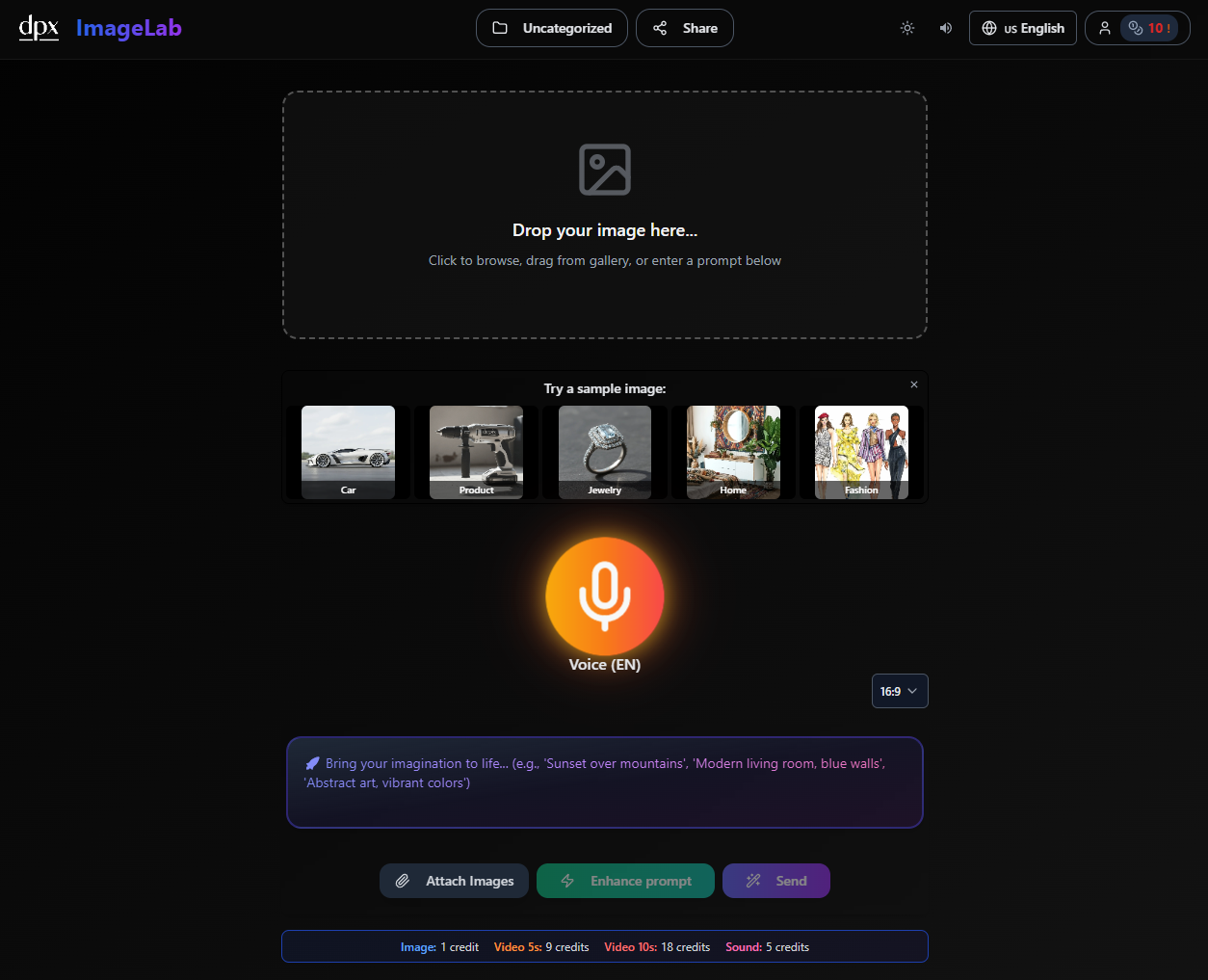
The last time Engineering.com wrote about Depix Technologies, developer of generative AI rendering software, CEO Philip Lunn claimed the technology “made designers cry.” When Lunn reached out recently about Depix’s latest project, ImageLab, he took the hyperbole even further. “Last year we made designers cry. This year we will make them cry and fall out of their chair and shout with elation,” he wrote in an email. If you’re the crying type, consider yourself warned. Here’s a hands-on look at Depix ImageLab and what it can do. What is Depix ImageLab? Depix ImageLab is a web-based tool for generating AI images. You’ve probably already used something similar. But ImageLab explicitly targets professionals, like product designers, looking for high quality renders. “What we’re doing is making it very simple to generate really high quality images from anywhere,” Lunn told Engineering.com during a demo of ImageLab. “Anywhere,” Lunn specified, could be “from a very early sketch, to a polished CAD image from any CAD manufacturer. It doesn’t matter what the CAD input is. It could be architecture, it could be products. It could be a circuit board. It could be a widget. Doesn’t matter. It just makes a great marketing photo.” Anyone can sign up for an account at DepixImageLab.com to get 10 free credits. Each generated image costs 1 credit. You can also create five second videos for 9 credits apiece, though we didn’t test that feature. When you sign up, this is what you’ll see: The interface is self-explanatory. You start by importing an image (or picking a sample), and then you tell ImageLab what to do to it. If you don’t feel like typing a prompt, you can hit the glowing Voice button to dictate one instead. You can also attach other images to reference in your prompt, like an image of a texture you want to apply to the target image (we’ll show an example of that later). Let’s see how it works. Depix ImageLab in action For our first foray with ImageLab, we picked one of the available sample images, a sketch of a car: A designer might want to see what a real version of this car would look like—so we asked ImageLab to generate one. Prompt: Turn this sketch into a photorealistic rendering on a desert highway. After about 30 seconds of processing, Depix ImageLab generated this image: Once you’ve generated an image, ImageLab provides a toolbar that lets you save it, crop it, compare it to the original image, select a specific region to manipulate in your next prompt, and apply other adjustments. There’s also an extensive gallery of presets that will apply automatic prompts to your image (more on that later). Let’s try again. Here’s the image we just generated, with a new prompt being applied: Prompt: Change the color of the car to matte black with red accents. Prompt: Change the angle of the camera so that the car is viewed from the front, and change the car’s color to blue. Prompt: Change the background to Times Square, and put a crowd of gawking admirers around the car. And change the color of the car to red. Prompt: Put the camera inside the car so we can see the scene from the driver’s perspective. ImageLab, like other generative AI tools, doesn’t always give you the result you’re expecting. In this instance, rather than giving us an inside view of the original car, ImageLab has instead put us behind the wheel of a second car. Perhaps a better prompt would have made a difference. To see what might have been, we reverted to the previous image and used the “Enhance prompt” button to give us a helping hand. Original prompt: Put the camera inside the car so we can see the scene from the driver’s perspective. Enhanced prompt: First-person driver’s view through a car windshield during sunset, showing the steering wheel and dashboard lit by orange light. The same problem persists, but at least there’s an orange glow. We could keep trying increasingly specific prompts, as Lunn did throughout his demo when unexpected problems arose. It’s easy to get lost in a generative rabbit hole, playing with prompts until every pixel is perfect. So we’ll restrain ourselves to two final examples of ImageLab. Let’s go back to the original sketch of the car and apply one of ImageLab’s built-in presets: Amalfi Coast. Prompt (added automatically): Place this car on the Amalfi Coast in Italy with dramatic coastal cliffs, Mediterranean sea views, colorful Italian villages, and coastal road atmosphere while adhering to the shape and position of the car as close as possible while adhering to the original image To demonstrate how ImageLab uses reference images, we uploaded this image: (Image: Michael Dziedzic via Unsplash.) Prompt: Apply the texture in the attached image to the car. Is Depix ImageLab a “KeyShot killer”? We’ve shown off several examples of ImageLab’s capabilities, and you can freely test them for yourself. What’s obvious from even limited testing is that the AI tool varies in the quality of its output. It can quickly create impressive renders from hasty sketches, and it’s adept at adjusting certain elements of a picture—like colors—without affecting others. But it can also misinterpret prompts and create odd images that don’t hold up to scrutiny. Like all AI tools, ImageLab can be good, bad and ugly. That’s AI for you; sorting the results is up to the user. But crucially, it’s incredibly fast and easy to use. “We’re trying to be the thing for product designers and product marketers and CAD users… who really would love to be able to make a nice image, but just can’t invest the time in learning all the settings and tweaks you have to do for rendering,” Lunn said. Lunn has plenty of experience with the settings and tweaks of traditional rendering, having previously founded a company called Bunkspeed which sold a rendering program called Hypershot. In 2010 Hypershot was taken over by Luxion and rebranded as KeyShot.
Lectric offers up to $720 in Prime Day e-bike savings from $999, Jackery Explorer 2000 v2 station at exclusive new $629 low, more

We’re less than 24 hours away from the kick-off of Amazon’s Prime Big Deal Days event, but that doesn’t mean savings aren’t already well underway. Leading today’s Green Deals is Lectric’s Better-Than-Prime Sale that is offering up to $720 in savings on e-bike bundles, with the second-ever price cut on the premium ONE Long-Range Belt-Drive Commuter e-bike to its $1,899 low, while also getting $220 in FREE gear, among other increased offers. We also secured $870 in exclusive savings on the Jackery Explorer 2000 v2 Portable Power Station at a new $629 low, and you can pick up the latest Schumacher 12A Level 1 Portable EV Charger at $128 – plus, even more waiting for you below. And don’t forget about all the hangover deals from last week collected at the bottom of the page, rounded together in our latest edition of Electrified Weekly. Head below for other New Green Deals we’ve found today and, of course, Electrek’s best EV buying and leasing deals. Also, check out the new Electrek Tesla Shop for the best deals on Tesla accessories. more…
Webinar: Inside EV safety – industrial CT insights into EV battery reliability

Electric vehicle batteries are at the heart of the EV revolution, but they also pose unique safety and reliability challenges. Overcharging, thermal stress, and hidden manufacturing defects can lead to serious risks that are difficult to detect with conventional methods. In this webinar, you’ll learn how industrial CT scanning provides a powerful, non-destructive way to look inside EV batteries and uncover hidden defects. We’ll show how CT scans can: Identify internal flaws such as voids, cracks, and misalignments. Reveal how overcharging and thermal cycling affect battery structure. Enable safer design and quality control by visualizing problems before they lead to failure. Whether you’re working in R&D, quality assurance, or safety testing, you’ll gain practical insights into how CT technology gives engineers the visibility they need to build safer, more reliable EV batteries. Join us on Wednesday 29th October 2025.Register now, it’s free!
Tesla releases cryptic teaser for something massive and it’s coming this week

Tesla has released a cryptic teaser for something massive, and it will release details on it this week. With many different projects in the works, there is a lot of speculation going on about what it could potentially be, but we have a few ideas. On Sunday morning, Tesla released a nine-second teaser video of what appears to be either a vehicle wheel, fan, or some sort of propeller, but there are no real clues as to what it could be exactly. It then ends with “10/7,” meaning it will announce something on October 7, which is this Tuesday: pic.twitter.com/KsXDaJgMcJ — Tesla (@Tesla) October 5, 2025 Given that Tesla has been working on a handful of pretty notable projects that are set for unveiling at the end of this year, and there are some clues that seem to point in their direction with this short teaser video. There are two projects that come to mind almost immediately: the Tesla Roadster is one, and the “E41” or affordable model is the other. Here’s what we know about both: Tesla Roadster Demo Event Tesla said earlier this year that it would have a demo event for the Roadster to unveil some new technologies and show off what it has been working on over the past few years. There have been a lot of crazy things in the works for the Roadster, including a SpaceX package that would use cold-gas thrusters for an insane 1.1-second 0-60 MPH acceleration rate. This package was also supposed to help it hover, something CEO Elon Musk has teased for the past few years. The Roadster was ready for release earlier this year, but after Chief Designer Franz von Holzhausen and VP of Powertrain Lars Moravy showed Musk what they had come up with, he wanted more. Moravy said on the Ride the Lightning podcast earlier this year: “What we had come up with exceeded what we originally planned. So, Elon was like, ‘Wow, great. Let’s do more!'” The Roadster event was coined as “the most epic demo,” and since it was planned for the end of 2025, it is totally feasible to believe this could be it. Elon Musk teases Tesla’s “most epic demo” by end of year Tesla ‘E41’ Affordable Model Some believe the teaser could be the official launch of Tesla’s affordable model, which Musk said earlier this year is simply a stripped down Model Y. There have been some sightings of this vehicle in the past few weeks, including one on Friday that showed the vehicle completely uncovered for the first time: It looks like the new affordable Tesla Model Y was spotted near Giga Texas Model Y body with the Model 3 fascia, no glass roof, and looks as if there is a front bumper camera! Should be coming soon! pic.twitter.com/9lC5te9GnW — TESLARATI (@Teslarati) October 3, 2025 The launch of the affordable model makes sense, especially from a timing perspective. With the $7,500 EV tax credit officially coming to a close on September 30, many are wondering how Tesla will spark growth in its deliveries. A more affordable EV would be the perfect response, and it is something that Tesla has been working on for some time. Other Potential Ideas There are some pretty interesting ideas as to what the teaser could be apart from the Roadster or affordable model. Some believe it could be a cooling fan for a GPU cluster, which would make sense considering Tesla’s prowess in data. Grok also made an interesting guess, stating it could be a propeller for a secret air taxi Tesla is developing. This seems sort of our of left field. We do know Tesla hosted a handful of influencers at Gigafactory Texas this past week, so whatever the company showed them is likely what will be unveiled on Tuesday. The post Tesla releases cryptic teaser for something massive and it’s coming this week appeared first on TESLARATI.