Heybike Ranger 3.0 Pro review: 28 MPH foldable fat-tire e-bike with full-suspension comfort
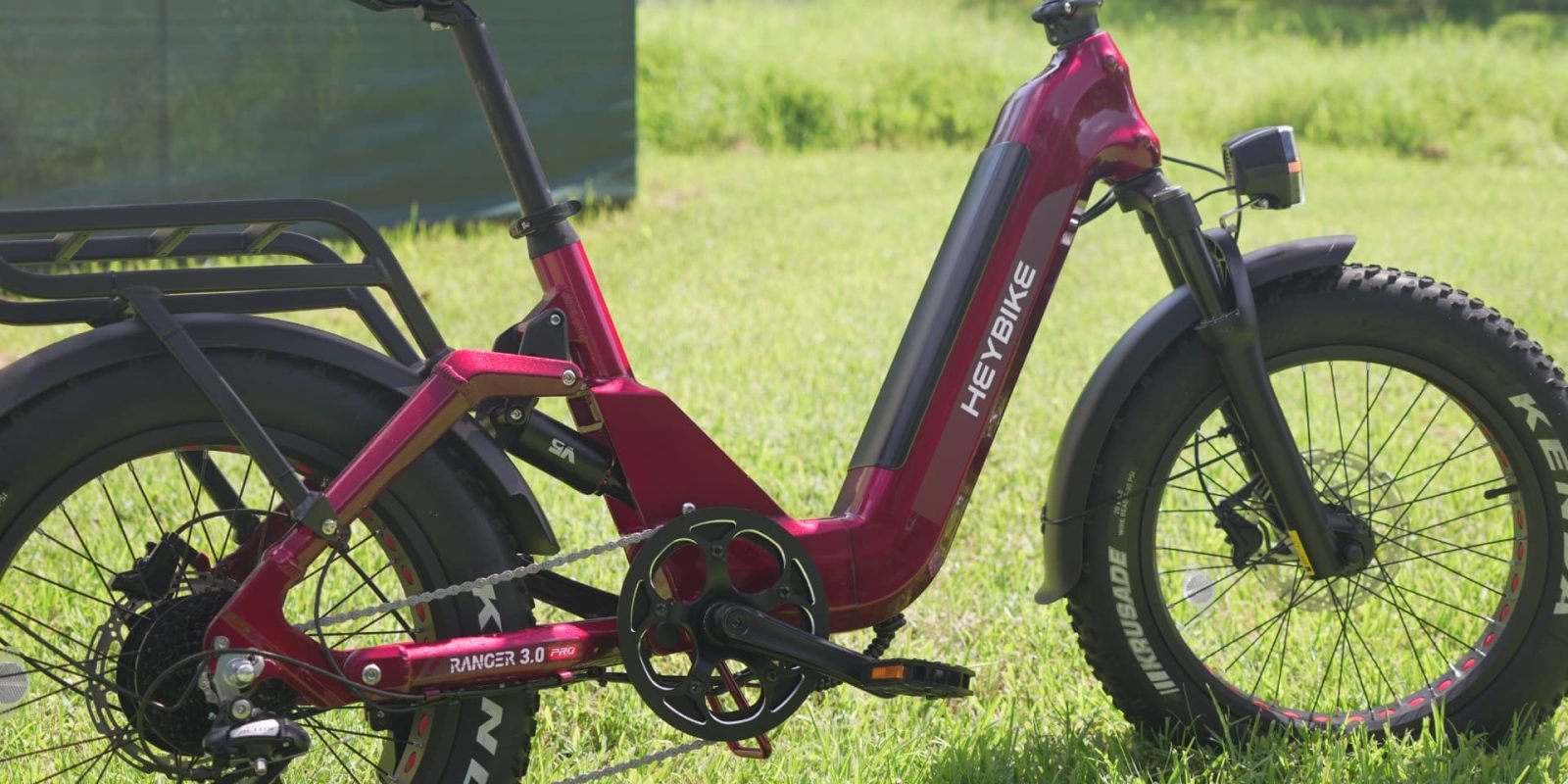
I’ve tested a lot of folding fat-tire e-bikes over the years, and while many start to blend together, the Heybike Ranger 3.0 Pro managed to stand out with a thoughtful combination of design, comfort, and surprising feature upgrades. This is a beefy, full-suspension folder that feels more like a mini-adventure bike than a commuter machine – and I mean that in a good way. more…
Download the guide to driving fuel cell advancement with programmable power solutions

Sponsored by Ametek. What’s Inside This Exclusive Whitepaper? Explore hands-on strategies, technical insights, and next-gen fuel cell testing solutions driving the hydrogen economy forward. Here’s a sneak peek: Hydrogen Electrolysis Optimization: Learn how precise voltage and current control boosts hydrogen yield and system efficiency. Fuel Cell Testing & Simulation: Explore how AMETEK’s Mi-BEAM, SGX, and HPX systems simulate and stress-test real-world fuel cell applications. EV Powertrain Innovation: See how Fuel Cell Electric Vehicle (FCEV) drive cycles and regenerative braking scenarios are replicated without complex hardware setups. Energy Efficiency & Scalability: Discover how bidirectional, low-ripple power solutions support up to 1.2 MW scalable systems. Who Should Download This Whitepaper? This guide is essential for: Engineers developing hydrogen and fuel cell solutions EV system designers and test lab managers R&D professionals in clean energy, automotive, or aerospace Power electronics and simulation specialists If you’re building the future of sustainable energy, this whitepaper is your roadmap to smarter, more efficient fuel cell development. Download the Whitepaper Now! Discover how AMETEK Programmable Power is accelerating breakthroughs in hydrogen and fuel cell technology — from lab benches to electric highways. Get your free copy and gain a competitive edge in tomorrow’s clean energy revolution.
Bentley appoints Cate Lochead as chief marketing officer

Bentley Systems, Incorporated announced the appointment of Cate Lochead as Chief Marketing Officer. She brings marketing leadership in AI innovation and more than 20 years of experience in enterprise software to Bentley. Cate Lochead joins Bentley Systems as Chief Marketing Officer. (Image courtesy of Bentley Systems) Most recently, Lochead served as Chief Marketing Officer for high-growth software companies in AI, data, and security. Previously, she led marketing organizations at global technology leaders, including Oracle and Intuit. She has deep expertise in positioning transformative technologies for market visibility and adoption. For more information, visit bentley.com. The post Bentley appoints Cate Lochead as chief marketing officer appeared first on Engineering.com.
Tesla’s ‘more affordable’ Model Y is now available in EU – it’s a better deal there

Tesla is now selling its stripped-down, “more affordable” vehicle, the Model Y Standard, in Europe, just three days after releasing it in the US. Its US release was widely panned as the massive number of missing features outweighed the relatively small price cut. But the new European release has fewer cut features and a larger price differential, making the calculus much different in a territory where Tesla sales have fallen rapidly. more…
USA Rare Earth acquires Less Common Metals to accelerate its mine-to-magnet strategy
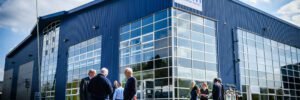
USA Rare Earth (USAR) has entered into a definitive agreement to acquire UK-based rare earth metal and alloy producer Less Common Metals (LCM). The acquisition secures USAR’s access to high-quality rare earth metal and strip cast alloy for its global customers and the development of its Oklahoma magnet facility. Under the terms of the deal, USAR will acquire LCM for $100 million in cash and 6.74 million shares of USAR common stock. The transaction is expected to close in the fourth quarter of 2025. LCM produces light and heavy rare earth permanent magnet metals and alloys at scale at its 67,000 square foot production facility in Cheshire, UK. It also benefits from an established supply of raw materials outside of China. The company is one of the few producers capable of processing metal oxide feedstocks from mined and recycled sources. LCM closes the loop for USAR’s in-house processing of recycled rare earths. USAR will be able to reuse end-of-life magnets and its own swarf generated during magnet production, providing access to alternative low-cost sources of feedstock. LCM will be able to continue to expand and serve its global customer base with a broad portfolio of rare earth and critical metals and alloys, while also supplying neodymium iron boron (NdFeB) metal and strip cast alloy to USAR’s Stillwater, Oklahoma magnet facility when it starts production. LCM’s metals and alloys are used in the manufacturing of advanced magnets for customers across EV, automotive, industrial, defense and other sectors in the US, UK, France, Germany, Japan and Taiwan. LCM has previously announced a planned expansion into France supported by the French government under the 2030 France investment plan. “Midstream metal making is the linchpin of the global supply chain and LCM is the only proven ex-China producer of rare earth metal, alloys, and strip casting at scale,” said Michael Blitzer, Chairman of USA Rare Earth. “The combination of USAR-LCM will establish rare earth metal making in the United States for the first time in decades, as we move quickly to integrate these capabilities in Stillwater, Oklahoma to provide all of the feedstock for the buildout of our 5,000-ton magnet production facility. Our ambition is also to expand LCM’s capabilities in both the United Kingdom and Europe.” Source: USA Rare Earth
CoreWeave to acquire Monolith AI to boost industrial innovation

CoreWeave, Inc. announced an agreement to acquire Monolith AI Limited, a pioneer in applying artificial intelligence and machine learning to solve complex physics and engineering challenges. Combining Monolith’s simulation and test-driven machine learning capabilities with CoreWeave’s purpose-built AI cloud enables the combined companies to offer a full-stack platform for industrial and manufacturing enterprises. The aim is to enable users to shorten R&D cycles, accelerate product development and design, and unlock new levels of competitive advantage through AI-driven innovation. According to McKinsey, AI adoption in complex manufacturing could increase R&D efficiency by 20 to 80 percent, underscoring the enormous opportunity for AI to unlock productivity gains1. Monolith’s platform is already used by many of the world’s leading engineering companies including Nissan, BMW, and Honeywell to cut months out of the product development cycle and accelerate innovation. Monolith is recognized for its expertise in applying AI and machine learning to some of the most intractable physics and engineering problems. Its tools include anomaly detection, test plan optimization, and next test recommendation, which help engineers make faster, more reliable decisions without requiring in-house AI or coding expertise. By embedding machine learning directly into engineering workflows, Monolith reduces physical testing that has historically slowed progress, while improving quality, and accelerating innovation. The acquisition of Monolith, along with OpenPipe for reinforcement learning, and Weights & Biases for model iteration and experiment tracking, reflects CoreWeave’s commitment to being the essential AI cloud used by builders to develop and deploy AI across every industry. In the automotive sector, CoreWeave serves as the Official AI Cloud Computing Partner of the Aston Martin Aramco Formula One Team, supporting the development of the team’s first large-scale cloud computing facility. Terms of the transaction were not disclosed. The closing of the acquisition is subject to customary closing conditions. For more information, visit coreweave.com. 1 https://www.mckinsey.com/capabilities/quantumblack/our-insights/the-next-innovation-revolution-powered-by-ai“For industries that produce complex manufactured products, R&D processes could be accelerated by 20 to 80 percent, depending on the industry (Exhibit 4)“ The post CoreWeave to acquire Monolith AI to boost industrial innovation appeared first on Engineering.com.
Hear me out: instead of faster chargers, we should lobby for SLOWER gas pumps

Utilities, state governments, and private developers are racing to roll out faster, more powerful EV chargers. At the same time, automakers and tech giants across the globe are pouring billions into R&D to develop batteries that can take ever-higher levels of power. But what if there’s a better, easier, cheaper, and more effective way to cut emissions? What if, instead of faster chargers, we pushed for SLOWER gas pumps? more…
Delta Air Lines partners with Maeve to refine regional hybrid-electric airliners

Delta Air Lines has announced a partnership with Dutch electric plane maker Maeve to support the development of a new hybrid-electric regional aircraft. Under the terms of the agreement, Delta will provide operational support to help Maeve’s M80 hybrid-electric aircraft reach commercial viability for regional flights. Maeve will become part of Delta’s Sustainable Skies Lab. Its presence in the program checks off a box for a key milestone in Delta’s 2023 Sustainability Roadmap to accelerate innovative solutions for a more sustainable future of travel. In November 2023, Maeve introduced the M80, a hybrid 80-seater aircraft, saying that “there are currently no alternatives in development that are equally sustainable, cost-effective, and match the operational needs of airlines and airports.” In short, Maeve says that the M80 offers the performance of a jet and the efficiency of a turboprop. The M80 hybrid-electric aircraft has a range of 921 miles (1,482 km) and promises 40% higher efficiency through a hybrid engine architecture that provides power assistance at low altitude operations, the company said. The hybrid model can also support the efficient integration of more electric aircraft systems. To meet the needs of smaller airports and airlines, Maeve designed the M80 “to attain best-in-class specifications with regards to passenger capacity, range, lead time and energy needed for implementation,” the company said. “The aircraft is designed to support the future of the regional aviation market, delivering a decarbonized, low energy solution with regional jet performance and turbo-prop economics.” Founded in 2020, Maeve Aerospace has announced plans to launch the Maeve 01 by 2031. The Maeve 01 will be “the world’s first all-electric, 44-seat regional aircraft,” according to the company. Maeve, which focuses on the short-range aviation market, is also developing rapid-charging systems for its battery-powered aircraft. Source: Maeve
Gen Z calls for systemic change

From Nepal to Morocco to Peru, Gen Z is making its voice heard. This year, youth-led protests erupted across continents, driven by a strikingly consistent set of grievances: entrenched corruption, political elites seen as abusive or unresponsive, rising economic insecurity and youth unemployment, and deteriorating public services. These protests aren’t isolated; they reflect a broader generational sentiment that is now backed by global data. Recent research from GlobeScan reveals concerns voiced by young people in recent protests reflect a broader global trend. Around the world, Gen Z (those born between 1996 and 2010) consistently shows higher levels of concern than older generations about systemic social issues. Nearly two-thirds of Gen Z consider corruption to be a “very serious” problem, compared to only 58 percent of Baby Boomers. This generational gap is even more pronounced on issues such as human rights abuses, unemployment and unfair treatment of workers. Together, these findings highlight a shared sense of urgency among younger generations worldwide. What this means Gen Z is navigating a world that feels stuck, where broken systems persist and promises of reform often fall short. Their protests aren’t just expressions of frustration; they’re calls for systemic change. This is a warning signal for governments, employers and institutions everywhere. Ignoring these concerns risks deepening discontent and eroding trust. Brands and institutions that want to connect with young people must speak to these concerns directly and credibly, and their messaging must match the urgency felt by the younger generation. Listening, co-creating and visibly responding to youth concerns are essential for sustaining trust and relevance, whether you’re a government, brand or other organization. The post Gen Z calls for systemic change appeared first on Trellis.
Renesas unveils customizable inductive position sensor ICs
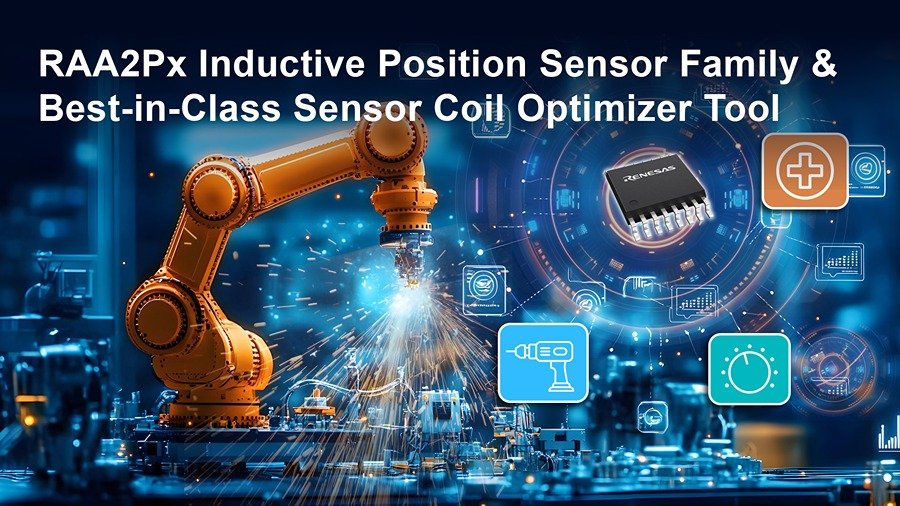
Renesas Electronics Corporation introduced a new family of magnet-free inductive position sensor (IPS) ICs that can be fully customized for various coil designs compatible with a wide range of industrial applications such as robotics, medical and healthcare, smart buildings, home appliances and motor commutation. Built for high resolution, precision, and robust performance, the new RAA2P3226, RAA2P3200, and RAA2P4200 sensor ICs offer a cost-effective alternative to traditional magnetic and optical encoders, which can be bulky, expensive, and require frequent maintenance. Renesas also launched a web-based design tool that allows customers to easily create custom sensing elements to meet their specific system needs. Operating on non-contact coil sensor technology, Renesas IPS products use a simple metallic target and dual-coil or single-coil configurations to detect absolute rotary, linear, or arc positions. These sensor ICs are designed to maintain stable operation even in environments with elevated temperatures (-40 to 125°C), particulate matter, moisture, mechanical vibration and electromagnetic interference. Moreover, they are immune to stray magnetic fields and require no maintenance, unlike magnetic- or optical encoder-based sensors. Their durability and low upkeep make them a reliable and cost-effective sensing solution for motor drives, actuators, valves, service robots and infrastructure applications, where reliability and long-term performance are critical. All three products offer high precision in detecting target positions, with accuracy better than 0.1 percent of the full-scale electrical range. Two of the products, the RAA2P3226 and RAA2P3200 operate at 600K RPM (electrical) with propagation delays under 100ns, which is imperative in high-speed motor applications. The advanced RAA2P3226 supports dual-coil sensing with up to 19-bit resolution and 0.01° absolute accuracy, providing the high-precision performance required for robotic applications. The RAA2P4200 targets low-speed applications such as medical devices and power tools and the RAA2P3200 is optimized for high-speed motor commutation. All three products include automatic calibration and linearization to simplify integration and improve system-level performance. In addition to these three products, Renesas will also introduce automotive-grade IPS, RAA2P452x and RAA2P4500, which will be available later this year. The dual-channel RAA2P452x allows customers to achieve ASIL D safety compliance when paired with Renesas MCUs. This automotive-grade solution offers a cost-effective option for low-speed body control and chassis systems without compromising quality. Designing with inductive position sensors typically involves integrating a PCB, an IC with passive components, and a metal target mounted to the moving part. The most complex part is the external sensing element, such as the transmitter and receiver coils, which must be precisely configured to realize accuracy and customized to the system’s mechanical and environmental requirements. Renesas’ web-based Inductive Position Sensor Coil Optimizer tool tackles this challenge by automating coil layout, simulation, and tuning, significantly reducing the learning curve for developers. With this tool, engineers can also obtain accurate performance estimates and overcome manufacturing constraints by optimizing the coil layout. Key features of the RAA2P3226, RAA2P3200 and RAA2P4200 RAA2P3226 Dual-coil IPS for full inductive robotic joints, logistic and industrial robots/Cobots Output interfaces: UART, ABI, Step-Dir, I²C Up to 19-bit resolution and 0.01° absolute accuracy (integrated Vernier) Automatic Gain Control (AGC) to compensate for air-gap variations 16-point linearization feature to improve the accuracy True-power-on position information at the start-up Rotary on-axis and off-axis, arc and linear implementations possible Industrial-grade temperature range: -40°C to 125°C Supply voltage: 3.0V to 5.5V RAA2P3200 High-speed, low-latency IPS for motor commutation, E-bikes and industrial robots/Cobots Output interfaces: SPI, UART, ABI, UVW or Step-Dir Automatic Gain Control (AGC) to compensate for air-gap variations 16-point linearization feature to improve the accuracy Rotary on-axis and off-axis, arc and linear implementations possible Industrial-grade temperature range: -40°C to 125°C Supply voltage: 3.0V to 5.5V Overvoltage, reverse polarity, and short-circuit protection RAA2P4200 Single-coil design for low-speed service robots, power tools and medical applications Output interfaces: Analog, PWM, I²C Automatic Gain Control (AGC) to compensate for air-gap variations 16-point linearization feature to improve the accuracy Rotary on-axis and off-axis, arc and linear implementations possible Industrial-grade temperature range: -40°C to 125°C Supply voltage: 3.0V to 5.5V Overvoltage, reverse polarity, and short-circuit protection Replacing the ZMID4200 device Winning combinations Renesas combined the RAA2P3226 with other compatible devices to develop two winning combinations: Mini BLDC Servo and Turntable System. Winning Combinations are technically vetted system architectures from mutually compatible devices that work together seamlessly to bring an optimized, low-risk design for faster time to market. Renesas offers more than 400 Winning Combinations with a wide range of products from the Renesas portfolio to enable customers to speed up the design process and bring their products to market more quickly. They can be found at renesas.com/win. Availability The RAA2P3226, RAA2P3200 and RAA2P4200 are available in volume production, along with evaluation kits. The automotive-grade RAA2P452x and RAA2P4500 will be in production in Q4/2025. The Inductive Position Sensor Coil Optimizer is available now and supports all Renesas IPS products. For more information, visit For more information, visit renesas.com. The post Renesas unveils customizable inductive position sensor ICs appeared first on Engineering.com.
Hiboy launches TITAN & TITAN Pro e-scooters with up to $699 savings, Anker SOLIX F3000 station at new $1,399 low, more
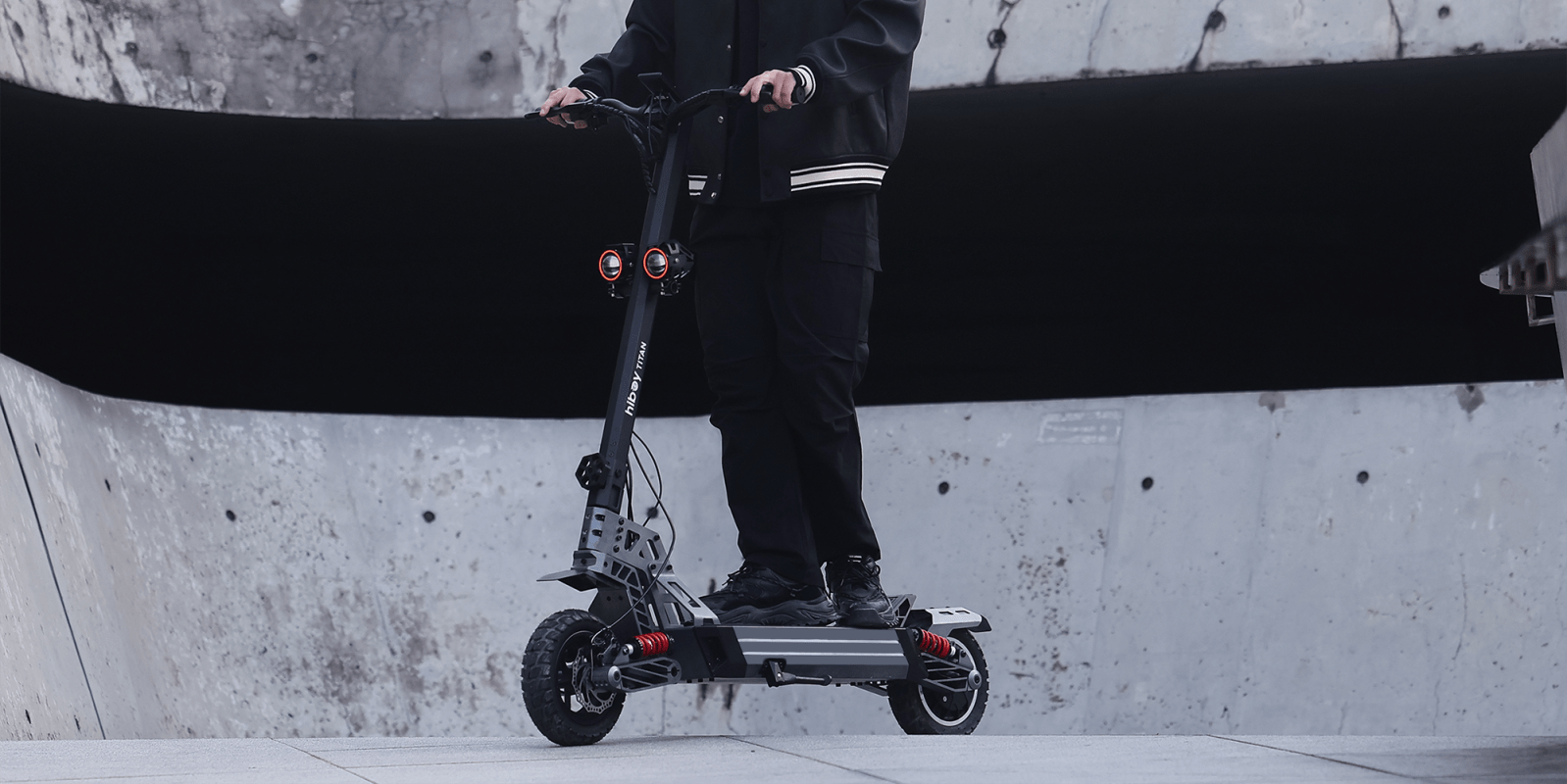
We’re closing out this week’s Green Deals with some more major savings, headlined by Hiboy’s new TITAN Electric Scooter and TITAN Pro Electric Scooter, which are launching with up to $699 in savings starting from $1,001. Right behind them is Anker’s SOLIX F3000 Portable Power Station (and bundles) that is getting its $1,399 Prime Day low extended, as well as Mammotion’s YUKA Mini 500H and 700H robot lawn mowers starting from a $649 low. We also have EcoFlow’s latest 48-hour flash sale, a handy device from Goal Zero, and many other ongoing Prime Day sales waiting for you below – with all the continuing event’s savings collected into our Post-Prime Day Green Deals hub here. Head below for other New Green Deals we’ve found today and, of course, Electrek’s best EV buying and leasing deals. Also, check out the new Electrek Tesla Shop for the best deals on Tesla accessories. more…
Video: potting vs. foam in EV battery packs

When it comes to lithium-ion batteries in EVs, the stakes are high. A single malfunctioning cell can trigger thermal runaway—a rapid, uncontrollable rise in temperature and pressure that can result in fires or explosions. For engineers, preventing this isn’t just good design—it’s non-negotiable. Charged recently chatted with Luka Sovulj from Epic Resins to learn how their epoxy and polyurethane formulations are designed to protect EV battery systems from moisture ingress, vibration, and thermal events. Their products can fully encapsulate battery cells—providing a barrier against environmental stressors while contributing to pack safety and lifespan. The company has over 50 years of experience in electronics and battery applications. One of the key functions of these potting and coating materials is to manage thermal and mechanical stresses. When a battery is subject to repeated cycling, vibration, or thermal gradients, stress builds up in interfaces and components. By enveloping those components in a stable polymeric matrix, the compounds help dampen shock, reduce micro-cracking, and slow degradation. Luka notes that thermal runaway is a critical safety concern; their formulations are engineered to resist propagation through the pack by absorbing or dissipating heat and preventing expansion into adjacent cells. Epic also offers custom formulation flexibility. They can tailor viscosity, gel time, filler type, and density to match a customer’s specific design or manufacturing constraints. For instance, a low-density filler could be used for lightweighting, while still maintaining thermal or mechanical performance. Or, faster cure times may align with high-throughput production lines. This alignment between material properties and manufacturing workflow is especially desirable in a field where pack design and assembly constraints vary among OEMs and suppliers. Luka also contrasts non-cellular elastomers with foam materials. Unlike foams, which are largely composed of air and have limited structural and thermal performance, their elastomeric compounds offer higher tensile strength, better thermal conductivity, and more reliable flame retardancy. Because their materials do not expand or contract during curing, they avoid internal stresses and sensitivity to ambient conditions, such as temperature and humidity. That consistency is a major benefit when scaling from lab samples to large volume production. Learn more at
Tesla axed one of the Model Y’s best features in ‘Standard’ trims: here’s why
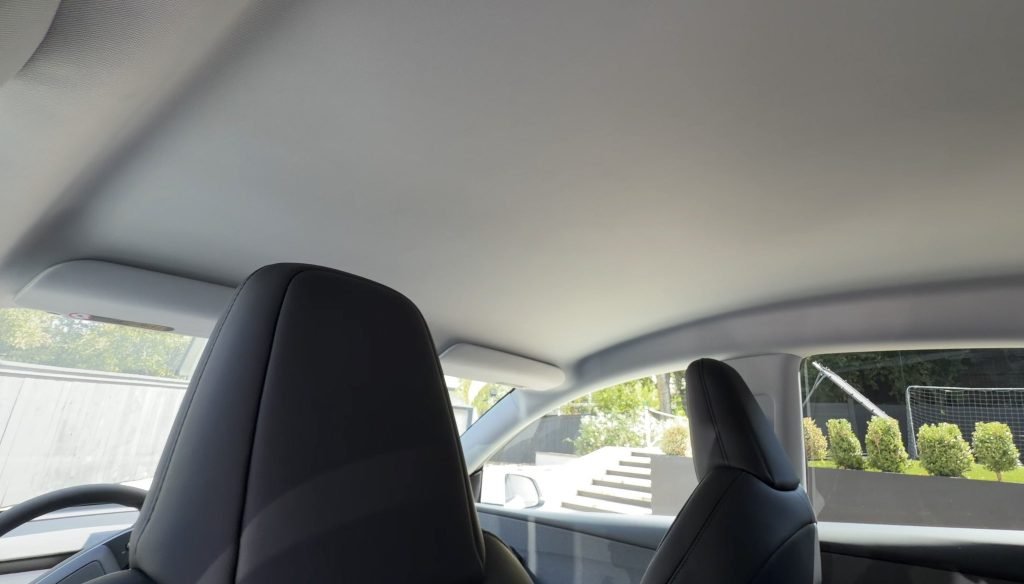
Tesla chose to implement a glass roof on the new Model 3 and Model Y ‘Standard’ builds, despite the fact that you won’t be able to see it from the inside. In the new Model 3 and Model Y ‘Standard’ configurations, one of the biggest changes is the lack of a glass roof, which is one of the more unique features Tesla offers. How Tesla’s Standard models will help deliveries despite price disappointment The entire roof of the Model 3 and Model Y’s ‘Premium’ and Performance trims is glass, giving everyone in the car an astounding view of the sky. However, Tesla chose to cover this up in the new ‘Standard’ trim levels. Here’s a look at it: Credit: ItsKimJava | X Despite it not being visible from the inside, the roof is still made of glass. It is only visible from the outside. Even if you removed the headliner in the Model 3 or Model Y ‘Standard,’ you would not be able to see the outside, because the glass is opaque: Fun fact about the Standard Model Y closed glass roof. A Tesla engineer told us that the glass is opaque, so even if you removed the textile lining on the inside, you would not see the outside. More details to come on our first drive video this Friday. pic.twitter.com/N4uZFlblBB — Kim Java (@ItsKimJava) October 8, 2025 Tesla’s Vice President of Powertrain, Lars Moravy, commented on the use of glass in the Premium models and how it differs from the glass in the Standard trims: “All glass is NOT created equal. Remember, the Model Y Premium glass is laminated with silver IR reflective coatings to make it super comfy and reject solar load… the standard is not… plus LOTS of people wanted a closed headliner, always trying to listen (and improve road noise at the same time).” The decision to cover up the glass while still using it was an efficiency choice. Moravy said Tesla chose to keep the glass for the new Standard models due to “cost, supply chain, and manufacturing efficiency.” Cost, supply chain and manufacturing efficiency in our factories — Lars (@larsmoravy) October 9, 2025 Tesla launched the Standard models on Tuesday. The cars were effectively a counter to the loss of the $7,500 EV tax credit. The post Tesla axed one of the Model Y’s best features in ‘Standard’ trims: here’s why appeared first on TESLARATI.
Tesla bull sees a new path to 600,000 deliveries per quarter

Tesla (NASDAQ: TSLA) bull Dan Ives of Wedbush Securities published a new note to investors on Thursday evening, which seemed to open up the possibility of the automaker returning to a growth rate in terms of deliveries. After nearly two years of leveling off with deliveries, which was expected, Tesla is now slated to potentially return to growth, Ives says, as it has introduced new, more affordable models. It launched its Standard offerings for the Model 3 and Model Y this week, a strategy to bring cheaper cars to customers amid the loss of the $7,500 tax credit. Wedbush’s Dan Ives put up a new Tesla $TSLA note: “The AI valuation will start to get unlocked in the Tesla story and we believe the march to an AI driven valuation for TSLA over the next 6-9 months has now begun in our view with FSD and autonomous penetration of Tesla’s… — TESLARATI (@Teslarati) October 10, 2025 In his note to investors, Ives said: “We believe the launch of a lower cost model represents the first step to getting back to a ~500k quarterly delivery run-rate, which will be important to stimulate demand for its fleet with the EV tax credit expiring at the end of September.” Although these cars come in only slightly under $40,000, there is some belief that they will do two things: attract car buyers looking for an under-$40k EV with Tesla’s technology and infrastructure, or push those on the fence to the now-Premium models, which are simply the Long Range Rear-Wheel-Drive and Long Range All-Wheel-Drive. Ives said in the note that Tesla’s plans for a $25,000 car are “on hold,” but it seems as if that vehicle will be the Cybercab, which the company unveiled a year ago today. That project seems to be moving forward as well, based on what we saw at both Fremont and Gigafactory Texas yesterday. At Fremont, the Cybercab was spotted on the Test Track, while crash-tested units were spotted at the factory in Austin. After the Standard models were rolled out and the Cybercab or another $25,000 unit arrives, Ives believes Tesla could actually get closer to 600,000 deliveries per quarter, he said on CNBC this morning: BREAKING: DAN IVES SAYS — $TSLA WILL DELIVER ABOVE 600K CARS PER QUARTER He says Tesla stock is going to $600+ ! pic.twitter.com/fWLfMnH1XH — TheSonOfWalkley (@TheSonOfWalkley) October 10, 2025 Moving forward, Tesla has much more going for it than its potential growth in quarterly deliveries. Ives recognizes that a majority of what Tesla’s value will come from in the future: AI and autonomy. Ives said: “The AI valuation will start to get unlocked in the Tesla story and we believe the march to an AI driven valuation for TSLA over the next 6-9 months has now begun in our view with FSD and autonomous penetration of Tesla’s installed base and the acceleration of Cybercab in the US representing the golden goose for Musk & Co. We believe Tesla could reach a $2 trillion market cap early 2026 in a bull case scenario and $3 trillion by the end of 2026 as full scale volume production begins of the autonomous and robotics roadmap.” Ives and Wedbush maintained their $600 price target and ‘Outperform’ rating on Tesla stock. The post Tesla bull sees a new path to 600,000 deliveries per quarter appeared first on TESLARATI.
Tesla Model Y L helps boost China wholesale numbers to 90,812 units in September

Tesla China’s wholesale numbers bounced back in September after two straight months of decline, hinting at renewed momentum for the EV maker in one of the world’s most competitive electric car markets. As per data from the China Passenger Car Association (CPCA), Tesla China sold 90,812 vehicles wholesale last month, a 2.82% year-on-year increase from the 88,321 units that were sold wholesale in September 2024. The month’s results represent the company’s best wholesale figures this year so far. Tesla China’s September comeback Tesla China’s wholesale results in September were boosted by the Model Y L, as noted in a CNEV Post report. The new six-seat Model Y L, launched in August and delivered starting in early September, enabled Tesla China to enter the market for large SUVs with six seats, a segment previously inaccessible by the standard, five-seat Model Y. Tesla’s Gigafactory Shanghai continues to be the keystone of the company’s Asia-Pacific operations, producing both the Model 3 and Model Y for local and overseas markets. September’s total marked a 9.16% increase from August’s 83,192 units, effectively allowing Tesla China to return to growth after two months of year-over-year declines. $TSLA Tesla China sold 90,812 vehicles to Wholesale in September.This is the highest number this year.*As China's October Mid-Autumn Festival holiday comes to an end, everything is returning to normal. pic.twitter.com/bgCCHx2DHF — Tsla Chan (@Tslachan) October 10, 2025 Tesla China’s quarterly results From January to September, Tesla China sold 606,364 vehicles wholesale, down 10.27% compared to the same period last year. The decline reflected seven months of year-on-year drops in the first nine months of 2024. Part of this decline was due to Tesla’s changeover to the new Model Y earlier this year, which resulted in the company effectively pulling out its best-selling model for a few months while its factories were being updated. In the third quarter, Tesla China sold 241,890 vehicles, accounting for 48.66% of the electric car maker’s global total of 497,099 deliveries. That figure was down 2.91% year-on-year but up 26.17% from the previous quarter. With Model Y L deliveries likely hitting their stride this Q4 2025, Tesla China’s wholesale figures this quarter would likely be very interesting. The post Tesla Model Y L helps boost China wholesale numbers to 90,812 units in September appeared first on TESLARATI.
Tesla quietly files for Model Y+ in China, and its range numbers could be wild

Tesla has filed for regulatory approval of a new Model Y+ in China, hinting at a long-range update to its best-selling crossover SUV. The upcoming variant was listed in the Ministry of Industry and Information Technology’s (MIIT) public catalog. Mirroring Model 3+ Range Based on the MIIT’s catalog, the Model Y+ will feature a 225 kW/302 horsepower single-motor setup. It will also feature ternary LG Energy Solution batteries, similar to the long-range Model 3+, which was launched earlier this year. The vehicle is expected to offer around 800 kilometers of CLTC range, potentially making it the longest range Model Y in Tesla China’s lineup. The new Model Y+, identified under model number TSL6480BEVBR0, retains the same five-seat configuration and dimensions as the current Model Y. Though Tesla has not yet confirmed official range figures, industry observers expect it to be quite similar to the Model 3+’s 830-kilometer CLTC performance, as noted in a CNEV Post report. BREAKING $TSLA files for Model Y+ (Long Range RWD version) in China The Model Y+ uses a single motor and batteries from LG Energy Solution, similar to the Model 3 variant with an 830-km range The Model Y+ is expected to be priced between the entry-level and Long… pic.twitter.com/sDzA1ngfnU — Ming (@tslaming) October 9, 2025 Intensifying Competition Tesla’s filing comes amid intensifying domestic competition in China. The U.S. EV maker sold 57,152 vehicles in August, down nearly 10% year-on-year, though up almost 41% from July’s 40,617 units, as noted by data from the China Passenger Car Association (CPCA). Still, the Model Y+ could help Tesla regain traction against strong local players by offering class-leading range and improved efficiency, two factors that have become a trademark of the electric vehicle maker in China. Tesla’s experience with the Model 3+, which received a RMB 10,000 price cut within a month of launch, suggests that raw range numbers alone may not guarantee stronger sales. With this in mind, the rollout of features such as FSD could prove beneficial in boosting the company’s sales in the country. The post Tesla quietly files for Model Y+ in China, and its range numbers could be wild appeared first on TESLARATI.
My Tesla did this on FSD (Supervised) v14.1 and the internet went crazy

My Tesla did something on Full Self-Driving (Supervised) v14.1, and it garnered quite the response from the internet. I received access to Tesla’s FSD v14.1 on Tuesday night, and by Wednesday, I was already using it and seeing all the progress the company had made from v13.2.9. Tesla Full Self-Driving v14.1 first impressions: Robotaxi-like features arrive However, there was one thing that it did during the drive that I shared on our social media accounts, and it really got a lot of interesting reactions from people from all corners of the world. I’ll give some background about the situation: I was driving on Main Street in Dallastown, PA, and the route was about to take me left onto Pleasant Avenue. It is a tight and usually very congested intersection; Main Street is a popular route for many construction vehicles and even some tractor-trailers. It is a pretty tight intersection for full-size trucks and larger passenger vehicles. It is not super tight for my Model Y, but it gets to feel congested at times, including with what happened yesterday. The light when I approached the intersection was a green yield; there was also a solid green arrow at the beginning of my light cycle, but I had arrived after that had already turned into the green yield. Oncoming traffic had a green light. My Model Y got out into the middle of the intersection, and the light turned yellow, then red. Most people, including myself, would have probably made the left turn after the light turned red since the car was already out in the intersection. The Tesla, using FSD v14.1, did not. Instead, it chose to back up to the “Stop Here on Red” line, which is further back due to the tight turn the perpendicular traffic has: Super cool thing Tesla FSD v14.1 did: it proceeded thru this intersection to turn left, but the light had gone to red before the turn could be completed. It put itself in reverse and backed up to the “Stop Here on Red” sign/line. Didn’t proceed at a red or impede others. pic.twitter.com/AKb1AI32fK — TESLARATI (@Teslarati) October 8, 2025 As I mentioned, I would have probably taken the left turn. However, I believe the Tesla did not see the traffic that sat to the left, and because of this, it weighed the turn as a higher probability of an accident than if it were to just back up to the line. If you look at these two screenshots from when the light was yellow and red, Tesla’s driver visualization does not have any idea what traffic is to the left on Pleasant Avenue: I believe that, since FSD could not tell what traffic was down to the left, it chose to reverse. People had some polarizing opinions on it: Tesla self-driving can reverse to get out of potentially dangerous positions. — Ashok Elluswamy (@aelluswamy) October 8, 2025 is it not legal to wait in the intersection to turn? I’ve always done that and turned after it goes red if needed — wadu (@waduhekwaduhek2) October 8, 2025 WOW okay that is impressive ! And did it with good speed — Ryan’s Model Y (@ryanjaycowan) October 8, 2025 Impressive that it has this capability, but it’s not the correct move. Green, yellow, red only dictate when you can enter the intersection, once you are in the intersection you must complete your maneuver, not back up. There are plenty of intersections where you HAVE to make the… — doyouwanttoknow? (@climateyupa) October 8, 2025 As far as the legality of the move, it does not seem to be against Pennsylvania law to go through or choose to back up. I have seen many cars do both things over the course of my life of driving in this state, and neither has ever gotten anyone a ticket. I think FSD just did what it felt was the safer option here. The post My Tesla did this on FSD (Supervised) v14.1 and the internet went crazy appeared first on TESLARATI.
Tesla takes huge step with Cybercab in new spotting

Tesla has taken a huge step forward with its Cybercab project, as the vehicle has been spotted on the Fremont Test Track for the first time. Typically, when cars are spotted on the Fremont Test Track, it means Tesla has begun advancing the development of that specific project. With Cybercab production slated for 2026, it seems Tesla is ready to get things moving. The Cybercab was unveiled one year ago tomorrow, at the “We, Robot” event in Los Angeles. Tesla Robotaxi Cybercab: Seats, price, special features, release date, and more Tesla has been hoping to get Cybercab production started in early 2026. With a few months until then, the program has taken some leaps, including the recent start of crash testing of the vehicle at the Fremont Factory in Northern California. Some of these units have made their way to Gigafactory Texas at Tesla’s crash testing facility: The 1st @Tesla Cybercab at the Giga Texas crash testing facility. Hard to say for sure, but this may indicate the vehicle has completed most of the final engineering & production tests out at Fremont and what remains is now at Giga Texas. If this follows how the @Cybertruck… pic.twitter.com/RHB2IjkL1L — Joe Tegtmeyer (@JoeTegtmeyer) October 9, 2025 Now, it has taken another step as Tesla has officially started testing the vehicle at the Fremont Test Track: Tesla spotted for the first time testing the Cybercab at their Fremont factory in California. Full video: pic.twitter.com/oveOsXqiyg — Sawyer Merritt (@SawyerMerritt) October 9, 2025 Here’s when vehicles in Tesla’s lineup were first spotted on the Fremont Test Track and then launched: Vehicle First Spotted on Fremont Test Track Launch Date (Production Start/First Deliveries) Model Y December 12, 2019 January 2020 Tesla Semi March 8, 2021 December 1, 2022 (Limited to pilot program participants) Cybertruck December 10, 2021 November 2023 Cybercab October 9, 2025 Early 2026 Timeframes for when Tesla vehicles hit the Fremont Test Track and when their production and deliveries begin certainly vary. However, the Cybercab being spotted marks a significant step forward for Tesla, as it indicates the company is nearing a major milestone in production, whether for deliveries or on-road testing. It does seem as if Tesla could employ the Cybercab for its Robotaxi program in Austin, Texas, and Northern California. With more markets expected to launch Robotaxi rides soon, it could be a formidable challenge for the new vehicle, especially if Tesla can initiate rides without a Safety Monitor. The post Tesla takes huge step with Cybercab in new spotting appeared first on TESLARATI.