Tesla ramps production of its 'new' models at Giga Texas
I bought a Tesla without having perhaps the biggest advantage of owning an electric vehicle: home charging. People told me it could be done, others said it eliminated the purpose of owning an EV. I knew I wanted a Tesla, and I knew I could probably get away with not having access to charging at home. I traded my ICE vehicle for a Tesla Model Y: here’s how it went The strategy I planned to use without having home charging was pretty simple: there’s a Supercharger a few miles away, and there’s also low-level charging at my local grocery store. The Model Y also came with a Mobile Connector, so there was another way I could charge in a pinch. There are also some distinct advantages I have over others, including the fact that I do not commute to and from work, and I’m also situated only a handful of miles from things like the store and shopping, and most of my errands can be completed without driving more than 15 miles back and forth. A common misconception about being reliant on Supercharging is the cost. Many believe that Supercharging is so expensive that it costs about the same as buying gas. However, there are many workarounds for that, some of which I have used weekly to save money and increase convenience. Here’s how I’ve made it work, and how I suggest you can too: Charge During Off-Peak Hours as Much as Possible The biggest tip I have for those who choose to buy an EV but do not have access to at-home charging is the advantage that is off-peak rates. At my local Supercharger, it costs $0.47 from 8 a.m. to 10 p.m., and just $0.18 from 10 p.m. to 8 a.m. That means if you can wake up a little earlier or go to bed a little bit later, you’ll save nearly three times the money. This is not to say that I never charge during peak hours, but I try to save the longer charges for off-peak hours, and it’s been a huge advantage for me. One morning recently, I was at 9 percent and I charged to 90 percent. It only cost me about $11. Charging during peak hours, that same charge would have been roughly $26. Tesla Supercharger access has proven to be a challenge for one company In my Bronco Sport, going from 40 miles to a full tank, roughly 400 miles, would have cost me well over $40. It’s not so bad either. The Supercharger I use is located at a Sheetz, so I’m able to go in, grab a coffee and a breakfast sandwich, charge, watch YouTube in the car, and sometimes, I even get to enjoy a nice sunrise on the way home. Friday mornings are sacred: ✅BEC on a bagel from Sheetz✅early AM supercharging rates✅Bob does sports @sheetz @tesla @RobbyBerger pic.twitter.com/hu5iemAgEd — Joey Klender (@KlenderJoey) September 26, 2025 If I have to go at night, my Fiancè and I usually use the opportunity to spend time together. We’ll run over to the Supercharger, grab snacks, and watch whatever we’re binging on Netflix (right now, it’s Narcos). Many people said that Supercharging would cost me more than filling up my gas car. According to my Tesla app, that simply isn’t the case. While I have been forced to charge during peak hours at times for about a month and a half, in about fifteen charging sessions, I’ve saved about $70. Over the course of a year, that would equate to over $800. Utilize Other Charging Solutions Although my Charging Stats above show that I’ve only used it 1 percent of the time, I have the advantage of free charging at my grocery store. It is a Shell Recharge EV charging station, and there are two of them at the store. I used my J1772 adapter to charge, and it charges slowly at 11.5 kW. However, it is great if you’re doing your shopping for the week and you’re stuck at the store for an hour or two. If you have one or two of these at your grocery store, just remember to be courteous and charge until you have a reasonable amount of range. What I’ll Do Moving Forward One ongoing effort has been pushing my leasing office to install a few EV chargers in our neighborhood. Because we rent, we are truly at the mercy of what the leasing office will allow and what they’ll do to make the lives of EV owners easier. I’m hoping to continue pushing the management company to a point that will eventually get EV chargers in the neighborhood, especially while I live here and for those who will live here after we leave.
Elon Musk highlights the biggest flaw in X’s monetization program

Elon Musk has admitted that X’s creator payout system isn’t living up to expectations, and he has highlighted the current system’s biggest flaw. Amidst complaints about low and inconsistent payments, the platform’s owner acknowledged that X has been “underpaying and not allocating payment accurately enough.” Musk also stated that YouTube manages creator payments “much better.” Musk acknowledges payout issues Recent discussions about the social media platform’s payout issues began when X product head Nikita Bier stated that the company was developing new upgrades for “power users.” This prompted X user Peter Duan to raise ongoing concerns about being “consistently underpaid” compared to his peers. Bier responded candidly, suggesting that “creator payouts do more harm than good and we need to off-ramp to a different system.” Musk then weighed in on the matter, contradicting Bier’s view. “No,” Musk wrote in his reply, “the issue is that we are underpaying and not allocating payment accurately enough. YouTube does a much better job.” The Tesla CEO’s comment immediately reignited debates about X’s monetization program, which some have criticized for its rather unpredictable nature. @nikitabier please fix the monetization.I have consistently compared my pay outs with my peers and have been consistently underpaid. Happy to provide data.Thank you — Peter Duan (@BTCBULLRIDER) September 30, 2025 No, the issue is that we are underpaying and not allocating payment accurately enough. YouTube does a much better job. — Elon Musk (@elonmusk) October 16, 2025 X’s monetization challenges Since X launched its ad revenue-sharing program in 2023, the system has promised to reward Premium subscribers who generate high engagement with verified accounts, as noted in a WION report. Creators, however, have argued that the company’s payout model has remained inconsistent, with revenue fluctuating even when view counts stay stable. Reports have noted that some users with millions of monthly impressions have received just a few hundred dollars. By contrast, YouTube’s Partner Program, which takes a 45% cut of ad revenue, is known for more transparent and predictable payments. Musk’s admission that YouTube handles monetization more effectively could then hint at a potential shift towards a new monetization program for X, a platform that has become increasingly critical to social conversations over the years. The post Elon Musk highlights the biggest flaw in X’s monetization program appeared first on TESLARATI.
Tesla ownership without home charging: Here’s how it’s done

I bought a Tesla without having perhaps the biggest advantage of owning an electric vehicle: home charging. People told me it could be done, others said it eliminated the purpose of owning an EV. I knew I wanted a Tesla, and I knew I could probably get away with not having access to charging at home. I traded my ICE vehicle for a Tesla Model Y: here’s how it went The strategy I planned to use without having home charging was pretty simple: there’s a Supercharger a few miles away, and there’s also low-level charging at my local grocery store. The Model Y also came with a Mobile Connector, so there was another way I could charge in a pinch. There are also some distinct advantages I have over others, including the fact that I do not commute to and from work, and I’m also situated only a handful of miles from things like the store and shopping, and most of my errands can be completed without driving more than 15 miles back and forth. A common misconception about being reliant on Supercharging is the cost. Many believe that Supercharging is so expensive that it costs about the same as buying gas. However, there are many workarounds for that, some of which I have used weekly to save money and increase convenience. Here’s how I’ve made it work, and how I suggest you can too: Charge During Off-Peak Hours as Much as Possible The biggest tip I have for those who choose to buy an EV but do not have access to at-home charging is the advantage that is off-peak rates. At my local Supercharger, it costs $0.47 from 8 a.m. to 10 p.m., and just $0.18 from 10 p.m. to 8 a.m. That means if you can wake up a little earlier or go to bed a little bit later, you’ll save nearly three times the money. This is not to say that I never charge during peak hours, but I try to save the longer charges for off-peak hours, and it’s been a huge advantage for me. One morning recently, I was at 9 percent and I charged to 90 percent. It only cost me about $11. Charging during peak hours, that same charge would have been roughly $26. Tesla Supercharger access has proven to be a challenge for one company In my Bronco Sport, going from 40 miles to a full tank, roughly 400 miles, would have cost me well over $40. It’s not so bad either. The Supercharger I use is located at a Sheetz, so I’m able to go in, grab a coffee and a breakfast sandwich, charge, watch YouTube in the car, and sometimes, I even get to enjoy a nice sunrise on the way home. Friday mornings are sacred: BEC on a bagel from Sheetz early AM supercharging rates Bob does sports @sheetz @tesla @RobbyBerger pic.twitter.com/hu5iemAgEd — Joey Klender (@KlenderJoey) September 26, 2025 If I have to go at night, my Fiancè and I usually use the opportunity to spend time together. We’ll run over to the Supercharger, grab snacks, and watch whatever we’re binging on Netflix (right now, it’s Narcos). Many people said that Supercharging would cost me more than filling up my gas car. According to my Tesla app, that simply isn’t the case. While I have been forced to charge during peak hours at times for about a month and a half, in about fifteen charging sessions, I’ve saved about $70. Over the course of a year, that would equate to over $800. Utilize Other Charging Solutions Although my Charging Stats above show that I’ve only used it 1 percent of the time, I have the advantage of free charging at my grocery store. It is a Shell Recharge EV charging station, and there are two of them at the store. I used my J1772 adapter to charge, and it charges slowly at 11.5 kW. However, it is great if you’re doing your shopping for the week and you’re stuck at the store for an hour or two. If you have one or two of these at your grocery store, just remember to be courteous and charge until you have a reasonable amount of range. What I’ll Do Moving Forward One ongoing effort has been pushing my leasing office to install a few EV chargers in our neighborhood. Because we rent, we are truly at the mercy of what the leasing office will allow and what they’ll do to make the lives of EV owners easier. I’m hoping to continue pushing the management company to a point that will eventually get EV chargers in the neighborhood, especially while I live here and for those who will live here after we leave. The post Tesla ownership without home charging: Here’s how it’s done appeared first on TESLARATI.
Survey says: North America lags the rest of the world on value-chain data
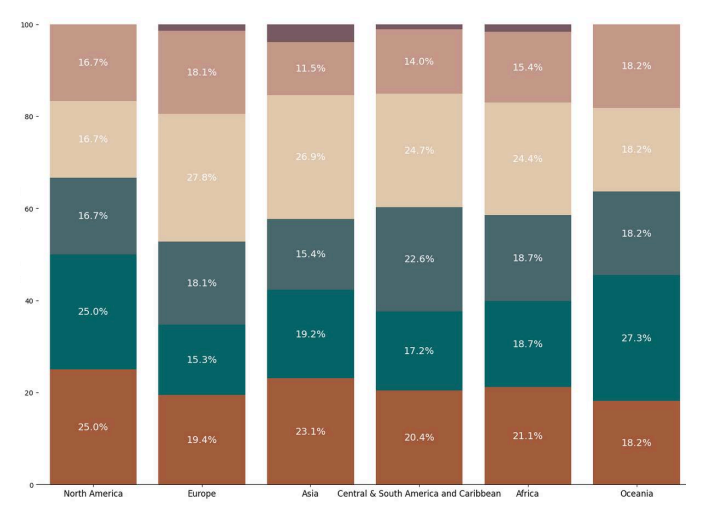
North American firms lag their counterparts around the world in the use of higher-quality Scope 3 data, a survey of more than 1,200 professionals from close to 100 countries shows. The survey, conducted by the MIT Sustainable Supply Chain Lab, included responses from professionals working in supply chain, procurement, logistics, operations and sustainability. Half of all respondents in North America reported relying on the most basic kind of data on value-chain emissions — industry averages or spend-based estimates — compared to just over a third in Europe. Use of data sourced direct from suppliers, which is generally more accurate, also showed regional differences: 28 percent of European businesses reported using supplier data, more than 10 percentage points higher than the rate in North America. Data sources for Scope 3 measurement The difference stems from the factors driving sustainability in the two regions, said Sreedevi Rajagopalan, an MIT research scientist and an author of the report. European firms’ sustainability initiatives are more strongly shaped by regulation, particularly the EU’s Corporate Sustainability Reporting Directive, which requires standardized disclosures and greater transparency. These regulatory pressures have pushed European companies to invest in custom tools and supplier-level data collection. In contrast, North American firms are primarily driven by investors and board priorities, which can be satisfied using spend-based estimates and industry averages. “These methods are quicker and provide broad comparability — even though they’re less precise,” added Rajagopalan. “The trade-off is that spend-based and industry-average approaches can obscure real supplier-level improvements and sometimes even disincentivize sustainability investments. Companies using more detailed supplier data not only achieve more accurate emissions estimates but also strengthen supplier engagement and uncover new opportunities for emissions reduction.” The post Survey says: North America lags the rest of the world on value-chain data appeared first on Trellis.
AM General partners to develop autonomous Army logistics vehicle

AM General has formed a collaborative agreement with renowned autonomous solutions provider, Carnegie Robotics, and leading developer of crewed and uncrewed military ground vehicles, Textron Systems, to design and deliver an autonomous platform for the U.S. Army’s Medium Modular Equipment Transport Trailer (M-MET) program. This next-generation unmanned ground vehicle (UGV) will be developed to meet the Army’s most pressing modernization priorities. AM General, in collaboration with Carnegie Robotics and Textron Systems, will deliver a highly capable unmanned platform that is purpose-built to strengthen Army mobility, sustainment, and energy resilience. The team’s Medium Modular Equipment Transport (M-MET) trailer offering will feature a hybrid powertrain mounted on AM General’s battle-proven light tactical vehicle chassis. The M-MET program’s key mission is to close logistics gaps to autonomously deliver multi-class supplies and operational energy between Brigade Support Areas (BSA) and dispersed forward units. The platform will have a modular, multi-mission design that can autonomously transport critical supplies, generate and distribute operational energy, and integrate a variety of mission payloads in support of Army Transformation in Contact (TiC) and Multi-Domain Operations (MDO). AM General alongside Carnegie Robotics and Textron Systems, is delivering a highly capable unmanned platform purpose-built to strengthen Army mobility, sustainment, and energy resilience. The vehicle combines a rugged, all-terrain chassis with advanced suspension and a hybrid-electric powerpack that provides over 30 kW of exportable power – enabling both autonomous logistics and operational energy support. Its drive-by-wire controls, integrated autonomy suite, and MOSA-compliant network ensure adaptability and rapid integration of mission payloads. Built on the battle-proven HUMVEE platform and enhanced with a modernized powertrain and suspension, the system offers unmatched off-road performance, proven interoperability, and scalability for production. This approach allows the Army to field a modular, reliable, and rapidly deployable solution to close critical operational gaps. Carnegie Robotics will develop autonomy software stack, sensor fusion, computer architecture, non-weapons payload integration, and provide ongoing software sustainment. Textron Systems will incorporate the drive-by-wire system, diagnostics, and weapons payload. Textron Systems has decades of experience with designing, developing and integrating unmanned platforms, with a deep understanding of autonomous vehicle operation across air, land and sea domains. Textron Systems will use their best-in-class technology and expertise to provide an affordable and scalable solution, leveraging its proven robotic core technology. The M-MET request for proposal is expected to be released in 2026. For more information, visit amgeneral.com. The post AM General partners to develop autonomous Army logistics vehicle appeared first on Engineering.com.
Bluetti launches Pioneer Na(Sodium) station starting from exclusive $735, save $1,116 on Tenways AGO X e-bike gear + battery bundle, more

Today’s Green Deals is the third in a row that is headlining a new power station release, with Bluetti launching its new Pioneer Na(Sodium) Portable Power Station and bundles with exclusive savings for our readers starting from $735. From there, we have the massive $1,116 savings on Tenways’ AGO X All-Terrain Mid-Drive e-bike that comes with $307 in FREE add-on gear alongside a FREE Power Bank (extra 180Wh battery) for $1,999. There’s also BougeRV’s e-bike Rack Hitch for all vehicles hitting a new $350 low, Greenworks Gen 2 electric pressure washers, and our favorite ongoing Prime Day Sales (half of which are ending tonight) – plus, many more available to browse in our Post-Prime Day Green Deals hub here. And don’t forget about the hangover deals that are collected together at the bottom of the page, like yesterday’s $1,000 super-early bird savings on EcoFlow’s upcoming DELTA Pro Ultra X power station, the new low price on Heybike’s Hero Carbon-Fiber All-Terrain e-bike, and more. Head below for other New Green Deals we’ve found today and, of course, Electrek’s best EV buying and leasing deals. Also, check out the new Electrek Tesla Shop for the best deals on Tesla accessories. more…
Enhancing EV battery packs with foams, adhesives and high-performance thermal materials

Effective thermal management is one of the most critical aspects of EV battery pack design. Engineers must not only ensure efficient heat dissipation during charging and discharging cycles but also maintain uniform temperature across all cells to optimize performance and extend battery life. This requires integrating advanced materials—such as flame-retardant foams, adhesives, and gap fillers—that can simultaneously control heat flow, provide structural reinforcement, and improve overall safety. To learn more about addressing these thermal challenges at the material level, Charged recently chatted with Germaine Mariaselvaraj, Technical Service Manager at H.B. Fuller. Germaine explained how their EV Protect foam series addresses a core challenge in EV battery design: preventing thermal runaway from propagating between cells. The foam acts as a fire‐retardant barrier, helping isolate a single failing cell so that the rest of the pack remains intact. Beyond just safety, it also delivers structural and vibration-resistance benefits, which many battery integrators rely on to meet durability standards without adding heavy metal or plastic stiffeners. H.B. Fuller’s first offering, EV Protect 4006, is a semi-structural foam that flows into cavities and expands to encapsulate components. As market demands shifted toward more structural solutions, H.B. Fuller introduced EV Protect 5006, 5008, and 5009—versions with increased stiffness that allow for the reduction or replacement of traditional structural parts. The upshot: reduced part count, lower mass and a more integrated pack layout that supports newer architectures like cell-to-pack or cell-to-chassis. Beyond thermal management, the foam contributes to noise, vibration and harshness (NVH) control and thermal insulation. Some customers rely on the foam to help them pass vibration testing that they could not achieve with bare components, and because the foam envelops the cells, it also mitigates temperature swings in extreme ambient conditions. In cold or hot environments, the foam moderates local temperatures, helping reduce the impact on range or battery performance. Germaine also discussed H.B. Fuller’s EV Bond 775, a reactive hot-melt adhesive that streamlines battery module assembly. By replacing tape or multi-step adhesive processes, this reactive hot-melt enables faster bonding of mica to lids, cells and cooling tubes. That accelerates cycle time, reduces handling, and cuts scrap or rework—all valuable in high-volume battery manufacturing. On the gap-filling and thermal interface front, H.B. Fuller’s EV Them 288 (a silicone-free MS polymer) competes with traditional silicone gap fillers. Because it’s silicone-free, it helps meet stricter OEM constraints on materials in the manufacturing environment. Learn more about H.B. Fuller’s battery pack materials portfolio
Tesla launches new interior option for rare Model Y trim

Tesla has launched a new interior option for the rare Model Y L trim that is available only in China, marking the first new color for the inside of a vehicle in some time. Tesla has traditionally stuck with either Black or White interior options with the Model 3 and Model Y, although the Model S and Model X have had additional colors. The Model S and Model X still have a Walnut Cream interior option that costs an additional $2,000. With the mass market models, however, Tesla has maintained the Black or White selections, until now, at least in China. Tesla just launched a new light grey interior option for the Model Y L in China, which will cost $1,120. It differs from the white interior slightly, but it is nice for buyers in China to have this third option: The new color is only available on the Model Y L in China, so customers who take delivery of other trim levels or in other regions will not have this color available to them, just as the vehicle configuration itself is exclusive to that market. In terms of whether it will make its way to other markets, CEO Elon Musk has said that the Model Y L could potentially make its way to the United States at the end of 2026, but it is not a certainty. Musk said: “This variant of the Model Y doesn’t start production in the U.S. until the end of next year. Might not ever, given the advent of self-driving in America.” This variant of the Model Y doesn’t start production in the US until the end of next year. Might not ever, given the advent of self-driving in America. — Elon Musk (@elonmusk) August 20, 2025 This came as a disappointment to many fans and owners in the U.S. because people here have been pushing Tesla to create and manufacture a new, full-size SUV, or at least something more traditional that competes with vehicles like the Chevrolet Tahoe and Ford Expedition. While the Model Y L is not on par with the size of those vehicles, it is a longer and larger version of the best-selling Model Y. Tesla China shows off Model Y L’s manufacturing process in new video Nevertheless, the new interior option is something we could hopefully see added to U.S. vehicles, although it seems Tesla’s focus is truly dialed in on the Cybercab and expanding Robotaxi and autonomy. The post Tesla launches new interior option for rare Model Y trim appeared first on TESLARATI.
How L’Oreal links environmental goals to new product innovation
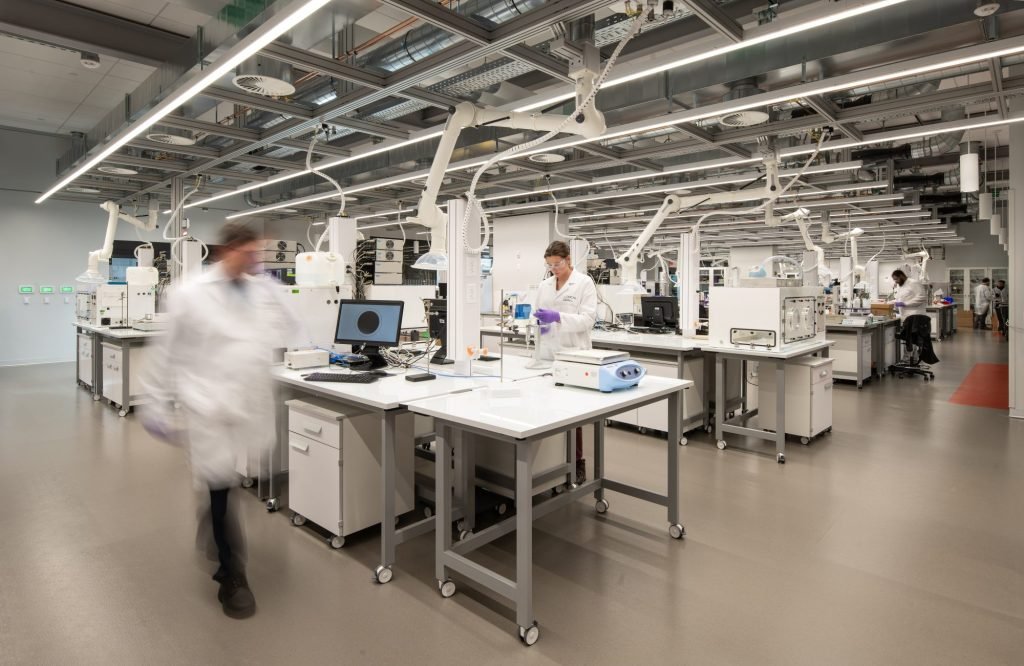
One of L’Oreal’s most complex environmental goals is a push to replace petrochemicals — widely used in cosmetics for their moisturizing and blending properties — by relying on plants, minerals and recycled materials for 95 percent of its ingredients by 2030. As of the French conglomerate’s latest progress report, for 2024, the category leader in cosmetics and personal care — with sales of $45 billion — has managed to reach 66 percent. That achievement is linked to its decision to embed “eco-design” principles into its 4,000-person research and innovation team more than eight years ago. All new products for 2023 and 2024 were evaluated using the company’s proprietary Sustainable Product Optimization Tool, which considers 14 environmental metrics as part of ingredients sections. More recently, the ecodesign strategy inspired a new perfume made with fragrance collected from flowers using a water-free extraction system. It also drove the refinement of a vertical farm system that lets L’Oreal cultivate plants for its cosmetics using less land, water and energy. Both innovations address another L’Oreal goal: use recycled water for 100 percent of its industrial processes. So far, the company has achieved 53 percent. “Our performance as a business cannot be separated from our performance from an environmental and social perspective,” said Marissa McGowan, chief sustainability officer at L’Oreal North America. “I would also say innovation is the mindset of continually striving to do better and continually striving to meet new needs, and sustainability is sort of synonymous with innovation.” L’Oreal’s 250,000-square-foot scientific research center in Clark, New Jersey, which opened in February and employs 600 scientists and researchers.Source: Trellis Group/Heather ClancySource: L'Oreal Dedicated space to nurture breakthroughs Much of the ecodesign work for North American products happens at L’Oreal’s 250,000-square-foot scientific research center in Clark, New Jersey, which opened in February. The facility employs 600 scientists and engineers, who have been challenged to use 12 principles of “green chemistry” on behalf of research intended for the U.S. market. (The lab is responsible for about 20 percent of L’Oreal’s formulations globally.) McGowan meets with the head of that lab at least monthly to review goals on a brand-by-brand basis. The goal is to prioritize substances that are biodegradable, found in nature and require less energy and water — for both production and consumption. For example, L’Oreal is leaning into shea butter, which it sources from trees and seeds grown by Burkina Faso communities in West Africa. The substance features prominently in more than 1,700 products, including a new Biolage professional salon line that restores nutrients to damaged or colored hair without using paraben (a known endocrine and hormone disruptor), silicone or mineral oil. L’Oreal scientists developed a way to concentrate the butter, so less of it needs to be used, a process they demonstrated during my September visit to the Clark facility. Another breakthrough is glycolysine, a patent-pending, bio-based surfactant used in the new CeraVe Air Foaming Cleanser, launched in summer 2025. The substance replaces synthetic substances that can be skin irritants. It’s made from a combination of glycolipids from plants or fungi, and polylysine, an amino acid polymer. The cleanser doesn’t require water to create the foam: a special pump mixes air with the product as it is dispensed, creating bubbles. Each brand is responsible for its own environmental design priorities, but CeraVe’s growth has exploded over the past five years to more than $2 billion globally, and that’s one reason its work gets special attention. L’Oreal studies the potential ripple effect of an innovation when deciding where to prioritize. “We do have a brand-by-brand approach, but once that technology comes through in one brand, we look to see how we can scale it across the portfolio and it becomes available for all the brands,” McGowan said. L’Oreal uses shea butter in more than 1,700 products, including a new salon line that restores nutrients to hair without using paraben (an endocrine and hormone disruptor).Source: Trellis Group/Heather ClancySource: L'Oreal New cultivation and extraction technologies L’Oreal’s product-agnostic approach to ecodesign is illustrated by two technologies under development for several years and formally introduced this summer. Osmobloom, created through a partnership with Cosmo International Fragrances, is an air-capture system for extracting fragrance molecules from flowers while leaving the bloom intact. Traditional approaches use steam, solvents and fats to absorb the fragrance. The equipment uses less energy, water and chemicals. It also enables L’Oreal to harvest flowers that were previously considered “mute,” such as lily of the valley and hyacinth, and those from the iconic orange blossom and tuberose. The first product to result from the innovation: a perfume, Private Talk from Valentino Beauty, made from tuberose plants. L’Oreal has 12 ingredients under development. At the end of the Osmobloom extraction, the flower is intact and can be used for other applications — such as an ingredient in herbal tea. “We’re adding to the supply chain, not taking away,” said McGowan. Another technology that will be used across brands is an early-stage, artificial intelligence-powered vertical farm called BioPods developed by Interstellar Lab, a startup that was part of L’Oreal’s innovation accelerator program. BioPods use 99 percent less water than traditional farming methods, by recycling water, and also capture carbon dioxide. They were initially created for applications in outer space, but L’Oreal sees the technology as important for growing plants in territories impacted by climate change. BioPods will also allow for more cultivation near production facilities. In recent demonstrations, BioPods were used to grow Centella asiatica, which produces an ingredient called madecassoside, a compound with anti-inflammatory, antioxidant and anti-aging properties. The post How L’Oreal links environmental goals to new product innovation appeared first on Trellis.
New open-source tool for multi-material DfAM

Graded lattice with soft/rigid regions. (IMAGE: University of Colorado Boulder) In an age where the DMCA reigns and it seems as though there’s an app for everything and everything has an app, it’s easy to forget that open source software still exists. More importantly, it’s still the basis for numerous useful tools for engineers working with additive manufacturing (AM). And now there’s one more. Developed in the Matter Assembly Computation Lab at the University of Colorado Boulder, OpenVCAD is a software package that’s designed to help AM engineers design multi-material 3D printed objects. More specifically, it’s built to make gradient design easier. “There’s certainly a history of multi-material design study and practice that existed well before OpenVCAD,” said assistant professor Robert MacCurdy, in a press release. “But we believe the overhead of writing specific code for specific projects every single time prevents engineers from doing as much design as they could. With OpenVCAD, we’re doing all of that work once—and doing it really well—so that people have built-in infrastructure to represent these spatially varying multi-material designs.” Charles Wade, the PhD student who created OpenVCAD, said his aim was to provide design engineers with a set of tools that would make it easier to build the complex functions necessary for multi-material 3D prints. A three‑component gradient Utah teapot. (IMAGE: University of Colorado Boulder) “This is the first multi-material, code-based design tool that is widely available,” Wade said in the same release. “It allows for good complexity when printing objects, it’s accessible and it’s intuitive to write and design. Unlike traditional CAD software, where you’re forced to sketch everything out for each change and you cannot represent graded materials, our tool allows users to change one small variable and watch the whole design update in an easy way.” According to its creators, OpenVCAD enabled engineers in MacCurdy’s lab to design an object consisting of five different materials. It’s equipped with a Python implementation that enables users to import the researcher’s repository and get started immediately. “We want this to be widely available to people,” Wade said in the release. “We have a growing base of external researchers from other institutions who are using this tool and we hope to enable that community to do their best work.” Potential applications for the new tool include designing surgical planning models, flexible actuators for soft robotics and simulations of multi-material objects. The tool can also be used to apply mechanical properties to specific parts of lattice structures. “We’re able to rely on OpenVCAD’s core capabilities to represent multi-material objects in a bunch of different domains,” said MacCurdy in the release. “But there is a lot more coming in certain areas that we are excited about and we’re really hoping this approach to multi-material design takes off.” The post New open-source tool for multi-material DfAM appeared first on Engineering.com.
Score $1,000 off EcoFlow’s upcoming DELTA Pro Ultra X station, Heybike Hero carbon-fiber e-bikes start from new $1,899 low, more
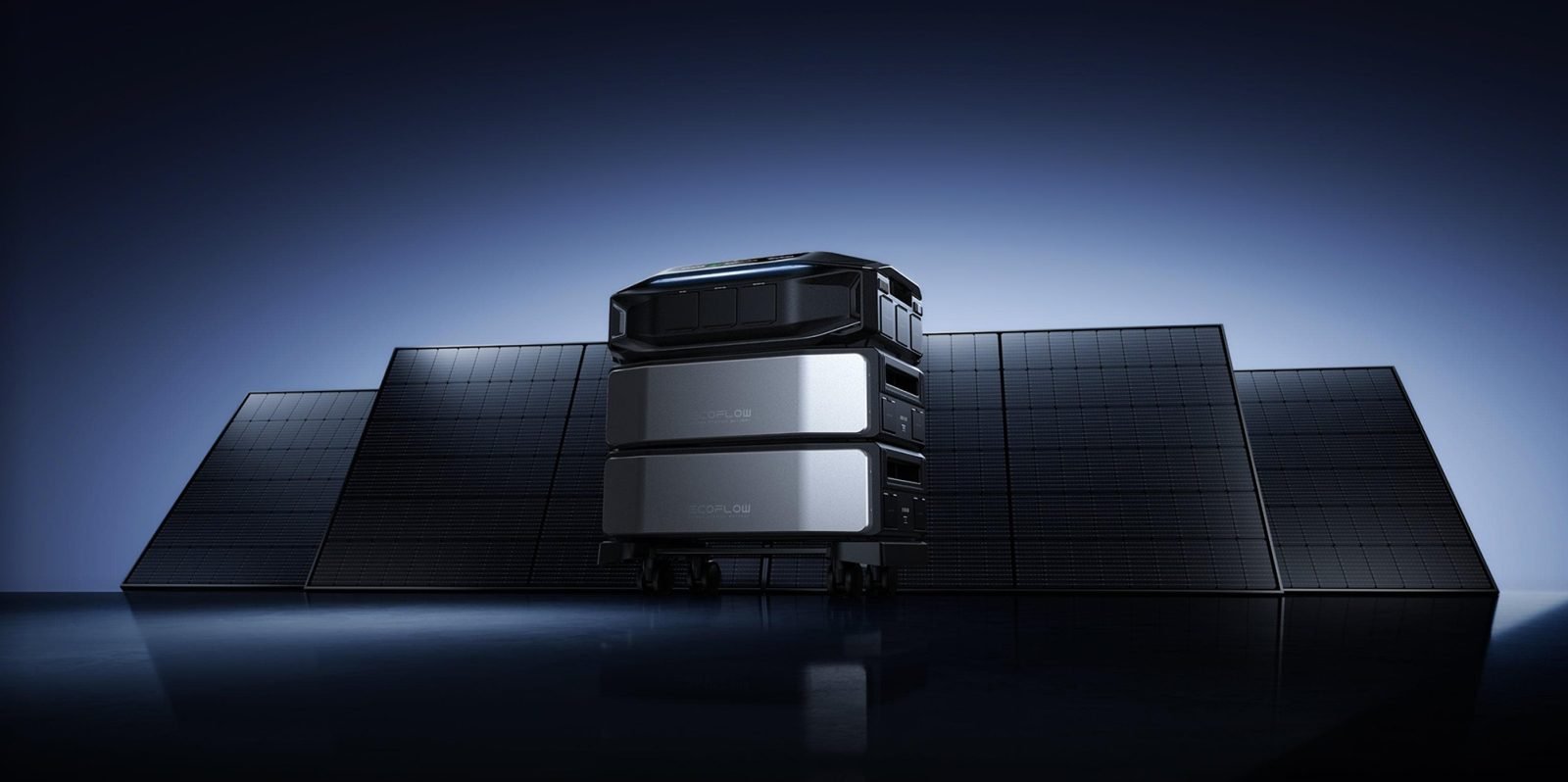
Following right along in the same fashion as yesterday’s Green Deals, today’s edition is led by another pre-sale offer on upcoming tech, with EcoFlow offering a way to score a super early-bird $1,000 discount on its soon-to-release DELTA Pro Ultra X Whole-Home Power Station. Behind it is Heybike’s Halloween Sale, which is not only continuing some Prime Day lows, but also dropping the Hero Carbon-Fiber All-Terrain 1,000W e-bike to a new $1,899 low. We also have EcoFlow’s final extended Prime Day 48-hour flash sale on two extra battery units and a Smart Home Panel 2 – all starting from a $349 low, and more waiting for you below – plus, many more available to browse in our Post-Prime Day Green Deals hub here. And don’t forget about the hangover deals from yesterday that are collected together at the bottom of the page, including the early-bird savings on Anker’s new SOLIX C2000 Gen 2 Portable Power Station, and more. Head below for other New Green Deals we’ve found today and, of course, Electrek’s best EV buying and leasing deals. Also, check out the new Electrek Tesla Shop for the best deals on Tesla accessories. more…
OMI brings hybrid tech to off-road vehicles

OMI’s Fusion Drive is a hybrid powertrain designed to optimize power and efficiency in challenging off-road conditions. Charged recently chatted with Paul Brewster, Chief Sales Officer at OMI, to learn more. Rather than simply chasing novelty, OMI is a pragmatic innovator, creating systems designed to tackle real-world challenges. The Fusion Drive system features electric and combustion power in a unified drivetrain. Riders can toggle between stealth mode (electric only), boosted or hybrid modes, or fallback to traditional combustion. This flexibility enables operators to adapt according to the mission profile, terrain, noise constraints or thermal signature requirements. In addition to recreational and agricultural vehicles, Brewster highlighted military applications, noting that quiet, heat-reduced approaches may prove decisive in life-or-death scenarios. Complementing the powertrain is the Nexus user interface, a console built for modularity and control. Rather than viewing the drive system in isolation, OMI treats it as a hub for broader integration. The Nexus UI can manage auxiliaries like winches, cameras, lights and tie in with third-party hardware or software. Whether through an onboard keypad or via smartphone, the control is placed directly in the user’s hands. The emphasis is on seamless integration and modular growth, rather than forcing rigid system constraints. In terms of deployment, OMI has already announced a collaboration with Upfit UTV to integrate the Fusion Drive into a Polaris Ranger 1500 platform. The system is designed to drop in without structural chassis changes, which helps expedite adoption and reduce retrofitting barriers. The target availability is early 2026. By leveraging its global R&D and manufacturing bases in China, Mexico, and the US, OMI plans to scale into markets where regulatory and economic environments align favorably. To learn more, visit and follow them on social media. Facebook: https://www.facebook.com/omi.mecatronicsolutions/LinkedIn: https://www.linkedin.com/company/omi-electromechanical/YouTube:
Tesla mulls revamping $25k car, strange report claims

Tesla is reportedly mulling the potential revamp of its $25,000 vehicle project, a strange report claims. It seems unlikely, especially since Tesla launched two new, more affordable models last week with the Model 3 and Model Y Standard trims. However, a report from European media outlet 36kr claims Tesla has started to advance two vehicle projects, internally codenamed E41 and D50, in China. People familiar with the matter reportedly told the outlet that “some design and verification reports of the new projects are inherited from the current Model Y and Model 3.” Tesla axed one of the Model Y’s best features in ‘Standard’ trims: here’s why These new simplified models would be priced between $5,000 and $5,500 cheaper than what the new ‘Standard’ trims cost. The report also claims that these vehicles would be launched only if the new ‘Standard’ models “fall short of sales expectations.” $TSLA BREAKING Tesla is reportedly restarting work on its NV91 and NV93 projects for models smaller than the Model Y The NV91 project refers specifically to the $25,000 vehicle that CEO Elon Musk had mentioned, a model that was halted in Feb.2024 despite being… pic.twitter.com/L8TDvzmNwm — Ming (@tslaming) October 14, 2025 This report suggests that potentially more affordable models are being offered, but this seems unlikely, considering Tesla launched the two Standard models just last week, and the only truly affordable model it is working on will be the Cybercab. However, there is potential for a car to launch that undercuts the newest configurations of the Model 3 and Model Y. As of now, it just seems as if it is something that is far-fetched. When Tesla’s patent for the unboxed process was published just last month, it seemed more than obvious that the vehicle it would be used for was the Cybercab. The language used in the patent itself was geared toward more streamlined and quality production and manufacturing, which Tesla must implement to meet the likely demand for the vehicle. It will be easier to scale vehicles with the unboxed process, and the Cybercab has been routinely mentioned with the sub-$30,000 price tag, even by CEO Elon Musk. He said during the Q3 2024 Earnings Call: “I think having a regular 25K model is pointless. It would be silly. Like it would be completely at odds with what we believe…It’s fully considered cost per mile is what matters. And if you try to make a car that is essentially a hybrid, manual, or automatic car, it’s not going to be as good as a dedicated autonomous car. So, yes, Cybercab is just not going to have steering wheels and pedals.” The post Tesla mulls revamping $25k car, strange report claims appeared first on TESLARATI.
Tesla China comeback: Retail sales hit second-highest month of 2025

Tesla’s retail sales in China climbed to 71,525 vehicles in September, the company’s second-highest monthly total this year, as per data from the China Passenger Car Association (CPCA). The result reflects a steady rebound, narrowing Tesla’s year-on-year sales decline to just 0.93%, while showing a 25% jump from August’s weaker numbers. Tesla China’s September numbers are just below the 74,127 units that were sold domestically in March. Tesla China’s September Despite the uptick, Tesla China’s retail sales have now logged seven months of year-on-year declines this 2025, managing growth only in March and June, though a good portion of these lost sales was due to the changeover to the new Model Y. The Shanghai Gigafactory, which produces both the Model 3 and Model Y, continues to serve as a dual-purpose hub for domestic and export markets. In September, Tesla exported 19,287 vehicles from its Shanghai facility, up 19.6% year-on-year but down 25.9% from August, as noted in a CNEV Post report. This is in line with Tesla China’s strategy of prioritizing exports early in each quarter. Including exports, Tesla China’s total wholesale volume reached 90,812 units in September, up 2.82% year-on-year and 9.16% month-on-month. Wholesale sales of Tesla's Giga Shanghai are split between 19,287 exports and 71,525 sales in China. pic.twitter.com/Xj4mNhBUGL — Roland Pircher (@piloly) October 13, 2025 Model Y still leads The Tesla Model Y still led the electric vehicle maker’s sales in China with 59,907 units sold wholesale during the month, rising 17.1% from last year, while Model 3 reached 30,905 units, dipping 16.8% year-on-year but up 27% from August. Tesla’s overall market share in China’s NEV segment rose to 5.52%, and its BEV share climbed to 8.66%, modest gains hinting at the company’s resilience in a fiercely competitive market. Across Q3, Tesla sold 169,294 vehicles in China, down 6.9% year-on-year, marking its second consecutive quarterly decline but a strong 31.4% recovery versus Q2. Year-to-date, Tesla’s retail total stands at 432,704 units, down 5.97% compared to last year. The post Tesla China comeback: Retail sales hit second-highest month of 2025 appeared first on TESLARATI.
Tesla dominates best-selling EVs in Q3, but there’s one disappointment

Tesla dominated the sales figures for electric vehicles in the third quarter in the United States, but there was one disappointment: the Cybertruck. As a whole, the EV industry benefitted from the loss of the $7,500 EV tax credit in Q3, which was something many expected. As the credit expired, consumers rushed to showrooms to take the credit and remove $7,500 from the purchase price of their new vehicle. Will Tesla thrive without the EV tax credit? Five reasons why they might It was a very interesting time for many companies as they scrambled to figure out how to push as many vehicles out the door as they could in preparation for the tax credit’s removal. In typical fashion, Tesla was able to top every manufacturer and secure a dominating portion of the overall market in Q3. However, some other OEMs pulled out some surprises, including Chevrolet, Honda, and Ford, which managed to get two vehicles in the top 10, as many as Tesla. Cox Automotive compiled the data in its Q3 Electric Vehicle Sales Report: Tesla Model Y – 114,897 Tesla Model 3 – 53,857 Chevrolet Equinox EV – 25,085 Hyundai Ioniq 5 – 21,999 Honda Prologue – 20,236 Ford Mustang Mach-E – 20,177 Volkswagen ID.4 – 12,470 Audi Q6 e-tron – 10,299 Ford F-150 Lightning – 10,005 Rivian R1S – 8,184 10.5 percent of the automotive sales in the U.S. in Q3 were electric, a new record that surpasses that of Q3 2024, where the total share of sales for EVs was 8.6 percent. Now, the disappointment that is evident from this list is the fact that there is no Tesla Cybertruck listed. That’s because it was the second-best-selling EV pickup on the market. The company sold 5,385 Cybertruck units in Q3. The Cybertruck has been a vehicle that has confused many Tesla fans and owners, especially considering the company had such stratospheric expectations for the vehicle while it was in development. Reservation trackers had the truck sitting between one million and two million orders, but it has not lived up to that. Pricing is the main issue with Cybertruck. Tesla introduced the pickup with Single, Dual, and Tri-motor configurations, priced at $39,990, $49,990, and $69,990. Those price points are simply a thing of the past. Tesla Cybertruck was the second-best-selling EV pickup in Q3, Cox Automotive data shows. It was only outsold by the Ford F-150 Lightning, which sold 10,005 units for the quarter. Cybertruck had 5,385 sales. pic.twitter.com/Q2gnUbF6bk — TESLARATI (@Teslarati) October 13, 2025 The post Tesla dominates best-selling EVs in Q3, but there’s one disappointment appeared first on TESLARATI.
Tesla Autopilot visualization gets big upgrade with tons of new additions
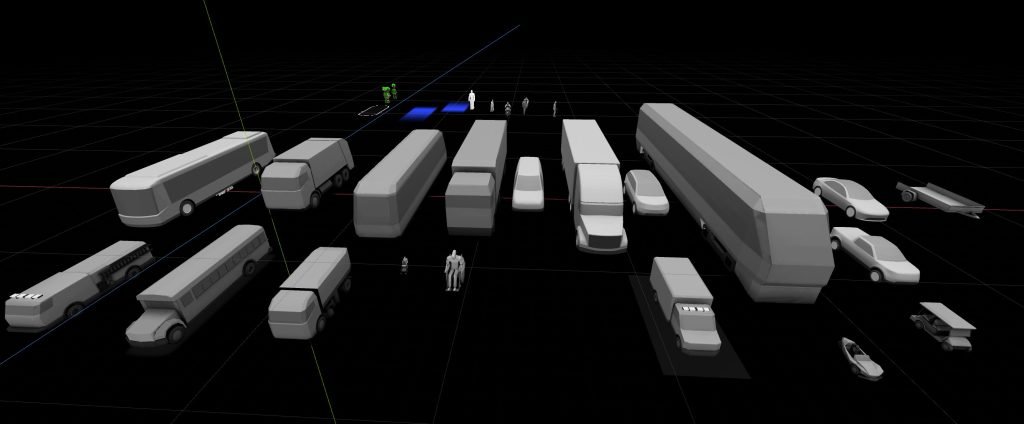
Tesla’s Autopilot visualization just got a big upgrade as the company added tons of new additions to what it will be able to render in terms of a vehicle’s surroundings. The AP visualization shows up on the center touchscreen and illustrates the surroundings of the cars. It has gotten better in recent years, as it is able to outline types of vehicles, pedestrians, animals, and more. Tesla just fixed a four-year-old bug with Full Self-Driving visualization However, it still does not have every single application, and acquiring them will take some time. If an object or vehicle is visible to the vehicle but an accurate render is not available, the car will instead pick whatever is closest. For example, I passed an Amish family yesterday in Lancaster, PA, and instead of illustrating the horse and carriage, it simply showed a small box truck. In an effort to make the Autopilot and Full Self-Driving suites more robust and accurate, Tesla has added a substantial amount of vehicle renders, which will become available in the coming weeks. The visualizations were found by Tesla hacker @greentheonly, who posted them on X. The new visualization renders are: Ambulance Firetruck Garbage Truck Schoolbus European Semi Truck Golf Cart Person on a Scooter Person on a Skateboard Stroller Street Sweeper Three-Wheeler Trailer Train Tram Person in a Wheelchair Here is an image with all of the Autopilot visualization renders: Credit: Green The visualization is a crucial part of manual operation and can be considered a distinct advantage that Tesla has over other companies. It continues to be an effort that Tesla invests heavily in, as it keeps refining the suite and making it more robust with additional visualizations and animations. Recently, it was revealed that Tesla is planning to utilize Unreal Engine for driver visualization to create a realistic depiction of the vehicle’s environment. Tesla has not yet confirmed this, but coding found with the Model S and Model X showed it could be coming in the near future. The post Tesla Autopilot visualization gets big upgrade with tons of new additions appeared first on TESLARATI.
Tesla launches new color from Gigafactory Berlin

Tesla has launched a new color at Gigafactory Berlin in Germany, home of the company’s “world-class paint shop,” as Elon Musk once called it. Bringing a new color to Tesla’s Model Y, there are now five available colors for those who will receive a vehicle from Gigafactory Berlin, with four of them being colors offered in other markets. However, there is now one distinct color that is only available in Germany: Marine Blue. Tesla has launched “Marine Blue” in select European countries It is the third shade of blue Giga Berlin produces. It costs $1,500 pic.twitter.com/pVDWdNeBSJ — TESLARATI (@Teslarati) October 10, 2025 Priced at €1,300, Marine Blue will cost the same as both Diamond Black and Stealth Grey, while Quicksilver and Ultra Red are available for double the price. It is the third shade of blue Tesla offers across its lineup, as Deep Metallic Blue and Glacier Blue are also offered, but in other markets. Tesla has routinely flexed Giga Berlin for having the most advanced paint shop throughout its factories, and it has produced some interesting colors over the past few years, some of which were truly awesome. Tesla Giga Berlin is getting a world-class paint shop, new color ‘layers’ to come In 2020, Musk said, “Giga Berlin will have the world’s most advanced paint shop, with more layers of stunning colors that subtly change with curvature.” He also detailed the company’s plans to upgrade the Fremont and Shanghai paint shops. Gigafactory Texas was not yet unveiled. Tesla has worked to improve those facilities, especially in Fremont. It was able to roll out the new Diamond Black color earlier this year. However, Giga Berlin seems to remain the standard in terms of paint for Tesla. It routinely offers new colors. For example, back in 2022, Tesla rolled out its familiar Quicksilver color for the Model Y, while also introducing Midnight Cherry Red, a color close to burgundy. However, the company chose to discontinue the color after determining internally that customers no longer wanted to buy it. Midnight Cherry Red was removed as an option earlier this year, likely to make way for the development of the new Marine Blue. The post Tesla launches new color from Gigafactory Berlin appeared first on TESLARATI.
4D_Additive integrates with Phasio for automated 3D printing
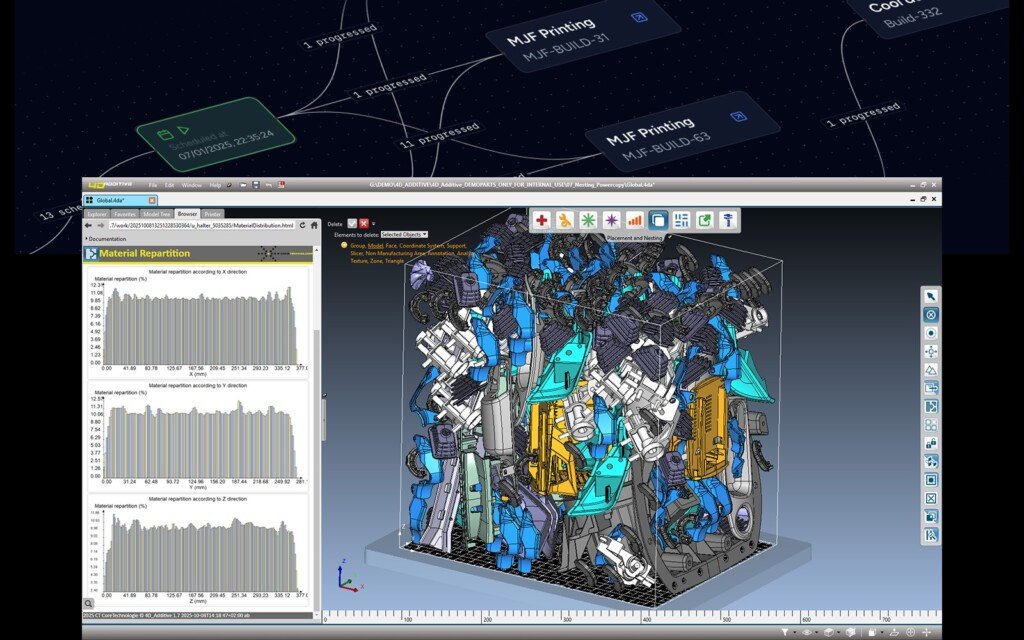
CoreTechnologie’s 4D_Additive 3D printing software has been integrated into the Phasio order management platform, allowing direct transfer of manufacturing data. The update, using the new 4dam file format and automatic build job functions in version 1.7, can reduce preparation time by 40% to 60%. Caption: Phasio and CoreTechnologie ensure seamless automation in additive manufacturing | Photo Credit: CoreTechnologie GmbH The German-French software manufacturer CoreTechnologie (CT), producer of the universal 3D printing and nesting software 4D_Additive, and Phasio, producer of the manufacturing platform of the same name, have announced increased cooperation to enable a seamless process chain in additive manufacturing. The cooperation between the two software manufacturers improves efficiency and reduces errors in the workflow. Seamless process chain The Phasio software offers transparent and simple quotation creation, order management and workflow planning. All manufacturing information for the components is transferred directly from the Phasio software to the 4D_Additive 3D printing software via the new 4dam file format. This enables the automatic loading of the CAD models specified for each order, including their correct orientation and quantity, without any need for manual intervention. Once the desired nesting parameters have been defined, the 4D_Additive software performs 3D nesting with a high packing density and thermal optimisation. The number and position of each part within the build space for a given job are transmitted back to the order management system by means of the 3MF format. By eliminating the potential for human error, inaccuracies in daily work are avoided and automatic manufacturing processes with high quality standards are carried out. This results in a 40 to 60 percent reduction in manual work in the daily practice of a 3D printing service company. The integrated solution enables an automated workflow with an optimal first-time-right rate, reduces waste to an absolute minimum and ensures high throughputs for all additive manufacturing processes without compromising part quality. Universal software for additive manufacturing The modular 4D_Additive software suite was designed as an innovative tool for all printing processes and enables an easy build job preparation for SLS, MJF, SLM, SLA and FDM printers within one single Software and a modern and easy-to-use graphical interface. The very fast nesting functions, enabled by multiprocessor calculation, allow high packing densities and heat-optimised distribution of the models in the build space of the 3D printer. The software reads all common CAD formats as well as STL and 3mf data. In addition, clever repair functions allow faulty CAD, STL and scan data to be converted into watertight, printable models within shortest space of time. With CAD modelling functions, specific changes can be made in 4D_Additive and parts can be cut using various cutting types. Support structures for SLM, FDM and SLA printers can be created automatically and edited locally by the user. Functions for creating labels and textures, as well as internal and external lattice structures, complete the range of features offered by the 3D printing software. Further information on the CT software is available at coretechnologie.com/products/4d-additive. The post 4D_Additive integrates with Phasio for automated 3D printing appeared first on Engineering.com.