Energy Vault announces acquisition of 150 MW battery energy storage project in Texas

Energy Vault has acquired and plans to develop SOSA Energy Center, a 150 MW/300 MWh battery energy storage system (BESS) located in Madison County, Texas. The project, originally developed by Savion, a subsidiary of Shell plc, represents an advancement in Energy Vault’s growing U.S. portfolio and marks the first project to be formally acquired through its Asset Vault investment platform. The 150 MW/300 MWh BESS is positioned within the ERCOT North market, one of the most mature and dynamic power markets in the United States. The project is expected to receive Notice to Proceed (NTP) in Q4 2025, with commercial operation expected in Q1 2027. Energy Vault will safe harbor the asset with construction beginning on-site in Q4 2025. Upon completion, the project will deliver critical grid support and renewable integration capacity to Texas’s rapidly evolving energy landscape. As the first project to be formally acquired under Energy Vault’s Asset Vault investment platform, the SOSA BESS acquisition will be supported by the recently announced $300 million preferred equity investment by Orion Infrastructure Capital (OIC), in addition to the monetization of Federal Investment Tax Credit-related funds. Asset Vault is a fully consolidated subsidiary of Energy Vault, dedicated to developing, building, owning and operating energy storage assets globally. Energy Vault is in advanced negotiations with a counterparty for an 8-year offtake agreement. “The SOSA BESS is a strong addition to Energy Vault’s growing global portfolio of energy storage deployments, with top quartile project performance attributes consistent with all project acquisitions and development under the Asset Vault platform,” said Robert Piconi, Chairman and Chief Executive Officer of Energy Vault. “This project acquisition demonstrates our commitment to one of the most important attributes of success in this dynamic market — speed of execution — rapidly deploying capital toward the development of high-return, bankable energy infrastructure at scale.” “SOSA represents the caliber of bankable, cash-flow generating assets that Asset Vault was designed to capture,” said Chris Leary, Head of Infra Equity, OIC. “Energy Vault’s proven ability to execute on projects with strong fundamentals and long-term revenue visibility reinforces why we’re committed to supporting their growth as they build a portfolio of owned and operated energy storage assets that deliver predictable returns.” The SOSA project benefits from fully secured site control, clean title, and completed environmental and interconnection milestones, ensuring a streamlined path to construction. The offtake structure is expected to be underwritten by an investment-grade counterparty, and is expected to deliver bankable, frontloaded revenue streams, enhancing returns and de-risking project cash flows. The BESS will leverage Energy Vault’s third-generation B-VAULT AC product, enabling Energy Vault to deliver the system quickly and at low cost while also providing higher levels of system availability in the ERCOT region. The company’s global B-VAULT portfolio now exceeds 2 GWh of deployed or contracted systems, spanning Europe, North America, and Asia, and is complemented by Energy Vault’s gravity and hydrogen storage platforms for multi-duration energy applications. Asset Vault creates a vertically integrated ecosystem that captures value across the entire energy storage lifecycle, combining Energy Vault’s proven operational expertise with long-term asset ownership to generate predictable, recurring cash flows. Under Asset Vault, Energy Vault self-performs engineering, procurement, construction (EPC), and long-term service agreements for projects, creating multiple cash flow streams while maintaining the flexibility to optimize returns through strategic capital deployment. L'articolo Energy Vault announces acquisition of 150 MW battery energy storage project in Texas proviene da BatteryIndustry.net.
SpaceX successfully launches 100th Starlink mission of 2025

SpaceX achieved its 100th Starlink mission of the year on Friday, October 31, marking another milestone for 2025. A Falcon 9 rocket carrying 28 Starlink broadband satellites successfully lifted off from Vandenberg Space Force Base in California at 4:41 p.m. ET, carrying another 28 Starlink satellites to Low Earth Orbit (LEO). Falcon 9 booster’s 29th flight Roughly 8.5 minutes after liftoff, the Falcon 9’s first stage touched down on the drone ship Of Course I Still Love You in the Pacific Ocean. This marked the booster’s 29th flight, which is approaching SpaceX’s reuse record of 31 missions. This latest mission adds to SpaceX’s impressive 138 Falcon 9 launches in 2025, 99 of which were dedicated to Starlink, according to Space.com. The company’s focus on reusing boosters has enabled this breakneck pace, with multiple launches each week supporting both Starlink’s expansion and external customers. Go Falcon! Go Starlink! This marks SpaceX's Milestone 100th Starlink mission for 2025, and with mission success SpaceX will have deployed an incredible 2,554 Starlink satellites so far for the year! pic.twitter.com/l67donRV6J — Brian Basson (@BassonBrain) October 31, 2025 Starlink’s network continues massive global expansion Starlink remains the largest active satellite constellation in history, with more than 10,000 satellites launched, nearly 8,800 of which are currently active. SpaceX recently achieved Starlink’s 10,000-satellite milestone. With 100 Starlink missions completed for 2025, space enthusiasts have noted that SpaceX has successfully launched 2,554 Starlink satellites so far this year. Starlink, which provides high-speed, low-latency internet connectivity even to the world’s most remote areas, has been proven to be life-changing technology for people across the globe. The service is currently operational in about 150 countries, and it currently has over 5 million subscribers worldwide. From this number, 2.7 million joined over the past year. The post SpaceX successfully launches 100th Starlink mission of 2025 appeared first on TESLARATI.
Michael Dell points out practical advantage of Elon Musk’s proposed pay package

Michael Dell has weighed in on Elon Musk’s controversial 2025 CEO Performance Award, offering a grounded perspective amidst the noise surrounding the pay package today. As pointed out by the Dell Technologies CEO, Musk will only be rewarded if he delivers extraordinary value to shareholders. Musk would quite literally receive no compensation if he fails to achieve his targets. Dell emphasizes results over rhetoric Dell shared his thoughts about Musk’s 2025 CEO Performance Award in a post on X.“Vote FOR Elon Musk. The award is only achieved IF he hits exceptionally ambitious market-cap and operational milestones—if he falls short, he gets nothing,” Dell wrote in his post. “If he succeeds, shareholders will win big through unprecedented value creation, and he will earn added voting rights to continue driving Tesla’s long-term vision.” Musk replied with a short “Thanks Michael,” acknowledging Dell’s support. Dell’s framing cuts through the debate surrounding Musk’s compensation, as he simply focused on the incentive structure’s risk-reward balance. Vote FOR @elonmusk. The award is only achieved IF he hits exceptionally ambitious market-cap and operational milestones—if he falls short, he gets nothing. If he succeeds, shareholders will win big through unprecedented value creation, and he will earn added voting rights to… — Michael Dell (@MichaelDell) October 31, 2025 Thanks Michael https://t.co/QBewPSLV4j — Elon Musk (@elonmusk) November 1, 2025 Musk’s ambitious pay package Elon Musk’s 2025 CEO Performance Award requires Tesla’s market capitalization to rise from roughly $1.1 trillion today to $8.5 trillion within a decade. This would make Tesla more valuable than any company in history. Apart from this, Tesla’s operating profit must also grow from $17 billion to $400 billion annually. Musk must also lead the company to several product-related milestones, such as 20 million cumulative vehicle deliveries, 10 million Full Self-Driving subscriptions, 1 million Tesla Bots, and 1 million operating Robotaxis. So far, proxy advisors Glass Lewis and ISS have urged shareholders to vote against the plan. Some prominent investors, including ARK Invest CEO Cathie Wood, however, have voiced strong support for the plan. Wood called Musk “the most productive human being on earth,” arguing that his vision and ability to attract talent are central to Tesla’s success. The post Michael Dell points out practical advantage of Elon Musk’s proposed pay package appeared first on TESLARATI.
Tesla Model Y L gains V2L capabilities with software update

Tesla has quietly added Vehicle-to-Load (V2L) functionality to the Model Y L through its latest over-the-air update in China, giving owners the ability to power external devices directly from their EVs. The addition of the feature was highlighted by Tesla in its release notes for China’s 2025.32.300 update. Model Y L gains V2L and other convenience upgrades The 2025.32.300 update, which is rolling out to Model Y L vehicles in China, introduces several notable additions. First among them is an “external discharge function,” which enables V2L capability through an official adapter that Tesla plans to release later. The feature should enable the Model Y L to power appliances, tools, or possibly even other EVs, making it extra useful for camping trips or the occasional power outages. Other improvements include a lower temperature limit for Dog Mode, customizable low-battery settings to conserve energy while parked, and expanded personalization for the vehicle’s “Rave Cave” entertainment feature. Tesla noted that certain functions may vary depending on vehicle configuration, and rollout timing could differ by region. $TSLA Tesla China will add a V2L feature to the Model YL through the 2025.32.300 update. The adapter for that feature will be released later. pic.twitter.com/ajujBGu4X5 — Tsla Chan (@Tslachan) October 31, 2025 Model Y L surges in China’s SUV rankings Despite being new in the market, the Model Y L is already making some waves in China’s top-selling mid-to-large SUVs lists. Data from Yiche showed that Tesla sold 8,221 units in September, securing fourth place in the segment behind the Leapmotor C16, Li Auto L6, and the Xiaomi YU7. The Model Y L’s rapid ascent highlighted its strong market appeal despite a higher price point than most local competitors. Interestingly enough, the Xiaomi YU7, which is positioned closer to the standard Model Y with its five-seat configuration, topped the rankings with 22,244 units sold in September. With Tesla’s continued free software upgrades, as well as its features like Full Self-Driving (Supervised), however, the Model Y L may have a chance at climbing China’s lists for the best-selling mid-to-large SUVs. The post Tesla Model Y L gains V2L capabilities with software update appeared first on TESLARATI.
Tesla targets gas car owners with this crazy new promotion

Tesla is targeting gas car owners with a crazy new promotion launched on October 31, its latest move to boost sales amidst the loss of the $7,500 electric vehicle tax credit, which went away on September 30. Tesla is now offering 2,000 free Supercharging miles to any gas car owner who chooses to trade their car in on a Tesla. The promotion requires a gas or hybrid electric vehicle to be turned in for any of the vehicles in Tesla’s lineup. If you do that, you get 2,000 free miles of Supercharging, which can be utilized at any of the chargers on the Tesla network within the next two years: New Tesla Incentive Just Dropped! Trade in your gas/hybrid vehicle & get FREE Supercharging • Must trade in a gas or hybrid vehicle • 2,000 miles of Supercharging, valid for 2 years Would you trade in your gas car for 2,000 free miles? pic.twitter.com/8uEQySr1py — DennisCW | wen my L (@DennisCW_) October 31, 2025 Supercharging is rarely a Tesla owner’s primary source of charging, but for some owners, it is critical to their ownership experience. While many homeowners or apartment dwellers are able to utilize charging infrastructure they either installed themselves or were provided by their property management company, others are totally reliant on the wide variety of charging options that are available today. Owning an EV without home charging can be CHEAP with Tesla Superchargers! Watch til the end to see how much I spent to charge my @Tesla Model Y@TeslaCharging @MdeZegher pic.twitter.com/jRIWkdJvY6 — TESLARATI (@Teslarati) October 31, 2025 Tesla’s Supercharging Network has expanded rapidly over the past few years, mostly in preparation for the company to open it to other EV manufacturers, most of which have adopted the company’s North American Charging Standard (NACS) in the United States. Its latest quarterly earnings Shareholder Deck revealed a 16 percent increase in stations in Q3 compared to the same timeframe in 2024. Meanwhile, connectors have increased by 18 percent in the same timeframe. There are over 73,800 connectors in the Tesla Supercharger Network globally. The move could be looked at as a way to incentivize people to switch to electric vehicles, and it is something we have seen Tesla experiment with over the past month. It has played with leasing terms, and we will likely see more incentive offers, like this Supercharging one or even Full Self-Driving trials for those who choose to make the switch over the next two months. Tesla routinely offers some tasty deals in Q4 as it aims to round out the year with a strong delivery and production report for investors. Q4 is statistically Tesla’s strongest three-month period in any given year. However, Q3 was Tesla’s strongest performance in terms of vehicle deliveries in company history, as it narrowly missed the elusive 500,000 mark for a quarter. The post Tesla targets gas car owners with this crazy new promotion appeared first on TESLARATI.
Tesla’s popular side business is going to get bigger, Elon Musk says
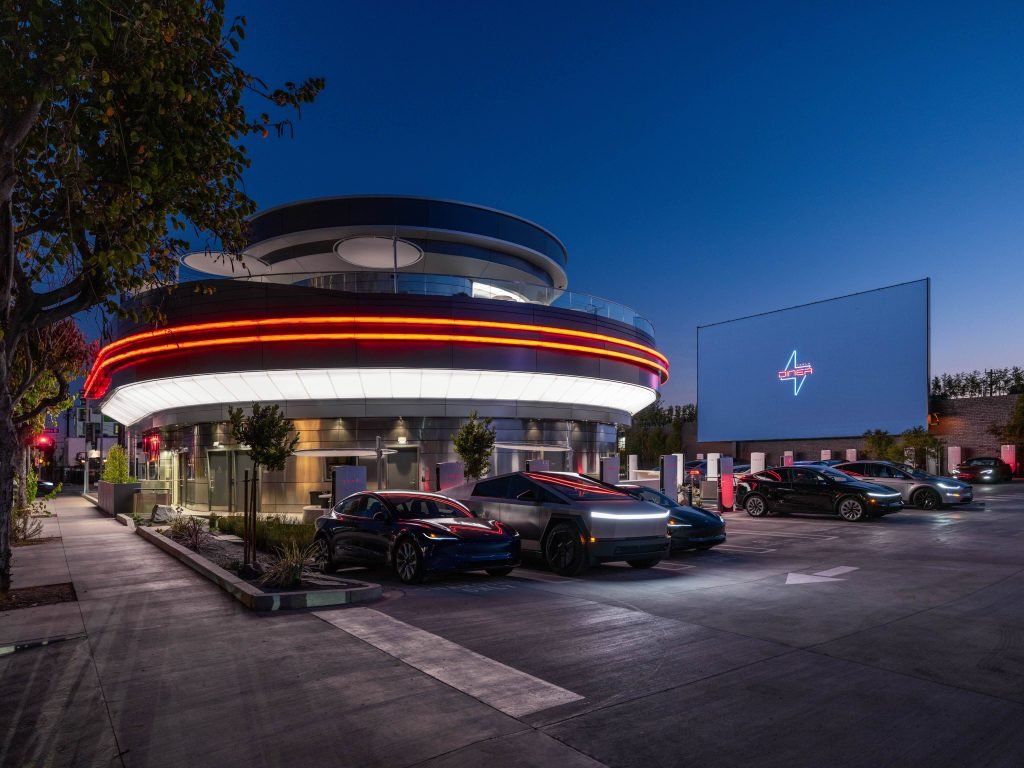
Tesla will open two new Diner locations in the United States after its first location in Los Angeles has been a raging success, as it is constantly packed and serving food for 24 hours a day, every day. Tesla CEO Elon Musk said that the initial Diner location on Santa Monica Boulevard is “going well,” and based on reviews and its constant out-the-door lines, it is safe to say it has been a major outlet of interest for people in the area. It features two massive movie screens, a menu that is locally sourced and has been created by a world-class chef, and Supercharging for EVs. It truly is the perfect stop for those who are hungry, need entertainment, or need a quick charge. Credit: Tesla So far, Tesla has not released too many details on the success of the restaurant, but it did state in a graphic for its Q3 Supercharging stats that it sold roughly 50,000 burgers at the Diner in Q3, roughly 715 each day. Burgers are not the only thing on the menu, either. With how well it has gone, Musk is now considering the possibility of new locations that are notable to Tesla, including Austin and Palo Alto. On Friday, Musk revealed he believes it “probably makes sense to open one” near Gigafactory Texas and Engineering HQ in Palo Alto:” The futuristic Tesla Diner is going well. Probably makes sense to open one near our Giga Texas HQ in Austin and engineering HQ in Palo Alto. — Elon Musk (@elonmusk) October 31, 2025 It took several years to get the Diner developed, built, and opened. On July 21, Tesla launched the Diner to the public at 4:20 p.m. local time (of course), after years of development. Musk first offered the idea of a drive-in Supercharger Diner back in December 2018. By 2023, Tesla had secured building permits and broken ground on the site in September of that year. Since its launch, it has been a popular hotspot for Tesla fans and others to visit, although it has attracted unwanted attention from protestors as well. Cringey protestors are outside the Tesla Diner in Los Angeles singing “Elon Musk has got to go” These people are absolutely nuts pic.twitter.com/LZ0U6rpMIn — TESLARATI (@Teslarati) October 27, 2025 They look hungry. If they walked inside and ordered some food, maybe they’d stop yelling into microphones and threatening Musk. The post Tesla’s popular side business is going to get bigger, Elon Musk says appeared first on TESLARATI.
No costly sacrifices: consumers want ‘easy’ sustainability actions
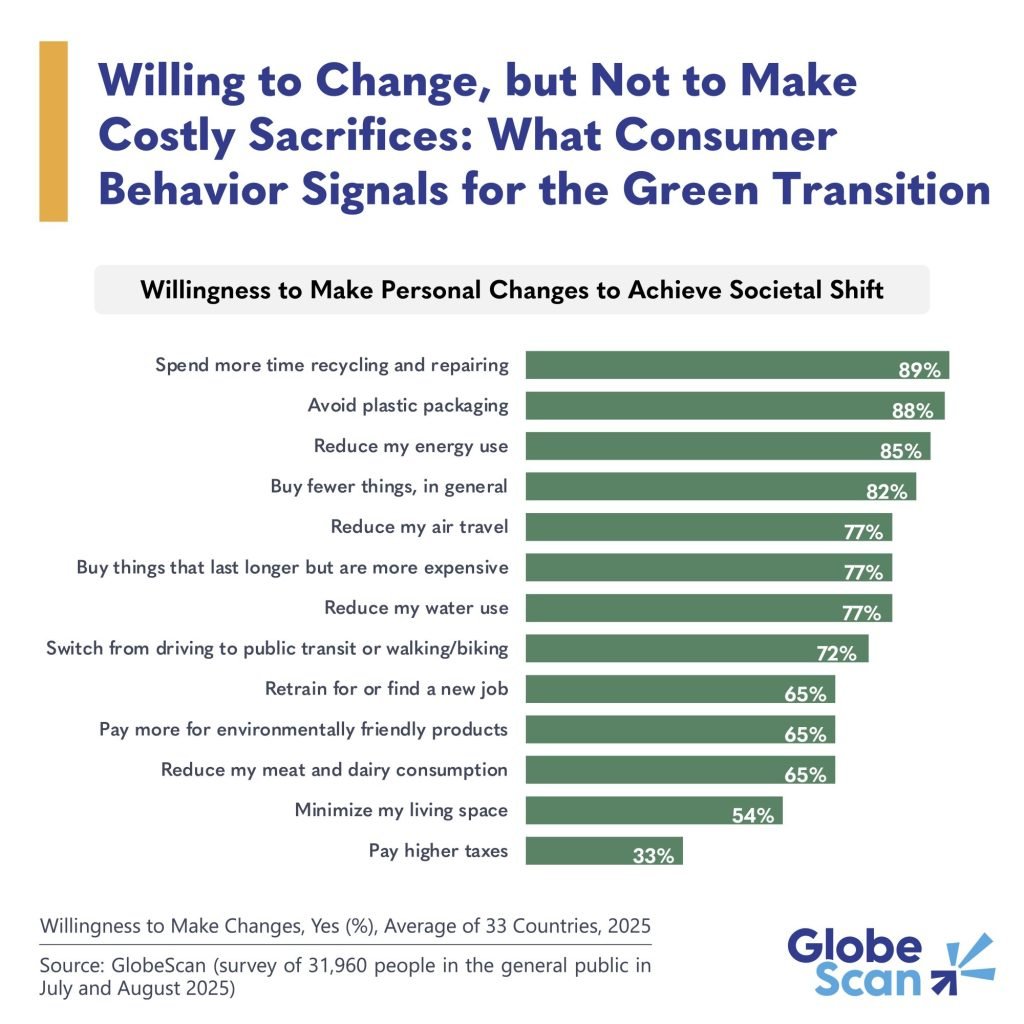
Which feels easier: taking an empty milk jug to the recycling bin or forking over tax dollars in the name of sustainability? If you chose the former, you’re not alone. According to new insights from Trellis data partner GlobeScan about how societies are responding to the sustainability transition, convenience is king. When asked how willing they are to make specific changes, people are most willing to make changes when they’re low-cost, familiar or relatively easy to do. More transformative changes that require financial sacrifice or lifestyle overhaul face greater resistance. People are most willing to take everyday, tangible actions that feel manageable such as: Recycling (89 percent) Avoiding plastic packaging (88 percent) Reducing energy use (85 percent) Support drops significantly for more costly or disruptive actions such as minimizing living space (54 percent) or paying higher taxes (33 percent). What this means GlobeScan’s research shows that while people broadly support the green transition, their willingness to make hard personal sacrifices, especially financial ones, is limited. Instead, people prefer actions that feel familiar and relatively effortless. This signals a clear imperative: make sustainability frictionless. To accelerate the transition, governments and businesses must embed low-effort, high-impact actions into everyday life and design systems that reward sustainable choices without demanding sacrifice. Based on a survey of 31,960 people across more than 30 countries conducted July-August 2025. The post No costly sacrifices: consumers want ‘easy’ sustainability actions appeared first on Trellis.
Beyond the hype: a 4 level framework for AI in PLM
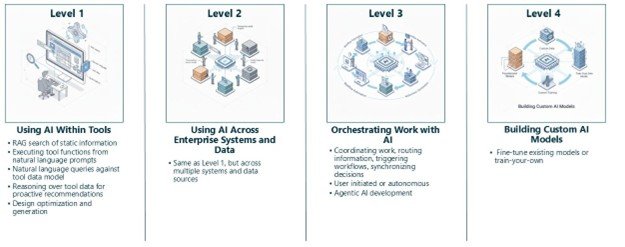
For decades, CIMdata has tracked Artificial Intelligence’s (AI) role in PLM, particularly within various computer-aided technologies like CAD and CAE. More recently, and especially with the advent of generative AI and now Agentic AI, the proposed uses and expected applications have exploded. CIMdata recognized AI’s greater potential back in 2019, when we introduced discussions related to AI’s role in augmenting human intelligence in support of the product lifecycle and its various enabling technologies. And in 2024, we further recognized its role by making ‘augmented intelligence’ one of CIMdata’s Critical Dozen—CIMdata’s twelve enabling elements of a digital transformation. Our emphasis then, and still today, is that AI enhances human decision-making, rather than attempting to replace it. That distinction matters now more than ever. As solution providers accelerate AI capabilities across product lifecycle management (PLM) solutions, the conversation has shifted from whether to adopt AI to how to adopt it effectively. What we’re seeing is companies jumping to advanced capabilities without understanding the prerequisites, with costly results. Additionally, the gap between solution provider roadmaps and organizational readiness is leading to expensive failures. In this two-part article, CIMdata introduces a Four-Level Framework for AI in PLM (Figure 1), developed as a practical tool to navigate this gap and help companies move from basic use to strategic advantage. Each level has distinct prerequisites and capabilities. Understanding these levels will help you make realistic decisions about where to invest and what success requires. Part 1 covers the foundational levels: using AI within individual tools (Level 1) and extending AI across your enterprise systems (Level 2). Part 2 will tackle orchestrating work with autonomous AI agents (Level 3) and building custom AI models (Level 4), complete with realistic timelines through 2027 and actionable strategic guidance for navigating this transformation. The four levels of AI maturity in PLM. (Image: Cimdata) One clarification: this article addresses the full spectrum of AI in PLM. This includes traditional machine learning (ML), such as physics-informed neural networks, AI surrogate models for accelerating simulation, predictive maintenance algorithms, and computer vision for quality inspection. It also encompasses AI-assisted topology optimization and generative design, as well as generative AI, including large language models (LLMs) that enable conversational interfaces. While our examples focus primarily on LLM-based AI, since it’s driving current investment decisions, the framework applies equally to all AI types, whether conversational or computational. The prerequisites remain the same: clean data, integrated systems, skilled teams, and governance frameworks. The Framework: Four Levels of AI Maturity AI maturity in PLM can be understood through four levels, each with distinct capabilities, prerequisites, and organizational requirements. Level 1: AI built into individual tools (e.g., CAD, PDM, and simulation). You ask AI for answers using data from that single system. Prerequisites are minimal: tool adoption, basic prompt literacy, and output validation. Level 2: AI accesses information across your entire enterprise, which is connected through a digital thread. AI synthesizes information from PLM, ERP, manufacturing, procurement, quality, and other enterprise databases. Prerequisites are substantial: digital thread infrastructure, data governance, and integration expertise. Level 3: Introduces AI agents. Instead of just answering questions like the AI assistants from Levels 1 and 2 do, AI agents monitor systems, detect events, and execute multi-step workflows with varying levels of autonomy. Prerequisites are extensive: everything from Level 2 plus data governance frameworks, years of operational experience, and cultural acceptance of AI acting without human intervention. Level 4: Organizations build custom AI models for competitive advantage or specialized requirements. This can happen alongside any other level. It requires AI/ML expertise, data science capabilities, compute power, and clear justification. Most organizations progress sequentially because each level builds capabilities for the next. However, organizations with existing capabilities can start at higher levels. What matters is having properly enabled the prerequisites for your target level. Level 1: Tool-Native AI-Single-tool AI that answers your questions. At Level 1, you’re working with AI assistants that solution providers have integrated directly into their solutions. The pattern is straightforward: you ask a question, and the AI searches data that is stored, indexed, and managed within that specific tool to compose an answer. This represents the simplest form of AI adoption; you purchase the solution and start using the AI. Level 1 capabilities include: Conversational search where engineers ask questions in plain language and get synthesized answers. Tools like Siemens Teamcenter Copilot (their PLM-specific assistant, not to be confused with Siemens Industrial Copilot that will be discussed in Part 2), AnsysGPT, and PTC Creo+ AI Assistant are examples of solutions with this capability. Natural language command discovery where engineers ask, “How do I create a circular pattern?” and AI suggests the relevant commands and menu locations, eliminating the need to search through documentation or complex menu structures. Natural language queries against tool data, where “show me all fasteners with corrosion resistance rating greater than eight used in marine applications” returns relevant results. AI-driven design optimization where generative design algorithms explore design alternatives based on constraints and requirements. For example, Autodesk Fusion 360’s generative design creates optimized geometries from performance requirements and boundary conditions. For specialized domains like ship design or aerospace structures, some solution providers build custom models (Level 4 capabilities) and embed these into their tools, making domain-specific AI acceleration available to Level 1 users without requiring them to develop custom models themselves. Proactive recommendations based on patterns in tool data, like flagging “this part is used in 12 assemblies.” Example: Siemens NX’s Design for Manufacture Advisor analyzes geometry and identifies manufacturing challenges. Prerequisites are minimal, which is why Level 1 adoption is spreading quickly. Teams need basic training, prompt literacy through practice, and the ability to validate outputs—plan for 3 to 6 months of proper adoption and skill development. The boundaries of Level 1 matter. At this level, reasoning is constrained to what’s in the solution. AI can’t access information from other systems or predict impacts across the enterprise. When your engineers say, “This would be better if it knew about supplier capabilities” or “I need cost data from
EcoFlow’s Halloween Sale adds Monthly Madness promotions with up to 65% discounts, extra savings, 3x EcoCredits from $249, more

Our Green Deals today is being headlined by EcoFlow’s switched-up Halloween Sale with Monthly Madness promotions lasting only for the next two days with up to 65% discounts, bonus savings, 3x EcoCredit rewards, and more. Among the expanded lineup, we spotted the brand’s new DELTA 3 Max Portable Power Station coming with a FREE trolley at a new $721 low. Speaking of switched-up sales, Rad Power Bikes has not only extended its Haul-o-ween Sale, but is also offering up to $200 discounts/bundles on select e-bikes alongside some extra savings on e-bikes and accessories – all starting from $89. We also have Autel’s MaxiCharger Home 50A Level 2 EV Chargers in either a wood grain or blue colorway at $404, as well as a one-day-only snow shovel deal, and many soon-to-end deals on power stations waiting for you below. And don’t forget about the hangover deals from last week that are collected together at the bottom of the page, like yesterday’s exclusive camping-ready Bluetti power station deals, the new low on Heybike’s Tyson Uni-body e-bike, and more. Head below for other New Green Deals we’ve found today and, of course, Electrek’s best EV buying and leasing deals. Also, check out the new Electrek Tesla Shop for the best deals on Tesla accessories. more…
Altech touts sodium nickel chloride battery prototype performance
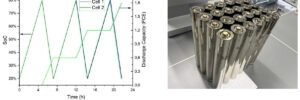
Australia-based Altech Batteries has announced that its CERENERGY sodium nickel chloride prototype battery cells have completed more than 650 charge-discharge cycles without any detectable capacity loss. For stationary energy storage systems (ESS), this translates into fewer battery replacements, lower lifetime operating costs, and increased reliability for users, according to the company. The cells also delivered nearly 100% Coulombic efficiency alongside an energy efficiency of up to 92% across 650 cycles. This high efficiency demonstrates that the cells are not expending energy on unwanted processes such as electrode degradation, the company said. The cells achieved a nominal capacity of 100 Ah and 250 Wh, maintaining reliable performance at higher discharge rates. A key feature is their ability to support multiple daily charge-discharge cycles within the 20-80% state of charge (SoC) range at 25 A. The first ABS60 battery pack prototype has been validated under real-world operating conditions, marking a major step forward in product readiness. Testing included diverse load profiles, continuous discharges at 25 A (equivalent to C-rate of C/4 or one-quarter of the pack’s rated capacity per hour) at 80% depth of discharge, short-duration high-current pulses up to 50 A and carefully controlled thermal variations. The pack demonstrated stable performance, achieving around 88% round-trip efficiency while maintaining reliable thermal management. Over more than 110 cycles, results showed no observable capacity fading and only a slight increase in internal resistance, Altech said. “These results confirm CERENERGY’s robustness and readiness for market adoption. Demonstrating long cycle life, high efficiency, and unmatched safety, we are now strongly positioned to deliver a competitive and sustainable alternative for grid and industrial energy storage,” said Iggy Tan, Group Managing Director at Altech. Source: Altech Batteries
Tesla Cybercab is heading to China’s import expo
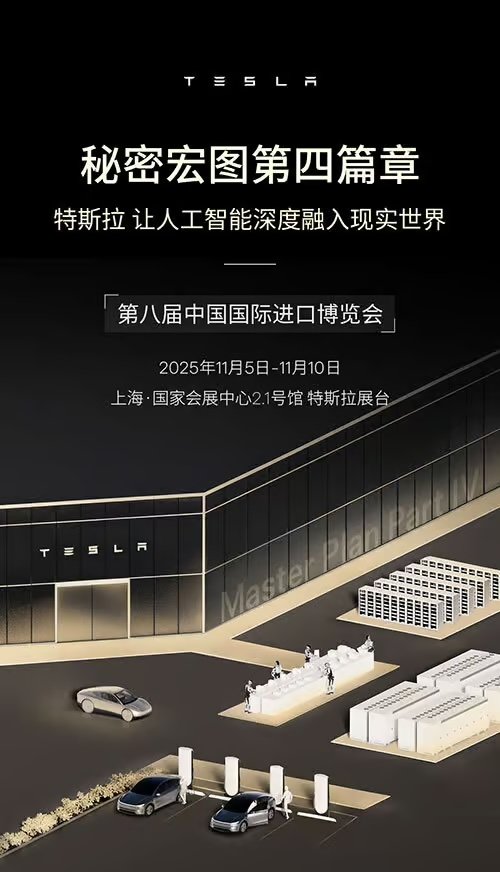
Tesla will make its return to the China International Import Expo (CIIE) this November, marking its first appearance at the event since 2022. The U.S. electric vehicle maker confirmed it will showcase its highly anticipated Cybercab, which will make its Asia-Pacific debut during the event. The expo will take place from November 5–10 at Shanghai’s National Exhibition and Convention Center. Tesla Cybercab in China Tesla announced its participation in the event on its official Weibo account. As per the electric vehicle maker, it would be occupying Booth A3-03 in Hall 2.1 at the National Exhibition and Convention Center. As noted in a CNEV Post report, the Cybercab, the company’s dedicated autonomous two-seater Robotaxi, will be making its Asia-Pacific debut at the CIIE as well. The company shared a graphic on Chinese social media which showed an image featuring several Tesla products, such as the Cybercab, Optimus, and Megapack batteries. The graphic also featured a building that read “Master Plan Part IV.” Tesla’s momentum in China Tesla’s return comes after skipping the event last year. Interestingly enough, Tesla attended the event from 2018 all the way to 2023. Tesla’s return to the CIIE then aligns with the company’s efforts to attract consumer interest in the world’s most competitive electric vehicle market. The Cybercab’s presence in the event could suggest that Tesla might be interested in bringing its Robotaxi to the country. This is quite interesting as China is already home to several autonomous ride-hailing services, though Tesla’s pure vision approach, which focuses on artificial intelligence and cameras, is quite unique. So far, Tesla has only rolled out its autonomous ride-hailing services in Austin, Texas, and the Bay Area, California. The post Tesla Cybercab is heading to China’s import expo appeared first on TESLARATI.
Tesla Full Self Driving (FSD) is nearing approval in a new country

It appears that Tesla FSD (Supervised) is heading to a new country soon, at least based on comments from Israel’s Transport and Road Safety Minister Miri Regev. As per the official, Tesla’s Full Self-Driving system could be enabled in Israel in the near future. Israeli drivers are pushing for FSD rollout While Tesla’s FSD is already operational in markets like the U.S., Canada, and Australia, Israeli owners have long been unable to use the feature due to regulatory barriers. Despite its premium price tag, however, numerous Tesla owners in Israel have noted that the technology’s safety benefits, at least when approved for real-world use in the country, justify its cost. It was then no surprise that nearly 1,000 Tesla owners in Israel have already petitioned the government to greenlight FSD’s domestic release in Israel. In a post on X, Regev seemed to confirm that FSD is indeed coming to Israel. “I’ve received the many referrals from Tesla drivers in Israel! Tesla drivers? Soon you won’t need to hold the steering wheel,” she wrote in her post. קיבלתי את הפניות הרבות של נהגי הטסלה בישראל!נהגי טסלה?בקרוב לא תצטרכו להחזיק את ההגה – שווה קריאההכתבה בתגובה הראשונה.@elonmusk pic.twitter.com/OHJ7mi5WcF — מירי רגב (@regev_miri) October 29, 2025 $TSLA Tesla’s FSD will be launched in Israel “soon” According to the Israeli Ministry of Transportation, Minister Regev instructed the ministry’s Director-General to act promptly to ratify the technology, subject to the required tests: “From an examination conducted by the… pic.twitter.com/SSDmt2Hwnp — Ming (@tslaming) October 29, 2025 FSD’s regulatory support in Israel Regev stated that her Ministry views promoting innovative technologies as essential to improving both road safety and smart mobility. A working group led by Moshe Ben-Zaken, Director General of the Ministry of Transportation has reportedly been tasked to finalize the approval process, coordinating with regulatory and safety agencies to ensure compliance with international standards. In a comment to Geektime, Israel’s Ministry of Transportation and Road Safety noted that Regev is indeed supporting the release of FSD in the country. “Minister Regev sees great importance in promoting innovative technologies, and in particular in the entry of advanced driving systems (FSD) into the Israeli market, as part of the ministry’s policy to encourage innovation, safety, and smart transportation,” the Ministry stated. The post Tesla Full Self Driving (FSD) is nearing approval in a new country appeared first on TESLARATI.
FIRST LOOK: Tesla Cybertruck police cruiser interior
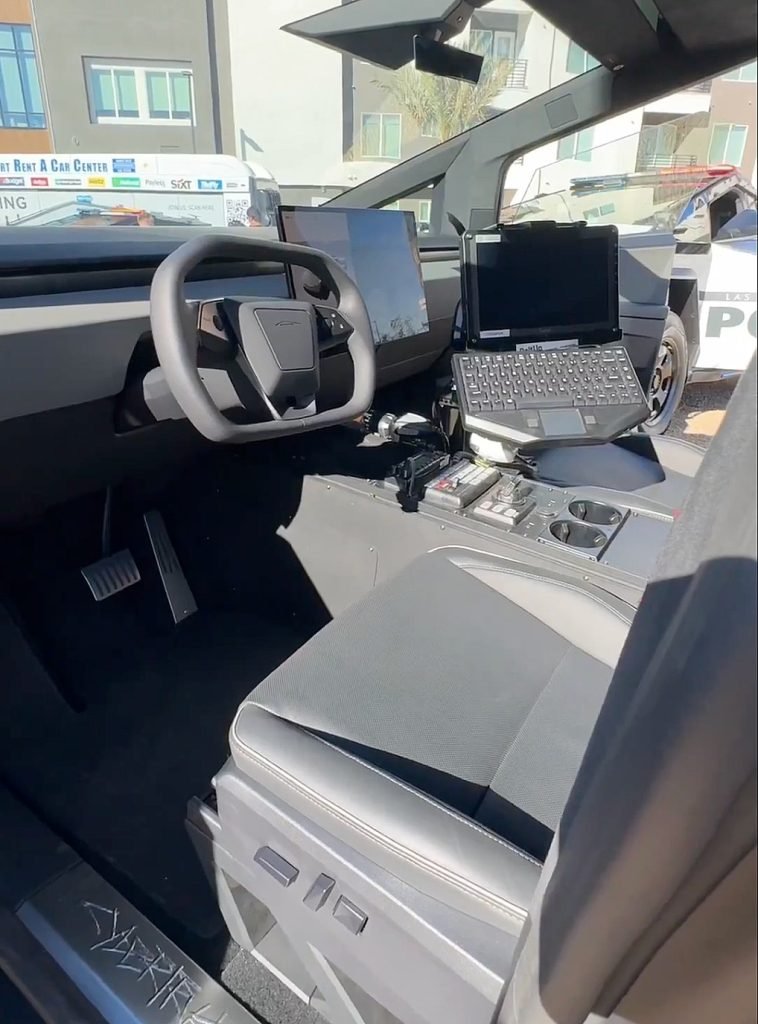
The first look at the Tesla Cybertruck police cruisers for the Las Vegas Metro Police Department has been going around as the city begins to add them to its active fleet. The LVMPD released a new video of the police cruisers that were donated by billionaires Ben and Felicia Horowitz, showing their design, as well as the first look at the front of the vehicle where police will sit, as well as the back where the criminals will think about their actions. Tesla Cybertruck police fleet in Las Vegas pic.twitter.com/Z8t2wLMVR3 — TESLARATI (@Teslarati) October 30, 2025 Sheriff Kevin McMahill commented on the addition of the Cybertrucks to the fleet, which includes recognition of their symbolism regarding the mission of the Department itself: “These represent something bigger than a police vehicle. They represent innovation and our continued commitment to serve this community with the best tools available — safely, efficiently, and responsibly. They can handle everything from Fremont Street to Red Rock Canyon.” The LVMPD had the Cybertrucks primed for law enforcement use by Upfit Tesla, a division of Unplugged Performance, the unequivocal leader in performance upgrades for Teslas. The first look at the interior of the police cruisers is awesome to see, especially as it shows the Cybertruck’s ability to cater to every and any application for personal or professional use. The front of the Cybertruck police vehicle shows an interior fully outfitted for a shift in Las Vegas. A laptop is mounted next to the center touchscreen, and siren and light controls are located in the center for easy access for officers: The rear of the cruiser is plain and fitted with plastic seats, typical for the transportation of criminals and suspects, as well as a partition that appears to be made of ballistic glass, helping to protect officers from those they have arrested. It is also reinforced with steel and foam lines the top of the partition: The fleet was donated shortly after a Cybertruck exploded at the front entrance of Trump Tower in Las Vegas in January. While the person inside lost their life, the Cybertruck’s ability to muffle most of the blast and keep damage relatively limited to the building impressed many. The post FIRST LOOK: Tesla Cybertruck police cruiser interior appeared first on TESLARATI.
Tesla hints it could see ‘a few more vehicles’ released soon

Tesla Board Chair Robyn Denholm hinted the company could see “a few more vehicles” coming out and being released soon, although there is no indication of what could be on the way based on her comments. However, Tesla has hinted toward several potential releases in the coming years, as other executives, including Chief Designer Franz von Holzhausen, have talked briefly about what could be on the way. Denholm said on CNBC yesterday that “we do have a few other vehicles coming out.” BREAKING: $TSLA BOARD CHAIR ROBYN SAYS — “WE HAVE NEW VEHICLES COMING OUT” It’s happening ! pic.twitter.com/f8UuZWGLuP — TheSonOfWalkley (@TheSonOfWalkley) October 27, 2025 It was a vague and almost cryptic sentence, as, in all honesty, it was not completely clear whether she was talking about recent releases that are just making their way to market, like the Model 3 and Model Y “Standard,” or new vehicles altogether. Nevertheless, it’s worth dissecting. Tesla “Standard” Models On October 7, Tesla launched the Standard Model 3 and Model Y, stripped-down versions of their now “Premium” siblings. The Standard trims lack premium features like leather seats, a rear touchscreen, and a glass roof, among other features. Tesla begins deliveries of its affordable Model Y Standard These cars are just starting to be delivered for the first time, so it is possible that Denholm was referring to these cars. Potential Model 2 Hint? There has always been a looming vehicle model that many Tesla fans and owners have been intrigued by: the Model 2. This car was hinted at being the $25,000 model that Tesla was rumored to be developing, and many thought that was the vehicle that would be released earlier this month, not the Standard Model 3 and Model Y. Instead, the Model 2 could be something that would enable Tesla to reach an entirely new consumer base, including those who are not able to swing the payment for the company’s more premium offerings. It seems Tesla will have to launch some sort of extremely affordable model in the future, and with the Cybercab being slotted at that rough price point, it would not be out of the question for it to be in the realm of possibility for future releases. It’s worth noting, however, that it is probably unlikely this will happen. Tesla is so deadset focused on autonomy, it seems Cybercab would take extreme precedence over the unconfirmed “Model 2.” Cybertruck-inspired SUV Tesla fans have been begging the company to develop a full-size SUV that would compete with the Ford Expedition or Chevrolet Tahoe, but the company has not given any indication that this would be something it would build. Nevertheless, there was a very subtle hint in a recent promotional clip that showed a Cyber SUV mock-up placed strategically next to a clay model of a Model 3: Tesla appears to be mulling a Cyber SUV design The Model X is simply not what people want when it comes to an SUV, as it does not have the seating capacity and cargo space that many need with a full-sized SUV. This issue, in particular, has been one that has been extremely relevant to the company’s future lineup as consumers have shown they would be interested in a Tesla vehicle that fit this description. Additionally, von Holzhausen said in September that a Cyber SUV or a smaller electric pickup with a more traditional design is “definitely things we’ve considered…We’re working on so many innovative and fun things.” Tesla gives big hint that it will build Cyber SUV, smaller Cybertruck The post Tesla hints it could see ‘a few more vehicles’ released soon appeared first on TESLARATI.
Tesla Cybercab spotted testing on public roads for the first time

The Tesla Cybercab has been spotted testing on public roads for the first time, marking a substantial step forward in the vehicle’s development. The car was spotted just minutes from Tesla’s Engineering Headquarters in Los Altos, California. There are a few interesting tidbits we can gather from the photo and the information shared with it: BREAKING: Tesla’s Cybercab spotted testing on public roads for the first time! This was in Los Altos, California, about 10 minutes from Tesla’s Engineering HQ. As would be expected at this stage, a person was in the driver seat. The future is autonomous pic.twitter.com/cvd6UrnKZo — Sawyer Merritt (@SawyerMerritt) October 29, 2025 The vehicle had a driver and side view mirrors equipped on it, which seems to be pretty expected, especially at this stage. Tesla might have been using its Full Self-Driving software with the vehicle as it enters this new stage of testing on public roads. This seems most likely, especially as the car, which has long been developed to be void of a steering wheel and pedals, will totally rely on autonomous tech to transport one or two passengers to their destination. Additionally, side view mirrors are required by law at delivery, and Tesla was likely looking to keep things as safe and elementary as possible, especially with this early stage of testing. As this is the first time the vehicle has been spotted on public roads and the first time it was likely testing on them, Tesla was being cautious. There have been a lot of developments with Cybercab over the past few weeks, as the car has been spotted testing on the Fremont Factory’s test track, units have been seen outside of Gigafactory Texas’s crash testing facility, and there has been some additional speculation about what the vehicle’s standard equipment will be. There have also been quite a few job postings by Tesla for manufacturing and production roles related to Cybercab over the past few weeks. Yesterday, Tesla’s Board Chair, Robyn Denholm, revealed that the company could end up building Cybercab with a steering wheel and pedals, contrary to what Tesla and CEO Elon Musk have wanted to do. Tesla Cybercab might be getting a huge change The vehicle has yet to reach that stage of regulatory testing, but Tesla wants to start volume production in Q2. If it wants to release the vehicle without any manual controls, that means that Full Self-Driving will need to be completed within the next eight months. The post Tesla Cybercab spotted testing on public roads for the first time appeared first on TESLARATI.
Worksport Hits Record Growth as It Prepares to Launch Solar Truck Covers and Clean-Energy Systems
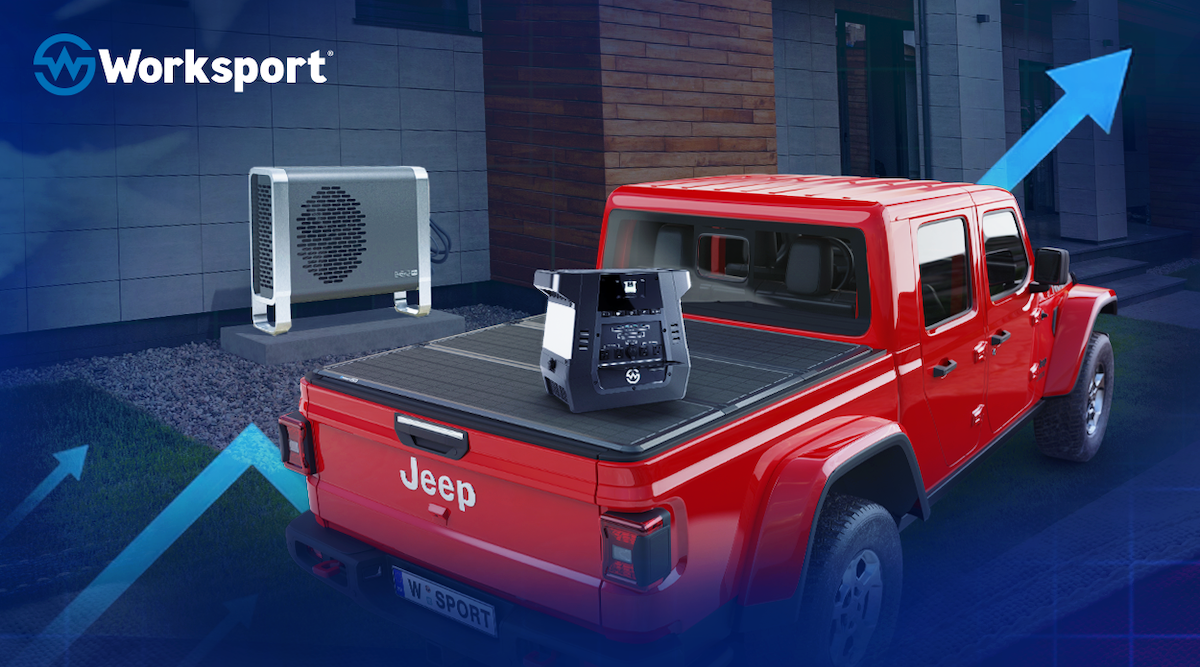
Support CleanTechnica's work through a Substack subscription or on Stripe. Worksport Ltd. (NASDAQ: WKSP) has reported its best financial quarter in company history, showing that its transition from truck accessories to distributed clean-energy systems is gaining serious traction. For the third consecutive quarter, Worksport recorded both record revenues and expanding margins, underscoring how domestic manufacturing and renewable integration are beginning to converge in the company’s business model. Record Growth Before Product Launches In the third quarter of 2025, Worksport achieved $5.0 million in revenue, a 62% increase year-over-year, and a 31% gross margin, up dramatically from just 7.9% during the same period last year. That’s a 2,300 basis-point improvement in profitability, driven by operational efficiencies, scaling production, and strong demand for the company’s legacy tonneau covers. Perhaps most notably, this growth has occurred before the commercialization of Worksport’s upcoming clean-energy portfolio, including the SOLIS™ solar-integrated tonneau cover, the COR™ portable energy storage system, and the Terravis™ line of clean-climate heat pumps, which are now undergoing validation with the U.S. Department of Energy. U.S. Manufacturing Momentum Behind the numbers lies a steady ramp-up in Worksport’s U.S. production capacity. The company’s New York-based factory produced 8,600 units in Q3, up from 6,000 in Q2 and 4,300 in Q1, representing a 100% production increase in just two quarters. This momentum, Worksport says, reflects the benefits of domestic production: reduced supply-chain dependencies, faster turnaround times, and a factory capable of supporting up to $100 million in annual revenue without additional investment. The company’s expanding gross margin also suggests growing economies of scale and better fixed-cost absorption as production volumes rise. Clean Energy Meets Automotive Innovation Worksport’s technology suite sits at the intersection of automotive innovation and renewable energy. Its upcoming SOLIS™ tonneau cover integrates solar panels into pickup trucks, turning vehicles into mobile energy generation units that can charge the COR™ portable power system: a compact, modular energy storage unit designed for off-grid power, outdoor work, or emergency backup. Meanwhile, Terravis Energy, a Worksport subsidiary, is developing a new generation of cold-climate heat pumps designed to replace fossil-fuel-based heating in colder regions, a segment that is gaining traction as governments and homeowners pursue electrification and energy efficiency targets. By leveraging experience from the automotive accessory market, Worksport is positioning itself as a bridge between traditional manufacturing and clean-energy innovation — an area CleanTechnica has long identified as a key growth frontier for decarbonization. Strategic Positioning for 2026 and Beyond The company’s current performance provides a strong foundation for its upcoming clean-energy launches. Worksport’s consistent quarterly growth demonstrates it can fund and sustain R&D investments without eroding profitability — a key differentiator in a capital-intensive sector. With both consumer-facing (truck-based solar and storage) and industrial applications (Terravis heat pumps) in development, Worksport is emerging as a rare hybrid: a vertically integrated U.S. manufacturer scaling hardware that directly supports distributed renewable energy adoption. As global demand for off-grid power, EV-compatible systems, and electrified heating continues to expand, Worksport’s momentum offers a snapshot of how smaller U.S. manufacturers can adapt and thrive in the clean-tech economy. Sign up for CleanTechnica's Weekly Substack for Zach and Scott's in-depth analyses and high level summaries, sign up for our daily newsletter, and follow us on Google News! Advertisement Have a tip for CleanTechnica? Want to advertise? Want to suggest a guest for our CleanTech Talk podcast? Contact us here. Sign up for our daily newsletter for 15 new cleantech stories a day. Or sign up for our weekly one on top stories of the week if daily is too frequent. CleanTechnica uses affiliate links. See our policy here. CleanTechnica's Comment Policy
Hecate cancels 650MW Long Island, New York BESS project
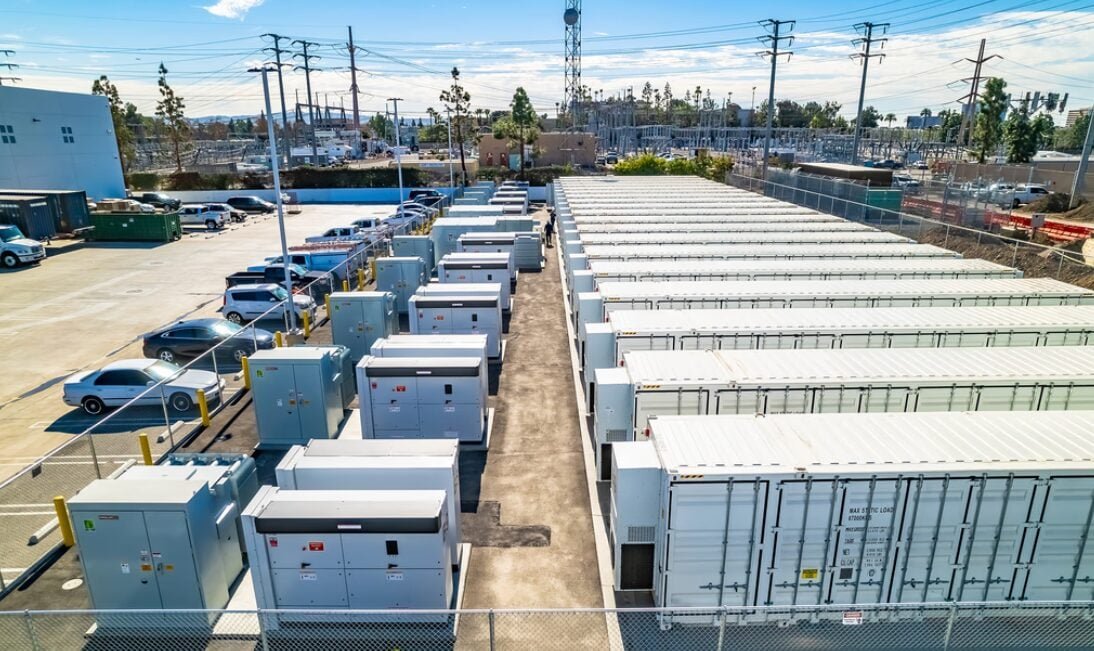
Hecate cancels 650MW Long Island, New York BESS project - Energy-Storage.News Skip to content
"Foundation:" Elon Musk wants to send a record of Grokipedia to space
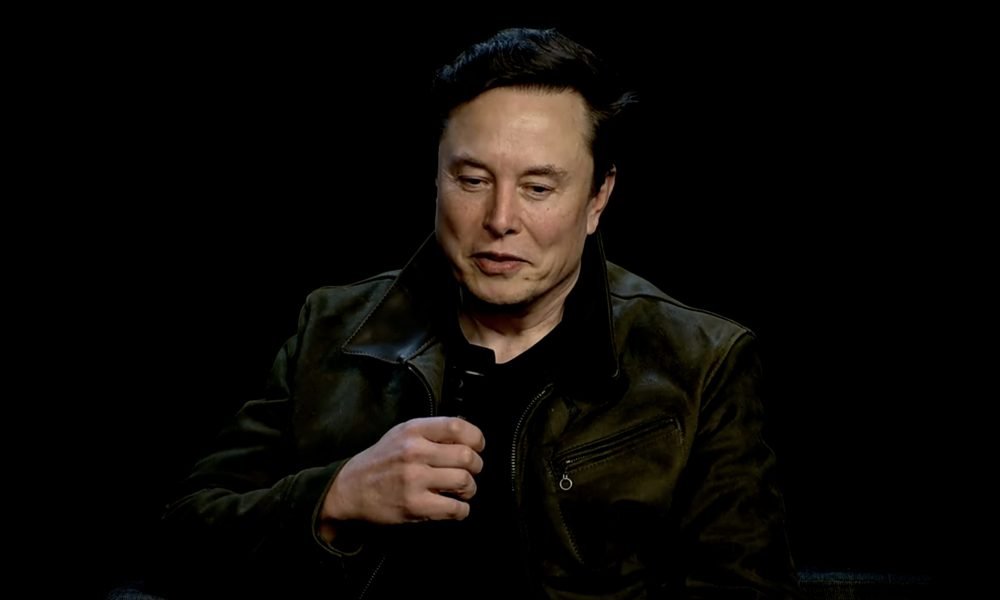
Elon Musk has announced one of his latest initiatives, and it is every bit as sci-fi as it is surprisingly grounded. In a post on X, Musk stated that Grokipedia, xAI’s new open-source encyclopedia, will be etched into stable oxide and launched into space. The idea sounds outlandish, though it is also something that is in character for the CEO. Preserving human knowledge among the stars Musk posted his plan following the launch of Grokipedia’s V0.1’s iteration. The CEO congratulated the xAI team for the online encyclopedia’s launch, though he also stated that the goal for Grokipedia is to create an open-source collection of knowledge. This would then be distributed to the cosmos. “Nice work by the xAI team on Grokipedia! The goal here is to create an open source, comprehensive collection of all knowledge. Then place copies of that etched in a stable oxide in orbit, the Moon, and Mars to preserve it for the future. Foundation,” Musk wrote in his post. While seemingly outlandish, this is not the first time that a record of human knowledge of sorts was sent out to space. In 1977, the Voyager Golden Record was launched aboard NASA’s Voyager 1 and 2 spacecraft. The record contains sounds and images that ere aggregated to portray the diversity of the Earth’s culture. Of course, Musk’s plan with Grokipedia, is infinitely more ambitious. Nice work by the @xAI team on https://t.co/op5s4ZiSwh! The goal here is to create an open source, comprehensive collection of all knowledge. Then place copies of that etched in a stable oxide in orbit, the Moon and Mars to preserve it for the future. Foundation.— Elon Musk (@elonmusk) October 28, 2025 Grokipedia and AI neutrality Musk launched Grokipedia as an AI-driven alternative to Wikipedia, designed to eliminate the human biases that could affect conventional online knowledge platforms. The system is powered by xAI’s Grok, which scrape and summarize information from across the internet, offering balanced and nuanced coverage of topics ranging from science and technology to culture and politics. Unlike Wikipedia’s human-edited format, Grokipedia would be able to evolve through machine learning, reading vastly more material than any editorial team could. Early testers, including Wikipedia co-founder Larry Sanger, praised its initial version as “very OK” and potentially more neutral than Wikipedia. Musk agreed, stating that even in its V0.1 form, Grokipedia is “already better than Wikipedia.”