Tesla rolls out most aggressive Model Y lease deal in the US yet

Tesla has rolled out what could very well be its most aggressive promotion for Model Y leases in the United States yet. With the promotion in place, customers would be able to take home a Model Y at a very low cost. Zero downpayment leases The new Model Y lease promotion was initially reported on X, with industry watcher Sawyer Merritt stating that while the vehicles’ monthly payments are still similar to before, the cars can now be ordered with a $0 downpayment. Tesla community members noted that this promotion would cut the full payment cost of Model Y leases by several thousand dollars, though prices were still a bit better when the $7,500 federal tax credit was still in effect. Despite this, a $0 downpayment would likely be appreciated by customers, as it lowers the entry point to the Tesla ecosystem by a notable margin. NEWS: Tesla has just effectively lowered U.S. Model Y lease prices by $3,000 by eliminating the down payment. The starting monthly price stays the same at $479/mo, but now you can get that with $0 down (vs $3k before).Plus, every new lease includes one free upgrade — your… pic.twitter.com/roT6dAZwRf — Sawyer Merritt (@SawyerMerritt) November 15, 2025 Premium freebies included Apart from a $0 downpayment, customers of Model Y leases are also provided one free upgrade for their vehicles. These upgrades could be premium paint, such as Pearl White Multi-Coat, Deep Blue Metallic, Diamond Black, Quicksilver or Ultra Red, or 20″ Helix 2.0 Wheels. Customers could also opt for a White Interior or a Tow Hitch free of charge. A look at Tesla’s Model Y order page shows that the promotion is available for all the Model Y Premium Rear-Wheel Drive and the Model Y Premium All-Wheel Drive. The Model Y Standard and the Model Y Performance are not eligible for the $0 downpayment or free premium upgrade promotion as of writing. @teslarati Tesla Full Self-Driving v14.1.7 is here and here’s some things it did extremely well! #tesla #teslafsd #fullselfdriving ♬ You Have It – Marscott The post Tesla rolls out most aggressive Model Y lease deal in the US yet appeared first on TESLARATI.
Eviden launches BullSequana XH3500 for advanced HPC and AI
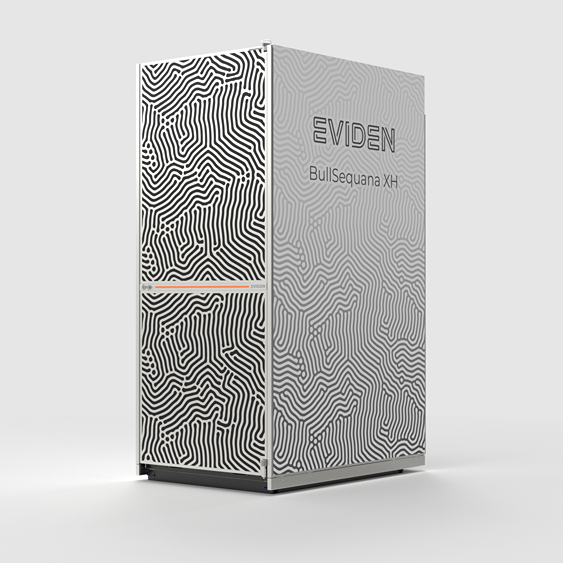
Eviden has launched the BullSequana XH3500, its latest supercomputer designed to support the combined needs of high-performance computing and artificial intelligence workloads. The system is built to scale to future performance requirements and integrates updated hardware with a supporting software and application ecosystem to help organizations advance research, industrial development and AI applications. Eviden new BullSequana XH3500 for HPC-AI. Building on over two decades of HPC leadership, Eviden introduces the BullSequana XH3500 as a natural progression from the BullSequana XH3000, refining its hybrid computing strategy and harnessing the technological foundations laid by its predecessor. With enhanced performance, energy-efficiency and scalability, the BullSequana XH3500 is at the center of a broader, integrated ecosystem of software, services, and expert support. This ecosystem brings tEviden Unveils its BullSequana XH3500ogether the critical elements of deployment, optimization, and innovation into a cohesive framework, accelerating time-to-value and enabling organizations to navigate the evolving landscape of HPC and AI with greater agility and confidence. Compared to its predecessor, the BullSequana XH3500 delivers over 80% more electrical power per square meter and 30% greater cooling capacity per kilowatt, all within the same rack footprint. These improvements enable industry-leading performance density and energy efficiency, empowering organizations to meet growing computational needs without expanding data-center space and, therefore operating in a more sustainable way and significantly reducing cooling power requirements and overall environmental impact. The BullSequana XH3500 also offers unparalleled flexibility thanks to its open, modular design. Customers can freely mix and match different computing, acceleration, and networking technologies to tailor configurations to their specific needs – from simulation and modeling to large-scale AI training. By ensuring full technology freedom and eliminating vendor lock-in, this unique approach allows seamless integration of next-generation processors and interconnects as they become available, while protecting long-term investments. As more computing power implies more heat, energy efficiency and cooling are critical to the BullSequana XH3500’s design, the leading system to address AI factories’ frugality needs. The system features 100% fan-less 5th generation Direct Liquid Cooling (DLC) with warm water support (40°C / 104°F facility supply), enabling significant reductions in total cost of ownership (TCO) and supporting heat reuse and free-cooling strategies for greener operations. Complementary software tools provide intelligent power and resource management, dynamically optimizing performance and energy use in real time. For more information, visit eviden.com. The post Eviden launches BullSequana XH3500 for advanced HPC and AI appeared first on Engineering.com.
First Solar pours $330M into a new South Carolina solar factory
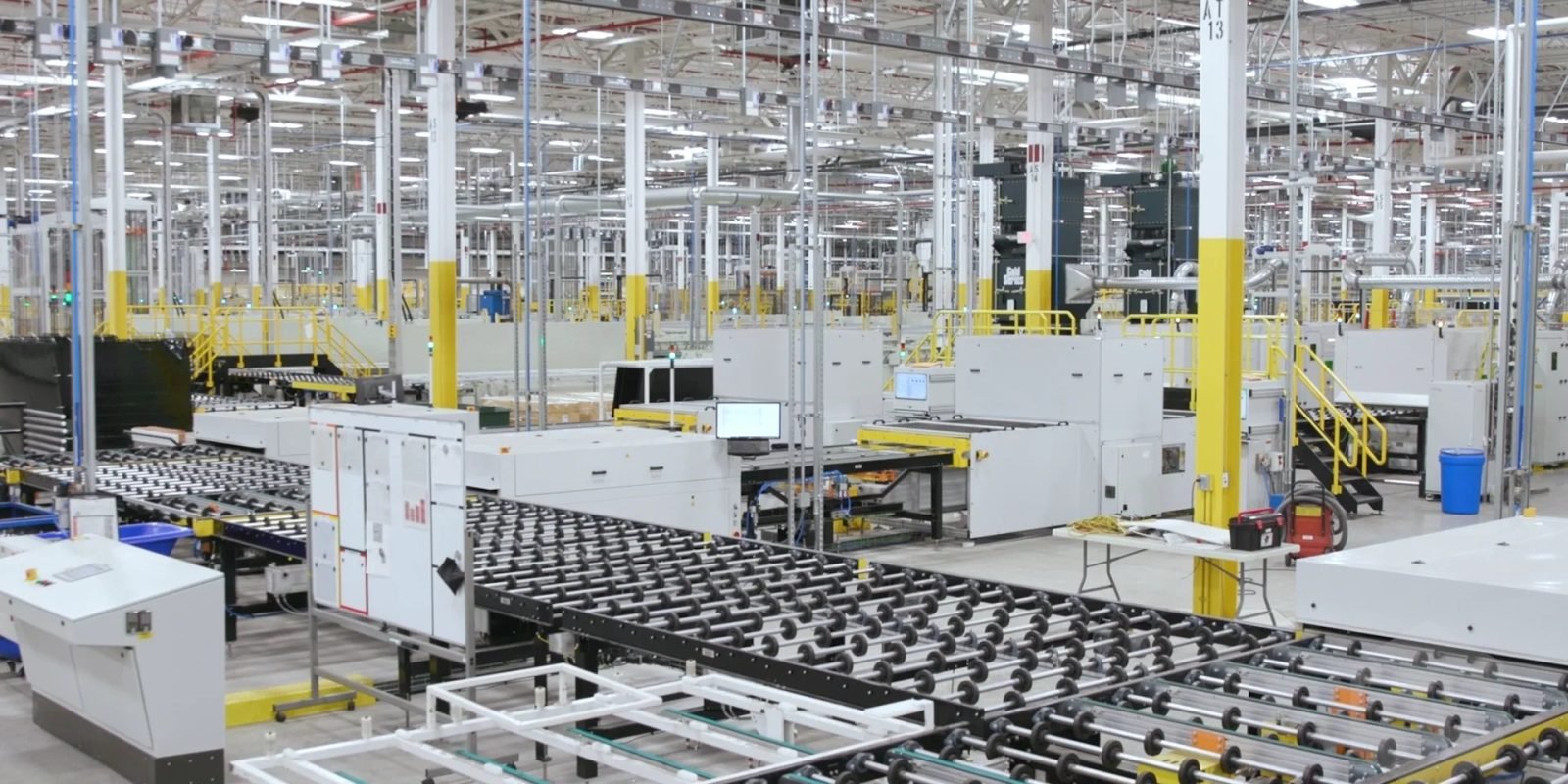
First Solar, the US’s largest solar panel manufacturer, has now announced the location of its new solar factory. The company says it will build a new facility in Gaffney, South Carolina, to handle the final production steps for its Series 6 Plus thin film modules. Those components are currently made by First Solar’s factories overseas, but once the South Carolina plant opens in the second half of 2026, they’ll be finished on US soil. more…
Molex launches eHV60 high-voltage connector for reliable, efficient EV power connections

Molex has announced the launch of its eHV60 high-voltage automotive connector, the first product in its new eHV high-voltage connector and terminal system portfolio. Molex says the eHV60 is purpose-built for auxiliary high-voltage functions, including DC/DC converters, onboard chargers, electric compressors and e-axles in battery electric vehicles and plug-in hybrid electric vehicles. The connector is designed to combine a compact form factor with robust electrical and mechanical reliability, addressing growing space constraints in modern electric vehicle architectures. The eHV60 supports up to 1000 V and 64 A at 80°C, making it suited for mid-power auxiliary applications. The connector’s shielded interface provides enhanced protection against electromagnetic interference (EMI), which is essential for maintaining signal integrity and overall system safety in high-voltage EV systems. Molex says that the eHV60 occupies up to 30 percent less space compared to existing alternatives, enabling easier integration into compact system designs. The eHV60 has been validated both electrically and mechanically as a drop-in replacement, offering automotive original equipment manufacturers (OEMs) and Tier 1 suppliers the option to source from multiple validated suppliers without revising existing system layouts. Molex highlights adherence to USCAR-2 and LV215 industry standards and notes global compliance and qualification readiness. “The new eHV60 aligns with Molex’s broader automotive portfolio to strengthen supply chain resiliency and reduce total manufacturing costs,” said Scott Whicker, Senior Vice President and President of Transportation and Innovative Solutions at Molex. “This newest extension to our eHV high-voltage connector portfolio offers a compact, efficient solution that increases sourcing flexibility while easing integration into space-constrained systems.” Molex expects to make the eHV60 available in the first quarter of 2026. Source: Molex
COP30: Global majority calls for government to push bold climate action
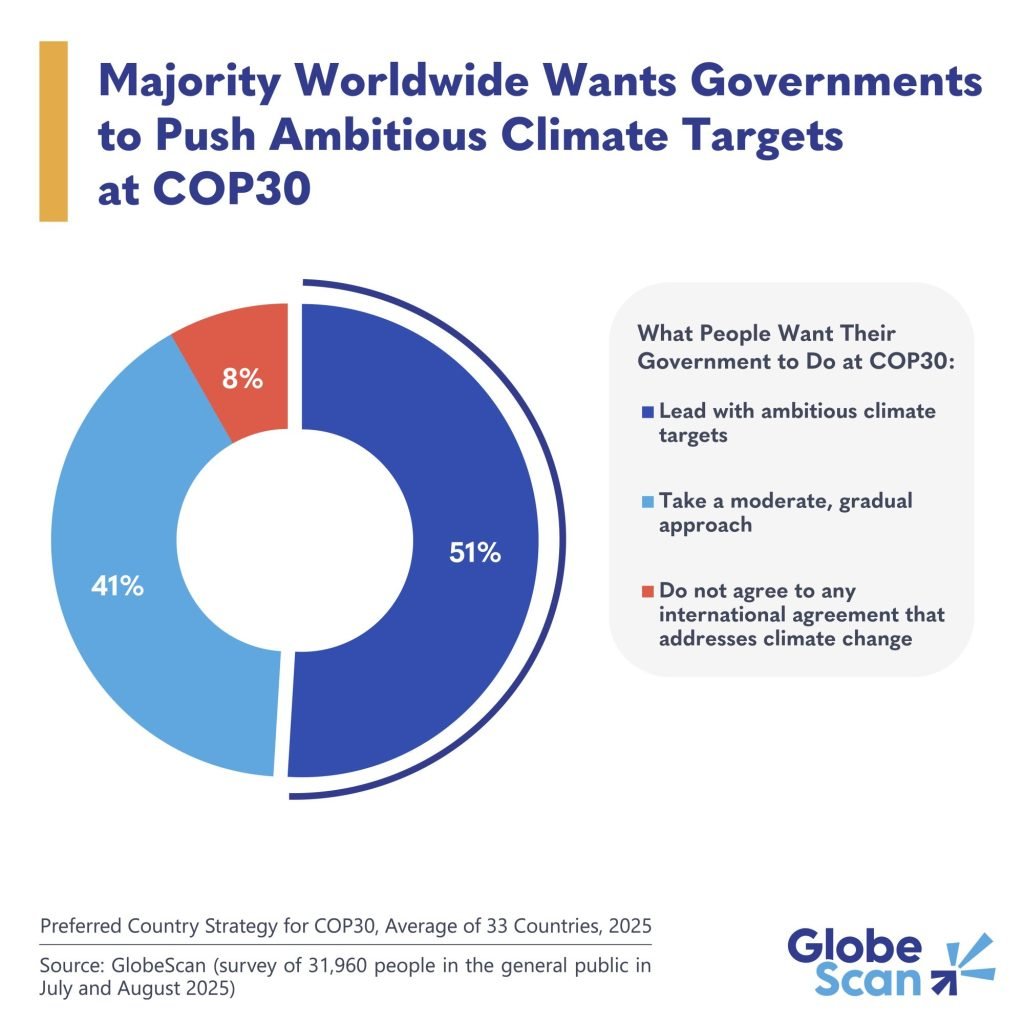
COP30 spotlights the critical role of tropical forests and the Amazon’s unique biodiversity in global climate regulation. And as the first COP held in the Amazon region, research from Trellis data partner GlobeScan highlights a clear global appetite for climate leadership. Just over half (51 percent) of more than 30,000 people surveyed want their governments to set ambitious targets, while four in 10 (41 percent) prefer a more moderate approach. Only 8 percent oppose their country agreeing to any international agreements on climate change at COP30. Latin American markets are among those with the highest support, while more moderate or skeptical views are found in parts of Europe and East Asia. Nearly two-thirds of Brazilians (63 percent) want their country to lead on ambitious climate targets at COP30. These trends across key countries suggest growing public demand for more ambition from their governments on the global climate agenda. What this means GlobeScan’s findings reveal a powerful global expectation that people want their governments to lead on climate action. Falling short of these expectations, even with incremental outcomes, wouldn’t only slow this momentum at a critical point, but would also directly contradict public expectations. For a deeper understanding and actionable next steps, leaders can: Respond to pubic expectations for bold action from governments, companies and international bodies Invest in high-impact, large-scale initiatives including regulation, nature protection and agricultural reform Signal ambition at COP30 and other international forums to advocate for national commitments. Based on a survey of 31,960 people in 33 countries conducted July-August 2025. The post COP30: Global majority calls for government to push bold climate action appeared first on Trellis.
Dyndrite updates LPBF Pro with NXG Slice Viewer for Nikon NXG Series
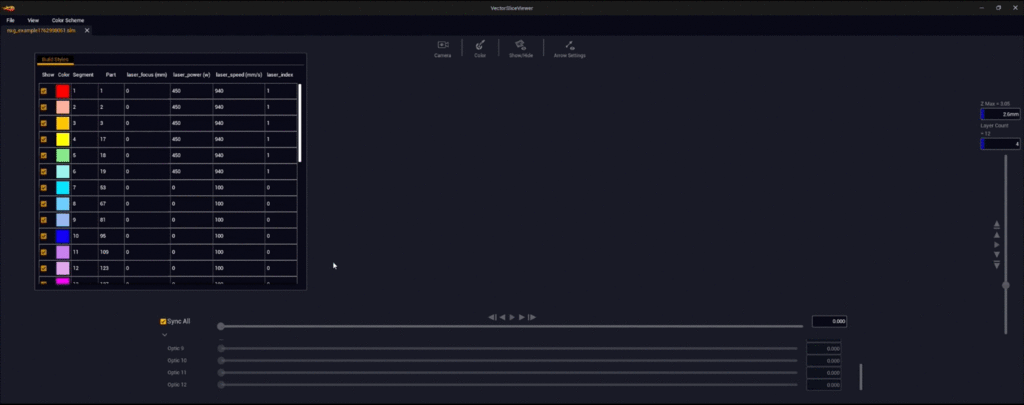
Dyndrite, a provider of industrial software for additive manufacturing, announced updates to Dyndrite LPBF Pro that include an NXG Slice Viewer, a time-simulated, 12-laser toolpath visualization and debugging environment designed for Nikon SLM Solutions’ NXG Series of large-format multi-optic metal additive manufacturing machines, including the NXG XII 600 and NXG 600E. Developed to support Nikon SLM’s open architecture and refined with input from early users, the LPBF Pro NXG Slice Viewer gives machine operators a detailed view of multi-laser activity during builds and tools to troubleshoot custom optic allocation strategies. Purpose built and hardened by nxg power users, the Dyndrite nxg slice viewer gives engineers the tools needed for developing smarter optic allocation strategies for high throughput. Built for NXG Production True time simulation of all 12 lasers at once – Play, pause, scrub, and step through layers with custom jump delay and mark delay. Enhanced UI – View lasers individually or synced, leverage high color contrast modes and control thickness. Optic allocation intelligence – Fully connected to Dyndrite’s custom optic-allocation tools for NXG Series, enabling rapid what-if analysis to balance utilization, reduce idling, minimize cross-talk and dynamic forced laser synchronization Early-user hardened – Shaped by hands-on feedback from alpha/beta customers operating NXGs. The NXG Slice Viewer is available today as part of the latest Dyndrite LPBF Pro release. Existing LPBF Pro NXG customers can access the feature immediately. For more information, visit dyndrite.com. The post Dyndrite updates LPBF Pro with NXG Slice Viewer for Nikon NXG Series appeared first on Engineering.com.
It’s time to start recommending some Tesla Powerwall alternatives [update]
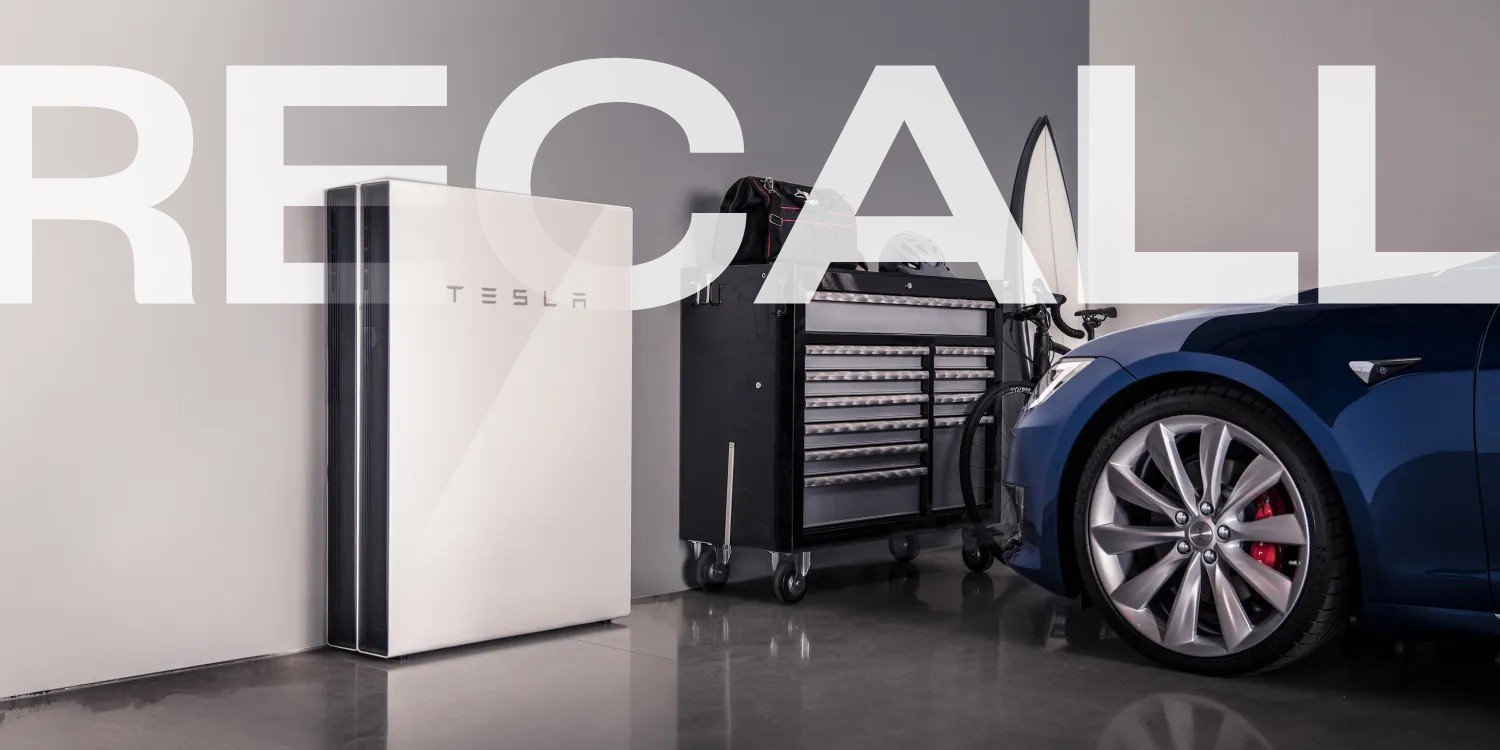
For years, Tesla Powerwall has been the go-to recommendation for “normals” looking for a painless, low-effort experience from their first home solar and battery backup solutions. But with a recent recall on more than 10,000 home batteries over fire safety concerns, more and more people are beginning to look for alternatives to the trailblazing Tesla brand. The good news: there are plenty of other great home solar battery solutions are there! UPDATE 13NOV2025: added a new, American brand choice. more…
Vector and EA Elektro-Automatik launch test system for megawatt EV charging communication
Vector has announced the release of its new hardware-in-the-loop test system, vCTS.performance, developed with EA Elektro-Automatik. The system is designed for testing charging communication between EVs and EVSE and supports the demanding requirements of the Megawatt Charging System (MCS), with charging power scalable from 60 kW to 3.84 MW. The vCTS.performance system enables conformity and interoperability testing for high-power EV charging scenarios with realistic load and endurance testing. The system’s testing capabilities encompass all major charging standards relevant to the EV industry, including Combined Charging System (CCS), MCS, North American Charging Standard (NACS), GB/T and CHAdeMO. The hardware is optimized for integration with Vector’s CANoe Test Package for EV and EVSE, as well as the vTESTstudio workflow. Vector says that the vCTS.performance includes regenerative charging capability, allowing energy feedback to the grid at over 96 percent efficiency. “With vCTS.performance, Vector sets new standards for high-power charging tests for electric vehicles and makes a significant contribution to the advancement and validation of charging communication in electromobility,” said Jan Großmann, Product Manager for vCTS.performance at Vector. Source: Vector Topics: Vector, EV Charging, Test Equipment
Tesla Australia celebrates 150k vehicles on domestic roads

Tesla has reached a major milestone in Australia, celebrating 150,000 vehicles on local roads. The milestone was announced by the electric vehicle maker on social media platform X. Sustainability for all In its post on X, Tesla Australia and New Zealand noted that the 150,000-vehicle milestone is a notable accomplishment as it accelerates “sustainable abundance for all.” The company also thanked its customers down under for supporting its vehicles over the years. “Accelerating sustainable abundance for all. Celebrating 150k Teslas on the road. Thank you, Australia,” Tesla Australia and New Zealand wrote in its post on X. The post was accompanied by a photo of what appeared to be a Quicksilver Model Y premium with the Sydney Opera House in the background. This is an appropriate photo for the EV maker, as the Model Y consistently ranks among Australia’s top-selling electric cars, even as the market becomes flooded with cheaper, newer, and flashier competitors. Accelerating sustainable abundance for allCelebrating 150k Teslas on the roadThank you Australia pic.twitter.com/AAy0JUkjM1 — Tesla Australia & New Zealand (@TeslaAUNZ) November 11, 2025 Australia’s FSD momentum Last month, Tesla revealed that FSD Supervised users in Australia and New Zealand have collectively driven over 1 million kilometers within two weeks of the system’s public release. The company noted that drivers are averaging around 80,000 kilometers per day with FSD Supervised active, equivalent to 67 laps around Australia or 625 trips from Auckland to Invercargill. “In less than 2 weeks, owners have travelled 1 million kilometers on FSD Supervised in AU & NZ,” Tesla’s local account wrote. Australia became the first right-hand-drive market to gain access to FSD Supervised, which was officially launched in the country on September 18. Coupled with the presence of FSD (Supervised) subscriptions, the adoption of FSD in Australia has been understandably quick. @teslarati Tesla Full Self-Driving and Yap is the best driving experience #tesla #fsd #yapping ♬ I Run – HAVEN. The post Tesla Australia celebrates 150k vehicles on domestic roads appeared first on TESLARATI.
Jim Farley admits he was “humbled” when Ford tore down Tesla and Chinese EVs

Ford CEO Jim Farley says dismantling Tesla and Chinese-made EVs was a wake-up call that reshaped how the veteran automaker is taking on the electric transition. Speaking on the Office Hours: Business Edition podcast, Farley admitted he was “humbled” after learning how far ahead Tesla and China’s automakers were in design and efficiency. The revelation, he stated, convinced him that Ford had to rethink everything from engineering to strategy. Teardowns and tech gaps “I was very humbled when we took apart the first Model 3 Tesla and started to take apart the Chinese vehicles. When we took them apart, it was shocking what we found,” Farley told host Monica Langley, as noted in an Insider report. He noted that Ford’s Mustang Mach-E had roughly 1.6 kilometers more electrical wiring than Tesla’s sedan, making it heavier and more expensive to build. The experience pushed Farley to launch Ford’s Model e in 2022, a dedicated EV division focused on competing with tech-driven automakers. Although Model e lost more than $5 billion in 2024 and is expected to face similar losses this year, Farley said he has no regrets. “I knew it was going to be brutal business-wise. My ethos is, take on the hardest problems as fast as you can and sometimes do it in public because you’ll solve them quicker that way,” he said. Farley has led Ford since 2020, during which he’s pushed the company to adopt leaner designs, modernized software systems, and faster EV production cycles inspired by Tesla’s model. Urgency in Ford’s global push Farley has repeatedly warned that Chinese EV makers such as BYD now pose an “existential threat” to legacy carmakers. He described Chinese electric vehicles as “far superior” and said their expansion overseas highlights how quickly the landscape is changing. “We can’t walk away from EVs,” Farley said. “Not just for the US, but if we want to be a global company, I’m not going to just cede that to the Chinese.” Still, the U.S. market remains challenging. Farley expects only about 5% of domestic car sales to be electric in the near term, as buyers demand more affordable models. To meet that shift, Ford plans a $30,000 midsize electric truck for 2027. “We now know that the EV market in the US is totally different than we thought,” Farley stated. @teslarati Tesla Full Self-Driving and Yap is the best driving experience #tesla #fsd #yapping ♬ I Run – HAVEN. The post Jim Farley admits he was “humbled” when Ford tore down Tesla and Chinese EVs appeared first on TESLARATI.
Tesla Superchargers to be opened for VW ID.4 and ID. Buzz owners

Volkswagen has announced that owners of the ID.4 and ID. Buzz will soon gain access to Tesla’s expansive Supercharger network across North America. Starting November 18, eligible drivers can charge at more than 25,000 compatible DC fast chargers using a Volkswagen-approved NACS adapter. The adapter, however, would need to be purchased by eligible customers. Volkswagen goes NACS To connect with the Tesla Supercharger network, ID.4 and ID. Buzz owners will need a $200 Volkswagen NACS-to-CCS adapter, which is available from dealers or online at parts.vw.com. Original owners of 2025 models can claim a $100 rebate within 90 days of purchase, with the program running through July 15, 2026, as noted in a press release. Starting with model year 2026, the NACS adapter will be included as standard equipment on all new Volkswagen EVs. It should be noted that Volkswagen’s NACS adapter enables charging exclusively on DC fast chargers compatible with Tesla’s North American Charging System. It cannot be used with Level 1 or Level 2 AC chargers, including Tesla’s own Destination Charger network. Select 2024 and 2025 models will also receive a software update to ensure optimal performance when charging through NACS. Volkswagen of America SVP’s comments Volkswagen of America Senior Vice President of Product Marketing and Strategy Petar Danilovic shared his excitement about the ID.4 and ID. Buzz’s upcoming use of the Tesla Supercharger Network. “This is great news for our EV owners,” he said. “They will now be able to access the more than 25,000 DC fast chargers on the Tesla Supercharger network across the United States, in addition to the more than 5,000 fast chargers on Electrify America’s grid. This makes life much more convenient, whether you are taking a road trip or you rely on public charging should home charging not be an option.” To use the Supercharger Network, ID.4 and ID. Buzz owners could use the Tesla app to find compatible stations and pay directly for their charging sessions. Combined with Electrify America’s growing network, ID.4 and ID. Buzz owners now have more options for their charging needs, allowing them to travel long distances in their all-electric cars. @teslarati Tesla Full Self-Driving and Yap is the best driving experience #tesla #fsd #yapping ♬ I Run – HAVEN. The post Tesla Superchargers to be opened for VW ID.4 and ID. Buzz owners appeared first on TESLARATI.
Tesla Superchargers crowned best EV charging network in the UK for 2025

Tesla has once again claimed the top spot in the UK’s most anticipated EV charging satisfaction survey. As per Zapmap’s 2025 driver satisfaction rankings, the Tesla Supercharger network was voted Best Large EV Charging Network for the second consecutive year. The annual survey, based on thousands of EV driver responses, measures reliability, ease of use, and payment experience across the UK’s public charging landscape. Tesla tops the survey’s “Large” category Zapmap’s 2025 rankings, which were drawn from nearly 4,000 battery electric vehicle (BEV) drivers, reflect how quickly public charging is evolving across the UK. For the survey’s “Large” network class, which includes systems with over 500 devices, Tesla once again stood out for reliability and cost efficiency. The automaker now offers 1,115 open Supercharger devices at 97 public sites, roughly 54% of its total UK network. That’s a 40% increase in public availability compared to September 2024. A particularly appreciated aspect of the Supercharger network is its cost, which continues to be “significantly lower prices than most rapid/ultra-rapid networks, with drivers also appreciating its reliability,” Zapmap noted. Thanks to everyone who voted, two years in a row! https://t.co/rPPMbQdC2m — Tesla UK (@tesla_uk) November 13, 2025 Tesla Regional Manager’s comments Ollie Dodd, Senior Regional Manager for Northern Europe Charging at Tesla, shared his appreciation for the Supercharger network’s award. “We’re thrilled to win Zapmap’s Best EV Charging Network for the second year in a row. Being recognized by the drivers themselves shows that our customer-centric and data-driven approach to building sites is well-received. We look forward to showcasing more customer-centric features in 2026 as we expand the network further and look towards new initiatives in roaming and payment methods,” he said. Conducted during September and October 2025, Zapmap’s eighth annual survey found that reliability and payment flexibility remain top priorities among EV drivers, two things that the Supercharger network particularly excels in. Fortunately for UK EV owners, the Supercharger network is also aggressively growing. @teslarati Tesla Full Self-Driving and Yap is the best driving experience #tesla #fsd #yapping ♬ I Run – HAVEN. The post Tesla Superchargers crowned best EV charging network in the UK for 2025 appeared first on TESLARATI.
China considering EV acceleration limits to curb high-speed accidents

Recent reports have emerged stating that China is considering new national standards that would restrict how fast electric vehicles can accelerate upon each startup. The potential regulation is reportedly being considered amidst a rise in EV-related crashes. The draft for the proposed regulation was released by the Ministry of Public Security on November 10. If approved, the regulation would be a national standard. New regulation targets default performance limits Under the proposal, all passenger vehicles would start in a state where acceleration from 0–100 km/h (0-60 mph) would take no less than five seconds. This rule would apply to both pure EVs and plug-in hybrids, and it is aimed at preventing unintended acceleration caused by driver inexperience or surprise torque delivery. The public has until January 10, 2026, to submit feedback before the rule is finalized, as noted in a CNEV Post report. Authorities have stated that the change reflects growing safety concerns amidst the arrival of more powerful electric cars. The new regulation would make it mandatory for drivers to deliberately engage performance modes, ensuring they are aware and ready for their vehicles’ increased power output before accelerating. A rise in accidents China’s EV sector has seen an explosion of high-powered models, some capable of 0–100 km/h acceleration in under two seconds. These speeds were once reserved for supercars, but some electric cars such as the Xiaomi SU7 Ultra offer such performance at an affordable cost. However, authorities have observed that this performance has led to an uptick in accidents. I recent years, incidents of crashes involving lack of control in vehicles with rapid acceleration have risen, as per an explanatory note accompanying the draft. Part of this is due to drivers seemingly being unprepared for the power of their own vehicles. For context, driving schools in China typically use cars that accelerate to 100 km/h in more than 5 seconds. This level of acceleration is also typical in combustion-powered cars. @teslarati Tesla Full Self-Driving and Yap is the best driving experience #tesla #fsd #yapping ♬ I Run – HAVEN. The post China considering EV acceleration limits to curb high-speed accidents appeared first on TESLARATI.
Tesla Giga Shanghai just built its 5 millionth battery pack

Tesla’s Shanghai Gigafactory has reached a major production milestone, with its five millionth battery pack rolling off the line this week. The achievement highlights Giga Shanghai’s role as the automaker’s highest volume manufacturing complex and primary vehicle export hub. Giga Shanghai’s new milestone Tesla announced the milestone on X and Weibo, sharing images from the facility where the five millionth pack was completed. Images showed the Giga Shanghai team posing for a commemorative photo with the facility’s five millionth battery pack. Several of the company’s executives congratulated the Tesla China team for its recent milestone, including SVP Tom Zhu, who wrote “Power up, team!” in a post on X. While Tesla designs and assembles its battery packs in China, the cells themselves are supplied by local partner CATL and South Korea’s LG Energy Solution, as noted in a CNEV Post report. Tesla China has stated that its pack safety standards exceed industry norms several times over, with longevity engineered to outlast vehicle lifespans. Power up, team! https://t.co/h2KEdTSLRs — LaoZhu (@tomzhu_nz) November 12, 2025 Giga Shanghai’s growing role Construction of Giga Shanghai began in early 2019, becoming China’s first wholly foreign-owned auto manufacturing facility. Giga Shanghai’s first phase was completed within the year, producing Model 3 sedans by the end of 2019. It now produces both Model 3 sedans and Model Y SUVs for domestic and export markets, with an annual capacity approaching one million vehicles. Despite the record-setting battery milestone, Tesla China’s recent domestic results left a lot to be desired. As per the China Passenger Car Association, Tesla’s retail sales in October dropped 36% year over year to 26,006 units, the lowest since late 2022. Analysts attributed the decline to Giga Shanghai’s focus on exports last month, as well as the ramp of compelling rivals like the Xiaomi YU7. @teslarati Here’s the scoop on the Tesla Model Y Standard coming to Europe #tesla #fyp #modely #ev ♬ Eyes for you. – ϱniʜɈoИ The post Tesla Giga Shanghai just built its 5 millionth battery pack appeared first on TESLARATI.
Elon Musk hints at when Tesla can fix this FSD complaint with v14

Tesla CEO Elon Musk hinted at when the company will resolve a major complaint with the Full Self-Driving suite. This particular issue has been persistent and a common complaint within the v14 suite. Tesla has had its v14 FSD rollout deployed for over a month, and its earliest iterations featured a vast majority of improvements from the past versions. However, one common complaint has continued to be mentioned: stuttering and hesitancy. Tesla Full Self-Driving’s biggest improvements from v13 to v14 Most commonly, FSD users have experienced this at intersections when the Tesla is at a complete stop. The vehicle will inch forward, contemplate proceeding, and then stutter pretty significantly before ultimately moving forward. Tesla has worked on resolving the issue and has worked on it with subsequent rollouts, but it has only improved slightly. The company has mentioned that it is working to fix it completely, but it seems the next big Software Update to actually resolve the issue altogether will likely be 14.2. Musk confirmed that on Wednesday: Yes — Elon Musk (@elonmusk) November 12, 2025 When will v14.2 rollout? It’s likely a month or more away. Currently, Tesla is rolling out v14.1.7, which is the latest version and features some minor improvements to Hardware 4 vehicles. These cars are currently on v14.1.4, but are not receiving v14.1.5 or v14.1.6, as both of those seemed to be internal releases to company employees. Tesla FSD v14.1.7 incoming…. pic.twitter.com/6zuMDZRVD2 — TESLARATI (@Teslarati) November 12, 2025 The stuttering issue has been a main complaint of many FSD users, and it is something that is being addressed. Musk’s confirmation that the suite is likely to receive a fix for this issue with the next major FSD release is a sign of good things to come, but we’re hopeful it comes sooner rather than later. Overall, v14 has been an excellent improvement from v13 with the addition of the additional Speed Profiles of Mad Max and Sloth, as well as new Arrival Options that give the driver an opportunity to let the car park in a suitable location upon arriving at the destination. @teslarati Tesla Full Self-Driving and Yap is the best driving experience #tesla #fsd #yapping ♬ I Run – HAVEN. The post Elon Musk hints at when Tesla can fix this FSD complaint with v14 appeared first on TESLARATI.
Tesla teases new market entrance with confusing and cryptic message

Tesla teased its entrance into a new market with a confusing and what appeared to be cryptic message on the social media platform X. The company has been teasing its entrance into several markets, including Africa, which would be a first, and South America, where it only operates in Chile. In September, Tesla started creating active job postings for the Colombian market, hinting it would expand its presence in South America and launch in a new country for the first time in two years. Tesla job postings seem to show next surprise market entry The jobs were related to various roles, including Associate Sales Manager, Advisors in Sales and Delivery, and Service Technicians. These are all roles that would indicate Tesla is planning to launch a wide-scale effort to sell, manage, and repair vehicles in the market. Last night, Tesla posted its latest hint, a cryptic video that seems to show the outline of Colombia, teasing its closer than ever to market entry: pic.twitter.com/Hi8t7URy1D — Tesla North America (@tesla_na) November 12, 2025 This would be the next expansion into a continent where it does not have much of a presence for Tesla. Currently, there are only two Supercharger locations on the entire continent, and they’re both in Chile. Tesla will obviously need to expand upon this crucial part of the ownership experience to enable a more confident consumer base in South America as a whole. However, it is not impossible, as many other EV charging infrastructures are available, and home charging is always a suitable option for those who have access to it. Surprisingly, Tesla seems to be more concerned about these middle-market countries as opposed to the larger markets in South America, but that could be by design. If Tesla were to launch in Brazil initially, it may not be able to handle the uptick in demand, and infrastructure expansion could be more difficult. Brazil may be on its list in the upcoming years, but not as of right now. @teslarati Tesla Full Self-Driving and Yap is the best driving experience #tesla #fsd #yapping ♬ I Run – HAVEN. The post Tesla teases new market entrance with confusing and cryptic message appeared first on TESLARATI.
Inside Patagonia’s comprehensive plan to counter rising emissions
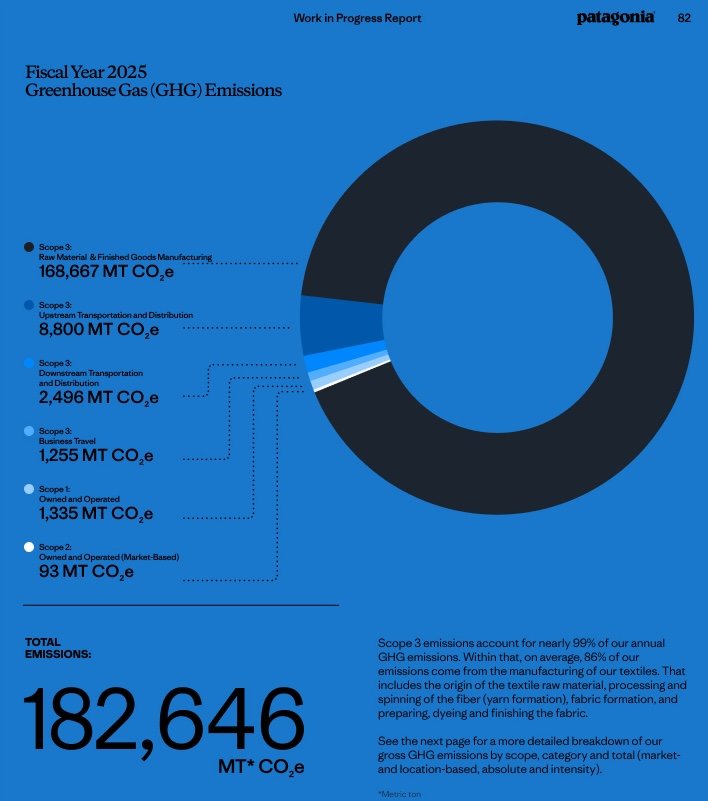
Patagonia needs to cut greenhouse gas emissions by an average of 10 percent each year to reach its commitment to be net zero by 2040. Like most other apparel makers, it’s struggling to deliver on that promise in a global economy complicated by trade wars and shifting ESG regulations. For its 2025 fiscal year ended April 30, the 52-year-old, storied outdoor gear and apparel maker’s footprint rose 2 percent to 182,646 metric tons of carbon dioxide equivalent. The big reason for the year-over-year rise: “more carbon-intensive” materials in new duffels and packs, which were a larger part of its product assortment, the company said in its first comprehensive environmental and social progress report published Nov. 12. Raw materials and finished goods manufacturing accounted for 92 percent of Patagonia’s footprint in fiscal year 2025, according to the 130-page narrative, which pulls together disclosures that the Ventura, California, company makes on its website, through certification audits and to nonprofits. Patagonia, which had revenue of $1.5 billion in FY2025, compiled the information so employees, customers and suppliers could learn more about the evolving best practices that it uses to reduce emissions. Since its 2017 baseline year, Patagonia’s emissions are up about 19 percent. Unique perspective As a private company, Patagonia isn’t required to report its climate progress, but the company’s leadership felt it important to counter the rise of greenhushing and to demonstrate that companies should still talk about their work. It hasn’t committed to a publishing cadence. “Patagonia is not perfect by any means,” Founder and ex-CEO Yvon Chouinard, now 87, said in a note leading the “Work in Progress” report. “We do not have all the answers, but the fear of getting things wrong in the process cannot stop us from trying to get things right in the end.” The company’s near-term targets include reducing emissions from its direct operations and purchased electricity by 80 percent by 2030, compared with 2017. Patagonia has pledged to cut absolute emissions from its supply chain by 55 percent in that same timeframe. Chouinard, along with current CEO Ryan Gellert, oversees Patagonia’s climate strategy and approves long-term, multimillion-dollar decarbonization investments. Patagonia is organized under a unique ownership structure: the Patagonia Purpose Trust owns the voting stock (2 percent) with the rest held by Holdfast Collective, an environmental nonprofit that has received $180 million in dividends since it was created in 2022. A breakdown of Patagonia’s footprint by emissions type. Source: PatagoniaSource: Patagonia Progress: It’s complicated Patagonia gives itself passing grades on two of four 2025 environmental goals in the report: eliminating “forever” chemicals from its fabrics and buying 100 percent of materials from “preferred” sources certified as having reduced climate impacts. It reached 84.4 percent overall for the latter goal, but made particular progress on using recycled polyester (93 percent) and nylon (89 percent), which significantly reduced the company’s dependence on products made from fossil fuels. Patagonia measures every product using its proprietary Ironclad Quality Index, which evaluates design metrics such as how materials can reduce environmental impact; manufacturing indicators, in an effort to minimize defects that cause returns; and use factors such as durability. “Responsibly made high-quality products that are multifunctional, durable and repairable can be used for years and years,” the company said in the report. “As a result, they reduce waste and take full advantage of valuable resources already extracted. Quality, for us, is an environmental attribute.” For example, Patagonia’s Black Hole Duffel has a score of 9.3 (out of 10), compared with a score of 7.2 in 2016. One reason was a decision to replace a thermoplastic polyurethane made from virgin petroleum with a recycled material that had the same qualities but had a matte finish instead of a shiny one. The potential risk to sales was worth it, the company said. Supply chain: the path forward The report also outlines several new initiatives intended to encourage more direct action on decarbonization in Patagonia’s supply chain — which contributed 95 percent of its emissions in FY2025. They include: A pilot of a new carbon accounting approach that would allow Patagonia to get credit for investments it funds for suppliers, such as electrification, that reduce emissions. The use of an internal fee — called the Verified Carbon Intervention Unit — that calculates the price of emissions reduction measures and factors this into contracts with Patagonia’s 10 biggest partners. This represented a $37.3 million operational expense in FY2025. A policy that requires suppliers to write a coal-phaseout plan and share the timeline. A “no carbon offset” mandate that applies both to employees and partners. An environmental impact manual that lays out compliance requirements for its supply chain; new suppliers must pass a related screening process during their onboarding. Untapped potential: Product recycling and reuse The analysis is rife with contradictions, including high hopes for plans to recirculate and reuse materials even though there is no clear recycling pathway for at least 85 percent of its products. For example, a typical rain jacket could include at least three different fabrics bonded together with adhesive. Just 1 percent of the products Patagonia has ever made have been returned for recycling. Just 20 percent of those can be processed; the rest are being stored “indefinitely” until Patagonia can figure out what to do with the items. This requires an industry-level response, the company said. The post Inside Patagonia’s comprehensive plan to counter rising emissions appeared first on Trellis.
Vectorworks Architect named architectural design software of the year

Vectorworks, Inc. announced that Vectorworks Architect, was named Architectural Design Software of the Year at the Construction Computing Awards. OMI Architects also received the Sustainability Project of the Year award for the Havelock project, which was designed using Vectorworks Architect. Located at 70 Great Bridgewater Street in Manchester, the Havelock project renovated an older office building, formerly called Evershed House, into an updated, energy-efficient workspace. Using Vectorworks Architect, OMI Architects worked with project partners to coordinate design models, improve building performance and convey design plans throughout each stage of development. Known as “The Hammers,” the Construction Computing Awards recognize technologies, tools, and solutions that support progress and efficiency in the architecture, engineering, and construction industries. Winners were announced at a ceremony at the Leonardo Royal Hotel in London. Vectorworks Architect allows designers to sketch, model, and document within an integrated workflow. It includes 2D graphics, 3D modeling and visualization tools, and cloud collaboration through Vectorworks Cloud Services to support creative and technical design work. Vectorworks Architect 2026 introduces tools designed to support sustainability and improve design performance. New features include a Sustainability Dashboard for carbon calculations, Worksheet Slicing, enhanced Depth Cueing, and updated Door and Window Assembly tools to assist architects in managing complex design workflows more efficiently. The complete list of winners is available here and will be featured in the November/December issues of CAD User and Construction Computing magazines. For more information, visit vectorworks.net The post Vectorworks Architect named architectural design software of the year appeared first on Engineering.com.