Tesla Diner to transition to full-service restaurant as Chef heads for new venture
Tesla Full Self-Driving appears to be heading to Europe soon, especially as the company has continued to expand its testing phases across the continent. It appears that the effort is getting even bigger, as the company recently posted a job for a Vehicle Operator in Prague, Czech Republic. This would be the third country the company is seeking a Vehicle Operator in for the European market, joining Germany and Hungary, which already have job postings in Berlin, Prüm, and Budapest, respectively. Breaking: Tesla is hiring vehicle operators in Prague. pic.twitter.com/CbiJdQLCLj — Tesla Yoda (@teslayoda) November 19, 2025 This position specifically targets the Engineering and Information Technology departments at Tesla, and not the Robotics and Artificial Intelligence job category that relates to Robotaxi job postings. Although there has been a posting for Robotaxi Operators in the Eastern Hemisphere, more specifically, Israel, this specific posting has to do with data collection, likely to bolster the company’s position in Europe with FSD. The job description says: “We are seeking a highly motivated employee to strengthen our team responsible for vehicle data collection. The Driver/Vehicle Operator position is tasked with capturing high-quality data that contributes to improving our vehicles’ performance. This role requires self-initiative, flexibility, attention to detail, and the ability to work in a dynamic environment.” It also notes the job is for a fixed term of one year. The position requires operation of a vehicle for data collection within a defined area, and requires the Vehicle Operator to provide feedback to improve data collection processes, analyze and report collected data, and create daily driving reports. The posting also solidifies the company’s intention to bring its Full Self-Driving platform to Europe in the coming months, something it has worked tirelessly to achieve as it spars with local regulators. For years, Musk has said the process for gaining approval in Europe would take significantly more time than it does in the United States. Back in 2019, he predicted it would take six to twelve months to gain approval for Europe, but it has taken much longer. This year, Musk went on to say that the process of getting FSD to move forward has been “very frustrating,” and said it “hurts the safety of the people of Europe.” Elon Musk clarifies the holdup with Tesla Full Self-Driving launch in Europe The latest update Musk gave us was in July, when he said that Tesla was awaiting regulatory approval.
Hydrostor and 3CE amend Willow Rock ESA for third time, 'permitting and interconnection challenges' to blame

Hydrostor and 3CE amend Willow Rock ESA for third time, 'permitting and interconnection challenges' to blame - Energy-Storage.News Skip to content
Tesla celebrates 75k Superchargers, less than 5 months since 70k-stall milestone
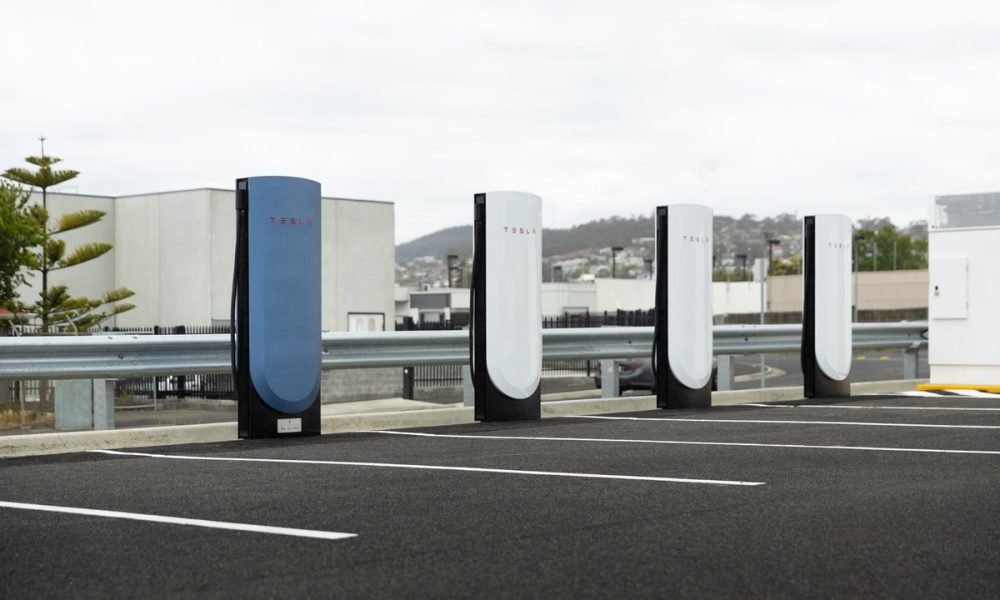
Tesla has crossed another major charging milestone by officially installing its 75,000th Supercharger stall worldwide. The electric vehicle maker chose South Hobart, Tasmania, as the commemorative location of its 75,000th Supercharger. Tesla’s 75,000th Supercharger Tesla’s 75,000th stall is hosted at the South Hobart Smart Store on Cascade Road, South Hobart, TAS 7004, as noted in a techAU report. The location features four next-generation V4 Superchargers, which are built with longer cables that should make it easy even for non-Teslas to use the rapid charger. The site also includes simplified payment options, aligning with Tesla’s push to make V4 stations more accessible to a broader set of drivers. For Tasmanian EV owners, the installation fills an important regional gap, improving long-distance coverage around Hobart and strengthening the area’s appeal for mainland travelers traveling by electric vehicle. Similar to other commemorative Superchargers, the 70,000th stall is quite special as it is finished in Glacier Blue paint. Tesla’s 50,000th stall, which is in California, is painted a stunning red, and the 60,000th stall, which is in Japan, features unique origami-inspired graphics. Accelerating Supercharger milestones The Tesla Supercharger’s pace of expansion shows no signs of slowing. Tesla celebrated its 70,000th stall at a 12-stall site in Burleson, Texas late June 2025. Just eight months earlier, Tesla announced that it had celebrated the buildout of its 60,000th Supercharger, which was built in Enshu Morimachi, Shizuoka Prefecture, Japan. Tesla’s Supercharger Network also recently received accolades in the United Kingdom, with the 2025 Zapmap survey naming the rapid charging system as the Best Large EV Charging Network for the second year in a row. Survey respondents praised the Supercharger Network for its ease of use, price, and reliability, which is best-in-class. The fact that the network has also been opened for non-Teslas is just icing on the cake. Advertisement -->
ESS Inc, Eos foresee policy and load growth tailwinds ahead
ESS Inc, Eos foresee policy and load growth tailwinds ahead - Energy-Storage.News Skip to content
Difficult realities of LiDAR: Volvo backs away from Luminar

After a seven year partnership, Volvo is pulling away from Luminar as troubles flare in the LiDAR market. By Will Girling The troubles of LiDAR manufacturer Luminar are accelerating following news that Volvo Cars has cancelled a five-year supply contract, confirmed directly to multiple publications. Although the two companies have collaborated closely together since 2018, Volvo now deems Luminar a "supply chain risk" due to failure to meet contractual obligations. Subscribe to Automotive World to continue reading Sign up now and gain unlimited access to our news, analysis, data, and research Subscribe Already a member? Join our LinkedIn Group Let us help you understand the future of mobility "*" indicates required fields
Unilever, Nestlé close to ending deforestation for key commodities

Attempts by companies to eliminate deforestation from supply chains show huge divergence in success, with leaders already coming close to having eliminated the practice for several key commodities and some laggards demonstrating no effort in the same areas, a new report finds. Unilever, Danone and Nestlé are among the companies to report having verified that 90 percent or more of their purchases of palm oil, soy, timber, pulp and paper come from sources that do not cause deforestation or the conversion of other natural ecosystems. Nestlé and Marks and Spencer, a U.K. retailer, also achieved 100 percent deforestation-free sourcing for cattle, according to Ceres, a nonprofit that works with investors, companies and policymakers. “There are challenges to achieving deforestation and conversion-free supply chains, particularly with certain commodities,” said Meryl Richards, program director for food and forests at Ceres. “But we’re seeing here that it’s possible to overcome those challenges.” At the other end of the scale of the 53 food brands, retailers and other companies assessed by Ceres were BJ’s Wholesale Club, a discount retailer, and Bloomin’ Brands, which owns Outback Steakhouse and other restaurant chains. The Ceres team could not find evidence of either taking action to trace and verify commodities, or implement policies to tackle deforestation. Neither company responded to a request for comment. Low disclosure of deforestation policies has also been noted in the finance sector: A report issued earlier this year found that only 40 percent of 150 financial institutions surveyed had such a policy in place, down from 45 percent in 2023. Explaining the divergence In addition to exposing stark differences between company ambitions, the Ceres report also recommends steps that companies can take to reduce deforestation in their supply chains and hints at factors that explain the differing levels of ambition. The authors did not break down how action on deforestation varies by type of business, for instance, but it’s notable that many retailers and restaurants scored poorly on tracing and verification of palm oil, the commodity that’s most widely tracked. The difference may be due to challenges in engaging suppliers; retailers will generally have a great number of supply-chain tiers between themselves and producers. Food brands achieved higher rates for tracking and verification of commodities, with some exceptions. Kraft Heinz, for example, reported tracing just 5 percent of the palm oil it purchases back to source, and to having verified the same fraction as deforestation and conversion-free. The company, which reported $26 billion in sales in 2024, made no disclosures about soy, cattle, cocoa, timber, pulp or paper. The company did not return a request for comment. Exposure to European markets is another factor driving company action, added Calli VanderWilde, food and forests manager at Ceres. The EU’s Regulation on Deforestation-free Products, which is due to come into force next month, requires companies to prove that the commodities covered — cattle, cocoa, coffee, palm oil, rubber and soy — are deforestation-free before selling them. Positive outlook Palm oil is most widely tracked because companies and investors started paying attention to the deforestation risks associated with the commodity around 15 years ago, noted Richards. Supply chains for some other commodities, including cattle, are often complex, she added. Indeed, companies often seen as sustainability leaders, including Nestlé and Danone, have been criticized by other nonprofits for doing too little to address livestock emissions. But at least when it comes to deforestation, Richards expects the availability of new tools and technology will allow companies to track and verify at much improved levels in the near future. In addition to working with individual suppliers, Richards said that companies can ensure tracking and verification is as efficient as possible by joining jurisdictional or regional efforts to eliminate deforestation. Such projects help tackle the root causes of deforestation and reduce the risk that protecting one area simply leads to increased conversion nearby.
Finally, a compact sports watch that competes with my Garmin in training guidance
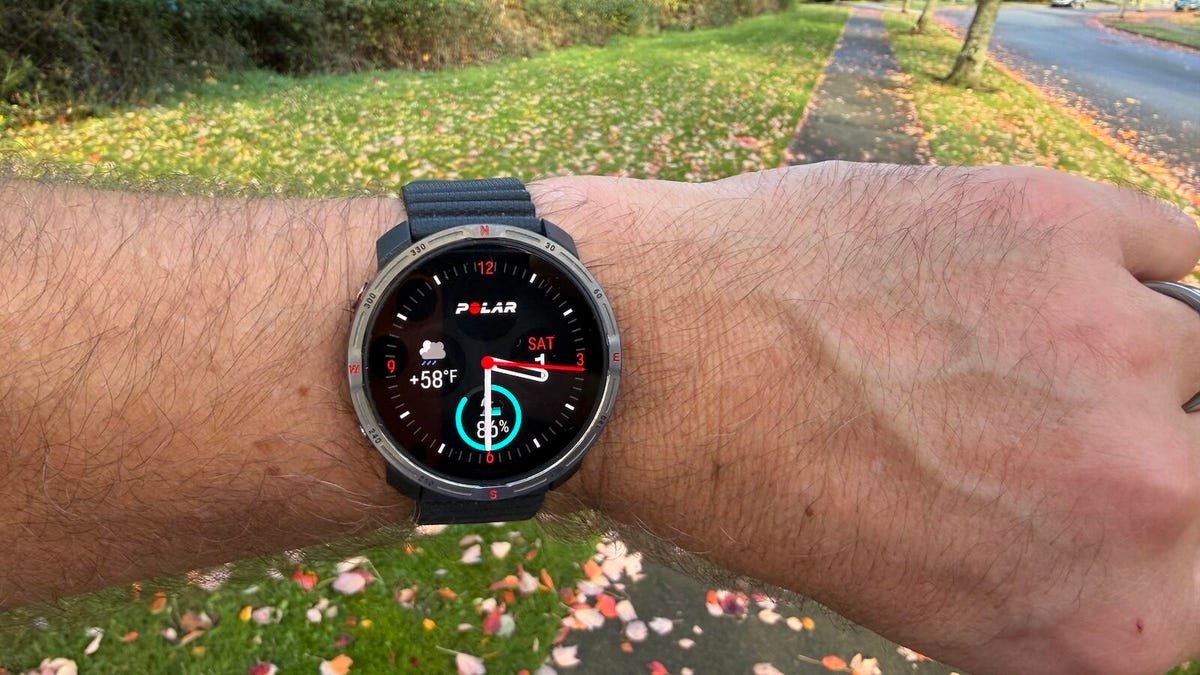
ZDNET's key takeaways The Polar Grit X2 is available in Night Black for $800 The rugged MIL-spec build, vibrant AMOLED display, accurate location tracking, and advanced training tools make this a great watch for outdoor adventures Smartphone syncing is a manual process, the smartphone app is somewhat stagnant, and the watch is expensive. Follow ZDNET: Add us as a preferred source on Google. Polar has some of the most powerful and capable training tools in its Polar Flow software that is available online and in smartphone apps. Its newest watch, the Polar Grit X2, provides a robust wearable that captures all of your key health and fitness data to feed into the Polar Flow ecosystem so that you can measure your performance and track trends to help you achieve your goals. Also: I tested the best sports watches in 2025: Here are the latest and greatest watches, no matter your budget Whereas Garmin has been expanding into the smartwatch space with features such as speakers, microphones, payment systems, subscription music support, and satellite services, Polar (like Coros and Suunto), continues to focus primarily on health and wellness. Polar's rugged watches are built to withstand the rigors of an active lifestyle while providing some basic smartwatch functionality, such as app notifications. Best smartwatch deals of the week Deals are selected by the CNET Group commerce team, and may be unrelated to this article. I tried out the Polar Grit X2 Pro in 2024. The Grit X2 provides the same experiences, but in a slightly smaller and sleeker package, priced $200 less. (The Grit X2 Pro increased in price by $250 to $1,000 since my 2024 review.) The $800 price point of the Grit X2 remains rather expensive for a GPS sports watch with limited smartwatch capabilities. Garmin's Venu X1 is normally priced at the same $800 level as the Forerunner 970 $50 less, and both of these watches offer much more than Polar does with the Grit X2. Suunto's new models, the Vertical 2 and Race 2, are more closely aligned with the Grit X2 in terms of features, but are priced at $600 and $500, respectively. Matthew Miller/ZDNET The brilliant 1.28-inch AMOLED display has a sapphire crystal glass material and the watch weighs in at just 2.2 ounces. Given the smaller size and lighter weight, the battery also has a smaller capacity and provides up to 30 hours in GPS tracking mode and about seven days in typical smartwatch mode. Charging up a sports watch once a week is fine, especially given the AMOLED display that has vibrant colors and a stark black background. Matthew Miller/ZDNET The GPS tracking with the Grit X2 was accurate, and its heart rate measurements closely matched those of other watches in my testing as well. The maps and routing performed well. If you're looking for a rugged watch for hiking or trail running, consider this model, especially if you can find it at a lower price point on sale. The five hardware buttons make it easy to use in the rain, which is the condition I spent most of my time in while testing. Also: I walked over 10,000 steps with 3 sports watches - this one was the most accurate by far The Grit X2 launches with the Polar OS 4.0 UI; other watches received this update, which includes features such as Find My Phone, PIN code security option, updated workout summaries, points of interest on maps, and more. The Polar Flow smartphone application provides access to the data collected by the Grit X2, but it's growing a bit stale and isn't the most intuitive app to use. I'm also not a fan of having to press and hold the button to initiate syncing of the watch with the Polar Flow app, and I prefer automatic syncing of the watch and phone. I would love to see an update to Polar Flow, especially when we see fantastic user experiences such as Fitbit Premium on the Pixel Watch 4 and other AI-based guidance and coaching on other sports watches. Matthew Miller/ZDNET Polar nails sleep tracking, training load measurements, running metrics, and other advanced fitness monitoring. You can fully customize the on-screen metrics that appear on the watch for more than 170 sports and activities, so spend the time and make the watch perform as you desire. The Grit X2 is designed to fit smaller wrists than the X2 Pro. ZDNET's buying advice Polar's new Grit X2 offers a rugged sports watch in a smaller and lighter form factor than the Grit X2 Pro with a focus on mapping, navigation, and performance tracking. The watch performed well in terms of location tracking and heart rate measurements, but the user interface and smartphone app appear somewhat dated, and the watch is priced relatively high compared to competitors like Suunto, Coros, and Garmin. If you are a fan of Polar's ecosystem, this may be a watch worth considering. The Vantage V3 is priced slightly lower, offers longer battery life, and provides nearly all the same functionality.
DC power supplies launch kicks off productronica 2025
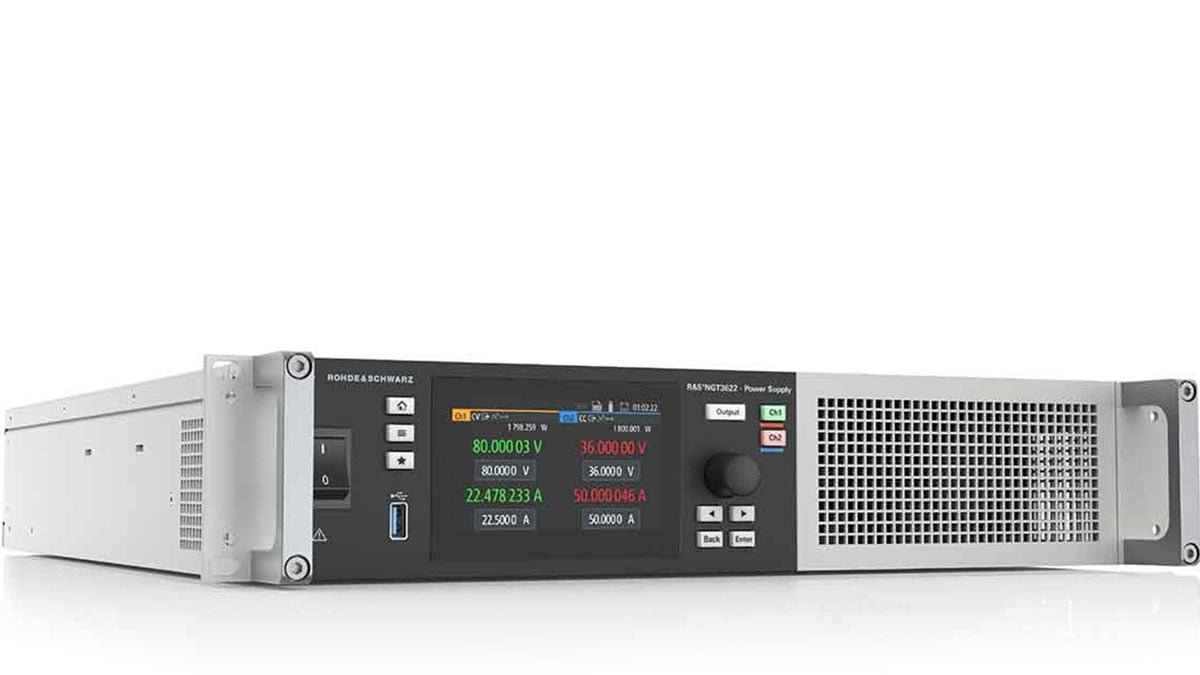
Rohde & Schwarz opened day one at productronica 2025 in Munich with the launch of the R&S NGT3600 series, a new line of DC power supplies offering up to 1800 W per channel. These power supplies are highly versatile, providing adjustable output voltages of up to 80 V. The two channels of the R&S NGT3622 model can be combined in series or parallel, allowing users to double either the voltage or the current. For applications requiring even more power, up to three units can be connected, delivering up to 480 V or 300 A across six channels. The R&S NGT3600 series delivers exceptionally clean and stable power, featuring very low voltage and current ripple and noise. With a resolution of 100 µA for current and 1mV for voltage, the instruments offer precise measurements needed for a wide range of applications. The unique two-channel model, the R&S NGT3622, sets a new benchmark for high-performance DC power supplies by combining up to two fully independent 1800 W outputs in a single compact instrument. This represents a significant breakthrough for labs and test systems that demand versatility, space efficiency, and uncompromised precision. It is ideally suited for measurement and testing tasks in various industries, including power electronics, mobile and satellite communications, renewable energies, automotive, aerospace & defence, among others. The R&S NGT3622 enables precise current and voltage testing under load, efficiency measurements and thermal characterization of components such as DC/DC converters, power supplies, motors, and semiconductors. Engineers can use a R&S NGT3600 to test high-current prototypes, such as base stations, validate MPPT algorithms for solar inverters, or inspect charging stations. In the automotive sector, it supports the transition to 48 V on-board networks, making it ideal for simulating on-board networks and powering communication systems, sensors, and control units during testing. These capabilities are equally valuable in the aerospace and defence sectors. All models in the R&S NGT3600 DC power supply series are directly rack-mountable – no adapter is required. They are part of the R&S ESSENTIALS portfolio and will be available as of January 13, 2026, from Rohde & Schwarz and selected distribution partners. Visitors to productronica 2025 in Munich (November 18-21) can see the instruments at the Rohde & Schwarz booth A1.375.
Wisconsin gets 26 new fast-charging stations with $14M of grants
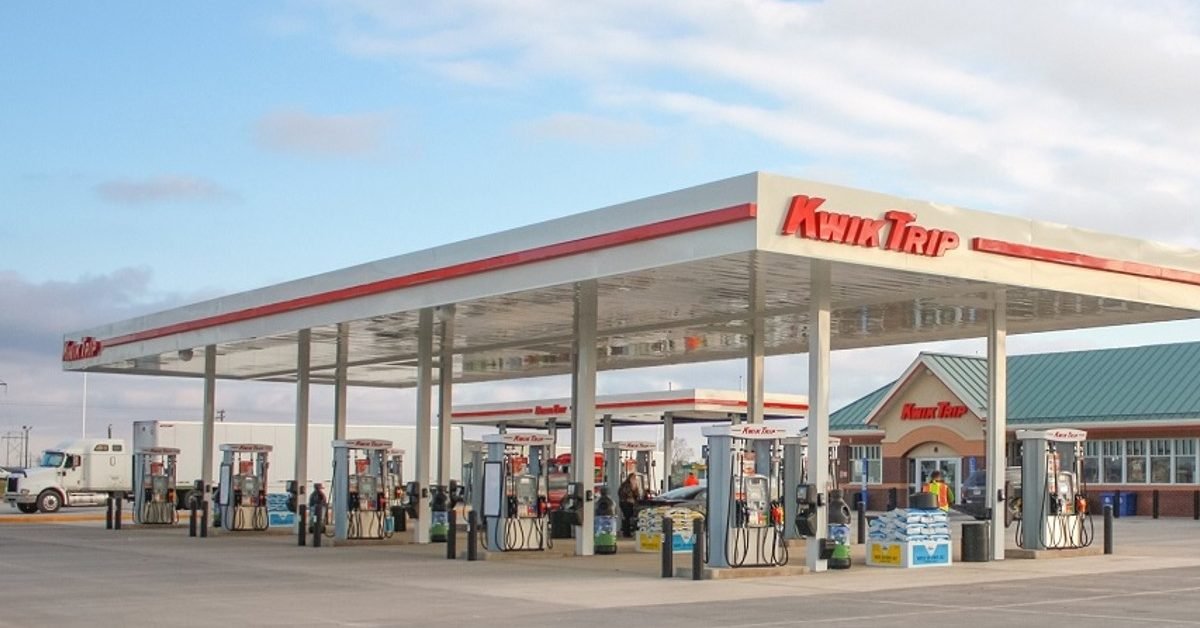
Wisconsin is getting another boost in DC fast charging thanks to $14 million in recovered federal grants for 26 sites statewide. The funding comes through the National Electric Vehicle Infrastructure (NEVI) program, part of President Joe Biden’s Bipartisan Infrastructure Law. The award follows a legal battle earlier this year, when Governor Tony Evers (D-WI) joined other states in a lawsuit to force the Trump Administration to release over $60 million that Wisconsin was owed from the NEVI Formula Program. A federal judge blocked the Trump administration’s illegal attempt to obstruct the NEVI program in June, clearing the way for planned NEVI EV charging projects to continue. This round of sites fills in EV charging station coverage gaps following the initial awards announced in May 2024. Round one granted $22.4 million for 52 projects; 11 of those chargers are already online, and another 16 have been cleared for construction. Across both award rounds, the Wisconsin Department of Transportation (WisDOT) has now allocated more than $36.4 million toward 78 total projects. The first NEVI-backed fast charging stations opened earlier this year at Kwik Trip stores in Ashland, Menomonie, and Chippewa Falls. Advertisement - scroll for more content The 26 new charging stations will be built along Wisconsin’s Alternative Fuel Corridor and sited at convenience stores, restaurants, hotels, grocery stores, and other travel stops. They’ll service the more than 37,000 EV drivers registered in the state, as well as road‑trippers and visitors, and will have a minimum of 150 kW per port. Round two awardees include Tesla, Kwik Trip, and Universal EV. A full list of the 26 fast charging locations can be found here. If you’re looking to replace your old HVAC equipment, it’s always a good idea to get quotes from a few installers. To make sure you’re finding a trusted, reliable HVAC installer near you that offers competitive pricing on heat pumps, check out EnergySage. EnergySage is a free service that makes it easy for you to get a heat pump. They have pre-vetted heat pump installers competing for your business, ensuring you get high quality solutions. Plus, it’s free to use! Your personalized heat pump quotes are easy to compare online and you’ll get access to unbiased Energy Advisors to help you every step of the way. Get started here. – *ad FTC: We use income earning auto affiliate links. More.
50+ House Republicans ask Commerce to halt Chinese solar inverter imports
NextRoll, Inc. ("NextRoll") and our 20 advertising partners use cookies and similar technologies on this site and use personal data (e.g., your IP address). If you consent, the cookies, device identifiers, or other information can be stored or accessed on your device for the purposes described below. You can click "Allow All" or "Decline All" or click Settings above to customise your consent regarding the purposes and features for which your personal data will be processed and/or the partners with whom you will share personal data. NextRoll and our advertising partners process personal data to: ● Store and/or access information on a device; ● Create a personalised content profile; ● Select personalised content; ● Personalised advertising, advertising measurement, audience research and services development; ● Services development. For some of the purposes above, our advertising partners: ● Use precise geolocation data. Some of our partners rely on their legitimate business interests to process personal data. View our advertising partners if you wish to provide or deny consent for specific partners, review the purposes each partner believes they have a legitimate interest for, and object to such processing. If you select Decline All, you will still be able to view content on this site and you will still receive advertising, but the advertising will not be tailored for you. You may change your setting whenever you see the Manage consent preferences on this site.
Charged EVs | Wolfspeed unveils new 1200 V silicon carbide power modules for high-efficiency EV inverters
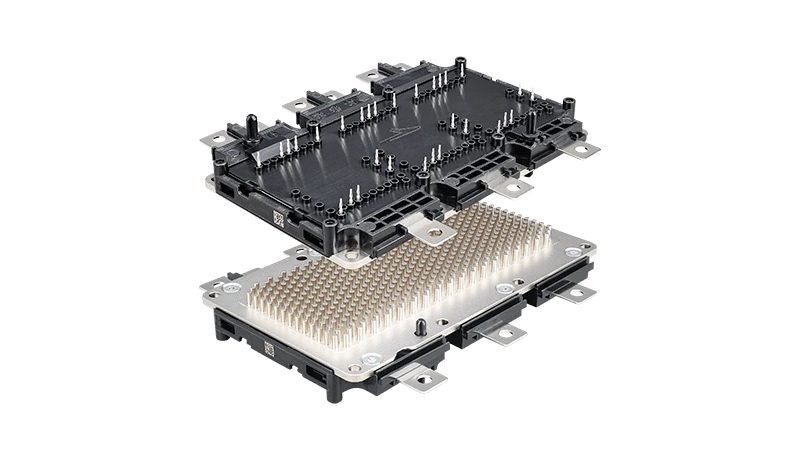
Wolfspeed has announced the release of its 1200-volt silicon carbide (SiC) six-pack power modules, targeting high-power inverter applications for electric vehicles and industrial machinery. The new modules utilize Wolfspeed’s Gen 4 SiC MOSFET technology combined with updated packaging to deliver what it claims is three times the power cycling capability at operating temperature compared to competitive options and 15 percent higher inverter current in an industry-standard footprint. Technical highlights include a 22 percent reduction in drain-source on-resistance at 125°C compared to the prior generation. The modules also feature approximately 60 percent lower turn-on energy across operating temperatures, a soft-body diode design for 30 percent lower switching losses, and 50 percent lower VDS overshoot during reverse recovery events, based on Wolfspeed’s measurements against its previous generation. The packaging approach uses sintered die attach, epoxy encapsulant and copper clip interconnects, which together enable the threefold increase in power cycling relative to leading competitor devices in the same physical format, according to the company. The modules’ industry-standard casing allows for drop-in replacement of IGBT modules, reducing the need for complex redesigns and making integration into existing electrified vehicle architectures more straightforward. Compatibility with standard system components such as capacitors, cooling plates, gate drivers and current sensors is maintained, and assembly is simplified by removing requirements for power terminal laser welding and complex coldplate mounting. Wolfspeed notes that these modules are designed for electric vehicle OEMs as well as heavy-duty, construction, and agricultural vehicle manufacturers who prioritize reliability, power density, and reduced maintenance. Other industrial inverter markets are also directly targeted. The 1200-volt SiC six-pack modules are currently available for sampling, with full distribution availability expected in early 2026. “These modules provide a means for electric mobility OEMs to take a quantum leap forward in technology,” said Dr. Cengiz Balkas, Chief Business Officer at Wolfspeed. “We took proven, well-rounded switching performance made possible with our Gen 4 MOSFETs and turned further knobs with our YM package to greatly improve power cycling—one of the biggest performance hurdles a power designer can face. In doing so, we’re delivering the reliability, efficiency, and power density that heavy-duty, construction and agricultural vehicles demand.” Source: Wolfspeed
Xpeng reports lowest quarterly net loss in 5 years, nears 1st profit on non-GAAP basis
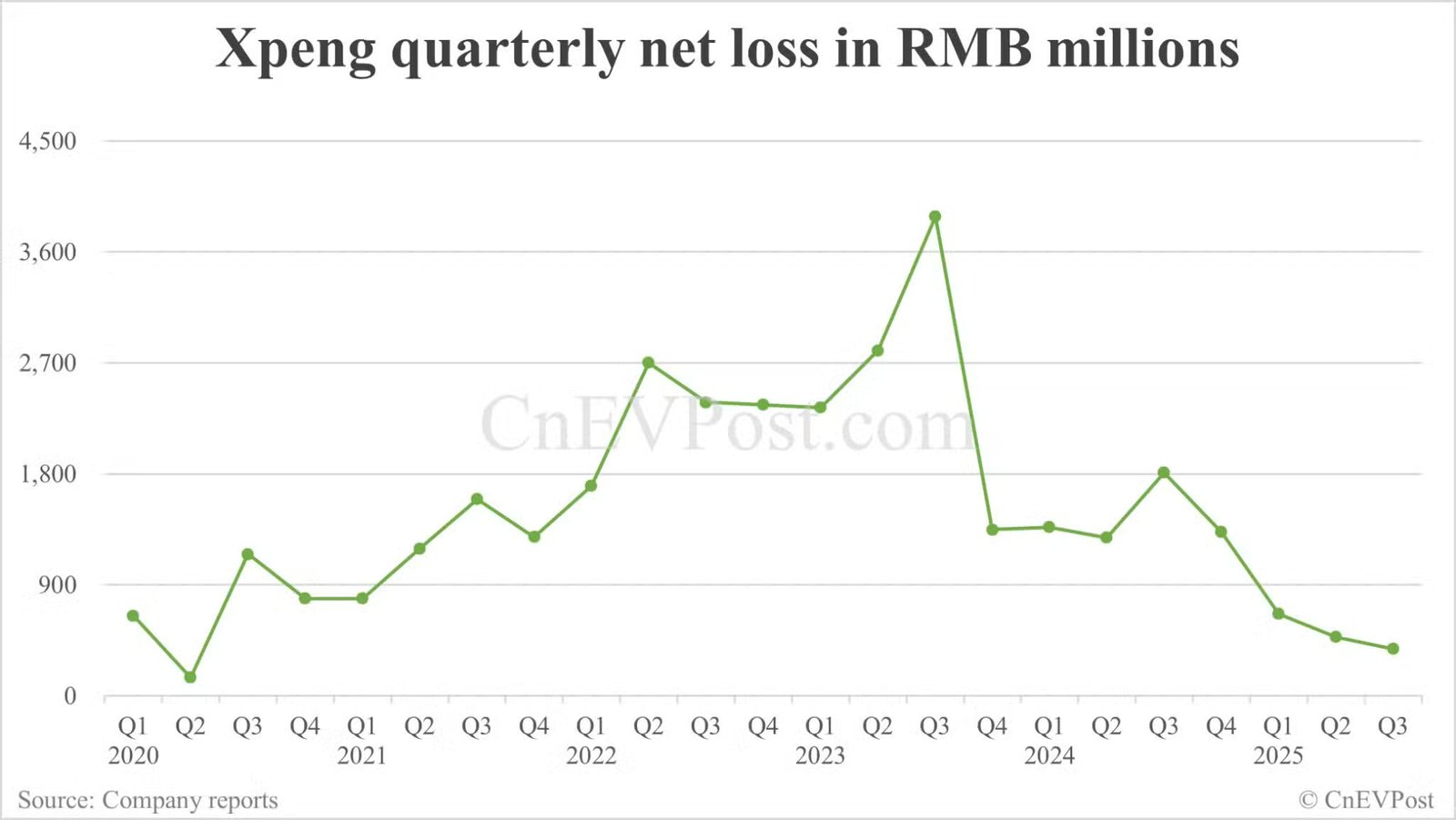
Xpeng posted a net loss of RMB 380 million ($50 million) in the third quarter, its smallest since the third quarter of 2020. Xpeng's non-GAAP net loss narrowed to RMB 150 million in the third quarter, approaching breakeven. Xpeng (NYSE: XPEV) reported its smallest net loss in five years as vehicle deliveries and service revenue surged. The electric vehicle (EV) maker posted a net loss of RMB 380 million ($50 million) in the third quarter, the lowest since the third quarter of 2020, according to unaudited financial results released today. This represents a 78.93 percent decrease from the RMB 1.81 billion net loss in the same period of 2024 and a 20.28 percent decrease from the RMB 480 million net loss in the second quarter 2025. This marks Xpeng's eighth consecutive quarter of year-on-year net loss reduction. The company aims to achieve quarterly profitability in the fourth quarter of this year. Xpeng's non-GAAP net loss for the third quarter was RMB 150 million, approaching breakeven. This compares to RMB 1.53 billion in the same period of 2024 and RMB 390 million in the second quarter of 2025. The company has seen robust growth this year, delivering 116,007 vehicles in the third quarter -- a record high for the fourth consecutive quarter, according to data compiled by CnEVPost. This represents a 149.30 percent year-on-year increase and a 12.43 percent rise from the second quarter. Xpeng's third-quarter revenue reached RMB 20.38 billion, a 101.8 percent increase from RMB 10.1 billion in the same period of 2024 and an 11.5 percent rise from RMB 18.27 billion in the second quarter of 2025. Vehicle sales revenue reached RMB 18.05 billion in the third quarter, up 105.3 percent year-on-year and up 6.9 percent quarter-on-quarter. This growth was primarily driven by increased deliveries of newly launched models, Xpeng said. The company's service and other revenue reached RMB 2.33 billion in the third quarter, up 78.1 percent from RMB 1.31 billion in the same period of 2024 and up 67.3 percent from RMB 1.39 billion in the second quarter 2025. The growth was primarily driven by increased revenue from after-sales services and technical R&D services provided to "a car manufacturer" following the successful completion of several key milestones this quarter under their agreement. Xpeng did not name the manufacturer, though it is apparently German automaker Volkswagen. On July 26, 2023, Xpeng announced Volkswagen's plan to invest $700 million in the company and jointly develop EVs. Earlier this month, Volkswagen's majority-owned Chinese joint venture, Volkswagen Anhui, filed for the ID.UNYX 08 SUV (sport utility vehicle), signaling the imminent launch of their first collaborative model. Xpeng's gross margin reached a record 20.1 percent in the third quarter, compared to 15.3 percent in the same period of 2024 and 17.3 percent in the second quarter 2025. Its vehicle margin came in at 13.1 percent in the third quarter, compared to 8.6 percent in the same period of 2024 and 14.3 percent projected for the second quarter 2025. The year-on-year increase primarily resulted from ongoing cost reductions, while the quarter-on-quarter decline stemmed from product transitions. Xpeng's service and other business margin reached 74.6 percent in the third quarter, compared to 60.1 percent in the same period of 2024 and 53.6 percent in the second quarter 2025. This growth was primarily driven by revenue from technology R&D services. The company's R&D expenses for the third quarter were RMB 2.43 billion, representing a 48.7 percent increase from RMB 1.63 billion in the same period of 2024 and a 10.1 percent increase from RMB 2.21 billion in the second quarter of 2025. The increase were primarily attributable to the company's expansion of its product portfolio to support future growth, resulting in higher expenses related to the development of new vehicle models and technologies. Its third-quarter selling, general, and administrative (SG&A) expenses totaled RMB 2.49 billion, representing a 52.6 percent increase from RMB 1.63 billion in the same period of 2024 and a 15.0 percent increase from RMB 2.17 billion in the second quarter of 2025. The increases were primarily driven by higher franchisee commissions, which in turn resulted from sales growth and increased marketing and advertising expenses. As of September 30, 2025, Xpeng held a total of RMB 48.33 billion in cash and cash equivalents, restricted cash, short-term investments, and time deposits. Xpeng guided fourth-quarter vehicle deliveries to be between 125,000 and 132,000 units, representing year-on-year growth of about 36.6 percent to 44.3 percent. It guided fourth-quarter total revenue to be between RMB 21.5 billion and RMB 23.0 billion, representing year-on-year growth of about 33.5 percent to 42.8 percent. The guidance implies Xpeng now expects combined November and December deliveries to reach 82,987 to 89,987 units, considering its October delivery of 42,013 vehicles. Correction: In a previous version, the net loss of RMB 380 million was incorrectly converted to $500 million. "Tesla's robot can't even do this -- how could Xpeng possibly make it?"
Tesla CEO Elon Musk sends final warning to Bill Gates over short position

The Boring Company is gearing up to tackle one of its toughest projects yet, a new tunnel system beneath Nashville’s notoriously tough limestone terrain. Unlike the soft-soil conditions of Las Vegas and Austin, the Music City Loop will require a “hard-rock” boring machine capable of drilling through dense, erosion-resistant bedrock. The Boring Company’s machine for the project is now in final testing. A boring hard-rock tunneling machine The Boring Company revealed on X that its new hard-rock TBM can generate up to 4 million pounds of grip force and 1.5 million pounds of maximum thrust load. It also features a 15-filter dust removal system designed to keep operations clean and efficient during excavation even in places where hard rock is present. Previous Boring Co. projects, including its Loop tunnels in Las Vegas, Austin, and Bastrop, were dug primarily through soft soils. Nashville’s geology, however, poses a different challenge. Boring Company CEO and President Steve Davis mentioned this challenge during the project’s announcement in late July. “It’s a tough place to tunnel, Nashville. If we were optimizing for the easiest places to tunnel, it would not be here. You have extremely hard rock, like way harder than it should be. It’s an engineering problem that’s fairly easy and straightforward to solve,” Davis said. Advertisement Final acceptance testing of TBC’s first hard-rock TBM before it ships to Nashville! The TBC tunnels built in Vegas, Austin, Bastrop and Los Angeles were in mostly soft soil, while Nashville is hard rock. Shown is: -Dust removal system, equipped with 15 high capacity… pic.twitter.com/oW2QGvPMBn— The Boring Company (@boringcompany) November 10, 2025 Nashville’s limestone terrain Experts have stated that the city’s subsurface conditions make it one of the more complex tunneling environments in the U.S. The Outer Nashville Basin is composed of cherty Mississippian-age limestone, a strong yet soluble rock that can dissolve over time, creating underground voids and caves, as noted in a report from The Tennessean. Jakob Walter, the founder and principal engineer of Haushepherd, shared his thoughts on these challenges. “Limestone is generally a stable sedimentary bedrock material with strength parameters that are favorable for tunneling. Limestone is however fairly soluble when compared to other rack materials, and can dissolve over long periods of time when exposed to water. “Unexpected encounters with these features while tunneling can result in significant construction delays and potential instability of the excavation. In urban locations, structures at the ground surface should also be constantly monitored with robotic total stations or similar surveying equipment to identify any early signs of movement or distress,” he said.
Your Amazon driver may soon deliver with these smart glasses on - why that's good news
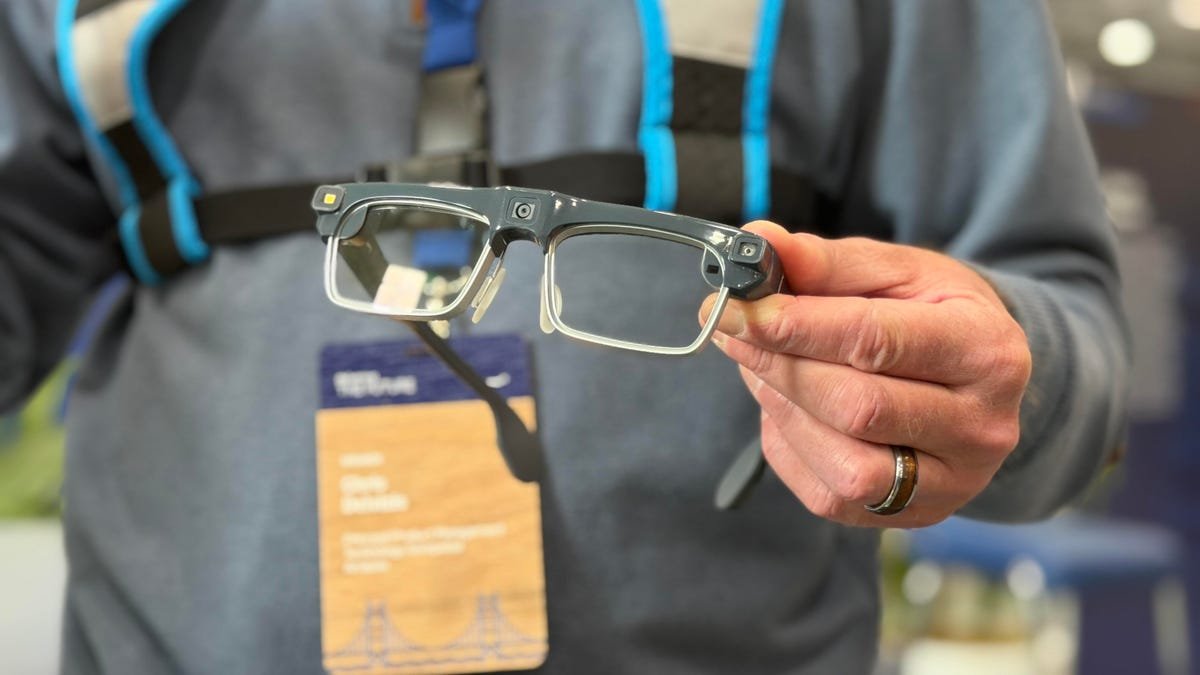
Sabrina Ortiz/ZDNET Follow ZDNET: Add us as a preferred source on Google. ZDNET's key takeaways Amazon is developing smart delivery glasses. They can help identify hazards and make it easier to find packages. Customers' deliveries should also be improved. AI-powered smart glasses are having a moment, with Meta adding several new pairs to its collection in September at Meta Connect and Samsung teasing its upcoming pair a few weeks ago. However, the AI smart glasses on the market have catered toward the general consumer, while the ones Amazon has launched have a different purpose: optimizing deliveries. During its "Delivering the Future" event in San Francisco last month, Amazon unveiled its smart delivery glasses, designed to help delivery associates deliver packages more safely and efficiently, which in turn improves customer delivery experiences. Also: Your Amazon deliveries are getting 3 major upgrades this fall - here's what's new The glasses can scan packages, display turn-by-turn walking directions, and capture an image of the delivery hands-free, helping drivers stay focused and avoid reaching for their phones. Powering it all is AI and machine learning. Amazon The glasses use AI-powered sensing, computer vision, and a camera to create a "heads-up display" that can showcase navigation details, hazards, and delivery tasks, as stated in the release. As seen in the screenshot above, the in-lens display appears to function similarly to the in-lens displays found on the Even Reality smart glasses. Also: Watch out, Meta: Samsung just confirmed its smart glasses plans (with some spicy hints) For example, the glasses automatically populate delivery information, such as address and number of packages, within the driver's field of view as soon as they park safely outside the delivery. The smart glasses also enable them to locate the package in the truck, displaying different alerts when the package is identified. Sabrina Ortiz/ZDNET Lastly, to safely deliver the driver to the destination, it navigates them to the delivery address with turn-by-turn walking navigation powered by Amazon's geospatial technology. If hazards are encountered along the way, the smart glasses will guide the delivery associate accordingly to ensure a safe delivery to their destination. The two cameras located at the front of the glasses also capture a photo of the package delivered to the doorstep, which is typically done using a smartphone. The glasses can accommodate prescriptions as well as light-adjusting lenses. Additionally, the glasses feature a small controller worn in the delivery vest for operational controls, a swappable battery for all-day use, and a dedicated emergency button. Sabrina Ortiz/ZDNET I had the chance to try out the glasses at the event, and the in-lens display shows the text exactly as pictured. Then, with the controller in my pocket, I was able to go from one page to another, shifting from just seeing the address and customer notes to the package verification page and, lastly, the step-by-step navigation. Sabrina Ortiz/ZDNET They also felt comfortable on the bridge of my nose, though I was only wearing them for the duration of the five-minute demo. The weight distribution of the battery pack and controller also felt comfortable, likely because it was resting on the vest, which has pockets positioned perfectly to accommodate long wear. Amazon said in the blog post that the glasses were designed with input from the drivers themselves. Hundreds tested early versions and provided feedback that influenced the design and comfort of the glasses. Also: The massive AWS outage that broke half the internet is finally over - here's what happened I chatted with a DA who uses it to complete deliveries in the SF area. He confirmed that they are comfortable and convenient to use, and the battery pack lasts him all day. In the future, the company anticipates that the glasses will be able to detect real-time mistakes, alerting the driver if they mistakenly drop the package at the wrong house or apartment, send notifications when a pet is in the yard, and perform other functions. The company did not provide an exact timeline for when to expect your driver to arrive at your door wearing the smart glasses, or when the rollout will start. Disclosure: The cost of Sabrina Ortiz's travel to San Francisco, California, for Delivering the Future event was covered by Amazon, a common industry practice for long-distance trips. The judgments and opinions of ZDNET's writers and editors are always independent of the companies we cover.
3D Systems adds new SLA printer, casting tools and materials
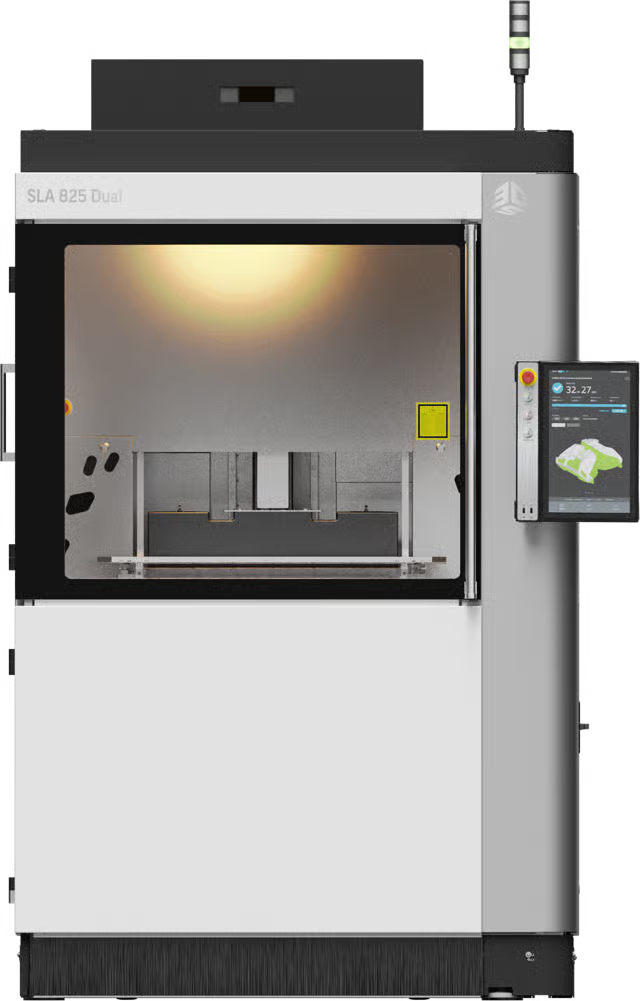
3D Systems announced new additions to its stereolithography (SLA) product lineup that it will present at Formnext 2025. The company introduced the SLA 825 Dual, a high-throughput SLA system with a larger build volume intended for automotive, motorsports, aerospace and service bureau applications. 3D Systems also introduced ArrayCast, a solution for investment casting that removes the need for tooling and allows engineers to create casting patterns without upfront tooling requirements. In addition, the company expanded its SLA materials portfolio with Accura SbF and Accura Xtreme Black to support casting and prototyping applications. 3D Systems’ SLA 825 Dual delivers unmatched surface finish, accuracy, and reliability for high performance industries such as transportation and motorsports, aerospace and defense, and service bureaus. These updates are intended to give customers more options for meeting application requirements and improving development workflows. SLA 825 Dual – The new gold standard in large-frame stereolithography 3D Systems’ new SLA 825 Dual is the Company’s most advanced large-frame SLA printer to date. For customers depending on SLA technology for unmatched surface finish, accuracy, and reliability, the SLA 825 Dual extends that legacy while creating a pathway for continuous performance and throughput improvements. With a new, 20% larger build volume of 830 x 830 x 550 mm, dual-laser architecture, and simplified user workflow, the SLA 825 Dual will continue 3D Systems’ nearly 40-year leadership in high-throughput SLA manufacturing for high performance industries such as transportation and motorsports, and aerospace and defense, as well as service bureaus. The SLA 825 Dual is engineered for long-term value and scalability—designed to be upgradeable for future technology innovations. 3D Systems will present case studies and technology demonstrations in its booth at Formnext. The SLA 825 Dual is available for immediate ordering, with the first shipments planned to begin in December 2025. ArrayCast allows users to effortlessly create customized casting trees, complete with configurable runners, sprues, and end effectors tailored to their workflow. ArrayCast optimizes foundry workflows, improves efficiencies 3D Systems offers a range of tools for investment casting, including 3D printers, software and build styles intended to help make 3D-printed patterns cost-competitive with traditional wax tooling. For more than 25 years, the company’s QuickCast software has been used by foundries to create lightweight casting patterns directly from CAD models, reducing the need for tooling and supporting design flexibility. The company has introduced ArrayCast, a software tool that enables users to create casting trees with configurable runners, sprues and end effectors. The digital workflow is designed to streamline tree assembly and reduce manual steps. Key features include: The ability to assemble casting trees digitally before printing, which can shorten production time compared with manual tree-building processes Reduced manual labor by allowing printing of fully assembled casting trees, limiting the need for hand gluing or wax welding More consistent part production through a digital workflow that reduces variation associated with manual assembly ArrayCast is available as an add-on within the company’s 3D Sprint software, which supports its polymer printing platforms. Accura SbF provides dimensional stability for casting metals Accura SbF has no detectable Antimony, making it the perfect material for printing QuickCast patterns suitable for casting a variety of ferrous and non-ferrous high-performance metals. 3D Systems is introducing another enhancement to its Investment Casting portfolio, Accura SbF. The Company’s latest SLA casting resin has no detectable Antimony, making it the perfect material for printing QuickCast patterns suitable for casting a variety of ferrous and non-ferrous high-performance metals, such as Nickel-based superalloys and Titanium. QuickCastinvestment casting patterns printed with Accura SbF lead to an efficient investment casting workflow with fast print speed, high dimensional stability of the pattern and a high burnout success rate with low residual ash. Accura SbF patterns also have high modulus giving them the ideal rigidity during post processing, pattern assembly and shelling. The stability of both the low viscosity, fast draining liquid resin and cured patterns is a significant benefit to a cost effective, predictable workflow and casting results. Combined with 3D Systems’ advanced SLA printing technology, including the SLA 825 Dual, and the Company’s 3D Sprint software, Accura SbF quickly creates large, light weight, and easy to handle casting patterns through its industry leading and fully documented QuickCast process. Accura SbF is available for immediate ordering. Accura Xtreme Black offers exceptional durability for challenging assemblies such as snap-fit components, rugged enclosures, and consumer electronics. Accura Xtreme Black supports efficient, reliable prototyping At Formnext 2025, 3D Systems is showcasing Accura Xtreme Black, a high-performance prototyping resin engineered for form, fit, and function applications. It offers exceptional durability for challenging assemblies such as snap-fit components, rugged enclosures, and consumer electronics. Combining Accura Xtreme Black with 3D Systems’ SLA technology can serve as a practical alternative to CNC machining of thermoplastics such as ABS. Its deep black color closely replicates the aesthetics of molded production parts, and the low-viscosity formulation enhances build quality and simplifies finishing, while its sharp detail and dimensional accuracy ensure precise results. With tough mechanical properties and resistance to modest temperatures without distortion, Accura Xtreme Black is the ideal multi-functional resin for SLA. Accura Xtreme Black is available for immediate ordering. 3D Systems will feature these products in its booth (Hall 11.1, Booth D11) at Formnext 2025 (Nov. 18-21 in Frankfurt, Germany) as part of its full portfolio of solutions for polymer and metal additive manufacturing. For additional information, visit 3dsystems.com. The post 3D Systems adds new SLA printer, casting tools and materials appeared first on Engineering.com.
BLUETTI just dropped new home backup power stations – and slashed prices up to 65% for Black Friday

Whether you’re prepping for winter power outages, loading up the RV for a long-haul trip, or want clean, reliable power anywhere you go, BLUETTI has a portable power option for every need. And right now, the clean energy experts are offering up to 65% off their most popular products for Black Friday – plus they’ve just dropped two major new releases: the Elite 400 and B500K expansion battery. Here’s a complete guide to what’s new, what’s on sale, and how to pick the model that fits your lifestyle best. There are also some special deals just for Electrek readers, so don’t miss out! more…
Inside the EV battery recall process—the complexity of safety and logistics
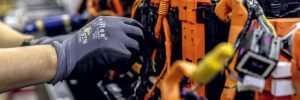
As EV adoption accelerates, so does the frequency of battery recalls—and the operational expertise they require. In recent months, a string of recalls from major automakers has underscored the complexities of EV battery systems. Hyundai recently pulled back a limited number of 2025 IONIQ 5s in the US after identifying a short-circuit risk linked to a faulty battery pack busbar. Ford has expanded its recall of 2022 Mustang Mach-E models with extended-range batteries owing to overheating contactors that could cause a sudden loss of drive power. And BMW has faced back-to-back recalls—one affecting more than 70,000 vehicles over a software issue that could cause the high-voltage system to shut down unexpectedly, and another targeting 136 EVs in the US for incorrectly assembled battery cell modules that could lead to power loss or fire. In some cases, these issues can be remedied with software updates. In others, the battery needs to be removed entirely and replaced. Unlike traditional vehicle recalls, which can often be resolved with a quick part swap, removing and replacing an EV battery can take hours and must be repeated across hundreds or thousands of vehicles—often under tight timelines. For a recent luxury EV model recall of more than 25,000 vehicles, the removal took nine hours per battery. Once consumers are notified, an extensive technical response is mobilized. Teams of technicians, transport specialists and supply chain managers coordinate a complex operation to ensure that every recalled battery is safely handled, shipped, and then repaired, recycled or disposed of under strict protocols. To understand the realities of this process, Charged spoke with Bryce Cornet, Senior Manager of Supply Chain Logistics at EV Battery Solutions by Cox Automotive. We discussed what happens behind the scenes of an EV battery recall, how the process differs from traditional ICE vehicle recalls, and the safety protocols that determine where each battery ends up. Charged: What are the first steps when a battery recall is announced? Bryce Cornet: The first thing that is considered is whether it is a safety recall or a traditional mechanical recall. When batteries have a safety recall applied to them, most of the time an OEM has had discussions with agencies like NHTSA and then released an announcement to customers. Customers get a letter in the mail saying the battery in their vehicle is affected by a safety recall. There could be instructions, depending on how severe the safety situation is, but for the most part it’s to explain to the customer that they need to bring their car in for battery replacement. If the recall is large enough, it may be bucketed based on the criticality of potential failures. The OEM will have data around when the production failure happened. Some batteries may be more critical than others, and they have an idea of which Vehicle Identification Numbers, or VINs, have these batteries in them. That’s something we’re able to help with too, because we have a software system that ties into the vehicle. Often dealers are doing these repairs for the OEM. Is the dealer prepared to take on a large number of recalled repairs? They may go from doing one repair a month to 20 repairs a month. Do they have the space to store battery packs? What are the ergonomics of moving a battery through a dealership network? Do they have the tools? Another question is whether the recall is pack-level or cell-level. Primarily, what we deal with are module- and cell-level recalls. In that case, the whole battery pack is removed from the vehicle and shipped to us, either for module replacements—maybe we can find the critical module and replace it and certify it—or it could be that the full battery pack needs to be re-cycled, in which case we do disassembly operations to make it safe to recycle. On top of disassembly and recycling, there is a storage component to consider. Some of these battery packs may be held for a certain amount of time, but they need to be held safely. Our warehouses at EV Battery Solutions have high-pressure fire suppression systems. We support the dealer in getting batteries away from the dealership as quickly as possible, because they often don’t have a lot of extra storage for battery packs. The important thing is getting the pack and storing it if we have to, or getting it quickly to recycling, to get rid of any type of risk. Charged: How is transportation handled, given the risks of shipping large lithium-ion batteries? Bryce Cornet: EV batteries are packaged more robustly if it is a safety recall. A portion of this is planning, to safely transport a battery from a dealership or from distribution sites. That battery has to move through public ecosystems on trucks. When a safety recall hits, the battery falls under a hazmat regulation in 49 CFR with the Pipeline and Hazardous Materials Safety Administration, PHMSA, which states if the battery is damaged, defective or recalled, it cannot be transported by air or other means. We’re passionate about making recycling as close to a dealership as possible, because you don’t want to transport batteries far that potentially could have safety recalls. Charged: Can you walk us through the logistical process of removing and handling a recalled battery? Bryce Cornet: The process varies based on the OEM, because every OEM has their secret sauce for how the battery fits into the vehicle. The form factor is different. You’re often dealing with high-voltage connections, and it may not be easy to get to them to pull them out. One thing that we often run into, in addition to understanding how difficult it could be for dealers to remove that from the vehicle, is simply when we get it to our sites, there’s another layer of complexity, depending on how the battery shell mounts over the modules. Is it sealed with a glue? Is it bolted down and sealed? We have to account for the time it takes to do the disassembly-to-recycling
Tesla is looking to phase out China-made parts at US factories: report

Tesla has reportedly started directing its suppliers to eliminate China-made components from vehicles built in the United States. This would make Tesla’s US-produced vehicles even more American-made. The update was initially reported by The Wall Street Journal. Accelerating North American sourcing As per the WSJ report, the shift reportedly came amidst escalating tariff uncertainties between Washington and Beijing. Citing people reportedly familiar with the matter, the publication claimed that Tesla has already swapped out several China-made components, aiming to complete the transition within the next two years. The publication also claimed that Tesla has been reducing its reliance on China-based suppliers since the pandemic disrupted supply chains. The company has quietly increased North American sourcing over the past two years as tariff concerns have intensified. If accurate, Tesla would likely end up with vehicles that are even more locally sourced than they are today. It would remain to be seen, however, if a change in suppliers for its US-made vehicles would result in price adjustments for cars like the Model 3 and Model Y. Industry-wide reassessments Tesla is not alone in reevaluating its dependence on China. Auto executives across the automotive industry have been in rapid-response mode amid shifting trade policies, chip supply anxiety, and concerns over rare-earth materials. Fluctuating tariffs between the United States and China during President Donald Trump’s current term have made pricing strategies quite unpredictable as well, as noted in a Reuters report. General Motors this week issued a similar directive to thousands of suppliers, instructing them to remove China-origin components from their supply chains. The same is true for Stellantis, which also announced earlier this year that it was implementing several strategies to avoid tariffs that were placed by the Trump administration. @teslarati Tesla Full Self-Driving v14.1.7 is here and here’s some things it did extremely well! #tesla #teslafsd #fullselfdriving ♬ You Have It – Marscott The post Tesla is looking to phase out China-made parts at US factories: report appeared first on TESLARATI.