Waymo rider data hints that Tesla’s Cybercab strategy might be the smartest, after all

Toyota Connected Europe designer Karim Dia Toubajie has highlighted a particular trend that became evident in Waymo’s Q3 2025 occupancy stats. As it turned out, 90% of the trips taken by the driverless taxis carried two or fewer passengers. These observations all but validate Tesla’s controversial two-seat Cybercab strategy, which has caught a lot of criticism since it was unveiled last year. Toyota designer observes a trend Karim Dia Toubajie, Lead Product Designer (Sustainable Mobility) at Toyota Connected Europe, analyzed Waymo’s latest California Public Utilities Commission filings and posted the results on LinkedIn this week. “90% of robotaxi trips have 2 or less passengers, so why are we using 5-seater vehicles?” Toubajie asked. He continued: “90% of trips have 2 or less people, 75% of trips have 1 or less people.” He accompanied his comments with a graphic showing Waymo’s occupancy rates, which showed 71% of trips having one passenger, 15% of trips having two passengers, 6% of trips having three passengers, 5% of trips having zero passengers, and only 3% of trips having four passengers. The data excludes operational trips like depot runs or charging, though Toubajie pointed out that most of the time, Waymo’s massive self-driving taxis are really just transporting 1 or 2 people, at times even no passengers at all. “This means that most of the time, the vehicle being used significantly outweighs the needs of the trip,” the Toyota designer wrote in his post. Here's confirmation that Tesla making the Cybercab a two-seater was the right call:Waymo Q3 2025 occupancy data shows 90% of Waymo robotaxi trips have 2 or less people. @elonmusk pic.twitter.com/7qlUHbCVUh — Jaan of the EVwire.com (@TheEVuniverse) November 27, 2025 Cybercab suddenly looks perfectly sized Toubajie gave a nod to Tesla’s approach. “The Tesla Cybercab announced in 2024, is a 2-seater robotaxi with a 50kWh battery but I still believe this is on the larger side of what’s required for most trips,” he wrote. With Waymo’s own numbers now proving 90% of demand fits two seats or fewer, the wheel-less, lidar-free Cybercab now looks like the smartest play in the room. The Cybercab is designed to be easy to produce, with CEO Elon Musk commenting that its product line would resemble a consumer electronics factory more than an automotive plant. This means that the Cybercab could saturate the roads quickly once it is deployed. While the Cybercab will likely take the lion’s share of Tesla’s ride-hailing passengers, the Model 3 sedan and Model Y crossover would be perfect for the remaining 9% of riders who require larger vehicles. This should be easy to implement for Tesla, as the Model Y and Model 3 are both mass-market vehicles. The post Waymo rider data hints that Tesla’s Cybercab strategy might be the smartest, after all appeared first on TESLARATI.
Czech Deputy excited for Tesla FSD, hints at Transport Committee review

Martin Kolovratník, a Czech Republic Chamber of Deputies member, has expressed his excitement for Tesla’s Full Self-Driving (FSD) after an apparent constituent called for a quick approval for the advanced safety system. The ANO party lawmaker, who drives both diesel and EV, shared his thoughts about the matter in a post on social media platform X. The official’s initial statements Kolovratník kicked off the exchange with a post outlining his coalition’s efforts to scrap highway toll exemptions for electric vehicles and plug-ins starting in 2027. “Times have changed. Electric vehicles are no longer a fringe technology, but a full-fledged part of operations. And if someone uses the highway network, they should follow the same rules as everyone else. That’s the basis of fairness,” he wrote. He emphasized equity over ideology, noting his personal mix of diesel and electric driving. “For this reason, there is no reason to continue favoring one technology at the expense of another… It’s not about ideology, it’s about equal conditions. That’s why we clearly agreed within the new coalition: the exemption for electric vehicles and plug-ins will end in 2027. The decision is predictable, understandable, and economically sound.” Doba se změnila. Elektromobily už nejsou okrajovou technologií, ale plnohodnotnou součástí provozu. A pokud někdo využívá dálniční síť, má platit stejná pravidla jako ostatní – to je základ férovosti.Z tohoto důvodu není důvod dál zvýhodňovat jednu technologii na úkor druhé. A… pic.twitter.com/rLeIyQXsrC — Martin Kolovratník (@kolovratnikm) November 26, 2025 Vím o tom. Líbí se mi to a přijde mi to zajímavé. Až ustavíme výbory a podvýbory tak to hned otevřeme na tom dopravním. Diky za tip, report dodám — Martin Kolovratník (@kolovratnikm) November 26, 2025 Tesla FSD enthusiasm The conversation pivoted to Tesla’s FSD when X user @robotinreallife, who seems to be one of the official’s constituents, replied that other matters are more important than ending highway exemptions for EVs. “I’m happy to pay for the highway, but I have a question about a much more fundamental matter: The Netherlands will approve the operation of Tesla FSD in February 26, a technology that has been proven to reduce accidents. The Czech Republic has the option to immediately recognize this certification. Do you plan to support this step so that we don’t unnecessarily delay?” the X user asked. Kolovratník responded promptly, sharing his own excitement for the upcoming rollout of FSD. “I know about it. I like it and it seems interesting to me. Once we set up the committees and subcommittees, we’ll open it right away in that transport one. Thanks for the tip, I’ll deliver the report,” the official noted in his reply on X. Kolovratník’s nod to FSD hints at the system’s potentially smooth rollout to Czechia in the coming year. With the Netherlands possibly greenlighting FSD (Supervised) in early 2026, Kolovratník’s commitment could accelerate cross-border certification, boosting FSD’s foray into Europe by a notable margin. The post Czech Deputy excited for Tesla FSD, hints at Transport Committee review appeared first on TESLARATI.
Tesla starts rolling out FSD V14.2.1 to AI4 vehicles including Cybertruck

It appears that the Tesla AI team burned the midnight oil, allowing them to release FSD V14.2.1 on Thanksgiving. The update has been reported by Tesla owners with AI4 vehicles, as well as Cybertruck owners. For the Tesla AI team, at least, it appears that work really does not stop. FSD V14.2.1 Initial posts about FSD V14.2.1 were shared by Tesla owners on social media platform X. As per the Tesla owners, V14.2.1 appears to be a point update that’s designed to polish the features and capacities that have been available in FSD V14. A look at the release notes for FSD V14.2.1, however, shows that an extra line has been added. “Camera visibility can lead to increased attention monitoring sensitivity.” Whether this could lead to more drivers being alerted to pay attention to the roads more remains to be seen. This would likely become evident as soon as the first batch of videos from Tesla owners who received V14.21 start sharing their first drive impressions of the update. Despite the update being released on Thanksgiving, it would not be surprising if first impressions videos of FSD V14.2.1 are shared today, just the same. As I am finishing Thanksgiving Dinner, what drops.. a new version of FSD. v14.2.1 is downloading to my @Cybertuck and 2026 Model Y at the same time. Release notes are attached. I am thankful for the hardworking @Tesla_AI team .. unexpected on a national holiday. Thank you for… pic.twitter.com/hKPnzPyWJj — Chuck Cook (@chazman) November 27, 2025 GOOD NEWS $TSLA FSD V14.2.1 ROLLING OUT NOW This point update is to polish what have been available in 14.2, but also includes this new update:“Camera visibility can lead to increased attention monitoring sensitivity.” Hats off to @Tesla_AI team for working hard on… pic.twitter.com/9JP6Gh4lKv — Ming (@tslaming) November 27, 2025 FSD v14.2.1 navigates a very narrow corner in a parking garage, then pulls up to the ticket machine and exits. pic.twitter.com/ZjmvNbsmSZ — Zack (@BLKMDL3) November 28, 2025 Rapid FSD releases What is rather interesting and impressive is the fact that FSD V14.2.1 was released just about a week after the initial FSD V14.2 update was rolled out. This bodes well for Tesla’s FSD users, especially since CEO Elon Musk has stated in the past that the V14.2 series will be for “widespread use.” FSD V14 has so far received numerous positive reviews from Tesla owners, with numerous drivers noting that the system now drives better than most human drivers because it is cautious, confident, and considerate at the same time. The only question now, really, is if the V14.2 series does make it to the company’s wide FSD fleet, which is still populated by numerous HW3 vehicles. The post Tesla starts rolling out FSD V14.2.1 to AI4 vehicles including Cybertruck appeared first on TESLARATI.
As COP30 closes, climate, conflict and poverty dominate public concern

As COP30 enters its final days in Brazil — the first COP in the Amazon region and marking the 10th anniversary of the Paris Agreement — the world’s attention is on climate action. But public priorities extend beyond climate alone. Trellis data partner GlobeScan’s latest research reveals that climate change, war/conflict and extreme poverty dominate global concerns, ranking highest in both perceived seriousness and importance to address. War and conflict tops the list for seriousness (68 percent), while climate change and extreme poverty are tied for first place in importance (41 percent). These crises are deeply interconnected; climate change drives resource scarcity and displacement, hitting the poorest the hardest and fueling instability. Poverty and inequality create conditions for conflict, while war undermines efforts to build climate resilience and economic security. Other issues, such as corruption, water pollution and hunger also rank high on perceived seriousness but fall behind on importance compared to the top three. This underscores the unique urgency of climate, poverty and conflict as a combined global challenge. What this means As COP30 concludes, expectations for bold climate commitments are high, but progress may be constrained by competing priorities and geopolitical tensions. These interconnected crises make negotiations harder, as countries balance climate ambition with urgent social and security concerns. Public opinion signals that ambition cannot be siloed. Integrated strategies that address climate, poverty and conflict together will be critical to achieving global aspirations moving forward. Based on a survey of more than 31,000 people in more than 30 countries conducted July-August 2025. The post As COP30 closes, climate, conflict and poverty dominate public concern appeared first on Trellis.
3D printing research roundup

Composite SEM image of microDelta robots (IMAGE: Carnegie Mellon University.) Thanksgiving is almost upon us and we all know those topics that will inevitably come up at the dinner table despite ever present reminders to avoid them. But here’s one topic you won’t find on that list: 3D printing. So, when your relatives start expounding on their own pet theories of “What’s Wrong With This Country” or “The Trouble With Kids Today” why not derail them with anecdotes about some of the latest breakthroughs in additive technology? Here’s a few to get you started: Mighty Morphin 3D printed structures! We’ve covered the topic of 4D printing for years here on engineering.com, but the technology still largely confined to the laboratory. However, a team of engineers from the University of Illinois Urbana-Champaign is aiming to change that with a new approach to morphing 3D printed two-dimensional structures into curved 3D structures for space-based applications. “[O]ur collaborators in the Beckman Institute developed a recipe for a pure resin system that’s very energy efficient,” explained Ph.D. student Ivan Wu in a press release. “And we have a 3D printer that can print commercial aerospace-grade composite structures. I think the breakthrough was combining those two things into one.” Wu’s idea is to mold the liquid resin with printed carbon fiber and then freeze it, so that it can be stored safely and efficiently for transport and then later activated via a low-energy heat stimulus that initiates the polymerization process. This process, called frontal polymerization, is intended to eliminate the need for ovens or autoclaves large enough to cure a full-sized satellite dish. “For me, the first challenge was to solve the inverse problem,” Wu said. “You have a design for the 3D shape you want, but what is the 2D pattern to print that results in that shape? I had to write mathematical equations to describe the shapes to print the exact pattern. This study solved that problem.” Wu sourced equations and wrote the code to program the printer to deposit the fiber bundles onto a bed to create five different 3D configurations: a spiral cylinder, a twist, cone, a saddle and a parabolic dish. “Together, they show the diversity of shapes we can make. But I think the one that’s most interesting and applicable is the parabolic dish, which mimics the smooth, curved shape that’s needed for deployable satellites.” Wu’s proposal is to use the activated 3D shapes as molds for in-space manufacturing of high-stiffness structures. His research is supported by the Air Force Research Laboratory and published in the journal Additive Manufacturing. microDeltas of the world, unite! Another well-worn topic on our site, delta robots have been deployed in all manner of picking, packing, and sorting tasks in a variety of manufacturing industries. They’re typically on the order of a few cubic feet in size, but a team of engineers at Carnegie Melon University have managed to 3D print “microDeltas” that make a penny look enormous. Microrobotics at this scale have normally required manual assembly and folding microfabricated components, but the Carnegie Melon engineers have developed a 3D printing process for microrobotics that uses a combination of two-photon polymerization and a thin metal coating to create complex 3D geometries and actuators without any folding or manual assembly. “Eliminating the need for assembly has huge benefits in terms of rapid fabrication and design iteration,” said Sarah Bergbreiter, professor of mechanical engineering at Carnegie Melon, in a press release. “At large scales, researchers can assemble robots from motors and mechanisms that you can buy off-the-shelf. We don’t have that luxury at these small scales where both making and connecting tiny pieces together is hard. That’s where this new fabrication process is incredibly beneficial.” According to Bergbreiter and her students, the 1.4 mm and 0.7 mm microDeltas, are the smallest and fastest Delta robots ever demonstrated. They also claim that shrinking the robot improved precision to less than a micrometer, increased speed by operating at frequencies over 1 kHz, and delivered enough power to launch a grain of salt: a projectile 7.4% the mass of the entire robot. They suggest that densely packed arrays of multiple microDelta robots could enable entirely new robot capabilities at small scales, such as rich haptic feedback or previously infeasible micromanipulation tasks. 3D printed blood vessels while you wait 3D printing organic tissue, aka bioprinting, has been used to duplicate brains, bones, cartilage, and ligaments, sometimes not just replicating but improving on nature’s designs. The latest advancement in this vein (pun unintended but grudgingly preserved) comes from mechanical and biomedical engineers at the University of Sydney. They’ve created anatomically accurate models of both healthy and diseased areas of blood vessels, including their delicate structures and the dents and divots on the damaged lining of the blood vessel walls that are commonly found in stroke patients. The researchers used CT scans of stroke patients as blueprints to create mini models, shrinking the original 5-7mm carotid artery 3D model to 200 to 300 micrometers. They also managed to reduced the time it takes to print the models from 10 hours to two by using glass slides as a base, rather than the conventional resin moulds. Visualizing arterial blood flow. (Image: University of Sydney.) According to the team, this artery on a chip’ method successfully mimicked the physical appearance of blood vessels, and blood flow simulations generated similar fluid dynamics and movement of natural blood flow. During testing, the researchers were able to witness, in real time and under the microscope, blood clot formation and the behaviour of platelets which area crucial component involved in blood clotting that could lead to a stroke. “We’re not just printing blood vessels,” said PhD candidate Charles Zhao, “We’re printing hope for millions at risk of stroke worldwide. With continued support and collaboration, we aim to make personalised vascular medicine accessible to every patient who needs it.” The research is published in the journal Advanced Materials. She’s a quick (3D printed) house Closer to home, researchers
Rad Power expands e-bike Black Friday Sale with more savings + lows from $999, Anker smart security devices 50% off, GE appliance, more

Happy Thanksgiving, everyone! To celebrate the day, we’ve got another jam-packed edition of Green Deals, with plenty more that you can browse in our official Black Friday Green Deals hub here, encompassing all the sales/deals we’ve collected over the last few weeks that are still alive and well. Headlining today’s features is Rad Power’s expanded Black Friday Sale, which is seeing increased prices to new lows, like the RadExpand 5 Plus Folding e-bike at $1,399, among others. From there, we also have a large collection of Anker eufy solar cams, and other smart security devices starting from $50, as well as GE’s Profile Smart Electric Ventless Heat Pump Washer/Dryer Combo at $2,000, the next EcoFlow 48-hour flash sale, Aiper’s robot pool cleaners, smart composters, hydroponic gardens, and so much more waiting for you below. And don’t forget about the hangover deals that are collected together at the bottom of the page (and also in our Green Deals hub), like yesterday’s first post-launch price cuts on the Heybike Mars 3.0 and Ranger 3.0 Pro e-bikes, the Tesla universal EV charger retaining a $50 discount, and more. Head below for other New Green Deals we’ve found today and, of course, Electrek’s best EV buying and leasing deals. Also, check out the new Electrek Tesla Shop for the best deals on Tesla accessories. more…
Coperion and HPB advance scalable continuous processing for solid-state EV batteries

Coperion has announced a collaboration with High Performance Battery (HPB) aimed at enabling industrial-scale production of solid-state batteries. This initiative combines Coperion’s continuous extrusion processing expertise with HPB’s solid-state battery technology. According to HPB, its batteries demonstrate notable improvements over conventional lithium-ion technology in safety, lifespan, and environmental performance, with intellectual property protected in 96 countries and a claimed 50 percent better environmental balance compared to traditional lithium-ion cells. Earlier in 2024, Coperion and HPB conducted joint trials at Coperion’s test facility in Stuttgart, Germany. The focus was on determining whether HPB’s proprietary battery slurry could be processed to target viscosity levels using Coperion’s continuous extrusion systems. The initial phase of testing was successful, with both companies reporting that the process achieved the required viscosity parameters for the battery slurry. “Our primary goal was to validate that our proprietary slurry can be produced reliably and consistently at industrial scale,” said Markus Stichnote, Head of Development at HPB. “The successful trials using Coperion’s state-of-the-art equipment have confirmed that scaling up our technology is both feasible and efficient.” The companies note that with initial viscosity targets met, plans are underway for additional scale-up trials, with the goal of advancing toward full industrial-scale solid-state battery production. Source: High Performance Battery Source: Coperion Topics: High Performance Battery, Coperion, Batteries, Solid-State Batteries, EV Manufacturing
Tesla launches crazy Full Self-Driving free trial: here’s how you can get it

Tesla is launching a crazy Full Self-Driving free trial, which will enable owners who have not purchased the suite outright to try it for 30 days. There are a handful of stipulations that will be needed in order for you to qualify for the free trial, which was announced on Thursday night. Tesla said the trial is for v14, the company’s latest version of the Full Self-Driving suite, and will be available to new and existing Model S, Model 3, Model X, Model Y, and Cybertruck owners, who will have the opportunity to try the latest features, including Speed Profiles, Arrival Options, and other new upgrades. Tesla is launching a free 30-day trial of Full Self-Driving in North America for owners. It includes every model, but you need v14.2 or later, and you cannot have already purchased the suite outright. — TESLARATI (@Teslarati) November 27, 2025 You must own one of the five Tesla models, have Full Self-Driving v14.2 or later, and have an eligible vehicle in the United States, Puerto Rico, Mexico, or Canada. The company said it is a non-transferable trial, which is not redeemable for cash. Tesla is reaching out to owners via email to give them the opportunity to enable the Full Self-Driving trial. Those who are subscribed to the monthly Full Self-Driving program are eligible, so they will essentially get a free month of the suite. Once it is installed, the trial will begin, and the 30-day countdown will begin. Tesla is making a major push to increase its Full Self-Driving take rate, as it revealed that about 12 percent of owners are users of the program during its recent earnings call. Tesla CFO Vaibhav Taneja said during the call: “We feel that as people experience the supervised FSD at scale, demand for our vehicles, like Elon said, would increase significantly. On the FSD adoption front, we’ve continued to see decent progress. However, note that the total paid FSD customer base is still small, around 12% of our current fleet.” Earlier today, we reported on Tesla also launching a small-scale advertising campaign on X for the Full Self-Driving suite, hoping to increase adoption. Tesla Full Self-Driving warrants huge switch-up on essential company strategy It appears most people are pretty content with the subscription program. It costs just $99 a month, in comparison to the $8,000 fee it is for the outright purchase. The post Tesla launches crazy Full Self-Driving free trial: here’s how you can get it appeared first on TESLARATI.
Tesla Model Y Standard: first impressions from a Premium owner

Tesla was nice enough to hook us up with the new Model Y “Standard” trim for a few days, and while we’ll be sure to fill you in on the full experience in the coming days, there are a lot of differences we noticed right off the bat, which make the ownership experience different from the “Premium” configuration level. I purchased a Model Y Long Range All-Wheel-Drive back in August and took delivery just two weeks later. Through the first three months of owning my car, I’ve come to love so many things about the Tesla experience. I traded my ICE vehicle for a Tesla Model Y: here’s how it went However, I was interested in experiencing the affordable trim and seeing whether I would miss any of the voided features of the “Premium” Model Y. Through the first 24 hours, here are my first impressions of the Model Y Standard as a Premium trim level owner: Overall Aesthetic The lack of a light bar is not something that is a dealbreaker. In fact, I would argue that the Model Y Standard’s more traditional headlight design is just as pleasing from an aesthetic standpoint. The car is great looking from top to bottom; there are not a substantial number of differences besides the lack of a lightbar on both the front and the back of the car. Overall, it is a very sleek vehicle, but the major changes are obviously with the interior. Interior Changes This is where the big differences are, and some of the things I’ve gotten used to in the Premium are not included. If I didn’t have a Premium Model Y already, I’m not sure I’d miss some of the things that are not present in the Standard trim, but I believe I’d get annoyed with it. First impressions: Interior is excellent. I definitely miss the additional storage already that is available in my Premium. I could definitely get over it though Noticeable step down in sound system. Long Time by Boston absolutely cranks in the Premium; it’s still very… — TESLARATI (@Teslarati) November 25, 2025 Storage The Premium has a large storage compartment between the cupholders and the wireless charger, which is not present in the Standard trim. Instead, it is more like the Cybertruck, as there is a pass-through and floor storage. I think that the pass-through is nice, but the additional storage is something I take advantage of, especially as someone who films Full Self-Driving videos, which requires hauling mounts, GoPros, and other accessories. The sleekness of the Premium trim is also something I prefer; I really enjoy having the ability to close those compartments and cover the cupholders. Obviously, this is a really trivial issue and not something that is substantially impactful from an ownership experience. If I weren’t already an owner, I am not sure I’d even have something to complain about. Material Differences The Premium trim seats are completely Vegan Leather, which I really do like, even as someone who doesn’t really love leather seats due to their temperature dependency. The Standard trim features a Textile and Vegan hybrid, which has half of the seat a different material than the other. The material is very similar to what I had in my previous car, a Bronco Sport. It was very durable, easy to clean, dried quickly, and hid a lot of things that leather does not, like oils from your skin, which constantly require attention to keep your interior looking fresh. The wireless charger is also a different material, as the Premium features an Alcantara material on that. The Standard has a rubberized and textured backing, which looks good, too. They’re both more than suitable. Other Missing Features The Standard lacks a few minor things, most noticeably is the ambient lighting. The biggest change, however, and something I really miss, is the glass roof. A lot of people told me that when I got my Model Y, I wouldn’t even notice the glass roof after a few weeks. That could not be further from the truth. I look out of it all the time, and it’s one of my family’s favorite parts of the car. My Fiancè and I really love parking and watching Netflix when we pick food up, especially when it’s raining, because the glass roof gives such a great view. We also loved it as Fall arrived, because it was great to look at the foliage. Buy the Tesla. Enjoy the glass roof. pic.twitter.com/r2GDyOEEWu — TESLARATI (@Teslarati) October 28, 2025 Bigger Differences There are also a handful of very noticeable differences from the overall cabin experience, especially with the sound system. Much Weaker Sound System The Model Y Standard has just 7 speakers and 1 amp, with no subwoofer. This is a significant step down from the 13-15 speakers in the Premium Long Range AWD Model Y, the 2 amps it comes with, and 1 subwoofer in the trunk. I usually like to listen to Long Time by Boston to test out a sound system, and it was noticeably weaker in the Standard. It was missing a big portion of the umph that is provided by the Premium’s sound system. Cabin Noise It feels like the Cabin Noise is definitely more noticeable in the Standard, which is something I really love about my Model Y. It is able to dampen so much road noise from louder cars, and I don’t feel as if it is very quiet in the Standard. This is perhaps the biggest make-or-break for me with this car. I truly have been spoiled by how quiet the cabin is in the Premium, and it’s due to the lack of acoustic-lined glass in the Standard. I will be doing a more in-depth review of the Model Y Standard, especially with ride quality, later this week. The post Tesla Model Y Standard: first impressions from a Premium owner appeared first on TESLARATI.
Western Australia seeks local vanadium for 500MWh flow battery- Energy-Storage.News

Western Australia seeks local vanadium for 500MWh flow battery- Energy-Storage.News Skip to content
Tesla Full Self-Driving warrants huge switch-up on essential company strategy

Tesla was nice enough to hook us up with the new Model Y “Standard” trim for a few days, and while we’ll be sure to fill you in on the full experience in the coming days, there are a lot of differences we noticed right off the bat, which make the ownership experience different from the “Premium” configuration level. I purchased a Model Y Long Range All-Wheel-Drive back in August and took delivery just two weeks later. Through the first three months of owning my car, I’ve come to love so many things about the Tesla experience. I traded my ICE vehicle for a Tesla Model Y: here’s how it went However, I was interested in experiencing the affordable trim and seeing whether I would miss any of the voided features of the “Premium” Model Y. Through the first 24 hours, here are my first impressions of the Model Y Standard as a Premium trim level owner: Overall Aesthetic The lack of a light bar is not something that is a dealbreaker. In fact, I would argue that the Model Y Standard’s more traditional headlight design is just as pleasing from an aesthetic standpoint. The car is great looking from top to bottom; there are not a substantial number of differences besides the lack of a lightbar on both the front and the back of the car. Overall, it is a very sleek vehicle, but the major changes are obviously with the interior. Interior Changes This is where the big differences are, and some of the things I’ve gotten used to in the Premium are not included. If I didn’t have a Premium Model Y already, I’m not sure I’d miss some of the things that are not present in the Standard trim, but I believe I’d get annoyed with it. First impressions: Interior is excellent. I definitely miss the additional storage already that is available in my Premium. I could definitely get over it though Noticeable step down in sound system. Long Time by Boston absolutely cranks in the Premium; it’s still very… — TESLARATI (@Teslarati) November 25, 2025 Storage The Premium has a large storage compartment between the cupholders and the wireless charger, which is not present in the Standard trim. Instead, it is more like the Cybertruck, as there is a pass-through and floor storage. I think that the pass-through is nice, but the additional storage is something I take advantage of, especially as someone who films Full Self-Driving videos, which requires hauling mounts, GoPros, and other accessories. The sleekness of the Premium trim is also something I prefer; I really enjoy having the ability to close those compartments and cover the cupholders. Obviously, this is a really trivial issue and not something that is substantially impactful from an ownership experience. If I weren’t already an owner, I am not sure I’d even have something to complain about. Material Differences The Premium trim seats are completely Vegan Leather, which I really do like, even as someone who doesn’t really love leather seats due to their temperature dependency. The Standard trim features a Textile and Vegan hybrid, which has half of the seat a different material than the other. The material is very similar to what I had in my previous car, a Bronco Sport. It was very durable, easy to clean, dried quickly, and hid a lot of things that leather does not, like oils from your skin, which constantly require attention to keep your interior looking fresh. The wireless charger is also a different material, as the Premium features an Alcantara material on that. The Standard has a rubberized and textured backing, which looks good, too. They’re both more than suitable. Other Missing Features The Standard lacks a few minor things, most noticeably is the ambient lighting. The biggest change, however, and something I really miss, is the glass roof. A lot of people told me that when I got my Model Y, I wouldn’t even notice the glass roof after a few weeks. That could not be further from the truth. I look out of it all the time, and it’s one of my family’s favorite parts of the car. My Fiancè and I really love parking and watching Netflix when we pick food up, especially when it’s raining, because the glass roof gives such a great view. We also loved it as Fall arrived, because it was great to look at the foliage. Buy the Tesla. Enjoy the glass roof. pic.twitter.com/r2GDyOEEWu — TESLARATI (@Teslarati) October 28, 2025 Bigger Differences There are also a handful of very noticeable differences from the overall cabin experience, especially with the sound system. Much Weaker Sound System The Model Y Standard has just 7 speakers and 1 amp, with no subwoofer. This is a significant step down from the 13-15 speakers in the Premium Long Range AWD Model Y, the 2 amps it comes with, and 1 subwoofer in the trunk. I usually like to listen to Long Time by Boston to test out a sound system, and it was noticeably weaker in the Standard. It was missing a big portion of the umph that is provided by the Premium’s sound system. Cabin Noise It feels like the Cabin Noise is definitely more noticeable in the Standard, which is something I really love about my Model Y. It is able to dampen so much road noise from louder cars, and I don’t feel as if it is very quiet in the Standard. This is perhaps the biggest make-or-break for me with this car. I truly have been spoiled by how quiet the cabin is in the Premium, and it’s due to the lack of acoustic-lined glass in the Standard. I will be doing a more in-depth review of the Model Y Standard, especially with ride quality, later this week.
Goal Zero Yeti Pro 4000 — CleanTechnica Tested

Support CleanTechnica's work through a Substack subscription or on Stripe. Goal Zero has been working to establish itself as the portable power solution for outdoor enthusiasts for years now. You can find them on the shelves of REI and many similar outdoor equipment stores as part of that push. Most of their solutions are extremely portable and lightweight, pairing a compact portable battery with a portable, folding solar panel. In recent years, Goal Zero has moved into larger portable power stations, and now with the Yeti Pro 4000, they are hoping to find a permanent place in your home. The Goal Zero Yeti Pro 4000 is the size of a typical ice chest. Image credit: Kyle Field, CleanTechnica Disclaimer: Goal Zero sent the Yeti Pro 4000 to the author for the purposes of this review. The Goal Zero Yeti Pro 4000 is a 4 kWh portable power station that pushes the boundaries of the term portable. It tips the scales at over 100 lb and comes with a detachable wheeled trolley that makes this otherwise unmanageable battery pack somewhat more portable. The trolley comes with an extendable luggage style handle that is clearly strained under the load of the battery. It was designed to be portable by definition, but it’s primary design objective was clearly to be installed semi-permanently in your home as a backup power solution. In this configuration, the trolley would be removed and additional battery packs would be mounted below the Yeti Pro 4000 in a tower configuration. Expansion batteries can be connected to the Goal Zero Yeti Pro 4000 and wired directly into your home’s electrical system. Image courtesy: Goal Zero When it’s set up this way, it can be wired directly into your home’s electrical system with Goal Zero’s Home Integration Kit. It’s a neat solution because you can wire it into your home, letting you tap into all of its stored capacity to provide backup power to your home. If you’re looking for a bit more adventure in your life, you can simply remove the Goal Zero Yeti Pro 4000 from the battery stack and install it in your vehicle, RV, or trailer, taking your portable power solution with you. You can even purchase a remote screen that lets you control the unit from up front even if you install the battery at the rear of the vehicle. They also make a separate kit for use in a vehicle which they call the Yeti Pro 4000 Escape Driveable, which includes the screen and wiring with the battery. The remote screen for the Yeti Pro 4000 gives you full control of the battery, remotely. Image courtesy: Goal Zero This ability to serve double duty at home and on the road will surely make it easier for homeowners to justify the purchase. Similarly, you could purchase the Yeti Pro 4000 and add additional battery modules later if you find that they would be helpful or you find them on sale. What it lacks in portability it makes up for in its rugged build quality and expansion capabilities. You can add up to four of Goal Zero’s 5 kW expansion packs for a total of 24 kWh of storage capacity. It can also be wired directly into a subpanel to provide backup power to specific circuits in the home in the event of a power outage. That makes it capable of replacing stationary energy storage units in the home. Charging the Yeti Pro 4000 When it comes to charging the Yeti Pro 4000, it can gulp up 1,800 watts of power from a standard AC outlet. That’s effectively the max power you can get from US outlets, so there’s not much hope of going higher in any unit regardless of the technology. Image courtesy: Kyle Field, CleanTechnica If you’re looking for more sustainable feedstock, the Yeti Pro 4000 can accept up to 3,000 watts of solar. That alone makes it a solid contender as the primary energy storage system for an off grid cabin. It can also be recharged using a standard 12v DC automotive adapter, or even directly wired into a combustion vehicle’s alternator for more power. Using the Yeti Pro 4000 The Goal Zero Yeti Pro 4000 can push out 3,600 watts of continuous power with a surge capability of up to 7,200 watts. That means you can run just about everything in your house off of it except for maybe your electric car charger, your air conditioner, and your electric stove. We tested it with everything from an electric cooktop, to a high power blender, to an electric convection oven and it powered them all independently without blinking. It’s rated for the power and in our testing, it lived up to the claims. Image courtesy: Goal Zero Because of its LFP chemistry, the Yeti Pro 4000 is rated to support 4,000 charge cycles. That’s the equivalent of charging and discharging it every single day for more than 11 years. Suffice it to say that the Yeti Pro 4000 was designed with longevity in mind. Overall The Goal Zero Yeti Pro 4000 is an impressively capable unit. I consider it to be a semi-portable unit mainly due to its hefty 116 pound weight. It was designed to be able to be used as a portable power station when you need it to be but to also be semi-permanently installed in your home for the majority of its life. From the customer reviews on its own site, the Goal Zero Yeti Pro 4000 was clearly plagued with early issues. Though, those largely seem to have been sorted out in the newer reviews. In our testing, we didn’t encounter any of the software issues encountered by many reviewers, but this should definitely be taken into consideration before buying. We ran several appliances off of the Goal Zero Yeti Pro 4000 for several days continuously and it was flawless, but your mileage may vary. The expandable luggage-style handle makes it easier to move around. Though, it does
'Rapid growth but disorderly competiton': Longi enters energy storage industry with PotisEdge deal

PotisEdge president: Combination will offer opportunities Speaking to Energy-Storage.news at an event in London marking the deal, PotisEdge founder and president Minjie Shi said: “Longi will bring the strong brand name and a big market to PotisEdge, and the combination of the two companies offers big opportunities to the market.” “We are a technology company that designs and manufactures all the key components with the exception of the battery cells. We’re highly integrated, and that’s allowed us to gain a good reputation and solve market challenges,” Shi said. “Battery cell manufacturing and system integration are totally different. Battery cells are a chemistry process, system integration is about controls, software, hardware and intelligent systems.” Core technology offering The firm’s offering is built around the five ‘S’s: BMS (battery management system), EMS (energy management system), PCS (power conversion system), TMS (thermal management system) and its proprietary ICCS (intelligent cell contact system) technology for predicting thermal runaway. In September, the firm launched a 6.25MWh AC BESS product with string inverters and its ICCS technology for fire safety. The tech is designed for monitoring and protection of battery cells, to prevent thermal runaway and ensure safe operation of the system. It provides early warnings, predictions and an immediate response to potential cell malfunctions. Before the AC launch, its grid-scale products were DC products. “Amongst the 12GWh of deployments, that has mainly been DC products, especially the 5MWh unit. Now we are shipping the all-in-one AC solution,” Shi said, adding that all regions are showing demand for both DC and AC products. He added that the PotisEdge brand would remain for the foreseeable future, as it had over a decade of experience in the BESS industry with 12GWh deployed. It has mainly been active in the grid-scale segment, with deployments to date primarily in China, but also in North America, Europe and Australia. Markets “Europe is an important market for us, we’ve already delivered for a few sites here like Italy,” he said. It has 31GWh manufacturing capacity from its facility in Suzhou, China, and a 4-6GWh one in Atlanta, Georgia, US, set to start manufacturing next year. The Atlanta facility will produce the same products as its Suzhou facility, but will be more automated, with only 100 employees needed, Shi said. “For the US market, the main thing is to localise production, and we’ve focused on solving this for the last two years. All companies are facing that same challenge.” PotisEdge is also working on a modular BESS solution, as many other system integrators and BESS manufacturers have done in response to transportation issues with ever more energy-dense and heavy 20-foot containers. As part of its expansion into storage with PotisEdge, Longi will establish a Solar-Storage Technology Innovation Center Center of Excellence in Europe, it said. Chinese solar PV companies have steadily moved into energy storage, seeking to capitalise on its growth opportunities but also to offset falling profits in their core market as the sector suffers from over-supply. See all coverage of Longi by our sister site PV Tech here. PotisEdge president Minjie Shi and Energy-Storage.news reporter Cameron Murray.
Elon Musk proposes Grok 5 vs world's best League of Legends team match

Elon Musk has proposed a high-profile gaming challenge for xAI’s upcoming Grok 5. As per Musk, it would be interesting to see if the large language model could beat the world’ best human League of Legends team with specific constraints. Musk’s proposal has received positive reception from professional players and Riot Games alike, suggesting that the exciting exhibition match might indeed happen. Musk outlines restrictions for Grok In his post on X, Musk detailed constraints to keep the match competitive, including limiting Grok to human-level reaction times, human-speed clicking, and viewing the game only through a camera feed with standard 20/20 vision. The idea quickly circulated across the esports community, drawing commentary from former pros and AI researchers, as noted in a Dexerto report. Former League pro Eugene “Pobelter” Park expressed enthusiasm, offering to help Musk’s team and noting the unique comparison to past AI-versus-human breakthroughs, such as OpenAI’s Dota 2 bots. AI researcher Oriol Vinyals, who previously reached Grandmaster rank in StarCraft, suggested testing Grok in RTS gameplay as well. Musk welcomed the idea, even responding positively to Vinyals’ comment that it would be nice to see Optimus operate the mouse and keyboard. Let’s see if @Grok 5 can beat the best human team @LeagueOfLegends in 2026 with these important constraints: 1. Can only look at the monitor with a camera, seeing no more than what a person with 20/20 vision would see. 2. Reaction latency and click rate no faster than human.…— Elon Musk (@elonmusk) November 25, 2025 would love to help and offer insight as a former league pro, I thought AI vs dota2 was really interesting and always wanted to see it vs League @xAI— Eugene Park (@Pobelter) November 25, 2025 Pros debate Grok’s chances, T1 and Riot show interest Reactions weren’t universally optimistic. Former professional mid-laner Joedat “Voyboy” Esfahani argued that even with Grok’s rapid learning capabilities, League of Legends requires deep synergy, game-state interpretation, and team coordination that may be difficult for AI to master at top competitive levels. Yiliang “Doublelift” Peng was similarly skeptical, publicly stating he doubted Grok could beat T1, or even himself, and jokingly promised to shave his head if Grok managed to win. T1, however, embraced the proposal, responding with a GIF of Faker and the message “We are ready,” signaling their willingness to participate. Riot Games itself also reacted, with co-founder Marc Merrill replying to Musk with “let’s discuss.” Needless to say, it appears that Riot Games in onboard with the idea. Though no match has been confirmed, interest from players, teams, and Riot suggests the concept could materialize into a landmark AI-versus-human matchup, potentially becoming one of the most viewed League of Legends events in history. The fact that Grok 5 will be constrained to human limits would definitely add an interesting dimension to the matchup, as it could truly demonstrate how human-like the large language model could be like in real-time scenarios. Tesla has passed a key milestone, and it was one that CEO Elon Musk initially mentioned more than nine years ago when he published Master Plan, Part Deux. As per Tesla China in a post on its official Weibo account, the company’s Autopilot system has accumulated over 10 billion kilometers of real-world driving experience. Tesla China’s subtle, but huge announcement In its Weibo post, Tesla China announced that the company’s Autopilot system has accumulated 10 billion kilometers of driving experience. “In this respect, Tesla vehicles equipped with Autopilot technology can be considered to have the world’s most experienced and seasoned driver.” Tesla AI’s handle on Weibo also highlighted a key advantage of the company’s self-driving system. “It will never drive under the influence of alcohol, be distracted, or be fatigued,” the team wrote. “We believe that advancements in Autopilot technology will save more lives.” Tesla China did not clarify exactly what it meant by “Autopilot” in its Weibo post, though the company’s intense focus on FSD over the past years suggests that the term includes miles that were driven by FSD (Beta) and Full Self-Driving (Supervised). Either way, 10 billion cumulative miles of real-world data is something that few, if any, competitors could compete with. Advertisement –> Credit: Tesla China/Weibo Elon Musk’s 10-billion-km estimate, way back in 2016 When Elon Musk published Master Plan Part Deux, he outlined his vision for the company’s autonomous driving system. At the time, Autopilot was still very new, though Musk was already envisioning how the system could get regulatory approval worldwide. He estimated that worldwide regulatory approval will probably require around 10 billion miles of real-world driving data, which was an impossible-sounding amount at the time. “Even once the software is highly refined and far better than the average human driver, there will still be a significant time gap, varying widely by jurisdiction, before true self-driving is approved by regulators. We expect that worldwide regulatory approval will require something on the order of 6 billion miles (10 billion km). Current fleet learning is happening at just over 3 million miles (5 million km) per day,” Musk wrote. It’s quite interesting but Tesla is indeed getting regulatory approval for FSD (Supervised) at a steady pace today, at a time when 10 billion miles of data has been achieved. The system has been active in the United States and has since been rolled out to other countries such as Australia, New Zealand, China, and, more recently, South Korea. Expectations are high that Tesla could secure FSD approval in Europe sometime next year as well.
Hawaii’s LNG Detour: Why A Fossil Bridge Arriving In The 2030s Makes No Sense
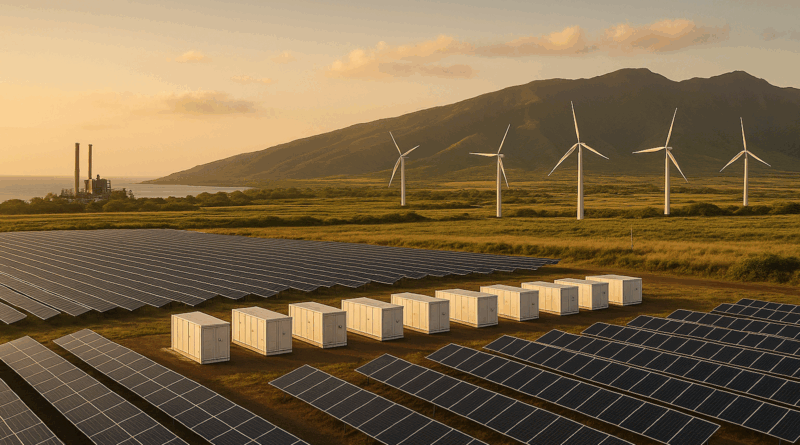
Support CleanTechnica's work through a Substack subscription or on Stripe. Hawaii is re-evaluating its electricity system again and LNG is back on the table as a proposed bridge between oil dependence and a renewable future. The idea is simple at first glance. Hawaii burns more oil for electricity than any other state and Oahu still relies on oil for most of its generation. LNG is cleaner than residual fuel oil at the smokestack and often cheaper per kWh after modern gas turbines extract more energy from the same heat. The argument is that a temporary shift to LNG creates breathing room while the islands continue to build wind, solar, and batteries. The appeal is easy to understand. A familiar thermal solution promises reliability and a measurable reduction in local air pollution. The problem is that the framing leaves out the full system picture and the lifecycle emissions I have been assessing for LNG supply chains for years. Hawaii’s current electricity landscape makes the pressure to choose something immediate understandable. Most of Oahu’s electricity still comes from low sulfur fuel oil and diesel. Statewide consumption sits around 10 TWh a year, with Oahu dominating demand. Maui and Hawaii Island have higher renewable shares, but they also have lower total loads. Power prices remain the highest in the United States. Solar on rooftops is significant and increasingly central to daytime demand, but there is still a large thermal backbone under those panels. When the last coal plant closed, the gap was filled entirely with oil generation. The state’s legal requirement for 100% renewable electricity by 2045 means every new fossil asset must retire early or convert to something cleaner before it has delivered a full economic life. Proponents of LNG tend to argue that oil dependence is too expensive, too polluting, and too volatile to maintain. They worry that relying heavily on solar and batteries before the system is fully reshaped risks reliability issues. They point out that residual fuel oil produces sulfur dioxide, particulates and heavy metals at levels that matter for public health. They argue that oil-fired generation is inflexible and that LNG in combined cycle turbines could reduce emissions while keeping firm capacity online. There is truth in all of this. Residual fuel oil is a dirty and expensive fuel. Meeting peak demand with existing oil plants is difficult. The utility does need dispatchable capacity to cover evening ramps and contingencies. These concerns justify a careful assessment of LNG, not a dismissal. The infrastructure required for LNG in Hawaii is significant. The concept usually centers on a floating storage and regasification unit moored off Oahu, a set of pipelines to shore, and a new gas plant near the old Barbers Point coal site. Existing oil plants would be converted to dual fuel. The total capital cost of all associated facilities is often estimated at more than $1 billion. LNG creates new fixed charges that ratepayers fund regardless of how much the resource is used. Any LNG system built in the 2020s must recover its costs before 2045 or find a way to run on low carbon fuels that are still expensive and scarce. LNG promises lower fuel costs, but comes packaged with new debt and a new fossil interface that competes directly with renewables for dispatch. Lifecycle greenhouse gas emissions are central to this debate. I have assessed LNG production and export chains in the United States for several years. The picture is rarely what the glossy brochures present. Methane leakage from upstream fields, gathering systems, compressors, and pipelines changes the climate math. Liquefaction requires large amounts of electricity and natural gas. Shipping LNG 3,000 miles across oceans is energy intensive. Regasification adds more losses. Combustion at the plant ends the chain, but everything before the plant stacks up behind the CO₂ coming out of the stack. For US LNG export facilities feeding Asian or Pacific markets, the full lifecycle emissions often reach levels close to heavy fuel oil when methane leakage is high. In the best cases, lifecycle LNG is cleaner than oil, but the difference is narrower than many assume when upstream emissions come from basins with known leakage problems. Hawaii’s potential LNG sources would include British Columbia and the US mainland. BC’s upstream methane performance is better than some US basins, but the liquefaction plants there still impose an energy penalty that shows up in lifecycle emissions. With US LNG exports, the upstream methane issue is likely larger. Data from independent satellite surveys and academic work on the Permian and other basins demonstrates that leakage is not well controlled. When methane leaks, the climate impact grows fast. LNG might deliver a 20% to 40% lifecycle reduction compared to residual fuel oil in a best case supply chain. It might deliver much less in a realistic case. The gap depends on upstream practice and not on anything Hawaii controls. Local air pollution is one area where LNG delivers clear and measurable improvements. Residual fuel oil produces sulfur dioxide at levels that no modern grid should accept. It also produces particulates and metals that create real health impacts. Natural gas contains very little sulfur and burns more completely. Switching a significant share of Oahu’s generation from oil to gas would cut sulfur dioxide by orders of magnitude. It would reduce particulates and eliminate heavy metal pollution related to fuel chemistry. The health benefit is real. The same benefit also appears when oil generation is displaced by wind, solar, and battery storage, because clean generation does not produce any stack emissions at all. The local pollution case for LNG is about replacing an old fossil fuel with a cleaner one. The renewable case is about replacing combustion entirely. Nitrogen oxides from gas plants deserve as much attention as the more visible sulfur and particulate emissions from oil. Gas combustion produces NOx through high temperature reactions in the turbine, and while levels are far lower than those from oil or diesel units, they are not zero. NOx is a
Vistra cancels 600MW BESS 150 miles from Moss Landing- Energy-Storage.News
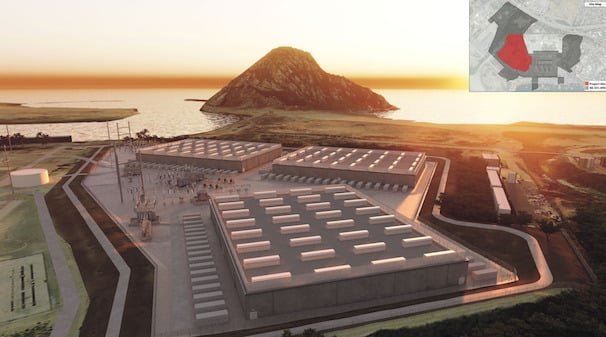
Vistra cancels 600MW BESS 150 miles from Moss Landing- Energy-Storage.News Skip to content
SpaceX maintains unbelievable Starship target despite Booster 18 incident
Tesla CEO Elon Musk revealed today on the social media platform X that legacy automakers, such as Ford, General Motors, and Stellantis, do not want to license the company’s Full Self-Driving suite, at least not without a long list of their own terms. “I’ve tried to warn them and even offered to license Tesla FSD, but they don’t want it! Crazy,” Musk said on X. “When legacy auto does occasionally reach out, they tepidly discuss implementing FSD for a tiny program in 5 years with unworkable requirements for Tesla, so pointless.” I’ve tried to warn them and even offered to license Tesla FSD, but they don’t want it! Crazy … When legacy auto does occasionally reach out, they tepidly discuss implementing FSD for a tiny program in 5 years with unworkable requirements for Tesla, so pointless. — Elon Musk (@elonmusk) November 24, 2025 Musk made the remark in response to a note we wrote about earlier today from Melius Research, in which analyst Rob Wertheimer said, “Our point is not that Tesla is at risk, it’s that everybody else is,” in terms of autonomy and self-driving development. Wertheimer believes there are hundreds of billions of dollars in value headed toward Tesla’s way because of its prowess with FSD. A few years ago, Musk first remarked that Tesla was in early talks with one legacy automaker regarding licensing Full Self-Driving for its vehicles. Tesla never confirmed which company it was, but given Musk’s ongoing talks with Ford CEO Jim Farley at the time, it seemed the Detroit-based automaker was the likely suspect. Tesla’s Elon Musk reiterates FSD licensing offer for other automakers Ford has been perhaps the most aggressive legacy automaker in terms of its EV efforts, but it recently scaled back its electric offensive due to profitability issues and weak demand. It simply was not making enough vehicles, nor selling the volume needed to turn a profit. Musk truly believes that many of the companies that turn their backs on FSD now will suffer in the future, especially considering the increased chance it could be a parallel to what has happened with EV efforts for many of these companies. Unfortunately, they got started too late and are now playing catch-up with Tesla, XPeng, BYD, and the other dominating forces in EVs across the globe.
Australia’s Waratah Super Battery enters planned shutdown
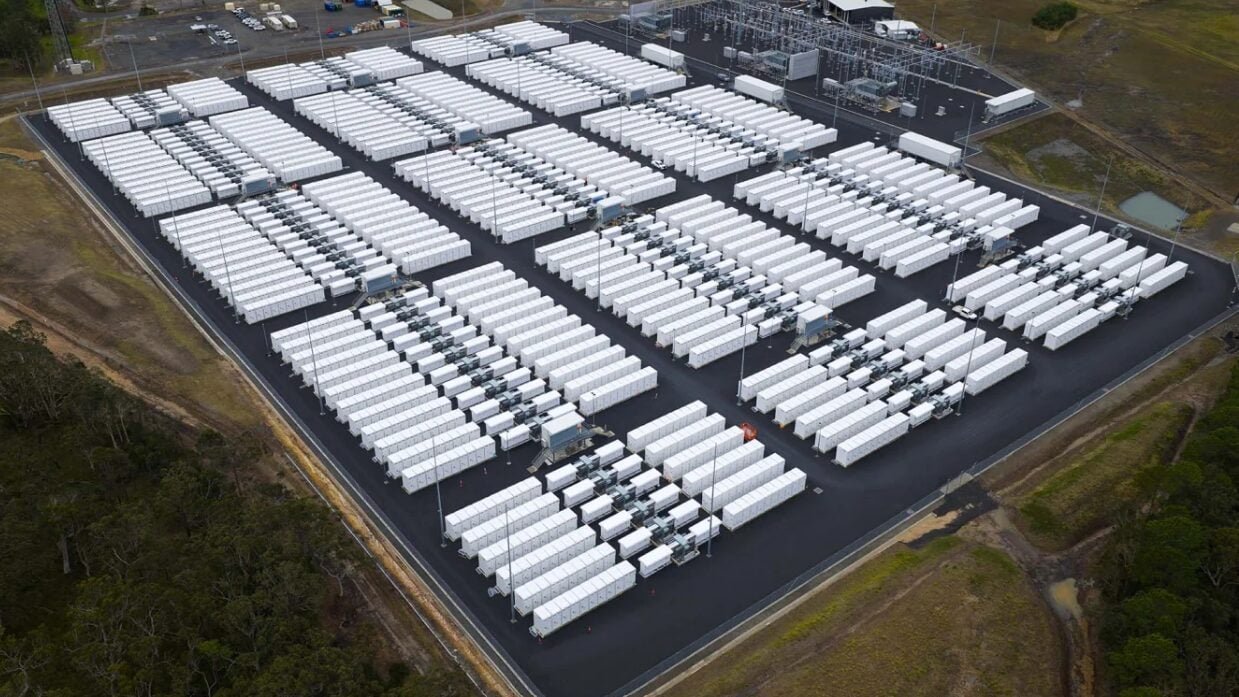
Australia’s Waratah Super Battery enters planned shutdown - Energy-Storage.News Skip to content