Tesla’s six-seat extended wheelbase Model Y L sold out for January 2026

The Tesla Model Y L seems to be in high demand in China, with estimated delivery dates for new orders now extending all the way into February 2026. This suggests that the Model Y L has been officially sold out from the rest of 2025 to January 2026. Model Y L estimated delivery dates The Model Y L’s updated delivery dates mark an extension from the vehicle’s previous 4-8 week estimated wait time. A detailed chart shared by Tesla data tracker @Tslachan on X shows the progressions of the Model Y L’s estimated delivery dates since its launch earlier this year. Following its launch in September, the vehicle was given an initial October 2025 estimated delivery date. The wait times for the vehicle were continually updated over the years, until the middle of November, when the Model Y L had an estimated delivery date of 4-8 weeks. This remained until now, when Tesla China simply listed February 2026 as the estimated delivery date for new Model Y L orders. $TSLA Tesla China's Model YL estimated delivery date has been extended to February 2026.(From: 4~8w) pic.twitter.com/ij87Icot4M — Tsla Chan (@Tslachan) December 4, 2025 Model Y demand in China Tesla Model Y demand in China seems to be very healthy, even beyond the Model Y L. New delivery dates show the company has already sold out its allocation of the all-electric crossover for 2025. The Model Y has been the most popular vehicle in the world in both of the last two years, outpacing incredibly popular vehicles like the Toyota RAV4. In China, the EV market is substantially more saturated, with more competitors than in any other market. Tesla has been particularly kind to the Chinese market, as it has launched trim levels for the Model Y in the country that are not available anywhere else, such as the Model Y L. Demand has been strong for the Model Y in China, with the vehicle ranking among the country’s top 5 New Energy Vehicles. Interestingly enough, vehicles that beat the Model Y in volume like the BYD Seagull are notably more affordable. Compared to vehicles that are comparably priced, the Model Y remains a strong seller in China. The post Tesla’s six-seat extended wheelbase Model Y L sold out for January 2026 appeared first on TESLARATI.
Tesla reliability rankings skyrocket significantly in latest assessment

Tesla ranked in the Top 10 of the most reliable car companies for 2026, as Consumer Reports’ latest index showed significant jumps from the past two years. In 2022, Tesla ranked 27th out of 28 brands. Last year, it came in 17th. Tesla entered the Top 10 in Consumer Reports’ list of reliable carmakers for the first time In the past two years, Tesla has ranked 17th in 2024 and 27th out of 28 brands in 2022. Subaru, BMW, Porsche, Honda, and Toyota were the Top 5 OEMs in the rankings. pic.twitter.com/z216bccVoH — TESLARATI (@Teslarati) December 4, 2025 However, 2026’s rankings were different. CR‘s rankings officially included Tesla in the Top 10, its best performance to date. Finishing tenth, the full Top 10 is: Subaru BMW Porsche Honda Toyota Lexus Lincoln Hyundai Acura Tesla Tesla has had steady improvements in its build quality, and its recent refinements of the Model 3 and Model Y have not gone unnoticed. The publication’s Senior Director of Auto Testing, Jake Fisher, said about Tesla that the company’s ability to work through the rough patches has resulted in better performance (via CNBC): “They definitely have their struggles, but by continuing to refine and not make huge changes in their models, they’re able to make more reliable vehicles, and they’ve moved up our rankings.” He continued to say that Tesla’s vehicles have become more reliable over time, and its decision to avoid making any significant changes to its bread-and-butter vehicles has benefited its performance in these rankings. Legacy automakers tend to go overboard with changes, sometimes keeping a model name but recognizing a change in its “generation.” This leads to constant growing pains, as the changes in design require intense adjustments on the production side of things. Instead, Tesla’s changes mostly come from a software standpoint, which are delivered through Over-the-Air updates, which improve the vehicle’s functionality or add new features. Only one Tesla vehicle scored below average in Consumer Reports’ rankings for 2026 was the Cybertruck. Fisher’s belief that Tesla improves its other models over time might prove to be true with Cybertruck in a few years. Tesla Cybertruck gets reviewed by Consumer Reports He continued: “They’re definitely improving by keeping with things and refining, but if you look at their 5- to 10-year-old models that are out there, when it comes to reliability, they’re dead last of all the brands. They’re able to improve the reliability if they don’t make major changes.” Regarding Subaru’s gold medal placing on the podium, Fisher said: “While Subaru models provide good performance and comfort, they also excel in areas that may not be immediately apparent during a test drive.” Other notable brands to improve are Rivian, which bumped itself slightly from 31 to 26. Chevrolet finished 24th, GMC ended up 29th, and Ford saw itself in 18th. The post Tesla reliability rankings skyrocket significantly in latest assessment appeared first on TESLARATI.
Tesla Semi just got a huge vote of confidence from 300-truck fleet

The Tesla Semi is moving closer to broader fleet adoption, with Keller Logistics Group wrapping up a key pre-production planning session with the electric vehicle maker’s team this week. The confidential meeting marks a major step for the mid-sized carrier in evaluating the electric truck for its regional routes. Keller’s pre-production Tesla Semi sessions Keller Logistics Group, a family-owned carrier with over 300 tractors and 1,000 trailers operating in the Midwest and Southeast, completed the session to assess the Tesla Semi’s fit for its operations. The company’s routes typically span 500-600 miles per day, positioning it as an ideal tester for the Semi’s day cab configuration in standard logistics scenarios. Details remain under mutual NDA, but the meeting reportedly focused on matching the truck to yard, shuttle and regional applications while scrutinizing economics like infrastructure, maintenance and incentives. GOOD NEWS Tesla Semi program advances with Keller Logistics Group: one step closer to real-world operations Keller Logistics Group leadership recently completed a pre-production planning session with the Tesla Semi program team. While the specific details of the engagement… pic.twitter.com/FEs6dvXk9T — Ming (@tslaming) December 3, 2025 What Keller’s executives are saying CEO Bryan Keller described the approach as methodical. “For us, staying ahead isn’t a headline, it’s a habit. From electrification and yard automation to digital visibility and warehouse technology, our teams are continually pressure-testing what’s next. The Tesla Semi discussion is one more way we evaluate new tools against our standards for safety, uptime, and customer ROI. We don’t chase trends, we pressure-test what works,” Keller said. Benjamin Pierce, Chief Strategy Officer, echoed these sentiments. “Electrification and next-generation powertrains are part of a much broader transformation. Whether it’s proprietary yard systems like YardLink, solar and renewable logistics solutions, or real-time vehicle intelligence, Keller’s approach stays the same, test it, prove it, and deploy it only when it strengthens service and total cost for our customers,” Pierce said. The post Tesla Semi just got a huge vote of confidence from 300-truck fleet appeared first on TESLARATI.
How Intel’s sales tailspin sidelined its 2030 sustainability ambitions
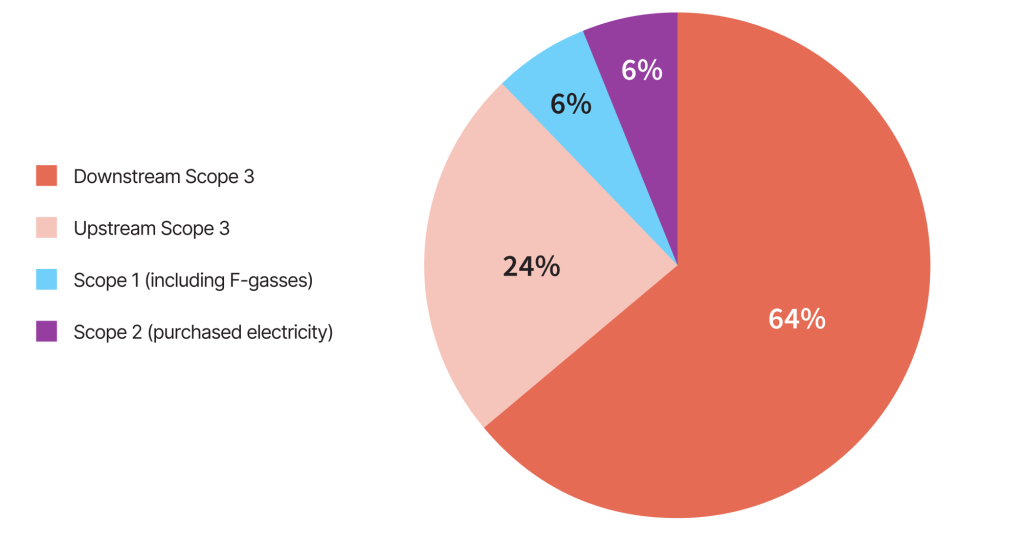
For many years, Intel was an American success story: the most valuable chipmaker in the world and the undisputed leader in the manufacture of microprocessors, the brains inside personal computers and internet servers. Its sustainability ambitions led the industry, as well. Special Series Chasing Net Zero ArcelorMittal: Inside the struggle to reach 2030 climate goals IKEA: On pace to halve emissions by 2030, while rivals falter Salesforce: How AI forced a reset of 2030 climate goals Series Overview & Methodology For nearly a decade, Intel bought more clean power than any other U.S. company. It was also an early leader in tackling the powerful greenhouse gasses released in the chipmaking process and known for setting ambitious emissions targets. As a percent of revenue, the company’s emissions peaked in 2006 and remain far below other major manufacturers. Then Intel’s business faltered, and so did its climate action. Over the past 15 years, the semiconductor behemoth has foundered as rivals captured new markets for chips used in smartphones and artificial intelligence data centers. A strategic misstep left its chips a generation behind the state of the art. Intel’s sales and share price plummeted, forcing it to lay off a quarter of its workforce this year. This profile — the latest installment in Chasing Net Zero, our company-by-company series that has probed the climate strategies of Nestlé, Salesforce and others — reveals how business storms have eroded Intel’s once-lauded climate strategy. A critical goal on supply-chain emissions was quietly pushed back 20 years under its new CEO, for instance, and the company no longer ties executive compensation to climate performance. Intel declined to make executives available for this article, but said in a statement that it is “committed to achieving a more sustainable future by advancing bold, measurable goals.” Analysts, however, say its progress towards those commitments has slowed as it fights for survival. “I wouldn’t say that Intel has stopped caring about sustainability, but they have more pressing concerns right now,” said Stephen Russell, a senior technical fellow for sustainability at Techinsights, an Ottawa semiconductor consulting firm. “They’ve fallen behind — and they are desperately trying to catch up.” When Intel led on climate Intel’s climate efforts began in the late 1990s when, under pressure from the Environmental Protection Agency, the company joined an industry group to scale back its emissions of fluorinated gases. These “F-gases,” used to carve microscopic circuits onto the surface of silicon wafers, have thousands of times the warming power of carbon dioxide when leaked into the atmosphere. In the following decade, the company also turned its attention to the electricity consumed by the machinery used to squeeze millions of transistors onto chips the size of postage stamps. Using renewable energy certificates (RECs), which allow companies to claim credit for using green energy by funneling money to renewables projects, Intel became the nation’s largest buyer of clean power between 2008 and 2016, according to the EPA. These initiatives helped Intel’s operational emissions — Scope 1 (mainly F-gases) and Scope 2 (the electricity it buys) — peak at 4 million metric tons of carbon dioxide equivalent in 2006. By 2019, emissions had declined to 2.8 million tons, even as the company’s revenue doubled. That same year, it stepped up its ambition with goals to use 100 percent renewables and shave 10 percent more off operational emissions by 2030. As with most companies, however, these sources are dwarfed by emissions from Intel’s value chain. Intel’s emissions in its 2019 baseline year Source: Intel company reports. In 2019, the electricity used to operate chips sold by Intel (downstream Scope 3) accounted for two-thirds of the company’s footprint. Chipmakers tackle these emissions by designing less power-hungry chips — Intel’s target is a tenfold efficiency improvement by 2030. But making chips more efficient encourages greater use, which drives up emissions. The trend is compounded by demand for chips to power AI applications. And the ultimate solution to Intel’s downstream Scope 3 emissions is the decarbonization of global grids — not something within the company’s control. One area of Scope 3 where the company has more influence is emissions generated by its suppliers, which represent a quarter of Intel’s footprint. In a target announced in 2022, the company said it would reduce supplier emissions by 30 percent by 2030 “from what they would be in the absence of action.” The upgraded near-term commitments were capped off with a long-term goal to reduce Scope 1 and 2 emissions to zero in 2040. A few years later, after activist shareholders asked for more, Intel published a detailed climate transition action plan and committed to a net-zero upstream supply chain by 2050. These are meaningful goals, particularly as the semiconductor industry has become a major contributor to climate change. Each new generation of chips requires more electricity and F-gases to manufacture, and by 2030 chipmaking is expected to account for 0.5 percent of global emissions. These goals compare favorably to Intel’s two main competitors in processor manufacturing, fast-growing Taiwan Semiconductor Manufacturing Company (TSMC) and the semiconductor division of consumer electronics giant Samsung. Both target net-zero value chains by 2050, a decade later than Intel’s operational emissions goal. Samsung lacks a near-term target, and TSMC only added one this year: a commitment to return its Scope 1 and 2 emissions to 2020 levels by 2030. Most other semiconductor companies, such as Nvidia, the high-flying AI chip maker, are “fabless,” meaning they outsource manufacturing and can claim relatively low Scope 1 and 2 emissions as a result. How Intel stalled on emissions With operational emissions falling and its commitments gaining in ambition, the Intel of five years ago had one of the most ambitious climate programs in the semiconductor industry. But the company was also grappling with the consequences of a bad bet made the previous decade. As they considered how to etch ever-smaller circuits onto the next generation of chips, Intel’s engineers had deemed one new technology — using extreme ultraviolet light to draw finer lines on silicon — too difficult to work with. They
How is Immersive Engineering transforming product development?
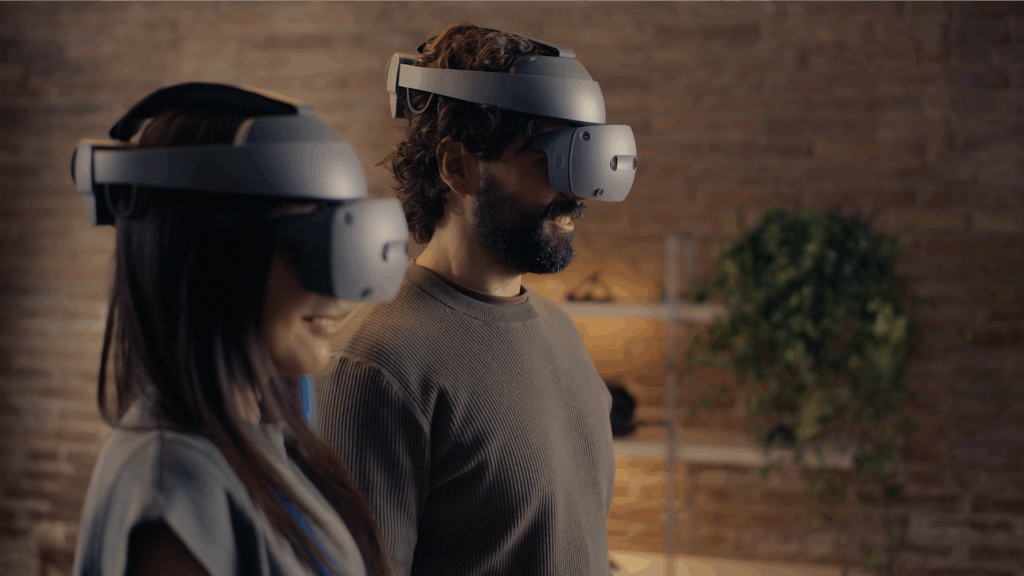
Siemens has sponsored this post. (Image: Siemens.) Traditional CAD tools have always been constrained by flat screens, 2D interactions and limited spatial feedback. Engineers interpreting complex geometry through a monitor often struggle to judge scale, evaluate fit and identify interferences. As products grow more complex, these limitations push decisions later into the design cycle and shift many errors downstream into physical prototyping. “Engineers can zoom in indefinitely within a 3D CAD setting, but that also means you can quickly lose perspective on what you’re looking at. As a result, design flaws remain hidden until physical prototypes are built, whether you’re working on boats, airplanes and cars, or on compact consumer electronics,” says Ben Widdowson, Head of Marketing Immersive Engineering at Siemens. Immersive Engineering solves these challenges by providing an intuitive environment for designers to assess geometry, ergonomics and assembly intent. Siemens is among the first to integrate Immersive Engineering and AI-driven assistance into a mainstream CAD environment through its Designcenter NX platform. Siemens AI-enhanced Immersive Engineering platform Siemens has long been integrating immersive capabilities as an optional module into its Designcenter NX platform. It transforms product development from a visual add-on to a fully operational engineering environment. The Immersive Designer lets users open assemblies at a true scale, modify geometry and collaborate with remote teams. A major enabler is the purpose-built Sony XR headset designed specifically for engineering workflows. “Sony built a mixed-reality headset specifically for engineering workflows that focuses on all-day comfort, ultra-high-resolution displays and controllers tailored for precision work,” Widdowson adds. This integration addresses one of the most significant gaps in earlier generations of VR tools: the inability to perform real engineering tasks. Siemens’ approach treats immersiveness as an alternate mode of CAD, and not an isolated experience. “Users can do everything they would normally do on a desktop, but fully immersive and collaborate in real-time,” Widdowson explains. AI adds another dimension to this environment. Siemens is developing a foundational engineering model capable of interpreting 3D geometry, design intent, bills of materials and manufacturing rules. These are some of the areas where generic LLMs like ChatGPT and Gemini have limited understanding. This underpins tools like NX Copilot for natural language assistance, automated DFM (Design for Manufacturing) advisors that flag manufacturing issues and ML-based productivity features such as adaptive UI and selection prediction. “We’re developing our own foundational model that can connect to LLMs while teaching them the language of engineering. It allows AI to understand a customer’s specific products and processes, while drawing on Siemens’ aggregated industry knowledge and the broader capabilities of public models,” Widdowson notes. Case Study: BAC Mono Supercar The immersive tools are already in use. Briggs Automotive Company (BAC), the boutique British automaker behind the Mono supercar, demonstrates how Immersive Engineering accelerates real-world product development. As they engineer the next-generation Mono, the team uses NX Immersive Designer to evaluate and refine cockpit ergonomics, packaging and regulatory compliance. By putting on the Sony headset, BAC designers can sit in a virtual driver’s seat and see the cockpit exactly as a driver would. They can test reach, visibility, pedal comfort, steering-wheel positioning and spatial feel with full-scale accuracy. One standout use case is the ability to reposition interior components on the fly in an immersive setting. Designers can move the steering wheel, adjust seat geometry or reposition the pedals using the hand controllers. At the same time, other experts such as ergonomists, manufacturing engineers and regulatory reviewers, can join the same immersive session. This collaborative environment is important for navigating global compliance requirements. “They had to meet a wide range of global regulations, so they described a design review where designers, engineers and even manufacturing stakeholders all joined the same immersive session. They evaluated something as simple as headlight placement, and whether it still meets regulations, without anyone needing CAD expertise,” says Widdowson. Conclusion Immersive Engineering is far more than a flashy new way to look at models. It is proving to be a transformative technology that, when combined with AI, can compress development cycles, reduce errors, and improve collaboration across the product lifecycle. The Siemens Designcenter NX integration with the Sony XR headset shows how Immersive Engineering is being used in real workflows. “Our view is that in ten years, Immersive Engineering won’t be a new capability at all. It will simply be the way engineers work, just as naturally as using a desktop today. Our customers build everything from smartphones to airplanes. As the next generation of engineers enters the workforce, we see it as our responsibility to make engineering more exciting, intuitive and engaging,” Widdowson concludes. Visit Siemens to learn more about Immersive Engineering with NX CAD. The post How is Immersive Engineering transforming product development? appeared first on Engineering.com.
Tezeus Swift review: This lightweight carbon fiber folding e-bike really surprised me
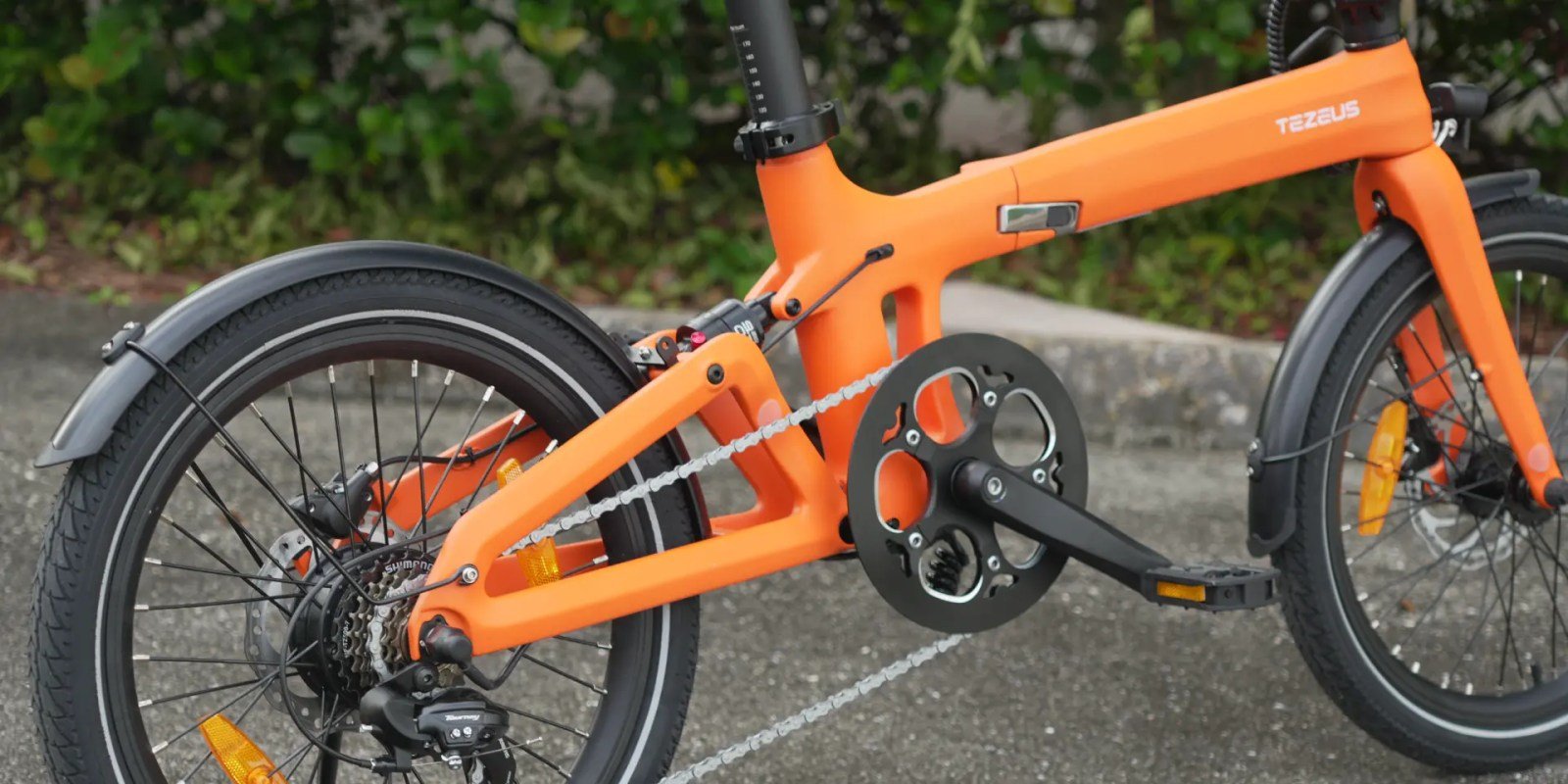
Folding e-bikes come in all shapes, sizes, and questionable design choices, but every once in a while, one comes along that makes me take a second look. After so much time on heavier folding e-bikes, that was my experience with the Tezeus Swift, a carbon fiber folding e-bike I recently spent a couple of weeks riding. On paper, it looks like a lightweight urban commuter with modest power. In practice, it turned out to be a surprisingly polished little machine that feels far more refined than most of the budget folders we tend to see. more…
Redwood Materials starts recycling operations at South Carolina site
US-based Redwood Materials has started critical materials recovery at its Berkeley County, South Carolina campus, adding an initial 20,000 metric tons of annual production. The company broke ground on the plant in early 2024. Redwood expects to expand the 600-acre campus over the next decade. Redwood’s Nevada facility produced more than 60,000 metric tons of materials last year, making it one of the biggest sources of mined or recycled critical minerals in the US. Redwood has a non-binding memorandum of understanding with GM to deploy energy storage systems using new US-manufactured batteries from GM and second-life battery packs from GM EVs. The company also has an agreement to supply Toyota with cathode active materials and anode copper foil to use in battery production at the automaker’s North Carolina battery manufacturing plant. “By recovering critical minerals at scale, we’re building the foundation for American leadership in advanced manufacturing, infrastructure, and the high-power technologies of tomorrow,” the company said. “With recycling operations now online in South Carolina, Redwood is helping transform the US into a nation that can secure and reuse its own resources.” Source: Redwood Materials
Tesla Optimus shows off its newest capability as progress accelerates

Tesla Optimus showed off its newest capability as progress on the project continues to accelerate toward an ultimate goal of mass production in the coming years. Tesla is still developing Optimus and preparing for the first stages of mass production, where units would be sold and shipped to customers. CEO Elon Musk has always marketed the humanoid robot as the biggest product in history, even outside of Tesla, but of all time. He believes it will eliminate the need to manually perform monotonous tasks, like cleaning, mowing the lawn, and folding laundry. However, lately, Musk has revealed even bigger plans for Optimus, including the ability to relieve humans of work entirely within the next 20 years. JUST IN: Elon Musk says working will be ‘optional’ in less than 20 years because of AI and robotics. pic.twitter.com/l3S5kl5HBB — Watcher.Guru (@WatcherGuru) November 30, 2025 Development at Tesla’s Artificial Intelligence and Robotics teams has progressed, and a new video was shown of the robot taking a light jog with what appeared to be some pretty natural form: Just set a new PR in the lab pic.twitter.com/8kJ2om7uV7 — Tesla Optimus (@Tesla_Optimus) December 2, 2025 Optimus has also made several public appearances lately, including one at the Neural Information Processing Systems, or NeurIPS Conference. Some spectators shared videos of Optimus’s charging rig, as well as its movements and capabilities, most interestingly, the hand: You have to hand it to Elon pic.twitter.com/fZKDlmGAbe — Ric Burton · NeurIPS 2025 (@_ricburton) December 2, 2025 The hand, forearm, and fingers have been one of the most evident challenges for Tesla in recent times, especially as it continues to work on its 3rd Generation iteration of Optimus. Musk said during the Q3 Earnings Call: “I don’t want to downplay the difficulty, but it’s an incredibly difficult thing, especially to create a hand that is as dexterous and capable as the human hand, which is incredible. The human hand is an incredible thing. The more you study the human hand, the more incredible you realize it is, and why you need four fingers and a thumb, why the fingers have certain degrees of freedom, why the various muscles are of different strengths, and fingers are of different lengths. It turns out that those are all there for a reason.” The interesting part of the Optimus program so far is the fact that Tesla has made a lot of progress with other portions of the project, like movement, for example, which appears to have come a long way. However, without a functional hand and fingers, Optimus could be rendered relatively useless, so it is evident that it has to figure this crucial part out first. The post Tesla Optimus shows off its newest capability as progress accelerates appeared first on TESLARATI.
Tesla hosts Rome Mayor for first Italian FSD Supervised road demo

Tesla definitely seems to be actively engaging European officials on FSD’s capabilities, with the company hosting Rome Mayor Roberto Gualtieri and Mobility Assessor Eugenio Patanè for a hands-on road demonstration. The event marked the first time an Italian mayor tested the advanced driver-assistance system in person in Rome’s urban streets. This comes amid Tesla’s push for FSD’s EU regulatory approvals in the coming year. Rome officials experience FSD Supervised Tesla conducted the demo using a Model 3 equipped with Full Self-Driving (Supervised), tackling typical Roman traffic including complex intersections, roundabouts, pedestrian crossings and mixed users like cars, bikes and scooters. The system showcased AI-based assisted driving, prioritizing safety while maintaining flow. FSD also handled overtakes and lane decisions, though with constant driver supervision. Investor Andrea Stroppa detailed the event on X, noting the system’s potential to reduce severe collision risks by up to seven times compared to traditional driving, based on Tesla’s data from billions of global fleet miles. The session highlighted FSD’s role as an assistance tool in its Supervised form, not a replacement, with the driver fully responsible at all times. Tesla ha ospitato il Sindaco di Roma Roberto Gualtieri e l’Assessore alla Mobilità Eugenio Patanè per una dimostrazione su strada del sistema Full Self-Driving (Supervised): è la prima volta che un Sindaco italiano testa di persona le capacità più avanzate della guida assistita… pic.twitter.com/WdS3PhkaSo — Andrea Stroppa Claudius Nero's Legion (@andst7) December 3, 2025 Path to European rollout Tesla has logged over 1 million kilometers of testing across 17 European countries, including Italy, to refine FSD for local conditions. The fact that Rome officials personally tested FSD Supervised bodes well for the program’s approval, as it suggests that key individuals are closely watching Tesla’s efforts and innovations. Assessor Patanè also highlighted the administration’s interest in technologies that boost road safety and urban travel quality, viewing them as aids for both private and public transport while respecting rules. Replies on X urged involving Italy’s Transport Ministry to speed approvals, with one user noting, “Great idea to involve the mayor! It would be necessary to involve components of the Ministry of Transport and the government as soon as possible: it’s they who can accelerate the approval of FSD in Italy.” The post Tesla hosts Rome Mayor for first Italian FSD Supervised road demo appeared first on TESLARATI.
Tesla Full Self-Driving shows confident navigation in heavy snow

Tesla Full Self-Driving is getting its first taste of Winter weather for late 2025, as snow is starting to fall all across the United States. The suite has been vastly improved after Tesla released v14 to many owners with capable hardware, and driving performance, along with overall behavior, has really been something to admire. This is by far the best version of FSD Tesla has ever released, and although there are a handful of regressions with each subsequent release, they are usually cleared up within a week or two. Tesla is releasing a modified version of FSD v14 for Hardware 3 owners: here’s when However, adverse weather conditions are something that Tesla will have to confront, as heavy rain, snow, and other interesting situations are bound to occur. In order for the vehicles to be fully autonomous, they will have to go through these scenarios safely and accurately. One big issue I’ve had, especially in heavy rain, is that the camera vision might be obstructed, which will display messages that certain features’ performance might be degraded. So far, from what we’ve seen, snow has not been a huge issue for the most recent Full Self-Driving release. It seems to be acting confidently and handling even snow-covered roads with relative ease: FSD 14.1.4 snow storm Ontario Canada pic.twitter.com/jwK1dLYT0w — Everything AI (@mrteslaspace) November 17, 2025 I found the steepest, unplowed hill in my area and tested the following: • FSD 14.2.1 on summer tires • FSD 14.2.1 on winter tires • Manual driving But I think the most impressive part was how FSD went DOWN the hill. FSD in the snow is sublime $TSLA pic.twitter.com/YMcN7Br3PU — Dillon Loomis (@DillonLoomis) December 2, 2025 Well.. I couldn’t let the boys have all the fun! Threw the GoPro up and decided to FSD v14.2.1 in the snow. Roads were not compacted like the other day, a little slippery, but overall doable at lower speeds. Enjoy the video and holiday music Liked: Took turns super slow… pic.twitter.com/rIAIeh3Zu3 — Diana (@99_Colorado) December 3, 2025 Moving into the winter months, it will be very interesting to see how FSD handles even more concerning conditions, especially with black ice, freezing rain and snow mix, and other things that happen during colder conditions. We are excited to test it ourselves, but I am waiting for heavy snowfall to make it to Pennsylvania so I can truly push it to the limit. The post Tesla Full Self-Driving shows confident navigation in heavy snow appeared first on TESLARATI.
How Bugaboo is pushing low-emissions strollers forward
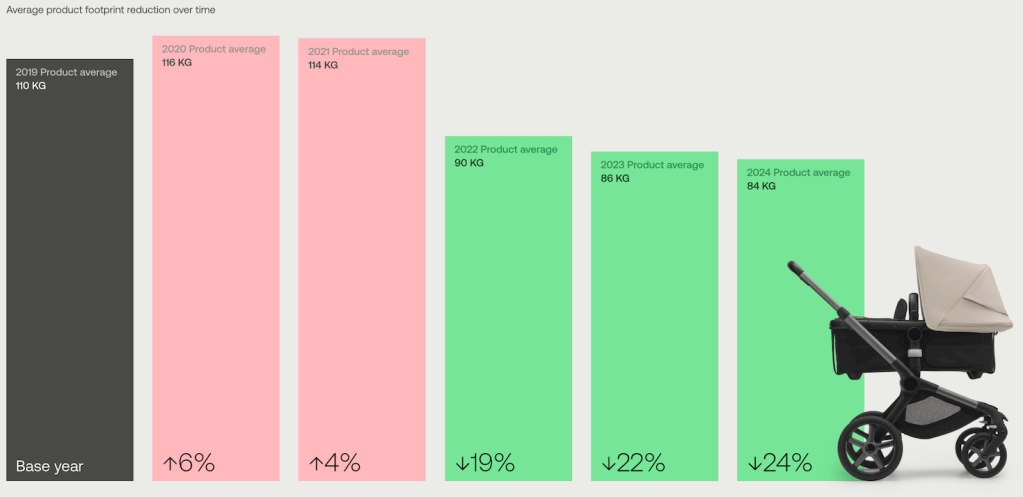
The lifespan of a stroller is as fleeting as a childhood. Even if used by more than one family, strollers ultimately land in a dump. Recycling infrastructure doesn’t exist. Bugaboo is an outlier in the industry for emphasizing durability, sustainable materials and circular business models. Such efforts support its net zero goal for 2035, which requires addressing the 91 percent of emissions that stem from materials. “I’m still surprised about this, but sustainability is not top of mind for consumers when they’re buying a pram or stroller,” said Melanie Wijnands, head of ESG at Bugaboo, based in Amsterdam. “It’s not a message that we, as an industry, are pushing. I hope by talking about it more as a brand, we’re putting it a little bit more top of mind with consumers.” Only 30 percent of stroller sales were “eco-friendly” models last year, according to one count. Slimming the product footprint Bugaboo has been lowering the average carbon footprint of its products since 2019, aiming for a 47 percent reduction by 2026. Credit: Bugaboo 2024 impact report Much work remains for the industry to zap waste and shrink its climate footprint. About 19 million strollers were sold globally from 2020 to 2023, according to 360 Research Reports, in a $10.5 billion market set to reach $16.6 billion in 2034. That’s a lot of virgin plastic, aluminum and polyester for landfills. A handful of companies have 40 percent of stroller market share, including Good Baby International Holdings, Chicco and Graco. With roughly 1,000 employees, Bugaboo is among the smaller, premium players. Circular models and durability Bugaboo has measured early success in circularity. Its revenues from refurbished and leased products doubled from 2019 to 2024, while the average carbon dioxide footprint of its goods fell by 24 percent. Even as the certified B Corporation made 93 percent more products, its emissions rose by a comparatively low 38 percent. Even as Bugaboo’s circular sales doubled, they only made up 1.4 percent of revenues in 2024. Still, that’s something in a space that has left repair and recycling to informal networks of families, friends and charities. Parents also turn to independent stores or Facebook Marketplace. eBay lists 3,100 strollers at the moment. Newer secondhand marketplaces such as Rebel and GoodBuy Gear are growing. Through a third party, Bugaboo refurbishes, cleans and re-lists 98 percent of products returned under warranty by European customers. Partners TinyMe in the Netherlands and StrollMe in Germany and Nordic countries manage stroller leases. Bugaboo plans for its products to last the equivalent of 3.5 trips around the planet. That’s between four to 13 years of life for its $1,200 Fox 5 stroller. Durable, modular and glue-free goods remain Bugaboo’s design focus for circularity. A bassinet basin doubles as a car seat. The $1,449 Kangaroo stroller can expand to fit a sibling. Parts such as brakes are available for older, popular models needing repair. Bugaboo recently found that 25-year-old models were still being resold. “Our head of design, who’s been with us for 25 years, was geeking out,” Wijnands said. ‘Carbon anatomy’ of two strollers Textiles, aluminum and plastic account for the greatest share of the CO2 footprint of Bugaboo strollers. Credit: Bugaboo 2024 impact report Materials Adopting alternatives to carbon-intensive textiles, aluminum and plastics is core to Bugaboo’s near-term target, aproved by the Science-Based Targets initiative. The company plans to slash the average CO2 equivalent footprint of its products by 47 percent by 2026. (It has already met its Scope 1 and 2 goals.) “To be completely honest, we’re not entirely sure how we can get there,” Wijnands said, noting that biobased plastic and recycled industrial aluminum have already helped. After introducing fabrics recycled from polyethylene terephthalate (PET) bottles last year, the company is looking into textile-to-textile recycled polyester. Among other material concerns, chemicals safety resonates with Bugaboo customers. “Children sometimes lick the side of their stroller or get anything and everything into their mouth,” Wijnands said. Bugaboo doesn’t use forever chemicals such as per- and polyfluoroalkyl substances (PFAS) or anti-bacterial coatings, a newer target of watchdog groups. Many of its textiles are OEKO-TEX certified. Supply chain Bugaboo has a unique level of control in owning its production facility in Xiamen, China, which is 25 percent powered by renewables. “We work really closely with our first-tier suppliers,” 80 percent of which are gradually getting rid of fossil fuels, she added. Wijnands joined Bugaboo from consultancy Circle Economy, which publishes a semi-annual global circularity score. The only full-time sustainability staffer, she reports to CEO Adriaan Thierry. Wijnands works closely with Bugaboo’s lead engineer on carbon accounting, head of design and the product team. “We’ve been really focusing on getting the carbon of our products down, but more and more, we’re also realizing that circularity is a promising route,” Wijnands said. The post How Bugaboo is pushing low-emissions strollers forward appeared first on Trellis.
Alpha and Omega launches 100V MOSFET for 48V AI server hot swap

Alpha and Omega Semiconductor Limited (AOS) announced its AOLV66935 a 100V High Safe Operating Area (SOA) MOSFET in an LFPAK 8×8 package. AOS’ latest MOSFET is designed as an ideal solution for 48V Hot Swap architectures in AI servers. The power demands of AI servers are intensifying, primarily driven by the increasing performance in the GPU/TPU. In addition to its wide SOA capability, the AOLV66935 Hot Swap MOSFET features very low on-resistance to meet these performance, efficiency and reliability challenges. State-of-the-art MOSFET handles higher peak currents delivering a cost-effective, high-performance and enhanced reliability hot swap solution. The AOLV66935 utilizes AOS’ 100V AlphaSGT proprietary MOSFET technology that combines the advantages of trench technology for low on-resistance with high SOA capability. AOS has tested and characterized the SOA at 25°C as well at higher operating conditions of 125°C giving system architects the confidence that the device will operate reliably under harsh conditions. Available in AOS’ state-of-the-art packaging, the MOSFET’s LFPAK 8×8 gull-wing constructed package is 60 percent smaller compared to the TO-263 (D2PAK) package. It also features advanced clip technology with a high current rating to provide high inrush current capabilities. In addition, the copper clip and packaging technology used offers low thermal resistance for improved thermal management. The AOLV66935 is manufactured in IATF 16949-certified facilities, and its LFPAK 8×8 packaging is compatible with automated optical inspection (AOI) manufacturing requirements. Furthermore, the AOLV66935 provides low power loss and reduced heat generation due to its leading low RDS(on) of 1.86 milliohms maximum rating at Vgs=10V. All the advanced features and high current capabilities designed into the AOLV66935 MOSFET deliver the necessary robustness for enhanced thermal cycling in harsh conditions that is now required in the latest AI server applications. Technical highlights Pricing and availability The AOLV66935 MOSFETs are immediately available in production quantities with a lead time of 14-16 weeks. The unit price in 1,000-piece quantities is $3.6. For more information, visit aosmd.com. The post Alpha and Omega launches 100V MOSFET for 48V AI server hot swap appeared first on Engineering.com.
EcoFlow Cyber Week Sale continues up to 80% power station discounts from $75 + exclusive DELTA 3 Ultra $879 low, Lectric, more
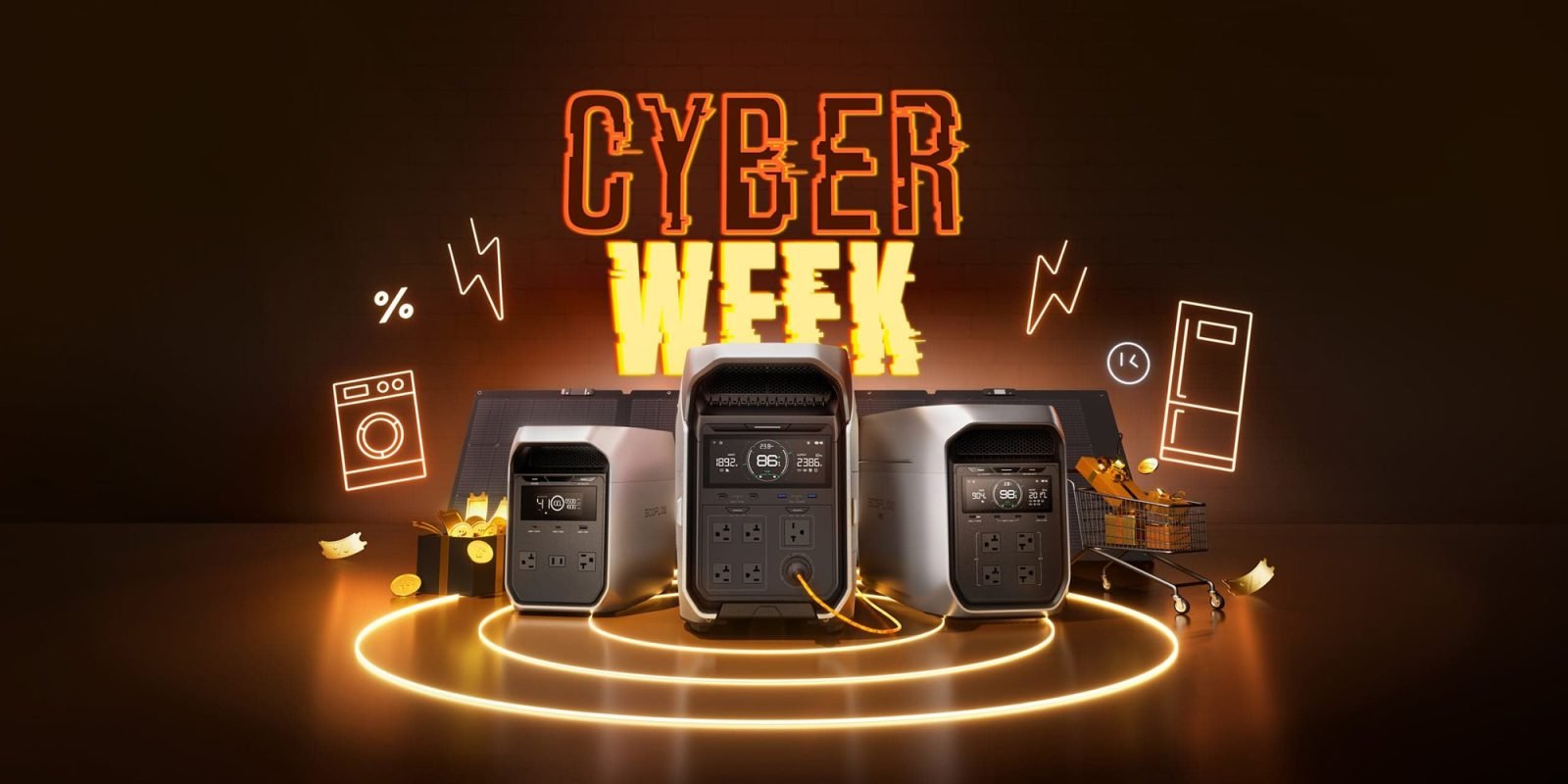
Cyber Monday may technically be over, but the savings aren’t slowing down, with today’s Green Deals being led by EcoFlow’s Cyber Week Sale that is continuing to take up to 80% off power stations, complete with extra savings and free gifts – all starting from $75. We also have Lectric’s Cyber Week e-bike sale with up to $893 savings starting from $999, which is donating $250 per order to foster children in need today, specifically, as well as an exclusive $1,620 savings on EcoFlow’s DELTA 3 Ultra Portable Power Station at a new $879 low, and a bunch of other extended/updated deals from Anker SOLIX, Autel, and more waiting for you below. And don’t forget about the hangover deals from the holiday event that are collected together in our Black Friday/Cyber Monday Green Deals hub, which we will continue to update through the rest of the week, like yesterday’s ongoing $13,289 exclusive savings across 20 different EcoFlow DELTA Pro Ultra X power station-centric offers, and more. Head below for other New Green Deals we’ve found today and, of course, Electrek’s best EV buying and leasing deals. Also, check out the new Electrek Tesla Shop for the best deals on Tesla accessories. more…
Altech demonstrates safety of sodium-nickel-chloride batteries under destructive test conditions

Solid-state battery developer Altech Batteries has completed a full suite of safety self-destruction validation tests on its sodium-nickel-chloride (SNC) battery technology, which it recently began selling. The tests were designed to simulate the most severe field hazards that can occur during storage, transport or operation. Across all the scenarios, which included direct fire exposure, rod penetration, over-charge, ballistic impact, drop test, impact test and submersion, the SNC cells and modules demonstrated chemical stability and mechanical resilience. No explosions, thermal runaways or uncontrolled reactions were recorded in the tests, Altech said. The SNC cells remained sealed and intact after being exposed to an 850° C gasoline fire for 30 minutes, while rod penetration and water exposure produced only harmless steam. The flames were extinguished within one minute. A drop of 10 meters onto a steel pole, simulating an impact at approximately 30 mph and crash at 48 km/h caused minor dents, without leakage or rupture. Immersion for 2.5 hours in 3.5% saltwater did not cause any external reaction or voltage loss, while an over-charge at 145% nominal voltage for one hour produced no venting, swelling or heat generation. Bullet impacts only caused brief smoke, while the structure and voltage remained stable. “These independent abuse tests confirm what long-term field data has been telling us for years—our sodium-nickel-chloride technology batteries produced by partner company AMPower, are exceptionally safe,” said Altech Managing Director Iggy Tan. “Even under direct fire, impact or over-voltage, the cells remain sealed and stable. This level of intrinsic safety is a major differentiator for Altech. Our SNC batteries can endure conditions well beyond certification limits while maintaining integrity and performance.” Source: Altech Batteries
Elon Musk’s warning to legacy automakers: Tesla FSD licensing snub echoes EV dismissal

Elon Musk said in late November that he’s “tried to warn” legacy automakers and “even offered to license Tesla Full Self-Driving, but they don’t want it,” expressing frustration with companies that refuse to adopt the company’s suite, which will eventually be autonomous. Tesla has long established itself as the leader in self-driving technology, especially in the United States. Although there are formidable competitors, Tesla’s FSD suite is the most robust and is not limited to certain areas or roadways. It operates anywhere and everywhere. The company’s current position as the leader in self-driving tech is being ignored by legacy automakers, a parallel to what Tesla’s position was with EV development over a decade ago, which was also ignored by competitors. The reluctance mirrors how legacy automakers initially dismissed EVs, only to scramble in catch-up mode years later–a pattern that highlights their historical underestimation of disruptive innovations from Tesla. Elon Musk’s Self-Driving Licensing Attempts Musk and Tesla have tried to push Full Self-Driving to other car companies, with no true suitors, despite ongoing conversations for years. Tesla’s FSD is aiming to become more robust through comprehensive data collection and a larger fleet, something the company has tried to establish through a subscription program, free trials, and other strategies. Tesla CEO Elon Musk sends rivals dire warning about Full Self-Driving However, competing companies have not wanted to license FSD for a handful of speculative reasons: competitive pride, regulatory concerns, high costs, or preference for in-house development. Déjà vu All Over Again Tesla tried to portray the importance of EVs long ago, as in the 2010s, executives from companies like Ford and GM downplayed the importance of sustainable powertrains as niche or unprofitable. Musk once said in a 2014 interview that rivals woke up to electric powertrains when the Model S started to disrupt things and gained some market share. Things got really serious upon the launch of the Model 3 in 2017, as a mass-market vehicle was what Tesla was missing from its lineup. This caused legacy companies to truly wake up; they were losing market share to Tesla’s new and exciting tech that offered less maintenance, a fresh take on passenger auto, and other advantages. They were late to the party, and although they have all launched vehicles of their own, they still lag in two major areas: sales and infrastructure, leaning on Tesla for the latter. I’ve tried to warn them and even offered to license Tesla FSD, but they don’t want it! Crazy … When legacy auto does occasionally reach out, they tepidly discuss implementing FSD for a tiny program in 5 years with unworkable requirements for Tesla, so pointless. — Elon Musk (@elonmusk) November 24, 2025 Musk’s past warnings have been plentiful. In 2017, he responded to critics who stated Tesla was chasing subsidies. He responded, “Few people know that we started Tesla when GM forcibly recalled all electric cars from customers in 2003 and then crushed them in a junkyard,” adding that “they would be doing nothing” on EVs without Tesla’s efforts. Companies laughed off Tesla’s prowess with EVs, only to realize they had made a grave mistake later on. It looks to be happening once again. A Pattern of Underestimation Both EVs and self-driving tech represent major paradigm shifts that legacy players view as threats to their established business models; it’s hard to change. However, these early push-aways from new tech only result in reactive strategies later on, usually resulting in what pains they are facing now. Ford is scaling back its EV efforts, and GM’s projects are hurting. Although they both have in-house self-driving projects, they are falling well behind the progress of Tesla and even other competitors. It is getting to a point where short-term risk will become a long-term setback, and they may have to rely on a company to pull them out of a tough situation later on, just as it did with Tesla and EV charging infrastructure. Tesla has continued to innovate, while legacy automakers have lagged behind, and it has cost them dearly. Implications and Future Outlook Moving forward, Tesla’s progress will continue to accelerate, while a dismissive attitude by other companies will continue to penalize them, especially as time goes on. Falling further behind in self-driving could eventually lead to market share erosion, as autonomy could be a crucial part of vehicle marketing within the next few years. Eventually, companies could be forced into joint partnerships as economic pressures mount. Some companies did this with EVs, but it has not resulted in very much. Self-driving efforts are not only a strength for companies themselves, but they also contribute to other things, like affordability and safety. Tesla has exhibited data that specifically shows its self-driving tech is safer than human drivers, most recently by a considerable margin. This would help with eliminating accidents and making roads safer. Tesla’s new Safety Report shows Autopilot is nine times safer than humans Additionally, competition in the market is a good thing, as it drives costs down and helps innovation continue on an upward trend. Conclusion The parallels are unmistakable: a decade ago, legacy automakers laughed off electric vehicles as toys for tree-huggers, crushed their own EV programs, and bet everything on the internal-combustion status quo–only to watch Tesla redefine the industry while they scrambled for billions in catch-up capital. Today, the same companies are turning down repeated offers to license Tesla’s Full Self-Driving technology, insisting they can build better autonomy in-house, even as their own programs stumble through recalls, layoffs, and missed milestones. History is not merely rhyming; it is repeating almost note-for-note. Elon Musk has spent twenty years warning that the auto industry’s bureaucratic inertia and short-term thinking will leave it stranded on the wrong side of technological revolutions. The question is no longer whether Tesla is ahead–it is whether the giants of Detroit, Stuttgart, and Toyota will finally listen before the next wave leaves them watching another leader pull away in the rear-view mirror. This time, the stakes are not
Tesla sees sharp November rebound in China as Model Y demand surges

Tesla’s sales momentum in China strengthened in November, with wholesale volumes rising to 86,700 units, reversing a slowdown seen in October. New data from the China Passenger Car Association (CPCA) shows a 9.95% year-on-year increase and a 40.98% jump month-over-month. This was partly driven by tightened delivery windows, targeted marketing, and buyers moving to secure vehicles before changes to national purchase tax incentives take effect. In November, Tesla's Giga Shangai wholesale sales (local in China and exports) were 86,700 Model 3 and Model Y. This is +9.9% year-over-year and +41.0% month-over-month. pic.twitter.com/X4Wie5lSMk — Roland Pircher (@piloly) December 2, 2025 Tesla’s November rebound coincided with a noticeable spike in Model Y interest across China. Delivery wait times extended multiple times over the month, jumping from an initial 2–5 weeks to estimated handovers in January and February 2026 for most five-seat variants. Only the six-seat Model Y L kept its 4–8 week estimated delivery timeframe. The company amplified these delivery updates across its Chinese social media channels, urging buyers to lock in orders early to secure 2025 delivery slots and preserve eligibility for current purchase tax incentives, as noted in a CNEV Post report. Tesla also highlighted that new inventory-built Model Y units were available for customers seeking guaranteed handovers before December 31. $TSLA BREAKING: Tesla China sold 86,700 vehicles for wholesale in November. pic.twitter.com/v7JsFESJgL — Tsla Chan (@Tslachan) December 2, 2025 This combination of urgency marketing and genuine supply-demand pressure seemed to have helped boost November’s volumes, stabilizing what had been a year marked by several months of year-over-year declines. For the January–November period, Tesla China recorded 754,561 wholesale units, an 8.30% decline compared to the same period last year. The company’s Shanghai Gigafactory continues to operate as both a domestic production base and a major global export hub, building the Model 3 and Model Y for markets across Asia, Europe, and the Middle East, among other territories. The post Tesla sees sharp November rebound in China as Model Y demand surges appeared first on TESLARATI.
Tesla Europe rolls out FSD ride-alongs in the Netherlands’ holiday campaign

Tesla Europe has announced that its “Future Holidays” campaign will feature Full Self-Driving (Supervised) ride-along experiences in the Netherlands. The festive event series comes amid Tesla’s ongoing push for regulatory approval of FSD across Europe. The Holiday program was announced by Tesla Europe & Middle East in a post on X. “Come get in the spirit with us. Featuring Caraoke, FSD Supervised ride-along experiences, holiday light shows with our S3XY lineup & more,” the company wrote in its post on X. Per the program’s official website, fun activities will include Caraoke sessions and light shows with the S3XY vehicle lineup. It appears that Optimus will also be making an appearance at the events. Tesla even noted that the humanoid robot will be in “full party spirit,” so things might indeed be quite fun. Come get in the spirit with usFeaturing Caraoke, FSD Supervised ride-along experiences, holiday light shows with our S3XY lineup & moreView locations below pic.twitter.com/RBPbgk1j8y — Tesla Europe & Middle East (@teslaeurope) December 2, 2025 “This season, we’re introducing you to the fun of the future. Register for our holiday events to meet our robots, see if you can spot the Bot to win prizes, and check out our selection of exclusive merchandise and limited-edition gifts. Discover Tesla activities near you and discover what makes the future so festive,” Tesla wrote on its official website. This announcement aligns with Tesla’s accelerating FSD efforts in Europe, where supervised ride-alongs could help demonstrate the tech to regulators and customers. The Netherlands, with its urban traffic and progressive EV policies, could serve as an ideal and valuable testing ground for FSD. Tesla is currently hard at work pushing for the rollout of FSD to several European countries. Tesla has received approval to operate 19 FSD test vehicles on Spain’s roads, though this number could increase as the program develops. As per the Dirección General de Tráfico (DGT), Tesla would be able to operate its FSD fleet on any national route across Spain. Recent job openings also hint at Tesla starting FSD tests in Austria. Apart from this, the company is also holding FSD demonstrations in Germany, France, and Italy. The post Tesla Europe rolls out FSD ride-alongs in the Netherlands’ holiday campaign appeared first on TESLARATI.
Tesla Model Y Standard Full Review: Is it worth the lower price?
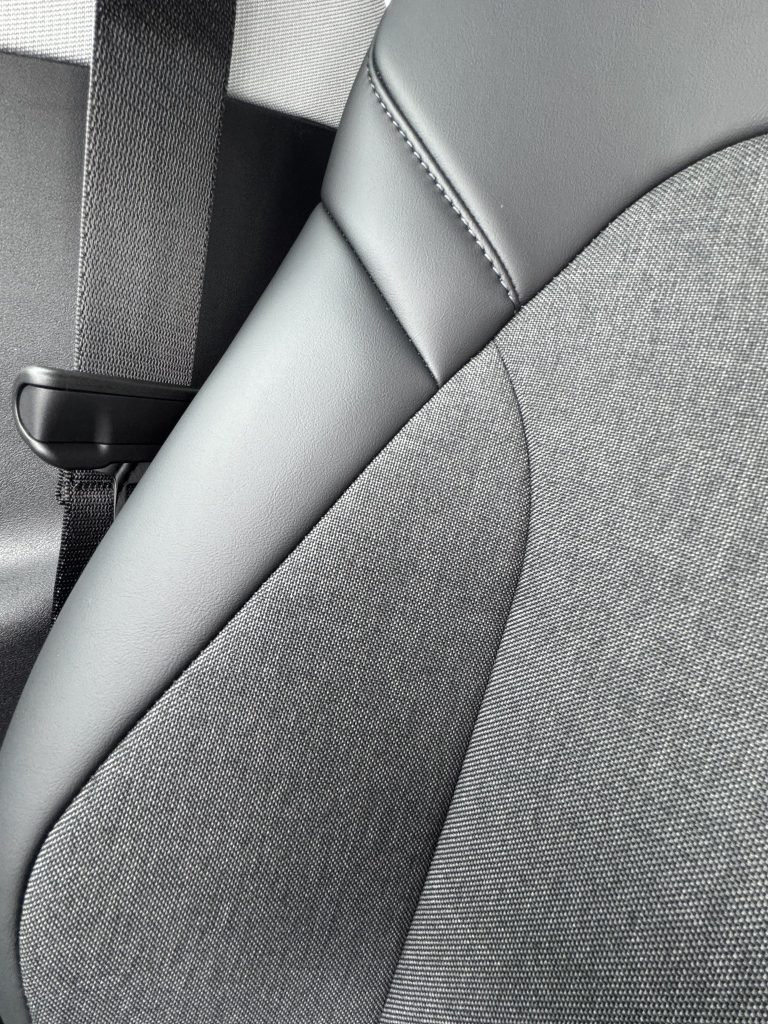
Tesla launched the Model Y Standard as an attempt to offer affordable electric vehicles to consumers now that the $7,500 EV tax credit is gone. We were able to spend four days with the car, and it was more than enough time to determine whether or not the car was worth the $9,000 discount compared to the Premium All-Wheel-Drive configuration, which is what I drive daily. The Model Y Standard was stripped of some of the features that are present in the Premium trims of the Model Y: no glass roof, a sound system with roughly half the speakers, fewer acoustic-lined glass windows, less storage, and less functionality from an interior standpoint. However, there are some real advantages to purchasing a Standard Model Y, and there are a handful of situations where this car would be well-suited. Do I think it is worth the lower price? Well, I’ll get to that later in this article. Initial Thoughts In my first impressions review of the Model Y Standard, I talked about the face-value differences between my Model Y Premium and the new, more affordable trim. You will first notice the lack of storage between the front two seats, as the cupholder and additional storage bin sliding doors are void. You still get the cupholders, but they are exposed, which isn’t a huge deal, but it definitely takes away from the sleek look the Premium trim offers. Additionally, the textile seats replace those of the vegan leather that is available in the upper-level trims. I mentioned previously that I could take or leave the vegan leather for the textile seats, as they are easy to clean, quick drying, and hide oils from your skin much better than leather does. However, there comes one big sacrifice that I have been spoiled by, as the textile seats are not ventilated, so say goodbye to cooling your keister in the Summertime. The lack of a glass roof is something many owners might not even notice. However, I have been spoiled by the glass roof in my car, and I look out of it every time I’m in my car. It is one of my favorite features, without a doubt. While it would not be a dealbreaker for me, it would be something I would miss terribly. Things I Noticed After Several Days Cabin Noise One of the biggest things I noticed after the first two days in the Model Y Standard is that the cabin is much louder than the Premium. This is because Tesla did not acoustically line all of the glass in the Standard configuration, as it did in the Premium. The side windows are not treated, just the windshields. Therefore, you notice the noise level in the cabin is louder than in the Premium. If you had not been driving in a Premium trim for a few months, you might not notice it. However, it is something that is a big sacrifice when moving to a different trim level, especially one that is less premium than what you might currently drive. I have always been so shocked at how amazingly quiet the Premium trim’s cabin is; my Model Y is extremely peaceful, even when I’m sitting in bumper-to-bumper traffic, and people have modified mufflers and exhaust systems, tractor-trailers are going by, or crotchrockets are zipping by on the interstate. This is a huge difference between the two cars, and it is something that is really hard to get used to. I know, first-world problems, right? But when you’re paying between $39,990 and $48,990 for a car, those little things truly do matter. Stereo System Differences Another thing I was very aware of was how weak the sound system is. I think if I had bought a Standard Model Y, I would have looked at having the speakers and subwoofers upgraded; I was almost disappointed in how much of a change it was between the two cars. When I finally picked up my Model Y Premium on Friday (which had been detailed by the awesome team at Tesla Mechanicsburg), the first thing I did was crank up the volume and listen to some music. I really missed having a premium sound system. Ride Quality There are virtually no differences between the two cars in terms of ride quality. They are both extremely fun to drive, and the suspension in the Model Y Standard feels perhaps a little bit stiffer than the Premium. Regardless, I didn’t truly notice all that much of a change. Driving this car around windy roads and tight turns was just as fun as my Model Y Premium. It was a blast to test out, and the slight change in feel was welcome. It’s always fun to drive new cars. Performance This is the first EV I’ve ever ridden in where I did not feel that awesome sensation of instant torque. It’s still a quick car, but it is missing that pep in its step that many of us have become accustomed to. If you want to get someone’s true reaction to EV acceleration, let me just put it this way: This is not the car to do it in. Some Little-Known Facts About the Model Y Standard Most of us know that the Model Y Standard has a glass roof, but it is opaque, so even if you took out the headliner, you still would not see out of it. However, there is an interesting little tidbit from a Service perspective that does not make much sense. If the Model Y glass roof cracks or is broken and needs to be replaced, Service is required to pull off the entire headliner and topside interior to access the glass. It cannot be replaced from the outside. In the Premium, because the glass is exposed, it is a much simpler process to replace the glass. This was an interesting thing I learned. Additionally, the seat controls are only available on the center screen, which makes it difficult to adjust the