Tesla’s northernmost Supercharger in North America opens

Tesla has opened its northernmost Supercharger in Fairbanks, Alaska, with eight V4 stalls located in one of the most frigid cities in the U.S. Located just 196 miles from the Arctic Circle, Fairbanks’s average temperature for the week was around -12 degrees Fahrenheit. However, there are plenty of Tesla owners in Alaska who have been waiting for more charging options out in public. There are only 36 total Supercharger stalls in Alaska, despite being the largest state in the U.S. Eight Superchargers were added to Fairbanks, which will eventually be a 48-stall station. Tesla announced its activation today: North America’s northernmost Supercharger Fairbanks, AK (8 stalls) opened to public. pic.twitter.com/zyL6bDuA93 — Tesla Charging (@TeslaCharging) December 12, 2025 The base price per kWh is $0.43 at the Fairbanks Supercharger. Thanks to its V4 capabilities, it can charge at speeds up to 325 kW. Despite being the northernmost Supercharger in North America, it is not even in the Top 5 northernmost Superchargers globally, because Alaska is south of Norway. The northernmost Supercharger is in Honningsvåg, Norway. All of the Top 5 are in the Scandanavian country. Tesla’s Supercharger expansion in 2025 has been impressive, and although it experienced some early-quarter slowdowns due to V3-to-V4 hardware transitions, it has been the company’s strongest year for deployments. Tesla Supercharging had a HUGE year, and they deserve to be recognized. Opened Tesla Diner, a drive-in movie theater with awesome, Chef-curated cuisine Gave access to Superchargers to several EV makers, including Hyundai, Genesis, Mercedes-Benz, Kia, Lucid, Toyota,… pic.twitter.com/yYT2QEbqoW — TESLARATI (@Teslarati) December 10, 2025 Through the three quarters of 2025, the company has added 7,753 stations and 73,817 stalls across the world, a 16 percent increase in stations and an 18 percent increase in stalls compared to last year. Tesla is on track to add over 12,000 stalls for the full year, achieving an average of one new stall every hour, an impressive statistic. Recently, the company wrapped up construction at its Supercharger Oasis in Lost Hills, California, a 168-stall Supercharger that Tesla Solar Panels completely power. It is the largest Supercharger in the world. The post Tesla’s northernmost Supercharger in North America opens appeared first on TESLARATI.
The top sustainability developments of 2025, according to practitioners
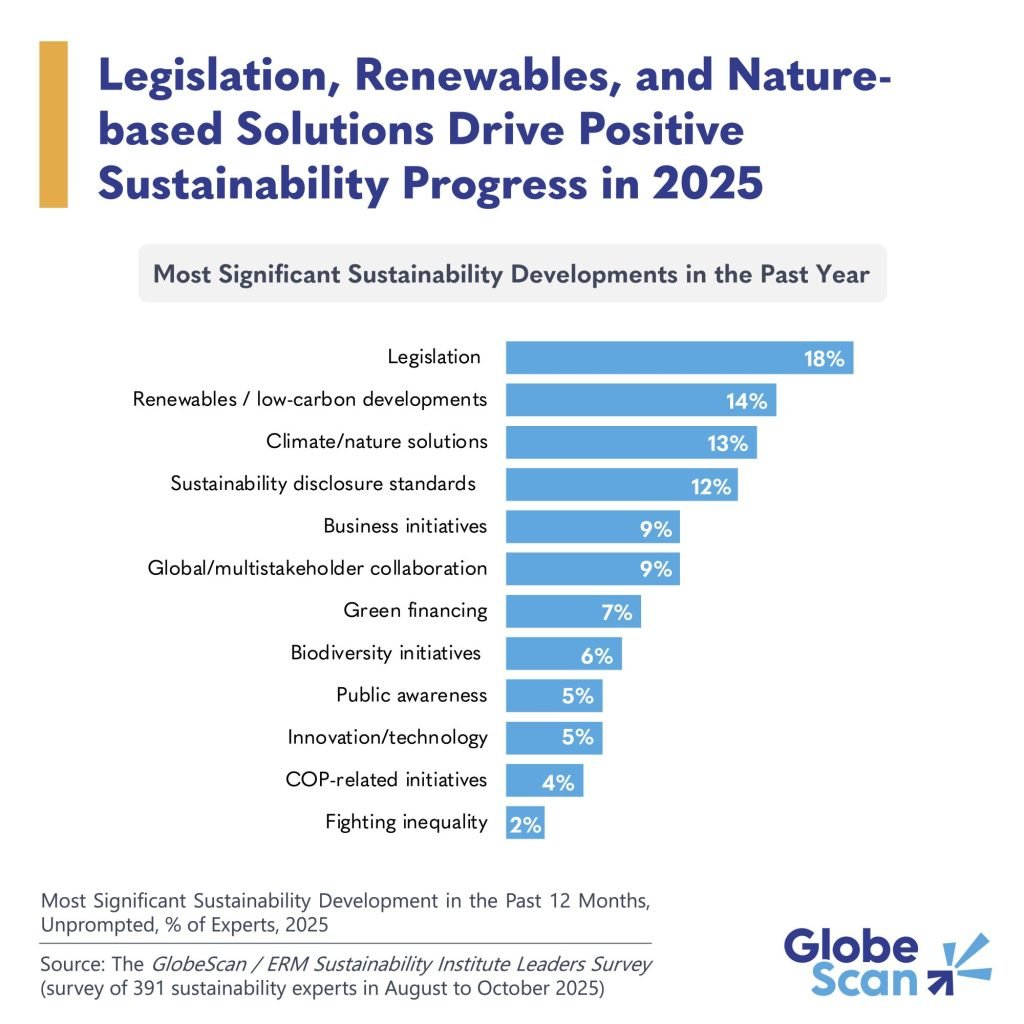
While this year brought plenty of setbacks for sustainability, new research shows what developments nearly 400 global sustainability experts thought had the most positive impact on the sustainability agenda in 2025. According to a survey from Trellis data partner GlobeScan and ERM, legislation remains the most significant driver of progress, cited by 18 percent of experts, although its perceived importance has declined compared to 2024, when it was cited by 33 percent of experts. Regulatory action continues to set the pace for change, creating frameworks that drive accountability and progress. Experts also point to renewables and low-carbon technologies (14 percent) and climate and nature-based solutions (13 percent) as critical forces accelerating momentum. Sustainability disclosure standards, in contrast, have seen a notable decline in influence compared to last year (down to 12 percent compared to 19 percent in 2024), signaling a shift toward implementation and tangible outcomes. What this means The sustainability transition is still underway, even amid backlash. While it’s slowed somewhat, legislative momentum continues to shape priorities, making it critical for organizations to integrate policy trends into strategy. Renewable energy and low-carbon technologies are creating cost advantages and accelerating decarbonization, while nature-based solutions are no longer peripheral but now essential for climate resilience and carbon removal. These are key levers of progress as companies strive to make sustainability a core driver of business and focus on tangible actions and impact. Based on a survey of 391 sustainability experts across 57 countries conducted between August-October 2025. The post The top sustainability developments of 2025, according to practitioners appeared first on Trellis.
Bluebeam adds Task Link to connect office and field workflows
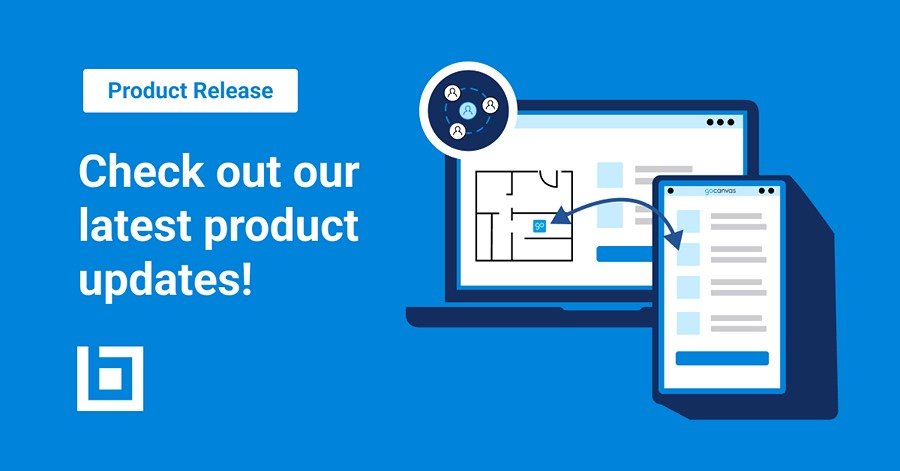
Bluebeam announced major updates designed to unify office and field teams. The launch of Task Link, a first-of-its-kind native integration between Bluebeam Revu and GoCanvas, along with significant enhancements to Bluebeam’s iOS and Android apps, delivers streamlined task management, real-time visibility, and organized documentation across every phase of a project. Task link: closing the gap between planning and execution The launch of Task Link represents the first major milestone in bringing Bluebeam and GoCanvas together into a unified field–office workflow. When the companies joined forces last year, the shared vision was to combine Bluebeam’s industry-leading markup and collaboration capabilities with GoCanvas’ real-time field data collection, giving construction teams a seamless, end-to-end workflow with fewer communication gaps, fewer errors, and far more visibility. What teams can do with Task Link: Push tasks from Revu to the field instantly, with updates reflected in real time. Keep teams aligned through automatic notifications as work advances. Capture verifiable on-site data via GoCanvas mobile forms – including photos, videos, signatures, and structured inputs. Maintain a single source of truth with all submissions linked directly back to Revu markups. Task Link is available to all Bluebeam subscribers with an active GoCanvas subscription. Mobile updates: real-time tools for smarter decisions Bluebeam’s latest and upcoming mobile enhancements deliver even more field-ready functionality tightly integrated with Studio. These updates enhance Bluebeam’s core markups and Studio collaboration environment, enabling teams to verify, annotate, and share information instantly —online or offline — to boost productivity and reduce rework. For iOS users: Measurement tools (length, area, polylength, count) for on-the-spot verification. Basic PDF form filling directly in-app to complete checklists and project documents from the field. Offline access to Studio Projects for updating project documents on remote jobsites. For Android users: Image markups on drawings for immediate visual clarity. Precision pen-eraser for cleaner edits without restarting. Local PDF support, enabling easy document access and editing anytime, anywhere. Together, these updates mark a significant step toward fully connected, AI-ready construction workflows, where data flows seamlessly between tools, teams, and project phases to drive smarter decisions and better outcomes. For more information, visit bluebeam.com. The post Bluebeam adds Task Link to connect office and field workflows appeared first on Engineering.com.
Jackery Christmas Sale takes up to 57% off power stations, Rad Power e-bikes up to $500 off, Exclusive refurbished Anker SOLIX, more
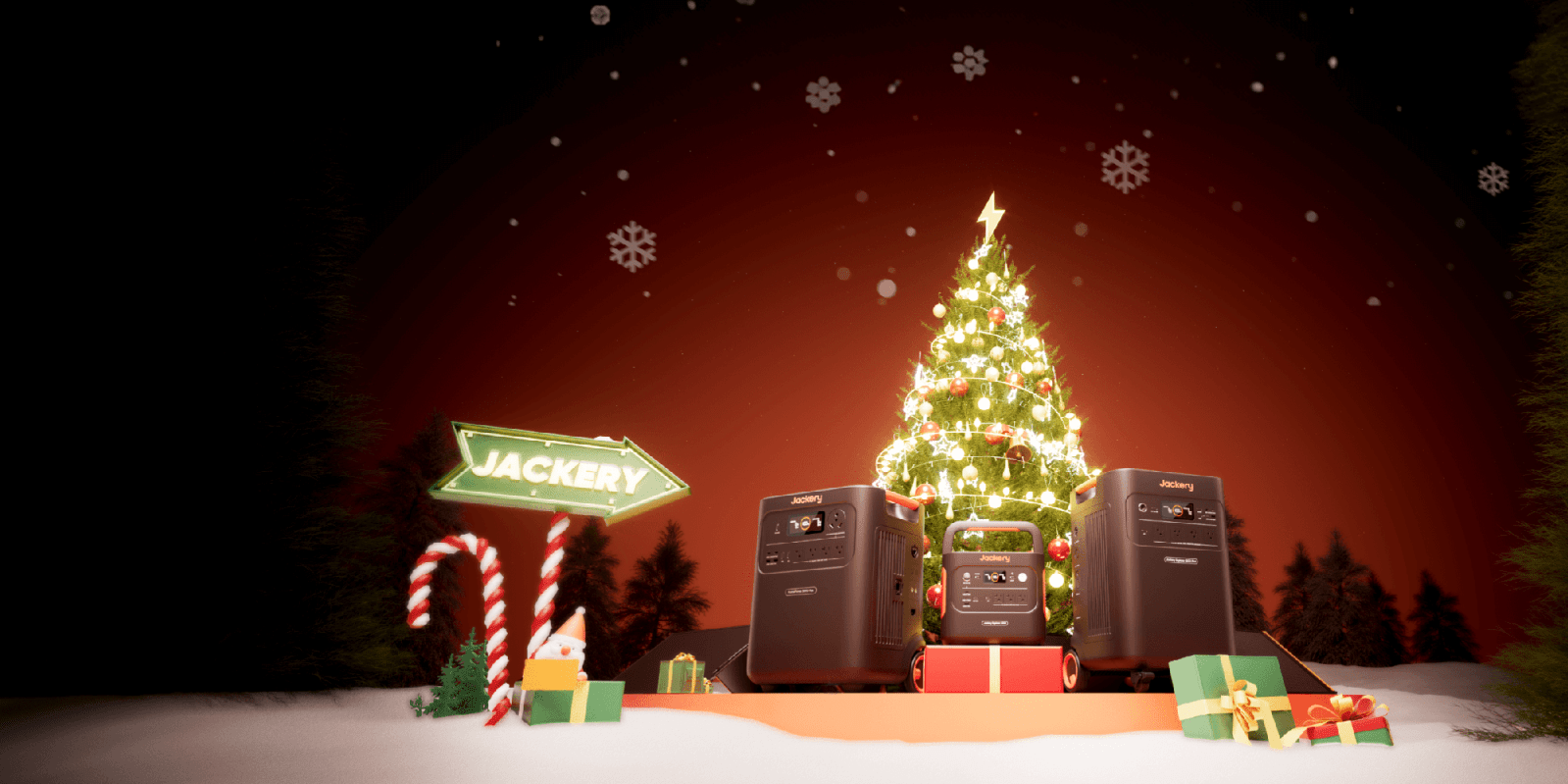
This week’s Thursday edition of Green Deals is following the trend of being headlined by another power station brand, as Jackery has launched its Christmas Holiday Sale with up to 57% discounts on units, complete with two extra savings codes starting from $79. Right behind it, we also have Rad Power Bikes’ Christmas e-bike sale with up to $500 discounts and new low prices starting from $1,399, as well as $1,280 exclusive savings on a refurbished Anker SOLIX F3800 Portable Power Station at a new $1,399 low, several Mammotion robot lawn mower deals, Goal Zero’s multi-purpose Torch 500 Light low, two unique cordless electric pressure washer deals from Fanttik, and much more waiting for you below. And don’t forget about the hangover deals collected together at the bottom of the page, like yesterday’s Bluetti power station Christmas sale with up to 55% initial discounts and up to 8% exclusive bonus savings, Anker’s SOLIX 72-hour flash deals that end tonight, and more. Head below for other New Green Deals we’ve found today and, of course, Electrek’s best EV buying and leasing deals. Also, check out the new Electrek Tesla Shop for the best deals on Tesla accessories. more…
Concentric’s autonomous forklift battery management system has performed 250,000 two-minute battery swaps
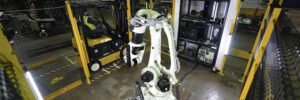
Swedish forklift and facility power systems provider Concentric has surpassed 250,000 battery swaps using PowerHIVE, its autonomous forklift battery management system. Concentric aims to help facilities accelerate their transition from lead-acid to lithium-ion batteries by eliminating expensive charging infrastructure, cutting downtime and reclaiming floor space. Lithium batteries require expansive electrical installations yet still require operators to manage charging and deal with idle forklifts and ancillary equipment, Concentric noted. The PowerHIVE system standardizes batteries to a single size and centralizes charging in a compact footprint. Standardized batteries often enable a 10% reduction in fleet size while freeing as much as 80% of battery room space for revenue-generating storage, Concentric said. Operators do not need to touch a 3,000-pound battery, and reloads take two minutes, increasing pallet throughput by up to 15%. Facilities realize a 5-12% increase in their throughput KPIs across receiving, shipping and production processes, according to the company. Customers report up to 37% reductions in energy usage. “Reaching 250,000 forklift battery swaps in such a short period reflects what our customers already know: PowerHIVE works,” said John Winter, President and CEO of Concentric. “The first 100,000 swaps took 20 months. The next 150,000 happened in seven. That is exponential growth fueled by simplicity and results.” Source: Concentric
Tesla partners with Lemonade for new insurance program

Tesla owners in California, Oregon, and Arizona can now use Lemonade Insurance, the firm that recently said it could cover Full Self-Driving miles for “almost free.” Lemonade, which offered the new service through its app, has three distinct advantages, it says: Direct Connection for no telematics device needed Better customer service Smarter pricing The company is known for offering unique, fee-based insurance rates through AI, and instead of keeping unclaimed premiums, it offers coverage through a flat free upfront. The leftover funds are donated to charities by its policyholders. On Thursday, it announced that cars in three states would be able to be connected directly to the car through its smartphone app, enabling easier access to insurance factors through telematics: Lemonade customers who own @Tesla vehicles in California, Oregon, and Arizona can now connect their cars directly to the Lemonade app! Direct connection = no telematics device needed Better customer experience Smarter pricing with Lemonade This is a game-changer… pic.twitter.com/jbabxZWT4t — Lemonade (@Lemonade_Inc) December 11, 2025 Tesla recently was offered “almost free” coverage for Full Self-Driving by Lemonade’s Shai Wininger, President and Co-founder, who said it would be “happy to explore insuring Tesla FSD miles for (almost) free.” The strategy would be one of the most unique, as it would provide Tesla drivers with stable, accurate, and consistent insurance rates, while also incentivizing owners to utilize Full Self-Driving for their travel miles. Tesla Full Self-Driving gets an offer to be insured for ‘almost free’ This would make FSD more cost-effective for owners and contribute to the company’s data collection efforts. Data also backs Tesla Full Self-Driving’s advantages as a safety net for drivers. Recent figures indicate it was nine times less likely to be in an accident compared to the national average, registering an accident every 6.36 million miles. The NHTSA says a crash occurs approximately every 702,000 miles. Tesla also offers its own in-house insurance program, which is currently offered in twelve states so far. The company is attempting to enter more areas of the U.S., with recent filings indicating the company wants to enter Florida and offer insurance to drivers in that state. The post Tesla partners with Lemonade for new insurance program appeared first on TESLARATI.
Tesla AI5 project begins to move forward

Tesla supplier Samsung is preparing to manufacture the AI5 chip, which will launch the company’s self-driving efforts even further, with its latest move. According to a new report from Sedaily, Samsung is accelerating its preparation for U.S. production of the AI5 chips by hiring veteran engineers for its Customer Engineering team, which will help resolve complex foundry challenges, stabilize production and yields, and ensure manufacturing goes smoothly for the new project. The hiring push signals that Tesla’s AI5 project is moving forward quickly at Samsung, which was one of two suppliers to win a contract order from the world’s leading EV maker. FIRST LOOK at Tesla’s AI5 chip, which will be available in late 2026 or early 2027 pic.twitter.com/aLomUuifhT — TESLARATI (@Teslarati) November 6, 2025 TSMC is the other. TSMC is using its 3nm process, reportedly, while Samsung will do a 2nm as a litmus test for the process. The different versions are due to the fact that “they translate designs to physical form differently,” CEO Elon Musk said recently. The goal is for the two to operate identically, obviously, which is a challenge. Some might remember Apple’s A9 “Chipgate” saga, which found that the chips differed in performance because of different manufacturers. The AI5 chip is Tesla’s next-generation hardware chip for its self-driving program, but it will also contribute to the Optimus program and other AI-driven features in both vehicles and other projects. Currently, Tesla utilizes AI4, formerly known as HW4 or Hardware 4, in its vehicles. Tesla teases new AI5 chip that will revolutionize self-driving AI5 is specialized for use by Tesla as it will work in conjunction with the company’s Neural Networks, focusing on real-time inference to make safe and logical decisions during operation. Musk said it was an “amazing design” and an “immense jump” from Tesla’s current AI4 chip. It will be roughly 40 times faster, and have 8 times the raw compute, with 9 times the memory capacity. It is also expected to be three times as efficient per watt as AI4. “We’re going to focus TSMC and Samsung, initially, on AI5. The AI5 chip, design by Tesla, it’s an amazing design. I’ve spent almost every weekend for the last few months with the chip team working on AI5.” It will be 40x better than the AI4 chip, Musk says. — TESLARATI (@Teslarati) October 22, 2025 AI5 will make its way into “maybe a small number of units” next year, Musk confirmed. However, it will not make its way to high-volume production until 2027. AI5 is not the last step, either, as Musk has already confirmed AI6 would likely enter production in mid-2028. The post Tesla AI5 project begins to move forward appeared first on TESLARATI.
Tesla CEO Elon Musk shades Waymo: ‘Never really had a chance’

Tesla CEO Elon Musk shaded Waymo in a post on X on Wednesday, stating the company “never really had a chance” and that it “will be obvious in hindsight.” Tesla and Waymo are the two primary contributors to the self-driving efforts in the United States, with both operating driverless ride-hailing services in the country. Tesla does have a Safety Monitor present in its vehicles in Austin, Texas, and someone in the driver’s seat in its Bay Area operation. Musk says the Austin operation will be completely void of any Safety Monitors by the end of the year. Tesla vs. Waymo Geofence in Austin pic.twitter.com/mrnL0YNSn4 — TESLARATI (@Teslarati) December 10, 2025 With the two companies being the main members of the driverless movement in the U.S., there is certainly a rivalry. The two have sparred back and forth with their geofences, or service areas, in both Austin and the Bay Area. While that is a metric for comparison now, ultimately, it will not matter in the coming years, as the two companies will likely operate in a similar fashion. Waymo has geared its business toward larger cities, and Tesla has said that its self-driving efforts will expand to every single one of its vehicles in any location globally. This is where the true difference between the two lies, along with the fact that Tesla uses its own vehicles, while Waymo has several models in its lineup from different manufacturers. The two also have different ideas on how to solve self-driving, as Tesla uses a vision-only approach. Waymo relies on several things, including LiDAR, which Musk once called “a fool’s errand.” This is where Tesla sets itself apart from the competition, and Musk highlighted the company’s position against Waymo. Jeff Dean, the Chief Scientist for Google DeepMind, said on X: “I don’t think Tesla has anywhere near the volume of rider-only autonomous miles that Waymo has (96M for Waymo, as of today). The safety data is quite compelling for Waymo, as well.” Musk replied: “Waymo never really had a chance against Tesla. This will be obvious in hindsight.” Waymo never really had a chance against Tesla. This will be obvious in hindsight. — Elon Musk (@elonmusk) December 10, 2025 Tesla stands to have a much larger fleet of vehicles in the coming years if it chooses to activate Robotaxi services with all passenger vehicles. A simple Over-the-Air update will activate this capability, while Waymo would likely be confined to the vehicles it commissions as Robotaxis. The post Tesla CEO Elon Musk shades Waymo: ‘Never really had a chance’ appeared first on TESLARATI.
Tesla adds new feature that will be great for crowded parking situations

Tesla has added a new feature that will be great for crowded parking lots, congested parking garages, or other confusing times when you cannot seem to pinpoint where your car went. Tesla has added a new Vehicle Locator feature to the Tesla App with App Update v4.51.5. This is the most recent iteration of the app and was priming owners for the slowly-released Holiday Update. While there are several new features, which we will reveal later in this article, perhaps one of the coolest is that of the Vehicle Locator, which will now point you in the direction of your car using a directional arrow on the home screen. This is similar to what Apple uses to find devices: Interesting. The location arrow in the Tesla app now points to your car when you’re nearby. pic.twitter.com/b0yjmwwzxN — Whole Mars Catalog (@wholemars) December 7, 2025 In real time, the arrow gives an accurate depiction of which direction you should walk in to find your car. This seems extremely helpful in large parking lots or unfamiliar shopping centers. Getting to your car after a sporting event is an event all in itself; this feature will undoubtedly help with it: The nice little touch that Tesla have put in the app – continuous tracking of your vehicle location relative to you. There’s people reporting dizziness testing this. To those I say… try spinning your phone instead. pic.twitter.com/BAYmJ3mzzD — Some UK Tesla Guy (UnSupervised…) (@SomeUKTeslaGuy) December 8, 2025 Tesla’s previous app versions revealed the address at which you could locate your car, which was great if you parked on the street in a city setting. It was also possible to use the map within the app to locate your car. However, this new feature gives a more definitive location for your car and helps with the navigation to it, instead of potentially walking randomly. It also reveals the distance you are from your car, which is a big plus. Along with this new addition, Tesla added Photobooth features, Dog Mode Live Activity, Custom Wraps and Tints for Colorizer, and Dashcam Clip details. Tesla App v4.51.5 looks to be preparing for the Holiday Update pic.twitter.com/ztts8poV82 — TESLARATI (@Teslarati) December 8, 2025 All in all, this App update was pretty robust. The post Tesla adds new feature that will be great for crowded parking situations appeared first on TESLARATI.
Rethinking corporate citizenship in 2026 as globalization wanes

The opinions expressed here by Trellis expert contributors are their own, not those of Trellis. The post-World War II architecture of international cooperation is eroding. Multilateral institutions have weakened, nationalist sentiment is surging and superpowers are wielding markets as geopolitical weapons. The world has moved from bi/unipolar dominance to a massively splintered multipolar world. For multinational corporations, this creates a fundamental challenge: How do you execute coherent ESG and DEI strategies when the global frameworks that supported them are fragmenting? The traditional global sustainability playbook assumed relatively stable international norms, such as aligned carbon accounting standards, converging labor protections and coordinated trade rules. That assumption no longer holds. Instead of navigating a coherent global framework, businesses face contradictory requirements across dozens of jurisdictions, diverging stakeholder expectations and the absence of clear international standards to point to as validation. This fragmentation demands strategic adaptation. The question isn’t whether to maintain ESG and DEI commitments (the business case remains compelling), but how to execute them effectively when the connective tissue of international cooperation has frayed. What worked in a multilateral world won’t work in a fragmented one. 5 strategic shifts for a fragmented world 1. From compliance arbitrage to principled consistency Fragmentation creates tempting opportunities: comply minimally in each jurisdiction, exploit regulatory gaps and play governments against each other. To be sure, some companies will take this approach, but this short-term opportunism is strategically foolish. The smarter approach is principled consistency: choosing high standards and applying them globally, even where not legally required. For example, one company we worked with used Principle 10 (anti-corruption) of the United Nations Global Compact to justify why it couldn’t pay “facilitation payments” to local officials, reducing costs and risk without offending those with the power to limit market access. 2. From rule-taker to rule-shaper Traditionally, businesses were largely rule-takers — complying with standards set by governments and multilateral bodies. While many private entities sought to influence policy, and still do, governments set the rules. However, as many governments increasingly ignore scientific and stakeholder consensus, businesses — the most trusted social actor in much of the world — are becoming de facto standard-setters. This shift creates responsibility and opportunity. The responsibility: Recognize that your standards shape stakeholder and market expectations, whether you intend them to or not. The opportunity: Participate actively in industry-led standard-setting rather than waiting for governmental guidelines that may never come. Strategic action means joining or forming industry consortia that maintain common standards even as governments diverge. It means investing in sector-specific standards organizations and recognizing that business has moved from the sidelines to the playing field in global governance. 3. From stakeholder management to stakeholder navigation The multilateral era offered a simplifying assumption: Stakeholder expectations would gradually converge around international norms. European standards would influence global practice. Labor protections would harmonize upward. ESG frameworks would align. Fragmentation destroys this assumption. Now firms face stakeholders with fundamentally contradictory expectations: investors demanding ESG commitments versus politicians attacking “woke capitalism”; European customers expecting aggressive climate action versus American jurisdictions penalizing fossil-fuel divestment; human rights advocates demanding supply-chain transparency versus governments restricting data flows. Strategic navigation requires several capabilities: Understand stakeholder expectations geographically and ideologically: “Investors” aren’t a monolithic category — different groups have divergent ESG priorities that may be irreconcilable. Practice principled consistency. Communicate the business case relentlessly: In a politicized environment, framing ESG initiatives as business imperatives rather than social commitments provides insulation from ideological attacks. Lead with the advantages for talent acquisition, risk management, operational efficiency and market access. Make strategic choices about which battles to fight: Not every stakeholder expectation can or should be met. Saying no remains one of the most difficult things to do in the ESG space, as it often means saying no to an issue or activity that’s important. Open and honest conversation about decision-making is key. Build coalitions of aligned stakeholders: When expectations fragment, assembling employees, investors, customers and suppliers who share priorities creates a counterweight to opposing pressures. 4. From risk mitigation to resilience building Traditional ESG strategy treated geopolitical fragmentation as a risk to be mitigated — something temporary that would eventually resolve. This was always optimistic. Now it’s strategic malpractice. Fragmentation isn’t a temporary disruption to be weathered. It’s the operating environment for the foreseeable future. Strategy must shift from hoping governments restore rational policies to building resilience for operating effectively within a fragmented system. Adaptive companies will: Diversify supply chains to account for regulatory divergence: The chain should account for both geographic and regulatory diversification — ensuring you can serve markets with contradictory requirements without rebuilding your entire operation. Plan scenarios that treat fragmentation as a baseline: Most corporate scenario planning still treats multilateral cooperation as the central case with fragmentation as downside risk. Invert this. Plan for continued fragmentation with occasional coordination as an upside surprise. Structure your organization to enable regional adaptation within global frameworks: Fragmentation makes the “think global, act local” challenge more acute. You need global standards (for efficiency and brand consistency) and regional flexibility (for regulatory compliance and stakeholder engagement). Invest in knowledge infrastructure: Understanding diverging regulatory requirements, tracking contradictory stakeholder expectations and maintaining situational awareness across fragmented markets requires dedicated intelligence capabilities that many organizations lack. 5. From passive participation to active investment Many business leaders are reluctant to accept this strategic truth: Global cooperation frameworks are public goods that businesses rely on but are currently underfunded. Multilateral institutions, international standard-setting bodies, cross-border governance initiatives, trade frameworks — these create the predictability, stability and common language that enable global business. As governments retreat their funding and participation, these mechanisms weaken. And as they weaken, the operating environment for global business becomes more costly, complex and risky. Strategic response requires active investment — with money, political capital and executive attention — in maintaining and rebuilding international cooperation mechanisms. The payoff isn’t immediate or easily measurable. But neither is investment in R&D, brand building or talent development. All are investments in capabilities that compound over time. A framework for
Revizto launches Infrastructure platform with linear navigation
Revizto, a collaboration platform for the architecture, engineering, construction and operations (AECO) industry, announced Revizto for Infrastructure, a solution for linear infrastructure projects that helps teams coordinate design and delivery across long corridors. Governments worldwide are investing heavily to modernize transportation, energy and digital networks. These projects require accurate coordination and reliable information sharing. Revizto for Infrastructure brings core workflows into a single platform for all users, reducing the need to move between multiple applications. Building on Revizto’s use in rail, road and energy programs, the new solution adds Linear Navigation, a feature that helps teams coordinate work across extended sites. The intent is to support smoother delivery, reduce avoidable errors and improve issue tracking for projects that include public funding. Built for long linear projects Linear projects such as highways, railways, tunnels, power lines and energy networks cover large areas and involve many specialists. Small alignment issues can lead to delays, rework and higher costs. Revizto for Infrastructure brings stakeholders into a shared 2D and 3D environment with a real-time, location-based view of progress from design through delivery. Linear Navigation lets users import alignments and chainage into Revizto, review corridors by location and manage issues with exact positional context. This supports design checks, field coordination and decision-making tied to specific project locations. Used on infrastructure programs Revizto is used on infrastructure programs worldwide. In the UK, Revizto supported the SMP Alliance, led by Jacobs, on the £362 million National Emergency Area Retrofit (NEAR) Programme for National Highways. The company says the tool helped teams coordinate delivery and track issues across the program. Revizto for Infrastructure is positioned as an extension of the platform for teams working on large, multi-stakeholder linear infrastructure projects. For more information, visit revizto.com. The post Revizto launches Infrastructure platform with linear navigation appeared first on Engineering.com.
EcoFlow Christmas Sale offers up to 68% power station savings + flash sale, Aventon e-bikes up to $500 off, Anker security lows, more

Leading the pack of today’s Green Deals is EcoFlow’s newly launched Christmas Holiday Sale with up to 68% initial discounts, extra savings, FREE gifts, and two segments of giveaways. Among the bunch, we’re seeing the DELTA 2 Max Portable Power Station bundled with two 220W solar panels and getting a FREE Power Hat for its second-ever $1,139 low + there is separate coverage of the event’s first 48-hour flash sale with returning low prices there, too. We also have Aventon’s entire e-bike lineup getting up to $500 discounts – plus, getting orders in by December 10 ensures they’ll be delivered by Christmas – all starting from $999. There’s also a collection of Anker eufy smart security devices – including solar cameras – back at lows starting from $50, and much more waiting for you below. And don’t forget about the hangover deals collected together at the bottom of the page, like yesterday’s Lectric Christmas e-bike sale with a December 15 shipping deadline for the holiday, and more. Head below for other New Green Deals we’ve found today and, of course, Electrek’s best EV buying and leasing deals. Also, check out the new Electrek Tesla Shop for the best deals on Tesla accessories. more…
Quintus unveils pilot-scale warm isostatic presses for all-solid-state battery production

Swedish high-pressure systems manufacturer Quintus Technologies has engineered its new series QIB 300 and QIB 600 Warm Isostatic Presses to validate processes for volume manufacturing of all-solid-state batteries (ASSBs). Warm Isostatic Pressing delivers high-density, defect-free structures and higher conductivity than other methods, according to Quintus. The technology also allows for simultaneous densification of multi-layered cells, increasing capacity and reducing processing cost per kWh. Quintus designed the WIP series specifically for pilot-scale ASSB production. It supports pressures up to 600 MPa and temperatures up to 145° C to achieve optimal compaction and bonding. Horizontal loading enables fast, automated batch processing and high throughput, and customizable fixtures optimize cell loading, improve pack density and reduce cost per cell. The system’s compact, efficient footprint is designed to minimize installation time and operating costs. Quintus offers application expertise and lifecycle support to support customers. At the company’s Battery Application Centers, engineers provide assistance in material testing, process optimization and system integration. The Quintus Care Program delivers tailored service plans to maximize uptime. “The shift to all-solid-state batteries will redefine mobility and energy storage—but it can only succeed with manufacturing technologies that deliver consistency, safety and scalability,” said Johan Hjärne, CEO of Quintus Technologies. “Our QIB 300 and 600 series presses reduce technical risk and time-to-market and offer better economics per kilowatt hour of battery capacity, giving the industry the confidence and tools it needs to move from research breakthroughs to real-world industrial production.” Source: Quintus Technologies
Tesla Full Self-Driving statistic impresses Wall Street firm: ‘Very close to unsupervised’

Tesla Full Self-Driving performance and statistics continue to impress everyone, from retail investors to Wall Street firms. However, one analyst believes Tesla’s driving suite is “very close” to achieving unsupervised self-driving. On Tuesday, Piper Sandler analyst Alexander Potter said that Tesla’s recent launch of Full Self-Driving version 14 increased the number of miles traveled between interventions by a drastic margin, based on data compiled by a Full Self-Driving Community Tracker. Piper Sandler reiterated its Overweight rating and $500 PT on Tesla $TSLA stock Analyst Alexander Potter said FSD is near full autonomy and latest versions showed the largest improvement in disengagements, from 440 miles to 9,200 miles between critical interventions pic.twitter.com/u4WCLfZcA9 — TESLARATI (@Teslarati) December 9, 2025 The data shows there was a significant jump in miles traveled between interventions as Tesla transitioned drivers to v14.1 back in October. The FSD Community Tracker saw a jump from 441 miles to over 9,200 miles, the most significant improvement in four years. Interestingly, there was a slight dip in the miles traveled between interventions with the release of v14.2. Piper Sandler said investor interest in FSD has increased. Full Self-Driving has displayed several improvements with v14, including the introduction of Arrival Options that allow specific parking situations to be chosen by the driver prior to arriving at the destination. Owners can choose from Street Parking, Parking Garages, Parking Lots, Chargers, and Driveways. Additionally, the overall improvements in performance from v13 have been evident through smoother operation, fewer mistakes during routine operation, and a more refined decision-making process. Early versions of v14 exhibited stuttering and brake stabbing, but Tesla did a great job of confronting the issue and eliminating it altogether with the release of v14.2. Tesla CEO Elon Musk also recently stated that the current v14.2 FSD suite is also less restrictive with drivers looking at their phones, which has caused some controversy within the community. Although we tested it and found there were fewer nudges by the driver monitoring system to push eyes back to the road, we still would not recommend it due to laws and regulations. Tesla Full Self-Driving v14.2.1 texting and driving: we tested it With that being said, FSD is improving significantly with each larger rollout, and Musk believes the final piece of the puzzle will be unveiled with FSD v14.3, which could come later this year or early in 2026. Piper Sandler reaffirmed its $500 price target on Tesla shares, as well as its ‘Overweight’ rating. The post Tesla Full Self-Driving statistic impresses Wall Street firm: ‘Very close to unsupervised’ appeared first on TESLARATI.
Tesla expands new Full Self-Driving program in Europe

Tesla expanded its new Full Self-Driving program, which gives people the opportunity to experience the company’s suite, in Europe. Tesla recently launched an opportunity for Europeans to experience Full Self-Driving, not in their personal vehicles, but through a new ride-along program that initially launched in Italy, France, and Germany back in late November. People could experience it by booking a reservation with a local Tesla showroom, but timeslots quickly filled up, making it difficult to keep up with demand. Tesla expanded the program and offered some additional times, but it also had its sights set on getting the program out to new markets. It finally achieved that on December 9, as it launched rides in Denmark and Switzerland, adding the fourth and fifth countries to the program. Tesla confirmed the arrival of the program to Denmark and Switzerland on X: Now available in Denmark & Switzerland — Tesla Europe & Middle East (@teslaeurope) December 9, 2025 The program, while a major contributor to Tesla’s butts in seats strategy, is truly another way for the company to leverage its fans in an effort to work through the regulatory hurdles it is facing in Europe. Tesla has faced significant red tape in the region, and although it has tested the FSD suite and been able to launch this ride-along program, it is still having some tremendous issues convincing regulatory agencies to allow it to give it to customers. CEO Elon Musk has worked with regulators, but admitted the process has been “insanely painful.” The most recent development with FSD and its potential use in Europe dealt with the Dutch approval authority, known as the RDW. Tesla says Europe could finally get FSD in 2026, and Dutch regulator RDW is key Tesla said it believes some regulations are “outdated and rules-based,” which makes the suite ineligible for use in the European jurisdiction. The RDW is working with Tesla to gain approval sometime early next year, but there are no guarantees. However, Tesla’s angle with the ride-along program seems to be that if it can push consumers to experience it and have a positive time, it should be easier for it to gain its footing across Europe with regulatory agencies. The post Tesla expands new Full Self-Driving program in Europe appeared first on TESLARATI.
Simulation spotlight: HyperWorks 2026 and Simcenter X Advanced
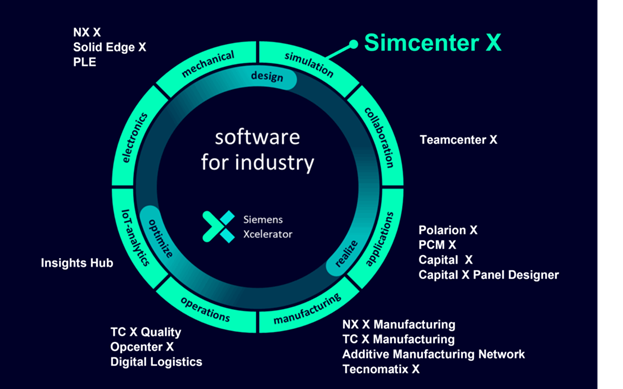
Welcome to Engineering Paper, bringing you the latest design and simulation software news. Today we’ll go over two big simulation updates from one big company. First up, Altair has released Altair HyperWorks 2026. The developer says its flagship simulation platform is now faster, more intuitive, and more multiphysical. Altair highlighted six “key innovations” of HyperWorks 2026: AI-powered design and simulation: HyperWorks continues to offer Altair PhysicsAI, a tool that uses AI to predict simulation results from historical data. In the 2026 release, Altair has expanded PhysicsAI support for vectors and smoothed-particle hydrodynamics. Enterprise-scale pre-processing and model assembly: Altair says large, complex assemblies will load and update “almost instantly” in HyperWorks 2026, and that model building, meshing, and connector creation are also significantly faster. Integrated multiphysics simulation: Improved solver performance and domain coupling in HyperWorks 2026 means faster and more accurate multiphysics simulations, according to Altair. In particular, users should notice improvements in motor and system design, reliability testing for electronics and batteries, and electromagnetic simulations. Automation, collaboration, and connectivity: HyperWorks 2026 adds more Python and API support and better visualization and plotting tools. Realistic particle, fluid, and material behavior: Altair says new modeling approaches in HyperWorks 2026 better capture the behavior of bulk materials, particle interactions, and high-temperature effects. Intuitive design and motion exploration: HyperWorks 2026 has new comparison and motion modeling tools that Altair says will make for more flexible design exploration. That includes new implicit modeling and warp-map tools, multi-window analysis for side-by-side comparison of results, and more. Altair HyperWorks 2026 is now available. You can see more release highlights on Altair.com. Altair, recall, is now part of the Siemens ONE Tech Company hivemind (speaking of which, anybody else watching Pluribus? You should). Here’s the second simulation update from that Unum. Siemens launches Simcenter X Advanced Siemens has announced what it says are significant updates to Simcenter X, the cloud-based version of its simulation suite (anytime you see an X trailing a Siemens software brand, it means it’s the cloud version; occasionally this branding backfires). X marks the spot. (Image: Siemens.) Siemens first launched Simcenter X in May 2024. At the time it supported only Simcenter STAR-CCM+, Siemens’ CFD software. The latest update, which Siemens refers to as Simcenter X Advanced, now includes more of Siemens’ simulation portfolio. In addition to STAR-CCM+, Simcenter X Advanced supports Simcenter Amesim for mechatronic system simulation, Simcenter HEEDS for design exploration and optimization, Simcenter 3D for multidisciplinary simulation, and Simcenter Femap for finite element analysis. Siemens says these applications are tightly integrated in Simcenter X, sharing a single named-user license and common token pool with built-in data management through Teamcenter X (Siemens’ cloud-based PLM software). “By unifying our multiphysics and optimization technologies and enhancing them with robust data management, collaboration capabilities, AI-driven guidance and design exploration, we’re empowering every engineer to accelerate innovation that matters, reduce complexity and make smarter decisions faster — anytime, anywhere,” Jean-Claude Ercolanelli, senior VP of simulation and test solutions at Siemens Digital Industries Software, said in the press release. You can read more about Simcenter X in this Siemens blog post about the new update, or this other Siemens blog post about Bear Grylls. One last link In last week’s Engineering Paper I wrote about the launch of Comsol Multiphysics 6.4. My colleague Martin Rowe, senior technical editor of EE World Online, provides a few more details in Comsol v6.4 enhances simulations, including electromagnetics. Got news, tips, comments, or complaints? Send them my way: malba@wtwhmedia.com. The post Simulation spotlight: HyperWorks 2026 and Simcenter X Advanced appeared first on Engineering.com.
Tesla China retail sales slip in November, facing impossible task to avoid first annual decline
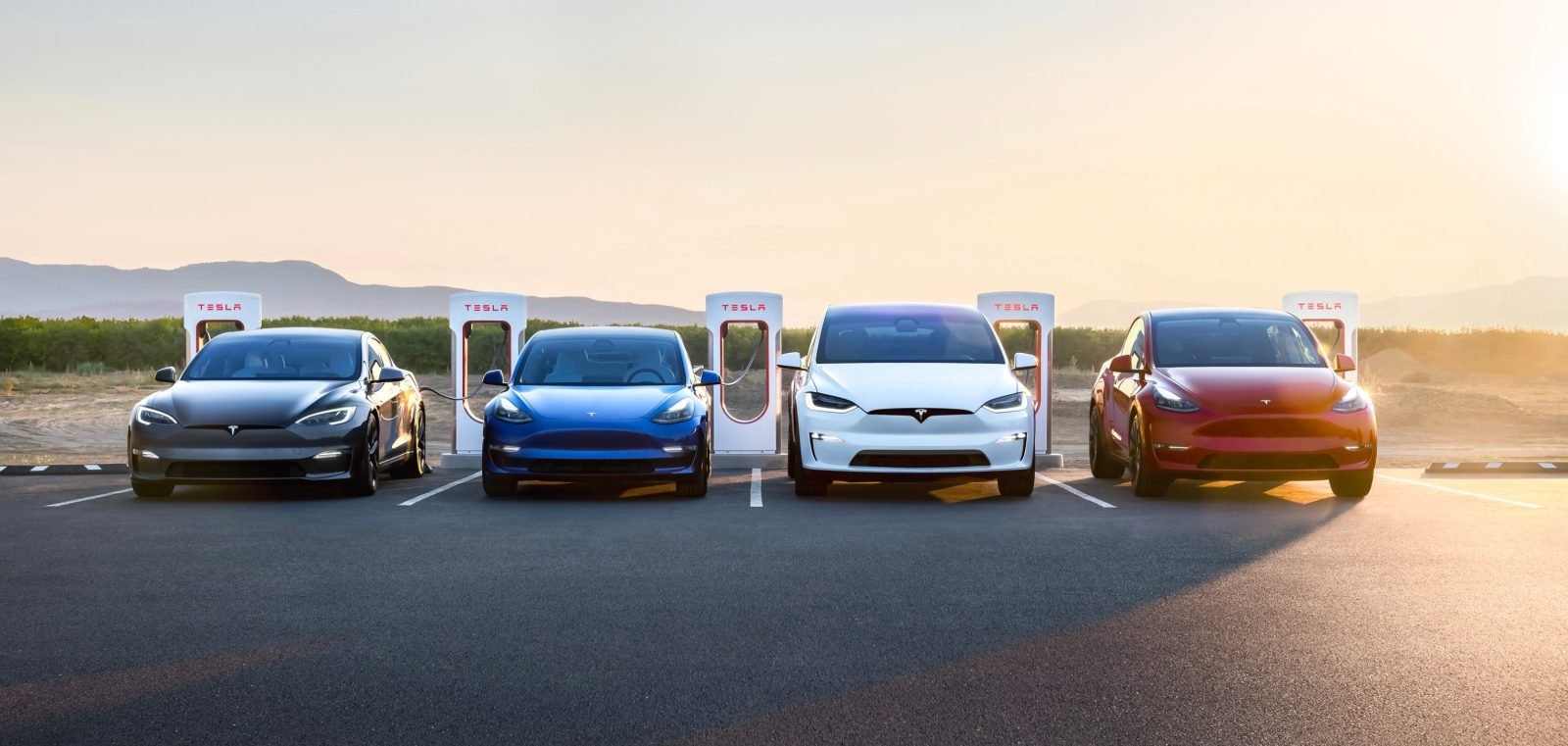
Tesla’s November numbers out of China are in, and they confirm what we’ve been suspecting for a while now: the growth story in the world’s most important EV market has officially stalled for the year. While Giga Shanghai is still churning out vehicles, the local appetite for them seems to have hit a ceiling, and the company is now facing a mathematical impossibility if it wants to avoid a year-over-year decline in 2025. more…
SparkCharge’s Mobile Battery-Powered Trailer delivers 320 kW DC charging for Zipcar’s EVs
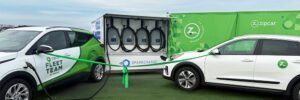
EV fleet charging network SparkCharge has partnered with the Massachusetts Clean Energy Center (MassCEC) and car-sharing network Zipcar to create a DC fast charging hub that uses a mobile, battery-equipped charging solution. Located at Zipcar’s maintenance facility in East Boston, the pilot facility supports a rotating fleet of Zipcar EVs. SparkCharge’s Mobile Battery-Powered Trailer delivers 320 kW DC fast charging. It is integrated with Zipcar’s existing on-site power, and draws supplemental energy from the grid to recharge its batteries between sessions, ensuring consistent, high-speed charging without overloading the local grid. SparkCharge explains that using its mobile charger can eliminate the need for major grid upgrades. “At SparkCharge, we believe electrification should never be limited by where the grid is or how long it takes,” said Joshua Aviv, founder and CEO of SparkCharge. “With this program in East Boston, we’re showing how fleets can deploy at scale, in any community, and deliver clean mobility today.” Source: SparkCharge