California city weighs banning Elon Musk companies like Tesla and SpaceX

A California City Council is planning to weigh whether it would adopt a resolution that would place a ban on its engagement with Elon Musk companies, like Tesla and SpaceX. The City of Davis, California, will have its City Council weigh a new proposal that would adopt a resolution “to divest from companies owned and/or controlled by Elon Musk.” This would include a divestment proposal to encourage CalPERS, the California Public Employees Retirement System, to divest from stock in any Musk company. A resolution draft titled, “Resolution Ending Engagement With Elon Musk-Controlled Companies and To Encourage CalPERS To Divest Stock In These Companies,” alleges that Musk “has engaged in business practices that are alleged to include violations of labor laws, environmental regulations, workplace safety standards, and regulatory noncompliance.” It claims that Musk “has used his influence and corporate platforms to promote political ideologies and activities that threaten democratic norms and institutions, including campaign finance activities that raise ethical and legal concerns.” If adopted, Davis would bar the city from entering into any new contracts or purchasing agreements with any company owned or controlled by Elon Musk. It also says it will not consider utilizing Tesla Robotaxis. Hotel owner tears down Tesla chargers in frustration over Musk’s politics A staff report on the proposal claims there is “no immediate budgetary impact.” However, a move like this would only impact its residents, especially with Tesla, as the Supercharger Network is open to all electric vehicle manufacturers. It is also extremely reliable and widespread. Regarding the divestment request to CalPERS, it would not be surprising to see the firm make the move. Although it voted against Musk’s compensation package last year, the firm has no issue continuing to make money off of Tesla’s performance on Wall Street. The decision to avoid Musk companies will be considered this evening at the City Council meeting. The report comes from Davis Vanguard. It is no secret that Musk’s political involvement, especially during the most recent Presidential Election, ruffled some feathers. Other cities considered similar options, like the City of Baltimore, which “decided to go in another direction” after awarding Tesla a $5 million contract for a fleet of EVs for city employees.
Base Power partners with El Paso Electric on Texas VPP

Base Power partners with El Paso Electric on Texas VPP - Energy-Storage.News Skip to content
Buick: is the brand that went to China coming home?

Buick: is the brand that went to China coming home? | Automotive World Skip to content The waning popularity of international brands in China, US tariffs, and residual affection for Buick at home mean change is afoot. By Ian Henry Buick is one of General Motors' oldest and most iconic brands; part of US automotive culture and history, it is immortalised in songs by Bob Dylan and Bruce Springsteen. However, Buick's American heritage has been much reduced in recent years, with only one model—Enclave—currently made in the US. Subscribe to Automotive World to continue reading Sign up now and gain unlimited access to our news, analysis, data, and research Subscribe Already a member? Join our LinkedIn Group Let us help you understand the future of mobility "*" indicates required fields Welcome back , to continue browsing the site, please click here We use cookies to ensure that we give you the best experience on our website. If you continue to use this site we will assume that you are happy with it.Ok Notifications
Why corporate investors look to domestic companies for dividends

The opinions expressed here by Trellis expert contributors are their own, not those of Trellis. For roughly 25 years, many professional investors had an investment playbook that favored companies that optimized global supply chains, captured labor cost arbitrage, and scaled relentlessly across borders. These structural advantages accrued disproportionately to mega-cap corporations with the resources to build complex international operations. The efficient frontier rewarded global optimization over domestic resilience. But now, that calculus is seemingly inverting. Whether driven by great-power rivalries fragmenting the world into spheres of influence, supply chain vulnerabilities exposed by the pandemic, or industrial policy reshaping where production occurs, the direction is becoming clear: the attributes that drive corporate success are shifting. As such, an emerging global commerce regime may reward resilience over efficiency, speed over scale and supply-chain control over cost minimization. For investors, this may create a compelling opportunity in a category that received relatively little attention during the globalization era: nimble, private, domestically-oriented companies with supply chains contained within U.S. borders or the Western hemisphere. Why private beats public The structural advantages of private ownership become particularly pronounced when companies need to execute multi-year transformations. Reshoring manufacturing, automating to offset domestic labor costs, vertically integrating for supply chain security — these initiatives require patient capital and longer time horizons that public market investors have historically punished. Consider the current decision-making environment. A publicly-traded manufacturer announcing a three-year, $200 million reshoring initiative plausibly faces immediate stock price pressure, analyst skepticism about near-term margins, and potential activist investors demanding faster returns. The same company under private ownership can execute the transformation without a quarterly communications apparatus or short-term earnings management. Private companies also enjoy decision speed that public counterparts cannot match. When tariff policies shift, supply chain disruptions emerge, or new reshoring incentives become available, private firms can pivot immediately. There are fewer board committees, limited disclosure requirements, and less investor relations considerations delaying action. This agility premium compounds over time. In a stable global trading environment, the advantages of scale and public market access outweighed the flexibility costs. In a volatile environment characterized by tariff uncertainty, industrial policy shifts and geopolitical fragmentation, this reverses. Why domestic beats global Companies with U.S. or Western hemisphere supply chains possess structural advantages that extend beyond tariff insulation. Shorter supply chains mean fewer disruption points, better quality control and reduced working capital requirements. When your suppliers are within driving distance rather than across an ocean, problems get solved faster and relationships run deeper. The regulatory and political environment increasingly favors domestic orientation as well via the CHIPS Act and Inflation Reduction Act. Companies already positioned within these value chains capture incentives that global competitors can’t access. Meanwhile, mega-cap multinationals face mounting antitrust scrutiny, forced localization requirements in foreign markets, and the political symbolism that comes with visibility. At the same time, “Made in America” has transformed from a cost liability to a brand asset. For companies serving domestic customers, American production represents competitive advantage rather than compromise. This brand premium compounds with the operational advantages of supply chain proximity. Why nimble beats scale Large multinational corporations face a particular bind in this environment. Their global infrastructure — painstakingly optimized over decades — was designed for a world that may no longer exist. Restructuring requires writing off stranded capital, accepting years of margin compression, and navigating organizational complexity that slows execution. Smaller companies face none of these legacy burdens. A $50 million revenue manufacturer with domestic operations needs no restructuring; its challenge is growth and capability building, not transformation and legacy rationalization. This is a fundamentally more attractive starting point for value creation. The talent equation also favors nimble operators. Skilled manufacturing workers, supply chain professionals and operations talent increasingly prefer stable domestic employers over companies managing global restructurings. In a tight labor market, the ability to offer workforce stability becomes a recruiting advantage that compounds operational benefits. Where the opportunities lie Several investment categories merit particular attention: Lower-middle-market private equity focused on domestic industrials. These firms — typically $10-100 million in revenue, often family-owned, frequently operating in unsexy but essential manufacturing niches — represent the sweet spot where private ownership advantages, domestic positioning and growth potential converge. Private credit financing reshoring initiatives offer attractive risk-adjusted returns. Companies investing in domestic manufacturing capacity, automation and supply chain reconfiguration need capital for multi-year projects. Traditional lending often falls short for these transformational investments, while private credit providers can structure patient financing capture yields while supporting economically rational adaptation. Vertical integration plays deserve fresh evaluation. The globalization era favored asset-light models that contracted production to lowest-cost providers. The emerging world order rewards owning critical supply chain nodes. Companies acquiring suppliers, investing in captive manufacturing or backward-integrating into component production may sacrifice near-term returns for long-term resilience — a trade-off that patient capital can underwrite. Employee stock ownership plans (ESOPs) offer an intriguing structural angle. These vehicles align workforce incentives with company success, provide liquidity for founders seeking exits outside traditional private equity channels, and create tax advantages that enhance returns. In a reshoring context, worker-owners have direct stakes in the success of domestic production investments. Given that an ESOP transfers ownership in a ‘graying America’ from founder to employees, impacting wealth gaps (without changing minimum wages or benefits), the structure has bipartisan support. Risk considerations Of course, this investment thesis carries meaningful risks that investors must weigh. Domestic supply chains aren’t immune to disruption — natural disasters, labor shortages and infrastructure failures can affect U.S. operations as readily as foreign ones. Some critical inputs simply don’t exist domestically and can’t be reshored regardless of incentives or intent. Rare earth processing, certain semiconductor manufacturing capabilities, and specialized components may require accepting some cross-border exposure. Policy reversibility presents another consideration. The current trajectory toward deglobalization could reverse with changed political leadership or shifting geopolitical dynamics. Companies and investors who over-rotate toward domestic positioning may find themselves disadvantaged if global trade normalization occurs. Building optionality — domestic positioning with flexibility to adapt — represents prudent
Samsung Unpacked 2026: 5 biggest rumors I found on Galaxy S26 Ultra, Buds 4 Pro, more

The Samsung Galaxy S25 series was unveiled at last year's winter Unpacked event. Sabrina Ortiz/ZDNET Follow ZDNET: Add us as a preferred source on Google. ZDNET's key takeaways The next Samsung Unpacked event should introduce new mobile gadgets to the market. Samsung is set to announce new Galaxy S26 models, including the Ultra. Expect talk of UI updates, redesigned earbuds, and possibly AI glasses. Unlike the last two years, Samsung isn't hosting an Unpacked event in January of 2026. Instead, the rumored Galaxy S26 Ultra has been confirmed to be announced this February, just before Mobile World Congress (MWC). Ahead of the launch event in February 25, reports point to the release of several major products, including some fan favorites, and possibly surprises. Also: Samsung confirms Galaxy S26 Ultra deal for $900 off ahead of February Unpacked From the expected new Galaxy S-series phones to a couple of unexpected treats, here's what you can expect from the Samsung Unpacked event in February. When is the Samsung Unpacked 2026 event? Kerry Wan/ZDNET Samsung has confirmed that the next Unpacked event will be held on February 25 in San Francisco, with viewers able to tune in at 10 a.m. PT and 1 p.m. ET. Also: 5 preinstalled Samsung apps you should remove ASAP - they're basically bloatware If you want to watch the Unpacked 2026 event online, you can go to the Samsung website or YouTube to tune in to the live stream. You'll likely find a "notify me" button closer to the launch, so you can receive a heads-up before the live stream begins. Here are five things we expect from the next Samsung Unpacked event. What to expect from Samsung Unpacked 2026 1. Don't sleep on the Samsung Galaxy S26 Prakhar Khanna/ZDNET To no surprise, the rumor mill has been spinning and spinning ahead of the Galaxy S26 launch. There were reports that Samsung would replace its base model with a "Galaxy S26 Pro" in its early-2026 flagship lineup. However, these rumors have since been debunked, and we now know that the S26 Pro is just the base model Galaxy S26. Also: If these Samsung Galaxy S26 rumors are true, I might finally put my Google Pixel loyalty to rest As usual, we could get a Galaxy S26 and Galaxy S26 Plus below the Ultra variant. The duo could get a camera upgrade in the ultrawide-angle sensor, with an expected upgrade from 12MP to 50MP, according to a report from Android Headlines. The lower-end model might have a slightly larger 6.3-inch screen and a 4,300mAh battery (300mAh more than the Galaxy S25's 4,000mAh cell). This device could be paired with 12GB of RAM and up to 512GB of storage. 2. Will an Edge model replace the Plus? Samsung Galaxy S25 Edge (left) and S25 Plus (right) Kerry Wan/ZDNET There have been rumors that Samsung could retire the "Plus" moniker and shift to a new slim phone, the Galaxy S26 Edge. According to reliable tipster Ice Universe, the super-slim Samsung phone could have a 4,200mAh battery and measure just 5.5mm thick, which is 0.3mm thinner than the S25 Edge and 0.1mm skinnier than the iPhone Air. Also: These Samsung Galaxy S26 rumors suggest big changes that we didn't see coming The Galaxy S26 Edge might feature the same 6.7-inch screen as before. While there have been contradicting rumors about Samsung continuing with the Edge in future lineups, I loved using the Galaxy S25 Edge -- especially because it had fewer hardware limitations than Apple's iPhone Air. 3. How much more 'Ultra' can Samsung get? Kerry Wan/ZDNET Samsung's Ultra phone needs a major ergonomic overhaul, and leaked renders of the Galaxy S26 Ultra hint at slight design changes. I couldn't use the Galaxy S25 Ultra as my daily driver last year, despite its comparatively lightweight design (218 grams), because of its sharp sides. According to leaked renders, Samsung's Galaxy S26 Ultra could feature curvier corners than its predecessor and a raised vertical camera bump on the back. The device is said to be 0.3mm slimmer, at 7.9mm thick, and to feature a new M14 OLED display. The company recently released teaser videos of a new privacy feature, which could protect your on-screen information from nosy strangers. I'm speculating this tech will be the biggest talking point after launch. Also: Samsung's confirmed Galaxy S26 Ultra display upgrade fixes my long-standing annoyance The Samsung Galaxy S26 Ultra could sport a larger 1/1.1-inch 200MP Sony sensor with an f/1.4 aperture for the main camera. The device is said to let in 47% more light, for better images in low-light situations. I hope the phone gets a telephoto camera upgrade too, but we'll have to wait and watch. All three Samsung Galaxy S26 phones are tipped to be powered by different processors in different regions. In the US and China, you might get Qualcomm Snapdragon 8 Elite Gen 5-powered devices, while the rest of the world could see Exynos 2600 variants. Historically, Samsung's in-house Exynos chipsets have been notorious for poor heat management, but the new processor could change that issue. According to Korea Economic Daily, the Exynos 2600 could include an NPU that's speculated to be 30% faster than Qualcomm's flagship chipset. 4. New One UI 8.5 features Prakhar Khanna/ZDNET Samsung released its One UI 8 alongside the Galaxy Z Fold 7 and Z Flip 7 last year, and it is expected to announce One UI 8.5 at the upcoming launch. For context, 8.5 has been available in beta since December, so we know what to expect. Also: I tried Samsung's $2,900 tri-foldable phone ahead of its US debut - it won me over in minutes The stable version of One UI 8.5 could bring an expanded dark theme, upgraded Home Up support, lockscreen widget support, and more AI features, including Samsung's take on Apple's Notification Summary feature. In the beta version, One UI 8.5 also allows you to resize folders and improves inter-device connectivity. 5. Samsung Galaxy Buds 4 Pro Kerry Wan/ZDNET According to a September report from SamMobile and an X post,
Intelligent Memory launches a new generation of eMMC
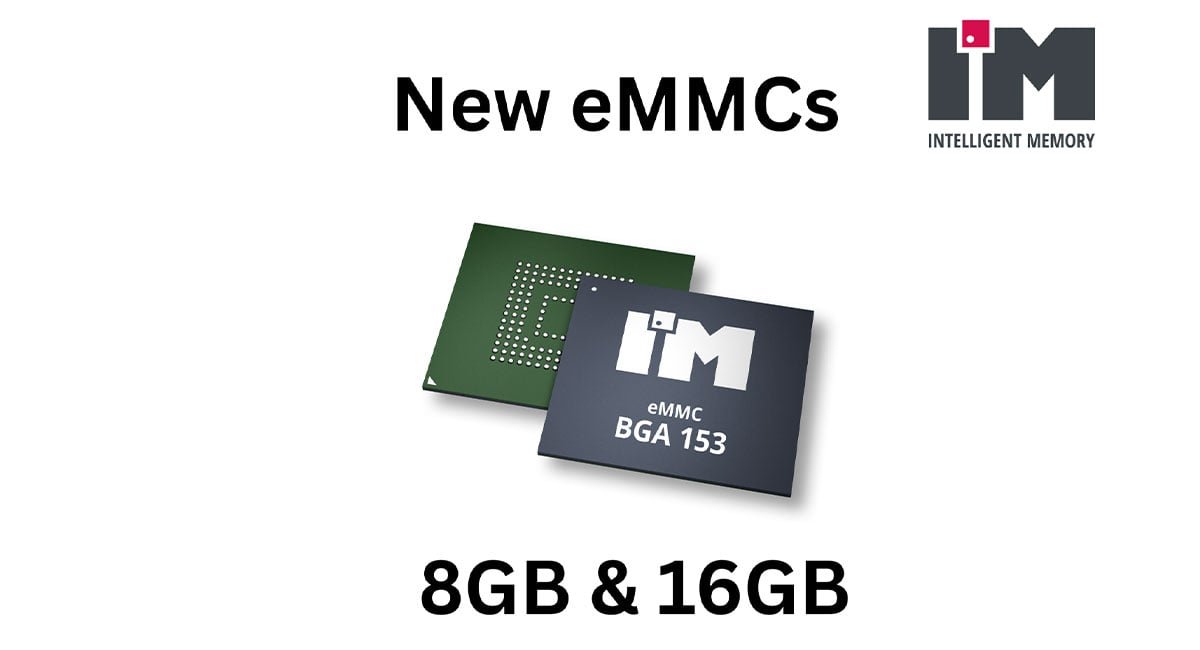
As many memory manufacturers discontinue their eMMC product lines, Intelligent Memory, a manufacturer of industrial-grade memory product solutions, launches a new, low-density eMMC product line. The new eMMCs will come in 8 and 16GB densities in a 153-ball BGA package, and are purpose-built for industrial environments where stability, longevity, and right-sized capacity are critical. Despite industry exits, eMMC technology remains essential for a wide range of embedded and industrial applications, ranging from industrial control systems and factory automation to medical equipment, IoT gateways, smart devices, and automotive electronics. These applications demand durable, stable, and long-lived memory – not massive storage. With this new product line, Intelligent Memory is stepping up to ensure industrial customers have the reliable storage solutions they need. For applications that need more capacity, Intelligent Memory offers higher-density options, such as its 64GB eMMC, which is currently in stock. With these options, Intelligent Memory invites industrial customers to future-proof their designs with eMMC they can count on. “Most industrial designs simply don’t require high-density storage,” said Alistair Jones, Global Director Sales & Marketing. “With our new low-density eMMC portfolio, customers get precisely the capacity they need, without paying for excess. We’re committed to supporting these products for the long term, providing peace of mind through a stable and predictable supply chain.” Samples of the new eMMC product line are available now. Intelligent Memory is exhibiting these eMMCs as part of its managed NAND flash memory product line at embedded world, in Nuremberg, from March 10-12th in hall 1, booth 340.
Segway Xyber e-bike hits new $2,900 low, Jackery Explorer 1500 Ultra power station $949, Velotric T1 ST Plus 100-mile extender bundle, more

Our Presidents Day Green Deals are loaded up with a solid collection of deals/sales, especially on e-bikes and power stations. Leading our top three, things start with the premium Segway Xyber Electric Bike at a new $2,900 low, while the latest Jackery Explorer 1500 Ultra Portable Power Station has fallen to $949, and Velotric is offering the return of its T1 ST Plus Urban e-bike bundled with a range extender battery at its $1,299 yearly low. From there, we also have EcoFlow’s latest 48-hour flash sale, an Anker SOLIX BP1000 expansion battery low, Ride1Up’s Presidents Day e-bike offers, and much more waiting for you. And don’t forget the hangover deals from last week at the bottom of the page, collected together within our latest Electrified Weekly roundup coverage. Head below for other New Green Deals we’ve found today and, of course, Electrek’s best EV buying and leasing deals. Also, check out the new Electrek Tesla Shop for the best deals on Tesla accessories. more…
Turntide’s new axial flux drive unit delivers up to 700 kW peak in a stackable package

Turntide Technologies has unveiled a modular axial flux electric drive unit (EDU) that integrates motor, inverter and gearing with shared cooling in a single package. The company says the axial flux design delivers 53% higher torque density than a comparable radial flux motor in 58% less volume and at 37% less weight. The platform supports 400 V and higher, with single or stacked motor configurations scaling from 73 kW to 220 kW nominal and 300 kW to 700 kW peak. Target applications include off-highway equipment, construction, powersports, commercial vehicles and automotive. The low-speed, high-torque characteristics of the axial flux motor allow for simpler gear designs, which Turntide says reduces mechanical complexity, weight and maintenance costs. The company is positioning the EDU as a pre-validated platform aimed at OEMs looking to electrify without the component-level integration work that typically adds months or years to development programs. “By handling the integration, validation, and testing upfront, our EDU decreases the risk, time and cost of bringing new products to market,” said CEO Steve Hornyak. Turntide recently put the platform through a durability test at King of the Hammers, one of the most demanding off-road races in the US. Its Sierra Echo-R became the first purpose-built EV to qualify for and compete in the Desert Challenge course, completing more than 600 miles of terrain with no drivetrain issues, according to the company. Source: Turntide Technologies
Here are the best electric bikes you can buy at every price level in February 2026

I’ve spent countless hours here at Electrek doing detailed hands-on testing of hundreds of electric bikes. Through thousands of miles of riding, I’ve been fortunate to learn these e-bikes inside and out, top to bottom and front to back. That long-term experience with real-world e-bike testing has helped me find the best electric bicycles on the market for just about any budget. Below are some of the top e-bikes I’ve hand-tested for every price range, current as of February 2026. While some of us are buried in snow, others are starting to see the first glimpse of riding season on the horizon! Check out the awesome e-bikes below, any one of which could become your next electric bike. more…
Download the EV inverter thermal management case study

Sponsored by Honeywell. Recently, a leading manufacturer of EV inverters encountered a heat dissipation issue related to the inverter and required a reliable solution to address this challenge. Download this case study to learn about diligently evaluating various options for thermal conductivity, high reliability, and suitability for thin gaps; and to learn more about Honeywell’s Phase Change Material (PCM) applications in EV inverter, on-board charger, and advanced driver-assistance system.
Tesla ends Full Self-Driving purchase option in the U.S.

Tesla has officially ended the option to purchase the Full Self-Driving suite outright, a move that was announced for the United States market in January by CEO Elon Musk. The driver assistance suite is now exclusively available in the U.S. as a subscription, which is currently priced at $99 per month. Tesla moved away from the outright purchase option in an effort to move more people to the subscription program, but there are concerns over its current price and the potential for it to rise. In January, Musk announced that Tesla would remove the ability to purchase the suite outright for $8,000. This would give the vehicle Full Self-Driving for its entire lifespan, but Tesla intended to move away from it, for several reasons, one being that a tranche in the CEO’s pay package requires 10 million active subscriptions of FSD. Although Tesla moved back the deadline in other countries, it has now taken effect in the U.S. on Sunday morning. Tesla updated its website to reflect this: Tesla has officially moved the outright purchase option for FSD on its website pic.twitter.com/RZt1oIevB3 — TESLARATI (@Teslarati) February 15, 2026 There are still some concerns regarding its price, as $99 per month is not where many consumers are hoping to see the subscription price stay. Musk has said that as capabilities improve, the price will go up, but it seems unlikely that 10 million drivers will want to pay an extra $100 every month for the capability, even if it is extremely useful. Instead, many owners and fans of the company are calling for Tesla to offer a different type of pricing platform. This includes a tiered-system that would let owners pick and choose the features they would want for varying prices, or even a daily, weekly, monthly, and annual pricing option, which would incentivize longer-term purchasing. Although Musk and other Tesla are aware of FSD’s capabilities and state is is worth much more than its current price, there could be some merit in the idea of offering a price for Supervised FSD and another price for Unsupervised FSD when it becomes available. The post Tesla ends Full Self-Driving purchase option in the U.S. appeared first on TESLARATI.
GENIUS: adding solar panels to semi trailers is an idea so obvious it hurts

Refrigerated trailers are critical for hauling your fresh food and flowers from the farm to your local market – the problem is that they pollute like crazy, powered by red-dye diesel gensets that run around the clock, even when the truck pulling them is fully electric. To help solve that problem, one company come up with an idea so obvious you’ll hate yourself for not coming up with it on your own: rooftop solar. more…
Download the guide to high voltage protection in DC fast charging

Sponsored by TTI. Fast charging in electric vehicles helps meet the demand for fast and convenient recharging, but the high voltage it entails also brings risks. Download Sensata’s guide to high-voltage protection to learn more about the risks associated with high-voltage DC fast charging and what can be done to mitigate these dangers.
RoboDK launches RoboDK CAM for robotic machining cells

RoboDK has launched RoboDK CAM, a comprehensive software solution that significantly reduces deployment times for automated machining cells. Unlike complex traditional approaches which require specialists to manually program each robot and end-effector using vendor-specific languages, RoboDK CAM automatically generates robot code from CAD designs and digital simulations, reducing the complexity and cost of machining automation deployments. This allows manufacturers and integrators to move directly from design to production without having to be experts in robot programming. RoboDK CAM supports a wide range of machining operations, including milling, drilling, deburring, cutting, and additive manufacturing. Users can generate advanced toolpaths, simulate full machining processes, detect collisions, and transition from simple 3-axis tasks to 5-axis machining within a single, intuitive environment. Additionally, instead of having to spend weeks testing and programming various configurations of your machining cell, RoboDK CAM allows you to test your setup in a safe, simulated environment in minutes. The new software is available in two configurations, addressing different manufacturing workflows: Standalone: RoboDK CAM enables users to manage the entire robotic machining process—from toolpath generation to robot simulation and code generation—within one integrated interface. Key capabilities include advanced surface machining, accurate stock tracking, and full machining simulation. Integrated: designed for machining professionals who want to work within established CAD/CAM platforms. RoboDK CAM integrates with all leading systems such as Fusion 360, SolidWorks or Mastercam through dedicated Add-ins, enabling users to retain their existing CAM workflow while extending it to industrial robots using RoboDK’s simulation and programming engine. Typically, it takes weeks of testing and programming to deploy machining automation, but as early testers of the software have reported, RoboDK CAM reduces testing time significantly -up to 40% depending on the complexity of the automation- and cuts overall deployment times from days to just minutes. For manufacturers, RoboDK CAM enables faster automation rollouts, reduced downtime, and quicker iteration on machining processes. For system integrators, the software shortens project timelines and reduces the engineering effort required to deploy robotic machining cells. For more information, visit robodk.com. The post RoboDK launches RoboDK CAM for robotic machining cells appeared first on Engineering.com.
California’s Helix water district gets state-of-the-art managed charging [Q&A]
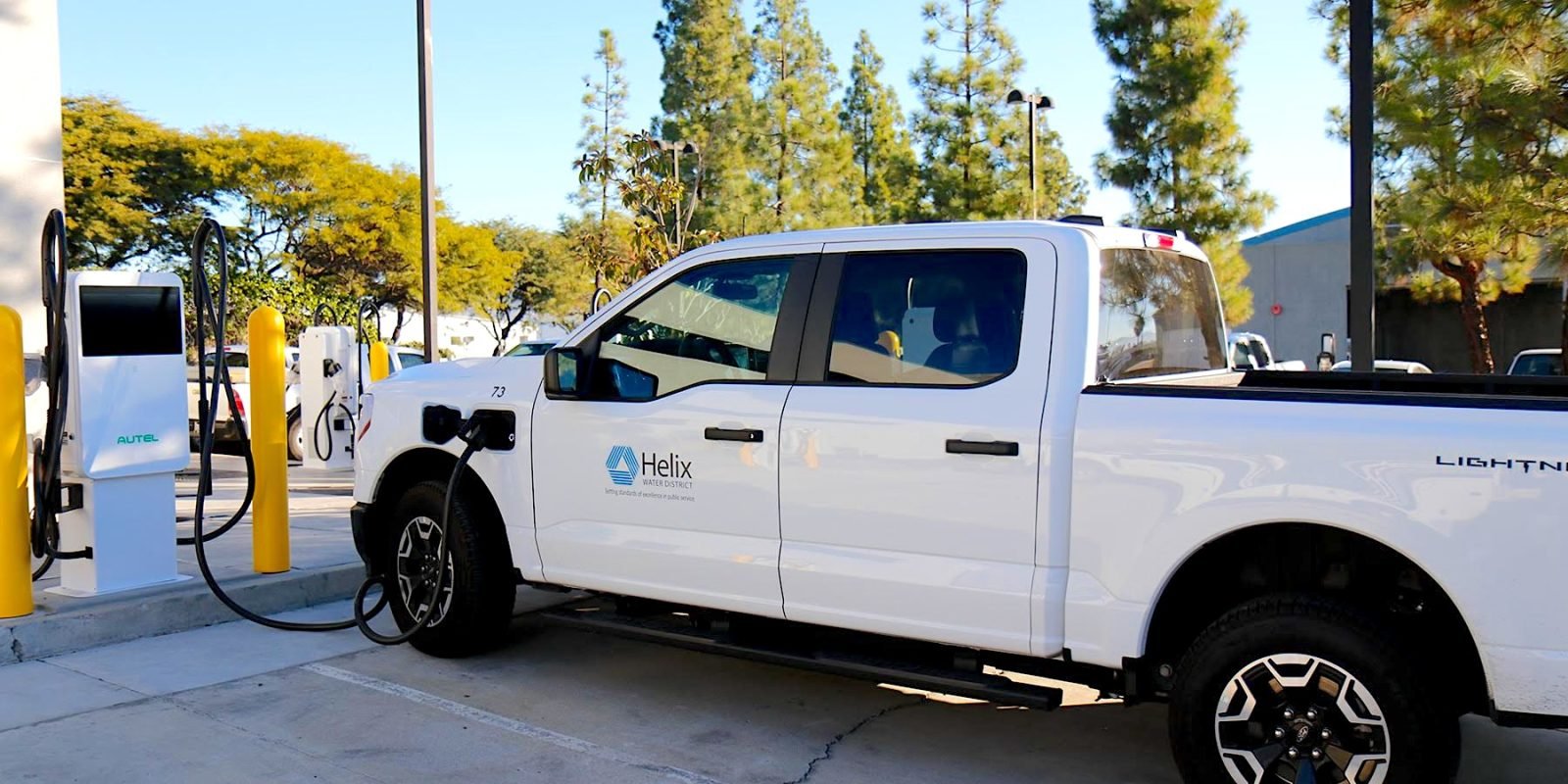
Located at Helix water district’s operations center in El Cajon, California, the project supports the district’s full transition to zero-emission vehicles while maintaining the reliability required of a mission-critical public utility. To keep it all running smoothly, the district has deployed Better Fleet’s advanced managed charging software solution – and we’ve got the company’s CEO, Dan Hilson, to walk us through it. more…
London Borough of Harrow rolls out 500 new on-street EV charge points

On-street charging is the solution for urban EV drivers who don’t have dedicated parking spaces, and London is at the center of the action. Now the London Borough of Harrow is rolling out 500 new on-street EV charge points in partnership with EV charging provider char.gy. The charge points are attached to lamp columns and provide low-powered charging, perfectly adequate for topping up an EV while it’s parked overnight. 225 new charge points have already been installed, and another 275 are slated to be deployed by October 2028. The new charge points run on 100% renewable electricity. They feature clear pricing and discounted overnight rates. “We’re putting residents first by making it easier to charge electric vehicles where people actually live,” said David Ashton, Cabinet Member for Finance and Highways. “More on-street charging means less time searching for a plug and more confidence for drivers every day. “ “This expansion will make a real difference for everyday drivers: people who live without a driveway, those switching to electric for the first time, and anyone who wants reliable, affordable charging close to home,” said John Lewis, CEO of char.gy. “We look forward to working with the council, residents and local communities as these chargers go live.” The Borough of Harrow has produced a short video to get residents excited about the new infrastructure. Source: char.gy
10 AI tools coming to Solidworks in 2026
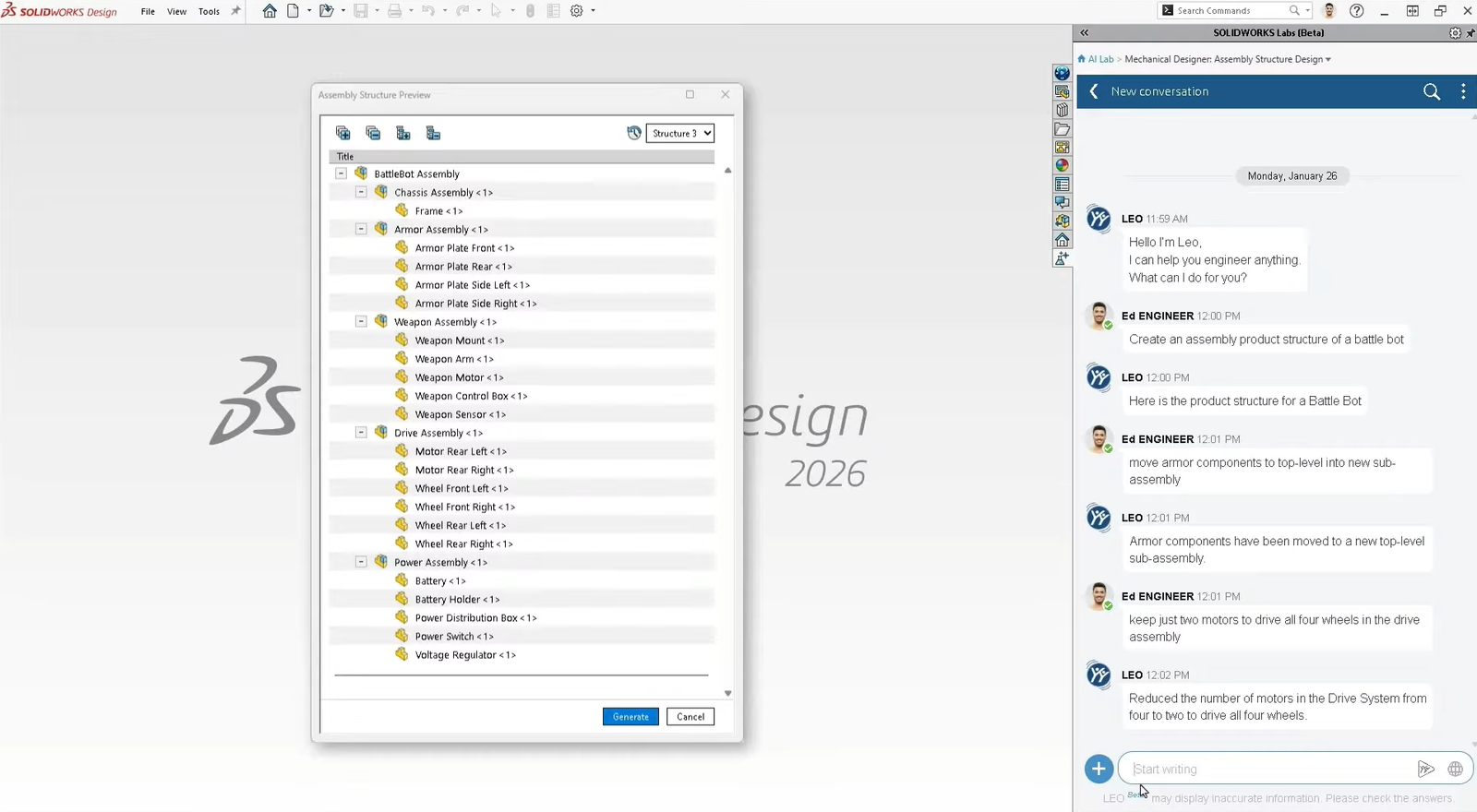
2026 will be the biggest year yet for AI-powered features in Solidworks. Dassault Systèmes showed off the new AI features last week at 3DExperience World 2026, emphasizing that most are not speculative demos but real features coming later this year. “Everything that I have shown to you today is working,” Manish Kumar, Solidworks CEO, told the crowd in his second-day keynote. Here are the Solidworks AI features we saw at 3DExperience World (plus some for the browser-based xDesign). Unless otherwise noted, all of these features are scheduled for general availability in July 2026, but most will be available in beta before then. 1. Assembly Structure Designer Beta availability: Current release Leo, as seen in this and other screenshots, is one of Dassault’s three virtual companions, alongside Aura and Marie. (Image: Dassault Systèmes.) Assembly Structure Designer allows users to set up an assembly framework when beginning their design. In the example Kumar shared on stage, a user asks Leo to create an assembly product structure for a battle bot. It generated a structure including a chassis assembly, armor assembly, weapon assembly and more. “You’re getting an outline, basically, of what your structure is. So you have your top level assemblies, you have your subassemblies, and you have your parts. It’s typical top level assembly management,” Craig Therrien, senior product manager for Solidworks, told Engineering.com. 2. What’s Wrong Beta availability: Current release (Image: Dassault Systèmes.) Solidworks users with errors or warnings in their feature tree can find them all listed in the What’s Wrong dialogue box. Now, AI will help them get to the root cause of the problem. “A lot of these are cascading problems,” Therrien said. “More than likely, if you have a bunch of errors in your tree, they’re kind of related to a root cause. So what it tries to do is direct you to that root cause.” While AI can find the common cause and recommend how to fix it, in the future it may even be able to fix the problem directly, Therrien said. 3. Drawing Creation Beta availability: Current release (Image: Dassault Systèmes.) Solidworks has had the ability to automatically generate drawings since last year, according to Therrien, but now the AI feature is more customizable. Users can instruct Leo to use settings including sheet sizes, drawing standards, and which templates to use. “Now you’re able to communicate up front how you want that drawing to be created before you do it,” Therrien said. 4. Design Inspection Beta availability: April (Image: Dassault Systèmes.) Design Inspection will allow Solidworks users to ask questions of their models in natural language. For example, they could ask the mass of the total assembly, how many of a specific type of part is included, or what materials are assigned to certain parts. 5. Material Manager Beta availability: April Not only can Solidworks users ask about the materials used in their parts, they can also manage those materials from the chatbot interface. In the Design Inspection screenshot above, the user asks what material is used for the vibration damping mounts and then instructs Leo to replace the steel alloy with natural rubber. “Imagine doing it by yourself manually, one part at a time. You can do it by just chatting with the model now,” Kumar said on stage. 6. Project Planner Beta availability: April (Image: Dassault Systèmes.) Solidworks users that also use Enovia Project Planner will soon get an AI boost, according to Kumar, who said they’ll be able to chat with Aura directly in Solidworks to manage their projects without having to dig through dashboards or spreadsheets. “It gives you instant clarity, summarizing your project status,” Kumar said in his keynote. “You can chat with it. Where is my project? What’s been delivered? What’s not delivered? And quick and easy access to what is blocking the release.” 7. Assembly Performance Doctor Beta availability: April (Image: Dassault Systèmes.) No one likes laggy assemblies, and while AI can’t magically speed them up (yet), it can help users optimize them. Assembly Performance Doctor will evaluate your assembly and recommend ways you can tweak it to overcome performance issues. “Maybe you have too many mates at the top level, or you have too much detail being shown in your fasteners, or something like that,” Therrien said. Similar to What’s Wrong, Assembly Performance Doctor cannot currently take action on its own recommendations, but it may in the future, according to Therrien. 8. PLM Model Insights Beta availability: April Though Kumar didn’t demo this feature on stage, PLM Model Insights is a new conversational way for users to investigate the PLM attributes of their files. “Today, users often spend time stitching together revision history, lifecycle management, where used, contained in, BOMs and spreadsheets to answer simple questions like ‘who changed what, when and what breaks?’ PLM Model Insights collapses that to seconds,” a Dassault representative told Engineering.com over email. “The user can use plain text to search for ownership, revision history, and information about a part or an assembly without having the file open.” 9. Design Change Impact Beta availability: April (Image: Dassault Systèmes.) Change is a part of life, and an even bigger part of engineering. This AI feature aims to help Solidworks users manage it more easily. “When change is inevitable, Aura helps you to understand the impact before it becomes a problem,” Kumar said on stage. Though he didn’t show a demo of Design Change Impact, the feature was available at the 3DExperience World AI lab booth. Dassault sent us a brief video demo over email (from which we took the above image) and described Design Change Impact as “helping users make informed decisions before committing to modifications. It analyzes the active assembly and explains which components, mates, and features will be affected by a specific modification.” 10. Image to Mesh Beta availability: July (Image: Dassault Systèmes.) With Image to Mesh, Solidworks users can upload pictures of an object and Leo will convert it into a 3D mesh. “Not every design starts from a blank screen. Very often you’re
Lectric Presidents Day sale offers up to $893 e-bike savings – deals from $999, Segway Navimow X4 + i2 robot mower launch deals, more

We’ve got some big deals leading our end-of-the week Green Deals, with Lectric launching its official Presidents Day Sale that has increased e-bike savings up to $893 – all starting from $999. Right behind that, we have Segway Navimow officially launching its newest i2 series and X4 series robot lawn mowers with up to $300 savings and FREE gear starting from $899. There’s also EcoFlow’s 72-hour Valentine’s Day flash sale closing out the overall event with the weekend, offering the DELTA 2 Portable Power Station at $399, among others, as well as sales on Velotric e-bikes (including a 100-mile range extending bundle), Hiboy EVs, NIU e-bikes, and more waiting for you below. And don’t forget the hangover deals at the bottom of the page, like yesterday’s massive $1,500 exclusive savings on the Gendome Home3000 Portable power Station to a new $799 low, and more. Head below for other New Green Deals we’ve found today and, of course, Electrek’s best EV buying and leasing deals. Also, check out the new Electrek Tesla Shop for the best deals on Tesla accessories. more…