NYPA to develop 1.2GW of additional energy storage
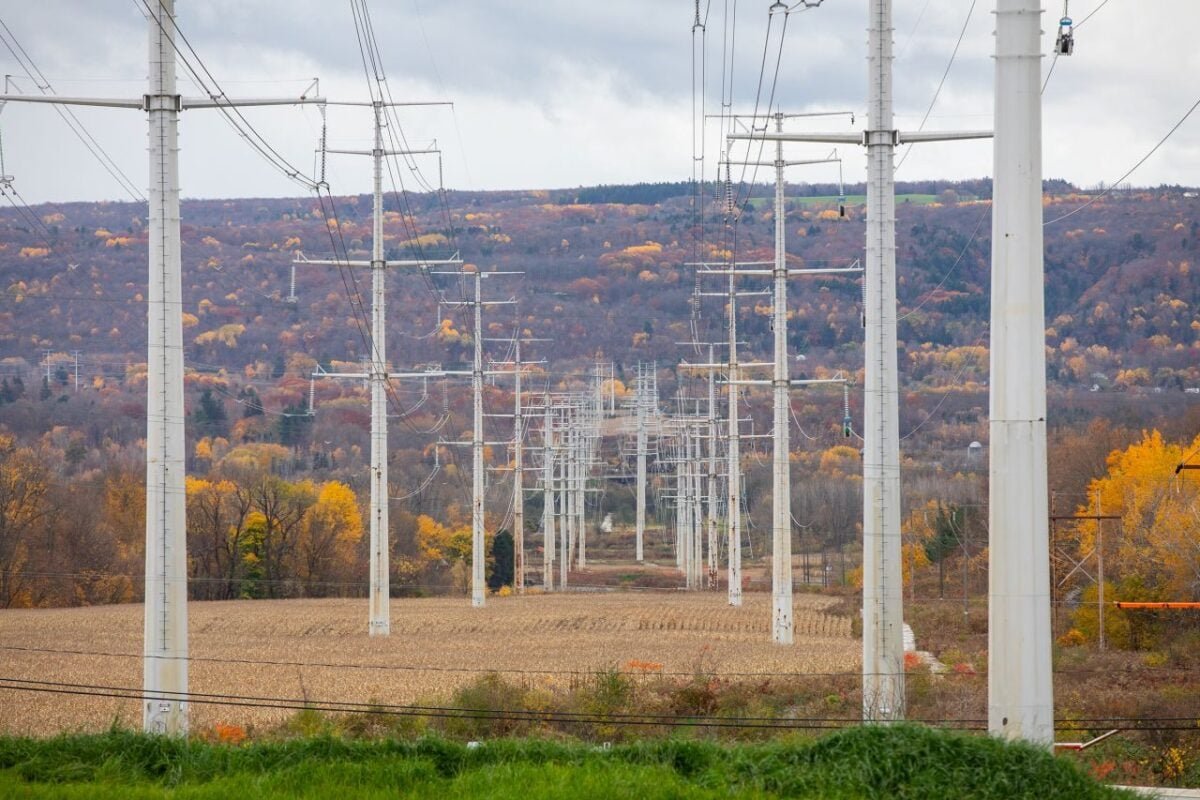
As reported by sister site PV-tech, the majority of this cumulative capacity came from solar technology. However, in July this year, the NYPA published a draft update for its plan that massively upped its energy storage ambitions by proposing an additional 156 projects representing a cumulative storage capacity exceeding 3.8GW. Alongside the storage additions, NYPA proposed another 20 new renewable generation projects, taking the total cumulative capacity to almost 7GW. Driscoll said that he was “proud” of the draft plan, which was produced during the height of uncertainties surrounding investment tax credits and increasing import tariffs. 7GW down to 5.5GW, 500MW development with Hydrostor Despite energy storage developments remaining mostly intact, the final plan approved last week comprises a reduced approximate 5.5GW of cumulative capacity, compared to the 7GW of the draft plan. NYPA said the reduction in cumulative capacity was down to the elimination of investment tax credits for solar and wind projects, along with the results of interconnection studies. Coupled with tax credits for energy storage remaining until 2033, these changes aren’t too surprising. The approved plan reduces the number of energy storage projects from 156 to 149, comprising 146 distribution-connected projects across three separate portfolios, as well as three individual utility-scale projects. Most notably of the new additions, NYPA is jointly developing a 500MW compressed-air energy storage system with Hydrostor in Lewis County connecting to the New York System Operator (NYISO’s) K load zone. The project, known as Antelope Energy Storage, is expected to be assessed by the system operator as part of its 2026 cluster study, with NYPA targeting commercial operations during the final quarter of 2030. Headquartered in Toronto, Canada, Hydrostor has developed its own proprietary advanced-compressed air energy storage (A-CAES) technology. As recently reported by Energy-Storage.news, an offtake agreement relating to one of Hydrostor’s California developments was recently amended for the third time due to “permitting and interconnection challenges.” Although the city of Croghan, which expects to host the Antelope project, has recently amended its zoning laws to regulate compressed air energy storage technology, it has yet to receive any development applications. Details of the other two utility-scale storage projects within NYPA’s revised plan are as follows: Project Name Co-developer Location Capacity (MWac) Estimated completion date H1 Oriden Deerpark, Orange County 10 Q4 2027 K4 YSG Solar Brookhaven, Suffolk County 4 Q3 2026 Both projects were included in the inaugural plan, with NYPA stating that no major updates have occurred since then. Portfolio developments In terms of distribution-connected storage, the updated plan includes three new portfolios which NYPA is separately co-developing with two developers: New Leaf Energy and Orenda, who are responsible for one and two portfolios, respectively. Broad details of the portfolios, which are all being developed under NYPA’s Renewable Energy Access and Community Help (REACH) program, can be found below: Project Names Co-developer Number of projects Cumulative Capacity (MWac) Capacity Range (MWac) Online date range R6.1 – R6.4, R6.11, R6.12 New Leaf Energy 6 28 3 – 5 Q2 2027 – Q2 2029 S1.1 – S1.75 Orenda 75 353.94 2.88 – 4.88 Q3 2027 – Q1 2030 S2.1 – S2.65 Orenda 65 318.24 4.896 Q1 2028 – Q2 2030 Further details of the portfolios can be accessed in the appendix of NYPA’s revised renewables plan. Interestingly, 145 of the 149 energy storage projects are slated for development in New York City and Westchester County. Within its renewed plan, NYPA noted that it was prioritising projects that can be developed expeditiously, and that “strong federal headwinds” presented “significant challenges” for the future buildout of renewable generation. The Energy Storage Summit USA will be held from 24-25 March 2026, in Dallas, TX. It features keynote speeches and panel discussions on topics like FEOC challenges, power demand forecasting, and managing the BESS supply chain. For complete information, visit the Energy Storage Summit USA website.
Tesla Cybercab tests are going on overdrive with production-ready units
Tesla is dominating in the United Kingdom so far through 2025, and with about two weeks left in the year, the Model Y and Model 3 are leading the way. The Model Y and Model 3 are the two best-selling electric vehicles in the United Kingdom, which is comprised of England, Scotland, Wales, and Northern Ireland, and it’s not particularly close. According to data gathered by EU-EVs, the Model Y is sitting at 18,890 units for the year, while the Model 3 is slightly behind with 16,361 sales for the year so far. The next best-selling EV is the Audi Q4 e-tron at 10,287 units, lagging significantly behind but ahead of other models like the BMW i4 and the Audi Q6 e-tron. The Model Y has tasted significant success in the global market, but it has dominated in large markets like Europe and the United States. For years, it’s been a car that has fit the bill of exactly what consumers need: a perfect combination of luxury, space, and sustainability. Both vehicles are going to see decreases in sales compared to 2024; the Model Y was the best-selling car last year, but it sold 32,610 units in the UK. Meanwhile, the Model 3 had reached 17,272 units, which will keep it right on par with last year. Tesla announces major milestone in the United Kingdom Tesla sold 50,090 units in the market last year, and it’s about 8,000 units shy of last year’s pace. It also had a stronger market share last year with 13.2 percent of the sales in the market. With two weeks left in 2025, Tesla has a 9.6 percent market share, leading Volkswagen with 8 percent. The company likely felt some impact from CEO Elon Musk’s involvement with the Trump administration and, more specifically, his role with DOGE. However, it is worth mentioning that some months saw stronger consumer demand than others. For example, sales were up over 20 percent in February. A 14 percent increase followed this in June.
BESS wins in Poland capacity market falls for the first time
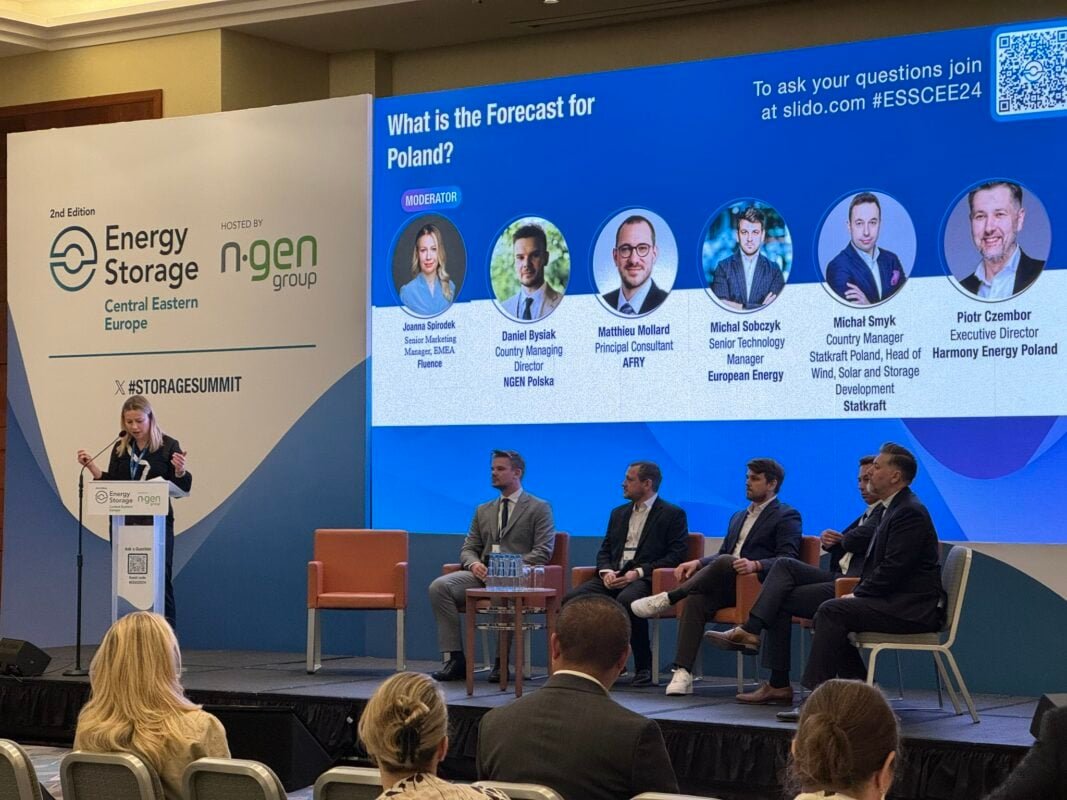
This is primarily due to a sharp cut in the de-rating factor for BESS to 13%, down from 60% in 2024 and 95% in 2023, executives from the Poland arm of developer-operator Harmony Energy and consultancy Arthur D. Little told Energy-Storage.news. The de-rating factor, or ‘correction availability factor’, is a limit on how much of a project’s capacity can be bid in to the auction, and is meant to reflect a technology’s reliability in being called upon. “It was clear that TSO wants to cut BESS in favour of gas. And they made their point,” said Michal Maćkowiak, executive director at Harmony Energy Poland. His colleague Piotr Czembor pointed out that because of the de-rating factor the actual capacity of BESS projects that won contracts will likely total around 5GW, for whom the capacity market will be around 13% of revenues. Gas projects, meanwhile, won around 2,400MW of contracts. The Poland government signalled its intent to change the parameters of the auction to favour gas in January this year. Is it also worth noting that the CM that just concluded is the last of its kind under the current system, with a new framework being negotiated with the EU. Arthur D. Little partner Wojciech Swiercz said: “This year’s main capacity market auction was primarily designed to attract investors in gas-fired generation, with auction parameters significantly favouring gas over energy storage—unlike previous years, when storage technologies dominated. The correction availability factor (KWD) for energy storage, which directly impacts capacity contract revenues, was set at just 13.39%, a dramatic drop from over 60% last year and 95% two years ago.” Nonetheless, he added that the amount of storage that won was surprising considering the disadvantage. “Now, both gas and energy storage investors face a race against time to deliver on their commitments within five years. We can expect significant challenges ahead, including global shortages of gas turbines, regulatory uncertainty for energy storage, and high financing costs,” he concluded. Notable developers and operators that won contracts for BESS projects in this year’s auction include R.Power, Nala Renewables, Axpo, RWE and Tauron, while state-owned power firm PGE won numerous contracts across different technologies including BESS. Enel X Polska, part of the Italy-headquartered power firm, won some contracts for demand response units. You can see the full list here (in Polish). The CM’s conclusion came just a few working days after Poland revealed the shortlisted energy storage projects for €1 billion (US$1.17 billion) in grants.
Tesla Semi program Director teases major improvements
Tesla Insurance has officially expanded to a new U.S. state, its thirteenth since its launch in 2019. Tesla has confirmed that its in-house Insurance program has officially made its way to Florida, just two months after the company filed to update its Private Passenger Auto program in the state. It had tried to offer its insurance program to drivers in the state back in 2022, but its launch did not happen. Instead, Tesla refiled the paperwork back in mid-October, which essentially was the move toward initiating the offering this month. Tesla’s in-house Insurance program first launched back in late 2019, offering a new way to insure the vehicles that was potentially less expensive and could alleviate a lot of the issues people had with claims, as the company could assess and repair the damage itself. It has expanded to new states since 2019, but Florida presents a particularly interesting challenge for Tesla, as the company’s entry into the state is particularly noteworthy given its unique insurance landscape, characterized by high premiums due to frequent natural disasters, dense traffic, and a no-fault system. Tesla partners with Lemonade for new insurance program Annual average premiums for Florida drivers hover around $4,000 per year, well above the national average. Tesla’s insurance program could disrupt this, especially for EV enthusiasts. The state’s growing EV adoption, fueled by incentives and infrastructure development, aligns perfectly with Tesla’s ecosystem. Moreover, there are more ways to have cars repaired, and features like comprehensive coverage for battery damage and roadside assistance tailored to EVs address those common painpoints that owners have. However, there are some challenges that still remain. Florida’s susceptibility to hurricanes raises questions about how Tesla will handle claims during disasters. Looking ahead, Tesla’s expansion of its insurance program signals the company’s ambition to continue vertically integrating its services, including coverage of its vehicles. Reducing dependency on third-party insurers only makes things simpler for the company’s automotive division, as well as for its customers.
Ford Has A Bidirectional EV Charging Trick Up Its Sleeve
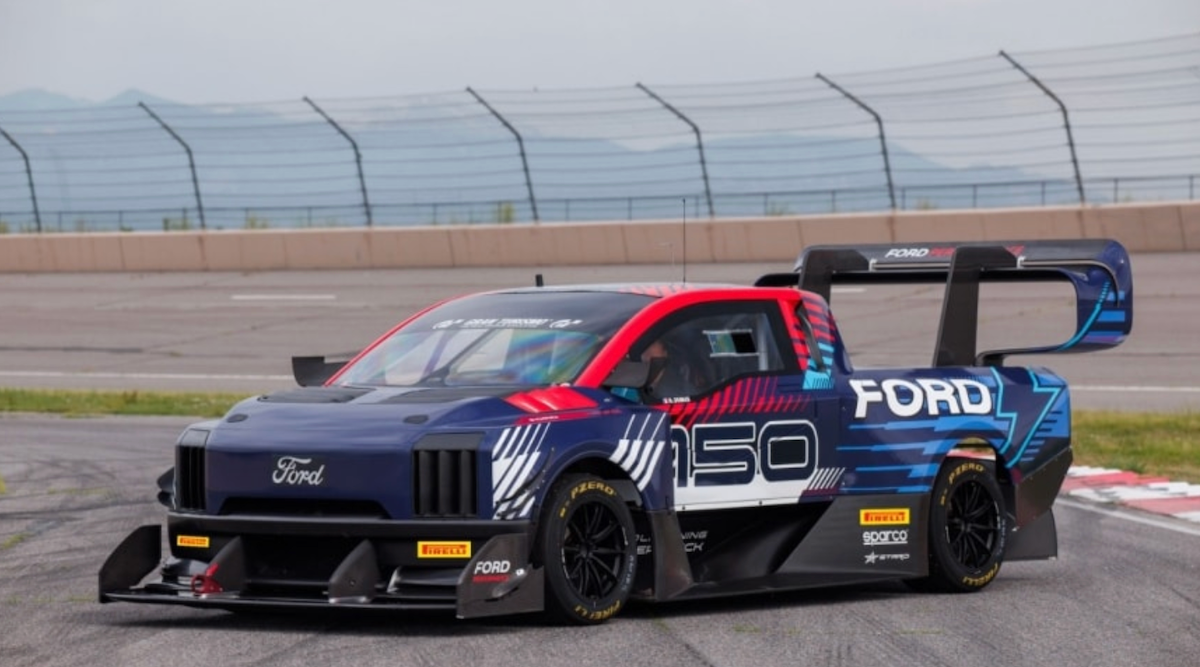
Support CleanTechnica's work through a Substack subscription or on Stripe. It seems like only yesterday that Ford Motor Company was all in on electric vehicles. Well, that was then. Today, good old-fashioned gasmobiles and hybrid gas-electric vehicles are the name of Ford’s game, along with a massively expanded interest in the energy storage industry. Like, massively expanding. For some insights into the energy storage angle, let’s turn to a newly released EV-to-home charging study produced by Ford and the University of Michigan. Farewell, Ford, We Hardly Knew Ye … Or Did We? CleanTechnica’s Steve Hanley has a good explainer on Ford’s new EV about-face and its forthcoming energy storage plans (here’s another CleanTechnica take on the subject). The new study, published in the journal Nature Energy, adds another dimension to the automaker’s energy storage plans under the title, “Vehicle-to-home charging can cut costs and greenhouse gas emissions across the USA.” Does Ford have 3-D chess flowing through its veins? Maybe! Despite the company’s U-turn on EVs, the new study makes a strong economic case for owning an electric vehicle. It reads like a big, fat raspberry blown at the insane, braying jackass who currently occupies the White House. In a nutshell, the study presents evidence that households with an EV can deploy their car battery to save money on their electricity bills — enough money to offset the cost of charging an EV, and then some. According to the Ford-University of Michigan team, the savings on EV charging costs can add up to a range of $2,400 to $5,600 over time. That’s not quite enough to make up for the recent loss of the $7,500 EV tax credit engineered by US President Trump and his Republican allies in Congress, but it does take some of the sting out. “We know that vehicles are parked the vast majority of the time and, so as this infrastructure develops, there’s a great opportunity here,” emphasizes Ford researcher and study co-author Robb De Kleine. “As we try to decarbonize the grid, we need energy storage to be able to do that. A lot of the time, the first instinct is to build stationary storage. But EVs could serve as electricity storage devices,” De Kleine elaborates. The New EV Energy Storage Study Don’t get too excited just yet. As De Kleine indicates, the research team advises that vehicle-to-home EV charging technology will need to level up its game before the full savings can be realized. “Ultimately, the goal is that drivers won’t have to change anything—they would park and plug in their EVs as normal, then technology running in the background automatically finds the best charging and discharging times,” explains Ford research scientist Hyung Chul Kim, who also co-authored the new study. Kim emphasizes that V2H (vehicle-to-home) charging needs to have plug-and-play capability, which it does not yet have in the US. “This capability is promising but still in its early stages,” Kim emphasizes. “We’re working with utilities to identify the best use cases for them, and we’re also determining ways to optimize overall battery lifetime,” Kim adds. How Does It Work? That’s … interesting! I’m reaching out to Ford to see if any details are available on their utility partnerships. In the meantime, the new study offers some clues about the automaker’s future plans for energy storage, EVs, and both. Parth Vaishnav, an assistant professor in the University of Michigan’s School for Environment and Sustainability, explained the general concept in a press statement on December 16. “Putting vehicle batteries between the electricity grid and homes makes it possible for homes to buy electricity for all household uses when it is cheap and clean—for example, in the afternoon, when there is a lot of solar power—and to store it in the car’s battery for later use,” said Vaishnav. The idea is not a particularly new one. Bi-directional EV charging is the foundational technology. EVs are essentially mobile energy storage systems on wheels. They can draw power from a home charging station, and — if equipped with bidirectional charging — they can also send electricity from their battery into the home. What is new is the potential for seamlessly integrating bidirectional charging and energy storage with real time information about electricity costs and the availability of renewable energy on the grid. The results vary by region, taking into account prevailing electricity rates and seasonal conditions among other factors. “In parts of Texas and California, the cost savings of V2H compared to conventional charging can be so great that it more than pays for the electricity needed for driving,” the University of Michigan notes. Saving The Planet, One Mobile Energy Storage System At A Time The University of Michigan also emphasizes that the greenhouse gas savings adds up when the energy storage capabilities of EVs are optimized by V2H charging. “V2H could reduce lifecycle greenhouse gas emissions from a household’s electricity use by 70 to 250%, which would amount to cutting between 24 and 57 tons of lifetime carbon dioxide emissions,” the school explains. “The reduction can surpass 100% when it more than makes up for emissions from the extra electricity needed to drive the car,” Vaishnav adds. “If you’re buying an EV because you want to cut greenhouse gas emissions—or if you’re making an EV because you want to cut greenhouse gas emissions—this tells you that, in addition to reducing greenhouse gas emissions from transport, the EV could also help cut building sector greenhouse gas emissions,” Vaishnav adds again for good measure. That’s also interesting. While greenhouse gas emissions are not top of mind for budget-strapped households, they continue to factor into business decisions. Regardless of the sharp sideways turn in federal climate policy, surveys continue to show that the interest in carbon-reducing technologies among US businesses remains strong — outside of the fossil fuel industry, that is. In that regard, the new survey provides fleet owners with another compelling, bottom-line case for fleet electrification. The researchers also point out that their findings can be
California CCA throws support behind two thermal battery storage startup developers
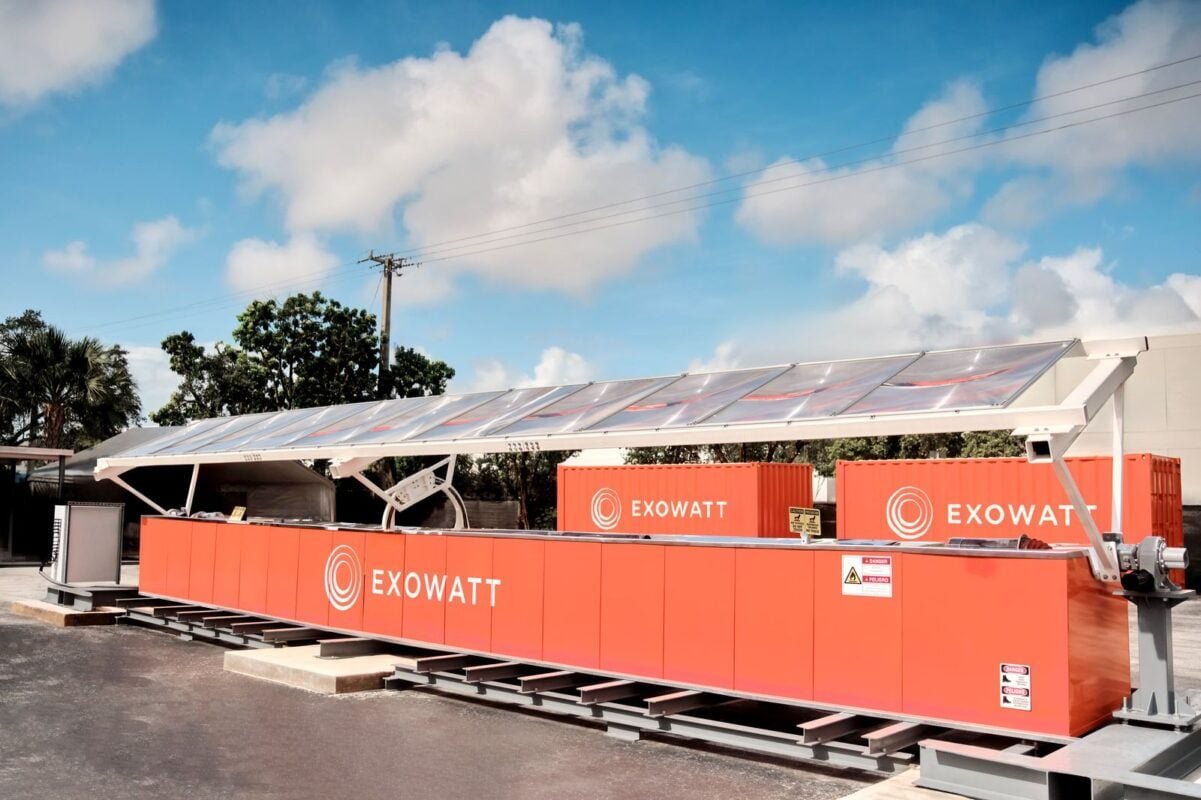
California CCA throws support behind two thermal battery storage startup developers - Energy-Storage.News Skip to content
Tesla Insurance officially expands to new U.S. state

Tesla Insurance has officially expanded to a new U.S. state, its thirteenth since its launch in 2019. Tesla has confirmed that its in-house Insurance program has officially made its way to Florida, just two months after the company filed to update its Private Passenger Auto program in the state. It had tried to offer its insurance program to drivers in the state back in 2022, but its launch did not happen. Instead, Tesla refiled the paperwork back in mid-October, which essentially was the move toward initiating the offering this month. Tesla’s in-house Insurance program first launched back in late 2019, offering a new way to insure the vehicles that was potentially less expensive and could alleviate a lot of the issues people had with claims, as the company could assess and repair the damage itself. It has expanded to new states since 2019, but Florida presents a particularly interesting challenge for Tesla, as the company’s entry into the state is particularly noteworthy given its unique insurance landscape, characterized by high premiums due to frequent natural disasters, dense traffic, and a no-fault system. Tesla partners with Lemonade for new insurance program Annual average premiums for Florida drivers hover around $4,000 per year, well above the national average. Tesla’s insurance program could disrupt this, especially for EV enthusiasts. The state’s growing EV adoption, fueled by incentives and infrastructure development, aligns perfectly with Tesla’s ecosystem. Moreover, there are more ways to have cars repaired, and features like comprehensive coverage for battery damage and roadside assistance tailored to EVs address those common painpoints that owners have. However, there are some challenges that still remain. Florida’s susceptibility to hurricanes raises questions about how Tesla will handle claims during disasters. Looking ahead, Tesla’s expansion of its insurance program signals the company’s ambition to continue vertically integrating its services, including coverage of its vehicles. Reducing dependency on third-party insurers only makes things simpler for the company’s automotive division, as well as for its customers.
Hitachi Energy supplies PCS to Finland's largest BESS

Hitachi Energy supplies PCS to Finland's largest BESS - Energy-Storage.News Skip to content
Battery Power Online | Ford’s $20 Billion Battery Pivot

By Battery Power Online December 16, 2025 | On Monday, Ford Motor Company announced plans to shift its Ford+ plan, which boiled down to a nearly $20 billion loss on its EV business. “The operating reality has changed, and we are redeploying capital into higher-return growth opportunities: Ford Pro, our market-leading trucks and vans, hybrids and high-margin opportunities like our new battery energy storage business,” said Ford president and CEO Jim Farley in a press release. Calling it an effort to “follow customers,” the OEM plans, “a decisive redeployment of capital” that includes adding hybrid and extended-range electric propulsion trucks and vans to its lineup while ceasing production of the current generation F-150 Lightning and a previously planned new electric commercial van. Instead, Ford will expand powertrain choice — including a range of hybrids and extended-range electric propulsion — while focusing its pure electric vehicle development on its flexible Universal EV Platform for smaller, affordable models. This next-generation architecture is engineered to underpin a high-volume family of smaller, highly efficient and affordable electric vehicles designed to be accessible to millions of customers. The first vehicle from the Universal EV Platform will be the fully connected midsize pickup truck assembled at Louisville Assembly Plant starting in 2027. By 2030, Ford expects approximately 50% of its global volume will be hybrids, extended-range EVs and fully electric vehicles, up from 17% in 2025. Launching a Battery Energy Storage System Business Ford is launching a new business — including sales and service — to capture the large demand for battery energy storage from data centers and infrastructure to support the electric grid. Ford plans to repurpose existing U.S. battery manufacturing capacity in Glendale, Kentucky, to serve the rapidly growing battery energy storage systems market. This strategic initiative will leverage currently underutilized electric vehicle battery capacity to create a new, diversified and profitable revenue stream for Ford. The company also plans to invest roughly $2 billion in the next two years to scale the business. The Kentucky site will be converted to manufacture 5 MWh+ advanced battery energy storage systems. Ford plans to produce LFP prismatic cells, battery energy storage system modules and 20-foot DC container systems at this facility. These systems are at the heart of the energy storage solution market for data centers, utilities, and large-scale industrial and commercial customers. Leveraging more than a century of manufacturing expertise and licensed advanced battery technology, Ford plans to bring initial capacity online within 18 months, positioning the company to capture share in the growing U.S. battery energy storage systems market. Ford currently plans to deploy at least 20 GWh annually by late 2027.
The Commission blinks first: EU's 2035 ICE ban is reversed

The Commission blinks first: EU's 2035 ICE ban is reversed | Automotive World Skip to content After pressure from EU states and automotive industry, the European Commission has reversed its intended 2035 ban on ICE vehicle sales. By Ian Henry The announcement that the European Commission (EC) will allow internal combustion engine (ICE) cars to be sold beyond 2035 has come as no surprise. The idea had been trailed in the automotive press for several weeks, and pressure had been building throughout 2025 for the EU's executive branch to change its plans. Subscribe to Automotive World to continue reading Sign up now and gain unlimited access to our news, analysis, data, and research Subscribe Already a member? Join our LinkedIn Group Let us help you understand the future of mobility "*" indicates required fields Welcome back , to continue browsing the site, please click here We use cookies to ensure that we give you the best experience on our website. If you continue to use this site we will assume that you are happy with it.Ok Notifications
Mastercard’s master plan for reducing IT carbon emissions
Companies in every sector are investing in artificial intelligence and digital services to create new business value, spurring hundreds of billions of dollars of spending on data center expansion projects by the biggest cloud-services players and co-location providers. Those investments will derail corporate emissions goals if they’re not managed properly. Getting ahead of that outcome will take closer collaboration between chief technology or information officers and sustainability leaders. “I know it’s not easy to carve out bandwidth to focus on this problem, but I would encourage all of my peers to do this,” said George Maddaloni, chief technology officer, operations at Mastercard. Mastercard stepped up efforts to more closely manage its digital carbon footprint three years ago, before AI strategy was top of mind for every business executive. In April, the company formally made environmental sustainability one of the key performance indicators reviewed monthly by a new steering committee composed of senior executives, including CSO Ellen Jackowski. “We started with the data about what we run from a technology perspective, and then looked at how to allocate and assign a footprint to our different products and services based on that,” Maddaloni said. Growing concern Information technology accounts for an estimated 2-4 percent of annual global emissions, according to the International Energy Agency — a figure that’s growing rapidly as companies increasingly rely on digital services — with hardware manufacturing, life-cycle management and electricity accounting for the biggest chunks of the total. Large tech companies with aggressive emissions reduction goals, including Amazon, Google and Microsoft, are struggling to achieve those targets in large part because of the more than $364 billion they spent this year on data center buildouts. The potential ripple effect affects sustainability professionals beyond Big Tech. More than 60 percent of the leaders surveyed in August by The Conference Board indicated that data center energy demand was their greatest concern related to their company’s AI investments, followed by the emissions related to the services themselves. The level of emissions generated by IT infrastructure, including data centers, varies widely from industry to industry. Enterprise technology contributes an estimated 60-65 percent of emissions related to electricity (Scope 2) and upstream and downstream business activities (Scope 3) at banks and financial services firms. For healthcare providers, the average is closer to 10-15 percent of Scope 2 and 3. Mastercard’s data center footprint represents 60 percent of emissions from its direct operations (Scope 1) and purchased electricity. Those two categories account for 10 percent of its total emissions, which means Mastercard’s data centers contribute 6 percent of the company’s entire carbon footprint. “This is a material topic for a handful of industries, including financial services,” said Bjoern Stengel, global sustainability practice lead at tech research firm IDC. “With the rise of AI, it became a mainstream topic overnight.” Best practices for taming digital footprints Over the past three years, Mastercard has managed to decouple its growth in its payment services from its emissions. In 2024, for example, the company’s revenue grew 12 percent, but Mastercard’s overall emissions decreased 7 percent. Key to that achievement was the creation of a patent-pending management dashboard that includes real-time electricity consumption of Mastercard’s services (including the percentage that comes from renewables), information about server and hardware use and carbon-intensity metrics at the product, program and asset level. The information is used to generate scores that the committee and division heads can use to compare and evaluate the impact of various decarbonization efforts. Among the metrics considered is the carbon intensity of the electric grid where a data center is located. Here are some specific tactics that have helped with Mastercard’s IT transformation: Color-coding for dashboard scores: Teams can quickly see how their product or service is performing; red means that an initiative falls in the bottom third for energy intensity, renewable use and hardware efficiency. Carbon profiles for each product or service: This includes customer-facing and internal assets. Product leads are responsible for understanding and managing energy consumption. Proactive decommissioning: Mastercard removed more than 1,200 computer servers in 2024, consolidating the jobs they handled, and retired technology that wasn’t being used. Closer scrutiny of cloud services and co-location partners: Mastercard has used that information, in some cases, to switch where specific services are running based on the carbon intensity of certain regions. It uses actual data from these suppliers, rather than spend-based estimates. Emissions-sensitive software code: Mastercard is being judicious about the data chosen to train AI models, which keeps them smaller and saves energy. Offense and defense Sustainability leaders are helping the most mature organizations, such as Mastercard, both to manage the environmental impact of AI and to brainstorm ways it can be used to advance business value. “Instead of looking at this as a siloed topic, look at this as part of the bigger AI ROI equation,” said IDC’s Stengel. “There are financial and nonfinancial sides to this discussion.” AI enables companies to use information that’s been collected for ESG reports and greenhouse gas inventories for much more than compliance, said Sammy Lakshmann, a U.S. PwC partner focused on digital and AI-enabled sustainability strategy. For example, data that the sustainability teams collect about extended producer responsibility laws offer important signals for product managers and finance teams about potential future fees, he said. Likewise, real-time climate data could be used by retailers to adjust merchandising strategies or product inventories proactively. “The companies that are going to win are the ones that combine AI, sustainability and business value,” Lakshmann said.
Can your shopping bot be trusted? How Visa will ensure scam-free AI transactions

Getty Images / SOPA Images / Contributor Follow ZDNET: Add us as a preferred source on Google. ZDNET's key takeaways Visa and Akami aim to secure agentic transactions. It's another layer of protection for AI-led shopping. AI shopping experiences create new security risks. If you've been holiday shopping online, you may have noticed that this year, you have the option to use AI like a shopping assistant. This is just one step toward the ultimate goal of autonomous, agentic AI transactions -- which, while convenient, open up a whole new set of vulnerabilities. Also: Should you trust AI agents with your holiday shopping? Here's what experts want you to know Visa and cybersecurity company Akamai Technologies are collaborating to address a significant pain point in agentic commerce: verifying whether the bot conducting the transaction was sent by a human or is a malicious actor. The partnership, announced Wednesday, utilizes Visa's Trusted Agent Protocol in conjunction with Akamai Technologies' cybersecurity protections to create safer agent-based commerce experiences with better fraud controls. Transforming AI agents from novelties into trusted actors "By combining Visa Trusted Agent Protocol with Akamai's deep user recognition and threat intelligence, we're working to solve the dual-identity challenge that's crucial to AI commerce," said Patrick Sullivan, chief technology officer of security strategy at Akamai Technologies. "We prove both who the agent is and, critically, who it represents. This is what transforms AI agents from novelties into trusted economic actors." Many credit card companies have begun laying the groundwork for agent-based transactions by implementing new protocols, frameworks, and measures designed to improve security for individual users and enterprises. In May, Visa launched Intelligent Commerce, which provides payment support to developers creating agentic AI shopping experiences. It also offers AI-ready credit cards that replace card details with tokenized digital credentials, as well as AI payments, which enable AI agents to make transactions using guidelines set by the user. Google's Agent Payments Protocol, launched in September, aims to create similar protections for those wary of AI-enabled transactions. Also: How to shop with AI: 6 ways I find deals, price track, and let agents buy for me As the announcement explains, merchants must now decipher whether a bot is trying to place a transaction that actually belongs to a human. This is especially important as Akamai's 2025 Digital Fraud and Abuse Report found that AI-powered bot traffic has surged 300% over the past year. To solve for this, Visa's Trusted Agent Protocol's agent authentication framework and Akamai's edge-based behavioral intelligence and user recognition will work in conjunction and verify the legitimacy of the agent activity. They will also work in concert to link the agent to each user, with the Trusted Agent Protocol passing information from user to agent, and then Akamai will preserve that identity. Also: The coming AI agent crisis: Why Okta's new security standard is a must-have for your business Lastly, and perhaps most importantly, the Trusted Agent Protocol can ensure that the payment reaches the merchant in the way the buyer has requested, while Akamai can provide end-to-end protection. The entire Trusted Agent Protocol is meant to be deployed with "minimal infrastructure and user experience (UX) changes," enabling its 175 million Visa accepting merchant locations to make the transition over to agentic commerce as seamlessly as possible, according to Visa.
Why we’re still fighting for perfect fasteners in CAD
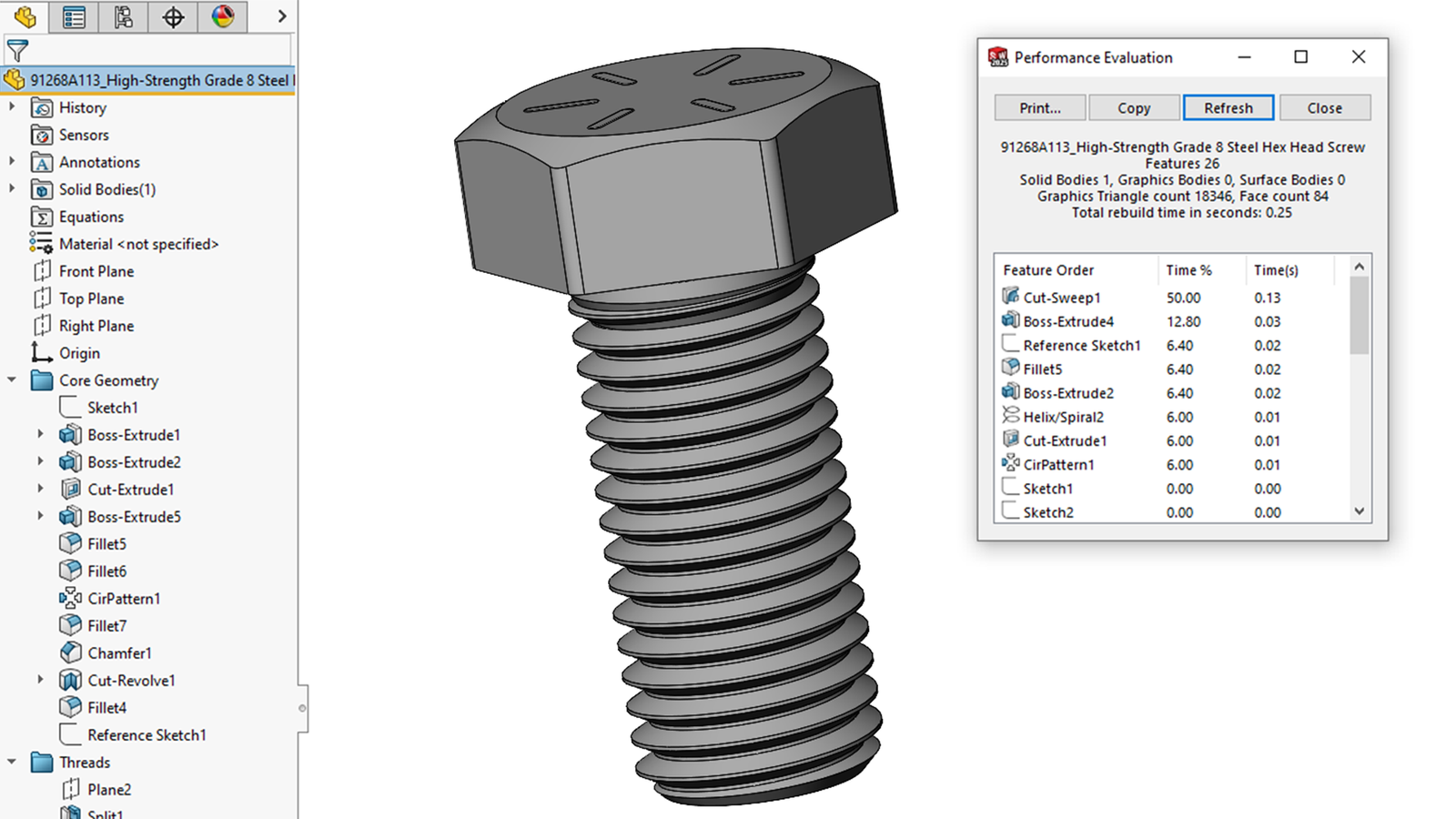
It's not just laggy assemblies. Here are 6 reasons fasteners continue to frustrate CAD users—and how engineers can fight back. If there’s one thing that CAD software should have solved by now, it’s fasteners. And yet, these simple, ubiquitous parts remain a frustration for many engineers. Why don’t we have a single library of amazing fastener models? After eight years of building a fastener library from scratch, I think I know the answer. My name is Peter Brinkhuis. After five years of working as a mechanical engineer, I noticed that my work could use some more automation. So I quit my job and founded CAD Booster, where we create user-friendly software (and other tools) for Solidworks. I’ve created a drawing automation add-in, an incredibly consistent fastener library and a tool to make working with fasteners fun again. So what’s the problem with fasteners? The problem is there’s not just one problem. Fasteners are being held back by CAD performance, business models, withdrawn standards and more. But by understanding what we’re fighting, engineers can fight back—and win the battle for better fasteners. We’re fighting performance A mechanical model is by definition an approximation of reality. How accurate that model should be is up to you and your employer. Do you want geometrically accurate helical threads modeled on all your bolts? Go ahead, but you’ll kill performance and make your colleagues want to pull their hair out. The supplier McMaster-Carr still includes helical threads in most of their models, unfortunately, and with a rebuild time to match: 0.25 seconds. Simplified models are 25 times faster. I once debugged a large, slow assembly in Solidworks and found it was lagging due to four levelling feet with fully modeled threads. Once the threads were gone, the assembly got snappy. A bolt model with fully modeled thread from McMaster-Carr. (Image: Author.) But how far do you go? I stop at bolts that still look like bolts but that have no modeled threads or radii. I’ve also talked with a company that designs slaughterhouses, and they’ve resorted to only adding an attribute to a hole. Zero geometry, lots of speed, accurate BOMs—but not very lifelike. We’re fighting entropy Every engineering company has a fastener library. They may start out using the Solidworks Toolbox, but at some point they’ll quit using that and start creating their own fastener models. How hard could it be, right? It’s just a sketch, a few dimensions, a revolve and a cut-extrude. But then comes the request for consistency across all thousands of files or configurations. It would be great if bolt types were interchangeable without breaking mates. How about metadata? And how do the files appear in your BOMs? Does every material get its own file, its own configuration? Can you buy every size in every material? No task is trivial if you have to perform it 50,000 times. And who’s managing all those fastener files? Is someone in charge (great for large companies) or can any engineer add a size (the reality of SMBs)? I’ve seen libraries with fastener sizes like M7x22; sizes that you cannot (and should not) buy anywhere. We’re fighting standardization organizations I have worked my way through the PDFs of 60+ DIN and ISO standards, and one thing I learned from reading between the lines is that these standards are not written for the engineer. They are written for the manufacturer. Things have gotten better with the ISO standards, but the old DIN standards were bad. For most fastener standards, the shape is not fully defined. Manufacturers get lots of leeway, especially with the under-head shape of bolts. Drawing those bolts in CAD is impossible because the shape is undefined. Countersunk ISO 10642 bolts only have a theoretical max head diameter and a minimum value, not a target value with a tolerance. The shape of a countersunk bolt according to ISO 10642, with an infinitely sharp head. (Image: Author.) Standards are also written to fit on an A4 piece of paper, which is terrible if you want to copy the data from a long table that spans multiple pages (but that’s a whole different story). We’re fighting ghosts Most DIN standards for fasteners, like DIN 933 for hexagon head bolts and DIN 912 for hexagon socket head cap screws, were withdrawn 20 – 30 years ago. But engineers keep adding them to their designs, and shops keep stocking them, because purchasing doesn’t care what the current ISO standard is. So we’re stuck. The only way out is to move forward. Stop using standards that were withdrawn decades ago and start using the ISO replacements. There are tiny differences, like the width across flats for hexagon head bolts size M10, M12, M14 and M22, so keep your eyes open. Lead engineers should take charge and the rest will follow. If you don’t know who the fastener police is at your company, it should be you. And please stop using spring lock washers like DIN 127 and serrated washers. They are the 1950s idea of locking devices, but they just don’t work. Junker vibration tests show this, and DIN withdrew these standards without a replacement. Your fasteners will still come loose, so switch to Nord-Lock washers or a properly preloaded set of fasteners. We’re fighting shops If engineers don’t stop ordering withdrawn fastener standards, shops will keep selling them and manufacturers will keep making them. There’s no incentive for a shop to tell a purchaser “no” when the company is ready to buy a pallet of DIN 931 bolts. And a purchaser will never ask the engineering department to update their assembly just to comply with the latest standards. So engineers need to take the lead. Ask for the latest standard and don’t budge at the first sign of resistance. Tell them Peter sent you. This is the goal: a perfectly consistent fastener library. (Image: Author.) We’re fighting business models Consistency is valuable, so most CAD suppliers are happy to put fasteners behind a paywall. Solidworks has
US pauses tech prosperity deal with UK amid wider trade dispute

The US has paused implementation of its technology cooperation agreement, the so-called Tech Prosperity Deal, with the UK citing frustration over stalled broader trade negotiations and unresolved regulatory differences. Officials in Washington confirmed the suspension last week, saying progress on issues such as market access and non-tariff barriers was insufficient to move the pact forward. The agreement was announced in September during President Donald Trump’s state visit to the UK and was designed to deepen collaboration on emerging technologies, including artificial intelligence (AI), quantum computing, and civil nuclear energy. It had been presented in London as a key component in strengthening transatlantic tech ties. Both governments described the deal as a framework rather than a formal treaty. It included commitments from major US tech firms to invest in the UK, with projected capital flows in the tens of billions of pounds. Microsoft, NVIDIA, Google, OpenAI, and other companies publicly pledged investment plans during the announcement. A core part of the agreement was the creation of an AI growth zone in the north-east of England, which was intended to catalyse private sector development and leverage the UK’s research base. Early projections suggested the initiative could attract substantial capital and job creation, particularly in high-performance computing and AI infrastructure. Washington’s decision reflects growing dissatisfaction with the progress of negotiations in other areas of the UK-US economic relationship. US officials have made it clear that implementation of the tech deal was linked to concessions on broader trade issues that remain unresolved. These include disagreements over the UK’s digital services tax, food safety standards, and other regulatory measures that the US sees as barriers to market access. Critics in Washington had previously objected to the UK’s digital services tax, a levy on large technology companies that is forecast to generate hundreds of millions of pounds annually. Although UK officials have pushed back on claims that the tax was the principal stumbling block. The US administration’s move follows months of intensive diplomatic engagement. Negotiators on both sides have been working hard to iron out differences in order to avoid punitive tariffs and bolster bilateral economic ties. Despite these efforts, Washington concluded that advancement of the technology agreement could not proceed without progress on wider trade terms. Prime Minister Keir Starmer had described the pact at the time of signing as a major step in UK-US relations. He emphasised the opportunities it would bring for jobs, research collaboration, and private investment in emerging sectors. UK officials still characterise the current pause as part of constructive negotiation rather than a collapse of the deal. The UK government has stressed its commitment to making the partnership work, and Downing Street said talks with Washington would continue. Officials are expected to pursue further discussions in the coming months to resolve outstanding trade issues and unlock the tech cooperation measures. The pause has drawn attention to the wider context of UK-US economic relations, which include ongoing discussions on tariffs and market access across a range of sectors beyond technology, and highlights the complexity of linking high-technology collaboration with broader trade negotiations that touch on sovereignty, regulatory policy, and domestic economic priorities. For British policymakers and industry stakeholders, the suspension raises questions about the future of the UK’s bid to become a global AI hub and to leverage foreign investment for strategic sectors. How London balances regulatory autonomy with the desire for closer alignment with US economic and technology policy will be a key theme in forthcoming negotiations. As both sides prepare for further talks early next year, the focus will be on reconciling divergent approaches to taxation, regulation, and market access – and on sustaining the “special relationship” at a time when domestic economic agendas in both countries are under pressure.
Sunrun + NRG launch a virtual power plant to ease Texas power demand

Photo: Sunrun As Texas braces for tighter power margins and record demand on the ERCOT grid, Sunrun and NRG Energy are transforming home batteries into a giant virtual power plant. The two companies are integrating more home battery storage into the grid and tapping those batteries when the state needs power the most. The solar + storage provider and energy company announced a new multi-year partnership aimed at accelerating the adoption of distributed energy in Texas, with a focus on solar-plus-storage systems that can be aggregated and dispatched during periods of high demand. The idea is simple: use home batteries as a flexible, on‑demand power source to help meet Texas’s rapidly growing electricity needs. Under the deal, Texas homeowners will be offered a bundled home energy setup that pairs Sunrun’s solar and battery systems with retail electricity plans from NRG’s Texas provider, Reliant. Customers will also get smart battery programming designed to optimize when their batteries charge and discharge. As new and existing Sunrun customers enroll with Reliant, their combined battery capacity will be made available to support the ERCOT grid during times of stress. “This partnership is a major step in achieving our goal of creating a 1 GW virtual power plant by 2035,” said Brad Bentley, President of NRG Consumer. “By teaming up with Sunrun, we’re unlocking a new source of dispatchable, flexible energy while giving customers the opportunity to unlock value from their homes and contribute to a more resilient grid.” Advertisement - scroll for more content Sunrun, which has one of the largest fleets of residential batteries in the US, will be paid for aggregating the capacity, and participating Reliant customers will be compensated by Sunrun for sharing their stored solar energy. The arrangement gives Texas households a way to earn money from their batteries while also improving grid reliability in a state that continues to see rapid population growth, extreme weather, and rising electricity demand. Read more: The US’s first residential V2G power plant is running on Ford F-150 Lightning trucks If you’re looking to replace your old HVAC equipment, it’s always a good idea to get quotes from a few installers. To make sure you’re finding a trusted, reliable HVAC installer near you that offers competitive pricing on heat pumps, check out EnergySage. EnergySage is a free service that makes it easy for you to get a heat pump. They have pre-vetted heat pump installers competing for your business, ensuring you get high quality solutions. Plus, it’s free to use! Your personalized heat pump quotes are easy to compare online and you’ll get access to unbiased Energy Advisors to help you every step of the way. Get started here. – *ad FTC: We use income earning auto affiliate links. More.
California vineyard goes 100% solar with floating PV system

NextRoll, Inc. ("NextRoll") and our 21 advertising partners use cookies and similar technologies on this site and use personal data (e.g., your IP address). If you consent, the cookies, device identifiers, or other information can be stored or accessed on your device for the purposes described below. You can click "Allow All" or "Decline All" or click Settings above to customise your consent regarding the purposes and features for which your personal data will be processed and/or the partners with whom you will share personal data. NextRoll and our advertising partners process personal data to: ● Store and/or access information on a device; ● Create a personalised content profile; ● Select personalised content; ● Personalised advertising, advertising measurement, audience research and services development; ● Services development. For some of the purposes above, our advertising partners: ● Use precise geolocation data. Some of our partners rely on their legitimate business interests to process personal data. View our advertising partners if you wish to provide or deny consent for specific partners, review the purposes each partner believes they have a legitimate interest for, and object to such processing. If you select Decline All, you will still be able to view content on this site and you will still receive advertising, but the advertising will not be tailored for you. You may change your setting whenever you see the Manage consent preferences on this site.
Webinar: Advancing EV thermal management with Phase Change Materials (PCMs)

Unlock next‑generation cooling performance for EV power electronics and ADAS As electric vehicles evolve toward higher computing power and smarter ADAS capabilities, thermal challenges are becoming more critical than ever. Highly integrated systems generate significantly more heat-demanding innovative solutions that go beyond conventional thermal interface materials. This session provides an in-depth exploration of state‑of‑the‑art Phase Change Materials (PCMs) and advanced thermal solutions engineered to improve performance, efficiency, and reliability. The discussion will focus on areas including EV Inverters, ADAS Units and On‑Board Chargers (OBCs). In this webinar we’ll explore: Key market trends, customer challenges and thermal demands shaping advanced automotive & EV electronics Evolving thermal performance requirements and design limitations in next-generation systems Latest advancements in PCM technology and chip-level thermal control How Solstice PCMs are validated against stringent automotive reliability standards Real-world benefits including more compact designs, improved safety, reliability and component lifespan Business impact from optimized power density and lower production costs to faster EV assembly and time to market. Whether you’re an engineer, researcher or industry professional, this session will deliver valuable insights into the thermal challenges facing modern EVs and demonstrate how PCMs correlate with and outperform traditional TIMs in EV applications. Join us on Wednesday, Jan 14th at 12pm US EST.Register now, it’s free An illustration representing a computer circuit board and a car chip.
Tesla Model Y L is gaining momentum in China’s premium segment

Tesla’s domestic sales in China held steady in November with around 73,000 units delivered, but a closer look at the Model Y L’s numbers hints at an emerging shift towards pricier variants that could very well be boosting average selling prices and margins. This suggests that the addition of the Model Y L to Tesla China’s lineup will not result in a case of cannibalization, but a possible case of “premiumization” instead. Tesla China’s November domestic numbers Data from the a Passenger Car Association (CPCA) indicated that Tesla China saw domestic deliveries of about 73,000 vehicles in November 2025. This number included 34,000 standard Model Y units, 26,000 Model 3 units, and 13,000 Model Y L units, as per industry watchers. This means that the Model Y L accounted for roughly 27% of Tesla China’s total Model Y sales, despite the variant carrying a ~28% premium over the base RWD Model Y that is estimated to have dominated last year’s mix. As per industry watcher @TSLAFanMtl, this suggests that Tesla China’s sales have moved towards more premium variants this year. Thus, direct year-over-year sales comparisons might miss the bigger picture. This is true even for the regular Model Y, as another premium trim, the Long Range RWD variant, was also added to the lineup this 2025. People look at YoY unit sale numbers and think Tesla China not doing well – wrong!Model Y L made up 27% of Model Y sales last month. This car is +28% more expensive than the RWD Y, which is pretty much all they sold this time last year.There is also the LR RWD version in the… https://t.co/xqEBtsETgX — James Cat (@TSLAFanMtl) December 16, 2025 Tesla China November Domestic Sales BreakdownModel Y: 34,000Model 3: 26,000Model YL: 13,000Total: 73,000 https://t.co/37ag7njV9p — 大趙 (@zhongwen2005) December 16, 2025 BREAKING Tesla absolutely crushed it in China in November The Model Y took the crown as the #1 best-selling SUV in November 2025 with a massive 33,900 deliveries (excluding the YL) The Model YL bolstered the brand’s success with an impressive 12,800 units of its own… pic.twitter.com/O8CSVdcYL8 — Ming (@tslaming) December 16, 2025 November 2025 momentum While Tesla China’s overall sales this year have seen challenges, the Model Y and Model 3 have remained strong sellers in the country. This is especially impressive as the Model Y and Model 3 are premium-priced vehicles, and they compete in the world’s most competitive electric vehicle market. Tesla China is also yet to roll out the latest capabilities of FSD in China, which means that its vehicles in the country could not tap into their latest capabilities yet. Aggregated results from November suggest that the Tesla Model Y took the crown as China’s #1 best-selling SUV during the month, with roughly 34,000 deliveries. With the Model Y L, this number is even higher. The Tesla Model 3 also had a stellar month, seeing 25,700 deliveries during November 2025. The post Tesla Model Y L is gaining momentum in China’s premium segment appeared first on TESLARATI.